Kubota BX1800 Snow Blower Guide
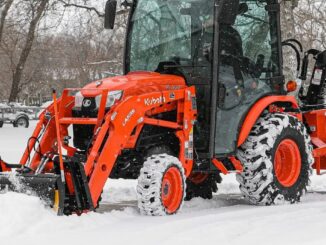
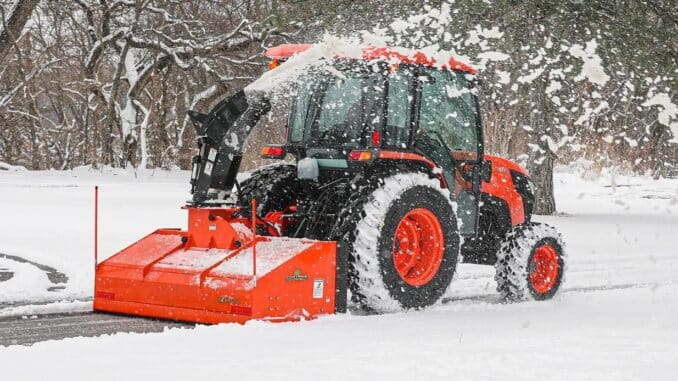
The Kubota BX1800 can operate a front-mounted snow blower when equipped with the correct tractor-specific mounting, lift and PTO-drive components. The 50-inch Kubota BX2750A two-stage front blower is a documented attachment option for this tractor; buying the blower housing alone does not provide a complete installation.tractor-specs
For owners clearing driveways and residential acreage, the main decisions are attachment compatibility, mechanical condition, traction and rear counterweight. A used blower advertised simply as “fits Kubota BX” needs closer investigation because different BX generations can require different mounting and drive equipment.
This guide explains what to check before buying, how front and rear blowers differ, and how to prepare, operate and maintain a snow-removal setup without overloading the tractor or creating avoidable safety risks.
Kubota BX1800 Snow Blower Compatibility
The BX1800 is a four-wheel-drive subcompact diesel tractor with a liquid-cooled, three-cylinder engine and hydrostatic transmission. It has a mid PTO rated at 2,500 rpm and a rear PTO rated at 540 rpm, making the two PTO locations fundamentally different attachment connections.tractor-specs
A front snow blower uses the appropriate mid-PTO driveline and mounting arrangement. A conventional rear blower connects to the rear three-point hitch and rear PTO. Neither connection establishes compatibility by itself: implement power requirements, driveline geometry, lifting capacity and weight distribution must also match.
The documented front-blower option
The BX2750A is a 50-inch, approximately 127 cm, two-stage front-mounted blower with hydraulic lift listed for the BX1800. Its augers collect snow and feed a separate impeller, which accelerates it through the discharge chute.tractor-specs
Do not treat BX2750, BX2750A and later suffix versions as identical complete packages. Similar-looking housings may be offered with different drivelines, brackets, chute-control supports or mounting equipment.
Before purchasing, have an authorized dealer verify:
-
The tractor model and serial number.
-
The blower’s complete model designation and serial number.
-
The required subframe and front quick hitch.
-
The correct mid-PTO drive equipment.
-
Hydraulic lift connections and control requirements.
-
Chute-control hardware.
-
Required rear ballast and any attachment restrictions.
Why the mounting kit matters
The BX2751 subframe parts documentation includes a subframe, male quick hitch, hydraulic lift components and a mid-PTO kit. This illustrates why a used front blower must be assessed as a complete system rather than a stand-alone attachment; the designation alone is not proof that every component supplied fits a particular tractor.kubotabooks
Request photographs of everything removed from the donor tractor. Missing bearing supports, guards, brackets or shaft sections can turn an apparently inexpensive blower into a difficult installation.
Do not fabricate mounting adapters or shorten a high-speed front driveline without the correct installation specifications and qualified assistance.
Front-Mounted Versus Rear-Mounted Snow Blowers
The best arrangement depends on driveway layout, operator mobility, storage space and how often other tractor attachments are needed.
| Arrangement | Main advantage | Important limitation |
|---|---|---|
| Front-mounted, mid-PTO blower | Forward-facing operation and a clear view of the intake | Requires the correct front mounting, lift and driveline package |
| Conventional rear three-point blower | May offer a practical alternative when a complete front package cannot be found | Normally clears while reversing, increasing neck strain and reducing forward visibility |
| Pull-type or inverted rear blower | Clears while the tractor travels forward | Tractor must travel through the snow first; suitability depends on snow depth, traction and verified implement requirements |
| Separate walk-behind blower | Useful for narrow paths, steps and confined areas | Requires walking and separate engine or battery maintenance |
| Independently powered tow-behind blower | Uses its own power arrangement | Is not interchangeable with a tractor-PTO blower and needs separate compatibility assessment |
For any rear blower, confirm the required PTO horsepower, hitch category, driveline length, attachment weight and lifting geometry. A suitable PTO speed does not mean the BX1800 can power or safely carry every implement with that connection.
A walk-behind machine may be more practical for a short drive with many tight corners. A properly matched tractor blower becomes more attractive where longer runs and repeated storms make walking equipment labor-intensive.
Buying a Used Kubota BX1800 Snow Blower
Completeness and condition matter more than fresh paint. Inspect the blower with its power disconnected, engine stopped and all rotating components stationary.
Check the housing and snow-handling components
Look for:
-
Cracks or distortion around mounting points.
-
Bent auger flights or impeller blades.
-
Heavy scraper-bar and skid-shoe wear.
-
Rust perforation around the lower housing.
-
Evidence of stones or other objects striking the impeller.
-
Missing chute guards or driveline shields.
-
Seized chute rotation or damaged deflector hardware.
Verify the actual intake opening on the specific blower. Clearing width alone does not indicate how effectively it will handle a deep drift, and intake height is not a promise that the tractor can take a full-width bite through snow that deep.
Inspect the drivetrain
Check accessible shafts, universal joints, bearings, chains and sprockets for excessive wear, binding or damage. Inspect gearbox areas for leakage and signs of improvised repairs.
Shear bolts deserve particular attention. Oversized bolts, incorrect grades or welded auger connections may defeat the protection intended to limit damage during an obstruction.
Ask for a controlled demonstration only after mounting compatibility, guards and general condition have been verified. Stay clear of the intake, discharge and rotating shafts.
Mounting and Preparing the Attachment
Use the installation instructions for the actual tractor, mounting system and blower. The following sequence identifies the main checkpoints, not a substitute installation procedure.
-
Park on firm, level ground and secure the tractor as directed in its manual.
-
Remove conflicting equipment according to the relevant attachment instructions.
-
Inspect and install the approved subframe, hitch and drive components.
-
Connect the blower and fully engage its retaining mechanism.
-
With the engine stopped, connect the driveline and verify that its locking devices engage.
-
Connect clean hydraulic couplers after relieving pressure as instructed.
-
Install chute controls, guards and required counterweight.
-
Check hose routing, shaft clearance and the permitted lift range.
-
Test lifting and controls in a clear area before attempting snow removal.
Never assume an existing loader valve, front bracket or PTO shaft is suitable because it is already on the tractor. Confirm whether the loader, mower deck or associated hardware must be removed for the chosen installation.
The blower’s auger and impeller are mechanically driven through the PTO arrangement; hydraulic lift does not make it a hydraulically powered blower. Chute rotation and deflector controls depend on the equipment fitted, so verify any proposed hydraulic or electrical upgrade before purchasing it.
Kubota BX1800 Traction and Ballast
Traction and counterweight solve related but different problems. Chains improve tire grip, while correctly positioned ballast helps balance the tractor and maintain useful axle loading.
A front blower adds weight ahead of the tractor. The approved rear counterweight arrangement must account for that leverage, not simply add an arbitrary amount of weight somewhere on the machine.
Choosing traction aids
Check the installed tire size, wheel configuration and available clearance before ordering chains. Inspect clearance around fenders, hitch components, hoses and other nearby parts throughout the permitted movement range.
Steel chains can improve grip but may mark concrete, asphalt coatings and decorative paving. Rubber traction products may suit some sensitive surfaces, but their fit and performance still need verification.
Do not assume front chains are approved. Confirm axle restrictions and steering clearance in the tractor documentation or with a dealer.
Choosing counterweight
Possible ballast approaches include approved wheel weights, liquid tire ballast and rear-mounted counterweights. They are not automatically interchangeable because their positions affect axle loading differently.
Follow the approved arrangement and loading limits. Excessive ballast can overload tires, axles, hitch components or transport equipment.
Four-wheel drive does not eliminate sliding or shorten every stop. Reduce speed before turns and slopes, and avoid abrupt braking or direction changes.
Preparing the BX1800 for Cold-Weather Blowing
Reliable snow blowing starts with the tractor, especially when it must start after standing outside overnight.
Diesel fuel and cold starting
Use clean, seasonally appropriate diesel from a reliable supplier. Summer fuel left in the tank can cause trouble during a cold snap as wax formation restricts fuel flow through the filter.
Winter blends improve cold-flow performance. No. 1 diesel generally provides better cold-weather flow than No. 2 but has lower energy content; do not create a home blend without confirming the tractor’s fuel requirements.
If an approved anti-gel conditioner is needed, add it before fuel gels and follow its treatment instructions. Biodiesel content can also affect cold-weather performance.
Inspect the fuel filter and any fitted water-separation provision. If fuel has already gelled, stop repeated starting attempts and move the machine to a safely heated location when practical. Never add gasoline, alcohol or unapproved solvents, and never use a flame to warm fuel components.
Use the BX1800’s specified glow-plug starting procedure. Do not use ether or other starting fluid unless expressly permitted by the tractor instructions.
Battery, coolant and fluids
-
Clean battery terminals and inspect cables, grounds and hold-downs.
-
Use a maintainer compatible with the installed battery chemistry.
-
Do not charge a frozen, cracked, swollen or leaking battery.
-
Check coolant level only when safe and test freeze protection before severe weather.
-
Inspect radiator hoses, clamps and any approved engine-heater cord.
-
Verify engine, transmission and hydraulic lubricants against the tractor manual.
-
Avoid mixing incompatible fluids or making an unverified cold-weather fluid conversion.
Cold hydraulic oil can slow steering and attachment response. Warm the tractor gradually, operate permitted hydraulic functions gently and confirm normal response before loading the blower.
Operating the Kubota BX1800 Snow Blower
The hydrostatic transmission allows travel speed to be adjusted without using low engine speed as the main way to reduce snow intake. Maintain the attachment’s specified operating speed and reduce ground speed when the blower becomes heavily loaded.
Before starting
Walk around the tractor and check:
-
Fuel, fluids and visible leaks.
-
Blower latches, driveline guards and chute controls.
-
Tire condition, chains and counterweight security.
-
Intake and discharge openings for ice or foreign objects.
-
Steps, pedals, lights and the operator platform.
-
The work area for people, parked vehicles and hidden hazards.
Mark driveway edges, drainage openings, curbs and drop-offs before snowfall. Plan the discharge direction so snow and hidden debris cannot strike people, buildings, traffic or windows.
Clearing technique
Start with a manageable opening pass and overlap subsequent passes as needed. In deep, heavy or wet snow, reduce travel speed and take narrower bites rather than forcing the tractor forward.
Allow the blower to process snow. Do not use the housing as a bulldozer blade against compacted banks or frozen piles.
Avoid repeatedly throwing snow into the area that still needs clearing. Where wind permits, work so discharge moves away from the cleared route.
Wet snow and plow berms can require substantially slower progress than loose snow. Stop if the tractor labors excessively, the blower vibrates or discharge deteriorates abruptly.
Gravel and finished surfaces
Adjust the skid shoes and scraper position for the surface using the attachment instructions. On gravel, provide suitable clearance to reduce stone pickup, especially before a firm snow base develops.
Raised skids reduce risk but cannot guarantee that gravel will remain undisturbed. Keep the discharge well away from people and property.
On concrete, asphalt or decorative paving, inspect scraper and skid condition before use. Damaged edges, trapped stones and steel traction chains can all damage a finished surface.
Visibility and personal protection
The BX1800’s open operator station exposes the operator to wind and blowing snow. Any aftermarket enclosure must fit without interfering with controls, emergency exit or the rollover protective structure.
Never drill or weld the ROPS to attach an enclosure or accessory. Follow the tractor’s ROPS and seat-belt instructions.
Wear close-fitting insulated clothing, slip-resistant boots and gloves that preserve control feel. Keep lights clean, stop when visibility becomes unsafe and never run the tractor inside an enclosed building.
Clearing Blockages and Maintaining the Blower
A stopped auger can retain stored force. Never put hands into the intake or discharge chute, even after switching off the PTO.
-
Stop travel and disengage the PTO.
-
Lower the blower onto a suitable surface.
-
Apply the parking brake, stop the engine and remove the key.
-
Wait for every rotating component to stop.
-
Follow the attachment’s isolation procedure and use a suitable clean-out tool.
-
Inspect for damage before restarting.
Keep bystanders clear during both clearing and testing.
Routine owner maintenance
Follow the blower-specific schedule for lubrication, chain adjustment and gearbox checks. Use the specified lubricants and replacement shear bolts for its exact model and serial range.
Inspect:
-
Skid shoes and scraper wear.
-
Chain condition, alignment and tension.
-
Bearings and universal joints.
-
Chute rotation and deflector movement.
-
Guard security.
-
Mounting hardware and retaining pins.
-
Hydraulic hoses and couplers.
If a shear bolt breaks, remove the obstruction before replacing it. Check whether the manual requires a particular auger position or alignment; do not substitute a stronger bolt.
Structural cracks, damaged driveline components, repeated gearbox problems and uncertain mounting repairs require qualified service. Never search for hydraulic leaks with bare hands or work beneath an attachment supported only by hydraulic pressure.
Kubota BX1800 Snow Blower Troubleshooting
| Symptom | Likely causes | Safe first checks | When professional service is needed |
|---|---|---|---|
| Slow cranking | Weak battery, poor connections, unsuitable oil condition | Check charge, terminals and the specified lubricant | Persistent starter, charging or cable faults |
| Starts but loses power | Restricted fuel supply, waxing, excessive snow intake | Reduce travel speed; inspect fuel condition and filter | Repeated plugging or suspected injection faults |
| Poor discharge | Excessive feed rate, low operating speed, obstruction or wear | Stop and isolate; check blockage and operating setup | Damaged impeller, gearbox or drive components |
| Repeated clogging | Wet snow, excessive bite, restricted chute | Clear safely and reduce bite width and speed | Clogging continues under reasonable conditions |
| Sudden loss of drive | Broken shear bolt, chain or driveline fault | Stop immediately and inspect isolated components | Repeated failures, damaged shafts or gearbox trouble |
| Excessive vibration | Ice buildup, foreign object, bent rotating component | Stop; remove ice safely and inspect | Vibration persists or rotating parts are damaged |
| Wheelspin or poor steering | Unsuitable traction, incorrect ballast, excessive intake | Reduce load and verify approved setup | Correct balance or chain clearance cannot be achieved |
| Slow hydraulic lift | Cold fluid, low level, connection or hydraulic fault | Warm gently; check level and couplers safely | Persistent weakness, leakage or abnormal noise |
End-of-Season Storage
Remove packed snow, grit and salt, then let the blower dry. Avoid directing pressure-washer spray into bearings, seals or electrical controls.
Lubricate the specified points, protect exposed metal with an appropriate product and record worn parts. Release chain or other tension only if the attachment manual instructs it.
Disconnect and store the blower on approved stands or stable blocking on firm ground. Do not leave it suspended by the tractor’s hydraulics. Cap hydraulic connections and protect disconnected shafts and electrical plugs.
Before the next season, inspect for corrosion, rodent damage, seized controls and deteriorated hoses. Reinstall guards, verify attachment locking and test operation in a clear area before the first storm.
Kubota BX1800 Snow Blower FAQs
Which front snow blower fits a Kubota BX1800?
The BX2750A 50-inch two-stage front blower is a documented option. A usable installation also requires the correct tractor-specific mounting, hydraulic lift, driveline and controls. Verify the complete package against the tractor and attachment serial numbers before buying.
Will a snow blower from a newer BX tractor fit?
Not necessarily. A similar housing does not establish that its subframe, PTO drive, lift components or chute controls fit the BX1800. Have the complete component list checked rather than relying on a general BX-series description.
Can the BX1800 use a rear snow blower?
A rear blower requires a verified match for the rear PTO, three-point hitch, available power, lifting capacity and driveline geometry. Conventional reverse-working and pull-type blowers also impose different operating demands, so assess the specific implement.
Does a front blower need hydraulic power?
The applicable front arrangement uses mechanical PTO power to drive the snow-handling components and hydraulics for lift. Chute rotation or deflector operation depends on the installed controls and any approved options.
Are chains enough, or is rear ballast also needed?
Chains do not replace required counterweight. Chains improve grip, while ballast position affects balance and axle loading. Use the approved counterweight arrangement and confirm chain fit and clearance separately.
Can it clear a gravel driveway?
It can be used where the attachment setup and surface conditions permit, but stone pickup remains a hazard. Adjust skid shoes for suitable clearance and direct discharge away from people, vehicles and buildings.
Why does the blower clog in wet snow?
The intake rate may exceed the blower’s ability to discharge heavy material. Reduce travel speed and bite width while maintaining the specified operating speed. Isolate the machine before checking for an obstruction, ice buildup or mechanical damage.
What should happen after a shear bolt breaks?
Stop and isolate the machine, remove the obstruction and inspect for damage. Install only the specified replacement and follow any auger-positioning instructions. Repeated failures need diagnosis rather than stronger bolts.
Priorities Before the Next Storm
Start with a complete, verified attachment package, then resolve wear, driveline and mounting faults before snowfall. Set up traction and rear counterweight together, prepare the diesel tractor for cold starts and practice the controls in a clear area.
Keep the tractor, mounting-system and blower manuals available. Safe operation depends as much on correct installation, controlled travel speed and careful blockage clearing as it does on the blower itself.