
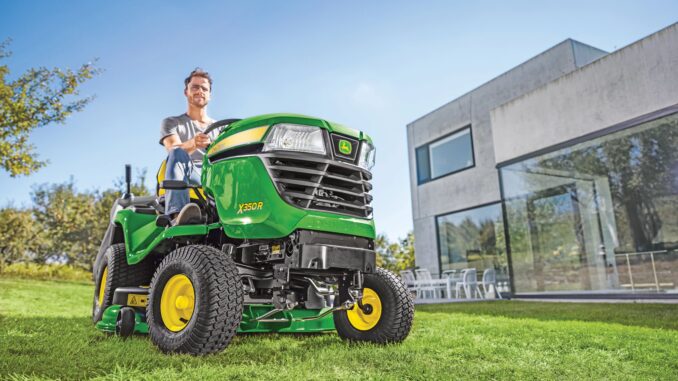
The John Deere 445 is a heavy-duty garden tractor built for homeowners who want more capability than a basic lawn tractor, with a 617 cc liquid-cooled twin-cylinder engine, hydrostatic foot control, and compatibility with mower decks and other yard attachments. This guide is written for DIY owners in the USA and Canada who need practical help with John Deere 445 repair, troubleshooting, maintenance, parts lookup, diagrams, and manuals.
Unlike lighter entry-level models, the John Deere 445 sits in Deere’s premium lawn and garden tractor class, so owners often keep them for many years and face a mix of age-related repairs, routine maintenance, and attachment setup issues. The aim here is to start with the symptom you can see, separate realistic DIY jobs from dealer-level work, and show where to find the right part numbers and documentation before ordering anything.
John Deere 445 model overview
The John Deere 445 is a lawn and garden tractor from the 400-series family, powered by a Kawasaki FD620D 22 hp liquid-cooled gasoline engine with electric start and a 20-amp charging system. Deere lists a two-pedal hydrostatic transmission, replaceable engine oil and fuel filters, and a replaceable air-cleaner element with pre-cleaner as core service features for the machine.
For most owners, the John Deere 445 is used on larger home properties where better traction, smoother mowing, and stronger attachment capability matter more than entry-level price. It is commonly chosen by owners who mow regularly, tow light yard equipment, or run seasonal attachments and want a machine that can hold up to heavier residential use.
General overview of the John Deere 445
Within the Deere lineup, the John Deere 445 sits above basic D and S series lawn tractors because it was designed as a true garden tractor with more robust frame, steering, drivetrain, and hydraulic capability. Key systems that matter for repairs are the Kawasaki liquid-cooled engine and fuel system, the mower-drive system, the hydrostatic transaxle, and the electrical and safety-interlock circuits.
Common service parts owners regularly buy for the John Deere 445 include the fuel filter AM116304, engine oil filter M806418, transaxle oil filter AM116156, foam air filter M76076, paper air filter MIU11376, and low-viscosity Hy-Gard transmission oil. Depending on deck size and setup, owners also commonly replace blades, deck belts, battery, spark plugs, and occasional mower or cooling-system items as these tractors age.
Troubleshooting the John Deere 445 by symptom
The best way to diagnose a John Deere 445 is to start with the exact symptom instead of guessing at parts. A no-start problem, weak mowing performance, vibration, overheating, loss of drive, or dead electrical function each points to a different group of checks and helps avoid wasting money on the wrong components.
Main symptom groups for the John Deere 445 are:
-
Starting issues, such as crank-no-start, slow cranking, or no crank at all.
-
Running issues, including rough idle, surging, power loss, or stalling under load.
-
Cut-quality problems, such as uneven cut, scalping, poor discharge, or belt slip.
-
Vibration and noise, often tied to blades, pulleys, bearings, driveline wear, or engine mounting issues.
-
Overheating and leaks, especially important on a liquid-cooled tractor like the John Deere 445.
-
Transmission and drive problems, including weak movement, inconsistent speed, or filter and fluid neglect.
-
Electrical and safety-switch faults, including PTO, seat, brake, start-circuit, and charging issues.
John Deere 445 emergency repair needs
Some John Deere 445 problems need immediate attention because they create a safety risk or can quickly damage expensive components. The main examples are fuel leaks, overheating, heavy vibration, coolant-system faults, blade or deck hardware failures, and any transmission issue that worsens rapidly under use.
John Deere 445 starting issues
When the John Deere 445 will not crank or will not fire, the risk is usually inconvenience first, but repeated cranking with poor voltage or bad fuel can mask the real cause and stress the starter and electrical system. This tractor uses electric start and a battery-based starting circuit, so battery condition, cable connections, switches, and fuel delivery all matter.
Common causes:
-
Weak battery or poor cable connections.
-
Dirty or failed fuel filter AM116304.
-
Safety switch or PTO/brake/seat interlock fault.
-
Ignition, spark plug, or fuel-delivery problem.
Basic checks:
-
Confirm the battery is charged and both terminals are clean and tight.
-
Make sure the PTO is off and the brake and seat/start conditions are correct.
-
Inspect the fuel level, fuel freshness, and inline fuel filter condition.
-
Check for spark and inspect plugs only after ruling out obvious safety-switch and battery faults.
John Deere 445 cut-quality problems
Poor mowing results on a John Deere 445 usually show up as streaks, ragged grass tips, uneven height, or weak discharge from the deck. These issues matter because many owners blame the tractor engine when the real cause is usually deck setup, blade condition, or belt wear.
Common causes:
-
Dull, bent, or unbalanced blades.
-
Worn or slipping deck belt.
-
Incorrect deck level.
-
Built-up grass under the deck housing.
Basic checks:
-
Inspect blades for edge wear, bends, and balance problems.
-
Clean the underside of the deck before diagnosing airflow-related complaints.
-
Check belt condition and pulley alignment.
-
Level the deck side-to-side and front-to-rear to spec using a deck gauge if available.
John Deere 445 vibration and noise
Strong vibration on a John Deere 445 should be treated as urgent because continued use can damage spindle bearings, pulleys, engine mounts, or deck hardware. A tractor that suddenly becomes noisy after blade impact or belt failure should not be used again until inspected.
Common causes:
-
Bent or badly worn blades.
-
Failing spindle or pulley bearings.
-
Loose deck hardware or engine-mount hardware.
-
Driveline or PTO-related wear.
Basic checks:
-
Stop mowing immediately if vibration starts suddenly.
-
Inspect blades and blade bolts before running the deck again.
-
Spin pulleys and spindles by hand with the engine off and belt removed if needed.
-
Check for looseness around the deck shell and mounting points.
John Deere 445 overheating and leaks
Because the John Deere 445 uses a liquid-cooled Kawasaki engine, overheating is more serious than on a simple air-cooled mower and should never be ignored. Coolant leaks, clogged screens, dirty radiator fins, or loss of circulation can quickly lead to expensive engine damage.
Common causes:
-
Dirty radiator or debris blocking airflow.
-
Low coolant or a leaking radiator/hose.
-
Failing water pump or circulation issue.
-
Oil or fuel leaks that create mess, smell, and fire risk.
Basic checks:
-
Let the engine cool fully before inspecting the cooling system.
-
Clean external debris from screens and radiator area.
-
Check for visible coolant seepage, hose damage, or radiator damage.
-
Do not keep running the tractor hot while “testing” because that can turn a minor cooling issue into major engine repair.
John Deere 445 transmission and drive problems
If a John Deere 445 moves weakly, surges, or loses pulling power, start with fluid and filter history before assuming the hydrostatic unit is worn out. Deere specifies low-viscosity Hy-Gard transmission oil and a replaceable transaxle filter, and neglected service can cause poor performance.
Common causes:
-
Old or incorrect transaxle fluid.
-
Restricted transaxle oil filter AM116156.
-
Linkage adjustment issues.
-
Internal hydrostatic wear.
Basic checks:
-
Verify the correct fluid type was used in the transmission.
-
Check service history for filter and fluid changes.
-
Inspect external linkage for looseness or binding.
-
If performance remains poor after service, move toward advanced diagnosis rather than continuing heavy use.
John Deere 445 electrical problems
Electrical faults on the John Deere 445 often show up as no-crank complaints, PTO engagement problems, weak charging, or intermittent shutdowns. Since Deere lists a 12-volt electric-start system with a 20-amp alternator, both charging and interlock integrity matter for dependable operation.
Common causes:
-
Weak battery or poor grounds.
-
Faulty PTO, brake, or seat switch.
-
Charging problem in alternator or regulator circuit.
-
Corroded connectors on an older machine.
Basic checks:
-
Inspect battery voltage and cable condition first.
-
Check visible connectors for corrosion, looseness, or heat damage.
-
Confirm safety switches are being actuated correctly.
-
Test charging output before replacing electrical parts at random.
DIY or dealer for the John Deere 445
The practical DIY line on a John Deere 445 is fairly clear: routine maintenance, filters, blades, belts, battery, and basic deck work are realistic for most owners, while hydrostatic internal work, engine internal repair, advanced electrical diagnosis, and cooling-system tear-down are better left to an experienced technician. Because the tractor is older and more sophisticated than many box-store mowers, accurate diagnosis matters more than simply swapping parts.
Good DIY jobs
-
Engine oil and oil filter service.
-
Fuel filter, air filter, and spark plug replacement.
-
Blade removal, sharpening, balancing, and replacement.
-
Deck cleaning, leveling, and common belt replacement.
-
Battery replacement and visible cable cleaning.
Advanced DIY or dealer jobs
-
Hydrostatic transmission diagnosis beyond fluid and filter service.
-
Cooling-system leak tracing, radiator replacement, or circulation-component repair.
-
Engine compression, internal valve, or head-gasket work.
-
Tricky interlock and wiring-fault diagnosis.
Skill level guide
-
Beginner: Filters, battery, blades, deck cleaning, visual inspections.
-
Intermediate: Belt replacement, deck leveling, spark plugs, basic electrical testing.
-
Advanced: Cooling-system repair, hydrostatic diagnosis, engine internal repair, wiring-fault tracing.
John Deere 445 parts, OEM vs aftermarket, and ordering info
Before ordering John Deere 445 parts, gather the full model designation, the tractor Product Identification Number, the engine model and serial, and the deck or attachment size actually fitted to the machine. That matters because older Deere tractors often have mid-production changes, multiple deck options, and engine-specific parts that can look similar online but not cross correctly.
OEM parts are the safest choice for belts, safety switches, fit-sensitive cooling and driveline parts, and anything where exact dimensions affect operation. Aftermarket parts can work well for common consumables such as some filters, blades, and batteries, but only when the cross-reference is clear and the supplier explicitly lists the John Deere 445.
John Deere 445 diagrams and manuals
For the John Deere 445, the most useful documents are the operator’s manual, Deere’s online parts catalog, the technical/service manual, and a model-specific maintenance parts page. Each one answers a different question, so owners get the best results by using them together instead of relying on a single source.
-
John Deere operator’s manual/specifications for official specs, maintenance sections, troubleshooting headings, and service intervals.
-
John Deere Parts Catalog for exploded diagrams and serial-sensitive parts lookup, although availability can vary by region and access state.
-
John Deere 445 maintenance guide at Green Farm Parts for quick service-part references and routine maintenance items.
-
Kawasaki FD620D technical downloads for engine-specific technical downloads when the issue is clearly engine-related rather than tractor-related.
How to locate John Deere 445 serial and engine numbers
These numbers matter because the right John Deere 445 part is often tied to serial range, engine specification, or deck variation. A seller can only cross-check accurately if you supply the exact identification information instead of just saying “445 mower.”
-
Park the tractor safely, shut it off, and clean dirt from the frame and engine areas before looking for tags.
-
Find the tractor Product Identification Number plate on the machine frame in the identification area described in the operator documentation.
-
Record the full model and PIN exactly as shown, including any serial-range detail.
-
Locate the engine model and serial information on the Kawasaki engine itself so engine parts can be matched correctly.
-
If a mower deck or attachment is fitted, record the deck size and any separate identification tag before ordering belts, blades, or spindle-related parts.
Buying John Deere 445 parts online and in stores
The best strategy is to identify the part from a diagram first, then confirm it against your John Deere 445 PIN, engine model, and deck size before buying. That approach reduces the most common ordering mistake on older Deere tractors: buying a part that fits the series but not the exact machine version.
-
Online: Good for price checking and diagram-based ordering, especially through John Deere Parts Catalog, Green Farm Parts, and Shop Deere.
-
Dealer counter: Best for serial-sensitive items, safety switches, cooling parts, and any order where the old part number has been superseded.
-
Retail stores: Fine for common consumables such as some batteries, spark plugs, and filters when the packaging clearly lists the John Deere 445 or the exact OEM cross-reference.
Step-by-step John Deere 445 fitting guide
These are the most useful high-impact John Deere 445 DIY jobs because they fix common running, cutting, and reliability complaints without going deep into dealer-level repair.
Replace the John Deere 445 fuel filter
A restricted fuel filter can cause hard starting, surging, or power loss under load.
-
Park safely, shut off the engine, and allow hot engine parts to cool.
-
Clamp or control fuel flow if needed, then remove the old inline filter carefully.
-
Match the new AM116304 filter to the old part and note the fuel-flow direction.
-
Install the new filter, secure the lines, and check carefully for leaks before starting.
-
Start the engine and verify smooth running under throttle.
Service the John Deere 445 air filter
A dirty air filter can reduce power, increase fuel use, and make the engine run poorly in dusty mowing conditions.
-
Open the air-cleaner housing and remove the foam pre-cleaner and paper element.
-
Inspect both elements for heavy dirt, damage, or oil contamination.
-
Replace the foam element M76076 and paper element MIU11376 if they are dirty or beyond reuse.
-
Clean the housing carefully so debris does not enter the intake.
-
Reassemble the housing securely before running the engine.
Change the John Deere 445 engine oil and filter
Fresh oil and a correct oil filter help the liquid-cooled Kawasaki engine last longer and maintain stable lubrication.
-
Warm the engine briefly so the oil drains more completely, then shut it off safely.
-
Drain the old oil into a suitable pan and remove the old filter.
-
Install the new M806418 filter and refill with the correct engine oil listed for the tractor.
-
Start the engine briefly, shut it off, and recheck the oil level and for leaks.
-
Dispose of used oil and filter properly.
Replace or sharpen John Deere 445 blades
Blade service is one of the fastest ways to fix ragged cutting, striping problems, and vibration caused by damaged cutting edges.
-
Disable the machine safely and secure the deck for access before touching blades.
-
Remove each blade and inspect for cracks, bends, and edge wear.
-
Sharpen and balance reusable blades, or replace any blade that is bent or badly worn.
-
Reinstall with correct hardware tightness and consistent blade orientation.
-
Test cut quality only after confirming there is no abnormal vibration.
Maintenance for the John Deere 445
Regular maintenance prevents the majority of recurring John Deere 445 complaints, especially starting trouble, weak mowing performance, overheating, hydrostatic drive issues, and age-related electrical faults. Deere’s service chart and common maintenance lists show that filters, fluids, cooling cleanliness, and deck condition are the big reliability drivers on this tractor.
Focus areas:
-
Starting reliability, keep battery connections clean and replace fuel and air service items on schedule.
-
Cut quality, keep blades sharp, the deck clean, and the belt in good condition.
-
Fire and overheating prevention, remove debris and keep the cooling system and engine area clean.
-
Drive performance, service the hydrostatic filter and use the correct low-viscosity Hy-Gard fluid.
-
Electrical reliability, inspect charging condition and aging connectors before intermittent faults become no-start problems.
John Deere 445 maintenance schedule
The official John Deere 445 service chart should always be the starting point, especially because this tractor uses both engine-service and hydrostatic-service intervals. In hard use, dust, heat, or rough terrain, maintenance frequency should increase beyond the basic schedule.
Daily or before each use
-
Check engine oil level.
-
Check fuel supply and inspect for obvious leaks.
-
Inspect cooling areas and remove debris buildup.
-
Check tires, controls, and general operating condition.
-
Clean heavy grass buildup from deck and tractor as needed.
Every 8 hours or similar routine interval
-
Grease points listed in the lubrication section where applicable.
-
Inspect mower components for loose hardware or visible wear.
-
Check blades and underside cleanliness if mowing conditions are heavy.
Every 25 hours
-
Inspect air-cleaner components more closely in dusty conditions.
-
Check battery terminals and visible wiring condition.
-
Recheck deck level and belt condition if cut quality changes.
Every 50 hours or yearly
-
Change engine oil and replace the oil filter.
-
Service the transaxle fluid and filter at the intervals called for in the schedule.
-
Lubricate key chassis and mower points listed by Deere.
Every 200 hours
-
Replace air filter elements.
-
Replace engine oil and transmission service items if due under the chart and usage pattern.
-
Inspect cooling-system components and hoses carefully on aging machines.
Every 250 hours
-
Replace the fuel filter AM116304.
-
Review broader service history so deferred items do not stack up into multiple failures.
Seasonal checklist
-
Spring: Change overdue service items, sharpen blades, clean cooling areas, and inspect the battery before the mowing season starts.
-
Mid-season: Clean the deck often, watch for belt wear, and inspect fuel and air service parts if power drops.
-
Fall or end of season: Clean thoroughly, address leaks, record needed winter repairs, and store the machine according to operator guidance.
Repair, upgrade, or replace the John Deere 445?
For many owners, the John Deere 445 is worth repairing when the chassis, transmission, and deck are still fundamentally sound, because it remains a premium older garden tractor with stronger capability than many newer lightweight machines. The decision shifts toward replacement when major engine, hydrostatic, cooling, and deck-spindle problems stack up at the same time and parts plus labor exceed the value of a reliable working machine.
Repair if
-
The issue is limited to maintenance parts, blades, belts, battery, filters, or a straightforward deck repair.
-
The tractor starts, drives, and cools properly aside from one isolated fault.
-
The frame, steering, and deck shell are still solid.
Upgrade if
-
You need different deck or attachment capability rather than major repair.
-
The machine is sound but your property size or mowing demands have changed.
-
You want better parts support through a newer Deere platform while keeping similar capability.
Replace if
-
The tractor has serious engine, hydrostatic, and deck repair needs all at once.
-
Overheating or neglected maintenance has already led to repeated major failures.
-
You cannot source key model-specific parts at sensible cost in your area.
John Deere 445 troubleshooting FAQ
1. Why will my John Deere 445 not start?
Most no-start complaints come down to battery condition, dirty cable connections, fuel-delivery restriction, or a safety-interlock issue involving the brake, PTO, or seat circuit. Start with the basics first because older tractors often suffer from low voltage and connection corrosion before they suffer from major engine failure. If it cranks well but does not fire, focus next on fuel flow, spark, and stale fuel.
2. Why does my John Deere 445 crank but not fire?
A crank-no-start condition usually points to missing fuel or spark rather than a bad starter. Check fuel freshness, the AM116304 fuel filter, visible fuel flow, and spark-plug condition before assuming a deeper engine problem. Also verify that no interlock issue is cutting ignition or fuel-related operation.
3. Why is my John Deere 445 hard to start when cold?
Cold-start trouble often comes from weak battery output, marginal ignition components, or fuel restriction that becomes more noticeable after the machine sits. A partially blocked filter, old plugs, or low cranking speed can all make the engine seem worse than it is. Keeping the battery and basic tune-up items in good condition usually helps more than random parts replacement.
4. Why does my John Deere 445 start and then die?
If the engine fires briefly and then quits, look at fuel delivery first. A restricted inline filter, stale fuel, or debris in the supply system can allow initial combustion and then starve the engine under continued running. Some intermittent electrical faults can do the same thing, especially on older wiring and safety circuits.
5. Why is my John Deere 445 running rough?
Rough running usually comes from air-fuel imbalance, ignition weakness, or maintenance neglect. Dirty air filters, restricted fuel flow, worn spark plugs, or engine-specific issues on the Kawasaki FD620D should all be considered in order from simplest to hardest. Diagnose by symptom pattern, such as rough idle only versus rough under load.
6. Why does my John Deere 445 lose power while mowing?
Power loss under mowing load often points to restricted fuel flow, dirty air filtration, dull blades increasing load, or a deck packed with wet grass. The tractor may feel like an engine problem when the actual cause is blade drag or a slipping mower belt. Clean the deck, inspect blades, and review filter service history before moving toward deeper engine diagnosis.
7. Why is my John Deere 445 surging?
Surging often means inconsistent fuel delivery or an intake-related issue. Start with the easiest checks such as fuel condition, filter restriction, and air-cleaner service because those are common and relatively cheap fixes. If the problem remains, more advanced carburetion or engine diagnosis may be needed.
8. Why is my John Deere 445 smoking?
Smoke color matters because it helps separate oil-burning, over-fueling, and overheating-related problems. Persistent smoke should prompt checks of oil level, air filter condition, cooling health, and engine behavior under load. Heavy continuous smoke moves the problem closer to advanced engine diagnosis than basic maintenance.
9. Why does my John Deere 445 overheat?
The John Deere 445 uses a liquid-cooled engine, so overheating usually involves airflow blockage, low coolant, radiator problems, or circulation faults rather than simple fin cleaning alone. Debris packed into screens and radiator areas is common in mowing work and should be ruled out early. Do not continue operating an overheating tractor just to “see if it clears up.”
10. Why is my John Deere 445 leaking coolant?
Coolant loss usually points to a hose, connection, radiator, or another cooling-system component rather than a routine maintenance issue. Because overheating damage can escalate quickly, any visible coolant leak should be repaired before continued use. The AM121496 radiator is one known replacement part listed for the 445 family when the core itself is damaged.
11. Why is my John Deere 445 leaking fuel?
Fuel leaks are both a reliability and fire-safety issue, so they should be treated as immediate repairs. Common areas include old fuel lines, clamps, and filter connections around the AM116304 inline filter. Never keep mowing with a visible fuel seep or strong gasoline smell around a hot engine.
12. Why is my John Deere 445 battery not charging?
Deere lists a 12-volt electric-start system with a 20-amp alternator, so chronic battery drain can come from either charging failure or repeated short-run use with a weak battery. Check battery condition and cable health first, then verify charging output before replacing components blindly. On older machines, corrosion and connection resistance are common contributors.
13. Why does my John Deere 445 click but not crank?
A clicking sound usually means the starting circuit is trying to work but battery voltage or cable integrity is insufficient. It can also mean starter-solenoid or connection trouble, but battery and ground checks should come first because they are the most common and easiest to verify. Clean connections and confirm proper battery condition before moving deeper.
14. Why does my John Deere 445 shut off when I engage the PTO?
This usually points to a safety-switch issue, electrical fault, or a deck load problem severe enough to drag the engine down. Start by confirming seat and PTO-related interlock operation, then inspect the deck for seized spindle or belt problems. A mower deck that turns roughly by hand needs attention before further PTO testing.
15. Why are the blades not engaging on my John Deere 445?
Blade engagement issues can come from the PTO system, belt failure, deck seizure, or an electrical control problem. Check whether the PTO system is being commanded correctly, then inspect the deck belt and rotating components for obvious damage. Avoid assuming the clutch is bad until the simpler causes are ruled out.
16. Why does my John Deere 445 cut unevenly?
Uneven cutting usually comes from deck-level error, tire-pressure mismatch, or worn blades rather than engine trouble. A deck that is even slightly out of level can leave a visible stripe on every pass. Check blade condition and deck setup before replacing cutting components at random.
17. Why does my John Deere 445 leave uncut strips?
Uncut strips are commonly caused by dull blades, weak airflow from deck buildup, or overlap technique that is too narrow for conditions. In heavier grass, even a capable tractor will struggle if the deck is dirty and the blades are blunt. Clean the deck, sharpen or replace blades, and retest before blaming belt drive.
18. Why is the cut from my John Deere 445 ragged?
Ragged grass tips usually mean the blades are dull rather than the tractor itself being at fault. Sharp, balanced blades cut cleaner, reduce stress on the deck system, and improve the finished appearance of the lawn. If ragged cutting continues after blade service, inspect deck speed and belt condition next.
19. Why does my John Deere 445 scalp the lawn?
Scalping points to deck-height choice, deck-level problems, or mowing ground conditions that exceed the setup. Low anti-scalp protection, uneven ground, and an improperly adjusted deck can all contribute. Raising height slightly and verifying level often helps before any parts are replaced.
20. Why is my John Deere 445 vibrating when mowing?
Mowing vibration usually comes from bent blades, blade imbalance, worn spindle bearings, or loose deck hardware. This should be treated seriously because continuing to run the deck can damage related components. Shut the machine down and inspect the cutting system before using it again.
21. Why is my John Deere 445 making a grinding noise?
Grinding sounds often indicate bearing wear, pulley trouble, or contact between damaged rotating parts. The sound may come from the deck, PTO area, or driveline, so isolate whether it occurs only with blades engaged or all the time. Any grinding that worsens quickly should be handled before continued operation.
22. Why does my John Deere 445 throw belts?
A belt that comes off repeatedly usually means pulley misalignment, worn idlers, wrong belt fit, or seized rotating parts. Replacing the belt without checking pulley condition often leads to the same failure again. Inspect the whole belt path and component condition before fitting another belt.
23. Why does my John Deere 445 keep breaking blades or damaging the deck?
Repeated blade damage usually means repeated impact with hidden objects, poor blade condition, or loose deck hardware allowing movement. A bent blade can also create vibration that damages nearby components if it is not caught early. Stop and inspect thoroughly after any hard strike rather than finishing the mowing session.
24. Why is my John Deere 445 hydrostatic drive weak?
Weak hydrostatic performance often comes from neglected fluid and filter service, incorrect oil, linkage problems, or internal transmission wear. Deere specifies low-viscosity Hy-Gard and a replaceable transaxle filter, so service history matters a great deal. If fresh correct fluid and filter do not help, deeper diagnosis is justified.
25. Why does my John Deere 445 move slowly uphill?
Slow uphill travel can be a sign of hydrostatic inefficiency, low traction, or both. Start with tire condition, fluid/filter history, and whether the tractor behaves the same on level ground. A performance loss only under load often points back to transmission condition rather than simple control adjustment.
26. Why does my John Deere 445 jerk when driving?
Jerky movement can come from linkage issues, fluid problems, or internal hydrostatic wear. If the problem appeared after poor service history or wrong oil, correcting that is the first logical step. If it persists, advanced hydrostatic diagnosis is more appropriate than repeated trial-and-error part changes.
27. Why are the safety switches on my John Deere 445 causing problems?
Safety switches commonly create intermittent no-start, shutoff, or PTO complaints on aging tractors because connectors corrode and switch action wears over time. The seat, brake, and PTO circuits should all be checked methodically rather than bypassed casually. Correct diagnosis matters because one faulty switch can mimic several different problems.
28. What oil does a John Deere 445 use?
Deere lists John Deere TURF-GARD engine oil in the operator specifications, and maintenance guides commonly reference Turf-Gard 10W-30 for service use. Always verify the current manual guidance and fill level rather than relying only on hearsay or what another Deere model uses. Using the correct oil and changing it on schedule protects the Kawasaki engine over the long term.
29. What transmission fluid does a John Deere 445 use?
Deere specifies John Deere Low Viscosity HY-GARD transmission oil for the John Deere 445 transaxle. That matters because hydrostatic units are sensitive to oil type and condition. If the wrong fluid was used, correcting it may improve drive quality before any major repair is considered.
30. How often should I change the oil on a John Deere 445?
Maintenance guides for the 445 commonly list engine oil and oil filter service at 50-hour and 200-hour intervals, depending on the item and schedule context. The operator documentation should be treated as the final authority for the exact chart used on your machine. Hard conditions such as dust and heat justify closer attention and sometimes shorter service intervals.
31. How often should I replace the fuel filter on a John Deere 445?
A commonly listed maintenance interval for the AM116304 fuel filter on the John Deere 445 is every 250 hours. In practice, contamination, stale fuel, or poor running symptoms may justify earlier replacement. It is a relatively simple service item, so many owners replace it proactively when chasing fuel-related issues.
32. How often should I replace the air filter on a John Deere 445?
The Green Farm Parts maintenance guide lists the foam and paper air filters at a 200-hour interval for the John Deere 445. In dusty mowing conditions, inspection and replacement may need to happen sooner because airflow restriction affects power and fuel quality. Always replace damaged elements rather than trying to stretch service life too far.
33. Is the John Deere 445 worth repairing?
In many cases, yes, because the John Deere 445 is a higher-spec older garden tractor with stronger capability than many modern entry-level lawn tractors. It is usually worth repairing when the problem is limited to maintenance parts, deck work, or one contained system fault. It becomes a harder case when engine, hydrostatic, and cooling repairs all arrive together.
34. Where can I find a John Deere 445 parts diagram?
The main source is the official John Deere Parts Catalog, which is designed for exploded diagrams and part lookup by model and serial information. A Deere-focused aftermarket site such as Green Farm Parts is also useful for routine maintenance part identification. For best results, use the diagram together with your tractor PIN and deck information.
35. Where can I find a John Deere 445 manual?
The operator manual material is available through Deere’s manuals site, and service-manual references for the 425, 445, and 455 family are commonly available through technical manual listings. The operator manual is best for routine service, controls, and maintenance charts, while the technical manual goes deeper into repair procedures. Owners often need both when diagnosing an older machine thoroughly.
John Deere 445 hydraulic system troubleshooting guide
The John Deere 445 uses a gear-type hydraulic pump driven off the engine to supply oil for power steering and the rockshaft/implement circuits, with pressure controlled through valves and reliefs built into the tractor’s hydraulic block. If pressure or flow drops anywhere in that loop, you see slow or no lift, weak steering, noisy pump, or hot oil.
Key hydraulic components owners should know about:
-
Hydraulic pump driven from engine
-
Suction path through transmission/hydraulic oil and filter
-
Main hydraulic valve block with relief valves and spools
-
Lines to power steering and rockshaft/front outlets
-
Return to transmission case
Symptom-based hydraulic troubleshooting on a 445
Always start with the symptom the owner can see and feel, not with the assumption “the pump is bad.”
Main hydraulic symptom buckets:
-
No lift or very weak lift on 3‑point/front attachments
-
Slow or jerky lift/drop
-
Heavy steering / no power steering assist
-
Hydraulic pump whine, growl or cavitation noise
-
External hydraulic oil leaks
-
Hydraulic oil running very hot
Safety basics before you touch anything
Hydraulic oil is hot and under pressure, and implements can fall suddenly if you remove the wrong line.
-
Park on level ground, lower all implements, shut engine off
-
Chock wheels and set brake
-
Release any trapped pressure per manual before cracking lines
-
Never put hands near suspected pinhole leaks (risk of injection)
1. John Deere 445 – no lift / very weak lift
What it looks like: Hitch or front attachment will not raise, or only creeps slowly with the engine revved high. Power steering may also feel weak when this happens.
Common causes:
-
Low hydraulic/transaxle oil level
-
Clogged or incorrect hydraulic/transaxle filter
-
Air in system after service
-
Sticking control valve spool
-
Relief valve stuck open or misadjusted
-
Worn pump (less common than people think)
Basic owner checks:
-
Check hydraulic/transaxle oil level with tractor on level ground and oil at the correct temp range.
-
Confirm the correct low‑viscosity Hy‑Gard type oil and the correct filter were used at last service.
-
Inspect for visible leaks at hoses, valve block and around pump that could indicate loss of oil and air ingress.
-
With engine running at mid‑throttle, try raising and lowering the hitch repeatedly to purge minor air and feel for any change. If nothing improves, further diagnosis or dealer testing of pump pressure is the next step.
DIY vs dealer here: Level and filter checks are fine for owners; live-pressure tests at the SCV/rockshaft ports or relief-valve work are dealer/advanced-DIY territory.
2. Slow or jerky lift on John Deere 445 hydraulics
What it looks like: Hitch or attachment lifts but in steps or “surges,” especially under load; may drop faster or slower than normal.
Common causes:
-
Borderline low oil level or aerated oil
-
Partially clogged filter
-
Sticky control valve spool
-
Internal wear in cylinders/valves causing bypass
-
Air in system after a component was replaced
Basic owner checks:
-
Verify oil level and correct spec fluid first. Low oil pulls air and causes jerky movement.
-
If the filter is old or questionable, replace with the correct part and re-test.
-
Cycle the control several times from full down to full up with moderate engine speed to help purge minor air.
-
If lift remains jerky while steering feels normal, suspected cylinder or valve issues should be left to a shop that can do pressure and leakage tests.
3. Heavy steering / no power steering assist
What it looks like: Steering feels like manual steering; wheel is hard to turn at low speed or when stationary.
Common causes:
-
Low hydraulic oil level or severe leak
-
Air in steering circuit after work on steering lines/pump
-
Internal failure in steering valve or steering cylinder
-
Pump output too low under load
Basic owner checks:
-
Confirm hydraulic/transaxle oil level and look carefully for leaks around the steering lines and cylinder.
-
If the steering went heavy right after hydraulic work, air trapping is suspect and cycling full left-to-right lock with engine running (and attachment lowered) may help bleed minor air.
-
If there is no improvement and lift is also weak, suspect overall system flow/pressure or pump and seek professional testing.
4. John Deere 445 hydraulic pump noise (whine/growl)
What it looks like: High-pitched whine or growling noise from the pump / transmission area, worse at higher rpm.
Common causes:
-
Low oil level causing cavitation
-
Wrong oil type or very old oil full of contaminants
-
Air leaks on suction side (loose clamps, cracked pick-up tube)
-
Pump wear causing internal cavitation
Basic owner checks:
-
Check level and top off with correct Hy‑Gard if low, then re-test noise.
-
If the oil is dark, smells burnt or has visible debris, schedule full drain, correct oil refill and filter change.
-
After service, run at moderate rpm and see whether noise improves as air purges. Persistent severe noise suggests pump or suction-side faults that warrant shop diagnosis.
5. External hydraulic oil leaks on a 445
What it looks like: Spots of oil on ground, wet hoses/valves, or misting around lines.
Common leak sources:
-
Hose crimps or cracked rubber sections
-
O‑rings where lines connect to valve block or cylinders
-
Around relief-valve plugs and fittings
-
Pump shaft seal or rear case seals
Basic owner checks:
-
Clean the area, run the tractor briefly, and see where fresh oil appears.
-
Tighten obviously loose non‑aluminum fittings gently; do not over-torque cast housings.
-
Replace damaged hoses and simple O‑ring joints as DIY; any leak tied to cast housings, main case seals or steering valve internals should go to a dealer or hydraulic shop.
6. Hydraulic oil overheating
What it looks like: Transmission/hydraulic case very hot, oil smells burnt, hydraulic functions fade after warmup.
Common causes:
-
Wrong oil grade causing excess friction
-
Running with low oil level
-
Relief valve stuck partially open, constantly dumping oil
-
Internal slip/bypass in valves/cylinders creating constant heat load
Basic owner checks:
-
Verify oil grade and level; correct if wrong or low and monitor temperature change over several uses.
-
Stop using tractor if the case is too hot to touch and smell suggests burnt oil; this scenario warrants dealer-level testing of relief valve setting and internal bypass.
Quick decision guide: what an owner should and should not do
Good DIY hydraulic tasks on a John Deere 445:
-
Check and correct hydraulic/transaxle oil level
-
Confirm and change oil and hydraulic filter on schedule
-
Inspect and replace leaking hoses or visible O‑rings on external joints
-
Basic bleed (cycling controls/steering) after filter or hose replacement, per manual
Leave to dealer/experienced tech:
-
Adjusting or replacing relief valves, including the units built into the hydraulic control block
-
Testing and rebuilding pump, steering valve, main control valve, or cylinders
-
Diagnosing internal bypass and pressure issues using gauges
-
Chasing complex heat issues or multiple hydraulic symptoms that persist after basic service
Common issues with Kawasaki FD620D engines in garden tractors
Kawasaki FD620D engines in garden tractors (John Deere 4×5 series, F‑mowers, etc.) tend to fail in a few repeatable ways: cooling/overheat damage, lubrication starvation, ignition/connector faults, and fuel/solenoid issues.
Below is a concise, symptom-first guide you can turn into a reusable “FD620D known issues” block across models.
1. Overheating and coolant-related problems
Liquid‑cooled FD620D engines rely on clear airflow and a healthy water pump and radiator; when those are neglected, they overheat and can seize.
Typical issues:
-
Overheating under load due to clogged radiator fins and screens
-
Coolant leaks from hoses, clamps, or radiator core
-
Water pump failure leading to poor coolant circulation
Owner-facing points:
-
Heat-related failure is one of the biggest killers of FD620D engines; once they have been run very hot, internal damage is common.
-
Many “mystery” power-loss complaints are early-stage overheating or marginal cooling, not just carburetion.
2. Lubrication starvation and bottom-end damage
Several FD620D field stories involve engines that were run low on oil and then spun main/balance shaft bearings or locked up.
Common patterns:
-
Engine suddenly stops with mechanical noise; will not turn or has very low compression afterwards
-
Evidence of spun bearing or bushing under the flywheel/front of engine after teardown
Why it matters:
-
Once a bearing has spun in the case, repair usually requires full teardown and machining or replacement, rather than simple top‑end work.
-
Many of these failures are preventable with basic oil checks and timely changes, but once oil starvation occurs, engines often become non‑economic to repair for typical owners.
3. Ignition and connector issues (runs on one cylinder, intermittent power)
FD620D ignition problems often show up as the engine running on one cylinder, losing power intermittently, or fading in and out with vibration.
Observed issues:
-
Engine that randomly drops a cylinder, then comes back when wiring/connector is touched or moved
-
Loose or failing ignition connectors on the liquid‑cooled twins causing misfire, loss of power, or “sometimes it runs, sometimes it doesn’t” complaints
Key takeaways:
-
Poor electrical connections at the ignition module/coil wiring are a known weak point; wiggling connectors during operation can reproduce the fault.
-
A practical fix many techs use is to cut out suspect connectors and replace with quality crimp “pull-apart” connectors or butt-splice connections, one wire at a time to avoid mix-ups.
4. Fuel shutoff solenoid and lean/stop issues
Owners and techs report that the FD620D will sometimes run lean, shut off randomly, or starve for fuel due to the 12‑volt shutoff solenoid on the carburetor.
Common symptoms:
-
Engine runs, then leans out or dies as if fuel is being cut
-
Machine restarts after cooling or after fiddling with wiring to the solenoid
Why this matters:
-
On an otherwise well‑maintained engine, the solenoid is an easy-to-miss electrical/fuel interface fault that can mimic carburetor or ignition problems.
-
Verifying proper 12‑volt supply to the solenoid and confirming full plunger movement is an important diagnostic step before a full carb rebuild.
5. General loss of power / won’t reach rated RPM
FD620D engines that feel weak but still run can suffer from a mix of normal wear and setup issues.
Typical complaints:
-
Will not reach no-load rated rpm or maintain rpm on a grade with mower engaged
-
Regains speed when blades are turned off, but not to the expected level
Common causes mentioned in field reports:
-
Misadjusted governor or throttle linkage preventing full travel
-
Valve clearances not checked/adjusted, leading to reduced breathing and power
-
More basic items like air filter restriction, fuel issues, and early cooling problems still need to be ruled out first.
6. “Runs fine for 20–30 minutes, then acts up”
A recurring FD620D pattern is engines that run well cold, then start missing, stalling, or losing power after 20–30 minutes.
Patterns seen:
-
Time‑based failure rather than immediate trouble, suggesting heat, ignition, or fuel‑delivery-related causes
-
Problems that reset if the engine cools down
Likely contributors:
-
Heat‑soak effects on ignition components or coils
-
Marginal cooling or radiator cleanliness causing subtle overheating
-
Fuel delivery and carb issues that show up only once demand and engine temperature increase
7. Failure “end games” owners should recognise
From user and tech reports across FD620D applications:
-
Sudden lock-up, metallic noise, and zero compression usually point toward serious internal failure (often oil-starvation or major overheat) rather than simple tune‑up issues.
-
Running long‑term on one cylinder or with significant misfire can contribute to uneven heat and additional mechanical stress.
For your content, you can safely emphasise:
-
Cooling system cleanliness and oil level as critical for FD620D longevity
-
Checking ignition connectors and the carb shutoff solenoid early in any “runs then dies / runs on one cylinder” workflow
-
Valve and governor checks for chronic low‑power complaints after the basics are done