
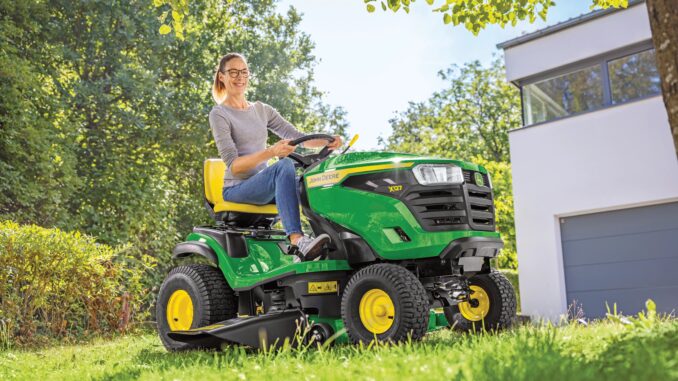
The John Deere S160 is a 100 Series lawn tractor aimed at homeowners who want a step up from entry-level riding mowers, with a 48-inch mower deck and the core systems needed for regular mowing, seasonal maintenance, and light-duty property work. This guide is written for DIY owners in the USA and Canada and covers the John Deere S160 from a symptom-first angle, including common parts, troubleshooting steps, maintenance intervals, parts diagrams, manuals, and realistic repair boundaries.
John Deere S160 model overview
The John Deere S160 sits in Deere’s 100 Series lawn tractor lineup and is sold as an S160 tractor with a 48-inch deck. The owner information page and replacement parts guide focus on routine homeowner service items such as engine oil, filters, spark plug, traction belt, deck belt, blades, battery, and deck leveling hardware, which tells you this machine is built for residential mowing rather than heavy ground-engaging work.
For most owners, the John Deere S160 is used for mowing medium to larger home lawns where a wider cutting deck helps reduce mowing time. In practice, the guide matters most when the tractor develops starting trouble, poor cut quality, belt wear, weak battery symptoms, or deck-related vibration.
General overview of the John Deere S160
The key systems on the John Deere S160 are the engine and fuel system, the mower deck and blades, the traction drive system, and the electrical starting and safety system. Deere’s replacement parts guide identifies the most commonly serviced items, which gives a useful picture of where routine faults usually show up first.
Common John Deere S160 service parts owners regularly buy include the oil filter AUC12916 for Canada, USA, and Mexico; fuel filter AM116304; spark plug MIU11020; air filter cartridge MIU11515; pre-cleaner MIU11517; traction belt UC30568; 48-inch mower deck belt GX21833; standard blade GX21784; mulch blade GX21786; battery TY25221B for Canada and USA; ignition switch GY20074; and gauge wheels GX10168. Deere also lists Turf-Gard 10W-30 oil TY22029, home maintenance kit AUC13706, and deck leveling gauge AM130907 as core service items for this model.
John Deere S160 troubleshooting approach
Troubleshooting the John Deere S160 works best when you begin with the symptom the owner can see, hear, or feel rather than ordering parts first. On this model, the main symptom groups are starting issues, running issues, poor cut quality, vibration and noise, overheating or hot-running symptoms, traction or drive complaints, and electrical or switch-related faults.
That symptom-first method matters because one issue can have several overlapping causes; for example, a no-start condition may be caused by the battery, fuel delivery, ignition switch, safety interlock input, or basic maintenance neglect rather than one obvious failed component. Starting with what the machine is doing saves time and helps avoid replacing good parts.
Emergency John Deere S160 repair needs
Some John Deere S160 problems should be dealt with immediately because they create safety risks or can damage other parts quickly. The highest-priority faults are severe vibration, fuel leakage, overheating caused by blocked cooling areas, belts coming apart, non-working safety or ignition components, and deck issues that can throw debris or damage spindles and belt hardware.
Starting issues on the John Deere S160
When the John Deere S160 will not crank, only clicks, or starts and immediately dies, the problem matters because repeated cranking can drain the battery and hide the real fault. It can also leave owners assuming the engine is bad when the issue is often in the battery, filter, switch, or basic service state.
-
Common causes include a weak battery TY25221B, dirty battery terminals, clogged fuel filter AM116304, worn spark plug MIU11020, restricted air filter MIU11515, faulty ignition switch GY20074, or a maintenance issue that has been ignored too long.
-
Check battery voltage and cable tightness first, then clean any corrosion from the terminals.
-
Confirm fresh fuel is present and inspect the fuel filter for obvious restriction.
-
Remove and inspect the spark plug for fouling, wear, or fuel wetness.
-
Inspect the air filter and pre-cleaner for dirt loading that could choke the engine.
-
If the tractor still will not respond correctly, inspect ignition switch function and safety interlock operation before buying major parts.
John Deere S160 cut-quality problems
Poor cut quality on the John Deere S160 usually shows up as uneven mowing, uncut strips, ragged grass tips, or clumping. These issues matter because they often point to worn blades, a bad deck belt, incorrect deck level, or buildup under the deck, all of which can worsen quickly if ignored.
-
Common causes include dull or bent GX21784 blades, incorrect mulch blade choice, worn GX21833 deck belt, misleveled deck, damaged gauge wheels GX10168, or heavy debris packed under the 48-inch deck.
-
Inspect blade edges and blade balance, and replace damaged blades rather than trying to save badly bent ones.
-
Check deck cleanliness and remove packed grass with the engine off and key removed.
-
Inspect the deck belt for glazing, cracking, fraying, or stretch.
-
Verify deck level using the AM130907 leveling gauge or equivalent method.
-
Re-test on dry grass at an appropriate ground speed before assuming a deeper deck problem.
Vibration and noise on the John Deere S160
Unusual vibration or banging on the John Deere S160 is an immediate warning sign because it can damage blades, spindles, belts, and deck hardware. Owners should stop mowing right away if vibration is sudden or severe.
-
Common causes include bent blades, loose blade hardware, damaged gauge wheels, deck belt damage, debris wrapped around spindles, or a failing traction belt or pulley.
-
Shut the tractor down immediately and inspect the deck underside safely.
-
Check both blades for bends, cracks, and tight mounting.
-
Inspect the GX21833 deck belt and belt path for partial belt failure.
-
Look for packed wire, roots, or twine around spindle areas.
-
Do not continue mowing until the source is found, because secondary damage can become much more expensive than the original fault.
Overheating and leaks on the John Deere S160
If the John Deere S160 runs hot, smells of burnt oil or belt, or shows fuel or oil leakage, treat it as urgent. Heat-related problems can shorten engine life and leaking fuel creates a clear fire risk.
-
Common causes include dirty cooling fins, overdue oil service, incorrect oil condition, fuel filter or fuel line leakage, clogged air filter, or a dragging belt that is overheating under load.
-
Check for visible leaks before restarting the tractor.
-
Clean engine cooling areas and remove debris accumulation around the engine.
-
Verify oil level and service age, using the listed 10W-30 oil where required.
-
Inspect the fuel filter and nearby hoses for seepage or cracking.
-
If overheating continues after basic cleaning and service, stop there and move toward dealer diagnosis.
John Deere S160 drive and traction problems
Drive complaints on the John Deere S160 often appear as weak uphill performance, inconsistent movement, squealing, or a tractor that barely moves even though the engine runs normally. These issues matter because a slipping traction belt can leave the machine stranded and may also damage related pulleys if ignored.
-
Common causes include worn traction belt UC30568, contaminated belt surfaces, pulley wear, or adjustment issues outside routine owner service.
-
Confirm the problem is not simply low traction from wet grass or steep terrain.
-
Inspect the traction belt area for obvious wear, glazing, or debris contamination.
-
Listen for belt squeal or pulley noise during engagement.
-
Check whether the tractor loses drive only under load, which often points to belt slip.
-
If belt replacement does not restore normal drive, internal transmission diagnosis is usually beyond basic DIY level.
Electrical problems on the John Deere S160
Electrical faults on the John Deere S160 can show up as no crank, intermittent starting, dim lights, or inconsistent switch behavior. They matter because the electrical and safety system is tied directly to safe starting and normal operation.
-
Common causes include weak battery, dirty terminals, failed ignition switch GY20074, headlight bulb failure AD2062R, or interlock-related issues that mimic other faults.
-
Start with battery condition and terminal cleanliness.
-
Check whether lights, starter response, and ignition behavior all fail or only one circuit does.
-
Inspect the ignition switch if symptoms are inconsistent.
-
Replace simple electrical wear items such as bulbs only after confirming the circuit has power.
-
Treat unexplained harness or interlock faults as advanced diagnosis rather than guesswork.
DIY or dealer for the John Deere S160
The realistic repair line on the John Deere S160 is straightforward: normal service items, blades, deck cleaning, filters, spark plug, battery work, and many belt-related inspections are reasonable DIY jobs, while internal transmission work, complex electrical diagnosis, and engine internal repairs are usually better left to a dealer or a highly experienced owner.
Good DIY jobs
-
Engine oil and oil filter service using TY22029 and AUC12916.
-
Air filter and pre-cleaner replacement using MIU11515 and MIU11517.
-
Fuel filter replacement using AM116304.
-
Spark plug replacement using MIU11020.
-
Blade replacement or sharpening on GX21784 or GX21786 blades.
-
Deck belt inspection and replacement of GX21833 if access and routing are understood.
-
Battery replacement using TY25221B in USA and Canada.
Advanced DIY or dealer jobs
-
Traction belt replacement if access is restricted or routing is unclear.
-
Repeated no-start diagnosis after battery, plug, filters, and switch checks.
-
Severe vibration that may involve spindle or pulley damage.
-
Persistent overheating after cooling-fin cleaning and scheduled service.
-
Internal transmission or hydro drive complaints beyond obvious belt wear.
Skill level guide
-
Beginner: Oil service, air filter, spark plug, battery, blade inspection, deck cleaning.
-
Intermediate: Fuel filter replacement, deck belt replacement, deck leveling, blade replacement and torque verification.
-
Advanced: Traction belt replacement, electrical diagnosis with a meter, repeated vibration tracing, or repairs involving hidden pulleys and safety circuits.
Parts for the John Deere S160: what you need before ordering
Before ordering John Deere S160 parts, gather the full model name, the tractor Product Identification Number, and any engine identification details listed on the engine itself. Because Deere parts can vary by model family, deck size, and production details, those numbers help you avoid wrong-belt and wrong-filter mistakes.
For this tractor, deck size matters because the S160 replacement guide here is specifically for the 48-inch deck version. If a seller only says “fits S160” without confirming deck size or serial range, double-check before you buy.
OEM parts are usually the safest choice for belts, ignition parts, fit-sensitive deck components, and any safety-related item because routing, dimensions, and switch behavior matter more than a small price difference. Aftermarket parts can be acceptable for common maintenance items like batteries, some blades, and filters, but only when the cross-reference is exact for the S160 and the 48-inch deck setup.
John Deere S160 manuals and parts diagrams
The best starting points for John Deere S160 manuals and diagrams are Deere’s owner information page, the S160 replacement parts guide PDF, Deere’s parts catalog tools, and a Deere-focused parts retailer with model pages. Each source does a different job, so using them together is better than relying on one listing page.
-
John Deere S160 owner information page for owner resources, manuals, service information, and model-specific support links.
-
John Deere S160 with 48-inch deck replacement parts guide PDF for fast OEM service part numbers such as filters, belts, blades, and electrical items.
-
John Deere lawn mower parts portal for access to the parts catalog and parts-diagram lookup tools.
-
Weingartz John Deere lawn tractor parts guide as a dealer-focused aftermarket source for quick lookups and shopping support.
How to identify your John Deere S160 numbers
Model, PIN, and engine numbers matter because they help confirm the exact machine configuration before you order filters, belts, electrical parts, or deck components. They also help the dealer counter find serial-sensitive updates or superseded part numbers.
-
Park the tractor safely, remove the key, and let hot parts cool before searching for identification labels.
-
Find the tractor Product Identification Number label on the machine frame area specified in the operator information for your unit.
-
Confirm the model designation reads S160 and note whether the tractor has the 48-inch deck listed in the Deere parts guide.
-
Locate the engine model and serial information on the engine shroud or engine label area so engine-related parts can be matched correctly.
-
Photograph all tags before ordering online, because one wrong digit can lead to the wrong part arriving.
Buying John Deere S160 parts online and locally
The smartest buying strategy for John Deere S160 parts is to identify the OEM number first, then compare pricing and availability across Deere and reputable sellers. That approach is much safer than shopping by generic keywords like “John Deere riding mower belt.”
-
Online: Use confirmed OEM numbers, check for deck-size sensitivity, and compare current supersessions before checkout.
-
Dealer counter: Best for ignition parts, serial-sensitive items, repeated failure problems, and anything where the parts diagram matters more than a description.
-
Retail stores: Acceptable for common consumables such as oil, some batteries, and some spark plugs only when packaging clearly matches the S160 application.
Useful sources include Deere’s owner info page, Deere’s lawn mower parts portal, and a Deere-focused retailer such as Weingartz.
Step-by-step John Deere S160 parts fitting guide
These are the highest-impact DIY jobs on the John Deere S160 because they solve many common homeowner complaints without opening up major systems. Always remove the key, disable accidental starting, and work on a cool machine before beginning.
Replacing the John Deere S160 air filter
A dirty air filter on the John Deere S160 can cause hard starting, rough running, and reduced power.
-
Park safely, switch the engine off, and open the air cleaner housing.
-
Remove the old cartridge MIU11515 and pre-cleaner MIU11517.
-
Wipe out loose dirt without pushing debris into the intake.
-
Install the new pre-cleaner and cartridge in the correct order.
-
Close the housing securely and test-run the engine.
Replacing the John Deere S160 spark plug
Replacing the spark plug often helps cure poor starting and misfire symptoms on the John Deere S160.
-
Let the engine cool fully, then pull off the spark plug boot.
-
Remove the old plug and inspect it for fouling or oil deposits.
-
Install the correct replacement plug, MIU11020.
-
Tighten to the specification in the operator information for your engine version.
-
Refit the plug wire firmly and test start the tractor.
John Deere S160 blade replacement
Fresh blades improve cut quality faster than almost any other service step on this tractor.
-
Raise or access the deck safely and block it securely before working underneath.
-
Remove the old blades and inspect for bends, cracks, or severe edge wear.
-
Install the correct replacement blades, GX21784 standard or GX21786 mulch, in the proper orientation.
-
Tighten hardware correctly and check that both blades rotate freely without contacting the deck.
-
Recheck cut quality after a short test mow on dry grass.
Replacing the John Deere S160 deck belt
Replacing the deck belt can fix blade-drive loss, weak cutting performance, and burning-belt smell.
-
Remove the mower deck or position it for safe belt access according to the operator procedure.
-
Note the belt routing before removal, using photos if needed.
-
Remove the worn GX21833 belt and inspect pulleys for heat damage or roughness.
-
Route the new belt exactly as designed and confirm it seats fully in all pulley grooves.
-
Reinstall the deck, engage briefly, and confirm smooth operation without squeal.
Maintenance to prevent John Deere S160 problems
Regular maintenance prevents most recurring John Deere S160 faults because the common failure points on this model are all routine-service items: oil, filters, spark plug, blades, belts, battery condition, and deck cleanliness. Owners who stay ahead of those basics usually catch problems before they become expensive repairs.
-
Starting reliability: Keep the battery clean, replace the spark plug and fuel filter on schedule, and avoid stale fuel sitting too long.
-
Cut quality: Keep blades sharp, deck level correct, and the deck underside clean.
-
Fire and overheating prevention: Clean cooling areas and remove dry debris around the engine and deck.
-
Drive performance: Inspect traction and deck belts for glazing or cracking before they fail completely.
-
Electrical reliability: Keep terminals clean and replace worn ignition or lighting parts with correct replacements.
John Deere S160 maintenance schedule
The operator information and Deere service intervals show that the S160 follows a structured schedule built around first-use break-in checks, recurring 10-hour and 25-hour inspections, then 50-hour or annual service items, 100-hour items, and longer-term dealer-level checks. Exact tasks should always be confirmed against the operator information that matches your tractor serial range and engine label.
Before each use
-
Check the machine generally for safe operating condition and obvious loose or damaged parts.
-
Look for fuel, oil, or belt-related problems before mowing.
-
Confirm blades and deck area are clear of debris and that tires appear properly inflated.
After first 8 to 10 hours
-
Deere service interval material for this family includes an early service point after initial operation; verify the exact break-in items in the operator manual linked for your tractor.
-
Recheck hardware, lubrication points, and any early wear signs after the first several mowing sessions.
Every 25 hours
-
Inspect mower blades.
-
Lubricate mower and chassis points if listed for your exact serial and deck setup.
-
Recheck deck condition and look for early belt wear.
Every 50 hours or yearly
-
Change engine oil with TY22029.
-
Replace the fuel filter AM116304.
-
Replace the spark plug MIU11020.
-
Replace the air filter cartridge MIU11515 and pre-cleaner MIU11517.
-
Inspect or clean air cleaner areas and remove debris from the machine.
Every 100 hours or yearly
-
Change engine oil and oil filter, including AUC12916 for Canada, USA, and Mexico.
-
Check and clean the battery.
-
Inspect and regap spark plugs where applicable under Deere interval guidance.
-
Clean engine cooling fins.
-
Check the mower drive belt.
Every 200 hours or similar dealer-level interval
-
Valve clearance or similar engine checks are typically dealer-level work in Deere interval material for comparable lawn tractor applications.
-
Use this interval as a cue to inspect overall machine wear, repeated belt failures, and chronic running issues that basic service has not corrected.
Seasonal checklist
-
Spring: Change overdue oil, inspect battery condition, sharpen or replace blades, and clean the deck before heavy mowing starts.
-
Mid-season: Recheck air filter condition, belt wear, and deck level, especially if cut quality drops.
-
Fall: Clean the tractor thoroughly, remove debris from cooling areas, and replace worn service items before storage.
Repair, upgrade, or replace the John Deere S160?
For most homeowners, repairing the John Deere S160 makes sense when the issue is in normal wear parts such as filters, blades, battery, belts, or tune-up items because Deere lists these parts clearly and they are routine ownership costs. Upgrading or replacing becomes more logical when failures become repetitive, when multiple systems need work at once, or when the machine no longer suits the property size or mowing workload.
Repair if…
-
The problem is limited to service parts such as blades, filters, spark plug, battery, or belts.
-
The tractor starts and drives reasonably well once routine maintenance is restored.
-
The deck, frame, and main drive system are still fundamentally sound.
Upgrade if…
-
You want different blade performance, such as switching from standard blades to the mulch blade option GX21786.
-
You routinely mow conditions that push the tractor near the edge of its intended homeowner role.
-
You are repeatedly buying convenience items and would benefit from moving to a heavier-duty machine class.
Replace if…
-
The tractor needs major work in several systems at the same time, such as drive, deck, and engine-related faults together.
-
Severe vibration or neglect has caused secondary damage beyond normal service parts.
-
Parts and labor estimates start to rival the value of a sound replacement mower for your property size.
John Deere S160 troubleshooting FAQ
1. Why will my John Deere S160 not start?
The most common no-start causes on the John Deere S160 are a weak battery, dirty terminals, stale fuel, a restricted fuel filter, a fouled spark plug, or an air filter that is badly clogged. Start with the simple checks first because Deere lists all of those as normal maintenance items for this model. If the tractor still does not respond after those checks, move to ignition switch or safety-circuit diagnosis rather than guessing at major engine trouble.
2. Why does my John Deere S160 click but not crank?
A click with no cranking usually points toward low battery power, poor cable contact, or starter-circuit voltage loss rather than a fuel problem. Check the battery TY25221B condition, clean both terminals, and make sure the connections are tight and not corroded. If voltage is good and the tractor still only clicks, the issue may be deeper in the starting circuit.
3. Why does my John Deere S160 start and then die?
If the engine fires briefly and quits, suspect fuel delivery or air restriction first. A partially blocked AM116304 fuel filter or a heavily loaded MIU11515 air filter can cause exactly that symptom. Fresh fuel and a basic tune-up often solve this before deeper diagnosis is needed.
4. Why is my John Deere S160 running rough?
Rough running on the John Deere S160 commonly comes from a dirty air filter, old spark plug, poor fuel quality, or overdue maintenance. Because Deere specifies regular replacement intervals for the spark plug, fuel filter, and air filter elements, those are the right first checks. If rough running remains after service, look for ignition or carburetion-related issues under dealer guidance.
5. Why does my John Deere S160 lose power while mowing?
Power loss under load often points to restricted airflow, dull blades increasing load, a dirty deck underside, or fuel delivery problems. Start by cleaning the deck, checking blade condition, and replacing service items that are overdue. If the engine only loses power in tall or wet grass, mowing conditions may be part of the problem too.
6. Why is my John Deere S160 hard to start when cold?
Cold-start difficulty usually shows up first when the spark plug is worn, the battery is weak, or the fuel and air system are due for service. Replacing the listed spark plug and filters is often more effective than chasing random electrical parts. A battery that seems acceptable in warm weather may still be too weak for reliable cold cranking.
7. Why does my John Deere S160 cut unevenly?
Uneven cutting usually means the deck is out of level, the blades are dull or bent, or the gauge wheels are not doing their job properly. Deere specifically lists the AM130907 deck leveling gauge and GX10168 gauge wheels as relevant deck service items for this model. Fix the deck setup before assuming the mower has a major spindle problem.
8. Why does my John Deere S160 leave strips of uncut grass?
Uncut strips are usually caused by dull blades, low blade tip performance from a worn deck belt, or mowing too fast for the grass conditions. Inspect the GX21833 belt and the condition of the GX21784 or GX21786 blades first. In many cases, sharpening or replacing blades solves the issue quickly.
9. Why does the John Deere S160 clump grass?
Grass clumping normally happens when the deck is dirty, the grass is wet or too tall, or the blades are no longer cutting cleanly. Clean the deck underside and reduce ground speed before assuming something major is wrong. If clumping continues in normal dry conditions, inspect blades and deck level.
10. Why does my John Deere S160 scalp parts of the lawn?
Scalping often comes from incorrect deck height, improper deck leveling, or mowing over uneven ground too aggressively. Check deck setup with the AM130907 leveling gauge and inspect gauge wheels for wear or damage. A setup problem is more likely than a major deck failure.
11. Why are the blades on my John Deere S160 not engaging properly?
If the blades do not engage properly, the deck belt may be worn, damaged, or slipping. A badly worn GX21833 belt can reduce blade drive even before it fully breaks. Also inspect for pulley damage, debris buildup, or belt routing errors after recent service.
12. Why does my John Deere S160 vibrate badly when mowing?
Severe vibration usually means stop immediately and inspect the deck area. Bent blades, loose blade hardware, wrapped debris, or belt damage are the most likely causes based on the S160’s listed deck service parts. Continued use can turn a simple blade repair into spindle or pulley damage.
13. Why is my John Deere S160 making a squealing noise?
A squeal often points to belt slip, pulley issues, or a belt contaminated with debris or wear glazing. Check both the GX21833 deck belt and UC30568 traction belt areas depending on when the noise occurs. Noise during blade engagement usually points toward the deck system rather than the traction drive.
14. Why does my John Deere S160 burn through deck belts?
Repeated deck belt failure usually means there is another issue behind it, such as pulley misalignment, seized spindle drag, debris packing, or improper belt installation. Replacing only the belt without checking the rest of the belt path often leads to another failure. Use the exact GX21833 belt rather than a close-enough substitute.
15. What is the correct deck belt for a John Deere S160?
For the S160 with 48-inch deck shown in Deere’s guide, the correct flat mower deck belt is GX21833. Because belt fit is highly sensitive, confirm the deck size and tractor identification before ordering.
16. What is the traction belt part number for the John Deere S160?
Deere lists the traction belt for this model as UC30568. If the tractor has weak movement or slips under load, that is one of the first drivetrain wear parts to inspect.
17. What blades fit the John Deere S160?
Deere lists GX21784 as the standard mower blade and GX21786 as the high-performance mulch blade for the S160 with 48-inch deck. Matching the blade type to how you mow can improve either general cutting or mulch performance.
18. What spark plug does a John Deere S160 use?
The replacement parts guide lists spark plug MIU11020 for the John Deere S160. Deere also shows a 50-hour replacement interval for that plug in the guide.
19. What oil filter does the John Deere S160 use?
For Canada, USA, and Mexico, Deere lists oil filter AUC12916 for the S160. Other regions use different oil filter numbers, so North American owners should stick with the listing for their market.
20. What fuel filter fits the John Deere S160?
The listed fuel filter is AM116304. Deere’s replacement guide shows it as a 50-hour service item, which is a good reminder not to leave it in place indefinitely.
21. What battery does the John Deere S160 use?
For Canada and the USA, Deere lists the TY25221B 12-volt battery for the S160. If you buy elsewhere, make sure the replacement matches terminal layout, dimensions, and rating rather than relying on a generic lawn tractor label.
22. Why does my John Deere S160 lose drive on hills?
Loss of drive on hills often points to traction belt wear or slipping rather than sudden engine trouble. Check the UC30568 belt condition and whether the problem appears only under load. If the belt is sound and the complaint remains, transmission-related diagnosis may be needed.
23. Why does my John Deere S160 barely move forward or backward?
A tractor that barely moves usually has a drivetrain issue, belt-slip problem, or a load condition that exceeds normal traction. Start with belt inspection because Deere specifically lists the traction belt as a key service part on this model. If there is no improvement after belt-related checks, dealer evaluation becomes more realistic.
24. Can I replace the John Deere S160 traction belt myself?
Some experienced owners can replace the traction belt themselves, but it is a more advanced DIY job than filters, blades, or spark plug service. Access, routing, and reassembly matter, and mistakes can create repeat failures or poor drive performance. If routing is unclear, using the parts diagram and dealer support is the safer approach.
25. Why does my John Deere S160 overheat?
Overheating is often caused by blocked cooling fins, debris buildup around the engine, poor airflow, or neglected oil service. Clean the cooling areas first and verify oil condition before assuming a major engine problem. Never ignore fuel or oil smells that suggest leakage or burning debris.
26. Why does my John Deere S160 smell like burning?
A burning smell can come from a slipping belt, overheated debris packed around hot components, or fluid leaking onto hot surfaces. Inspect the deck belt, traction belt area, and engine cooling zone before running the tractor again. Burning smells should always be treated as a stop-and-check symptom, not a keep-mowing symptom.
27. Why are my John Deere S160 headlights not working?
If the headlights fail, start with the bulb, switch function, battery condition, and visible wiring condition. Deere lists the headlight bulb as AD2062R and the ignition switch as GY20074, so those are two logical component checks. Do not assume the bulb is the only issue until you confirm power is reaching the circuit.
28. Why does my John Deere S160 need frequent battery charging?
Frequent charging usually means the battery is aging, the terminals are dirty, or the tractor sits too long between uses. Start by cleaning terminals and load-testing the battery before replacing unrelated parts. If the battery is healthy but still goes flat, charging-system diagnosis is more appropriate.
29. How often should I change oil in a John Deere S160?
The Deere replacement guide shows engine oil service at 50 hours, and Deere interval material also references scheduled oil and filter service at recurring intervals. For homeowner use, that usually means at least once per season if you do not reach the hourly threshold.
30. How often should I replace the air filter on a John Deere S160?
Deere’s S160 replacement guide lists the air filter cartridge and pre-cleaner as 50-hour service items. In dusty mowing conditions, they may need attention sooner because airflow restriction shows up quickly in performance and starting complaints.
31. How often should I replace the spark plug on a John Deere S160?
The S160 replacement guide lists spark plug MIU11020 with a 50-hour change interval. Even if the engine still runs, replacing it on schedule helps maintain easier starting and steadier running.
32. How often should I replace the fuel filter on a John Deere S160?
Deere lists the AM116304 fuel filter as a 50-hour change item in the replacement guide. That is a simple service job that can prevent a lot of avoidable fuel-delivery problems.
33. Should I buy OEM or aftermarket John Deere S160 parts?
OEM is usually the better choice for belts, ignition parts, and fit-sensitive deck components because dimensions and behavior matter. Aftermarket can work for some routine maintenance items if the cross-reference is exact and the supplier is reputable. When in doubt, use Deere numbers first and cross-shop from there.
34. Where can I find a John Deere S160 parts diagram?
A good parts diagram starting point is Deere’s lawn mower parts portal, along with the owner information page for the S160 and dealer-oriented parts sellers. The replacement parts PDF is also useful because it gives many of the fast-moving OEM numbers owners need most often.
35. Where can I find a John Deere S160 operator’s manual?
The easiest place to start is Deere’s S160 owner information page, which links to manuals and model support resources. A publicly accessible operator’s manual PDF is also available through retail-hosted document mirrors, but Deere’s own owner-information hub is the better long-term source.