
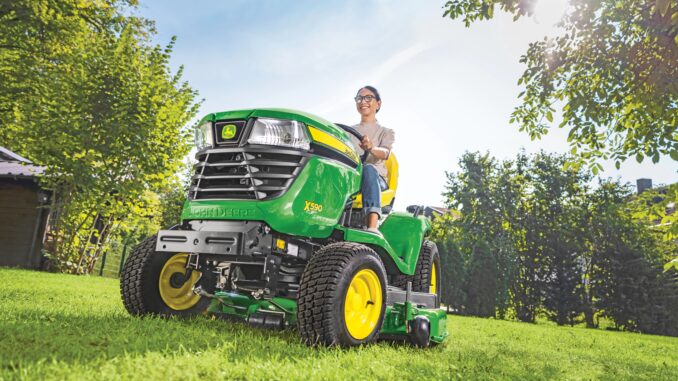
John Deere LX Series Lawn and Garden Tractor Models and Maintenance Guide
The John Deere LX Series was a long-running family of premium residential lawn tractors sold in North America from the early 1990s into the mid-2000s. It included lighter, single-cylinder lawn tractors for regular mowing as well as more substantial twin-cylinder models with larger decks, hydrostatic drive, stronger chassis components, and—in selected versions—all-wheel steering. Although every LX model is now discontinued, these machines remain common on established residential properties, country homes, small acreages, and in used-equipment ownership.
This page is a directory for John Deere LX Series model-specific guides, routine maintenance information, repair planning, and symptom-based troubleshooting content. Use it to identify the correct LX model family before working on its engine, transmission, mower deck, steering system, electrical equipment, or attachments. For broader ownership information across Deere residential equipment, start with the General John Deere Lawn and Garden Tractor Guide.
About the John Deere LX Series Lawn and Garden Tractor Series
The John Deere LX Series bridged the gap between basic residential lawn tractors and Deere’s heavier garden tractors. Across its production life, the range included models from roughly 14 hp single-cylinder machines with 38-inch mower decks to 18 hp twin-cylinder tractors capable of carrying 48-inch decks and handling a wider range of seasonal equipment.
Early LX tractors—including the LX172, LX173, LX176, LX178, LX186, and LX188—were built around a compact but relatively substantial lawn-tractor platform. They were intended for homeowners wanting more durability, mowing quality, and attachment capability than entry-level riders typically offered. The smaller models were practical for ordinary lawn mowing, leaf collection, light cart towing, and occasional snow work. The higher-specification LX178 and LX188 models added liquid-cooled twin-cylinder Kawasaki engines and were better suited to larger lawns, longer mowing sessions, and heavier seasonal use.
Later LX255 through LX289 models expanded the line further. These tractors generally used hydrostatic transmission systems, more refined operator controls, larger engine options, and mower decks from approximately 42 to 48 inches. The LX277AWS and LX280AWS introduced all-wheel steering, improving maneuverability around trees, landscape beds, fences, and tightly arranged gardens. These were still principally 2WD mowing tractors rather than true four-wheel-drive garden tractors, but their steering layout could make a major practical difference on obstacle-heavy properties.
The LX Series used a mix of manual or foot-controlled hydrostatic drive arrangements depending on model and generation. Typical equipment included electric PTO mower-deck engagement, adjustable cutting-height systems, cruise-control arrangements on selected tractors, headlights, and compatible bagging systems. Higher-end models often had heavier steering and driveline components than low-cost lawn tractors, although they should not be treated as substitutes for an X500, X700, classic 3xx/4xx, or other purpose-built heavy-duty garden tractor when regular ground-engaging work is required.
Common LX Series jobs include:
-
Routine residential and estate lawn mowing
-
Towing lawn carts, sweepers, and light yard trailers
-
Bagging grass clippings and collecting leaves
-
Pulling plug aerators, dethatchers, and spreaders within the tractor’s limits
-
Light snow clearance with compatible front blades or snow blowers
-
Seasonal property maintenance on small acreages
-
Mowing around trees, paths, garden borders, and buildings
In John Deere’s broader lawn and garden range, the LX Series sits historically above basic S Series-style lawn tractors in refinement and durability, while generally below later X500 and X700 garden tractors in chassis strength, hydraulic capability, attachment capacity, and intended workload.
John Deere LX Series Lawn and Garden Tractor Models
The table below is an across-time North American index of the known John Deere LX Series tractors. Specifications varied by year, deck package, market, and optional equipment, so the figures below should be treated as practical identification guidance rather than a substitute for the exact operator’s manual and serial-number-specific parts information.
The LX172 through LX188 group is often recognised as the earlier LX generation, while the LX255 through LX289 group represents the later development of the family. Parts, mower decks, engines, wiring arrangements, hood and grille assemblies, steering systems, drive belts, and attachment compatibility can differ substantially between these two groups. Always identify the exact tractor model and serial-number range before ordering parts or following a repair procedure.
LX Series Lawn and Garden Tractor Maintenance Guides
Regular service makes a larger difference on an aging LX Series tractor than cosmetic condition alone. Many surviving machines are several decades old, so preventive work should include both scheduled engine service and inspection of age-related wear items such as fuel lines, electrical connectors, deck bearings, steering joints, belts, plastic body panels, and rubber mounts.
Routine Service and Checks
Start with a consistent inspection routine before the mowing season and repeat key checks throughout the season. Engine oil level should be checked before use, with oil and filter changes completed at the interval specified for the installed engine. Because the LX range used Kawasaki, Kohler, and Briggs & Stratton engines, oil grades, capacities, filter part numbers, spark-plug specifications, and valve-service requirements are model-specific.
A practical LX Series service routine should include:
-
Check engine oil level before mowing and change oil and filter at the recommended service interval.
-
Inspect and clean or replace the air filter, pre-cleaner, and intake screen as required.
-
Replace spark plugs at the applicable interval and inspect ignition leads, coil connections, and plug-wire boots.
-
Inspect fuel lines, fuel filter, fuel tank venting, carburetor connections, and fuel shutoff components for deterioration.
-
Clean cooling fins, engine screens, fan areas, and radiator components on liquid-cooled models.
-
Check battery condition, terminal cleanliness, ground-cable connections, charging output, and starter-circuit wiring.
-
Inspect hydrostatic-drive linkage, cooling fan components, drive belts, and transaxle area for leaks or accumulated debris.
-
Examine tires for cracking, uneven wear, loose wheel hardware, and incorrect inflation pressure.
Useful internal maintenance resources for this group include LX Series lawn and garden tractor service interval checklist, DIY maintenance for LX Series lawn tractors, engine oil and filter service for John Deere LX Series tractors, and seasonal inspection checklist for legacy John Deere lawn tractors.
Do not assume all LX transaxles use a routine owner-serviceable oil-change schedule. Some hydrostatic units are treated differently depending on the exact model, transmission design, and service documentation. Inspect the transaxle for leakage, cooling blockage, damaged fan components, loose pulleys, worn drive belts, and linkage problems before assuming an internal hydrostatic failure.
Mower Deck, Cutting Quality, and Belt Care
The mower deck is the highest-wear assembly on most LX Series tractors. A tractor that starts, drives, and steers correctly can still give poor results if the deck is dirty, unlevel, fitted with worn blades, or operating with a stretched belt or failing spindle bearing.
Keep the underside of the deck clean enough to prevent a heavy layer of packed grass from changing airflow and cutting performance. Sharp, balanced blades reduce tearing and leave a cleaner cut, while bent or mismatched blades can create vibration, uneven mowing, and spindle damage. Replace damaged blades rather than attempting to straighten severely bent ones.
Deck service should include:
-
Inspect blades for wear, cracking, bends, damaged cutting edges, and imbalance.
-
Sharpen blades evenly and maintain the original blade shape and lift profile.
-
Check deck level side-to-side and front-to-rear after tire-pressure correction.
-
Inspect deck belts for cracking, glazing, missing ribs, frayed edges, or belt slip.
-
Check idler pulleys, tension springs, pulley guards, belt guides, and deck-engagement linkage.
-
Inspect spindle housings for noise, looseness, overheating, grease loss, or side play.
-
Remove packed grass and debris from the deck shell, discharge chute, belt covers, and pulley areas.
-
Check anti-scalp wheels, deck-gauge wheels, height-adjustment hardware, and lift links.
Conceptual internal resources include Mower deck maintenance and cutting quality on LX Series tractors, Deck belt and spindle service for LX Series lawn and garden tractors, and John Deere LX Series deck leveling and blade-care guide.
Steering, Axle, and Chassis Maintenance
LX Series steering systems deserve close inspection, particularly on older tractors that have spent years turning around trees, curbs, trailer ramps, and uneven ground. Loose steering, wandering, excessive turning effort, uneven tire wear, and reduced maneuverability can result from worn tie-rod ends, bushings, steering gears, wheel bearings, axle-pivot wear, or incorrect toe-in.
All-wheel-steering LX277AWS and LX280AWS models need particularly careful inspection because they add rear-steering components and related linkage. A rear-steering fault can affect turning behaviour, tire wear, tracking, and stability. Keep the steering system clean, lubricated where fittings or service procedures permit, and adjusted according to the correct model documentation.
Inspect the chassis for cracked brackets, loose engine mounts, missing deck-hanger hardware, worn hood pivots, loose seat hardware, damaged footrest areas, and rust around deck mounts or frame crossmembers. Check wheel bearings and axle components before replacing tires for unexplained uneven wear.
Useful guide concepts include Steering and front axle maintenance across LX Series lawn and garden tractors, all-wheel-steering inspection for LX277AWS and LX280AWS tractors, and LX Series chassis and wheel-bearing inspection guide.
LX Series Lawn and Garden Tractor Troubleshooting Guides
A sound troubleshooting process begins by separating the symptom from the suspected cause. For example, a tractor that will not crank may have a battery, fuse, safety-switch, solenoid, ground-cable, ignition-switch, PTO-interlock, or brake-pedal issue. A tractor that cranks normally but will not start is more likely to have fuel, spark, compression, timing, or carburetion trouble.
Record the exact model, engine type, serial-number range, symptom, operating conditions, and any recent repair work before ordering parts. This is especially important across the LX Series because similar-looking tractors can have very different engines, electrical systems, decks, and drive arrangements.
Starting, Engine, and Fuel / Ignition Problems
Common LX Series engine complaints include no-crank, cranks-but-will-not-start, hard starting when hot, intermittent stalling, surging at part throttle, loss of power in heavy grass, smoke, backfiring, and poor fuel economy. On older gasoline tractors, stale fuel, varnish in the carburetor, blocked fuel filters, cracked fuel hoses, failed shutoff solenoids, contaminated tanks, and poor electrical connections are frequent causes.
For a no-start condition, work in a sensible sequence:
-
Confirm the battery is charged and cable connections are clean and tight.
-
Check that the PTO is disengaged and all safety interlocks are in the required starting position.
-
Listen for starter-solenoid operation and check for voltage drop at the battery and starter.
-
Confirm fresh fuel reaches the carburetor or fuel-system inlet.
-
Check for ignition spark using safe testing procedures.
-
Inspect air-filter condition and look for flooded-engine symptoms.
-
Test compression and investigate valve, head-gasket, or internal-engine concerns only after basic fuel and ignition checks.
Liquid-cooled LX178, LX279, and LX289 tractors add cooling-system checks. Low coolant, leaks, a clogged radiator screen, damaged cooling fan, thermostat problems, or neglected coolant condition can contribute to overheating and reduced performance. Air-cooled machines need clear cooling fins and screens to prevent the same result.
Conceptual troubleshooting resources include LX Series lawn and garden tractor starting problems – diagnostics and fixes, Engine and fuel system issues across LX Series tractors, Kawasaki engine troubleshooting for John Deere LX Series tractors, and Kohler and Briggs engine problems on LX Series lawn tractors.
Mower Deck, PTO, and Cutting Performance Problems
If the deck will not engage, begin with the PTO control, electrical connections, safety-interlock state, deck belt, pulley condition, and mower-deck obstructions. An electric PTO clutch may click without transmitting sufficient torque if the clutch is worn, incorrectly adjusted where adjustment applies, contaminated, or operating with a damaged belt or seized spindle.
Typical mower-deck symptoms include:
-
PTO will not engage or disengage correctly.
-
Blades stop when entering tall or wet grass.
-
The deck belt squeals, smokes, rolls over, or repeatedly comes off.
-
The cut is uneven from side to side.
-
The mower scalps high spots or leaves strips of uncut grass.
-
The deck vibrates after a blade strike or blade replacement.
-
The deck produces rumbling, grinding, or high-pitched bearing noise.
-
Grass clippings discharge poorly or collect beneath the deck.
Check blades and spindles before assuming the PTO clutch is defective. A bent blade, damaged blade adapter, worn spindle bearing, loose pulley, missing belt guide, or incorrectly routed belt can create symptoms that appear to be electrical or clutch-related.
Useful internal guide titles include PTO and deck engagement problems on LX Series lawn tractors, Cut quality and deck vibration issues on LX Series models, and mower deck belt-routing and pulley troubleshooting for John Deere LX tractors.
Drive, Transmission, and Traction Problems
LX Series drive problems often begin outside the transmission itself. A worn traction belt, weak idler spring, seized idler pulley, damaged engine pulley, slipping belt, poor linkage adjustment, obstructed hydrostatic-cooling fan, dragging brake, or incorrect tire pressure may cause slow travel, loss of hill-climbing ability, poor reverse performance, or a no-drive complaint.
For hydrostatic tractors, allow the engine to warm up, operate at the appropriate engine speed, and verify the bypass or freewheel control is fully in its normal operating position. If the tractor was moved or stored with the bypass system released, follow the correct procedure for restoring normal hydrostatic operation before diagnosing major transmission failure.
Reduced traction is not always a transmission issue. Wet grass, worn rear tires, aggressive slope angles, uneven ground, a heavily loaded cart, low tire pressure, and a mower deck set too low can all reduce performance. All-wheel steering improves turning radius and manoeuvrability but does not provide four-wheel drive or eliminate the need for careful operation on slopes.
Conceptual resources for this area include Drive and transmission problems on LX Series lawn and garden tractors, Traction and hill performance issues across LX Series models, hydrostatic-drive diagnosis for John Deere LX tractors, and LX Series traction-belt and idler-pulley troubleshooting guide.
Attachments and Implements for the LX Series Lawn and Garden Tractor Series
John Deere LX Series tractors were commonly used with more than a mid-mount mower deck. Depending on the exact model, deck configuration, hitch equipment, drive system, and production generation, owners may encounter compatible baggers, rear collection systems, utility carts, lawn sweepers, spreaders, aerators, dethatchers, front blades, snow blowers, and related lawn-care accessories.
Attachment suitability depends on the tractor’s engine power, deck size, chassis type, available mounting points, front hitch or quick-attachment hardware, rear hitch rating, PTO arrangement, belt routing, electrical requirements, tire type, and ballast needs. Never assume an attachment from one LX generation will fit another simply because both machines use the LX name.
Common LX Series attachment categories include:
-
38-inch, 42-inch, 46-inch, and 48-inch mid-mount mower decks, depending on model
-
Rear baggers and grass-collection systems
-
Mulching kits and mulch blades
-
Lawn sweepers and leaf-collection equipment
-
Utility carts and light trailers
-
Broadcast spreaders and tow-behind sprayers
-
Plug aerators and dethatchers suited to the tractor’s towing capacity
-
Front snow blades
-
Snow blowers or snow throwers where the correct tractor-specific mounting and drive hardware is available
-
Tire chains, wheel weights, rear ballast, and winter traction accessories
-
Front brushes and lawn-maintenance accessories where compatible
Use particular caution with ground-engaging implements. The LX Series is more capable than many basic lawn tractors, but it is not automatically suitable for rear-mounted tillers, ploughs, cultivators, or heavy soil-working equipment. Those tasks place high loads on the frame, belt drive, transaxle, hitch, tires, and operator. Attachment use should remain within the limits for the exact tractor and accessory combination.