
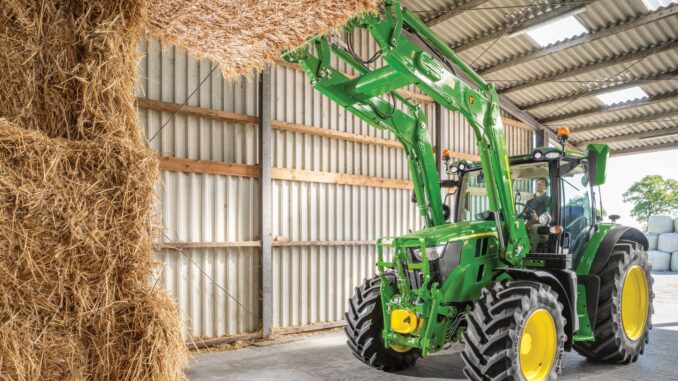
The John Deere 2038R sits in Deere’s 2R compact utility tractor range and is aimed at owners who mow larger properties, move material, handle light grading, and use PTO-driven attachments through the year. Deere’s operator literature for the 2032R and 2038R groups these tractors together, which is helpful because many service checks, operating procedures, and maintenance routines overlap.
For most owners in the USA and Canada, the John Deere 2038R is a practical “one tractor” machine: capable enough for mowing and property work, but still simple enough that many routine service jobs can be handled at home with basic tools. This guide focuses on symptom-first troubleshooting, realistic DIY repairs, maintenance planning, parts ordering, and a detailed FAQ written around what owners actually notice first.
General overview of the John Deere 2038R
The John Deere 2038R is a compact utility tractor in the 2R Series, with 37.3 gross engine horsepower, about 30.4 claimed PTO horsepower, hydrostatic drive, open-center hydraulics, and standard four-wheel drive. TractorData lists it as being built in Augusta, Georgia, with an 8.5-gallon fuel tank, 2,500 psi hydraulic pressure, and a rear Category I hitch, which matches the kind of property-maintenance role this model is designed for.
The main systems owners usually deal with are:
-
Engine and fuel system, including air intake, filters, diesel fuel supply, and cold-start performance.
-
Mower and PTO system, especially when fitted with a 60-inch or 72-inch mid-mount deck.
-
Hydrostatic drive and hydraulics, which affect travel response, loader work, steering, and attachment performance.
-
Electrical and safety interlock system, including battery, charging, seat switch logic, PTO safety inputs, and starting circuit functions.
Common service parts owners often look up for this platform include the engine oil filter M806419, air cleaner element M131803, primary fuel filter MIU800645, hydraulic filter LVA16054, and suction hydraulic filter LVA14703. Deere’s parts catalog also shows filter kit LVA21036 for service planning, which can simplify ordering for scheduled maintenance.
Troubleshooting approach for the John Deere 2038R
Good diagnosis starts with the symptom, not the part. On a John Deere 2038R, the most useful first question is whether the problem is a no-start, hard-start, poor running condition, PTO/mowing issue, hydraulic/drive complaint, overheating concern, unusual noise/vibration, or an electrical/safety shutdown issue.
For most owners, the major symptom groups are:
-
Starting issues.
-
Running or power-loss issues.
-
Mower cut-quality problems.
-
Vibration and abnormal noise.
-
Overheating or fluid leaks.
-
Transmission, hydraulic, or drive performance issues.
-
Electrical and safety-switch problems.
Emergency and immediate John Deere 2038R repair needs
Some problems should not be “watched for a while.” If the tractor loses steering response, shows hydraulic fluid leakage, overheats, develops severe vibration, or has a fuel or oil leak near hot components, it should be shut down and inspected before further use because continued operation can quickly damage expensive systems or create a fire risk.
4.1 Starting issues on the John Deere 2038R
A no-start or crank-no-start problem matters because many owners keep the 2038R ready for frequent mowing or loader work, and repeated failed starts can flatten the battery or mask a fuel-system problem. Diesel starting issues also tend to get worse quickly in cold weather or after contaminated fuel sits in the machine.
Common causes:
-
Weak battery or poor terminal connections.
-
Safety interlock not satisfied.
-
Fuel restriction or air in the fuel system.
-
Dirty air filter.
-
Glow/preheat or starting circuit issue.
Basic checks:
-
Confirm PTO is off, range/controls are in the correct position, and the operator conditions required by the safety system are met.
-
Check battery terminals for looseness or corrosion and confirm the battery is fully charged.
-
Make sure there is clean diesel fuel in the tank and inspect the primary fuel filter area for restriction or contamination.
-
Inspect the air filter element and replace it if heavily restricted.
-
If it still will not start, move to dealer-level electrical and fuel diagnosis.
4.2 John Deere 2038R running and power-loss problems
If the tractor starts but lacks power, smokes excessively, surges, or struggles under PTO load, the issue is often in the air, fuel, or service side before it becomes a major engine fault. Owners usually notice this first as weak mowing performance, sluggish loader work, or a tractor that bogs more easily than normal.
Common causes:
-
Dirty air filter.
-
Restricted fuel filter.
-
Old or contaminated diesel fuel.
-
Service overdue.
-
Excessive implement load or incorrect operating technique.
Basic checks:
-
Inspect and service the air cleaner.
-
Replace fuel filters if service history is uncertain or contamination is visible.
-
Verify fresh fuel and inspect for water or debris concerns.
-
Reduce load and compare performance with PTO disengaged and attachment removed if possible.
-
If poor power continues, dealer diagnosis is sensible because injector and deeper engine work are not typical homeowner jobs.
4.3 John Deere 2038R cut-quality problems
When fitted with a mower deck, cut-quality complaints usually show up as uneven grass height, streaking, uncut strips, clumping, or ragged tips. On the 2038R, these are more often maintenance or setup issues than serious tractor faults.
Common causes:
-
Dull or damaged blades.
-
Deck not level.
-
Grass too wet or too tall.
-
Belt wear or poor blade speed.
-
Build-up under the deck.
Basic checks:
-
Inspect blades for sharpness, bends, and balance.
-
Clean packed grass from the deck underside.
-
Check belt condition and tension according to deck design and wear level.
-
Level the deck and confirm tire pressures are even side to side.
-
Mow dry grass and avoid removing too much height in one pass.
4.4 Vibration and noise
Strong vibration should be treated as urgent because it can damage bearings, spindles, driveline components, and mounting hardware. Owners often notice it first through the seat, steering wheel, mower deck, or PTO attachment.
Common causes:
-
Bent or unbalanced mower blades.
-
Loose wheel or attachment hardware.
-
Damaged driveline or PTO-related component.
-
Debris wrapped around rotating parts.
-
Internal bearing wear.
Basic checks:
-
Shut the tractor down and inspect blades, deck spindles, and visible rotating parts.
-
Check wheel nuts and attachment mounting points.
-
Remove any wrapped wire, vines, or debris from shafts and pulleys.
-
Do not keep mowing “to finish the job” if vibration is severe.
-
Escalate to dealer service if vibration remains after obvious external causes are ruled out.
4.5 John Deere 2038R overheating and leaks
Overheating, coolant loss, engine oil leaks, fuel leaks, or hydraulic seepage should be handled quickly because this tractor’s diesel engine and hydraulic system are expensive compared with routine service parts. A small leak around filters, hoses, or fittings can become a bigger reliability or fire problem under heavy summer mowing.
Common causes:
-
Dirty cooling screens or radiator area.
-
Low fluid level.
-
Loose filter or hose connection after service.
-
Aging hose or seal.
-
Hydraulic filter or suction filter service issue.
Basic checks:
-
Clean debris from screens and cooling inlets before assuming an internal fault.
-
Check engine oil, coolant, and hydraulic fluid according to the operator’s procedure.
-
Inspect around the oil filter, fuel filter, and hydraulic filters for wetness after recent maintenance.
-
Tighten only where the manual allows; do not overtighten filters or fittings.
-
If fluid loss continues or overheating repeats, stop using the tractor until properly repaired.
4.6 Transmission, drive, and hydraulic problems on the John Deere 2038R
Weak travel response, poor hill performance, noisy hydraulics, loader slowness, or steering complaints usually point owners toward the hydrostatic and hydraulic side of the machine. Because the 2038R uses hydrostatic drive and open-center hydraulics, fluid condition and filter health matter a lot.
Common causes:
-
Low hydraulic/transmission fluid.
-
Restricted hydraulic filter or suction filter.
-
Incorrect operating range selection.
-
Hydraulic system contamination.
-
Internal hydrostatic or hydraulic wear.
Basic checks:
-
Verify hydraulic/transmission fluid level using the operator’s procedure.
-
Check service records for hydraulic filter and suction filter replacement.
-
Confirm the tractor is being used in the proper range for the load.
-
Inspect for external leaks or aeration symptoms.
-
Dealer diagnosis is usually the right move for persistent hydrostatic or internal hydraulic faults.
4.7 Electrical problems
Electrical faults on the John Deere 2038R often show up as intermittent starting, dead dash functions, weak cranking, blown fuses, or safety-related shutdowns. Because the tractor uses an alternator charging system and a 12-volt battery, many issues still begin with battery condition and connections.
Common causes:
-
Weak battery.
-
Corroded connections.
-
Blown fuse.
-
Faulty safety switch.
-
Charging issue.
Basic checks:
-
Load-test or fully charge the battery before chasing more complex faults.
-
Clean and tighten the battery connections and main grounds.
-
Check fuses and visible harness damage.
-
Verify seat, brake, PTO, and range-related safety conditions.
-
If the fault is intermittent, dealer tracing is often faster than random parts replacement.
DIY or dealer? John Deere 2038R repair decision guide
The John Deere 2038R is friendly enough for regular owner maintenance, but the line is usually between “external service parts and accessible bolt-on items” versus “fuel-injection, hydraulic internals, and advanced electrical diagnosis.” That means many owners can confidently handle filters, blades, deck cleaning, and routine checks, while injector problems, hydrostatic faults, and deeper safety-circuit tracing are better left to a Deere dealer or experienced diesel technician.
Good DIY jobs
-
Engine oil and oil filter changes.
-
Air filter replacement.
-
Fuel filter replacement if you follow proper bleeding/priming steps from official guidance.
-
Mower blade inspection, sharpening, or replacement.
-
Deck cleaning and leveling checks.
-
Battery replacement and terminal cleaning.
Advanced DIY or dealer jobs
-
Hydraulic and transmission service.
-
Safety switch diagnosis.
-
Hydrostatic drive complaints.
-
Injector or fuel-system fault tracing.
-
Loader valve and hydraulic leak diagnosis.
-
Internal PTO, clutch, or driveline work.
Skill level guide
-
Beginner: Filters, battery checks, deck cleaning, blade inspection.
-
Intermediate: Fuel filter changes, deck belt work, blade replacement, basic electrical checks.
-
Advanced: Hydraulic service, electrical tracing, driveline diagnosis, major attachment or PTO repairs.
Parts needed for the John Deere 2038R: OEM vs aftermarket
Before ordering parts, gather the full model name, the Product Identification Number (PIN), the engine model and serial information, and the deck size or attachment version installed on the tractor. That matters because the 2038R can be configured with different mowing and attachment setups, and serial-sensitive changes are common enough that guessing from appearance alone can waste time and money.
OEM parts are usually the best choice for belts, hydraulic filters, safety-switch-related items, and any part where fit or flow specification matters. Aftermarket can be reasonable for some blades, batteries, and certain filters, but only when the cross-reference is exact and the seller clearly lists the John Deere 2038R application.
Where to find manuals and parts diagrams for the John Deere 2038R
The most useful sources are:
-
John Deere 2032R/2038R Operator’s Manual, which is the best starting point for operation, service intervals, controls, and routine procedures.
-
John Deere Parts Catalog, which is the main Deere source for exploded diagrams and part-number verification, even though direct access can sometimes be awkward from search results.
-
Deere Technical Publications preview, which points toward the technical manual family used for deeper service work and shows that advanced procedures are written for experienced technicians.
-
TractorData 2038R page, which is useful for quick specification checks such as engine, transmission, PTO, hydraulics, and dimensions.
The operator’s manual is the right place for maintenance intervals, control descriptions, and owner-level procedures. The parts catalog is best for exploded views and confirming exact service parts, while Deere technical publications are more relevant when the job moves beyond normal homeowner maintenance into dealer-style repair work.
How to locate John Deere 2038R model, PIN, and engine numbers
These numbers matter because Deere commonly uses serial breaks, option-dependent parts, and attachment-specific changes. The correct PIN and engine identification help you avoid ordering the wrong filter, switch, belt, or hydraulic component.
Use this process:
-
Find the tractor Product Identification Number plate on the machine and record it exactly as shown.
-
Record the full tractor model designation as “2038R,” not just “2 Series.”
-
Check the engine identification information on the engine itself and note the serial details.
-
Record the mower deck size or any attachment model installed, such as 60-inch or 72-inch mid-mount mower.
-
Use all of that information together when searching Deere’s parts catalog or speaking with a dealer.
Buying John Deere 2038R parts online and in stores
The best buying strategy is to confirm the OEM number first, then shop by that number rather than by a vague model description alone. That approach reduces mistakes, especially for filters, deck parts, and hydraulic items that may vary by configuration or serial range.
-
Online: Use Deere’s Parts Catalog and then cross-check listings on reputable sellers before buying.
-
Dealer counter: Best for serial-number-sensitive parts, hydraulic components, and anything related to safety systems or fit-critical items.
-
Retail stores: Fine for consumables like batteries and some filters only if the packaging clearly lists the exact cross-reference and application.
Useful starting URLs:
Step-by-step fitting guide for common John Deere 2038R parts
Engine oil and filter
This job helps protect the Yanmar diesel and is one of the most realistic DIY tasks for most owners. The oil filter most directly associated with the platform in Deere’s catalog results is M806419.
-
Warm the engine briefly so the oil drains more completely, then park safely and shut the tractor down.
-
Drain the engine oil according to the operator’s procedure.
-
Remove the old oil filter and check that the old gasket came off with it.
-
Lightly oil the new filter gasket, install the new filter, and refill with the correct oil grade from the manual.
-
Start the engine, check for leaks, shut it down, and recheck the oil level.
Air filter replacement on the John Deere 2038R
A restricted air filter can contribute to poor running and power loss, so this is a high-value inspection item. Deere’s parts catalog lists air cleaner element M131803.
-
Open the air cleaner housing carefully so loose dirt does not fall into the intake.
-
Remove the old element and inspect the housing for dust or debris.
-
Clean the housing gently without forcing dirt deeper into the system.
-
Install the new element and make sure the housing seals correctly.
-
Recheck after the next few mowing or dusty work sessions.
Fuel filter service
Fuel filtration is critical on a diesel compact tractor, and restricted filters can cause starting and running complaints. Deere’s catalog and service references point to MIU800645 as a key 2038R fuel filter item.
-
Shut the tractor down and work as cleanly as possible around the fuel system.
-
Remove the old filter and catch any spilled fuel safely.
-
Clean the sealing area and install the new filter correctly.
-
Follow Deere’s recommended priming or bleed procedure for the tractor after filter replacement.
-
Start the engine and check carefully for leaks or air-related rough running.
Mower blades
Sharp, balanced blades are one of the biggest factors in cut quality. Deere’s own mulching guidance also stresses mowing with sharp blades and avoiding overly heavy cuts.
-
Park safely, remove the key, and secure the deck for safe access.
-
Inspect each blade for dull edges, bends, cracks, and heavy imbalance.
-
Sharpen or replace blades as needed.
-
Reinstall with correct orientation and secure hardware.
-
Test mow dry grass and check for a clean, even cut.
Maintenance to prevent John Deere 2038R problems recurring
Most repeat problems on the John Deere 2038R come from deferred routine service, packed debris, ignored fluid seepage, or attachment wear that gets left too long. A compact tractor that mows, lifts, and handles seasonal chores benefits more from consistent inspection than from occasional major repair.
Focus areas:
-
Starting reliability, by keeping the battery charged, terminals clean, and fuel/air filters in good condition.
-
Cut quality, by keeping blades sharp, deck underside clean, and mowing conditions reasonable.
-
Fire and overheating prevention, by cleaning debris from engine and cooling areas and repairing leaks early.
-
Drive performance, by staying current on hydraulic service and watching for changes in hydrostatic response.
-
Electrical reliability, by dealing with weak batteries and poor connections before they become intermittent faults.
John Deere 2038R maintenance schedule and year-round checklist
The operator’s manual is the authority for the actual chart and intervals, and Deere groups the 2032R and 2038R together in that literature. For owner planning, the safest approach is to follow the official chart exactly for your serial number and attachment setup, then use the checklist below as a practical version of that schedule.
Daily / before each use
-
Check engine oil level.
-
Check coolant and hydraulic/transmission fluid levels as required by the manual.
-
Inspect for leaks, loose hardware, and visible damage.
-
Clean debris from screens and air intake areas.
-
Verify safe operation of controls, brakes, and PTO conditions.
After the first service period / early ownership
-
Inspect the tractor closely for loose fasteners, seepage, and any issues that appeared during break-in use.
-
Review filter and fluid service history instead of assuming prior work was done correctly.
Every 25 hours
-
Clean or inspect the air intake and engine area if operating in dusty mowing conditions.
-
Check mower blades, deck cleanliness, and tire condition if the tractor is used mainly for mowing.
Every 50 hours or yearly
-
Inspect battery condition and terminals.
-
Check belts, hoses, and filter areas for aging or seepage.
-
Replace annual-use items as required by the official chart and climate conditions.
Every 200 hours or similar scheduled interval
-
Perform engine oil and oil filter service according to the Deere schedule for your machine version.
-
Inspect or replace air and fuel filtration as required.
-
Review mower deck wear parts and PTO-related components.
Every 400 hours or major service interval
-
Plan for more complete hydraulic/transmission service where specified in Deere’s chart.
-
Replace hydraulic filters and other major-service items as listed for the tractor.
-
Consider dealer support if this is your first major service on the machine.
Seasonal checklist
-
Spring: Check battery health, fluid levels, mower setup, blade condition, and cooling-area cleanliness before mowing season.
-
Mid-season: Reinspect air filtration, deck cleanliness, tire condition, and any developing leaks or vibration.
-
Fall or pre-winter: Clean the tractor thoroughly, address overdue service, and prepare fuel and battery condition for colder starts.
Repair, upgrade, or replace the John Deere 2038R?
For most owners, repairing a John Deere 2038R makes sense when the tractor is structurally sound and the problem is limited to normal wear items, filters, battery, blades, belts, or straightforward hydraulic leaks. Upgrading makes more sense when your work has outgrown the tractor’s capacity, while replacement becomes easier to justify when major hydraulic, engine, or repeated electrical faults stack up against the machine’s age and condition.
Repair if…
-
The issue is a normal service part or accessible external component.
-
The tractor still starts, drives, lifts, and runs attachments well overall.
-
The machine’s configuration still suits your property needs.
Upgrade if…
-
You consistently need more lift, hydraulics, PTO capability, or heavier attachments.
-
Your work has shifted from mowing/light property care to more serious ground-engaging tasks.
Replace if…
-
Major engine, hydrostatic, or hydraulic repairs are piling up.
-
Parts and labor estimates approach the value of the tractor.
-
Reliability has become poor enough that downtime is affecting your work.
John Deere 2038R troubleshooting FAQ
1. Why will my John Deere 2038R not start?
Start with the simple checks: battery charge, terminal condition, PTO off, and the safety interlock conditions required by the tractor. On a diesel 2038R, restricted fuel flow or air in the fuel side can also cause a crank-no-start condition, so the fuel filter and fuel quality deserve attention early.
2. Why does my John Deere 2038R crank but not fire?
That usually points more toward fuel delivery, air restriction, or a starting-system condition than a dead battery alone. Check for clean diesel fuel, inspect the primary fuel filter, and confirm the air cleaner is not heavily restricted before assuming a more serious engine issue.
3. Why is my John Deere 2038R hard to start when cold?
Cold-weather diesel starting is more sensitive to battery condition, preheat performance, and fuel quality. A marginal battery that seems acceptable in warm weather can become a real starting problem when temperatures drop, so battery health and clean connections matter more than many owners expect.
4. Why does my John Deere 2038R lose power under load?
The most common owner-level causes are a dirty air filter, restricted fuel filter, overdue maintenance, or simply loading the tractor too heavily for the range selected. If it bogs badly only under PTO mowing load, inspect both the engine service side and the mower setup before looking for deeper engine faults.
5. Why is my John Deere 2038R running rough?
Rough running often comes from contaminated fuel, restricted filtration, or air entering the fuel system after service. If the problem started soon after a filter change, rechecking installation and priming steps is often more productive than replacing additional parts blindly.
6. Why is my John Deere 2038R smoking more than usual?
Extra smoke can appear when the engine is over-fueled for the load, airflow is restricted, or fuel quality is poor. Start with the air filter and service history, then evaluate whether the tractor is being asked to do more than normal with the attachment fitted.
7. Why does my John Deere 2038R mower cut unevenly?
Uneven cut is usually about deck setup, blade condition, or mowing conditions rather than the tractor itself. Check blade sharpness, blade damage, deck level, tire pressures, and whether you are mowing wet or overly tall grass.
8. Why does my John Deere 2038R leave strips of uncut grass?
That usually means the blades are dull, the deck is dirty underneath, the mower is traveling too fast for conditions, or the overlap between passes is too small. A deck belt issue can contribute too, but simple mowing and blade checks should come first.
9. Why does my John Deere 2038R clump grass?
Clumping is often a moisture and volume problem rather than a breakdown. Deere’s mowing guidance stresses mowing dry grass, using sharp blades, and avoiding removal of too much height in one pass.
10. Why are the grass tips ragged after mowing with my John Deere 2038R?
Ragged tips nearly always point to dull blades. Sharpening or replacing the blades is one of the fastest ways to improve cut appearance and reduce stress on the turf.
11. Why does my John Deere 2038R vibrate when mowing?
Mowing vibration usually comes from bent blades, unbalanced blades, debris wrapped around rotating parts, or deck/spindle issues. Severe vibration should be treated as a stop-and-inspect problem, not something to push through until the end of the job.
12. Why does my John Deere 2038R shake at higher engine speed?
If the vibration rises with engine speed, think about rotating components first: blades, PTO-driven parts, and driveline items. Loose hardware or bearing wear can also become much more obvious as RPM increases.
13. Why is my John Deere 2038R overheating?
Packed debris around the cooling area, low fluid level, or a leak that has slowly reduced coolant or oil level are common starting points. Since compact tractors often work in dusty mowing conditions, cleaning screens and the radiator area is one of the first checks.
14. Why does my John Deere 2038R leak hydraulic fluid?
Hydraulic leaks can come from filters, hoses, fittings, or seals, especially after service or as the tractor ages. Because the 2038R relies heavily on hydraulic performance for steering, loader work, and hydrostatic operation, even a small leak should be tracked down quickly.
15. Why does my John Deere 2038R leak oil after a service?
A new leak after service usually means a gasket, seal surface, drain point, or filter installation issue rather than a coincidence. Check the oil filter area first and confirm the old gasket did not remain stuck in place under the new filter.
16. Why does my John Deere 2038R feel weak going uphill?
Hydrostatic tractors can feel weak if the range selection is wrong for the load or if hydraulic/transmission condition is poor. Before assuming internal wear, verify fluid level, service history, and whether the tractor is operating in the correct range.
17. Why is the hydrostatic drive on my John Deere 2038R noisy?
Hydraulic noise can relate to fluid level, filter restriction, aeration, or internal wear. A tractor that suddenly gets noisier after fluid or filter service deserves an immediate recheck of fluid level and filter installation.
18. Why is my John Deere 2038R loader slow?
Slow hydraulic response can stem from low hydraulic fluid, filter restriction, or system wear. Because the tractor uses open-center hydraulics with a listed total flow around 9.3 gpm, any restriction or fluid problem tends to show up clearly in loader and steering performance.
19. Why is the steering heavy on my John Deere 2038R?
Heavy steering often points back to the hydraulic side, especially if loader and drive feel off at the same time. Check hydraulic fluid level and look for obvious leaks before using the tractor further.
20. Why won’t the PTO engage on my John Deere 2038R?
Start with the obvious operator and safety conditions because Deere interlock logic can prevent PTO operation when required conditions are not met. If the controls and safety inputs check out, then look more closely at switch, linkage, or electrical issues.
21. Why does my John Deere 2038R battery keep going flat?
A battery that repeatedly dies may be old, undercharged, or not being recharged properly by the alternator system. The 2038R uses a 12-volt electrical system with an alternator and a listed 500 CCA battery spec, so battery size, condition, and charging health all matter.
22. Why does my John Deere 2038R click but not start?
A click with no proper cranking often means the battery is weak, the terminals are poor, or the starting circuit is not delivering full power. Clean and tighten connections before replacing more expensive electrical parts.
23. Why do the safety switches on my John Deere 2038R seem to cause random problems?
Intermittent safety issues are frustrating because they can mimic bigger faults. The best owner-level approach is to confirm switch actuation, inspect visible wiring and connectors, and avoid bypassing the system because that creates both safety and diagnostic problems.
24. What is the engine in the John Deere 2038R?
TractorData lists the John Deere 2038R as using a Yanmar 1.6-liter three-cylinder diesel engine. That diesel setup is one reason fuel cleanliness and proper filter service matter more here than on many smaller gasoline lawn tractors.
25. Does the John Deere 2038R have a hydrostatic transmission?
Yes, TractorData lists the 2038R as hydrostatic, and that is a big part of why it is popular with homeowners and acreage users who want easy forward-reverse control. It also means hydraulic/transmission fluid condition is especially important to overall drive feel.
26. Is the John Deere 2038R four-wheel drive?
Yes, the 2038R is listed as a four-wheel-drive compact utility tractor. That adds traction and versatility, but it also means front axle condition, tire matching, and proper use on different surfaces matter more than on simpler lawn tractors.
27. What mower deck sizes are common on the John Deere 2038R?
TractorData lists 60-inch and 72-inch mid-mount mower decks among the common attachments for the 2038R. That matters when ordering blades, belts, or deck parts because those items are deck-specific rather than just “2038R” parts.
28. What oil filter fits the John Deere 2038R?
Search results in Deere’s parts catalog identify M806419 as an oil filter used for this platform. Owners should still confirm by PIN and engine details before ordering, especially if they are buying from a third-party seller rather than directly from Deere.
29. What air filter fits the John Deere 2038R?
Deere’s parts catalog search results show M131803 as an air cleaner element associated with this machine family. As with any Deere part, confirm against your specific tractor information before purchase.
30. What fuel filter fits the John Deere 2038R?
Deere’s catalog results identify MIU800645 as a fuel filter associated with the 2038R service side. Fuel-system parts are worth double-checking by serial information because incorrect filtration parts can create more trouble than they solve.
31. What hydraulic filters does the John Deere 2038R use?
Deere catalog results show LVA16054 as a hydraulic filter and LVA14703 as a hydraulic suction filter relevant to service on this platform. Those are fit-sensitive parts, so OEM sourcing is generally the safer route here.
32. Can I use aftermarket parts on a John Deere 2038R?
Yes, but selectively. Aftermarket can be acceptable for some blades, batteries, and certain filters when the cross-reference is exact, while Deere OEM is usually the safer choice for hydraulic filters, fit-critical items, and safety-related components.
33. How often should I service a John Deere 2038R?
The correct answer is to follow the official 2032R/2038R operator’s manual maintenance chart for your machine and attachments. In practice, owners should think in terms of before-each-use checks, regular filter and fluid service, and more complete hydraulic maintenance at the larger scheduled intervals.
34. Is the John Deere 2038R a good DIY tractor to maintain?
Yes, within limits. Routine checks, filters, blades, battery work, and basic mower service are realistic for many owners, but major hydraulic, injection, and advanced electrical jobs move into dealer territory quickly.
35. When should I take my John Deere 2038R to a dealer?
Dealer help makes sense when the tractor has persistent no-start issues after basic checks, recurring hydraulic problems, major leaks, strong vibration with no obvious external cause, or anything involving hydrostatic internals, injector diagnosis, or complex electrical tracing. Those are the repair areas where experience and Deere-specific information save time and prevent expensive guesswork.