
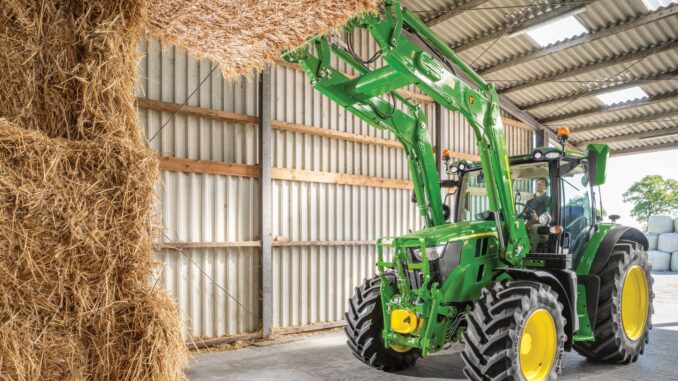
John Deere 2040 Series Compact Tractor Models and Maintenance Guide
The John Deere 2040 Series is best understood as a legacy utility tractor family rather than a modern compact-tractor line. These tractors were built for demanding mixed-farm, estate, loader, mowing, livestock, and light field-work duties, and they remain common on older acreages, small farms, and rural properties across North America. Their comparatively simple mechanical layout, substantial operating weight, diesel engines, and conventional three-point hitch/PTO equipment make them capable machines for owners willing to maintain older equipment properly.
This page is a directory for the John Deere 2040 Series, bringing together model-specific guides, maintenance content, and troubleshooting resources for surviving tractors in the range. Use it alongside the General John Deere Compact Tractor Guide as a broader starting point for Deere ownership, service planning, implement selection, and fault diagnosis. Although these are not sub-compact machines in the modern 1 Series or 2 Series sense, their owners often use them for the same practical property tasks—just on a heavier, more agricultural scale.
About the John Deere 2040 Compact Tractor Series
The John Deere 2040 Series covered a group of utility tractors marketed during the late 1970s and 1980s. In North American listings, the family includes more than one distinct tractor marketed as a 2040, plus the more powerful 2040S. Buyers should therefore identify a tractor by its serial number, engine configuration, production period, transmission arrangement, and regional origin before ordering parts or relying on specifications.
The earlier North American John Deere 2040 was produced from approximately 1976 to 1982. It used a three-cylinder diesel engine and is commonly listed at roughly 40 PTO horsepower. A later 2040 version, associated with 1979–1987 production listings, used a larger 3.9-litre four-cylinder diesel and is commonly listed around 70 engine horsepower and 61 PTO horsepower. The 2040S, produced approximately from 1981 to 1987, used the same general four-cylinder diesel family but was rated at about 75 net engine horsepower and 66 PTO horsepower.tractordata+2
These tractors are full-size utility machines, not lawn-and-garden tractors or modern sub-compacts. Depending on configuration, the later 2040 could weigh roughly 6,536 to 7,771 lb, while the 2040S could weigh about 7,365 to 7,995 lb. Two-wheel drive and four-wheel drive configurations were available, and later versions could be fitted with either open operator stations or cabs.tractordata+1
Transmission choices varied by model and market. The later four-cylinder machines could be equipped with an 8-forward/4-reverse partially synchronized transmission or a 16-forward/8-reverse Power Synchron arrangement with a hydraulically shifted high-low range. These are mechanical and hydraulic utility-tractor drivetrains—not hydrostatic compact-tractor systems—so clutch condition, linkage adjustment, clean transmission oil, and correct hydraulic pressure are central to reliable operation.tractordata+1
Typical work includes loader handling, hay and livestock chores, rotary cutting, rear-blade grading, snow work, transport, light tillage, mowing, and PTO-driven equipment. In current John Deere family terms, a 2040 Series tractor sits well above a 1 Series or 2 Series compact in physical size and generally overlaps the kind of work now associated with larger 4 Series compact tractors or small agricultural utility tractors.
John Deere 2040 Compact Tractor Models
The 2040 designation was used on more than one tractor configuration across time and markets. The table below is designed as a practical North American ownership index. Always verify the tractor identification number and engine before using a guide for parts, fluids, capacities, or repair procedures.
And See:
The earlier 2040 is commonly documented with a 2.7-litre, three-cylinder diesel, while later 2040 and 2040S listings identify a 3.9-litre, four-cylinder diesel. That distinction is critical: fuel-system components, cooling capacities, engine parts, service specifications, and diagnostic procedures may not transfer between them.tractordata+2
The later four-cylinder 2040 is commonly listed with 2WD and 4WD options, an 89.7–90-inch wheelbase, and open-station or cab configurations. The 2040S also appeared in 2WD and 4WD form, with a similar roughly 90-inch wheelbase but higher shipping weights.tractordata+1
2040 Series Compact Tractor Maintenance Guides
Routine Service and Checks
A John Deere 2040 Series maintenance plan should begin with identification. Before choosing filters, fluids, capacities, or service intervals, establish whether the tractor is the earlier three-cylinder 2040, the later four-cylinder 2040, or the 2040S. Serial-number breaks, country of origin, drivetrain type, front-axle arrangement, and cab specification can all affect the correct service information.
For regular owner checks, focus on engine oil level and condition, fuel-water separator servicing where fitted, air-cleaner restriction, coolant level, radiator cleanliness, fan-belt condition, battery terminals, brake operation, tire condition, steering free play, and lubrication of loader and three-point-hitch pivots. Older tractors can remain dependable for decades, but delayed grease work and neglected fluid changes quickly become expensive on high-load pivot pins, hydraulic pumps, front axles, and driveline components.
Use a 2040 Series compact tractor service interval checklist to organise routine tasks by hours and seasons. A practical companion post would be DIY maintenance for 2040 Series compact tractors, covering oil and filter replacement, air-filter inspection, grease-point schedules, cooling-system checks, fuel-system bleeding, and pre-winter preparation.
The later four-cylinder machines are commonly listed with approximately 9 qt of engine oil and about 18–19 qt of coolant, but owners should verify their exact tractor and manual rather than treating those figures as universal.tractordata+1
Hydraulics, Loader, and 3-Point Hitch
The hydraulic system deserves particular attention because it serves more than one function. On many utility tractors of this type, hydraulic oil condition affects steering assistance, remote valves, loader operation, three-point-hitch response, and parts of the transmission system. Use the correct Deere-approved transmission/hydraulic oil specification for the tractor, keep fluid levels correct, and replace filters according to the applicable service information.
Inspect loader and hitch equipment for:
-
Worn pins, bushings, retainers, and grease fittings
-
Damaged hydraulic hoses, rubbed hose sections, and leaking couplers
-
Cylinder-rod pitting, scored rods, or wet seals
-
Slow hitch response, hitch drift, or inconsistent lift
-
Loose loader-frame mounting hardware
-
Bent stabilizers, worn lift-arm balls, and seized adjustment links
-
Cracked welds around loader brackets or implement mounts
Useful internal article targets include Hydraulic maintenance and leak diagnosis on 2040 Series tractors, Loader and 3-point hitch maintenance for 2040 Series, and John Deere utility tractor hydraulic fluid and filter service guide.
A loader that feels weak is not automatically a pump failure. Check oil level, oil temperature, filter restriction, quick-coupler seating, control-valve operation, cylinder leakage, loader geometry, and the weight of the load before condemning major components.
Transmission and Drivetrain
The 2040 Series uses mechanical utility-tractor drivetrains rather than the hydrostatic systems found in many newer compact tractors. The later machines could have an 8-speed partially synchronized transmission or a 16-speed Power Synchron transmission. The Power Synchron version added a hydraulically shifted high-low function, so transmission-hydraulic oil quality and correct linkage operation matter particularly on those tractors.tractordata+1
Routine drivetrain inspection should cover clutch free play, gear-selection linkage, range-selector linkage, differential-lock movement, brake adjustment, front-drive components on 4WD tractors, axle seals, wheel fasteners, and driveshaft or universal-joint condition where applicable. A tractor that is difficult to shift may have linkage wear, a dragging clutch, wrong oil, cold heavy oil, internal synchronizer wear, or a gear-selection problem.
Use Transmission and driveline maintenance across 2040 Series compact tractors as the central guide, supported by model-specific posts for the 2040 and 2040S. The exact transmission installed matters, so include serial-number and configuration checks prominently in every drivetrain article.
2040 Series Compact Tractor Troubleshooting Guides
Starting, Engine, and Fuel Problems
Starting faults on older diesel utility tractors are often caused by basic issues rather than an internal engine failure. Begin with battery state of charge, cable condition, terminal cleanliness, ground connections, starter operation, fuel level, fuel shutoff position, air in the fuel system, and the condition of the fuel filters. A slow cranking speed can make a healthy diesel appear difficult to start, especially in cold conditions.
Common symptoms include:
-
No crank or intermittent cranking
-
Cranks normally but will not start
-
Starts, then stalls after a short period
-
Poor cold starting
-
Excessive exhaust smoke
-
Loss of power under PTO or loader load
-
Engine overheating during extended mowing or field work
-
Uneven running caused by fuel restriction, air intrusion, or injector-related issues
A useful hub article is 2040 Series compact tractor starting problems – diagnostics and fixes. Support it with Engine and fuel system issues across 2040 Series models, then link users to the correct three-cylinder or four-cylinder model guide. Do not assume that injection, filter, glow-aid, or fuel-bleeding procedures are identical across all tractors carrying the 2040 badge.
Hydraulic and Loader Performance Issues
Weak, slow, noisy, or jerky hydraulics can make a capable 2040 Series tractor frustrating to use. Typical complaints include a slow loader, weak bucket curl, jerky lift arms, a three-point hitch that will not rise, an implement that drops after lifting, steering that becomes stiff, or hydraulic performance that worsens after warm-up.
Start diagnosis with the simple checks:
-
Confirm the correct oil level and specification
-
Inspect the hydraulic filter and maintenance history
-
Check for suction-side leaks or foamy oil
-
Make sure all quick couplers are fully seated
-
Inspect hoses for collapse, leakage, and external damage
-
Confirm that remote-valve levers are not held in an incorrect position
-
Check loader-control valve operation
-
Compare symptoms cold versus fully warmed up
-
Look for cylinder drift or bypassing seals
Use Hydraulic performance problems on 2040 Series compact tractors as the main diagnostic page. A focused companion article, Loader won’t lift or is slow on 2040 Series models, can walk readers through pressure, flow, valve, cylinder, coupler, and implement-load checks.
Transmission, Drive, and PTO Problems
Transmission faults should be separated into gear-selection problems, clutch-release problems, hydraulic-control problems, and actual internal drivetrain damage. A tractor that will not move may have a clutch issue, a range-selector issue, differential-lock or brake drag, a linkage problem, insufficient hydraulic pressure on a power-shift-equipped version, or an internal transmission fault.
Common complaints include:
-
Tractor will not move in one or more ranges
-
Tractor moves only in some gears
-
Hard shifting or grinding when selecting gears
-
Tractor creeps with the clutch depressed
-
Loss of pulling ability on hills
-
Four-wheel drive does not engage or disengage properly
-
PTO will not engage
-
PTO turns slowly under load
-
PTO disengages unexpectedly
-
PTO clutch or control mechanism does not release correctly
Build a central Drive and transmission problems on 2040 Series compact tractors guide, then route owners to individual 2040 and 2040S troubleshooting articles. A separate PTO won’t engage or drops out across 2040 Series models post should distinguish between mechanical PTO linkage faults, clutch-related faults, hydraulic-control concerns, shaft damage, and problems caused by the attached implement.
Before diagnosing the tractor, always rule out a seized implement driveline, incorrectly adjusted slip clutch, overloaded mower or baler, damaged PTO shaft, or mismatched implement requirement.
Attachments and Implements for the 2040 Series Compact Tractor Series
The 2040 Series has the power and mass for a broad range of agricultural and property-maintenance implements. Exact compatibility depends on the individual tractor’s PTO arrangement, three-point-hitch category, hydraulic outlets, front axle, ballast, tire type, loader model, and whether the tractor is 2WD or 4WD.
Common equipment includes:
-
Front-end loaders with general-purpose, material, manure, or pallet-fork buckets
-
Rear-mounted rotary cutters and finishing mowers
-
Flail mowers where PTO power and terrain suit the machine
-
Rear blades for track maintenance, drainage shaping, and snow clearing
-
Box blades and land planes for drives and yard areas
-
Disc harrows, cultivators, small ploughs, and seedbed equipment
-
Post-hole diggers and other PTO-driven attachment equipment
-
Hay tools and light forage equipment appropriate to tractor power
-
Snow blowers, rear snow blades, and loader-mounted snow buckets
-
Bale-handling equipment within the loader’s capacity and safe-ballasting limits
-
Trailers and transport equipment, subject to braking, drawbar, road-safety, and towing-capacity considerations
Attachment selection should be based on more than advertised horsepower. Loader work depends heavily on rear ballast, tire loading, wheel weights, bucket size, terrain, and the load’s centre of gravity. PTO equipment needs to match the tractor’s PTO speed, available PTO horsepower, driveline length, and shear-bolt or slip-clutch requirements. Ground-engaging implements must suit traction, soil type, tire condition, and the tractor’s real working weight.