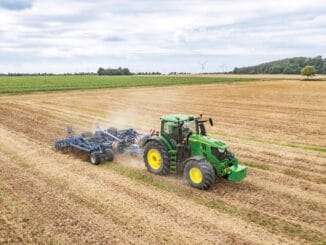
For compact-tractor implements, 540 RPM PTO is typically the best choice due to its widespread compatibility and suitability for lower-horsepower tasks.
Key Differences
540 RPM provides higher torque at slower speeds, ideal for everyday attachments like rotary mowers, tillers, post-hole diggers, and spreaders on tractors under 75 HP.1000 RPM delivers higher speed with less torque per revolution, better for demanding, high-HP implements (e.g., large balers) but risks damage if mismatched with 540-rated gear.
A 1000 RPM shaft handles roughly twice the power capacity of 540 due to reduced torque load, though it vibrates more at angles.
Compact Tractor Fit
Most compact tractors (under 75 HP) default to 540 RPM for versatility—it’s the industry standard with abundant parts availability.
Opt for dual 540/1000 if you mix implements, but avoid swapping shafts frequently to save wear; 1000-only suits bigger rigs over 90 HP.
Always match PTO speed to the implement’s label to prevent failure or injury—running 540 gear at 1000 RPM can destroy it.
Recommendation Table
1. PTO Speed Basics
| Concept | What It Means |
|---|---|
| RPM (Revolutions per Minute) | Number of complete turns the PTO shaft makes each minute. Determines how fast an attached implement spins. |
| 540 RPM | Traditional speed used on many older tractors and larger implements. Provides more torque at a slower rotation. |
| 1000 RPM | Newer, higher‑speed standard that lets lighter, faster‑spinning tools run efficiently without extra gearing. |
| Why Two Standards? | Early tractors were built around a 540 RPM gear ratio because most implements (large rotary mowers, balers, disc harrows) needed high torque at low speed. As manufacturers introduced lighter, high‑speed implements, a 1000 RPM option emerged to avoid the need for belts or extra gears. |
Most modern compact tractors allow you to select the desired speed via a gearbox selector, hydraulic switch, or electronic control. Some even offer dual‑speed PTOs that can be switched on the fly, giving you flexibility for mixed‑task operations.
2. Power & Torque Characteristics
Horsepower formula
HP=Torque (lb‑ft)×RPM5252
Because the denominator (5252) is constant, raising RPM increases horsepower for a given torque, while lowering RPM raises torque for a given horsepower.
| Speed | Typical Torque Range* | Approx. HP (30 hp tractor) |
|---|---|---|
| 540 RPM | 30–45 lb‑ft (higher) | ~30 hp (torque‑heavy) |
| 1000 RPM | 15–25 lb‑ft (lower) | ~30 hp (speed‑heavy) |
*Exact numbers vary by engine design and transmission.
Implications
- 540 RPM delivers more pulling force—ideal for implements that face heavy resistance (large rotors, disc harrows).
- 1000 RPM spins faster, allowing smaller blades or cutters to reach the necessary surface speed, which improves cutting quality on light‑duty tools.
3. Implement Compatibility
3.1. Implements Designed for 540 RPM
| Category | Typical Examples | Why 540 RPM Works |
|---|---|---|
| Rotary Mowers & Large‑Diameter Cutters | 48‑inch+ rotary mowers, brush hogs with big rotors | High torque keeps the rotor turning under dense vegetation without stalling. |
| Balers & Wrappers | Square‑bale balers, round‑bale wrappers | Slower speed provides steady, controlled winding of twine or netting. |
| Disc Harrows & Light Plows | 2‑to‑4‑bottom disc harrows, light plows | Torque helps the discs bite into soil, especially on rough ground. |
| Large‑Diameter Sprayers | Air‑blast sprayers with big fans | Fan blades need torque to overcome air resistance. |
3.2. Implements Designed for 1000 RPM
| Category | Typical Examples | Why 1000 RPM Works |
|---|---|---|
| Small Rotary Cutters & Brush Cutters | 24‑inch rotary cutters, handheld brush hogs | Faster blade speed yields cleaner cuts on light vegetation. |
| Snow Blowers | Compact snow throwers with impeller fans | Higher RPM moves more snow per revolution, improving clearing efficiency. |
| High‑Speed Sprayers | Orchard sprayers that rely on rapid airflow | Faster fan rotation creates a finer mist for uniform coverage. |
| Light‑Duty Tillers & Cultivators | Mini‑tillers with small tines | Speed helps the tines rotate quickly enough to break up soil without excessive torque. |
3.3. Dual‑Speed or Convertible Implements
Some manufacturers provide split‑shaft hubs, belt drives, or PTO converters that let a single implement operate on either speed. These adapters add cost and weight but give flexibility if you frequently switch tasks. Keep in mind:
- Power loss – Belt drives typically lose 2‑5 % of power.
- Complexity – More moving parts increase maintenance demands.
- Safety – Ensure guards and couplings are rated for the higher speed.
4. Performance Implications
| Factor | 540 RPM | 1000 RPM |
|---|---|---|
| Cutting / Mowing Efficiency | Excellent on thick, wet grass or tall brush; slower blade tip speed can leave a ragged finish on fine grass. | Cleaner cut on short, dry vegetation; may bog down on dense material. |
| Soil Disturbance & Compaction | Higher torque can increase soil drag, potentially causing more compaction on soft ground. | Lighter torque reduces drag, making it gentler on delicate soils. |
| Fuel Consumption | Slightly lower engine RPM → marginally better fuel economy (≈ 3‑5 % less) under comparable loads. | Higher engine RPM → modest fuel increase, often offset by faster task completion. |
| Noise & Vibration | Quieter, less vibration. | Higher acoustic noise and vibration; hearing protection is essential. |
5. Safety Aspects
| Aspect | 540 RPM | 1000 RPM |
|---|---|---|
| Stopping Distance | Slower rotation → longer time for blades to stop after PTO disengage. | Faster rotation → blades stop more quickly, but higher speed can increase severity of a mishap. |
| Guard Requirements | Standard PTO shield sufficient; blade guards must be robust. | Additional shielding recommended for high‑speed blades to contain fragments. |
| PPE | Hearing protection, eye protection, sturdy footwear. | Same PPE, plus extra caution for high‑speed debris. |
| Operator Training | Emphasize torque overload awareness. | Emphasize blade‑speed hazards and safe disengagement procedures. |
Always follow the tractor manufacturer’s safety manual and local regulations regarding PTO guard placement and emergency shut‑off mechanisms.
6. Real‑World Case Studies
Case A – Small Farm, Hilly Terrain, 540 RPM Rotary Mower
- Setup: 25‑hp compact tractor with a 540 RPM PTO, pulling a 48‑inch rotary mower.
- Outcome: The mower maintained consistent speed on steep slopes, handling thick, damp grass without stalling. Fuel consumption rose ~4 % versus a 1000 RPM mower, but reduced downtime outweighed the cost.
- Lesson: On uneven ground and heavy vegetation, torque outweighs speed.
Case B – Landscape Contractor, 1000 RPM Brush Cutter
- Setup: 30‑hp tractor equipped with a 1000 RPM PTO driving a 24‑inch brush cutter on residential properties.
- Outcome: Cleared brush 20 % faster than a 540 RPM cutter, achieving a clean cut on thin saplings. Blade wear increased, requiring knife replacement twice a season.
- Lesson: High‑speed cutters boost productivity on light material but may incur higher consumable costs.
7. Decision‑Making Framework
When choosing a PTO speed, walk through this checklist:
- Identify Primary Implement(s) – Are they torque‑heavy (large rotors, disc harrows) or speed‑heavy (small cutters, snow blowers)?
- Assess Typical Work Conditions – Dense vegetation, steep slopes, or soft soil favor 540 RPM; light, dry material, flat terrain, or precision work favors 1000 RPM.
- Match Tractor Power – Ensure the tractor’s horsepower can sustain the implement’s torque demand at the chosen speed. Overloading leads to overheating and premature wear.
- Future Expandability – If you anticipate adding diverse implements, consider a dual‑speed PTO or an adapter kit.
- Check Manufacturer Recommendations – Most implement manuals specify the required PTO speed; deviating can void warranties.
- Safety Review – Verify that guards, couplings, and PPE meet the speed’s requirements.
Quick Fit‑Check Table
| Implement | Recommended PTO Speed | Reason |
|---|---|---|
| 48‑inch rotary mower | 540 RPM | Needs high torque to turn large rotor under load |
| 24‑inch brush cutter | 1000 RPM | Blade tip speed critical for clean cut |
| Disc harrow (2‑bottom) | 540 RPM | Torque needed to bite into soil |
| Snow blower (impeller) | 1000 RPM | Faster impeller moves more snow per rev |
8. Maintenance & Longevity Tips
- Inspect Couplings – Look for cracks or worn splines weekly; replace before failure.
- Lubricate PTO Shafts – Follow the tractor’s service schedule; use the recommended grease type.
- Guard Checks – Verify shields are securely fastened and free of dents.
- Monitor Temperature – Excess heat indicates overload; pause work and let the system cool.
- Track Wear Parts – High‑speed cutters (1000 RPM) often need more frequent blade replacement; keep a spare set handy.
9. Expanded FAQ
Q1: Can I run a 540 RPM implement on a 1000 RPM PTO?
A: Technically you can, but the implement will spin twice as fast as designed, which can cause premature wear, unsafe blade speeds, or reduced performance. Most manufacturers advise against it and may void warranties. Use a PTO converter or stick to the specified speed.
Q2: What happens if I use a 1000 RPM implement on a 540 RPM PTO?
A: The implement will turn slower than intended, reducing cutting efficiency and possibly causing the engine to work harder to maintain torque. For rotary cutters, you’ll see ragged cuts; for snow blowers, reduced snow‑throw distance.
Q3: Do modern compact tractors allow easy speed switching?
A: Many newer models feature a dual‑speed PTO selector—either a lever, button, or electronic menu option—that lets you toggle between 540 RPM and 1000 RPM without tools. Check your owner’s manual for the exact procedure.
Q4: How does PTO speed affect fuel economy?
A: Running a 1000 RPM PTO generally raises engine RPM, leading to a modest fuel increase (≈ 3‑5 %). However, faster task completion can offset the extra consumption. For heavy‑load work, the 540 RPM setting often runs cooler and more efficiently.
Q5: Is there a legal requirement for PTO guards?
A: Yes. In most jurisdictions, a functional PTO shield must cover the shaft whenever the tractor is in motion. High‑speed (1000 RPM) implements often require additional blade guards to contain fragments. Refer to local agricultural safety regulations for specifics.
Q6: Can I retrofit a single‑speed tractor to dual‑speed?
A: Some manufacturers offer conversion kits that replace the PTO housing and add a selector valve. Installation typically requires a qualified mechanic and may affect warranty coverage. Evaluate cost versus the flexibility you need.
Q7: Which speed is better for organic farms that avoid heavy machinery?
A: Organic farms often prioritize gentle soil handling and low compaction, making 1000 RPM tools attractive for light tillage and precise mowing. However, if you still need to manage thick weeds or heavy residues, a 540 RPM mower may be indispensable.
Q8: Where can I find official PTO safety guidelines?
A: The USDA’s Agricultural Safety Manual and the American Society of Agricultural Engineers (ASAE) publish detailed PTO safety standards. A quick web search returns the latest PDFs (see the link to the USDA guide in the article body).
Q9: What are the most reliable brands for PTO converters?
A: Brands such as John Deere, Kubota, and New Holland produce OEM‑approved converters. Independent aftermarket options exist, but verify compatibility with your tractor model before purchase.
Q10: Where can I learn more about PTO technology?
A: A solid introductory resource is the Wikipedia entry on Power Take‑Off: https://en.wikipedia.org/wiki/Power_take-off. For deeper technical insight, the ASAE’s “PTO Design and Safety” handbook (available through agricultural extension services) is highly recommended.
10. Conclusion
Both 540 RPM and 1000 RPM PTO speeds have clear strengths. 540 RPM shines when you need raw pulling power—think large rotors, heavy tillage, and rugged terrain. 1000 RPM excels with lightweight, high‑speed implements such as brush cutters and snow blowers, delivering quicker cuts and smoother finishes.
Your optimal choice depends on the primary implements you run, typical field conditions, and whether you value torque or speed more in daily tasks. If you regularly switch between heavy and light duties, a dual‑speed PTO or a reliable converter can give you the best of both worlds—though it adds cost and maintenance considerations.
Matching the correct PTO speed to your implement improves productivity, reduces fuel consumption, extends equipment life, and keeps safety risks low.
Further Reading
- Power Take‑Off (PTO) Overview – Wikipedia: https://en.wikipedia.org/wiki/Power_take-off
- USDA Agricultural Safety Manual – PTO Safety – (PDF available via USDA website)