
John Deere 200 Series Lawn and Garden Tractor Models and Maintenance Guide
John Deere’s 200 Series name has been used for two very different groups of North American lawn and garden tractors. The original 200 Series, sold from the mid-1970s through the late 1980s, consisted of durable steel-framed garden tractors intended for mowing, towing, snow work, and light ground-engaging jobs. The current 200 Series includes the S220 and S240, which are premium residential lawn tractors designed principally for mowing, mulching, bagging, and lighter towing on maintained properties.
This page is a central directory for both interpretations of the 200 Series name. It brings together model-specific guides, maintenance information, troubleshooting content, mower deck service topics, PTO and drive-system diagnosis, attachment information, and practical ownership guidance. Use the General John Deere Lawn and Garden Tractor Guide as the top-level resource for comparing the wider Deere lawn and garden tractor range, including current residential machines and older garden-tractor platforms.
About the John Deere 200 Series Lawn and Garden Tractor Series
The John Deere 200 Series covers an unusually broad span of lawn and garden tractor history. The original 200, 208, 210, 212, 214, and 216 tractors were traditional garden tractors. They used single-cylinder Kohler gasoline engines ranging from approximately 8 hp to 16 hp, with steel frames, substantial cast and steel components, relatively large rear tires, manual steering, mechanical PTO arrangements, and transmission systems suited to mowing and utility work. These machines were commonly fitted with 38-inch or 46-inch mower decks and could also use equipment such as snow blades, snow blowers, sleeve-hitch implements, carts, and other garden attachments.
Early machines in the original range were generally gear-drive tractors, while later and higher-specification models offered more advanced drive arrangements. Depending on the model and production period, buyers could find a four-speed gear transaxle, a variable-speed drive, a hydrostatic transmission, or related traction-drive systems. The heavier original 200 Series tractors occupy the classic garden tractor tier, above a basic lawn tractor but below the larger and more powerful 300 and 400 Series machines.
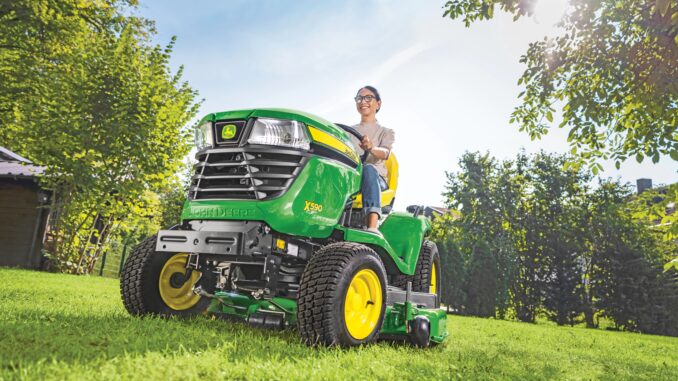
The modern 200 Series takes a different approach. The current S220 and S240 are two-wheel-drive residential lawn tractors with V-twin gasoline engines, side-by-side hydrostatic travel pedals, electric PTO engagement, stamped steel mower decks, and practical mowing features such as cruise control, adjustable seats, deck-height controls, anti-scalp wheels, and optional MulchControl capability. The S220 uses a 22 hp V-twin engine and normally carries a 42-inch Accel Deep mower deck. The S240 uses a 21.5 hp V-twin engine and is available with either a 42-inch or 48-inch Accel Deep mower deck.deere+1
In Deere’s wider range, the current 200 Series sits above entry-level S100 Series lawn tractors but below the more heavily equipped X300 Series lawn tractors and the larger X500 and X700 garden tractors. It is best suited to maintained lawns, larger residential plots, regular bagging or mulching work, and light towing rather than intensive ground-engaging work.
John Deere 200 Series Lawn and Garden Tractor Models
The following table is an across-time directory of publicly known John Deere 200 Series lawn and garden tractor models marketed in the United States and Canada. Specifications changed across production years, deck options, engine revisions, and regional catalog configurations. The original garden tractors and the modern S220/S240 machines should not be treated as mechanically interchangeable simply because they share the 200 Series designation.
And See
The original 200 Series range is widely documented as including the 200, 208, 210, 212, 214, and 216 models. The original 200 was an 8 hp gear-drive garden tractor with a 38-inch deck option, independent mid PTO, optional sleeve hitch, and available snow equipment. The 210, 212, 214, and 216 were generally offered with 38-inch or 46-inch mower deck options, while the later 216 represented the highest-power version of the original family.tractordata+1
The current S220 and S240 are marketed as the modern 200 Series residential lawn tractor range. The S220 uses a 22 hp V-twin engine, a hydrostatic two-wheel-drive transaxle, and a 42-inch Accel Deep deck. The S240 adds a Kawasaki V-twin engine, heavier-duty hydrostatic drive hardware, and a choice of 42-inch or 48-inch Accel Deep decks.deere+1
200 Series Lawn and Garden Tractor Maintenance Guides
Maintenance needs differ greatly between a 1970s or 1980s Kohler-powered garden tractor and a current V-twin hydrostatic lawn tractor. However, the same ownership principle applies throughout the range: frequent inspection and routine servicing are much less expensive than repairing a neglected engine, deck, transaxle, PTO clutch, or steering system.
The 200 Series lawn and garden tractor service interval checklist should be the starting point for any owner. Older tractors may need closer attention to grease fittings, belts, steering wear, carburetor condition, wiring, safety switches, and corrosion. Newer tractors usually have better service access and improved electrical systems, but still need regular oil, filter, deck, tire, and belt maintenance.
Routine Service and Checks
Check engine oil before each mowing session or before beginning a demanding job such as towing, bagging heavy grass, or snow removal. Change oil at the interval specified for the particular engine, but shorten the interval where the tractor works in dusty, hot, heavily loaded, or short-trip conditions. Engines equipped with oil filters need both fresh oil and the correct replacement filter.
Inspect the air-cleaner assembly regularly. A heavily restricted air filter can reduce power, worsen fuel consumption, encourage rich running, and make the engine struggle when the mower deck is loaded in long or wet grass. Replace a paper element rather than attempting to wash it. Pre-cleaners should be inspected and cleaned or replaced as appropriate.
Gasoline engines need clean fuel, a correctly functioning fuel cap vent, sound fuel lines, a clean fuel filter where fitted, and a carburetor that has not been left with stale fuel for months. Older 200 Series tractors are particularly vulnerable to blocked carburetor passages, varnish deposits, leaking fuel lines, worn needle valves, and sediment in fuel tanks. Use fresh fuel and a suitable stabilizer before seasonal storage.
Current S220 and S240 models use V-twin engines with full-pressure lubrication and replaceable oil filters. The S220 uses a 22 hp V-twin engine, while the S240 uses a 21.5 hp Kawasaki V-twin; both have replaceable air-cleaner elements and practical oil-drain arrangements.deere+1
Check the following during regular service:
-
Engine oil level and oil condition
-
Oil filter condition and replacement interval where fitted
-
Air filter, pre-cleaner, cooling fins, engine shrouds, and debris screens
-
Spark plugs, plug leads, ignition components, and engine tune condition
-
Fuel lines, fuel filter, tank condition, fuel cap vent, and carburetor operation
-
Battery voltage, battery terminals, grounds, charging circuit, starter cable, and solenoid connections
-
Tire pressures before mowing or adjusting the mower deck
-
Brake operation and parking brake engagement
-
Throttle, choke, hydrostatic pedal, clutch, brake, and gear-selector linkages
-
Safety-interlock switch operation
-
Drive belts, deck belts, idler pulleys, tension springs, and belt guides
-
Grease points, especially on older garden tractors with serviceable steering, axle, and mower-deck components
Useful internal resources for this work include the 200 Series lawn and garden tractor service interval checklist, DIY maintenance for 200 Series lawn tractors, engine oil, filters, and tune-up service for 200 Series tractors, and seasonal storage and pre-season checks for 200 Series lawn and garden tractors.
Mower Deck, Cutting Quality, and Belt Care
A well-maintained mower deck is essential to both cut quality and tractor reliability. Dull blades tear grass rather than cutting it cleanly, and bent or badly worn blades can cause vibration, poor airflow, uneven discharge, and premature spindle-bearing wear. Inspect blades frequently, especially after striking stones, roots, branches, hidden metal, or other obstacles.
Remove blades only with the engine off, key removed, parking brake applied, and spark-plug wires disconnected where practical. On modern models, also ensure the PTO is off and cannot be accidentally energized. Sharpen blades evenly and check their balance before refitting. A blade that is sharper on one end or materially lighter on one side can create vibration that damages spindle bearings and deck hardware.
Deck leveling should always begin with correctly inflated tires. An incorrectly inflated tire changes the deck’s position relative to the ground and can cause an apparent leveling problem. Check side-to-side deck level, then the front-to-rear pitch according to the deck’s intended setup. A deck that is too low at the front may scalp lawns or overload the engine, while a deck that is too high at the front can leave uncut grass.
Inspect the deck belt for glazing, cracking, fraying, missing chunks, oil contamination, excess heat, or a polished shiny appearance. Confirm that the belt is routed correctly around every pulley and belt keeper. A belt that repeatedly rolls off may point to a damaged pulley, failed idler bearing, weak tension spring, bent belt guide, worn spindle, or incorrect belt length.
Current S220 and S240 tractors use Accel Deep mower decks designed for mowing, mulching, and bagging. The modern 200 Series decks are available in 42-inch and 48-inch configurations depending on the model.deere+1
Useful internal resources include Mower deck maintenance and cutting quality on 200 Series tractors, Deck belt and spindle service for 200 Series lawn and garden tractors, and Blade, deck-level, and cut-quality guide for 200 Series models.
Steering, Axle, and Chassis Maintenance
Steering problems often develop gradually. Excess steering-wheel free play, wandering, uneven front-tire wear, a steering wheel that does not self-center, or a tractor that turns more easily in one direction can indicate wear in the tie rods, steering gear, axle pivot, front spindles, wheel bushings, wheel bearings, or steering links.
Classic 200 Series garden tractors should be inspected carefully for wear in mechanical steering components, front axle pivots, spindle bushings, drag links, hitch assemblies, mower-deck hangers, and frame mounting points. Grease service is particularly important on older machines that remain in working use.
Check front tire pressure and compare the wheels for visible lean, uneven tire wear, or loose movement when lifted from the ground. A basic toe-in check can help identify steering alignment issues, but worn parts should be repaired before attempting final adjustment. A tractor with worn tie rods or bushings cannot be accurately aligned until the free play is corrected.
Inspect the chassis for loose bolts, cracks around attachment mounting points, rust near deck supports, worn hitch hardware, damaged deck hangers, and loose wheel hardware. Examine pedal pivots, brake rods, hydrostatic linkage, throttle and choke cables, and safety switches as part of pre-season maintenance.
Helpful internal resources include Steering and front axle maintenance across 200 Series lawn and garden tractors, Garden tractor chassis and hitch inspection guide, and Front-wheel, tie-rod, and steering-play diagnosis for John Deere lawn tractors.
200 Series Lawn and Garden Tractor Troubleshooting Guides
The 200 Series includes several generations of tractors, so diagnosis starts with correct identification. Confirm the model number, serial-number range, engine type, transmission arrangement, mower deck size, PTO type, and any fitted attachment before ordering parts or beginning repair work. A problem that appears similar on a John Deere 216 and an S240 may have a completely different cause because the tractors use different engines, wiring, decks, and drive systems.
Individual model posts such as the John Deere 200 maintenance & troubleshooting guide, John Deere 214 problems and fixes overview, John Deere 216 maintenance & troubleshooting guide, John Deere S220 maintenance & troubleshooting guide, and John Deere S240 maintenance & troubleshooting guide should be used alongside the broader symptom-based topics below.
Starting, Engine, and Fuel / Ignition Problems
A no-start complaint should first be divided into two basic categories: the engine will not crank, or the engine cranks but will not start. If the engine will not crank, begin with battery charge, battery cable condition, ground connections, fuse condition, ignition switch operation, PTO switch position, brake or clutch switch operation, seat switch operation, starter solenoid function, and starter-motor condition.
A weak battery may still illuminate lights or operate a small electrical load but lack the current needed to turn an engine against compression. Clean and tighten both battery terminals and the engine ground connection before replacing expensive components. Corroded grounds are particularly common on older tractors.
If the engine cranks but will not start, check fuel condition, fuel flow, spark, compression, and air supply. Fresh fuel is essential. Old gasoline can cause varnish, blocked main jets, plugged idle circuits, sticking float needles, and poor starting after storage. On carbureted tractors, verify that fuel reaches the carburetor and that the choke is operating correctly. On current V-twin models, inspect the fuel filter, fuel lines, fuel pump operation, and air-filter condition before assuming a major internal engine fault.
Engine stalling under load is often caused by restricted fuel supply, an overly dirty air filter, poor spark, governor problems, overheating, a plugged cooling screen, a deck that is overloaded with wet grass, or blades that cannot reach correct speed because of belt or PTO issues. Smoke, oil consumption, difficult hot starting, excessive crankcase pressure, and low power can also point to compression, valve-clearance, or internal engine wear concerns.
Useful internal resources include 200 Series lawn and garden tractor starting problems – diagnostics and fixes, Engine and fuel system issues across 200 Series tractors, and Battery, safety switch, and starter-circuit troubleshooting for 200 Series models.
Mower Deck, PTO, and Cutting Performance Problems
If the mower deck will not engage, first identify whether the tractor uses a manual PTO system or an electric PTO clutch. On an electric-PTO model, check the PTO switch, fuse, wiring connectors, battery and charging voltage, safety-interlock circuit, clutch air gap where applicable, and clutch operation. On manual-PTO systems, inspect engagement linkage, belt tension, pulleys, belt guides, clutch components, and the condition of the drive belt.
A deck that engages but stops in heavy grass may have dull blades, excessive grass buildup beneath the deck, a worn belt, a weak idler spring, seized spindle bearings, an incorrectly routed belt, a failing PTO clutch, or an engine that cannot maintain governed speed. Slow blade speed is often mistaken for an engine problem when the real cause is belt slip or drag in the mower deck.
Excess vibration should never be ignored. Stop mowing and inspect for a bent blade, unbalanced blade, damaged spindle, loose pulley, worn bearing, bent deck shell, missing hardware, debris wrapped around a spindle, or a broken belt guide. Continuing to operate with vibration can enlarge mounting holes, damage bearings, crack deck welds, and cause belt failures.
Uneven cut, scalping, striping problems, grass clumps, and missed strips may be caused by incorrect deck level, mismatched tire pressures, worn blades, wrong anti-scalp wheel settings, excessive mowing speed, wet grass, incorrect blade type, blocked deck airflow, or a deck that is too low for terrain conditions.
Useful internal resources include PTO and deck engagement problems on 200 Series lawn tractors, Cut quality and deck vibration issues on 200 Series models, and Mower deck belt, spindle, and pulley diagnosis for 200 Series tractors.
Drive, Transmission, and Traction Problems
A tractor that will not move should be checked first for simple issues: parking brake engagement, drive-belt condition, correct hydrostatic bypass position, gear-selector position, clutch pedal operation, brake linkage drag, and disconnected or damaged drive linkage. On gear-drive tractors, verify that the transmission is fully in gear and that the clutch or variable-speed system is actually transmitting power.
Drive belts can look acceptable while still slipping under load. Inspect them for glazing, narrowing, cracking, oil contamination, incorrect routing, missing belt guides, weak tension springs, and seized idler pulleys. A belt that squeals when climbing a hill, towing, or engaging the deck is often slipping.
Hydrostatic tractors may lose travel speed because of a worn or slipping drive belt, overheated transaxle, blocked cooling fan, damaged cooling fins, linkage adjustment problems, a bypass valve left open, internal transmission wear, or low hydraulic performance where the system is serviceable. Hydrostatic whine can be normal to a degree, but new noise, severe whine, jerking, delayed movement, fluid leakage, or major loss of uphill performance deserves investigation.
Poor traction can result from worn rear tires, incorrect tire pressure, wet grass, loose soil, steep slopes, insufficient rear weight, excessive front-mounted attachment weight, or towing loads beyond the tractor’s practical capability. Tire chains and wheel weights can help in snow and some low-traction conditions, but they do not make steep or unstable terrain safe. Avoid operating across slopes that exceed the manufacturer’s stated limit or that feel unsafe for the specific ground condition.
The current S220 is a two-wheel-drive hydrostatic lawn tractor using a TLT200 transaxle, while the S240 uses a K46 heavy-duty hydrostatic transmission. Neither is a substitute for a purpose-built heavy-duty garden tractor when repeated ground-engaging, high-traction, or severe-slope work is required.deere+1
Useful internal resources include Drive and transmission problems on 200 Series lawn and garden tractors, Traction and hill performance issues across 200 Series models, and Hydrostatic transmission and drive-belt troubleshooting for 200 Series tractors.
Attachments and Implements for the 200 Series Lawn and Garden Tractor Series
Attachment capability is one of the biggest differences between the original and current 200 Series tractors. The classic 200, 208, 210, 212, 214, and 216 garden tractors were built to use mower decks and a range of utility equipment, including snow equipment and compatible sleeve-hitch or rear-mounted garden tools. The original John Deere 200, for example, could be equipped with a 38-inch mid-mount mower deck, snow blower, snow blade, independent mid PTO, and optional sleeve hitch.tractordata
Depending on model, production year, and local catalog availability, original 200 Series garden tractors may be suitable for:
-
Mid-mount mower decks
-
Snow blades
-
Snow blowers
-
Rear utility carts
-
Wheel weights
-
Tire chains
-
Front or rear weight equipment
-
Sleeve-hitch implements
-
Rear tillers where supported
-
Plows, cultivators, harrows, and similar light garden tools
-
Lawn sweepers
-
Aerators
-
Dethatchers
-
Sprayers
-
Tow-behind spreaders
-
Lawn rollers
The S220 and S240 are primarily mowing-oriented lawn tractors. Their most relevant accessories are mower decks, mulch kits, bagging systems, lawn carts, sweepers, aerators, dethatchers, spreaders, and carefully matched snow equipment where offered for the specific model. The current S220 and S240 are designed for mowing, mulching, and bagging, and their Accel Deep decks are compatible with optional MulchControl equipment.deere+1
Before buying or fitting an attachment, check the exact tractor model, serial-number group, deck mounting arrangement, PTO configuration, belt routing, front hitch or rear hitch type, electrical connections, tire clearance, attachment weight, and whether ballast is required. A mower deck from one Deere family may not fit another even if the cutting width is similar.
Heavy attachments alter steering effort, braking distance, traction, turning space, and stability. Snow equipment may need tire chains and wheel weights. Rear-mounted equipment may require front ballast. Bagging systems can add weight behind the rear axle, while a front snow blade can reduce steering grip unless the tractor is properly balanced.
Useful internal resources include Attachments and implement options for 200 Series lawn and garden tractors, Setting up and using snow equipment and yard attachments on 200 Series tractors, and Mower deck, bagger, and tow-behind compatibility for 200 Series models.