
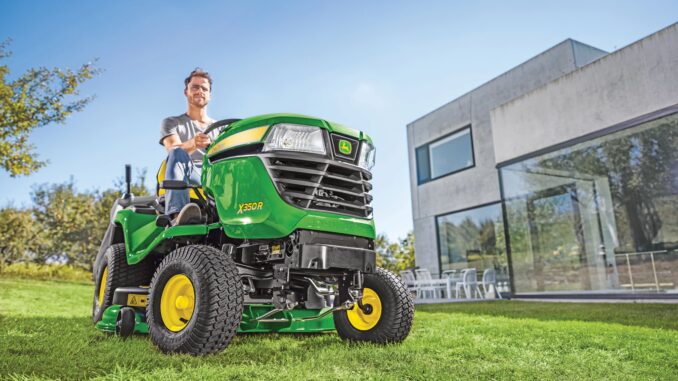
The John Deere 265 is a late-200 Series garden tractor built from 1988 to 1994, designed for homeowners who need more than a basic lawn tractor but still want a machine that is practical to maintain at home. It uses a 17 hp Kawasaki FC540V single-cylinder gasoline engine, a hydrostatic transmission, and an independent mid PTO with electric clutch, which makes it a capable platform for mowing and light year-round property work.
This guide is written for USA and Canada owners who want a practical, symptom-first reference for repair, troubleshooting, maintenance, parts lookup, diagrams, and manuals. It focuses on realistic DIY work, common failure points, routine service items, and the checks that help you decide whether to repair the tractor yourself or move the job to a John Deere dealer.
John Deere 265 model overview
The John Deere 265 sits in Deere’s late 200 Series / garden tractor range, above lighter lawn tractors and closer to the type of machine owners bought when they wanted heavier-duty mowing plus attachment capability. Factory information commonly associates the 265 with a 46-inch mid-mount mower deck, while the chassis could also be used with a snowblower and front blade attachments.
For owners, the most important systems are the Kawasaki engine and fuel system, the mower deck and PTO drive, the hydrostatic transmission, and the electrical and safety-switch system. When problems show up on an older 265, they usually appear as no-start complaints, weak running, poor cut quality, belt or blade issues, vibration, PTO engagement trouble, or age-related electrical faults.
Common John Deere 265 service parts
Owners most often look up parts tied to tune-up and mowing performance, including the engine oil and oil filter, air filter and foam pre-cleaner, fuel filter, spark plug, traction or PTO-related belts, mower blades, ignition key, battery, and deck wear items. Deere’s current residential quick-reference system also emphasizes maintenance parts, service intervals, and capacities as the fastest route for routine servicing on lawn and garden equipment.
Known maintenance references tied to Deere and third-party sources include Turf-Gard 10W-30 engine oil TY22029, oil filter AM125424, fuel filter AM116304, spark plug M805853 on comparable Deere/Kawasaki residential equipment, plus air-filter elements that Deere lists by engine/application in its quick-reference guides. Because the John Deere 265 is older and serial-number-sensitive, owners should always confirm the exact OEM number against the tractor PIN, engine model tag, and deck identification before ordering.
Troubleshooting the John Deere 265 by symptom
The best way to diagnose this tractor is to start with the symptom the owner actually sees, not with a random list of parts. On the John Deere 265, the main categories are starting issues, running issues, cut-quality problems, vibration and noise, overheating or leaks, transmission and drive complaints, and electrical or safety-switch faults.
That symptom-first approach matters because an older garden tractor often has more than one age-related issue at the same time, and replacing parts without narrowing the fault can waste money quickly. Basic checks should always come before deeper teardown, especially on fuel, ignition, belt, and safety-switch complaints.
Immediate John Deere 265 repair needs
Some faults on the John Deere 265 should be handled immediately because they affect safe operation or can damage expensive parts if ignored. The big ones are fuel leaks, severe vibration, PTO or blade issues, electrical shorts, overheated belts, and hydrostatic drive complaints that get worse under load.
John Deere 265 starting issues
A starting problem usually shows up as no crank, slow crank, or crank-without-start. On an older John Deere 265, that can come from a weak 12-volt battery, corroded terminals, poor ground, bad key switch, failed seat/brake/PTO safety interlock, stale fuel, restricted fuel filter, or ignition trouble at the plug or coil.
Common causes
-
Weak battery or poor cable connections.
-
Corroded ground path or starter circuit connections.
-
PTO left engaged or brake/safety switch not made.
-
Old fuel, blocked fuel filter, or varnish in the carburetor.
-
Fouled or worn spark plug.
Basic owner checks
-
Confirm the PTO is off, the brake is fully applied, and the operator presence system is not preventing cranking.
-
Check battery terminals for corrosion and verify the cables are tight.
-
Inspect the spark plug and fuel filter, and check whether fuel is fresh.
-
If it cranks but will not fire, check for spark and fuel delivery before replacing parts.
John Deere 265 running and power-loss issues
If the engine starts but runs rough, surges, smokes, or loses power in tall grass, the issue is often in the air-fuel-ignition side before it is anything more serious. Dirty air filtration, a partially blocked fuel filter, carburetor deposits, incorrect plug condition, or governor and throttle-linkage issues are all realistic causes on a machine of this age.
Common causes
-
Dirty paper air filter or clogged foam pre-cleaner.
-
Restricted fuel flow or stale gasoline.
-
Fouled spark plug or weak ignition.
-
Carburetor varnish from storage.
-
Cooling fins packed with debris, causing heat-related power loss.
Basic owner checks
-
Remove the air-cleaner cover and inspect both the paper element and foam pre-cleaner.
-
Replace stale fuel and inspect the inline fuel filter.
-
Check the plug condition and correct gap per the engine manual.
-
Clean engine-cooling areas so the air-cooled Kawasaki can shed heat properly.
Cut-quality problems on the John Deere 265
Poor cut quality normally shows up as uncut strips, ragged tips, scalping, clumping, or uneven height. On the John Deere 265, the most likely causes are dull or bent blades, an out-of-level 46-inch deck, worn spindle or idler parts, grass buildup under the deck, or a stretched or slipping deck belt.
Common causes
-
Dull, bent, or unbalanced blades.
-
Deck not level side-to-side or with incorrect pitch.
-
Belt wear or weak engagement at the PTO clutch.
-
Heavy debris buildup under the shell.
-
Tire pressure mismatch changing deck attitude.
Basic owner checks
-
Clean the underside of the mower deck.
-
Check blade edges, blade straightness, and blade balance.
-
Verify tire pressures are equal side-to-side.
-
Inspect the deck belt and idlers for glazing, cracking, or looseness.
John Deere 265 vibration and noise
Strong vibration is never something to ignore because it can quickly damage bearings, spindles, belts, and the PTO system. On this model it often points to a bent blade, unbalanced blade set, damaged spindle, loose pulley hardware, failing idler bearing, or engine/driveline mounting problem.
Common causes
-
Bent or badly worn mower blade.
-
Blade installed incorrectly or unmatched blade pair.
-
Worn spindle bearings.
-
Loose deck pulleys or idlers.
-
Damaged belt or pulley misalignment.
Basic owner checks
-
Stop mowing immediately if vibration appears suddenly.
-
Inspect both blades and all blade hardware before running again.
-
Spin deck pulleys and spindles by hand with the engine off to check for roughness.
-
Replace damaged blades in matched sets where required.
Overheating, smoke, and leaks on the John Deere 265
The John Deere 265 uses an air-cooled engine, so blocked cooling fins and debris around the engine can quickly lead to overheating symptoms. Oil smoke, fuel smell, or wet spots under the tractor also need fast attention because they can become fire risks or cause engine damage.
Common causes
-
Grass and dirt packed around cooling shrouds.
-
Overfilled crankcase or oil leak.
-
Aging fuel line or leaking inline filter.
-
Carburetor issues causing rich running.
-
Debris packed around muffler area.
Basic owner checks
-
Clean debris from the engine screen, cooling fins, and muffler area.
-
Check the oil level carefully instead of topping up blindly.
-
Inspect fuel hose and filter connections for seepage.
-
Do not continue mowing if you smell raw fuel or see active leaks.
John Deere 265 transmission and drive problems
The 265 uses a hydrostatic transmission, so owners usually describe drive problems as weak uphill pull, delayed response, poor reverse performance, or loss of motion after the tractor warms up. These symptoms can come from belt-related problems ahead of the hydro unit, worn linkage adjustment, brake drag, or internal transmission wear that moves the repair closer to dealer-level work.
Common causes
-
Worn or slipping traction-drive belt.
-
Linkage adjustment issues.
-
Brake not releasing fully.
-
Low system efficiency from age or internal hydro wear.
-
Tire or load conditions masking as drive loss.
Basic owner checks
-
Inspect the traction belt for glazing, cracks, and correct routing.
-
Make sure the brake is fully releasing.
-
Check linkages for free movement and obvious looseness.
-
If the problem persists hot and cold, treat it as an advanced diagnosis job.
Electrical and safety-switch issues on the John Deere 265
A lot of older John Deere 265 complaints come down to electrical age: corroded connectors, brittle wiring, weak grounds, worn ignition switches, or failed safety interlocks. Because the tractor uses an electric PTO clutch and multiple safety devices, even a simple no-crank or no-blade-engagement complaint can trace back to switch logic instead of the major component itself.
Common causes
-
Corroded battery terminals or frame ground.
-
Failing ignition switch.
-
Faulty seat, brake, or PTO switch.
-
Damaged PTO clutch circuit wiring.
-
Weak charging output or an aging battery.
Basic owner checks
-
Clean and tighten the battery posts and frame ground.
-
Inspect visible harness sections for rubbed insulation.
-
Test safety switches logically, one at a time.
-
If wiring repairs get beyond simple continuity checks, use the technical manual wiring diagram or hand the job to a dealer-level technician.
DIY or dealer for John Deere 265 repairs
The normal line on the John Deere 265 is simple: routine service, tune-up work, deck service, and external belt or blade repairs are good DIY territory, while hydrostatic internal work, electrical tracing beyond basic switch testing, and major engine teardown are better treated as advanced DIY or dealer jobs. That line matters more on this model because age, previous owner repairs, and serial-number differences can complicate even ordinary parts replacement.
Good DIY jobs
-
Engine oil and filter service.
-
Air filter, foam pre-cleaner, fuel filter, and spark plug replacement.
-
Blade sharpening or replacement and deck cleaning.
-
Deck-belt inspection and many external deck-belt replacements, provided routing is confirmed with the diagram.
-
Battery replacement and terminal cleaning.
Advanced DIY or dealer jobs
-
Carburetor rebuilding or deeper fuel-system cleanup after long storage.
-
PTO clutch diagnosis and electrical fault tracing.
-
Hydrostatic transmission diagnosis beyond belt and linkage checks.
-
Spindle, steering, or engine internal repairs requiring pullers, torque specs, or precise adjustment.
Skill level guide
-
Beginner: battery service, air filter, fuel filter, spark plug, deck cleanup, basic visual checks.
-
Intermediate: blade changes, deck leveling, belt replacement, basic switch testing, simple carburetor cleaning.
-
Advanced: electrical diagnosis with a schematic, PTO clutch testing, hydro drive diagnosis, internal engine or transmission work.
John Deere 265 parts, OEM numbers, and what to confirm first
Before ordering parts, collect the full model name, the tractor Product Identification Number or serial number, the engine model and serial number from the Kawasaki tag, and the mower-deck identification if the tractor still has its original 46-inch deck or another fitted deck/attachment. Those details matter because Deere specifically routes owners to model-based and serial-sensitive parts lookup systems, and older machines often have engine or deck swaps that make guesswork expensive.
John Deere 265 service parts table
OEM parts are the safer choice for belts, PTO-related pieces, safety switches, electrical parts, and any fit-sensitive item where wrong dimensions create new faults. Aftermarket parts can make sense for filters, blades, batteries, and tune-up items, but only when the cross-reference clearly matches both the John Deere 265 and the Kawasaki FC540V engine where relevant.
John Deere 265 diagrams and manuals
The best sources for John Deere 265 diagrams and manuals are Deere’s manuals portal, Deere’s quick-reference guide hub, the Deere parts catalog/JDParts system, and one Deere-focused aftermarket parts site that lets you browse illustrated diagrams by model. Used together, they give you operator procedures, maintenance references, exploded diagrams, and orderable OEM numbers.
-
John Deere Manuals and Training – Deere’s official portal for operator manuals, technical manuals, and parts catalogs.
-
John Deere Quick Reference Guides – useful for fast maintenance part-number lookups and service intervals on residential equipment.
-
John Deere Parts / lawn mower parts portal – Deere’s official parts entry point for blades, filters, belts, and model/serial lookup help.
-
Green Farm Parts parts lookup – a Deere-focused illustrated parts lookup workflow that many owners use after identifying the OEM number.
How to locate John Deere 265 serial and engine numbers
These numbers matter because the John Deere 265 spans multiple production years, and parts can vary by tractor serial number, deck version, and engine application. Deere also notes that the machine model and serial are the starting point for correct parts and service information, while the engine number is found directly on the engine itself.
-
Go to the rear of the tractor and look above the drawbar area for the serial-number decal; TractorData identifies this as the 265 serial-number location.
-
Record the full tractor model and serial exactly as shown, including any prefix characters if present.
-
Find the mower-deck or attachment tag on the deck/implement itself, because deck and attachment parts should not be ordered from the tractor model alone.
-
Locate the Kawasaki engine model and serial tag on the engine shroud or engine body area, then record it before ordering tune-up parts.
-
Use those numbers in Deere’s manuals or parts portals so you are looking at the correct diagram and service listing.
Buying John Deere 265 parts online and locally
The smartest strategy is to use Deere’s diagrams first, write down the confirmed OEM number, and only then compare price and availability across official and aftermarket sellers. That matters even more on the John Deere 265 because older tractors often have replacement decks, aftermarket electrical parts, or engine-specific tune-up differences.
-
Online: confirm the OEM number first and pay attention to serial breaks, deck size, and engine application details.
-
Dealer counter: best for electrical parts, safety switches, older serial-specific components, and anything where the diagram is not completely clear.
-
Retail stores: acceptable for common consumables such as spark plugs, batteries, and some filters if the packaging clearly cross-references the 265 or FC540V engine.
Useful sources:
Step-by-step John Deere 265 fitting guide
These are the highest-value DIY jobs for most John Deere 265 owners because they directly affect starting, reliability, and cut quality. Always work on a cool machine, remove the key, and isolate the spark-plug lead before putting hands near rotating parts.
Replace the John Deere 265 air filter and foam pre-cleaner
This job helps with hard starting, rich running, and loss of power under load.
-
Park on level ground, switch the engine off, and let it cool fully.
-
Remove the air-cleaner cover and inspect both the paper element and foam pre-cleaner.
-
Replace dirty, oil-soaked, torn, or collapsed filter elements instead of trying to save them.
-
Clean loose debris from the air-box area without forcing dirt into the intake.
-
Install the new elements in the correct order and seal the cover properly.
Replace the John Deere 265 fuel filter
This job helps when the tractor starts poorly, starves under load, or has been sitting with old fuel.
-
Shut the engine off and work in a ventilated area away from ignition sources.
-
Clamp the fuel line if needed and note the direction of fuel flow before removing the old filter.
-
Remove the old filter and inspect the hose ends for cracking.
-
Install the new filter in the correct flow direction and secure the clamps.
-
Check carefully for leaks before mowing.
Change the John Deere 265 spark plug
A fresh plug can cure hard starting, misfire, and rough running on the FC540V engine.
-
Let the engine cool and pull the spark-plug lead off the plug boot.
-
Clean around the plug area first so debris does not fall into the cylinder.
-
Remove the old plug and compare it with the replacement to confirm reach and thread type.
-
Install the new plug to the correct specification from the engine manual.
-
Refit the plug lead securely and test-run the tractor.
Replace or sharpen John Deere 265 mower blades
Blade service fixes ragged cutting, striping issues, and vibration caused by damaged edges.
-
Remove the key, disconnect the spark-plug wire, and secure the deck safely for access.
-
Mark blade orientation before removal so each blade goes back correctly.
-
Replace bent blades outright; only sharpen blades that are still straight and structurally sound.
-
Balance sharpened blades before reinstalling to reduce vibration.
-
Tighten hardware to the correct specification and test for smooth running.
Inspect and replace the John Deere 265 mower deck belt
A fresh deck belt helps cure poor blade speed, weak cut quality, squealing, and intermittent PTO drive.
-
Confirm the exact deck model and belt routing diagram before removing the old belt.
-
Inspect idlers, spring tension, and pulley condition before fitting a new belt.
-
Route the replacement belt exactly as shown in the diagram and check that it sits fully in every pulley groove.
-
Rotate the deck pulleys by hand to confirm smooth movement and correct tracking.
-
Recheck belt tension and test engagement at low throttle first.
Preventing repeat John Deere 265 problems
Regular maintenance matters more on the John Deere 265 than on a newer machine because age multiplies small issues into bigger repairs. A simple routine focused on clean fuel, clean cooling air, sharp blades, sound belts, and healthy electrical connections prevents a large share of common owner complaints.
Focus areas:
-
Starting reliability: keep the battery charged, terminals clean, fuel fresh, and the plug and filters on schedule.
-
Cut quality: keep blades sharp, deck clean, tires evenly inflated, and the belt in good condition.
-
Fire and overheating prevention: clean the engine screen, cooling fins, and muffler area often on this air-cooled tractor.
-
Drive performance: inspect the traction belt and linkages before blaming the hydro unit.
-
Electrical reliability: clean grounds and protect connectors from corrosion.
John Deere 265 maintenance schedule
Official maintenance references for the 265 family are older than Deere’s current online quick-reference format, but the available engine data and Deere residential guidance still support a practical schedule for oil, filters, blades, belts, and inspections. The FC540V engine reference lists a 50-hour oil-change interval and a 2.1-quart oil capacity with filter change in the operator’s manual reference data.
Before each use
-
Check engine oil level.
-
Look for fuel or oil leaks.
-
Check tires visually and verify the machine is safe to operate.
-
Clean heavy debris from deck, engine screen, and muffler area.
Every 25 hours
-
Inspect and clean the air-cleaner system more often in dusty mowing conditions.
-
Check blade condition and deck cleanliness.
-
Inspect belts for cracking, glazing, and fraying.
-
Check battery terminals and visible wiring for corrosion.
Every 50 hours
-
Change engine oil and replace the oil filter if following the engine reference interval.
-
Inspect or replace the spark plug as condition requires.
-
Inspect the fuel filter and fuel lines.
-
Check deck level and blade balance if cut quality has changed.
Every 100 hours or yearly
-
Replace air-filter elements as needed, including the foam pre-cleaner where applicable.
-
Replace the fuel filter if flow is restricted or maintenance history is unknown.
-
Replace the spark plug if performance has degraded or annual service is due.
-
Review belts, battery condition, and PTO operation before a new mowing season.
Seasonal checklist
-
Spring: change oil, inspect filters, install sharp blades, level the deck, and check battery condition.
-
Mid-season: clean cooling areas, inspect belts, and check for blade wear or vibration.
-
Fall or end of season: stabilize or drain old fuel appropriately, clean the tractor thoroughly, and correct any belt, blade, or wiring issues before storage.
Repair, upgrade, or replace the John Deere 265
For many owners, the John Deere 265 is still worth repairing when the chassis is solid and the problem is limited to maintenance items, deck wear, belts, switches, or normal engine tune-up parts. The case for replacement gets stronger when the tractor has major hydro problems, repeated electrical harness issues, severe rust in key structural areas, or a pile of overdue repairs that exceed the value of the machine.
Repair if
-
The engine is fundamentally sound and compression/running quality are still acceptable.
-
The issue is in blades, belts, battery, filters, fuel delivery, or switches.
-
The deck and frame are structurally solid.
Upgrade if
-
You need better bagging, a refreshed deck setup, improved blades, or attachment-specific usability rather than a whole new tractor.
-
The 265 still meets your mowing needs but needs catch-up maintenance.
Replace if
-
Hydrostatic drive performance is badly degraded and not caused by external belt or linkage issues.
-
The machine has chronic wiring failures plus major engine or deck damage.
-
Repair cost is approaching the price of a newer, safer, and easier-to-support mower.
John Deere 265 troubleshooting FAQ
1. Why will my John Deere 265 not start?
The most common reasons are a weak battery, corroded cable ends, an engaged PTO, a brake or seat switch not closing properly, stale fuel, or ignition problems at the spark plug. Start with the simple checks first because a no-start on an older 265 is often caused by a basic electrical or fuel issue rather than a major engine failure.
2. Why does my John Deere 265 crank but not fire?
That usually points to missing spark, poor fuel delivery, or stale fuel in the carburetor. Check plug condition, fuel flow through the filter, and whether the engine is getting fresh gasoline before replacing more expensive parts.
3. Why is my John Deere 265 battery always dead?
Age, corrosion, poor charging output, or a hidden draw in the electrical system are common causes. The 265 uses a 12-volt electrical system with alternator charging, so weak charging or bad grounds can leave the battery undercharged even if the battery itself is not fully failed.
4. Why does my John Deere 265 click but not turn over?
A click with no crank usually means low battery voltage, poor cable connection, bad ground, or starter-circuit resistance. Clean the terminals first and load-test the battery before assuming the starter motor is bad.
5. Why does the John Deere 265 run rough at idle?
Rough idle often comes from a dirty carburetor, fuel restriction, stale gas, or a worn spark plug. On an older air-cooled single-cylinder engine, intake and fuel cleanliness matter a lot, so service the basic tune-up parts first.
6. Why does my John Deere 265 lose power when mowing?
Loss of power under load is commonly caused by a dirty air filter, restricted fuel flow, dull blades, or a deck full of wet grass that overloads the engine. Clean the deck, service the air and fuel side, and make sure the engine is not overheating from blocked cooling fins.
7. Why is my John Deere 265 blowing black smoke?
Black smoke suggests an over-rich fuel condition or restricted airflow. Check the air filter first, then look for carburetor problems or choke issues that keep the engine running too rich.
8. Why does my John Deere 265 smoke after I add oil?
That can happen if the crankcase is overfilled or oil was spilled onto hot engine parts during service. Recheck the oil level carefully and clean any spilled oil before running the tractor again.
9. Why does my John Deere 265 cut unevenly?
Uneven cutting usually comes from deck-level problems, low tire pressure on one side, dull blades, or worn deck parts. Tire pressure and deck setup should be checked before replacing blades or spindle parts.
10. Why does my John Deere 265 leave strips of uncut grass?
Striping complaints often come from dull blades, slow blade speed, belt slip, or mowing too fast for the grass conditions. Inspect the belt and blades together because either one can reduce cut performance.
11. Why is the John Deere 265 cutting ragged instead of clean?
Ragged grass tips usually point to dull blades. Sharpen or replace the blades and make sure they are balanced before reinstalling them.
12. Why does my John Deere 265 scalp the lawn?
Scalping is normally caused by poor deck setup, uneven ground, incorrect mowing height, or deck wheels that are not adjusted correctly. Start by leveling the deck and checking tire pressure.
13. Why do my John Deere 265 blades keep getting dull so quickly?
Frequent blade dulling is usually caused by sandy soil, hidden debris, mowing too low, or continuing to mow after the edge is already rounded over. Once the blade edge is poor, cut quality drops fast and vibration risk increases if the blades become damaged.
14. Why does the John Deere 265 vibrate when the blades engage?
That usually points to a bent blade, unbalanced blade, damaged spindle, or belt/pulley problem in the deck drive. Stop using the tractor until the deck is checked because vibration can damage more parts quickly.
15. Why does my John Deere 265 squeal when I engage the PTO?
A squeal at engagement often indicates a worn or glazed deck belt, a sticky idler, or drag in one of the deck components. Inspect belt condition and pulley rotation before assuming the PTO clutch itself has failed.
16. Why won’t the John Deere 265 PTO stay engaged?
The cause may be in the PTO switch, clutch circuit, safety interlock logic, or the clutch itself. Because the PTO is electric on this model, electrical testing is often required once basic switch checks are done.
17. Why does my John Deere 265 mower deck belt keep coming off?
A belt that jumps off usually means incorrect routing, a bent keeper, weak idler tension, worn pulleys, or a misaligned spindle/pulley assembly. Replacing the belt without checking alignment often leads to the same failure again.
18. Why does my John Deere 265 keep breaking deck belts?
Repeated belt failure usually means heat, misalignment, seized bearings, bad routing, or poor-quality replacement belts. OEM belts are often the safer choice on deck-drive systems because length and sidewall profile matter.
19. Why does my John Deere 265 pull weakly uphill?
Weak hill performance can come from traction-belt slip, brake drag, linkage problems, heavy load, or hydrostatic wear. Start with the external checks first because they are far cheaper and more realistic than internal hydro repair.
20. Why does the John Deere 265 move slowly when hot?
A hydro tractor that weakens as it warms up may have drive-belt issues, linkage trouble, or internal hydro wear. If external belt and brake checks do not solve it, that moves the job into advanced diagnosis territory.
21. Why won’t my John Deere 265 go into reverse properly?
Reverse complaints may be caused by linkage adjustment, brake drag, or hydro wear rather than a simple gear problem because this is a hydrostatic tractor. Inspect the external controls and linkage movement before assuming the transmission is internally failed.
22. Why is my John Deere 265 hard to steer?
Hard steering can come from low front-tire pressure, dry or worn steering parts, or front-end wear built up over years of use. It is also worth checking whether attachment weight or poor tire condition is making the tractor feel heavier than normal.
23. Why does my John Deere 265 overheat?
The FC540V is air-cooled, so overheating is often caused by blocked cooling fins, debris under the shrouds, or heavy mowing load in poor airflow conditions. Cleaning the engine cooling system is one of the best preventative jobs on this model.
24. Why do I smell fuel on my John Deere 265?
A raw-fuel smell usually means a leaking hose, filter, carburetor issue, or seepage at a fuel connection. Treat it as an immediate repair issue because fuel leaks near a hot engine or muffler create obvious fire risk.
25. Why does my John Deere 265 backfire?
Backfiring can be caused by stale fuel, ignition issues, carburetor imbalance, or shutdown-related fuel combustion in the exhaust. A tune-up and fuel-system check usually come before deeper engine diagnosis.
26. Why is my John Deere 265 spark plug fouling repeatedly?
Repeated fouling points to rich running, weak ignition, too much idle time, or an air-filter problem that is upsetting mixture quality. Inspect the filter and fuel system before simply fitting another plug.
27. Why does my John Deere 265 surge at part throttle?
Surging usually suggests fuel restriction, carburetor deposits, or governor response issues. Fresh fuel and a clean air-fuel system solve many of these complaints on seasonal-use tractors.
28. Why won’t my John Deere 265 charge the battery?
If the battery keeps dropping during use, check connections, grounds, and charging output from the alternator system. A charging-system fault can look like a bad battery, so both should be tested before parts are ordered.
29. Why do the lights or electrical accessories work intermittently on my John Deere 265?
Intermittent operation usually points to corroded connectors, weak grounds, aged switches, or damaged wiring insulation. This is common on older outdoor equipment, especially if the tractor has lived outside for part of its life.
30. Why won’t the John Deere 265 crank unless I wiggle the controls?
That often indicates a marginal safety switch or switch alignment issue in the brake, PTO, or seat circuit. Track the problem logically instead of bypassing safety systems, because those interlocks are part of the tractor’s safe operating design.
31. How often should I change the oil on a John Deere 265?
The engine reference for the 265 lists a 50-hour oil-change interval, with operator-manual reference data showing 2.1 US quarts with filter change. If the tractor works in dusty or hot conditions, more frequent checks are sensible even when you follow the official interval.
32. What oil should I use in a John Deere 265?
Deere’s residential references commonly use Turf-Gard 10W-30, sold as TY22029, on comparable equipment. Owners should still confirm the final oil recommendation against the operator’s manual and local temperature conditions for the FC540V-powered 265.
33. How often should I replace the John Deere 265 air filter?
There is no smart reason to treat the air filter as a once-a-decade part on a tractor like this. Inspect it regularly, clean serviceable foam components where the manual allows, and replace the paper element whenever it is restricted, damaged, or heavily contaminated.
34. Can I use aftermarket parts on a John Deere 265?
Yes, but they should be chosen carefully. Aftermarket filters, blades, and batteries can be fine when the cross-reference is exact, while belts, safety parts, and fit-sensitive drive components are usually better bought as OEM Deere parts.
35. Where can I find a John Deere 265 manual or parts diagram?
The best starting points are Deere’s Manuals and Training portal, Deere’s quick-reference guide hub, Deere’s lawn-mower parts portal, and a Deere-focused illustrated parts site such as Green Farm Parts. Use the tractor serial number, deck identification, and engine model when you search so you land on the correct documents and diagrams.