
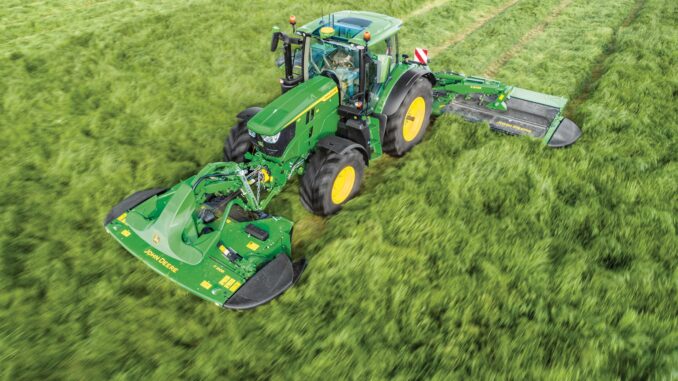
The John Deere 8400 is a large 8000 Series row-crop tractor built for serious field work, not a lawn tractor, with a turbocharged 8.1L six-cylinder diesel engine and high hydraulic capacity for heavy tillage, planting, and transport jobs. This guide focuses on practical repair decisions, symptom-based troubleshooting, routine maintenance, parts lookup, manuals, and owner-level service tasks so you can decide what is realistic DIY work and what is better left to a Deere dealer or experienced ag technician.
John Deere 8400 overview
The John Deere 8400 was built in the 1995 to 1999 period as part of Deere’s 8000 Series row-crop tractor lineup, sitting above the 8300 and below later higher-horsepower machines that followed in newer generations. It uses a turbocharged, aftercooled 8.1L diesel engine, large-capacity hydraulic and transmission systems, and was offered in configurations suited to row-crop farming, draft work, PTO applications, and road transport.
For owners, the key systems to understand are the engine and fuel system, the intake and cooling system, the transmission and hydraulic system, the front axle and steering components, the electrical starting/charging system, and the cab HVAC and controls. Those are also the systems that most often drive real-world repairs, downtime, and parts orders on an older John Deere 8400.
General overview of the John Deere 8400
Within the Deere lineup, the 8400 is a full-size agricultural row-crop tractor rather than a compact or homeowner machine, so repair priorities are different: reliability under load, hydraulic performance, cooling capacity, driveline integrity, and safe braking and steering matter more than convenience issues. Owners usually deal with age-related wear, contaminated fuel, air-intake restrictions, belt and tensioner wear, hydraulic filter service, electrical corrosion, and occasional cooling or front-axle leaks.
Common service and repair parts owners regularly buy for this model include engine oil filter DZ118156 or A&I cross-reference DZ101880, primary air filter RE51629, secondary air filter RE51630, fuel filter AR86745, fuel strainer AR103220, optional fuel water separator RE508633, transmission/hydraulic oil filter RE174130, transmission screen RE45369, fan drive belt R131213, auxiliary drive belt R157687, belt tensioner RE57498, battery TY25879B, starter RE70957, alternator RE46608, and low-pressure fuel pump RE46375 for the 8400 model.
John Deere 8400 troubleshooting approach
The best way to diagnose a John Deere 8400 is to start with the symptom the owner actually sees: slow cranking, hard starting, black smoke, power loss under load, hot hydraulic oil, no PTO response, steering looseness, or unusual vibration. Jumping straight to replacing expensive parts usually wastes time, especially on older tractors where poor connections, restricted filters, worn belts, dirty coolers, or overdue fluid service can cause several overlapping symptoms.
The main symptom groups on this tractor are:
-
Starting issues.
-
Running and power-loss issues.
-
Hydraulic and transmission performance problems.
-
Overheating and fluid leaks.
-
Vibration, belt noise, and front-end wear.
-
Electrical, charging, and cab-control faults.
John Deere 8400 immediate repair needs
Some faults need attention right away because they can stop safe operation or damage major components quickly. On a tractor this size, continuing to run with high coolant temperature, low oil pressure, hydraulic overheating, severe belt noise, brake weakness, steering play, or major fuel or hydraulic leaks can turn a manageable repair into an engine, pump, or transmission bill.
1. Starting issues
If the tractor cranks slowly, clicks, or will not fire, the problem matters because repeated low-voltage starting can damage batteries, cables, and the starter while also masking fuel or sensor problems. Hard starting on an older diesel often points to battery condition, cable resistance, poor grounds, restricted fuel supply, or air entering the fuel system.
Common causes:
-
Weak or failing battery.
-
Corroded terminals or bad ground connection.
-
Worn starter or poor starter feed.
-
Restricted fuel filter or strainer.
-
Fault in low-pressure fuel supply.
-
Air in the fuel system after filter service.
Basic owner checks:
-
Check battery voltage and cable tightness.
-
Clean both battery posts and chassis ground points.
-
Inspect the fuel filter and strainer service history.
-
Confirm the tank has clean diesel and the shutoff path is open.
-
Listen for consistent starter speed rather than repeated drop-off.
2. Running and power-loss problems
A John Deere 8400 that starts but lacks power, smokes excessively, or struggles under PTO or drawbar load should not just be “worked through,” because restricted air or fuel flow and cooling issues can quickly raise operating temperatures and stress the engine. The most common causes are overdue filters, intake restrictions, poor fuel delivery, or cooling-pack contamination.
Common causes:
-
Plugged primary or secondary air filter.
-
Dirty fuel filter or fuel strainer.
-
Weak low-pressure fuel pump.
-
Dirty radiator, grille, or oil cooler area.
-
Belt or tensioner problems affecting fan speed.
-
Turbo or intake leaks, especially on older machines.
Basic owner checks:
-
Inspect and service the air filters if indicated.
-
Replace the fuel filter if service is overdue.
-
Clean the cooling package externally.
-
Check fan and auxiliary belts for glazing or looseness.
-
Note whether smoke appears only under load or all the time.
3. Hydraulic and transmission problems
Hydraulic and transmission issues matter immediately because low oil level, clogged filters, overheated oil, or suction restrictions can damage expensive internal components. Slow remote response, steering hesitation, hitch weakness, or abnormal transmission behavior should always be investigated before continued field use.
Common causes:
-
Low transmission/hydraulic oil.
-
Overdue hydraulic oil filter.
-
Dirty transmission screen.
-
External leaks reducing fluid level.
-
Contaminated oil.
-
Internal wear or control issues requiring dealer diagnosis.
Basic owner checks:
-
Verify transmission/hydraulic oil level.
-
Inspect for active leaks at hoses, couplers, and axle areas.
-
Check whether filter and screen service is overdue.
-
Watch for warning codes or high oil temperature messages.
-
Stop using the tractor if hydraulic oil temperature rises abnormally.
4. Overheating and leaks
Cooling and leak issues should be treated as urgent because the 8400 carries large fluid volumes and works under sustained load, so a “small” leak can become a major failure fast. External dirt in the cooling package, failing belts, weak water pump performance, low coolant level, and leaking hoses are all common older-tractor causes.
Common causes:
-
Dirty radiator or cooler stack.
-
Low coolant level.
-
Weak radiator cap.
-
Worn fan belt or tensioner.
-
Water pump leakage.
-
Oil, fuel, or hydraulic hose seepage that worsens under load.
Basic owner checks:
-
Shut down and let the engine cool.
-
Check coolant level and inspect for visible leaks.
-
Clean debris from the grille, radiator, and coolers.
-
Inspect belts, tensioner action, and hose condition.
-
Do not continue working if temperature warnings persist.
5. Vibration and noise
A heavy tractor that suddenly develops vibration, squeal, clatter, or driveline noise should be checked quickly because secondary damage can spread to belts, bearings, steering parts, or attached implements. On the 8400, common trouble spots include fan and accessory belts, belt tensioners, tie-rod ends, axle wear, and hitch or drawbar hardware.
Common causes:
-
Glazed or cracked drive belts.
-
Weak belt tensioner.
-
Worn tie-rod ends.
-
Loose hitch hardware.
-
Wheel or axle hardware issues.
-
Implement driveline problems rather than tractor failure.
Basic owner checks:
-
Isolate whether the noise changes with engine speed or ground speed.
-
Inspect visible belts and pulleys.
-
Check front steering linkage for looseness.
-
Verify wheel and hitch hardware is secure.
-
Disconnect the implement before blaming the tractor alone.
6. Electrical problems
Electrical issues are common on older tractors because corrosion, vibration, and previous repairs often create intermittent faults. Charging problems, warning lights, poor cranking, wiper or HVAC issues, and sensor-related shutdown complaints often come back to connectors, grounds, alternator output, or battery condition.
Common causes:
-
Weak battery.
-
Poor grounds or corroded terminals.
-
Failing alternator.
-
Damaged wiring near hot or vibrating areas.
-
Faulty switches or relays.
-
Moisture-related cab electrical issues.
Basic owner checks:
-
Load-test the battery.
-
Confirm charging voltage with the engine running.
-
Inspect grounds and cable ends.
-
Check fuses and relay connections.
-
Escalate to dealer-level diagnosis for recurring control-unit codes.
John Deere 8400 DIY or dealer repair guide
The usual line on a John Deere 8400 is this: routine service, filter changes, belt inspection, basic battery work, and visible leak checks are realistic DIY jobs, but internal transmission, hydraulic, engine, and electronic control diagnosis often belongs with a dealer or experienced independent ag shop. The tractor’s size, stored energy, fluid volumes, and component cost mean a cautious owner should avoid guessing on any repair that could affect brakes, steering, hydraulics, PTO engagement, or engine internals.
Good DIY jobs:
-
Engine oil and filter service.
-
Air filter replacement.
-
Fuel filter and strainer service.
-
Battery replacement and terminal cleaning.
-
Fan and auxiliary belt inspection or replacement.
-
Cab air filter service.
-
Cooling-package cleaning.
Advanced DIY or dealer jobs:
-
Low-pressure fuel pump replacement.
-
Water pump replacement.
-
Starter or alternator replacement.
-
Transmission/hydraulic filter and screen service with fluid management.
-
Tie-rod end replacement and steering checks.
-
Electrical fault tracing beyond obvious wiring damage.
Skill level guide:
-
Beginner: filters, battery, visual inspections, radiator cleaning.
-
Intermediate: belts, starter, alternator, basic fuel-system service, cab filters.
-
Advanced: hydraulic service, front axle repairs, fuel pump replacement, cooling-system repair.
-
Dealer: internal transmission, hydraulic pump diagnosis, ECU or CCU faults, brake and steering safety repairs.
Parts for the John Deere 8400: OEM vs aftermarket
Before ordering parts, gather the full model name, the tractor Product Identification Number, the engine model and serial details, and any serial-number break information that affects part fit. On this model, Deere uses serial-number splits for some components, including cab filters and certain engine-related parts, so ordering by “8400 only” is not always enough.
OEM parts are the safer choice for belts, tensioners, fuel-system items, serial-number-sensitive filters, and safety-related components because fit and performance matter more than a small upfront saving. Aftermarket parts can be acceptable for batteries, some filters, and selected maintenance consumables, but only when the cross-reference is exact and the supplier clearly supports the John Deere 8400 serial range you have.
John Deere 8400 diagrams and manuals
The most useful sources for diagrams and manuals are Deere’s manuals portal, Deere’s shop support page for the 8400, Deere’s quick reference guide for 8000 Series tractors, and a Deere-focused parts retailer with a maintenance page for the model. Together, these give you operator information, maintenance intervals, parts numbers, and a starting point for serial-sensitive ordering.
Useful links:
-
John Deere Manuals and Training – official source for operator, technical, and parts publications.
-
John Deere 8400 Owner Support – quick maintenance access, operator support, and how-to resources.
-
John Deere 8000 Series Quick Reference Guide PDF – service intervals, capacities, and common part numbers for 8100/8200/8300/8400.
-
Green Farm Parts 8400 Maintenance Guide – Deere-focused aftermarket-friendly lookup page with common maintenance parts.
How to find John Deere 8400 serial and engine numbers
These numbers matter because Deere parts catalogs and service references often split components by tractor serial number, and engine-related parts can also depend on the engine model installed. Using the wrong serial break can leave you with filters, belts, pumps, or cab parts that almost fit but do not actually match the machine.
Steps:
-
Go to the rear hitch frame area of the tractor and look for the tractor identification plate, because Deere documentation for this series places the basic tractor serial number plate at the rear of the hitch frame.
-
Record the full tractor identification number exactly as stamped, not just the last digits.
-
Check the engine itself for the engine identification plate or stamped serial information and photograph it for parts ordering.
-
Note any serial-number break information shown in parts references, especially where filters or repair parts split by TSN ranges.
-
Keep these numbers in your phone and maintenance log before ordering online or calling a dealer.
Buying John Deere 8400 parts
The smartest buying strategy is to start with the OEM number from a Deere source, then compare pricing and availability online, through a Deere dealer, and through trusted ag parts sellers. This matters more on the 8400 because age, serial breaks, and reman options can create multiple valid-looking listings for one repair category.
-
Online: confirm the exact OEM number first, then buy against that number rather than a vague model description. Good starting points are Deere Manuals and Training, Shop.Deere 8400 owner support, and Green Farm Parts 8400 guide.
-
Dealer counter: best for serial-specific filters, fuel-system parts, control-related items, reman electrical units, and any part where Deere has updated supersessions.
-
Retail stores: acceptable for common consumables like batteries or cross-referenced filters, but only when the packaging clearly matches the 8400 application and OEM number.
John Deere 8400 fitting guide for common parts
These are high-impact service jobs that many owners can handle safely with planning, the correct filters or belts, and attention to cleanliness. Always park on level ground, lower attached equipment, shut the tractor down, remove the key, and let hot components cool before starting work.
Changing the John Deere 8400 engine oil and filter
This job helps protect the 8.1L engine and is one of the most important routine services on the tractor.
-
Warm the engine briefly, then shut it down and place a large drain pan under the oil drain.
-
Drain the engine oil fully and inspect the old oil for metal or coolant contamination.
-
Remove the old oil filter and make sure the old gasket comes off with it.
-
Lightly oil the gasket on the new filter and install it to the correct tightness.
-
Refill with the correct oil quantity and specification, then start the engine and check for leaks.
-
Recheck the level after shutdown and top up if needed.
Replacing the John Deere 8400 fuel filter
This job often fixes hard starting, weak running, or fuel starvation complaints caused by restricted service parts.
-
Clean the area around the fuel filter before opening the system.
-
Remove the old filter and check for debris or water contamination.
-
Install the new filter and ensure seals are seated correctly.
-
Prime or bleed the system as required for the tractor’s fuel setup.
-
Start the engine and watch for leaks or irregular running.
-
If the problem continues, inspect the fuel strainer and low-pressure fuel pump next.
Replacing John Deere 8400 air filters
This is a simple maintenance job that helps restore power and protects the engine from dust ingestion.
-
Open the air-cleaner housing carefully so dirt does not fall into the intake.
-
Remove the primary filter and inspect the housing for dust buildup.
-
Replace the secondary filter only when required rather than over-handling it unnecessarily.
-
Wipe out the housing with a clean, dry cloth and check sealing surfaces.
-
Install the new filter or filters and close the housing securely.
-
Monitor the restriction indicator afterward if fitted.
Replacing the John Deere 8400 fan or auxiliary belt
A cracked or loose belt can cause overheating, charging problems, and noise, so it should not be ignored.
-
Inspect the belt path and photograph routing before removal.
-
Check the tensioner for smooth travel and pulley condition.
-
Remove the old belt and compare length and width with the replacement.
-
Install the new belt correctly in all pulley grooves.
-
Confirm alignment and tensioner action before restart.
-
Start the engine and listen for chirping, squeal, or visible wobble.
Maintenance to prevent John Deere 8400 problems
Regular maintenance prevents most repeat failures on an older John Deere 8400 because dirt, heat, vibration, and overdue filters cause many of the symptoms owners notice first. Good preventive care is usually cheaper than chasing hydraulic, fuel, or cooling problems after they show up in the field.
Focus areas:
-
Starting reliability: keep the battery, terminals, grounds, and starter circuit clean and healthy.
-
Engine performance: stay ahead of fuel, oil, and air-filter intervals.
-
Overheating prevention: clean the cooling package and check belts and coolant condition.
-
Hydraulic performance: keep oil level correct and service the filter and screen on schedule.
-
Electrical reliability: inspect harnesses and charging output before intermittent issues become no-start complaints.
John Deere 8400 maintenance schedule
The official quick reference guide for the 8000 Series gives the most useful baseline intervals for this model, including an initial oil service at 100 hours, engine oil and filter service every 250 hours, transmission/hydraulic filter replacement every 750 hours, and screen cleaning every 1500 hours. Daily checks include engine oil, coolant, and transmission-hydraulic oil level, plus draining the water separator if equipped and lubricating front-end points depending on axle configuration.
Daily / before each use
-
Check engine oil level.
-
Check coolant level.
-
Check transmission/hydraulic oil level.
-
Drain water separator if equipped.
-
Lubricate front axle and steering points as applicable to 2WD or MFWD configuration.
After 100 hours
-
Perform the initial engine oil and filter change.
Every 250 hours
-
Change engine oil and filter.
-
Clean cab fresh air and recirculation filters as required.
-
Service batteries and inspect brake pedal feel.
Every 750 hours
-
Replace transmission/hydraulic filter element.
-
Replace fuel filter and fuel tank vent filter.
-
Check the air intake system and engine idle speeds.
Every 1500 hours
-
Clean the transmission/hydraulic oil suction screen.
-
Change transmission-hydraulic oil.
-
Change MFWD hub and axle housing oil if equipped.
-
Check belt tensioners.
Yearly / seasonal
-
Replace primary and secondary air filters annually or as indicated.
-
Replace cab air filters annually and as required.
-
Flush and refill the cooling system on the longer interval shown in maintenance references, and add coolant conditioner as specified.
Seasonal checklist
-
Spring or pre-season: change overdue filters, clean the cooling package, test the battery, inspect belts, and check for winter seepage.
-
Mid-season: monitor air restriction, clean coolers more often in dusty work, and inspect hydraulic hoses and couplers.
-
Fall or storage prep: repair leaks, service fuel and air systems, clean debris thoroughly, and keep the battery maintained during downtime.
Repair, upgrade, or replace the John Deere 8400?
For the John Deere 8400, repair usually makes sense when the tractor is structurally sound, starts and pulls well, and the problem is isolated to service items, belts, pumps, electrical parts, steering wear, or leaks rather than major transmission or engine damage. Upgrade makes more sense when your workload has outgrown the tractor’s technology, comfort, or hydraulic capability, while replacement becomes easier to justify when multiple high-cost systems fail at once.
Repair if:
-
The issue is a known wear item or routine service failure.
-
Compression, oil pressure, and transmission performance are otherwise sound.
-
The tractor fits your implements and workload well.
Upgrade if:
-
You need newer guidance, precision systems, or improved operator comfort.
-
Downtime costs are rising because of age-related electrical or hydraulic issues.
-
You are repeatedly stretching the tractor beyond its best-use range.
Replace if:
-
Engine, transmission, and hydraulic problems overlap.
-
Repair estimates approach the value of a sound replacement tractor.
-
Safety, braking, or steering repairs reveal wider structural wear or neglect.
John Deere 8400 troubleshooting FAQ
1. Why will my John Deere 8400 not start?
Most no-start complaints come down to battery weakness, poor cable connections, corroded grounds, starter problems, or restricted fuel delivery. Start with battery condition and voltage drop before buying fuel parts, because slow cranking on a diesel can make a healthy fuel system look bad.
2. Why does my John Deere 8400 crank slowly?
Slow cranking usually points to a weak battery, high resistance in the cables, poor ground contact, or a tired starter. On older tractors, corrosion inside cable ends is common even when the outside still looks usable.
3. Why does the John Deere 8400 start and then die?
That pattern often suggests fuel starvation, air entering the fuel system, or a badly restricted fuel filter or strainer. Check recent service history first, especially if the problem started soon after changing filters.
4. Why is my John Deere 8400 hard to start when cold?
Cold starting gets harder when batteries are weak, cables are tired, compression is down, or fuel supply is restricted. Begin with the battery and starter circuit, then move to fuel and engine-condition checks if cranking speed is still poor.
5. Why does my John Deere 8400 have low power under load?
Low power under load usually means the engine is not getting enough clean air, clean fuel, or cooling airflow. Dirty air filters, overdue fuel filters, cooling-pack blockage, or a weak low-pressure fuel pump are all realistic causes.
6. Why is my John Deere 8400 blowing black smoke?
Black smoke often means the engine is getting more fuel than air, which commonly happens with a restricted intake or load-related fueling issue. Check the air-cleaner system and intake path before assuming injector failure.
7. Why does my John Deere 8400 overheat?
Overheating on this tractor is often caused by a dirty radiator or cooler stack, low coolant, belt problems, or a water-pump issue. Stop work and correct it quickly because continued high temperature can damage the engine.
8. Why is my John Deere 8400 losing coolant?
Coolant loss can come from hose leaks, clamp seepage, radiator issues, a weak cap, pump leakage, or internal engine problems. Rule out visible external leaks first before moving to more expensive diagnosis.
9. Why is there oil around the engine on my John Deere 8400?
Oil around the engine may come from filter sealing, hose seepage, breather issues, or leaks at age-hardened seals and gaskets. Clean the area first so you can tell whether it is an active leak or old residue.
10. Why does my John Deere 8400 hydraulic system feel weak?
Weak hydraulics usually mean low oil level, restricted filtration, overheated oil, or internal wear. Always verify fluid level and filter history before assuming pump failure.
11. Why is my John Deere 8400 hydraulic oil getting hot?
Hot hydraulic oil is a serious warning because it can signal low fluid, clogged filtration, excessive load, or internal inefficiency. Shut the tractor down and investigate rather than continuing to work through it.
12. Why does the three-point hitch on my John Deere 8400 lift slowly?
Slow hitch response can be caused by low hydraulic oil, filter restriction, internal leakage, or control issues. Start with fluid level and maintenance status, then inspect couplers and external leaks.
13. Why are the remote hydraulics on my John Deere 8400 slow?
Remote slowdown often comes from hot oil, low oil, dirty filters, or a problem in the SCV coupler or valve circuit. If multiple hydraulic functions are weak, suspect a broader hydraulic supply issue rather than a single outlet.
14. Why does my John Deere 8400 steering feel loose?
Loose steering often points to worn tie-rod ends, linkage wear, or front-axle component play. Because steering is safety-critical, any noticeable looseness deserves prompt inspection before road transport.
15. Why does my John Deere 8400 make a squealing noise?
Squeal usually comes from a slipping belt, weak tensioner, pulley issue, or contaminated belt surface. If the noise changes with engine speed, check accessory drive components first.
16. Why does my John Deere 8400 vibrate more than usual?
New vibration may be caused by belt problems, front-end wear, loose hardware, driveline issues, or an implement fault. Separate engine-speed vibration from ground-speed vibration to narrow the diagnosis.
17. Why is the John Deere 8400 charging light on?
A charging warning usually means the alternator is not maintaining battery voltage, the belt is slipping, or wiring and grounds are poor. Check belt condition and actual charging voltage before replacing the alternator.
18. Why does my John Deere 8400 keep draining the battery?
Repeated battery drain can come from a weak battery, undercharging alternator, corroded terminals, or key-off electrical draw. Older tractors often suffer from poor connections before they suffer from a true parasitic draw.
19. Why does the John Deere 8400 starter click but not turn?
That usually means low battery voltage, a poor high-current connection, or a failing starter solenoid or starter motor. Check voltage under load rather than relying on an unloaded reading alone.
20. Why does my John Deere 8400 use more fuel than normal?
Higher fuel use can result from dirty air filters, poor combustion, excess idle time, overloaded operation, or a fuel-system issue reducing efficiency. Start with service items before chasing deeper engine faults.
21. Why does my John Deere 8400 idle rough?
Rough idle often points to fuel supply inconsistency, air in the system, dirty filters, injector imbalance, or low compression on an older engine. Simple fuel-service issues are more common than major internal failure, so diagnose in order.
22. Why is my John Deere 8400 surging?
Surging usually means the fuel supply is inconsistent or air flow is restricted. A partially blocked fuel filter or intake issue can create a repeated hunt in engine speed.
23. Why does my John Deere 8400 have poor PTO performance?
PTO complaints can be mechanical, load-related, hydraulic, or electronic depending on the exact symptom. If the PTO is disabled or slipping, reduce load and inspect operating conditions before assuming a major internal fault.
24. Why is my John Deere 8400 leaking hydraulic oil?
Hydraulic leaks often come from hoses, couplers, fittings, remote outlets, axle seals, or age-related hose cracking. Fix them early because low oil level can quickly affect steering, hitch, and remotes.
25. Why does my John Deere 8400 run hot only in dusty conditions?
Dust quickly blocks the cooling package and raises both engine and hydraulic temperatures, especially during heavy field work. In dusty use, cooler cleaning has to happen more often than the base schedule suggests.
26. Why do I need the serial number before ordering John Deere 8400 parts?
The 8400 has serial-number-sensitive parts, and Deere references split some components by TSN ranges. Without the serial number, you can easily buy the wrong filter, cab part, or repair component.
27. Where is the serial number plate on a John Deere 8400?
Deere documentation for this tractor family places the tractor identification plate at the rear of the tractor on the hitch frame. Clean the area carefully and photograph the plate before calling for parts.
28. What is the engine in the John Deere 8400?
The John Deere 8400 uses a turbocharged, aftercooled 8.1L inline six-cylinder diesel engine. That engine size and tractor weight are part of why cooling, clean filters, and correct oil service matter so much on this model.
29. How often should I change the oil on a John Deere 8400?
The quick reference guide lists an initial oil and filter change at 100 hours, then every 250 hours or as required, with extended conditions only under specific Deere oil and fuel requirements. If you do not meet those conditions, stick with the standard 250-hour interval.
30. How often should I replace the hydraulic filter on a John Deere 8400?
The Deere quick reference guide lists the transmission/hydraulic oil filter at a 750-hour replacement interval. If contamination, heat, or abnormal performance appears earlier, service may need to happen sooner.
31. How often should I clean the hydraulic screen on a John Deere 8400?
The transmission/hydraulic screen is listed for cleaning every 1500 hours. This is not a part to ignore, because restriction on the suction side can contribute to broader hydraulic problems.
32. What belts are commonly replaced on a John Deere 8400?
The common Deere-listed engine drive belts are the fan drive belt R131213 and auxiliary drive belt R157687, with RE57498 listed as the belt tensioner. Belt noise, heat, or charging complaints are common reasons owners replace them.
33. Can I use aftermarket filters on a John Deere 8400?
You can use aftermarket filters when the supplier gives a reliable cross-reference and quality is proven, but OEM is safer for serial-sensitive and critical systems. For fuel, hydraulic, and fit-sensitive service parts, Deere-spec parts reduce guesswork.
34. Is the John Deere 8400 a good DIY repair tractor?
It is a reasonable DIY tractor for maintenance and straightforward repairs, but not for every job. Routine filters, belts, battery service, and basic leak checks are realistic, while internal hydraulic, transmission, brake, and control problems usually justify professional help.
35. When should I stop DIY repairs and call a dealer for my John Deere 8400?
Stop and escalate when the issue involves hydraulic overheating, brake or steering safety, repeated no-start after basic electrical checks, major coolant or oil contamination, or any fault code or symptom that suggests internal transmission or control-unit problems. On a tractor of this size, guessing can get expensive fast.