
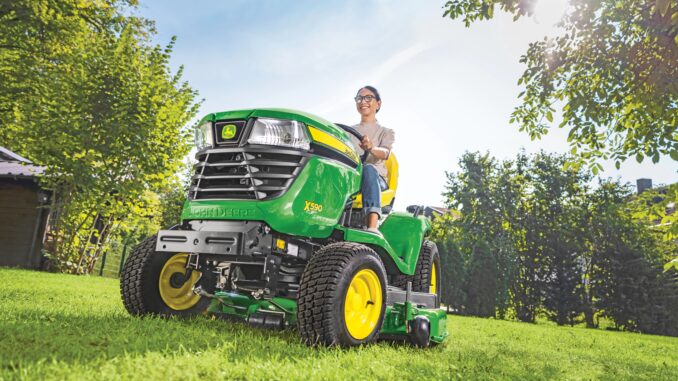
The John Deere 430 is a diesel-powered garden tractor built in Horicon, Wisconsin, with a 20 hp Yanmar 885cc 3-cylinder diesel engine, hydrostatic transmission, power steering, electric PTO clutch, and support for 50-inch and 60-inch mower decks plus front attachments such as a snowblower and blade. For USA and Canada owners, that makes it a strong fit for larger home lawns, estate work, and year-round property maintenance where a heavier-duty garden tractor is more useful than an entry-level lawn tractor.
This guide is written as a practical, symptom-first John Deere 430 repair, troubleshooting and maintenance guide for DIY owners. It covers what commonly goes wrong, what you can realistically inspect yourself, which parts owners commonly replace, where to find John Deere 430 diagrams and manuals, and how to stay ahead of repeat failures with the service schedule shown in the operator’s manual.
John Deere 430 overview and key systems
The John Deere 430 sits in Deere’s older heavy-duty lawn and garden tractor class rather than the lighter homeowner-focused 100 Series sold today. It was sold across multiple model years from 1984 through 1992, and TractorData lists serial number breaks for each production year beginning with M00430X285001 in 1984 and reaching M00430X110001 in 1992.
For repair and troubleshooting, the main systems that matter on the John Deere 430 are:
-
Engine and fuel system, built around the Yanmar 3-cylinder diesel, fuel filter/water separator, air cleaner, cooling system, and injection components.
-
Mower and PTO system, including the electric PTO clutch, PTO drive belts, deck spindles, blades, and deck shell hardware.
-
Drive and hydraulic system, including the hydrostatic transmission, hydraulic oil system, differential lock, brakes, and steering.
-
Electrical and safety system, including the 12-volt battery, 35-amp charging system, indicator lights, switches, and safety interlock checks described in the manual.
Common John Deere 430 service parts owners regularly look for include the engine oil filter, fuel filter/water separator, air cleaner element, PTO drive belts, mower blades for the deck size fitted to the tractor, battery, headlight bulbs, and deck or front-attachment wear parts.
John Deere 430 troubleshooting approach
The fastest way to diagnose a John Deere 430 is to start with the symptom you can actually see, hear, or feel. A no-start diesel, weak mowing performance, overheating, hydrostatic drive complaint, or repeated battery issue usually points you toward a much smaller group of systems than starting with random parts replacement.
For this model, the main symptom groups are usually:
-
Starting issues
-
Running issues such as low power, smoke, or rough operation
-
Cut-quality problems with the mower deck installed
-
Vibration and unusual noise
-
Overheating and fluid leaks
-
Transmission, hydraulic, or drive problems
-
Electrical and safety-interlock problems
Emergency John Deere 430 repair needs
Some faults on the John Deere 430 need immediate attention because they affect safe control of the tractor or can quickly damage expensive components. If the tractor loses braking, steering response, cooling, or PTO control, it should be parked until the cause is confirmed.
John Deere 430 starting issues
A John Deere 430 that cranks poorly, will not fire, or starts and dies may have a battery, fuel delivery, air-in-fuel, glow/starting aid, or safety-interlock related issue depending on the exact symptom. Diesel starting problems matter because repeated cranking can flatten the battery and mask the original fault.
Common causes:
-
Weak or discharged battery
-
Dirty or loose battery terminals
-
Fuel restriction or contaminated diesel
-
Air in the fuel system
-
Clogged fuel filter/water separator
-
Safety interlock fault
-
Starter or charging problems
Basic owner checks:
-
Check battery condition, terminal tightness, and visible cable corrosion.
-
Confirm there is clean fuel in the tank and check for water or stale fuel issues.
-
Inspect the fuel filter/water separator and drain or replace if contamination is present.
-
Check whether the tractor is set correctly for starting and whether PTO switches are off.
-
If fuel work was done recently, bleed the fuel system as outlined in the operator’s manual.
John Deere 430 cut-quality problems
If the John Deere 430 leaves uncut strips, scalps, or produces an uneven finish, the issue is often deck-related rather than engine-related. Continuing to mow with dull blades, wrong tire pressure, or deck belt/slip problems usually makes the result worse and increases stress on spindle and belt components.
Common causes:
-
Dull, bent, or mismatched blades
-
Incorrect deck level
-
Low or uneven tire pressure
-
Worn deck belt or PTO belt
-
Debris packed under the deck
-
Worn spindle bearings
Basic owner checks:
-
Confirm tire pressures are even side to side.
-
Clean the underside of the deck and check blade condition.
-
Inspect belts for glazing, cracks, or slack.
-
Listen for spindle noise with blades disengaged and deck safely supported.
-
Re-level the deck before replacing major parts.
John Deere 430 vibration and noise
New vibration on a John Deere 430 should never be ignored because it can quickly damage deck spindles, PTO components, bearings, or mounting hardware. A tractor that suddenly shakes more than usual often has a blade, belt, pulley, driveline, or engine-mount issue.
Common causes:
-
Bent or unbalanced blades
-
Damaged spindle or pulley bearings
-
Loose deck hardware
-
Worn PTO belt
-
Engine mounting issues
-
Front attachment imbalance
Basic owner checks:
-
Stop mowing immediately and inspect blades for bends or impact damage.
-
Check visible pulleys and belt tracking.
-
Tighten loose deck and shield fasteners.
-
Spin spindles by hand with the machine safely disabled.
-
Remove packed debris from the deck and PTO area.
John Deere 430 overheating and leaks
Overheating on the John Deere 430 is serious because the diesel engine relies on a clean cooling system and proper coolant level to avoid head, gasket, and long-term engine damage. Leaks from fuel, engine oil, hydraulic oil, or coolant also create safety and reliability problems.
Common causes:
-
Blocked radiator screen or grille
-
Low coolant level
-
Dirty engine compartment
-
Hose or clamp leaks
-
Worn seals
-
Incorrect fluid level
Basic owner checks:
-
Clean the radiator screen and grille area.
-
Check coolant level only when the engine is cool.
-
Inspect for leaking hoses, clamps, and wet fittings.
-
Clean oil and debris from the engine bay before rechecking.
-
Stop using the tractor if temperature warning symptoms continue.
John Deere 430 transmission and drive problems
A John Deere 430 with weak drive, inconsistent movement, or poor hill performance may have hydraulic oil level, linkage, brake drag, or hydrostatic system issues. Ignoring hydrostatic complaints can turn a routine service problem into a more expensive transmission repair.
Common causes:
-
Low transmission or hydraulic oil
-
Dirty or overdue hydro filter service
-
Linkage adjustment issues
-
Brake drag
-
Internal hydro wear
-
Differential lock issues
Basic owner checks:
-
Verify transmission or hydraulic oil level according to the manual.
-
Check for obvious external leaks.
-
Make sure brakes are fully releasing.
-
Inspect linkage movement for binding or slack.
-
If performance remains weak after basic checks, move to dealer or specialist diagnosis.
John Deere 430 electrical problems
Electrical issues on the John Deere 430 often show up as a no-crank complaint, charging problem, dead lights, or intermittent PTO operation. Because the model uses a 12-volt electrical system with an alternator and safety circuits, simple battery or connection faults can mimic more expensive failures.
Common causes:
-
Weak battery
-
Corroded terminals or grounds
-
Faulty switch or interlock
-
Blown bulbs or bad lamp sockets
-
Alternator or regulator issues
-
Wiring damage
Basic owner checks:
-
Clean and tighten battery posts and ground points.
-
Check whether the battery is holding charge.
-
Inspect visible wiring near the battery, PTO, and dash.
-
Test lights and indicators one circuit at a time.
-
Use the manual’s electrical troubleshooting section before replacing expensive components blindly.
John Deere 430 DIY or dealer repair guide
The John Deere 430 is very owner-serviceable for routine maintenance and basic wear parts, but it is also a heavier, hydraulic-equipped diesel garden tractor, so there is a clear line between realistic DIY work and repairs that need specialist tools or deeper diesel and hydrostatic knowledge.
Good DIY jobs on a John Deere 430
-
Engine oil and oil filter service
-
Air cleaner service
-
Fuel filter/water separator service
-
Battery cleaning or replacement
-
Blade replacement and sharpening
-
Deck cleaning and leveling
-
Belt inspection and straightforward belt replacement
-
Radiator screen and grille cleaning
-
Basic grease-point lubrication
Advanced DIY or dealer jobs on a John Deere 430
-
Injection pump or injector diagnosis
-
Internal hydrostatic transmission work
-
Major hydraulic leak repair
-
Steering hydraulic repairs
-
Electric PTO clutch diagnosis beyond basic voltage checks
-
Engine internal repairs
-
Differential, axle, or major brake repairs
Skill level guide
-
Beginner: Filters, fluid checks, battery service, deck cleaning, blade inspection.
-
Intermediate: Belt replacement, deck leveling, spindle checks, cooling-system service, fuel-system bleeding.
-
Advanced: Electrical diagnostics with a meter, clutch testing, hydraulic troubleshooting, diesel fuel-system diagnosis.
John Deere 430 parts, OEM vs aftermarket, and the information you need
Before ordering John Deere 430 parts, gather the full model name, the tractor Product Identification Number, the engine serial number, and the deck or attachment model and size. The operator’s manual specifically lists a Product Identification Number section, and TractorData states the serial number plate is below the steering column on the John Deere 430.
For this model, OEM parts are usually the safest choice for belts, PTO-related parts, fit-sensitive deck components, and safety or control parts. Good-quality aftermarket parts can be acceptable for selected consumables such as batteries, some filters, and blades, but only when the cross-reference matches the exact John Deere 430 configuration and deck size.
John Deere 430 diagrams and manuals
For John Deere 430 repair work, the best combination is the operator’s manual for service intervals and owner checks, the Deere parts catalog for exploded diagrams and serial-sensitive part lookups, and the technical manual for in-depth workshop procedures.
Useful sources include:
-
John Deere Parts Catalog for exploded diagrams, assemblies, and part-number verification by model and serial range.
-
Deere Technical Publications for official manuals and publication lookup.
-
TractorData John Deere 430 page for quick reference on specs, years, attachments, and serial location.
-
Jensales John Deere 430 operator’s manual listing for a commercially available copy of the operator’s manual if you need a print or download source.
How to find John Deere 430 serial and engine numbers
These numbers matter because deck, engine, and serial-range changes can affect what part fits. Ordering by appearance alone is one of the easiest ways to get the wrong belt, filter, or switch.
-
Park the tractor safely on level ground and shut it down completely.
-
Look below the steering column for the John Deere 430 serial number plate, which TractorData identifies as the serial number location.
-
Record the full Product Identification Number exactly as stamped, including prefixes and sequence numbers.
-
Locate the engine serial number on the engine identification label or plate and photograph it for accuracy.
-
Record the mower deck or attachment model and size separately, because a 50-inch and 60-inch deck do not use all the same wear parts.
Buying John Deere 430 parts online and in stores
The smartest strategy is to identify the exact OEM number first, then decide whether to buy OEM or a trusted aftermarket equivalent. That approach reduces return headaches and helps you avoid ordering by guesswork on a model with multiple attachments and long production years.
-
Online: Use the John Deere Parts Catalog first, then compare dealer or specialist parts listings using the exact part number.
-
Dealer counter: Best for serial-sensitive items, diesel fuel-system parts, electrical switches, and anything tied to attachment compatibility.
-
Retail stores: Fine for batteries, some bulbs, common lubricants, and selected blades or filters only if the packaging clearly cross-references the John Deere 430 and your exact deck or engine version.
Step-by-step John Deere 430 fitting guide for common parts
Change the John Deere 430 engine oil and oil filter
This service helps protect the Yanmar diesel from wear and sludge buildup, and the operator’s manual includes engine oil and filter change service procedures.
-
Warm the engine briefly, then shut it off and park safely.
-
Drain the engine oil into a suitable container.
-
Remove the old oil filter and check that the old gasket came off with it.
-
Lightly oil the gasket on the new filter and install it hand-tight to the specified seating method.
-
Refill with the correct oil grade listed in the manual, then start and check for leaks.
-
Recheck oil level after shutdown and top up if needed.
Service the John Deere 430 fuel filter and bleed the system
This job often fixes hard starting, stalling after fuel starvation, or poor running caused by contamination or air in the diesel fuel system.
-
Shut off the tractor and clean the area around the filter housing first.
-
Remove the old fuel filter or separator element carefully to keep dirt out.
-
Install the replacement filter and seals exactly as supplied.
-
Refill or prime as required by the system design.
-
Bleed the fuel system following the operator’s manual procedure if air has entered the lines.
-
Start the engine and check carefully for leaks.
Clean the John Deere 430 air cleaner
A restricted air cleaner can reduce diesel performance, increase smoke, and contribute to hard starting or poor combustion.
-
Stop the engine and lift the hood.
-
Remove the air cleaner from the housing, as described in the manual’s 200-hour service section.
-
Loosen the hose clamps and remove the connected tube if needed for access.
-
Inspect the element and housing for dust, oil, or damage.
-
Replace the element if it is dirty or damaged rather than trying to over-clean a worn filter.
-
Reassemble carefully so no unfiltered air can bypass the housing.
Replace John Deere 430 mower blades
Fresh, straight blades are one of the quickest ways to restore cut quality on a John Deere 430 with a mower deck installed.
-
Park safely, remove the key, and disable PTO operation.
-
Raise and support the deck safely for access.
-
Mark blade orientation before removal.
-
Remove the blade hardware and inspect the spindle and blade adapter surfaces.
-
Install the replacement blades in the correct orientation and torque to specification.
-
Test for smooth operation and recheck cut quality after mowing a short area.
Maintenance to prevent John Deere 430 problems
Regular service prevents many of the repeat failures owners blame on age alone. On the John Deere 430, clean fuel, good cooling airflow, proper lubrication, and regular belt and deck checks do more to prevent breakdowns than chasing symptoms after a failure has already developed.
Focus areas:
-
Starting reliability, keep the battery charged, terminals clean, and fuel system free of water or air.
-
Cut quality, keep blades sharp, deck clean, tires correctly inflated, and belts in good condition.
-
Fire and overheating prevention, clean the radiator screen, grille, and engine compartment regularly.
-
Drive performance, monitor hydraulic or transmission oil condition and fix leaks early.
-
Electrical reliability, inspect grounds, battery cables, lights, and safety interlock function before problems become intermittent.
John Deere 430 maintenance schedule and seasonal checklist
The operator’s manual lists service intervals at break-in, 10 hours or daily, 50 hours or weekly, 200 hours, 600 hours, and seasonal or as necessary. That interval structure is the right base for a John Deere 430 maintenance plan, even if a lightly used homeowner machine reaches some tasks by calendar time before it reaches them by hours.
Daily or before each use on a John Deere 430
-
Check engine oil level.
-
Check coolant level.
-
Inspect fuel level and general condition.
-
Check wheel bolts and visible hardware.
-
Look for leaks, loose belts, or safety issues before starting.
Every 50 hours or weekly
-
Lubricate grease points such as front spindle and drive-shaft locations listed in the manual index and service section.
-
Check alternator belt tension and electrolyte level where applicable.
-
Inspect brake and pedal shaft lubrication points.
-
Inspect PTO drive belts and deck wear items.
Every 200 hours
-
Clean the air cleaner.
-
Service the fuel filter/water separator.
-
Change engine oil and filter if your usage pattern or storage schedule calls for it according to the manual and oil plan.
-
Check gear case oil and related driveline service items listed in the manual.
Every 600 hours
-
Perform the deeper interval items shown in the operator’s manual service schedule.
-
Review cooling-system, fuel-system, and drivetrain items that may be time-consuming but important on older tractors.
Seasonal checklist for a John Deere 430
-
Spring: Change overdue fluids and filters, charge the battery, inspect mower deck setup, and clean the cooling system.
-
Mid-season: Recheck blade condition, belt wear, grease points, and radiator screen cleanliness.
-
Fall or storage season: Repair worn parts, loosen alternator and PTO belts, service the air cleaner, lubricate grease points, clean the tractor thoroughly, remove and charge the battery, and store the machine dry and protected.
Repair, upgrade, or replace a John Deere 430?
Because the John Deere 430 is a heavy-duty garden tractor with strong attachment support and hydraulic capability, repair is often worthwhile when the core engine, hydrostatic drive, and frame are still sound. Replace decisions usually make more sense when the tractor needs major engine and hydro work together or when parts cost starts to exceed the value of a dependable working machine.
Repair the John Deere 430 if
-
The issue is limited to belts, blades, filters, battery, switches, hoses, or deck wear parts.
-
The engine starts well and the hydrostatic drive still performs normally.
-
The frame, steering, and attachment mounting points remain solid.
Upgrade the John Deere 430 if
-
You need better mowing results from fresh blades, spindle service, or a deck rebuild rather than a full tractor replacement.
-
You can add value with better tires, renewed electrical components, or attachment-specific repairs.
-
The tractor is fundamentally sound but needs catch-up maintenance.
Replace the John Deere 430 if
-
It has severe engine wear plus major hydrostatic or hydraulic faults.
-
Structural corrosion or damage makes safe repair questionable.
-
You cannot source critical parts for your exact setup at a reasonable cost.
John Deere 430 troubleshooting FAQ
1. Why will my John Deere 430 not start?
Most no-start complaints on a John Deere 430 come down to battery condition, poor cable connections, contaminated fuel, air in the diesel system, or a safety-interlock problem. Start with the battery and terminals, then check fuel quality and filter condition before assuming the starter or injection system is bad.
2. Why does my John Deere 430 crank slowly?
Slow cranking usually points to a weak battery, dirty terminals, high-resistance cables, or a starter circuit issue. On an older diesel garden tractor, even a small voltage drop can make cold starts much harder than normal.
3. Why does my John Deere 430 start and then die?
That symptom often means the engine is getting some fuel but not enough to keep running. Check for a restricted fuel filter, water contamination, air in the fuel lines, or a fuel delivery problem before moving on to deeper diesel diagnosis.
4. Why is my John Deere 430 hard to start when cold?
Cold weather makes diesel starting more demanding, especially if battery performance is weak or the fuel system is not in top condition. The manual includes a cold weather starting section, so it is worth following the published starting procedure before replacing parts.
5. Why is my John Deere 430 losing power under load?
Low power under mowing or climbing load commonly points to fuel restriction, dirty air filtration, overheating, or deck drag if the mower is involved. A packed deck or dragging belt can make the engine feel weak even when the engine itself is still healthy.
6. Why is my John Deere 430 blowing smoke?
Smoke on a diesel John Deere 430 can be linked to restricted airflow, fuel-system issues, overloading, or internal engine wear. Start with the air cleaner, fuel quality, and cooling condition before assuming injector or engine damage.
7. Why does my John Deere 430 overheat?
The most common owner-level causes are blocked radiator screen area, dirty cooling passages, or low coolant level. Stop using the tractor until the cause is fixed, because repeated overheating can damage the engine.
8. Why is my John Deere 430 leaking coolant?
Coolant leaks usually come from hoses, clamps, radiator connections, or other aging cooling-system parts. Clean the area first so you can confirm the true source instead of chasing coolant that has spread around the engine bay.
9. Why does my John Deere 430 have oil under it?
The tractor can leak engine oil, hydraulic oil, or gear case oil depending on the location. Identify the fluid type and leak point before ordering seals, because wet dirt around older machines can make the origin look misleading.
10. Why does my John Deere 430 battery keep going dead?
A repeated dead battery usually means either the battery is failing or the charging system is not restoring charge properly. Check terminal condition, grounds, and charging output before replacing other electrical parts.
11. Why are the lights not working on my John Deere 430?
The 430 uses a 12-volt system with bulbs, wiring, and switches that can all fail with age. Check the battery first, then bulbs, sockets, grounds, and visible wiring damage in a logical order.
12. Why is the PTO not engaging on my John Deere 430?
If the PTO will not engage, inspect the electrical side first, including switch operation, wiring, and interlock inputs, because the front PTO clutch is electric on this model. After that, inspect belts and the driven attachment for seizure or overload.
13. Why is my John Deere 430 mowing unevenly?
Uneven mowing is usually caused by deck level problems, uneven tire pressure, dull blades, or deck buildup. These are all easier and cheaper to check than replacing spindles or belts first.
14. Why does my John Deere 430 leave strips of grass?
Streaking or striping that leaves standing grass often comes from dull blades, low blade tip speed, or deck contamination. Check blade condition and belt grip before assuming the deck shell itself is damaged.
15. Why is the John Deere 430 deck vibrating?
Deck vibration often means a bent blade, unbalanced blade set, worn spindle bearing, or damaged pulley. Stop using the mower until the source is found so you do not damage the spindle housings or PTO components.
16. Why does the John Deere 430 make a squealing belt noise?
A squeal usually means belt slip, pulley misalignment, seized bearings, or a worn belt surface. Replacing a belt without checking the pulleys often leads to the same problem returning.
17. Why do John Deere 430 blades keep loosening or wearing badly?
Repeated blade trouble can come from incorrect installation, impact damage, worn adapters, or mowing in rough conditions. Confirm the blades match the exact deck and that the mounting surfaces are clean and undamaged before fitting another set.
18. Why does my John Deere 430 scalp the lawn?
Scalping usually points to deck level issues, incorrect cutting height, uneven ground, or wrong tire pressure. A bent blade or damaged deck wheel can also make the deck cut lower on one side.
19. Why does my John Deere 430 hydrostatic drive feel weak?
Weak hydro response can come from low oil level, overdue service, brake drag, linkage issues, or internal hydro wear. Start with fluid level and external checks before assuming the transmission is worn out.
20. Why will my John Deere 430 not climb hills like it used to?
Loss of hill performance is often a sign of hydrostatic efficiency loss, dragging brakes, low hydraulic condition, or simply trying to work with worn tires. Compare behavior with and without the mower engaged to separate deck load from drive problems.
21. Why does the John Deere 430 jerk when I move the control lever?
Jerky movement can be caused by linkage wear, control adjustment issues, or hydrostatic system problems. Check the easy mechanical linkages first because slop there can mimic internal transmission faults.
22. Why are the brakes poor on my John Deere 430?
The manual includes brake troubleshooting and service information, and poor braking may come from wear, misadjustment, or related linkage issues. Because braking is a safety system, dealer-level inspection is sensible if basic adjustment does not restore normal stopping.
23. Why is the steering heavy on my John Deere 430?
Since the 430 uses power steering, heavy steering can indicate hydraulic, linkage, or front-end issues rather than just tire pressure alone. Check front tire condition and visible mechanical binding first, then move to hydraulic diagnosis.
24. Why does the John Deere 430 front attachment not work properly?
Because the 430 can run front implements such as a snowblower or blade, problems can come from PTO drive, mounting alignment, belt routing, or worn attachment components. Always confirm the attachment is fitted and tensioned correctly before replacing tractor-side parts.
25. Why does my John Deere 430 consume more fuel than expected?
Higher fuel use can come from restricted airflow, dragging deck components, poor operating habits, or engine condition issues. A diesel working against a dirty deck or slipping belt can use more fuel while still giving a worse result.
26. Why is my John Deere 430 air filter getting dirty so fast?
Fast air-filter loading often means dusty conditions, debris buildup around the intake, or a housing that is not sealing correctly. Inspect the housing and clamps carefully so dirt is not bypassing or overloading the element.
27. Why does my John Deere 430 keep throwing or wearing belts?
Belts usually fail early because of pulley misalignment, seized bearings, incorrect routing, or an attachment problem that overloads the system. Make sure the replacement belt matches the exact deck or PTO application before blaming the machine.
28. How often should I service my John Deere 430?
The operator’s manual organizes service around daily or 10-hour checks, 50-hour or weekly tasks, 200-hour service, 600-hour service, and seasonal or as-needed work. Owners who use the tractor lightly should still work by calendar time so fluids, filters, and cooling system care do not get ignored.
29. Where can I get a John Deere 430 manual?
The best places to start are Deere Technical Publications for official manual lookup, the John Deere Parts Catalog for diagrams, and trusted manual sellers for operator or technical manual copies. For deeper repair work, look for the 322, 330, 332, and 430 technical manual TM1591.
30. Where can I find John Deere 430 parts diagrams?
The John Deere online parts catalog is the most useful source for exploded diagrams and part-number confirmation. It is especially helpful when a part changed by serial range or attachment version.
31. Can I use aftermarket parts on a John Deere 430?
Yes, but use more caution with belts, PTO-related parts, and safety-sensitive components where fit matters most. Aftermarket can be reasonable for some consumables if the cross-reference is exact and the supplier is reputable.
32. Is the John Deere 430 a good candidate for DIY repairs?
Yes, for maintenance and common wear items it is a very workable DIY machine. Once the issue moves into diesel injection, hydrostatic internals, or hydraulic steering faults, the job becomes much more realistic for a dealer or experienced specialist.
33. What mower decks fit the John Deere 430?
TractorData lists 50-inch and 60-inch mid-mount mower decks among the known John Deere 430 attachments. That is why deck size must be confirmed before ordering blades, belts, or spindle-related parts.
34. Where is the serial number on a John Deere 430?
The serial number plate is below the steering column. Record it before ordering parts, because it helps confirm the correct serial range and production year.
35. When is it better to stop repairing a John Deere 430?
It is usually time to pause and reassess when the tractor has multiple major faults at once, such as engine wear, hydrostatic weakness, steering hydraulic issues, and structural deterioration. At that point, the total cost and downtime can exceed the value of a dependable finished machine.