
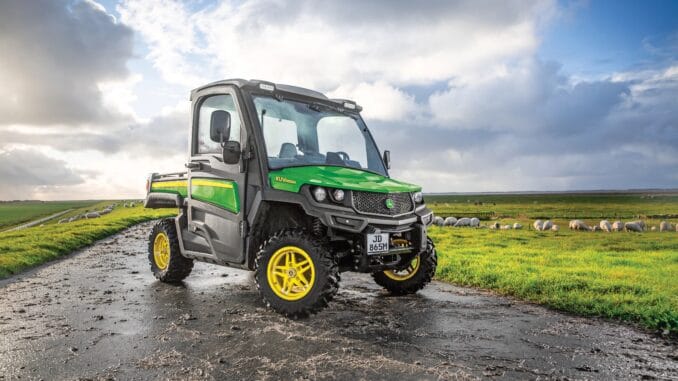
John Deere Gator prices vary a lot because “Gator” covers several utility vehicle families, from older TX and HPX work machines to newer XUV crossover utility vehicles, and values change by engine type, trim, cab equipment, hours, and overall condition. For most USA and Canada buyers, the practical question is not just what a John Deere Gator costs, but what it will cost to keep reliable, safe, and easy to maintain over time.
This guide is written for homeowner and DIY users who want a symptom-first repair and maintenance reference before buying, servicing, or troubleshooting a John Deere Gator. It covers price ranges, common systems, realistic DIY repairs, parts-ordering strategy, maintenance planning, and an expanded FAQ in the same owner-focused style that works well for Deere equipment guides.
John Deere Gator prices and model overview
The John Deere Gator line sits in Deere’s utility vehicle range and includes work-focused vehicles like older TX and HPX models plus larger XUV models aimed at hauling, property work, trail use, and year-round utility tasks. In real-world classified and dealer listings, used John Deere Gator prices in the USA and Canada commonly span from older lower-cost machines to late-model XUV units priced far higher, especially where cab, diesel, 4×4, and multi-passenger configurations are involved.
For buyers, that matters because repair costs and maintenance parts are not uniform across the range. A simple older Gator may be easier and cheaper to keep running, while a newer XUV with more electronics and accessories may justify a higher purchase price but needs more careful parts identification by exact model and PIN.
General overview of the John Deere Gator
Most John Deere Gators share the same broad system layout even though parts differ by model: engine and fuel system, drive system, steering and suspension, electrical system, brakes, and cargo/chassis components. On XUV machines, owners also commonly deal with 4WD controls, CVT/clutch-related drive behavior, cooling system maintenance, and accessory wiring for lights, heaters, or cab equipment.
Common service parts owners regularly buy include oil filters, air filters, spark plugs on gasoline models, batteries, drive belts on belt-driven units, switches, and complete maintenance kits sold by Deere for specific Gator models. Deere’s own online parts ecosystem also shows that some parts, such as switches and maintenance kits, are highly model-specific, which is why a Gator article must repeatedly come back to exact model and serial confirmation before ordering.
John Deere Gator troubleshooting approach
The best way to diagnose a John Deere Gator is to start with the symptom the owner actually sees: no-start, cranks but will not fire, weak drive, overheating, charging problems, brake issues, or abnormal vibration/noise. That symptom-first approach prevents random parts swapping and is especially important on Gators because the family includes very different engines, fuel systems, and driveline designs under one brand name.
Main symptom categories for most Gator models include:
-
Starting issues, no crank or no fire
-
Running issues, stalling, rough idle, loss of power
-
Drive and transmission issues, poor acceleration, belt slip, 4WD concerns
-
Electrical and charging faults, dead battery, lighting and switch problems
-
Overheating, leaks, and smell-of-fuel or smell-of-burning-belt complaints
-
Suspension, steering, vibration, and brake-related concerns
Emergency John Deere Gator repair needs
Some faults on a John Deere Gator need immediate attention because they create a safety risk or can rapidly damage expensive parts. The big red-flag categories are fuel leaks, brake problems, charging or wiring faults that can overheat connectors, serious belt/driveline noise, and overheating on liquid-cooled units.
John Deere Gator starting issues
A Gator that will not crank, cranks slowly, or starts only intermittently often points to battery, terminal, ground, starter circuit, safety interlock, or ignition-switch problems. This matters because repeated low-voltage starts can overwork the starter and leave you stranded far from the workshop.
Common causes:
-
Weak or failed battery
-
Corroded battery terminals or poor grounds
-
Faulty ignition or accessory switch
-
Safety interlock or selector-position problems
-
Starter or solenoid faults
Basic owner checks:
-
Confirm battery voltage and clean both terminals.
-
Check visible ground connections for looseness or corrosion.
-
Verify the vehicle is in the correct start position and brake/neutral conditions are met.
-
Listen for a click from the solenoid.
-
If voltage is good but crank is weak, stop before overheating cables or damaging the starter.
John Deere Gator running issues
If the engine starts but runs rough, hesitates, stalls, or lacks power, begin with basic air, fuel, ignition, and maintenance history. A neglected filter or stale fuel is much more common than a major internal engine problem on homeowner-used machines.
Common causes:
-
Dirty air filter
-
Old fuel or fuel contamination
-
Ignition tune-up parts overdue
-
Plugged or overdue oil-service items in a poorly maintained unit
-
Model-specific sensor or fuel-delivery faults on newer machines
Basic owner checks:
-
Inspect the air filter and replace if dirty.
-
Confirm the fuel is fresh and the tank is clean.
-
Check whether scheduled maintenance is overdue.
-
Inspect spark plug condition on gasoline models.
-
If the unit still runs poorly after routine-service checks, move toward model-specific diagnosis.
John Deere Gator vibration and noise
Sharp new vibration, rattling under load, or squeal from the drive area should never be ignored. On a Gator, those symptoms can signal loose hardware, driveline wear, belt problems, wheel issues, or chassis-related damage that becomes more expensive if kept in service.
Common causes:
-
Worn or slipping drive belt
-
Loose wheels or damaged tires
-
Driveline or clutch-related wear
-
Suspension or steering play
-
Body or cargo-bed hardware looseness
Basic owner checks:
-
Stop using the machine until the source is narrowed down.
-
Check wheel nuts and visible tire condition.
-
Inspect belt/driveline area for dust, heat, or smell.
-
Look for loose guards, shields, or bed mounts.
-
Escalate quickly if the noise appears load-related or metallic.
John Deere Gator overheating and leaks
Overheating, coolant loss, oil leaks, or fuel smells should be treated as immediate repair items. Continued use can damage the engine, create a fire hazard, or leave the vehicle stranded.
Common causes:
-
Low coolant on liquid-cooled models
-
Blocked cooling surfaces or debris buildup
-
Oil seepage from neglected seals or service points
-
Fuel-line or tank-vent issues
-
Heavy towing or low-speed use in hot conditions
Basic owner checks:
-
Shut down and let the vehicle cool fully.
-
Check fluid levels and look for active leaks.
-
Clear debris from cooling areas if accessible.
-
Confirm whether the leak is oil, coolant, or fuel before ordering parts.
-
Do not keep topping up and driving without finding the cause.
John Deere Gator transmission and drive problems
If the Gator revs but barely moves, shifts poorly, or loses pulling power on hills, think drive belt, clutch/CVT behavior, linkage, or model-specific transmission wear. This category matters because a slipping belt or clutch problem can quickly damage mating components if the vehicle keeps being worked hard.
Common causes:
-
Worn or glazed drive belt
-
Clutch/CVT contamination or wear
-
Shift linkage issues
-
Differential or drivetrain faults
-
Overloading beyond the machine’s intended use
Basic owner checks:
-
Compare engine speed to actual ground speed.
-
Check whether the problem is worse hot, cold, uphill, or under load.
-
Inspect the belt area for dust, glazing, or smell.
-
Confirm correct tire size and inflation side-to-side.
-
Move to dealer-level diagnosis if driveline disassembly is required.
John Deere Gator electrical problems
Lighting faults, no-charge complaints, accessory failures, and intermittent starting often come back to connectors, switches, grounds, or battery condition. Deere parts listings also show common replacement electrical items such as work-light switches and maintenance kits, reinforcing that minor electrical faults are routine owner concerns on Gators.
Common causes:
-
Weak battery
-
Corroded grounds and terminals
-
Faulty switchgear
-
Accessory wiring issues
-
Charging-system faults
Basic owner checks:
-
Test the battery first.
-
Clean and tighten main power and ground connections.
-
Check fuses and visible connectors.
-
Isolate whether the problem affects one circuit or the whole machine.
-
Replace obvious failed switches only after confirming power and ground.
DIY or dealer? John Deere Gator repair decision guide
The normal line for John Deere Gator owners is simple: routine service, basic bolt-on parts, filters, battery work, and visible electrical checks are reasonable DIY jobs, but internal driveline, major engine, EFI diagnostics, and transmission teardown are usually dealer-level work. That boundary gets even more important on newer XUV machines where model-specific electrical and driveline systems add complexity.
Good DIY jobs
-
Engine oil and filter service using the correct kit or parts for the exact model
-
Air filter inspection and replacement
-
Spark plug replacement on applicable gasoline models
-
Battery replacement and terminal cleaning
-
Basic light, fuse, and switch replacement where access is simple
Advanced DIY or dealer jobs
-
Drive belt and clutch-related diagnosis on XUV models
-
Fuel-system diagnosis beyond basic filter and fuel-quality checks
-
Electrical tracing for intermittent no-start or charging faults
-
Transmission, differential, axle, or internal brake repairs
-
Cooling-system leak diagnosis where bodywork or major access is required
Skill level guide
-
Beginner: battery, filters, spark plug, visual inspections, fuse checks
-
Intermediate: oil service, switch replacement, basic belt-area inspection, minor bolt-on parts
-
Advanced: clutch/CVT work, fuel diagnostics, electrical tracing, driveline repairs
John Deere Gator parts needed, OEM vs aftermarket, and what information you need
Before ordering any John Deere Gator part, gather the full model designation, Product Identification Number, engine model/serial where applicable, and any trim or chassis details that affect fit. Deere’s own maintenance-kit and switch listings make it clear that even parts that look generic can be equipment-specific, so broad “fits Gator” listings should be treated carefully.
OEM parts are usually the best choice for belts, switches, maintenance kits, and fit-sensitive components because Deere often ties those items to exact chassis or model applications. Aftermarket can be acceptable for batteries and some routine consumables, but only when the listing clearly cross-references the precise Gator model and serial range rather than the Gator family in general.
Where to find John Deere Gator manuals and parts diagrams
The best starting points are Deere operator’s manual lookup, Deere parts support, Deere Shop for maintenance kits and some replacement parts, and a Deere-focused parts site that breaks vehicles down by model. For pricing research, dealer inventory pages and agricultural listing sites are useful because they show the spread between older work Gators and newer XUV models in the real market.
Useful sources:
-
John Deere Operator’s Manuals for owner-use, safety, and maintenance lookup by model
-
John Deere Parts Support for official parts lookup pathways and dealer-linked support
-
John Deere Shop for maintenance kits and selected parts when the exact model is known
-
Garden Hire Spares Gator Parts Diagrams for model-by-model diagram navigation on Deere-focused aftermarket supply pages
How to locate John Deere Gator model, serial, and engine numbers
These numbers matter because a Gator family name alone is not enough to guarantee correct parts fitment. Older and newer Gators can use very different service parts even when the seller simply calls them “a John Deere Gator” in a listing.
-
Find the Product Identification Number plate on the vehicle frame area specified in the operator’s manual for your model.
-
Record the complete model designation, not just “Gator” or “XUV”.
-
Locate the engine identification label or stamped engine information if engine service parts are needed.
-
Confirm any trim, bed, or seating configuration that affects accessories and fitted parts.
-
Match all of that information against the official parts diagram before ordering.
Buying John Deere Gator parts online and in physical stores
The safest strategy is to use the machine’s exact model and PIN first, then confirm the OEM number, and only then compare online, dealer, and retail options. That extra step prevents the classic mistake of buying a “Gator” part that fits a different chassis or engine family.
-
Online: best for comparing OEM numbers and maintenance kits, but only after confirming model-specific fitment on official sources
-
Dealer counter: best for serial-sensitive parts, electrical parts, and unclear supersessions
-
Retail stores: acceptable for common consumables such as batteries if the packaging clearly cross-references the exact machine
Useful URLs:
-
agdealer.com John Deere utility vehicles for market-price comparison on used units
John Deere Gator fitting guide for common parts
These are the most realistic high-impact DIY jobs for many Gator owners, but exact steps vary by model and the operator’s manual should always be checked first. The goal is to keep these as safe, simple owner-level tasks rather than drifting into major driveline or engine work.
Replacing the John Deere Gator air filter
A dirty air filter can cause rough running, power loss, and unnecessary engine wear.
-
Park safely, switch off, and open the filter housing.
-
Remove the old filter carefully so dirt does not fall into the intake.
-
Wipe out loose debris from the housing.
-
Install the new filter in the correct orientation.
-
Refit the cover securely and check the seal.
Replacing the John Deere Gator battery
Battery replacement fixes many no-start and weak-crank complaints on older and seasonal-use Gators.
-
Switch off all accessories and remove the key.
-
Disconnect the negative cable first, then the positive.
-
Lift out the old battery and clean the tray and terminals.
-
Install the new battery, connecting positive first and negative last.
-
Confirm tight terminals and test cranking performance.
John Deere Gator oil and filter service
Routine oil service is one of the best ways to protect resale value and long-term reliability.
-
Warm the engine briefly if the manual allows.
-
Drain the oil into a suitable container.
-
Remove the old filter and confirm the old gasket comes away.
-
Fit the new OEM or exact-cross-reference filter and refill with the correct oil.
-
Run the engine, recheck level, and inspect for leaks.
Replacing a John Deere Gator switch
A failed work-light or accessory switch is often a straightforward repair when access is easy and the replacement is confirmed by part number.
-
Disconnect battery power before touching the circuit.
-
Remove the panel or switch retaining hardware.
-
Label or photograph the connectors.
-
Swap in the correct replacement switch.
-
Reconnect the battery and test the function before reassembly.
Maintenance to prevent John Deere Gator problems recurring
Regular maintenance stops many of the most expensive Gator faults before they begin, especially no-start complaints, clogged intake issues, premature belt wear, and electrical corrosion from seasonal use. Owners who use maintenance kits and stick to the manual are also less likely to miss small items that later create larger drivability problems.
Focus areas:
-
Starting reliability: keep the battery charged, terminals clean, and switchgear dry
-
Engine performance: replace air and oil-service items on time
-
Heat and fire prevention: clear debris, watch for leaks, and do not ignore belt smell or wiring heat
-
Drive performance: investigate belt slip early rather than driving through it
-
Electrical reliability: clean grounds and protect connectors on seasonal machines
John Deere Gator maintenance schedule and year-round checklist
Because “Gator” covers multiple models, the exact maintenance chart must come from the operator’s manual for the precise machine, but Deere clearly provides model-based operator-manual access and model-specific home maintenance kits for routine service. That means owners should use the official chart for intervals and use this checklist as a structure rather than a substitute for the exact manual.
Daily / before each use
-
Check engine oil level if required by your model’s operator manual
-
Inspect tires, steering feel, and brakes
-
Look for fuel, oil, or coolant leaks
-
Confirm lights and basic electrical functions where fitted
-
Remove grass, mud, and debris buildup from hot areas
Every 25 hours
-
Inspect the air intake and filter condition
-
Check battery terminals and visible wiring
-
Inspect belt/driveline area for dust, heat, or abnormal wear on applicable models
-
Check chassis hardware and bed fasteners
Every 50 hours or yearly
-
Change engine oil and filter if that matches the official interval for your machine
-
Inspect spark plug condition on gasoline units
-
Inspect cooling and hose condition on liquid-cooled models
-
Review brake operation and parking brake hold
Seasonal checklist
-
Spring or return-to-service: charge/test the battery, inspect for rodents, stale fuel, or corrosion
-
Mid-season: clean cooling and intake areas, recheck service history, inspect drive behavior under load
-
Fall or storage prep: clean thoroughly, address leaks, service due items, and store with battery care in mind
Repair, upgrade, or replace a John Deere Gator?
As a rule, repair a John Deere Gator when the machine is structurally sound, the engine and drivetrain are basically healthy, and the work needed is still in the normal maintenance-and-wear-parts category. Upgrade when the machine still has value but your needs now point toward a newer XUV with more payload, cab options, or capability, and replace when repair cost starts to approach the real market value of the vehicle in your area.
Repair if:
-
The issue is mostly maintenance-related, electrical, battery, filter, or minor bolt-on parts
-
The frame, bed, steering, and driveline are still fundamentally solid
-
Comparable used prices are still well above your likely repair cost
Upgrade if:
-
You need more comfort, seating, weather protection, or crossover capability
-
You are adding frequent hauling, towing, or year-round use
-
The current unit runs but no longer fits the job well
Replace if:
-
The vehicle has major engine, driveline, and electrical problems at the same time
-
Parts ordering is becoming difficult because the machine is too incomplete or heavily modified
-
Market listings show cleaner, ready-to-work used units near your total repair spend
John Deere Gator prices in the USA and Canada
Used John Deere Gator prices in current dealer and listing sources range from lower-cost older work units to much higher late-model XUV vehicles, with examples including older 4×4 HPX units around the lower teens in USD-equivalent pricing and XUV 835-class machines commonly much higher depending on year and spec. Dealer inventory pages also show premium asking prices on newer utility vehicle stock, which confirms that a buyer should always compare purchase price with expected maintenance catch-up cost rather than focusing on sticker alone.
A practical way to think about John Deere Gator prices is:
-
Older TX/HPX work vehicles: often the most budget-friendly entry point, but condition matters more than cosmetics
-
Mid-generation working Gators: usually the best value for buyers who want utility without late-model complexity
-
Newer XUV machines: highest prices, but often better comfort, accessories, and resale appeal
Expanded John Deere Gator troubleshooting FAQ
1. Why will my John Deere Gator not start?
The most common causes are a weak battery, dirty terminals, poor grounds, safety-start conditions not met, or a starter-circuit fault. Start with battery condition and cable cleanliness before suspecting expensive parts, because low-voltage problems are common on seasonal-use utility vehicles.
2. Why does my John Deere Gator click but not crank?
A click usually points to low battery power, poor cable connection, or a starter/solenoid issue rather than a fuel problem. If the battery tests good, inspect grounds and heavy cables before replacing switchgear or starter parts.
3. Why does my John Deere Gator crank but not fire?
Crank-with-no-start points more toward fuel, ignition, or air-delivery issues than battery trouble. Check fresh fuel, air filter condition, and basic ignition service items first, then move to model-specific diagnosis if routine checks do not solve it.
4. Why does my John Deere Gator start and then stall?
This can happen when fuel delivery is inconsistent, the air intake is restricted, or maintenance has been neglected. Dirty filters and stale fuel are far more common than major engine failures on lightly used homeowner machines.
5. Why is my John Deere Gator running rough?
Rough running often comes from dirty intake components, overdue service items, poor fuel, or ignition wear on gasoline models. Check the simple consumables first, because those are both common and comparatively cheap to correct.
6. Why does my John Deere Gator have low power?
Low power under load can come from a dirty air filter, overdue tune-up items, belt slip, or driveline inefficiency depending on the model. Pay attention to whether the engine itself sounds weak or whether engine speed rises without matching ground speed.
7. Why does my John Deere Gator rev but barely move?
That symptom strongly suggests drive-belt or clutch/CVT-related issues on applicable models. Stop using it hard until the belt area is inspected, because slipping components can damage mating surfaces quickly.
8. Why is my John Deere Gator losing speed on hills?
Hill-related speed loss can be normal if the vehicle is overloaded, but it can also indicate belt wear, clutch trouble, or general driveline inefficiency. Compare behavior empty versus loaded before assuming a major transmission failure.
9. Why does my John Deere Gator overheat?
Overheating usually points to low coolant on liquid-cooled machines, clogged cooling areas, heavy operating conditions, or an unresolved leak. Shut it down early, because repeated overheating is far more expensive than a preventive repair.
10. Why does my John Deere Gator smell like fuel?
A fuel smell can mean a leak, venting problem, or spillage that has not been cleaned up. Treat that as an immediate inspection item because of fire risk.
11. Why does my John Deere Gator smell like a burning belt?
That smell often shows belt slip or overheating in the drive system on belt-driven machines. Continued use under load can turn a belt job into a clutch or driveline repair.
12. Why is my John Deere Gator battery always dead?
Repeated battery failure usually means the machine sits too long, the battery is old, terminals are corroded, or the charging system is not keeping up. Test the battery first, then confirm charging before buying more parts.
13. Why are the lights not working on my John Deere Gator?
Lighting problems often come from blown fuses, poor grounds, failed switches, or accessory wiring issues. Deere’s own parts listings show model-specific switch replacements, so confirm the exact machine before ordering electrical parts.
14. Can a bad switch stop my John Deere Gator from working properly?
Yes, a failed switch can affect lighting, accessories, and in some cases starting or power distribution depending on the circuit. Replace switches only after confirming the machine has proper battery power and ground.
15. Why does my John Deere Gator vibrate at speed?
Speed-related vibration commonly comes from tire problems, loose wheels, driveline wear, or belt/clutch issues. Check the rolling parts first because they are faster to rule out than internal repairs.
16. Why does my John Deere Gator make noise when accelerating?
Noise under acceleration points more toward belt, clutch, driveline, or load-sensitive hardware issues than idle-only engine noise. That pattern helps narrow diagnosis quickly.
17. Why is my John Deere Gator hard to shift?
Hard shifting can be caused by linkage issues, driveline loading, or internal wear depending on the transmission design. If the problem is new or severe, avoid forcing the lever because that can create extra damage.
18. Why is 4WD not engaging on my John Deere Gator?
On models equipped with 4WD, engagement problems can involve switchgear, linkage, or model-specific driveline faults. Start with the owner controls and exact model documentation before assuming a major axle problem.
19. Why does my John Deere Gator pull to one side?
Pulling can come from unequal tire pressure, brake drag, steering wear, or suspension problems. Tire and brake checks are the fastest first steps.
20. Why are my John Deere Gator brakes weak?
Weak brakes may be due to wear, adjustment issues, contamination, or more serious hydraulic/mechanical faults depending on model. Because brakes are safety-critical, this is not a problem to leave until later.
21. Why is my John Deere Gator leaking oil?
Oil leaks may come from service points, seals, gaskets, or overfilling. Clean the area first and verify the source before ordering parts, because airflow can spread oil and make the true leak harder to identify.
22. Why is my John Deere Gator leaking coolant?
Coolant loss usually indicates a hose, fitting, radiator, or other cooling-system fault on liquid-cooled models. Do not keep running it hot while topping it off, because that risks engine damage.
23. Why does my John Deere Gator backfire or pop?
Popping can be tied to fuel quality, ignition problems, intake restrictions, or tune-related issues. On a machine with overdue basic service, simple maintenance is the logical first move.
24. How often should I service my John Deere Gator?
Use the official operator’s manual for the exact model, because Deere supports model-based maintenance lookup and even sells maintenance kits tied to specific Gator applications. The interval depends on the exact machine, engine, and duty cycle rather than the Gator family name alone.
25. What maintenance matters most on a John Deere Gator?
Battery health, clean terminals, regular oil service, air filter condition, and fast attention to leaks or belt-slip symptoms do the most to prevent owner-level problems. Those are the checks most likely to save money before a bigger failure develops.
26. Should I use OEM parts on my John Deere Gator?
OEM parts are usually the safest choice for belts, switches, fit-sensitive components, and bundled maintenance items. Aftermarket is more acceptable for some consumables, but only when cross-reference and fitment are exact.
27. Where do I find John Deere Gator parts diagrams?
Use Deere parts support, Deere Shop where applicable, and Deere-focused parts diagram sites that break Gators down by exact model. Avoid ordering from vague listings that only say “fits Gator”.
28. Are John Deere Gator prices higher in Canada?
Canadian asking prices can appear higher in raw numbers, but cross-border comparison needs currency conversion, local dealer supply, and equipment spec taken into account. Used-market pricing is broad enough that condition and trim usually matter more than country alone.
29. Is an older John Deere Gator worth buying?
Often yes, if the frame, driveline, and maintenance history are sound and the purchase price leaves room for catch-up service. Older work-focused Gators can still be strong value if bought on mechanical condition rather than appearance alone.
30. When should I replace instead of repair my John Deere Gator?
Replace when the machine has stacked major problems, the repair total is approaching the real market value, or your use now calls for a different class of Gator. Repair makes more sense when the issues are still in the service-parts category and the vehicle is otherwise solid.
31. What is the best John Deere Gator for property owners?
That depends on workload, terrain, payload, and whether the priority is simple work use or more crossover comfort and features. For many owners, the “best” machine is the one with the right capability and the clearest parts/manual support, not the most expensive one.
32. Does a John Deere Gator hold its value?
Late-model XUV machines and well-kept work units often show strong asking prices in dealer and classified listings, especially when clean and well-equipped. Service history and condition remain the biggest drivers of resale confidence.
33. Can I maintain a John Deere Gator myself?
Yes, many owners can handle routine maintenance and simple repairs such as battery, filters, oil service, and basic switch replacement. The key is to stop at the point where the job becomes serial-specific, driveline-internal, or diagnostic-heavy.
34. What should I check before buying a used John Deere Gator?
Check starting behavior, battery condition, leaks, belt/driveline response, brake feel, steering play, overall service history, and exact model/PIN identification. A cheap unit with unclear identity and obvious deferred maintenance can cost far more than a better-kept machine with a higher sticker.
35. What is the biggest mistake buyers make with John Deere Gator prices?
The biggest mistake is focusing only on the purchase price and ignoring model-specific parts fitment, maintenance catch-up cost, and whether the machine actually matches the work required. A slightly more expensive Gator with clear records and correct parts support is often the cheaper machine in the long run.