
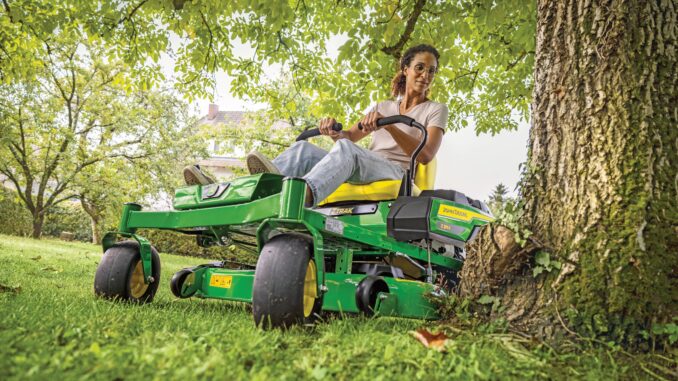
Introduction – John Deere Z830A overview
The John Deere Z830A is a commercial ZTrak zero‑turn mower designed for heavier, all‑day cutting on larger properties rather than small homeowner lawns. It typically runs a Kawasaki V‑twin engine, hydrostatic drive to the rear wheels, and a mid‑mounted mower deck sized for professional turf work (commonly 60″ or similar in this range).
This John Deere Z830A service and repair guide is written for USA and Canada owners who are comfortable with basic maintenance and some intermediate repairs. It focuses on real‑world symptoms you see on the mower (starting issues, poor cut, vibration, leaks, electrical problems) and then walks you through likely causes, DIY checks, and when to stop and call a dealer.
You’ll also find parts information, links to diagrams and manuals, and an expanded troubleshooting FAQ.
John Deere Z830A in the Deere line up
The John Deere Z830A sits in the Z800A professional ZTrak family, positioned above homeowner ZTraks and below the largest diesel commercial units. It’s aimed at commercial cutters and serious homeowners who need durability, high blade speed, and efficient maneuvering around obstacles.
Key systems to keep in mind on the John Deere Z830A:
-
Engine and fuel system – Vertical‑shaft V‑twin gasoline engine, fuel pump, filter, carburetor/injection, and tank.
-
Mower system – Fabricated steel deck, spindle assemblies, blades, deck belt, idlers, deck lift, and anti‑scalp wheels.
-
Drive system – Dual hydrostatic wheel motors, drive belt (engine to pumps), hydraulic hoses, and filters/reservoir (if equipped).
-
Electrical system – Starter, battery, ignition switch, PTO switch, safety switches, key wiring harness, and fuses.
Owners commonly purchase these John Deere Z830A service parts:
-
Engine oil filter
-
Air filter (primary and inner safety element)
-
Fuel filter
-
Spark plugs
-
Deck drive belt and idler pulleys
-
Mower blades
-
Battery
-
PTO and seat safety switches
Troubleshooting approach for the John Deere Z830A
Diagnosis on a John Deere Z830A should always start from the symptom you see and feel rather than jumping straight to a suspected part. Begin by asking: what changed, when did it start, and what else was happening (weather, terrain, fuel, recent work) at the time.
For this mower, you’ll usually group problems into these symptom categories:
-
Starting issues (won’t crank, won’t start, hard to start)
-
Running issues (dies under load, surging, smoking, misfiring)
-
Cut‑quality problems (uneven cut, scalping, streaks, poor discharge)
-
Vibration and noise (deck shake, rattles, grinding or squealing)
-
Overheating and leaks (engine running hot, oil or fuel on the ground)
-
Transmission and drive issues (weak drive, one side slow, loss of steering control)
-
Electrical and safety switch problems (no crank, PTO won’t engage, intermittent shut‑off)
Start with simple checks: fuel quality, filters, belt condition, and visible damage. Only then move to deeper diagnostics like testing safety switches, hydraulic pressures, or tearing down deck spindles.
Emergency issues on the John Deere Z830A
Some John Deere Z830A problems need immediate attention because they either make the mower unsafe to operate or risk major damage if you keep going. Treat these as “stop now” faults, not something to finish the yard with and fix later.
1. Starting issues – John Deere Z830A
Starting problems on a John Deere Z830A show up as the engine not cranking at all, cranking but never firing, or starting only with repeated attempts and extra choke. This matters because repeated cranking overheats the starter, drains the battery, and can flood the engine.
Common causes:
-
Weak or failing battery
-
Loose or corroded battery cables and grounds
-
Faulty seat, brake, or PTO safety switch
-
Bad ignition switch or starter solenoid
-
Fuel system issues (clogged filter, stale fuel, water in fuel)
-
Ignition problems (worn spark plugs, failed coil)
Basic owner checks:
-
Verify the parking brake is set, PTO is off, and you’re seated properly.
-
Check battery terminals for corrosion; clean and tighten if needed.
-
Try the headlights (if fitted) to confirm battery condition.
-
Listen for a click from the starter solenoid when turning the key to “start”.
-
Inspect the fuel filter and lines for clogs or air leaks.
If you cannot get any crank at all, or you see melted wiring or smell burning, stop and have a dealer or qualified technician inspect the electrical system.
2. Cut‑quality problems – John Deere Z830A
Cut‑quality problems on a John Deere Z830A typically look like uneven turf, ridges or scalping, poor discharge or clumping, and grass left standing after a pass. Ignoring this can stress the deck components, overwork the engine, and leave a poor finish that defeats the purpose of owning a commercial unit.
Common causes:
-
Dull, damaged, or wrong‑type blades
-
Deck not level side‑to‑side or front‑to‑back
-
Deck belt slipping or worn, causing low blade speed
-
Clogged underside of deck with packed grass
-
Bent deck, spindle housings, or blade shafts after impact
Basic owner checks:
-
Inspect blades for sharpness, nicks, or bends; replace or sharpen as needed.
-
Clean the underside of the deck safely, with the engine off and key removed.
-
Check deck level using a deck leveling gauge or ruler at blade tips.
-
Inspect the deck belt for cracks, glazing, or low tension.
-
Verify tire pressures are correct and equal side‑to‑side.
Major deck damage (cracked shell, bent spindles, or repeated belt failures) is best handled by a dealer because deck measurement and spindle replacement need proper tools and safety practices.
3. Vibration and noise – John Deere Z830A
On a John Deere Z830A, vibration shows up as shaking in the seat or control levers, buzzing in your feet, or noticeable deck shudder when the blades are engaged. Excessive noise may include grinding, squealing, or knocking sounds from the deck or engine area. Left alone, vibration can quickly damage bearings, belts, and mounting hardware.
Common causes:
-
Bent or unbalanced blades
-
Worn or failing deck spindle bearings
-
Loose deck mounting hardware or anti‑scalp wheels
-
Damaged idler pulleys or bearings
-
Debris wrapped around spindle or pulleys
Basic owner checks:
-
Inspect blades; replace any that are bent or severely nicked.
-
Spin each blade by hand (engine off, key removed) to feel for roughness or noise in spindle bearings.
-
Check pulleys and idlers for wobble or grinding when turned.
-
Tighten visible deck hardware to specified torque.
-
Remove any debris wrapped around spindles or pulleys.
If a spindle gets hot to the touch, makes grinding noise, or has obvious play, plan for full replacement rather than trying to “limp through” the season.
4. Overheating and leaks – John Deere Z830A
Overheating on a John Deere Z830A may show up as the engine smelling hot, loss of power under load, or automatic shut‑down if safety systems engage. Fluid leaks (oil, fuel, or hydraulic oil) are always urgent because they can cause fire hazards, environmental contamination, or hydraulic failure.
Common causes:
-
Packed cooling fins and shrouds with debris
-
Low engine oil or wrong viscosity
-
Fuel leaks at filter, lines, or tank fittings
-
Hydraulic leaks from hoses or pump/reservoir connections
Basic owner checks:
-
Inspect the engine cooling shrouds and fins; clean out debris with air, not water.
-
Check engine oil level and condition before each use.
-
Look for wet areas under the mower and along hoses and filters.
-
Smell for fuel around the tank and filter; do not run if fuel is dripping.
-
Wipe suspected leak areas, then run briefly to see fresh leakage source.
Any significant fuel leak or hydraulic leak near hot components should be treated as a “no‑run” condition until repaired properly.
5. Transmission and drive problems – John Deere Z830A
Transmission and drive problems on the John Deere Z830A include weak drive, one side moving slower than the other, jerky response, or inability to climb slopes as before. Continuing to run with hydraulic issues can damage wheel motors and pumps, which are expensive components.
Common causes:
-
Low hydraulic oil (if system has a reservoir)
-
Air in hydraulic lines after improper service
-
Contaminated fluid or wrong oil type
-
Worn drive belt from engine to hydraulic pumps
-
Failing wheel motor or pump internals
Basic owner checks:
-
Inspect the drive belt for wear and tension according to the manual.
-
Check hydraulic fluid level and condition, if applicable.
-
Look for wet spots around hydraulic hoses and fittings.
-
Verify tire pressures and tread condition.
-
Note whether the problem is worse when hot, which points to hydraulic components.
Beyond belt replacement and fluid service, hydraulic diagnosis is generally dealer‑level work due to the need for gauges, flushing procedures, and safe system depressurization.
6. Electrical problems – John Deere Z830A
Electrical problems on a John Deere Z830A commonly show as intermittent no‑start, PTO that won’t engage, mower dying when you release the brake, or total power loss. Because safety switches are intertwined, electrical faults can be confusing without a structured approach.
Common causes:
-
Failing battery or poor connections
-
Corroded grounds or fuse links
-
Faulty seat, PTO, or parking brake safety switches
-
Damaged wiring harness from abrasion or rodent damage
-
Failed ignition switch or relays
Basic owner checks:
-
Verify all fuses visually and with a simple continuity tester if available.
-
Wiggle harness connectors (engine off) to identify loose connections.
-
Check that safety switches actuate cleanly when levers are moved.
-
Clean and tighten main grounds and battery posts.
-
Look for rubbed‑through wiring in tight routing areas.
If you are uncomfortable with wiring work, limit yourself to visual checks and cleaning, then let a dealer handle deeper electrical troubleshooting.
DIY or dealer? John Deere Z830A repair decision guide
On the John Deere Z830A, the “line” between DIY and dealer work usually falls where jobs require special tools, hydraulic knowledge, or detailed electrical diagnosis. Routine maintenance and bolt‑on parts are very manageable for a homeowner or small contractor with basic tools and patience, while internal engine, hydraulic, and complex electrical repairs are better handled by a John Deere dealer or experienced shop.
Good DIY jobs on a John Deere Z830A:
-
Engine oil and filter changes
-
Air and fuel filter replacement
-
Spark plug replacement
-
Blade changing and sharpening
-
Deck belt replacement and deck leveling adjustments
-
Battery replacement and cleaning electrical contacts
-
Basic safety switch replacement (seat or PTO, if access is straightforward)
Advanced DIY or dealer jobs:
-
Hydraulic system repairs (wheel motors, pumps, hose replacement and flushing)
-
Internal engine repairs (head gaskets, valve work, timing components)
-
Deep electrical diagnostics with wiring harness, relays, and control modules
-
Major deck repairs (spindle housing replacement, welded deck repairs)
Skill level guide:
-
Beginner – Oil changes, air/fuel filter service, blade removal/installation, basic cleaning.
-
Intermediate – Belt replacement, deck leveling, battery and safety switch replacement, minor leak fixes.
-
Advanced – Engine internals, hydraulic repairs, full electrical troubleshooting and harness repair.
Parts needed for the John Deere Z830A (OEM vs aftermarket)
Before ordering parts for your John Deere Z830A, gather the core information you need so you don’t end up with incorrect components:
-
Full model name (John Deere Z830A)
-
Product Identification Number (PIN) from the mower chassis
-
Engine model and serial (often Kawasaki; check the engine tag)
-
Deck size and configuration (to match blades and deck belts correctly)
John Deere Z830A key service parts
Use OEM parts for belts, safety‑critical items (PTO switches, safety switches), and fit‑sensitive components like deck spindles and blade hardware. Aftermarket parts are often acceptable for some filters, blades, and batteries, provided they are clearly cross‑referenced to the Z830A and your specific engine and deck, and sourced from reputable brands rather than generic, unverified listings.
John Deere Z830A parts diagrams and service manuals
For John Deere Z830A owners, clear diagrams and official manuals save time and prevent costly mistakes. The best sources are:
-
John Deere official Operator’s Manual – The core document for daily maintenance, safety, and basic adjustments.
-
John Deere online parts catalog (JDParts or equivalent) – Exploded diagrams of the Z830A engine, deck, drive, and electrical systems with OEM part numbers.
-
John Deere Technical Publications – Repair manuals and technical guides for the Z810A/Z820A/Z830A/Z840A/Z850A/Z860A ZTrak series covering diagnostics and detailed procedures.
-
A reputable Deere‑focused parts site – Many have a dedicated John Deere Z830A page with commonly ordered parts and compatible aftermarket options.
Use the operator’s manual to set maintenance intervals and basic procedures. Use JDParts and technical manuals when you need to confirm part numbers, look up diagrams for belt routing or hydraulic hoses, or plan more in‑depth repairs.
Finding model, serial and engine numbers on a John Deere Z830A
Correct model and serial information matters because John Deere often updates components during a model’s life, and parts can change mid‑series. Hydraulic systems, safety switches, and deck parts are especially sensitive to PIN ranges.
How to locate the numbers:
-
Find the Product Identification Number (PIN) plate on the frame of the John Deere Z830A, typically near the rear or side of the machine on a metal tag.
-
Note the full model designation “Z830A” and the PIN; photograph the plate for reference.
-
Identify the engine model and serial from the tag on the engine block or shroud, usually on the side of the Kawasaki V‑twin.
-
Measure your deck width (e.g. 60″) and note any deck model markings; this ensures correct blades and belts.
-
Keep these details in a notebook or phone for quick access whenever you order parts or seek service.
Buying John Deere Z830A parts online and in stores
A good strategy for sourcing John Deere Z830A parts is to mix online ordering for known items with dealer support for complex or PIN‑specific components. Always confirm OEM numbers before buying and be cautious of generic listings that don’t reference your mower specifically.
-
Online – Use official John Deere parts sites and high‑quality aftermarket retailers that list the Z830A explicitly, checking part numbers against the operator’s manual or parts catalog.
-
Dealer counter – Ideal for hydraulic parts, safety‑critical components, and when you’re unsure about PIN breaks or superseded part numbers.
-
Retail stores – Fine for common consumables (oil, grease, some filters, batteries) if the packaging clearly lists John Deere Z830A or the correct engine and deck models.
Helpful URLs to bookmark (as examples):
-
John Deere official parts catalog (search by Z830A model and PIN)
-
John Deere Technical Publications site for ZTrak manuals
-
One or two reputable John Deere parts retailers with Z830A‑specific pages
Fitting common John Deere Z830A service parts – step‑by‑step
Below are practical DIY jobs that deliver high impact for John Deere Z830A owners. Always work on a cool machine, remove the key, and observe all safety instructions in the operator’s manual.
1. Engine oil and filter change – John Deere Z830A
Changing oil and filter keeps the engine healthy and prevents expensive failure on the Z830A.
-
Park the mower on level ground, set the brake, and let the engine cool.
-
Place a drain pan under the oil drain valve or plug and open it to drain the oil completely.
-
Remove the old oil filter and clean the mounting surface.
-
Lightly oil the gasket on the new filter and install it hand‑tight per manual instructions.
-
Close the drain, refill with recommended oil type and quantity.
-
Start the engine briefly, check for leaks, then recheck the oil level and top up if needed.
2. Air filter replacement – John Deere Z830A
Air filter service helps starting and running quality, especially in dusty environments.
-
Remove the engine shroud or air filter cover as per the operator’s manual.
-
Take out the primary air filter and inner safety element.
-
Inspect both; replace if dirty, damaged, or according to the schedule.
-
Clean the airbox with a dry cloth, avoiding blowing debris into the intake.
-
Install the new inner element (if used) and then the primary filter.
-
Replace the cover securely and ensure the seal is tight.
3. Fuel filter replacement – John Deere Z830A
This job reduces hard‑starting and surging on the Z830A, especially if fuel has been contaminated.
-
Shut off the fuel supply using the valve if fitted, or clamp the line gently.
-
Place a rag or small container under the fuel filter.
-
Loosen the hose clamps and remove the old filter, noting flow direction.
-
Install the new filter with correct orientation, pushing hoses fully onto barbs.
-
Tighten clamps, open the fuel valve, and check for leaks.
-
Start the mower and verify smooth running after a short period.
4. Mower blade replacement – John Deere Z830A
Blade changes improve cut quality and reduce strain on the deck bearings.
-
Park on a flat surface, shut off the engine, remove the key, and block the deck securely.
-
Use appropriate lifting or access (per manual) to reach the underside safely.
-
With a proper wrench and blade‑holding tool, remove each blade bolt.
-
Install new blades, ensuring correct orientation (cutting edge and lift direction).
-
Torque blade bolts to the specification in the manual.
-
Lower the deck, clear all tools, and test cut on a small area.
5. Deck belt replacement – John Deere Z830A
Replacing worn deck belts restores blade speed and prevents sudden belt breaks.
-
Lower the deck and remove belt shields to expose the belt and pulleys.
-
Note the routing or photograph it for reference.
-
Release belt tension at the idler (follow manual for spring or tensioner removal).
-
Remove the old belt from the pulleys and spindles.
-
Install the new belt following the correct routing and reinstall the tensioner.
-
Rotate pulleys by hand to check alignment, then test the PTO engagement briefly.
Maintenance on the John Deere Z830A to prevent repeat problems
Regular maintenance on a John Deere Z830A prevents the majority of starting, cutting, and drive issues that owners see. Focus on cleaning, lubrication, and timely replacement of consumables rather than waiting for an obvious failure.
Maintenance focus areas:
-
Starting reliability – Keep battery charged, terminals clean, and fuel fresh; replace filters and plugs per schedule.
-
Cut quality – Maintain sharp blades, correct deck level, and clean deck interiors to avoid clumping and poor discharge.
-
Fire and overheating prevention – Clean engine fins and deck regularly, check for fuel/oil leaks, and avoid packed debris near hot components.
-
Drive performance – Monitor drive belt and hydraulic fluid (if applicable), and check tire pressure.
-
Electrical reliability – Inspect harnesses, fuses, and safety switches periodically, keeping connections clean and dry.
John Deere Z830A maintenance schedule and year‑round checklist
Base your John Deere Z830A schedule on the official chart in the operator’s manual. The following pattern reflects typical tasks for this type of commercial ZTrak mower; always cross‑check with your manual for exact intervals and tasks.
Daily / before each use
-
Check engine oil level.
-
Inspect tires for damage and correct pressure.
-
Verify safety systems (brake, PTO, seat switch) operate correctly.
-
Look for visible leaks or loose hardware.
-
Clean major debris from deck and engine area.
After 8–10 hours
-
Grease key fittings (spindles, wheel bearings, pivot points) as specified.
-
Clean or inspect the air intake and screens.
-
Check deck belt tension and condition.
Every 25 hours
-
Inspect and clean the air filter; replace if heavily soiled.
-
Check battery terminals and clean if needed.
-
Inspect blades for wear or damage; sharpen/replace as required.
Every 50 hours or yearly
-
Change engine oil and filter.
-
Inspect fuel system for leaks, replace fuel filter if due.
-
Check all safety switches and wiring harness clips.
-
Inspect drive belt and idlers, replace if worn.
Every 200 hours (if applicable)
-
Replace air filter elements if not already replaced.
-
Service or change hydraulic oil and filter if the Z830A system requires it per manual.
-
Inspect wheel motors and hoses for leaks or damage.
Seasonal checklist – John Deere Z830A
Spring / preseason:
-
Full inspection of belts, blades, and tires.
-
Complete engine service (oil, filter, plugs if needed).
-
Confirm safety systems and PTO operation.
Mid‑season:
-
Re‑sharpen or replace blades.
-
Recheck deck level and belt condition.
-
Inspect hydraulic components and drive performance.
Fall / end‑of‑season:
-
Clean mower thoroughly, including deck underside.
-
Perform oil change if due and stabilize fuel or drain as recommended.
-
Store battery properly (charged and in a dry location) if not used over winter.
John Deere Z830A – repair, upgrade, or replace?
For the John Deere Z830A, the decision to repair, upgrade, or replace depends on machine age, total hours, and the type of failure. Commercial mowers can run many thousands of hours with proper care, but major hydraulic or engine failures at high hours may shift the economics toward replacement instead of full rebuilds.
Repair if…
-
The issue is limited to consumables (belts, blades, filters, switches, battery).
-
Hydraulic and engine components are fundamentally sound, with only minor leaks.
-
The deck shell is intact and not severely rusted or bent.
Upgrade if…
-
You want improved cut quality via better blades or deck wheels.
-
You’re adding comfort or productivity features like better seat, tires, or lighting.
-
You’re changing maintenance patterns with upgraded filters, grease or accessories.
Replace if…
-
The Z830A has extensive wear across engine, hydraulics, and deck with high hours.
-
Major components (engine, wheel motors, frame) require replacement at once.
-
Safety is compromised due to structural damage or obsolete parts availability.
Expanded troubleshooting FAQ – John Deere Z830A
1. Why will my John Deere Z830A not start?
If your John Deere Z830A won’t start, first separate “no crank” from “cranks but won’t fire.” No crank usually points to battery, wiring, or safety switches, while cranking without starting often indicates fuel or ignition issues. Confirm the brake is on, PTO is off, and you’re seated properly, then check battery voltage and cable condition. If it cranks but doesn’t fire, inspect the fuel filter, verify fresh fuel, and consider plugging issues like worn spark plugs or moisture in the ignition system.
2. Why does my John Deere Z830A crank but not fire?
When the Z830A cranks normally but never catches, think fuel or spark first. Confirm you have fresh gasoline that isn’t months old and check the fuel filter for blockage or air bubbles. Make sure the choke and throttle are set correctly per the manual. Remove and inspect spark plugs for fouling or heavy deposits, replacing them if doubtful. If there’s no response at all, the problem may lie with the ignition coils or a safety circuit preventing spark.
3. Why does my John Deere Z830A start but stall quickly?
A Z830A that starts then stalls within seconds often suffers from fuel delivery problems or a blocked vent. Check that the fuel tank cap vent is open and not clogged, as a vacuum can starve fuel. Inspect the fuel lines and filter for debris or kinks. Dirty carburetor jets or injection components can also cause early stalling; using quality fuel and periodic cleaning helps. Safety switches that think you’ve left the seat or engaged PTO incorrectly can also shut the mower down abruptly.
4. Why is my John Deere Z830A hard to start when cold?
Hard cold starts on a John Deere Z830A may stem from incorrect choke use, weak battery, or marginal spark plugs. Ensure you’re using the correct starting procedure, fully engaging choke when recommended. Cold‑weather increases oil viscosity, so weak batteries will struggle more; keep the battery well‑charged and in good condition. Check plug gap and condition, replacing worn plugs at the specified interval. If cold starts remain difficult, consider checking compression or fuel system integrity.
5. Why does my John Deere Z830A lose power under load?
Power loss on a Z830A under load usually indicates restricted air or fuel, dull blades over‑loading the deck, or a drive/belt issue. Inspect the air filter; a clogged element can choke the engine. Replace fuel filter and ensure the tank has clean fuel. Sharpen or replace blades to avoid dragging the deck. Confirm the deck belt is tight and not slipping; belt glazing or squealing under load signals replacement is needed. Persistent power loss may require dealer evaluation of engine or hydraulic components.
6. Why is my John Deere Z830A surging or hunting at idle?
Engine surging at idle on the Z830A typically comes from fuel mixture problems or vacuum leaks. Dirty carburetor passages or partially blocked jets can cause the engine to hunt. Inspect and replace fuel filters and ensure clean fuel is used. Vacuum leaks at gaskets or hoses should be addressed by tightening fittings or replacing cracked lines. In some cases, incorrect governor linkage adjustment causes surging and may need professional attention.
7. Why is my John Deere Z830A smoking from the exhaust?
Smoke from the Z830A exhaust can be black, white, or blue, and each hints at different issues. Black smoke indicates a rich fuel mixture—check air filter for blockage and ensure choke isn’t stuck on. White smoke can be condensation on cold starts or coolant‑related issues in engines with liquid cooling. Blue smoke suggests oil burning, possibly from worn rings, valve seals, or over‑filled crankcase. Persistent smoking, especially blue, warrants dealer diagnosis.
8. Why is my John Deere Z830A using more fuel than normal?
Excessive fuel use may result from rich mixture, dirty air filter, or running at inappropriate speeds or deck settings. Ensure the air filter is clean and the choke fully disengages after starting. Using dull blades or mowing too fast can force the engine to work harder, consuming more fuel. Make sure tire pressures and deck height are set correctly for the turf, as inefficient operation increases consumption. If fuel use is suddenly high, check for leaks or mis‑adjusted carburetor or injection settings.
9. Why does my John Deere Z830A cut unevenly?
Uneven cut on the John Deere Z830A обычно comes from unlevel deck, mismatched tire pressures, or damaged blades. Start by measuring deck height at blade tips on both sides and front‑to‑back, adjusting to specification. Set tire pressures to the same values across the axle. Inspect all blades for straightness and sharpness; replace any that are bent or unevenly worn. Also check anti‑scalp wheels and deck hangers for damage that might tilt the deck.
10. Why is my John Deere Z830A leaving streaks or stragglers?
Streaks or patches of uncut grass are common when blades are dull, deck is clogged, or mowing speed is too high. Sharpen or replace blades, focusing on a clean, sharp edge. Clean the underside of the deck to remove packed grass that interferes with discharge. Slow down in heavy or tall grass and overlap passes slightly more. If streaks persist, verify blade type and deck configuration match your mowing conditions.
11. Why does my John Deere Z830A scalp the lawn?
Scalping, where the mower removes too much grass or gouges the soil, is usually due to cutting at too low a height, unlevel deck, or improper anti‑scalp wheel settings. Raise the cutting height, especially on uneven terrain. Level the deck properly and adjust anti‑scalp wheels so they carry the deck only when needed. Avoid high speed over uneven ground, and consider mowing in different directions to reduce the impact of low spots.
12. Why won’t my John Deere Z830A discharge clippings properly?
Poor discharge, clumping, or clogging can arise from wet grass, dull blades, or a partially blocked discharge chute. If possible, mow when grass is dry and reduce ground speed. Sharpen blades to maintain high cutting efficiency. Clean the deck and chute thoroughly to restore airflow. Check for worn or altered blades that don’t provide the lift needed for good discharge and replace with correct OEM or equivalent types.
13. Why is my John Deere Z830A deck vibrating badly?
Severe deck vibration suggests bent blades, failing spindle bearings, or damaged pulleys. Inspect blades and replace any that hit obstacles or show clear bending. Spin spindle shafts by hand to feel for roughness, grinding, or excessive play. Check pulleys for wobble or cracked hubs. If bearings are failing or spindle housings cracked, plan for replacement rather than continued use, as running with bad bearings can cause major deck damage.
14. Why is there a squealing noise from the deck on my John Deere Z830A?
A squealing noise from your Z830A deck usually indicates a slipping belt or seized idler bearing. Watch the belt as you engage PTO (from a safe vantage point); if it smokes or jumps, it needs replacement or tension adjustment. Check idler pulleys and bearings for free and quiet rotation. Lubricate deck pivot points if recommended, but avoid over‑greasing belts or pulleys. Replace worn components promptly to prevent belt failure.
15. Why does my John Deere Z830A ride rough or bounce?
A rough or bouncing ride often comes from incorrect tire pressure, worn seat suspension, or mowing too fast over uneven ground. Check and correct tire pressure to match the operator’s manual. Adjust seat suspension or replace worn seat components. Slow down on rough terrain and avoid turning aggressively at high speed. If front caster wheels or bushings are worn, replacing them can improve ride and steering feel.
16. Why is my John Deere Z830A overheating?
Overheating on a Z830A can result from blocked cooling fins, low engine oil, or heavy load combined with poor airflow. Clean the engine shrouds, screens, and fins regularly, especially in dusty conditions. Check oil level and top up with recommended grade. Avoid continuous heavy mowing in extreme heat without breaks. If overheating persists, a dealer should verify internal cooling passages and thermostat function (where applicable).
17. Why is my John Deere Z830A leaking oil?
Oil leaks may come from loose filters, drain plugs, seals, or hydraulic hoses. Inspect around the oil filter, drain, and crankcase for wetness and tighten components carefully. Check hydraulic hoses and fittings for cracks and seepage. Clean areas and recheck after a short run to pinpoint the source. Significant leaks near hot components should be treated as urgent and may need dealer repair to avoid fire risk or component failure.
18. Why does my John Deere Z830A lose drive on one side?
When the Z830A loses drive or becomes weak on one side, suspect hydraulic or drive belt issues. Confirm tire pressure and that the wheel is not physically slipping. Inspect the drive belt from the engine to hydraulic pumps for wear or damage. Look for hydraulic leaks or low fluid level if your system uses a reservoir. If one wheel motor or pump is failing internally, performance will drop significantly and professional hydraulic testing is needed.
19. Why does my John Deere Z830A creep forward or backward when in neutral?
Neutral creep occurs when linkage or hydraulic settings drift. Check that control levers return cleanly to neutral and that linkages are not bent or loose. The operator’s manual often includes a procedure for neutral adjustment, which may be within intermediate owner capabilities. If creep continues after basic adjustments, dealer alignment of hydro controls and calibration is recommended.
20. Why can’t my John Deere Z830A climb hills like it used to?
Reduced hill‑climbing performance can be due to worn hydraulic components, slipping drive belt, or low tire traction. Inspect the drive belt and replace it if worn or glazed. Check hydraulic fluid level and condition; contamination or low level can reduce power. Verify tire tread and pressure; worn or over‑inflated tires lose grip. If the mower still struggles, hydraulic testing may reveal pump or wheel motor wear.
21. Why won’t the PTO engage on my John Deere Z830A?
If the PTO won’t engage, start with electrical and safety circuits. Confirm the PTO switch is functioning and that you’re meeting safety conditions (seat occupied, brake set correctly, etc.). Check the PTO fuse and wiring to the clutch. Inspect the PTO clutch connector and look for damage or corrosion. If electrical checks are fine but the clutch doesn’t click or hold, the clutch itself may be worn or require adjustment or replacement.
22. Why does the PTO disengage by itself on my John Deere Z830A?
PTO that drops out during mowing often signals electrical faults, failing safety switches, or low voltage. Ensure battery and charging system are healthy so voltage doesn’t sag under load. Inspect seat and PTO switches for intermittent operation when bouncing or turning. Check wiring for loose connectors, particularly around the PTO switch and clutch. A failing PTO clutch coil can also release under heat, needing replacement.
23. Why does my John Deere Z830A shut off when I release the brake?
This symptom points strongly to safety interlocks. On the Z830A, the system expects certain conditions when you release the parking brake, such as operator presence and PTO status. If a seat or brake switch is misaligned or failed, the mower may interpret that you’re not in a safe configuration and kill the engine. Inspect and adjust the switches per the manual; if unsure, have a dealer test and replace them.
24. Why are my John Deere Z830A safety switches causing problems?
Safety switches are vital but can create nuisance issues when dirty or worn. Dust, moisture, and vibration can cause intermittent contacts. Periodically inspect each safety switch for secure mounting and free actuation. Clean connectors and apply dielectric grease if appropriate. Replace switches that feel loose or fail continuity tests. Never bypass safety systems permanently; it risks serious injury and liability.
25. Why does my John Deere Z830A battery keep dying?
Repeated battery failures may indicate a charging system issue, parasitic drain, or poor battery quality. Check that the alternator or charging circuit is outputting correct voltage when the engine runs. Inspect wiring for shorts or accessories left on. Ensure battery cables are tight and clean. If the battery is old or has been deeply discharged many times, replacement with a quality unit of proper CCA rating is advisable.
26. Why won’t my John Deere Z830A charge the battery?
When the battery isn’t charging, check the alternator or stator and rectifier/regulator components. Verify wiring connections from the engine to the battery and fuses in the charging circuit. Use a voltmeter to see if voltage rises above battery resting voltage when the engine runs. If not, the charging components likely need replacement, which may be a dealer‑level job depending on engine design.
27. Why is my John Deere Z830A deck belt coming off?
A deck belt that repeatedly jumps off pulleys usually indicates misalignment, damaged pulleys, or improper routing. Confirm belt is routed correctly using the diagram in the manual. Inspect pulleys and idlers for bent brackets or worn bearings. Check tension system for proper operation and spring strength. Replace belts that are stretched or damaged; continuing to reuse old belts exacerbates the issue.
28. Why does my John Deere Z830A deck belt keep breaking?
Frequent belt breakage points to underlying mechanical problems, not just belt quality. Look for seized pulleys, misaligned spindle shafts, and obstructions in the belt path. Ensure belt tension is correct and not over‑tight. Check that blades are not hitting foreign objects or deck surfaces. Using OEM belts or high‑quality equivalents matched to the Z830A reduces risk of premature failure.
29. Why are my John Deere Z830A blades wearing out quickly?
Fast blade wear can result from sandy or abrasive soil, frequent contact with debris, or low‑quality aftermarket blades. If you mow in sandy conditions, expect to sharpen or replace blades more often. Avoid hitting rocks, curbs, or hidden objects by inspecting the area before mowing. Consider upgrading to OEM or heavier‑duty blades suitable for your turf. Always maintain correct blade torque and balance.
30. How often should I change the oil on my John Deere Z830A?
Follow the interval in your operator’s manual, but many Z830A owners change oil and filter around every 50 hours under normal conditions. In extreme heat, dust, or heavy commercial use, more frequent changes are wise. Always use the recommended oil type and capacity. Keep a maintenance log to track hours and service dates for consistent upkeep.
31. How often should I service the air filter on my John Deere Z830A?
Air filter service frequency depends heavily on dust levels. Check the filter at least every 25 hours, more often in dusty environments. Replace it whenever significantly dirty or per the manual’s stated hour interval. Don’t forget the inner safety element if equipped; it protects the engine when the primary fails and should be replaced together as recommended.
32. How often should I replace blades on my John Deere Z830A?
Blade replacement on the Z830A should be based on condition rather than a fixed hour number. Inspect blades every 25–50 hours or sooner if cut quality declines. Replace or sharpen when edges are rounded, chipped, or bent. Commercial use may demand more frequent attention than homeowner use. Balanced, sharp blades protect deck bearings and improve cut quality.
33. How do I know when to change the fuel filter on my John Deere Z830A?
Change the fuel filter according to the operator’s schedule or anytime you notice hard starting, surging, or loss of power under load. Inspect the filter for visible debris or discoloration. If you’ve had contaminated fuel or storage issues, change the filter proactively during the next service. Keeping a spare on hand is smart for mid‑season issues.
34. How often should I grease my John Deere Z830A?
Greasing intervals are usually tied to hours; many commercial mowers recommend lubrication every 8–10 hours in heavy use. Follow the Z830A lubrication chart precisely for each fitting. Over‑greasing isn’t helpful, but consistent lubrication of spindles, wheel bearings, and pivot points greatly extends component life.
35. When should I consider replacing my John Deere Z830A instead of repairing it?
Consider replacement when the Z830A has very high hours, multiple major component failures (engine, hydraulics, deck), and repair costs approach the value of a newer machine. If frame or structural safety is compromised, replacement becomes more urgent. In contrast, if issues are limited to consumables and minor leaks, continued repair and maintenance is usually the economical choice.