
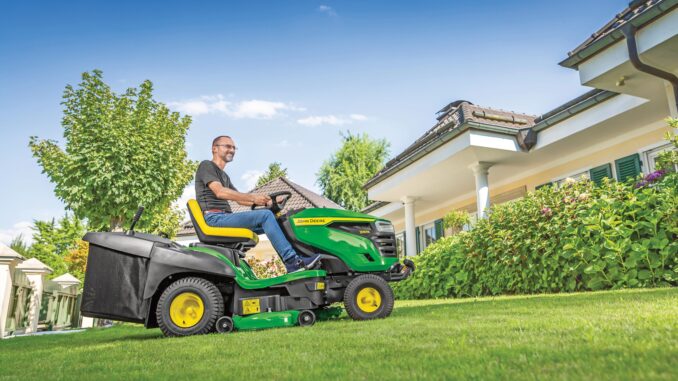
The John Deere L100 is a lawn tractor from Deere’s early 100 Series lineup, typically sold with a 42-inch mower deck and a gear-drive transmission for basic residential mowing. It was designed for homeowners with medium-size lawns who want a simple machine for routine grass cutting, light towing, and general property upkeep rather than steep-slope work or heavy-duty ground-engaging tasks.
This guide covers the most common John Deere L100 repair issues, troubleshooting steps, maintenance tasks, service parts, and owner questions for users in the USA and Canada. The focus is practical DIY ownership: start with the symptom, work through the likely causes in a safe order, and know when the repair is still realistic at home and when it has crossed into dealer-level work.
John Deere L100 overview
The John Deere L100 sits in the 100 Series family as a basic lawn tractor with manual gear transmission, conventional gasoline engine service points, and a 42-inch mower deck setup that many homeowners still maintain years after production. In Deere terms, it is a simple mowing tractor rather than a higher-spec garden tractor, which makes it approachable for routine owner service but less forgiving when worn belts, deck parts, or neglected fuel systems pile up.
The main systems owners usually deal with on a John Deere L100 are:
-
Engine and fuel system: air filter, spark plug, carburetor, fuel filter, fuel lines, engine oil, and cooling fins.
-
Mower system: 42-inch deck, deck belt, spindle assemblies, blades, deck wheels, and leveling hardware.
-
Drive system: gear transmission, clutch/brake linkage, drive belt, shift linkage, and rear traction components.
-
Electrical system: battery, fuse, ignition switch, PTO switch, seat switch, park brake switch, starter circuit, and headlights.
Common John Deere L100 service parts owners regularly buy include the fuel filter AM107314, engine oil filter AM125424 on equipped versions, 42-inch mower deck belt GY20305, spark plug M78453, and common 42-inch blade replacements associated with GX20249 cross-references. Those are the kinds of wear items that come up most often when an L100 has hard starting, weak cutting performance, belt slip, or deferred seasonal service.
Troubleshooting the John Deere L100 by symptom
The best way to diagnose a John Deere L100 is to start with what the owner actually sees: it will not start, starts but runs rough, cuts badly, vibrates, overheats, leaks, will not move properly, or has an electrical or safety-interlock problem. The operator’s manual itself separates troubleshooting into engine, electrical, tractor, and mower categories, which is a good reminder that random parts replacement usually wastes time and money.
Main symptom groups on the John Deere L100 include:
-
Starting issues
-
Running issues
-
Cut-quality problems
-
Vibration and noise
-
Overheating and leaks
-
Transmission and drive problems
-
Electrical and safety switch faults
John Deere L100 immediate repair needs
Some John Deere L100 faults need attention right away because they create a safety hazard or can quickly damage more expensive parts. Anything involving rotating blades, loose steering or drive response, fuel leakage, hot engine operation, major vibration, or bypassed safety switches should move to the top of the list before the tractor is used again.
Starting issues
If the John Deere L100 will not crank, cranks slowly, or turns over but never fires, the problem matters because repeated starting attempts can drain the battery, overheat the starter circuit, and hide the real fault. Starting trouble is often a simple interlock, battery, spark, or fuel-delivery issue rather than a major engine failure.
Common causes:
-
Weak or discharged battery
-
Corroded battery terminals
-
Bad fuse
-
PTO left engaged
-
Park brake switch or seat switch fault
-
Dirty fuel filter
-
Stale fuel
-
Fouled spark plug
-
Dirty air filter
-
Fuel flow restriction or carburetor varnish
Basic checks:
-
Confirm the PTO is off and the park brake is fully set.
-
Test battery condition and inspect both terminals for corrosion or looseness.
-
Check the main fuse and inspect visible wiring around the battery and starter area.
-
Verify fuel is fresh and reaching the filter and carburetor.
-
Remove and inspect the spark plug for heavy fouling, wetness, or damage.
John Deere L100 cut-quality problems
When a John Deere L100 leaves stragglers, uneven strips, scalped patches, or clumps, the issue matters because poor cut quality usually points to deck setup or blade problems that only get worse with use. It also increases belt load and can make owners misdiagnose a healthy engine as underpowered.
Common causes:
-
Dull or bent blades
-
Incorrect tire pressure
-
Deck out of level
-
Worn spindle bearings
-
Wrong mowing speed
-
Wet or overgrown grass
-
Belt slip
-
Packed deck underside
Basic checks:
-
Check tire pressures before adjusting anything on the deck.
-
Inspect blades for wear, bends, and correct installation orientation.
-
Clean the underside of the 42-inch deck and remove packed grass.
-
Measure deck level side-to-side and front-to-rear.
-
Inspect the deck belt for glazing, cracking, or slack.
John Deere L100 vibration and noise
Sudden vibration on a John Deere L100 should be treated as urgent because it can mean a bent blade, loose spindle, failing pulley, or damaged belt. Running the tractor in that condition can damage spindle housings, crack deck mounts, or throw a belt.
Common causes:
-
Bent blade
-
Unbalanced blade
-
Blade mounting hardware loose
-
Worn spindle bearings
-
Idler pulley wear
-
Deck belt damage
-
Debris wrapped around spindle shafts
Basic checks:
-
Shut the tractor off, remove the key, and wait for all moving parts to stop.
-
Inspect both blades and compare them for visible bending or impact damage.
-
Spin pulleys and spindles by hand with the belt removed if needed to feel for roughness.
-
Check belt routing and belt condition.
-
Do not continue mowing until the source of the vibration is identified.
Overheating and leaks
A John Deere L100 that smells hot, loses power as it warms up, or shows oil or fuel leakage needs prompt attention because air-cooled engines rely on clean cooling fins and safe fuel routing. Heat buildup can shorten engine life, while fuel leaks are an immediate fire hazard.
Common causes:
-
Blocked air intake screen
-
Dirty engine cooling fins
-
Old engine oil
-
Oil overfill or leak
-
Fuel line deterioration
-
Loose clamps
-
Carburetor seepage
Basic checks:
-
Inspect the air intake screen and engine shrouding area for grass and chaff.
-
Check engine oil level and condition with the tractor on level ground.
-
Look for wetness around the fuel filter, fuel lines, and carburetor area.
-
Clean heavy debris from around the engine before running again.
-
Repair fuel leaks before attempting another start.
John Deere L100 transmission and drive problems
If a John Deere L100 will not move well, slips under load, or shifts poorly, the problem matters because owners often blame the transmission when the real issue is belt condition or clutch-brake linkage adjustment. Gear-drive L100 tractors are mechanically simpler than hydro models, so basic external checks are especially worthwhile before assuming internal transmission failure.
Common causes:
-
Worn or stretched drive belt
-
Clutch/brake linkage out of adjustment
-
Shift linkage issue
-
Pulley wear
-
Traction loss from tire condition
-
Internal transmission wear in higher-hour machines
Basic checks:
-
Inspect the drive belt for glazing, cracking, or obvious slack.
-
Check clutch/brake pedal travel and whether the belt fully tensions and releases.
-
Confirm the tractor moves consistently in each selected gear.
-
Inspect rear tires for damage and poor traction.
-
If belt and linkage checks are normal but movement is still weak, move to advanced diagnosis.
John Deere L100 electrical problems
Electrical faults on a John Deere L100 usually show up as no-crank conditions, intermittent starting, dead headlights, or safety-switch behavior that seems random. Because the manual includes testing procedures for the park brake switch, PTO switch, seat switch, RIO system, fuse, battery, and headlight circuit, owners should work through those simple items before replacing expensive components.
Common causes:
-
Weak battery
-
Blown fuse
-
Dirty ground connection
-
Failed ignition switch
-
PTO switch failure
-
Seat switch fault
-
Park brake switch fault
-
Damaged wiring near moving linkage
Basic checks:
-
Check battery voltage and clean both cable ends.
-
Inspect the fuse and replace only with the correct rating.
-
Test whether the tractor behavior changes with PTO off, brake set, and operator seated correctly.
-
Inspect visible wiring for rub-through, heat damage, or disconnected plugs.
-
Replace switches only after confirming the interlock condition they monitor.
DIY or dealer
The normal repair line on a John Deere L100 is fairly clear: routine service, blade work, belt inspection, deck leveling, filter changes, and many no-start checks are realistic DIY jobs, while internal engine work, transmission teardown, and electrical diagnosis beyond basic switch and fuse testing are better left to a dealer or an experienced small-engine technician. Because the L100 is simple, owners can do a lot at home, but a simple tractor can still become expensive if safety systems are bypassed or belt-routing and linkage adjustments are guessed at.
Good DIY jobs
-
Engine oil and filter service where applicable.
-
Air filter replacement or cleaning per engine type.
-
Fuel filter replacement.
-
Spark plug replacement.
-
Blade removal, sharpening, balancing, and replacement.
-
Deck cleaning and leveling.
-
42-inch deck belt replacement.
-
Battery cleaning, charging, and basic replacement.
John Deere L100 advanced DIY or dealer jobs
-
Carburetor rebuild or replacement after confirmed fuel varnish problems.
-
Spindle replacement if hardware is seized or housings are damaged.
-
Drive-belt and clutch-linkage diagnosis when the tractor will not move correctly.
-
Safety-switch circuit testing with a meter.
-
Starter, charging-system, or harness diagnosis beyond obvious faults.
-
Internal transmission or engine repair.
Skill level guide
-
Beginner: air filter, spark plug, battery cleaning, deck washout and debris removal, checking tire pressure, checking oil.
-
Intermediate: fuel filter replacement, blade service, deck leveling, deck belt replacement, fuse and headlight bulb replacement.
-
Advanced: carburetor work, spindle replacement, drive-system diagnosis, electrical continuity testing, engine teardown.
John Deere L100 parts and part numbers
Before ordering John Deere L100 parts, gather the full model designation, the tractor Product Identification Number, the engine model and serial, and the deck size or deck version. That matters because Deere used different engines across the L-series family, and even apparently simple service items like filters, plugs, and belts can vary by engine or deck setup.
OEM parts are the safest choice for belts, safety switches, deck-drive components, and fit-sensitive items because routing, width, and engagement characteristics matter on Deere decks and interlock systems. Aftermarket parts can be perfectly acceptable for some filters, blades, batteries, and tune-up items, but only when the seller clearly cross-references the exact John Deere L100 application and engine specification.
Manuals and diagrams
For John Deere L100 owners, the most useful sources are the official operator’s manual, Deere owner support pages, Deere parts channels, and a reputable Deere-focused parts-lookup site. Each source helps with a different part of ownership, so using them together usually saves time and prevents wrong-part orders.
Useful links:
-
Official operator’s manual — best for safety, controls, maintenance intervals, service procedures, and troubleshooting categories.
-
John Deere owner support page for the L100 — useful starting point for owner support and model association.
-
Jacks Small Engines L100 parts diagrams — helpful for exploded views and visual parts lookup when identifying deck, steering, or chassis items.
-
Green Farm Parts L100 maintenance guide — useful for common service-part references and routine maintenance-item lists.
John Deere L100 model and serial number locations
These numbers matter because Deere model families can look similar while using different engines, deck components, and service parts. An owner who orders by appearance alone is much more likely to get the wrong belt, plug, filter, or switch.
Steps to find the correct identification details:
-
Look for the tractor Product Identification Number tag on the main tractor frame area identified in the operator documentation under product identification.
-
Record the exact machine model as shown on the tractor, including any deck or attachment information.
-
Find the engine model, type, and code on the engine shroud or engine identification label.
-
Confirm the mower deck size; the standard L100 configuration is commonly a 42-inch deck, but the deck identification still matters for parts ordering.
-
Keep those numbers in a note on your phone or inside your service records so future part orders match the machine exactly.
Buying John Deere L100 parts
The best buying strategy for John Deere L100 parts is to identify the symptom first, pull the correct part number second, and only then choose where to buy. That order helps avoid the common homeowner mistake of ordering a generic “fits many Deere models” part that does not match the belt path, switch connector, or engine spec on the tractor.
-
Online: best for comparing OEM numbers, checking cross-references, and reviewing exploded diagrams before ordering.
-
Dealer counter: best for serial-specific items, safety switches, hard-to-identify linkage hardware, and any part where Deere supersession may apply.
-
Retail stores: acceptable for common consumables like battery, spark plug, oil, and some filters if the packaging clearly lists the John Deere L100 and exact engine fitment.
Useful sources include John Deere Owner Support, Jacks Small Engines, and Green Farm Parts.
John Deere L100 fitting guide for common parts
These are high-impact DIY jobs because they solve a large share of common John Deere L100 running and cutting complaints without deep teardown work. Always remove the key, set the brake, and disconnect the spark-plug wire before working around the deck or rotating parts.
Replace the air filter on a John Deere L100
A clean air filter helps fix rich running, black smoke, hard starting, and general loss of power.
-
Park safely, switch the engine off, and let hot engine parts cool.
-
Open or unclip the air-cleaner housing on the engine.
-
Remove the filter element and clean debris from the housing without pushing dirt into the intake.
-
Install the new filter in the correct orientation for the engine used on the tractor.
-
Refit the cover securely and confirm nothing is pinching the intake area.
Replace the fuel filter on a John Deere L100
This job helps when the tractor starts and dies, starves for fuel, or surges under load.
-
Clamp the fuel line from the tank side if needed and work in a ventilated area away from flame.
-
Note the direction of fuel flow through the old inline filter.
-
Remove the hose clamps and slide the old filter out carefully.
-
Install the new filter with the flow arrow pointed toward the fuel pump or carburetor.
-
Refit clamps, check for leaks, and test run the engine.
Change the spark plug on a John Deere L100
A new spark plug can correct misfiring, hard starting, weak idle, and poor restart behavior.
-
Remove the ignition lead by pulling the boot, not the wire.
-
Use the correct deep socket to remove the old plug once the engine has cooled.
-
Compare the old and new plug to confirm correct thread reach and type.
-
Install the new plug carefully by hand first to avoid cross-threading, then tighten correctly.
-
Refit the boot fully and test start the tractor.
Replace the John Deere L100 42-inch deck belt
This job helps when the blades do not engage properly, the deck slips in tall grass, or the old belt is cracked and glazed.
-
Lower the deck, remove the key, and disconnect the spark-plug wire.
-
Note the belt routing before removal, using the belt path shown in your parts diagram or manual.
-
Release belt tension and remove the old belt from the engine drive sheave and deck pulleys as required for the 42-inch deck procedure.
-
Route the new GY20305 belt exactly as specified, making sure it sits fully in pulley grooves and guides.
-
Recheck tension, rotate pulleys by hand if safe to confirm seating, and test engagement at low engine speed first.
John Deere L100 maintenance to prevent repeat failures
Regular maintenance prevents most recurring John Deere L100 problems because starting faults, poor cutting, overheating, and belt complaints usually begin as small service issues that are ignored for too long. The official manual supports that pattern by emphasizing daily checks, lubrication, engine service, mower service, electrical service, and storage preparation rather than “repair after failure” ownership.
Focus areas:
-
Starting reliability: fresh fuel, clean filter, sound battery connections, correct spark-plug service.
-
Cut quality: sharp balanced blades, proper tire pressure, level deck, clean deck underside.
-
Fire and overheating prevention: clean engine screen and fins, fix fuel leaks immediately, keep debris off hot engine areas.
-
Drive performance: inspect belts and linkage before the tractor loses motion completely.
-
Electrical reliability: keep terminals clean, replace blown fuses correctly, and test safety systems rather than bypassing them.
John Deere L100 maintenance schedule
The John Deere operator’s manual provides service intervals covering daily checks, lubrication, engine service, transmission checks, mower service, electrical service, and storage routines. Exact engine details can vary, but the schedule below follows the official service structure and should be checked against the engine and operator documentation on the actual tractor.
Daily or before each use
-
Check engine oil level.
-
Check overall machine safety system and operator controls.
-
Inspect the mowing area and machine for loose, damaged, or leaking parts.
-
Clean heavy grass and debris buildup from the deck and engine screen area.
After 8 hours
-
Perform early break-in checks if the tractor is newly put into service, following the manual’s service-interval guidance.
-
Inspect for loose hardware, abnormal belt wear, or unusual vibration after initial use.
Every 25 hours
-
Replace or inspect the fuel filter as required for service conditions.
-
Replace or inspect the spark plug per service listing and engine condition.
-
Change engine oil and filter where applicable, or engine oil alone on versions without an oil filter.
-
Lubricate pivot and axle service points listed in the manual.
Every 50 hours or yearly
-
Clean air-intake screen and engine cooling fins.
-
Inspect and service the air-cleaner elements for the engine used on the tractor.
-
Check mower blades, deck belt, spindle condition, and deck level.
-
Clean battery terminals and inspect the electrical system.
Every 100 to 200 hours
-
Inspect or replace the 42-inch mower deck belt as wear dictates; common parts references place it in the longer-interval wear category.
-
Closely inspect drive-system wear items, steering wear, and deck spindle condition on higher-hour machines.
Seasonal checklist
-
Spring: change oil, inspect battery, fit sharp blades, level the deck, replace stale fuel if needed.
-
Mid-season: clean cooling areas, inspect belts, recheck tire pressure and cut quality, replace filters if performance slips.
-
Fall or pre-storage: clean the machine thoroughly, stabilize or manage fuel correctly, inspect for needed off-season repairs, and prepare the engine and battery for storage.
Repair, upgrade, or replace
For most homeowners, a John Deere L100 is worth repairing when the tractor is structurally sound and the problem is still limited to normal wear items like belts, blades, battery, filters, deck service, or minor electrical parts. It makes more sense to upgrade or replace when repeated failures involve multiple systems at once, the deck shell or transmission is badly worn, or the tractor no longer matches the workload on the property.
Repair if:
-
The issue is limited to routine service items or one clearly failed component.
-
The engine has good compression and the tractor frame and deck are still sound.
-
Parts are readily available and the rest of the machine is dependable.
Upgrade if:
-
You need easier operation than the gear-drive L100 offers.
-
You mow rougher or larger ground than the L100 was really designed for.
-
You are repeatedly pushing the tractor into heavier towing or thicker mowing than suits its setup.
Replace if:
-
The machine has major deck corrosion, serious transmission trouble, and electrical issues at the same time.
-
Safety-related parts are failing and the repair list keeps growing faster than the tractor’s value.
-
A newer mower would materially reduce downtime and improve fit for your property.
John Deere L100 troubleshooting FAQ
1. Why will my John Deere L100 not start?
A John Deere L100 that will not start usually comes down to the interlock system, battery condition, spark, or fuel delivery. First confirm the PTO is off, the brake is set, and the battery connections are clean and tight. Then check the fuse, inspect the spark plug, and make sure fresh fuel is actually reaching the carburetor through the inline filter.
2. Why does my John Deere L100 crank but not fire?
If it cranks but never fires, think fuel or spark before anything else. Old fuel, a blocked fuel filter, a fouled plug, or a carburetor gummed by storage are common causes on older L100 tractors. Pull the plug to see whether it is wet or dry, then verify the filter and fuel flow direction are correct.
3. Why does my John Deere L100 start and then die?
That symptom often points to restricted fuel flow or a carburetor issue rather than a dead ignition system. A partly blocked filter, stale fuel, or sediment in the carburetor bowl can allow a brief start and then starve the engine. Check the inline filter, fuel lines, and fuel freshness first.
4. Why is my John Deere L100 running rough?
Rough running usually means the engine is getting poor air, poor fuel, weak spark, or some combination of the three. Start with the air filter, spark plug, and fuel filter because those are common L100 service items and relatively easy to inspect. Also clean debris from the cooling and intake area so the engine can breathe properly.
5. Why does my John Deere L100 blow black smoke?
Black smoke usually indicates an over-rich condition, often caused by a dirty air filter, choke issue, or carburetor problem. Check the air-cleaner element first and make sure it is not heavily clogged. If the filter is clean, move to choke linkage and carburetor inspection.
6. Why does my John Deere L100 have no power in tall grass?
Loss of power in heavy grass can be normal if ground speed is too high, but it also points to dull blades, belt slip, deck buildup, or engine tune-up needs. Inspect the deck belt, sharpen the blades, clean the underside of the deck, and make sure the engine has a clean air filter and proper spark plug.
7. Why does the John Deere L100 leave uncut strips?
Uncut strips usually come from dull blades, bent blades, deck level issues, or running one tire low on pressure. Tire pressure should be checked before adjusting the deck because uneven tires can mimic a bad deck setup. After that, inspect blade condition and the 42-inch deck level.
8. Why is my John Deere L100 cutting unevenly?
An uneven cut is most often a setup problem, not a major mechanical failure. Check tire pressures, then measure deck height side to side and front to rear using the mower-level procedure from the operator’s manual. If the deck is level but the cut is still poor, inspect blades and spindle play.
9. Why does my John Deere L100 scalp the lawn?
Scalping happens when the deck is too low, the lawn is uneven, the deck wheels are misadjusted, or the tractor is mowing too fast over undulations. Recheck cutting height and deck-wheel setup, then slow down on rough ground. A level deck and sharp blades reduce repeat scalping.
10. Why does my John Deere L100 clump grass?
Clumping usually means the grass is too wet, too tall, or the underside of the deck is packed with buildup. Slow the mowing speed, mow more frequently, and clean the underside of the deck thoroughly. Worn blades can worsen clumping because they tear instead of lifting and cutting cleanly.
11. Why are the blades on my John Deere L100 not engaging properly?
If the blades do not engage well, inspect the deck belt, pulley path, and engagement components before assuming deck failure. A glazed or stretched 42-inch deck belt is a common cause of weak blade drive. Confirm the correct belt routing and replace worn belts with the right part number.
12. Why does my John Deere L100 deck belt keep coming off?
A belt that repeatedly comes off usually means a routing error, worn pulley, bent belt keeper, bad spindle bearing, or incorrect belt size. Check every pulley and guide carefully before fitting another belt. Using the correct GY20305 belt and the correct routing matters on the L100.
13. Why does my John Deere L100 keep breaking belts?
Repeated belt failure usually points to an underlying alignment or bearing problem rather than bad luck. Look for seized idlers, rough spindle bearings, bent pulley brackets, debris packed into pulley grooves, or an incorrect aftermarket belt profile. OEM belts are usually the safer choice here.
14. Why does my John Deere L100 vibrate when mowing?
Mowing vibration usually starts with a bent or unbalanced blade, but worn spindle bearings and damaged pulleys can produce the same symptom. Stop mowing immediately and inspect the blade set for impact damage. Continuing to run the deck can damage spindle housings and deck mounts.
15. Why does my John Deere L100 shake even with the mower off?
If vibration is present with the mower disengaged, the fault may be in the engine, drive system, or loose chassis hardware rather than the deck. Check engine mounting, drive belt condition, and obvious loose fasteners first. Also inspect the engine cooling area for packed debris that may be affecting operation.
16. Why is my John Deere L100 making a squealing noise?
A squeal often comes from a slipping belt, dry pulley bearing, or a deck component starting to seize. Determine whether the noise happens only with the mower engaged or even while driving with blades off. That helps separate deck-belt issues from drive-belt issues.
17. Why does my John Deere L100 overheat?
The L100 uses an air-cooled engine, so blocked intake screens and dirty cooling fins are common overheating causes. Grass, chaff, and oily dirt around the engine can hold heat and reduce airflow fast. Clean those areas and verify the oil level is correct before further use.
18. Why is my John Deere L100 leaking fuel?
Fuel leaks usually show up at the inline filter, hose connections, aging fuel lines, or carburetor area. This is an immediate repair item because leaked fuel around a hot air-cooled engine is a fire risk. Replace cracked lines, tighten clamps, and do not run the tractor until the leak is fixed.
19. Why is my John Deere L100 leaking oil?
Oil leaks can come from overfill, drain issues, gasket seepage, or wear around the engine after long service life. First confirm the oil is not simply overfilled and that the drain area is clean and tight after service. Persistent leaks that spread across the engine usually need closer inspection than routine DIY maintenance.
20. Why will my John Deere L100 not move?
If the engine runs but the tractor will not move, inspect the drive belt, clutch/brake linkage, and gear engagement first. On a gear-drive L100, external belt and linkage problems are common and much easier to fix than internal transmission damage. Only suspect major transmission failure after those basics are checked.
21. Why does my John Deere L100 move weakly uphill?
Weak movement on slopes often comes from drive-belt wear, traction loss, or clutch/brake adjustment issues. It may also simply be the machine reaching the limit of what a basic lawn tractor should be doing. Check belt condition and rear tire grip before blaming the transmission.
22. Why is shifting hard on my John Deere L100?
Hard shifting can happen when the clutch/brake linkage is not fully releasing belt load or when linkage wear has developed over time. Make sure the tractor is being operated exactly as Deere intended for a gear model, including full clutch/brake use during shifts. If that does not help, inspect linkage movement and belt behavior.
23. Why does my John Deere L100 battery keep going dead?
A repeatedly dead battery may be old, poorly connected, undercharged, or affected by a charging-system issue. Clean both terminals first because corrosion alone can create repeated no-start complaints. If the battery and connections are sound, move to charging-circuit testing.
24. Why does my John Deere L100 click but not crank?
A click without cranking usually points to a weak battery, poor cable connection, or starter-circuit problem. Start with voltage and terminal condition because that solves many older lawn-tractor click complaints. Also confirm the brake and PTO interlocks are satisfied.
25. Why do the headlights on my John Deere L100 not work?
Headlight faults are often caused by a bad bulb, blown fuse, or wiring issue rather than a major switch failure. The manual includes service procedures for bulb and fuse replacement, so those are the first checks to make. If those are fine, inspect the wiring connectors in the headlight circuit.
26. Why does my John Deere L100 shut off when I get off the seat?
That is often normal safety-switch behavior, especially if the PTO is engaged or the machine is not in the correct safe state. If shutdown behavior seems abnormal, test the seat switch and related interlock conditions rather than bypassing them. The L100 manual includes testing routines for these safety systems.
27. Why does my John Deere L100 stall when I engage the blades?
Stalling on blade engagement usually means the deck load is too high or the belt and spindle system has a drag problem. Check for packed grass under the deck, seized spindle bearings, bent blades, or a badly worn belt. A weak-running engine can also stall when the deck is switched on.
28. What oil should I use in a John Deere L100?
The correct oil choice should follow the operator’s manual and the engine specification on the tractor, not guesswork based on another Deere model. The official manual includes recommended lubricants and engine-service procedures. Always verify by the engine tag because L-series tractors used more than one engine type.
29. How often should I change oil on a John Deere L100?
The official maintenance structure includes regular engine oil service as part of routine intervals, with common service-part guides also referencing 25-hour maintenance items for the L100. In real homeowner use, annual oil changes at minimum are wise, with more frequent service in dusty or heavy conditions.
30. How often should I replace the spark plug on a John Deere L100?
Spark plugs are common periodic service items on the L100, and service-part listings associate them with regular maintenance intervals. In practice, inspect the plug each season and replace it when fouled, worn, hard-start symptoms appear, or the scheduled service interval is due.
31. How often should I replace the fuel filter on a John Deere L100?
The fuel filter is one of the most common routine service items on this tractor. Replace it at the recommended interval or sooner if fuel looks contaminated, flow is poor, or the tractor surges and starves under load. It is an inexpensive part that can prevent larger carburetor problems.
32. How often should I sharpen the blades on a John Deere L100?
Blade sharpening is condition-based more than calendar-based, because soil, sticks, sand, and mowing frequency all affect edge wear. Check blades regularly and service them whenever cut quality drops, stragglers appear, or the edges become rounded. Always balance blades after sharpening.
33. Can I use aftermarket parts on a John Deere L100?
Yes, but choose carefully. Aftermarket filters, blades, batteries, and tune-up items can work well when they cross-reference exactly to the L100 and its engine, while belts, safety components, and fit-sensitive parts are usually better bought as OEM.
34. Is the John Deere L100 worth repairing?
In many cases, yes, especially when the tractor only needs normal service parts, deck work, or minor electrical repair. The L100 is simple enough that basic repairs are often economical if the frame, deck shell, and drive system are still in decent shape. It becomes harder to justify when multiple major systems are worn at once.
35. When should I take my John Deere L100 to a dealer?
Take it to a dealer or experienced technician when the repair involves internal engine work, persistent carburetion issues after basic fuel service, charging-system diagnosis, transmission internals, or safety-interlock faults you cannot verify confidently. That is also the right move when the tractor has severe vibration, fuel leakage near hot engine parts, or a repair history that suggests multiple hidden faults.