
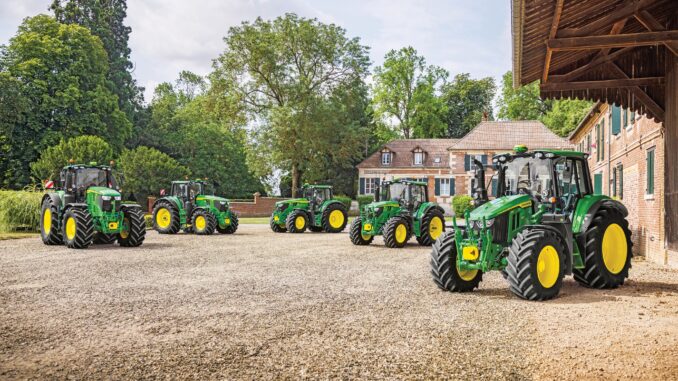
The John Deere 3032E is a 3E Series compact utility tractor built for property owners, acreage users, and light farm or estate work who need more capability than a lawn tractor but still want a machine that is approachable for routine owner maintenance.
It uses a diesel engine, hydrostatic transmission, rear PTO, and compact-tractor hydraulic systems, so the most common owner issues usually involve starting, fuel delivery, regeneration-related running complaints, hydraulic or transmission performance, electrical interlocks, and attachment setup rather than just “engine trouble.”
This guide is written for USA and Canada owners who are comfortable with basic servicing and want a practical, symptom-first reference for repair decisions, troubleshooting steps, maintenance planning, and parts buying. It covers what commonly goes wrong on the John Deere 3032E, what you can realistically do yourself, what usually belongs at the dealer, and which service parts and identification numbers matter before you order anything.
And See:
John Deere 3032E overview
The John Deere 3032E sits in Deere’s 3E compact utility tractor range and is positioned as an entry-level compact tractor for loader work, mowing, light grading, property maintenance, and general acreage chores. Published specs commonly list about 31 hp gross engine power, about 25 hp PTO power, a hydrostatic transmission, and diesel power from a Yanmar engine platform, which makes it more capable than residential riding equipment but still very owner-serviceable for routine work.
For most owners, the key systems are:
-
Engine and fuel system, including diesel filtration, air intake, cooling, and emissions-related exhaust filter functions.
-
Drive system, including the hydrostatic transmission, MFWD/front axle, brakes, and traction-assist features.
-
Hydraulic and hitch system, especially if the tractor is used with a loader, rear implements, or hydraulic accessories.
-
Electrical and safety system, including battery, relays, fuses, seat switch logic, PTO switch, neutral/start interlocks, and dash warnings.
Common service parts owners regularly buy for the John Deere 3032E include the engine oil filter M806419, primary air filter M131802, secondary air filter M131803, hydraulic oil filter LVA14703, transmission/hydraulic filter LVA16054, alternator/fan belt M801821, PTO switch LVA11437, neutral start switch RE12411, and battery TY26498. Fuel filtration parts vary by serial range, with earlier machines using M811032 and MIU800645, while later serials use MIU802421 and MIU803127; Deere-focused maintenance listings also show different filter kits by serial break.
John Deere 3032E troubleshooting approach
The best way to diagnose a John Deere 3032E is to start with the symptom the owner actually sees rather than guessing at a part first. Deere’s manual groups troubleshooting by engine, electrical system, machine, brakes, and steering, and in practice most owner complaints fit into a few repeat patterns.
Main symptom groups on this tractor are:
-
Starting issues, such as no crank, slow crank, hard starting, or start-and-stall.
-
Running issues, such as low power, rough running, smoke, warning lights, or regen-related complaints.
-
Hydraulic and drive problems, such as weak travel, poor loader response, noisy hydraulics, or front axle concerns.
-
Overheating, leaks, and smell complaints, usually involving coolant, belts, hoses, fins, filters, or fluid seepage.
-
Electrical and safety-switch issues, including battery, relays, fuses, PTO lockout, seat switch, and neutral-start logic.
John Deere 3032E emergency repairs
Some faults should be dealt with immediately because they create a safety risk or can quickly damage expensive components. On a compact diesel tractor, the big red flags are fuel leaks, hydraulic leaks under pressure, overheating, brake or steering faults, repeated warning lights, burning smells, major vibration, and any failure involving PTO shielding or safety interlocks.
1. John Deere 3032E starting issues
If the John Deere 3032E will not crank, cranks slowly, or starts and dies, stop using random parts-swapping and start with the basic interlock and power checks first. A lot of “bad starter” complaints on compact tractors turn out to be battery condition, terminal corrosion, safety-switch logic, or fuel delivery restrictions rather than a failed starter motor.
Common causes:
-
Weak or discharged battery.
-
Corroded or loose battery terminals.
-
PTO switch, neutral/start, or seat interlock issue.
-
Fuel contamination, water in sediment bowl, or restricted fuel filter.
-
Air in the fuel system after filter service.
-
Failed relay, fuse, or starting circuit component.
Basic owner checks:
-
Confirm PTO is off, range selector and pedals are in the correct start position, and the operator presence conditions are met.
-
Check battery voltage and inspect both terminals and grounds for looseness or corrosion.
-
Inspect fuses and relays before condemning the starter.
-
Check the fuel/water separator and fuel filters for restriction, water, or neglected service.
-
If filters were just changed, follow Deere’s normal priming/start procedure instead of extended cranking.
2. John Deere 3032E running and power problems
A John Deere 3032E that starts but runs poorly, lacks power, smokes, or feels like it is “not pulling like it should” usually points to restricted air or fuel flow, poor fuel quality, cooling restriction, or an emissions/exhaust filter operating issue on applicable 3032E machines. Deere specifically includes exhaust filter system operation and service sections for the 3032E, which is why warning-light complaints should not be ignored.
Common causes:
-
Dirty air filter or restricted intake hose.
-
Clogged fuel filter or contaminated diesel.
-
Cooling fins packed with debris, causing heat-related power loss.
-
Exhaust filter cleaning interruptions or related warning conditions.
-
Slipping belt or neglected engine service.
Basic owner checks:
-
Inspect the primary air filter and dust-unloading valve area.
-
Check the separator bowl and fuel filters for water or restriction.
-
Clean radiator, fuel cooler, and transmission cooling fins carefully.
-
Review any dash warnings before continuing operation.
-
If the machine repeatedly requests parked cleaning or derates, move diagnosis toward dealer-level support.
3. John Deere 3032E vibration and noise
New vibration, rattling, belt squeal, driveline noise, or harsh loader/hydraulic sound should never be dismissed as “just tractor noise.” On the John Deere 3032E, vibration can come from loose wheel hardware, damaged tires, front axle issues, belt problems, driveline wear, or an attachment/load problem rather than the engine itself.
Common causes:
-
Loose wheel bolts or hardware.
-
Damaged alternator/fan belt.
-
Implement driveline vibration or PTO attachment issue.
-
Front axle or MFWD-related wear.
-
Debris packed around rotating components.
Basic owner checks:
-
Park safely and inspect tires, wheel torque, and visible hardware.
-
Check the alternator/fan belt condition and tension-related wear signs.
-
Remove any wrapped debris from shafts or linkages.
-
Disconnect or isolate the attachment if the noise appeared under PTO load only.
-
Stop operation if vibration is heavy enough to affect steering, braking, or PTO smoothness.
4. John Deere 3032E overheating and leaks
Overheating on the John Deere 3032E can damage the engine quickly, and hydraulic or fuel leaks can create both fire and component-failure risks. Deere’s maintenance sections specifically call for coolant checks, hose inspection, and cleaning of radiator, fuel, and transmission cooling fins, which shows how often dirt buildup is part of the problem on compact tractors.
Common causes:
-
Plugged radiator, grille screens, or cooling fins.
-
Low coolant or leaking hose/clamp.
-
Worn fan/alternator belt.
-
Engine oil, fuel, or hydraulic leak onto hot surfaces.
-
Heavy debris buildup in engine compartment.
Basic owner checks:
-
Shut down and let the tractor cool before opening anything.
-
Inspect coolant level and visible hose/clamp condition.
-
Clean screens and fins with low-risk methods that do not bend cores.
-
Track the leak source before ordering parts, because coolant, engine oil, diesel, and hydraulic oil can look similar once dirty.
-
Do not keep running an overheating tractor to “finish the job.”
5. John Deere 3032E transmission and drive problems
If the tractor feels weak in travel, hesitates, loses pulling power, or the loader and steering seem lazy at the same time, think transmission/hydraulic oil level, filter condition, or hydrostatic system issues before assuming internal transmission failure. Deere includes transmission oil level checks, transmission oil and filter changes, front axle oil checks, and hydraulic system warm-up procedures for this model family.
Common causes:
-
Low transmission/hydraulic oil.
-
Overdue transmission/hydraulic filter service.
-
Cold hydraulic oil affecting response.
-
Front axle oil neglect or MFWD-related issue.
-
Internal hydrostatic or hydraulic fault.
Basic owner checks:
-
Verify transmission/hydraulic fluid level on level ground.
-
Confirm the 50-hour initial filter service and later 400-hour services were actually done.
-
Warm the machine properly before judging hydraulic performance in cold weather.
-
Check for fluid leaks around filters, hoses, and axle areas.
-
If steering, hitch, loader, and travel are all weak together, move quickly toward a professional diagnosis.
6. John Deere 3032E electrical problems
Electrical faults on the John Deere 3032E often show up as no-starts, intermittent shutdowns, lights or dash warnings, dead accessories, or safety interlock complaints. Deere’s manual includes battery, booster battery, relays, fuses, bulbs, and diagnostic code sections, which means owners should treat the electrical system as a full diagnosis path, not just “replace the battery and hope.”
Common causes:
-
Weak battery or poor charging.
-
Dirty terminals or ground issues.
-
Blown fuse or faulty relay.
-
Failed seat, PTO, or neutral-start switch.
-
Wiring damage from vibration, heat, or rodents.
Basic owner checks:
-
Clean and tighten battery terminals first.
-
Inspect fuse and relay positions with the correct replacement type.
-
Check obvious switch-related symptoms, especially PTO and neutral-start behavior.
-
Look for rubbed-through harness points around the engine bay and operator platform.
-
Record any displayed fault or warning code before disconnecting power.
John Deere 3032E DIY or dealer?
The normal line on the John Deere 3032E is simple: routine service, inspections, filters, fluids, belts, battery work, and basic switch replacement are realistic DIY tasks for careful owners, while emissions-system work, internal hydraulic or hydrostatic faults, injector or high-pressure fuel work, complex electrical diagnosis, and anything requiring special test procedures is usually dealer territory. Deere’s technical manual preview also states that it is written for experienced technicians and identifies essential tools for certain service work, which is a good reminder that not every repair is a driveway job.
Good DIY jobs:
-
Engine oil and filter change.
-
Air filter service.
-
Fuel filter and water separator service if you are comfortable bleeding/priming properly.
-
Battery cleaning or replacement.
-
Belt inspection and straightforward replacement.
-
Radiator screen, grille, and cooling-fin cleaning.
Advanced DIY or dealer jobs:
-
Transmission/hydraulic oil and filter service if access, cleanliness, and fluid handling are an issue.
-
Safety interlock diagnosis when more than one switch or harness branch may be involved.
-
Front axle, steering, brake, or PTO faults.
-
Exhaust filter system faults, repeated regen issues, and DPF-related service.
-
High-pressure fuel system or injector work, which Deere specifically warns against opening casually.
Skill level guide:
-
Beginner: engine oil, air filter, battery terminals, daily inspections, coolant and fluid level checks.
-
Intermediate: fuel filters, belt replacement, fuse/relay checks, switch replacement, cooling-system cleanup.
-
Advanced: hydraulic service, electrical tracing, axle work, repeated no-start diagnosis, emissions-related repairs.
John Deere 3032E parts information
Before ordering any repair parts for a John Deere 3032E, gather the full model name, Product Identification Number (PIN), engine information, and any serial-break details because Deere uses serial-based changes on service items such as fuel filters and maintenance kits. The operator’s manual includes identification-number sections, and Deere-focused parts guides for the 3032E clearly separate some service parts by serial number 610001 and up versus earlier machines.
OEM vs aftermarket guidance:
-
Stick with OEM for belts, serial-sensitive fuel or hydraulic filters, safety-switch parts, and anything fit-sensitive around the tractor’s interlock or driveline systems.
-
Aftermarket can be acceptable for batteries and some maintenance consumables if the cross-reference is exact and the seller clearly lists the correct 3032E serial range.
-
Be especially careful with “fits many Deere models” listings, because compact tractors often change filters and electrical parts across serial breaks.
John Deere 3032E manuals and parts diagrams
A good repair strategy starts with the right documents because the John Deere 3032E has serial-sensitive parts and a mix of owner-service and technician-level systems. Deere’s operator’s manual gives the maintenance schedule, operating procedures, safety checks, and identification number locations, while Deere’s technical publications and parts sources help with deeper repair or exact component lookup.
Useful sources:
-
John Deere 3025E/3032E/3038E Operator’s Manual (North America) — best source for maintenance intervals, operating checks, fluids, and routine service procedures.
-
John Deere 3032E/3038E older operator’s manual version — useful for identification and model-family continuity.
-
John Deere technical manual preview TM166919 — shows the technician-level manual exists and is intended for experienced service work.
-
Green Farm Parts 3032E maintenance guide — handy for common service-part numbers and serial-break kit references.
How to locate John Deere 3032E serial and engine numbers
These numbers matter because parts, filters, and some repair procedures can change by serial range. The operator’s manual includes a product identification section, and TractorData states the serial plate is on the right side of the tractor frame above the front axle.
Use this process:
-
Park safely on level ground, shut the tractor off, and clean the frame and engine areas so labels are readable.
-
Find the tractor Product Identification Number on the right side of the tractor frame above the front axle area.
-
Record the full model and PIN exactly as shown, including any prefixes or serial-break clues.
-
Locate the engine identification label on the engine itself and record the model and serial before ordering engine-service parts. Deere’s manual has a “Record Identification Numbers” section because this information is expected to be kept on file.
-
If an attachment or loader is involved in the repair, record its model and serial too, because hitch, hydraulic, and driveline parts can be attachment-specific.
Buying John Deere 3032E parts online and in stores
The smartest buying strategy is to confirm the OEM part number first, then compare suppliers instead of shopping by tractor name alone. That matters even more on the John Deere 3032E because several service filters differ by serial range, and owners can easily buy the wrong fuel-service parts if they skip the PIN check.
Buying options:
-
Online: use the operator’s manual and a Deere-focused parts source to confirm OEM numbers first, then buy by part number and serial range.
-
Dealer counter: best choice for serial-sensitive filters, electrical switches, hydraulic parts, emissions-related items, and anything you are not 100 percent sure about.
-
Retail stores: acceptable for common consumables like batteries, oil, or some cross-referenced filters, but only if the packaging clearly matches the John Deere 3032E and the correct serial break.
Useful links:
John Deere 3032E fitting guide for common parts
These are high-value DIY jobs because they solve a large share of common starting, running, and reliability complaints when service has been neglected. Always park safely, lower implements, remove the key, and let hot components cool before working around the engine, exhaust, or hydraulic system.
Change the John Deere 3032E engine oil and filter
This job helps with hard use, annual service, and general engine life. Deere lists engine oil level checks and oil/filter changes in the engine maintenance section, and the common oil filter listing for the 3032E is M806419.
-
Warm the engine briefly so oil drains better, then park safely and shut it down.
-
Drain the old oil into a suitable container and remove the old filter.
-
Lightly oil the gasket on the new M806419 filter and install it correctly.
-
Refill with the correct engine oil specified for the 3032E in the operator’s manual and climate conditions.
-
Start the engine, check for leaks, shut down, and recheck the oil level after it settles.
Service the John Deere 3032E air filters
This job often fixes power loss, black smoke, and restricted running caused by dusty use. Deere specifically covers air filter element service, dust-unloading valve cleaning, and air-filter hose checks in the maintenance section.
-
Open access to the air cleaner housing and inspect the primary element first.
-
Empty debris from the dust-unloading valve and housing area without forcing dirt deeper into the intake.
-
Replace dirty or damaged elements with M131802 and, if needed, M131803.
-
Inspect hoses and seals before reassembly so unfiltered air cannot bypass the housing.
-
Reset your maintenance record rather than guessing when it was last done.
Change the John Deere 3032E fuel filters
This job helps with hard starting, low power, and water-contamination complaints, but only if you match the correct parts to the serial range. Deere includes fuel sediment bowl and fuel filter service procedures, and the 3032E uses different filter numbers before and after serial 610001.
-
Confirm whether your tractor is S/N -610000 or S/N 610001- before ordering filters.
-
Clean the area around the separator and filter mounts so dirt cannot enter during service.
-
Replace the separator/filter elements using the correct OEM numbers for your serial range.
-
Reassemble carefully and follow the normal priming/start procedure in the operator’s manual.
-
Check for leaks immediately after startup and again after a short run.
Replace the John Deere 3032E transmission and hydraulic filters
This is a high-impact service job because weak drive response, noisy hydraulics, and sluggish implement operation can all trace back to neglected hydraulic service. Deere’s manual calls for transmission oil and filter service, and Deere-focused parts listings show LVA16054 for the transmission/hydraulic filter and LVA14703 for the hydraulic oil filter.
-
Confirm the machine is due, especially the initial 50-hour change or the later 400-hour interval.
-
Park level, lower implements, and relieve hydraulic load before opening the system.
-
Replace the transmission/hydraulic filter LVA16054 and hydraulic oil filter LVA14703 as required.
-
Refill with the correct specified fluid and check the level carefully.
-
Run the tractor, cycle hydraulics gently, and recheck for leaks and proper fluid level.
John Deere 3032E maintenance to prevent repeat problems
Regular maintenance on the John Deere 3032E prevents a huge share of the problems owners describe as “sudden failures.” Deere’s maintenance chart runs from daily checks through 400-hour, 600-hour, 1000-hour, 2000-hour/two-year, and 6000-hour/six-year intervals, so reliability is strongly tied to routine inspections and scheduled fluid/filter work rather than emergency repairs alone.
Focus areas:
-
Starting reliability: keep the battery, terminals, safety interlocks, and fuel system in good order.
-
Running quality: keep air and fuel filters current and do not ignore exhaust-filter warnings.
-
Fire and overheating prevention: clean screens, fins, engine bay debris, and any leaked oil or fuel.
-
Drive performance: monitor transmission/hydraulic oil level and do the initial 50-hour plus later 400-hour filter service on time.
-
Electrical reliability: protect battery connections, fuses, relays, and switch wiring from corrosion and vibration.
John Deere 3032E maintenance schedule
The official operator’s manual includes maintenance interval charts from daily service up to long-term intervals, plus service record categories for 10, 50, 200, 400, 600, 1000, 2000, and 6000 hours. The list below keeps to the same official pattern and the maintenance items explicitly shown for the 3032E family.
Daily / before each use
-
Check engine oil level.
-
Check coolant level.
-
Inspect fuel filter sediment bowl and look for water or contamination.
-
Test the safety interlock system before startup.
-
Clean front and side grille screens and look for debris buildup.
After initial 50 hours
-
Change transmission oil and filter as specified. Deere-focused parts listings for the 3032E note the initial 50-hour transmission/hydraulic filter service.
-
Review wheel hardware and general machine condition after break-in use. Deere includes wheel bolt and hardware checks in maintenance sections.
Every 25 hours
-
Lubricate grease points and hitch-related fittings as needed for your equipment setup, especially if used heavily in dusty or loader work. Deere lists hitch lubrication and axle/trunnion lubrication in maintenance sections, though actual use conditions can shorten intervals.
-
Clean debris from the engine compartment if operating in dusty mowing or loader conditions.
Every 200 hours or yearly
-
Change engine oil and engine oil filter.
-
Inspect or service the alternator/fan belt.
-
Clean the radiator, fuel, and transmission cooling fins thoroughly.
-
Inspect battery condition and terminals.
Every 400 hours
-
Replace the hydraulic oil filter.
-
Replace the transmission/hydraulic filter after the initial 50-hour change.
-
Replace fuel filtration parts annually or every 400 hours, depending on serial range.
-
Change transmission oil and filter as specified in the maintenance chart.
Every 600 hours
-
Check or replace primary and secondary air filter elements as required.
Every 1000 hours
-
Follow the service-record interval in Deere’s schedule and inspect any components listed for longer-interval service in the operator’s manual.
Every 2000 hours or every two years
-
Carry out the long-interval maintenance items in Deere’s official chart, especially fluid-related services that Deere groups under multi-year intervals.
Every 6000 hours or every six years
-
Complete the longest-interval maintenance items shown in Deere’s service record section.
Seasonal checklist
-
Spring / start of season: change overdue fluids and filters, test battery, check tire pressures, and clean all cooling areas.
-
Mid-season: inspect belts, air intake, fuel separator, and hydraulic oil level more often in dusty or hot use.
-
Fall / storage prep: clean the machine, prepare fuel and engine for storage, and follow Deere’s storage procedure.
Repair, upgrade, or replace?
For most John Deere 3032E owners, repair makes sense when the problem is isolated, the tractor is structurally sound, and the machine still fits the work you do. Upgrade makes more sense when you repeatedly hit lift-capacity, hydraulic-flow, comfort, or implement limitations, while replacement is the better move when major engine, hydrostatic, or emissions repairs stack up against the tractor’s age, hours, and overall condition.
Repair if…
-
The issue is a filter, battery, switch, belt, hose, or routine hydraulic-service problem.
-
The tractor otherwise starts, drives, steers, and operates attachments normally.
Upgrade if…
-
You need more loader capacity, PTO capability, or hydraulic features than the 3E platform comfortably provides.
-
You are adding heavier implements or using the tractor beyond light acreage/property tasks.
Replace if…
-
The machine has major hydrostatic, engine, or emissions-system faults plus poor overall condition.
-
Serial-sensitive parts, deferred maintenance, and repeated failures are turning the tractor into an unreliable project.
John Deere 3032E troubleshooting FAQ
1. Why will my John Deere 3032E not start?
Start with the basics: battery charge, terminal condition, PTO off position, and safety interlock status. Deere includes battery, fuse, relay, and safety-interlock checks in the operator’s manual, and many owner no-start complaints are caused by one of those before the starter itself is bad.
If the engine cranks but will not fire, move to fuel-related checks such as water in the separator, restricted filters, or air introduced during recent service. The 3032E has dedicated fuel filter and sediment-bowl service procedures, so fuel delivery is a common and logical next step.
2. Why does my John Deere 3032E crank slowly?
Slow cranking usually means a weak battery, poor cable connection, ground corrosion, or charging-system weakness. Deere specifically covers battery removal, cleaning, booster battery use, and electrical maintenance because these are common starting-system trouble points.
Cold weather can make this worse by increasing oil drag and reducing battery performance. Rule out battery and cable issues before replacing the starter.
3. Why does my John Deere 3032E start and then stall?
A start-and-stall complaint often points to restricted fuel flow, water contamination, or air in the system after filter replacement. Deere’s maintenance sections for the 3032E include separator and fuel filter service, which is where many owners need to focus first.
It can also happen when an electrical or interlock issue cuts operation unexpectedly. Check for warning lights or repeatable patterns before guessing.
4. Why is my John Deere 3032E losing power under load?
Low power under load often comes from a dirty air filter, restricted fuel filter, cooling restriction, or exhaust-filter cleaning issue. Deere’s operator’s manual includes both intake service and exhaust filter system operation for the 3032E, which is why this symptom should be approached as a full-system problem rather than just “bad fuel.”
Also check whether the tractor is being asked to do more than its compact 3E-series power and PTO rating realistically support. Published specs list about 31.2 gross hp and about 25 PTO hp.
5. Why is my John Deere 3032E smoking?
Smoke color matters. Black smoke often suggests restricted air or overload, while white smoke can point to poor combustion, cold running, or fuel issues; either way, the air and fuel service items are the first owner-level checks.
If smoke is accompanied by dash warnings or regeneration complaints, treat it as a higher-priority diagnostic issue. The 3032E has emissions/exhaust filter functions that should not be ignored.
6. Why does my John Deere 3032E keep showing exhaust filter or regen warnings?
The operator’s manual has separate sections for automatic, disabled, and parked exhaust filter cleaning on the 3032E, which shows that these warnings are part of normal operation if the machine is used in ways that interrupt cleaning cycles. Repeated warnings usually mean the tractor is not completing cleaning properly or there is a fault that needs diagnosis.
Owners can review operating conditions and warning behavior, but repeated or escalating exhaust-filter issues are usually dealer-level work. That is especially true if power drops or the tractor requests parked cleaning frequently.
7. Why is my John Deere 3032E overheating?
Overheating is commonly caused by plugged screens, dirty cooling fins, low coolant, hose problems, or a slipping belt. Deere specifically calls for cleaning front and side screens plus radiator, fuel, and transmission cooling fins.
Stop the tractor and fix the cause before more use. Continued overheating can turn a maintenance problem into engine damage.
8. Why is my John Deere 3032E coolant level dropping?
Coolant loss usually means an external hose, clamp, radiator, or gasket issue, or less commonly an internal engine problem. Deere includes hose and clamp checks plus cooling-system service in the official maintenance sections because those are common inspection points.
Clean the machine first so you can tell where fresh coolant is coming from. Guessing at the source usually leads to the wrong parts order.
9. Why does my John Deere 3032E hydraulic system feel weak?
If the loader, steering, and hitch all feel weak together, suspect transmission/hydraulic fluid level, filter condition, or broader hydraulic-system issues. Deere includes transmission oil level checks and transmission oil and filter changes for this model family.
Make sure the tractor is warmed up properly before judging performance, especially in cold weather. If multiple hydraulic functions are weak at once after fluid/filter service is confirmed, professional diagnosis is sensible.
10. Why will my John Deere 3032E barely move?
Poor travel performance on a hydrostatic tractor can result from low transmission/hydraulic oil, overdue filter service, hydraulic weakness, or a more serious hydrostatic problem. Deere’s service chart and parts listings both highlight the importance of the initial 50-hour and later 400-hour transmission/hydraulic filter service.
If steering and loader performance are also weak, think hydraulic supply first rather than a tire or traction problem. That pattern can save time in diagnosis.
11. Why does my John Deere 3032E make a whining hydraulic noise?
Some hydrostatic and hydraulic sound is normal, but a new or louder whine can indicate low fluid, cold oil, restricted filters, or air ingestion. Deere instructs owners to warm the hydraulic system oil and maintain the transmission/hydraulic service intervals for a reason.
Check fluid level and service history before assuming a pump is failing. A neglected filter is far cheaper to fix than an internal hydraulic component.
12. Why is my John Deere 3032E hard to steer?
Hard steering can come from low hydraulic oil, hydraulic weakness, front axle issues, or tire-related problems. Deere includes steering, front axle, and hydraulic maintenance sections because these systems overlap on compact tractors.
If steering trouble appears with loader weakness or poor travel, think hydraulic supply first. If it appears alone with noise or front-end binding, inspect axle and steering components more closely.
13. Why does my John Deere 3032E battery keep going dead?
The usual causes are battery age, poor charging, parasitic drain, loose terminals, or dirty grounds. Deere includes battery cleaning, installation, and booster-battery guidance in the maintenance section because compact tractors often suffer from corrosion and intermittent electrical contact.
Start by cleaning terminals and checking charging output before buying another battery. A dead battery can be the symptom, not the cause.
14. Why does my John Deere 3032E blow fuses?
Blown fuses point to a short, failed component, pinched wire, or wrong fuse installation. Deere covers fuse and relay replacement, and compact tractors are vulnerable to harness damage from vibration, movement, and rodent activity.
Never install a larger fuse to “get by.” Find the affected circuit and inspect the wiring before more use.
15. Why won’t the PTO engage on my John Deere 3032E?
A PTO problem can be electrical, switch-related, interlock-related, or mechanical. Deere lists PTO operation and PTO maintenance separately, and Deere-focused parts listings show the PTO switch LVA11437 as a commonly purchased item for this model.
Check the seat/interlock conditions, PTO switch behavior, and any warning indicators first. If the switch logic seems correct but the PTO still will not operate, move toward deeper diagnosis.
16. Why does my John Deere 3032E shut off when I get off the seat?
That usually means the operator presence and safety interlock system is working as designed, but it can also indicate a faulty seat switch if the behavior is erratic. Deere instructs owners to test the safety interlock system before startup.
If the tractor cuts out even when you are properly seated, inspect the seat switch and connector. Deere-focused parts listings show the seat switch AM131968 among common replacement items.
17. Why will my John Deere 3032E not crank unless I move the pedals or shifter?
That symptom often points to a neutral-start or range-position interlock issue rather than a bad starter. Deere includes controls and electrical troubleshooting sections, and RE12411 is listed as a common neutral start switch part associated with the 3032E.
If movement of the controls changes starting behavior, inspect switch adjustment, linkage position, and wiring before replacing major electrical parts. That symptom pattern is valuable diagnostic information.
18. Why is my John Deere 3032E leaking hydraulic oil?
Hydraulic leaks often come from filters, hoses, fittings, cylinders, or service points not tightened correctly after maintenance. Deere emphasizes safe hydraulic service and warns about high-pressure fluid hazards.
Clean the area, identify the exact source, and stop using the machine if the leak is active under pressure. High-pressure hydraulic leaks are not something to ignore or test with bare hands.
19. Why is my John Deere 3032E leaking diesel fuel?
Common causes are loose fittings, aged hoses, separator seals, or disturbed filter connections after service. Deere includes safe fuel handling and specific fuel-system maintenance sections because leaks create both reliability and fire risks.
Do not keep operating the tractor with a visible fuel leak. Fix the source and clean the area before returning the machine to service.
20. Why does my John Deere 3032E belt squeal?
A squealing belt usually indicates wear, glazing, contamination, or poor tension. Deere lists alternator belt service in the engine maintenance section, and Deere-focused parts listings show M801821 as a common fan belt part for the 3032E.
Inspect the belt before it fails completely. A slipping belt can contribute to charging and cooling problems at the same time.
21. Why does my John Deere 3032E vibrate more than normal?
Increased vibration can come from loose wheels, axle issues, driveline imbalance, debris buildup, or attachment problems. Deere includes wheel hardware checks and multiple drivetrain/front axle maintenance sections because vibration has several possible sources.
If vibration appears only under PTO load, inspect the attachment and driveline first. If it is present all the time, start with wheels, tires, and visible rotating components.
22. Why are my lights or dash functions not working on the John Deere 3032E?
That usually points to a fuse, relay, bulb, connector, or battery/ground issue. Deere includes headlight, tail light, warning light, relay, and fuse service in the electrical maintenance section.
Check the simple items first. Electrical accessories often fail because of corrosion or a shared supply issue rather than a bad switch alone.
23. Why does my John Deere 3032E run hot when mowing or brush cutting?
Heavy PTO work creates sustained heat, and compact tractors clog cooling screens and fins quickly in grass, chaff, and dust. Deere specifically tells owners to clean the front and side screens and the radiator, fuel, and transmission cooling fins.
If the tractor only overheats during dirty mowing conditions, increase cleaning frequency rather than waiting for the normal service interval. Extreme dust and heat conditions justify shorter service intervals.
24. Why does my John Deere 3032E seem fine cold but weak once hot?
A machine that weakens hot may have a restriction, fluid-condition problem, cooling issue, or wear that shows up once temperatures rise. Deere’s hydraulic warm-up and cooling-system maintenance sections are relevant here because both heat and fluid condition affect performance.
Check whether the weakness is limited to travel, hydraulics, or the engine itself. That separation helps narrow the system involved before parts are ordered.
25. Why is my John Deere 3032E hard to start after changing the fuel filter?
Fuel filter service can introduce air if the system is not handled cleanly and primed correctly. Deere provides the filter and separator procedures for the 3032E, so follow the correct start/priming steps instead of long, repeated cranking.
Also confirm you installed the correct filter parts for your serial range. The 3032E uses different fuel-service numbers on early and later serial machines.
26. How often should I change the oil in a John Deere 3032E?
Deere-focused maintenance listings for the 3032E specify replacing the engine oil filter and engine oil every 200 hours or annually, whichever comes first. The official operator’s manual also includes engine oil and filter service under scheduled maintenance.
For many homeowner and acreage users, annual service comes before the hour limit. Severe dust, heat, and heavy load can justify closer attention between scheduled intervals.
27. How often should I service the John Deere 3032E hydraulic and transmission filters?
The common maintenance listing for the 3032E shows the transmission/hydraulic filter changed after the initial 50 hours and then every 400 hours, while the hydraulic oil filter is replaced every 400 hours. Deere’s operator’s manual includes the transmission oil and filter change procedures and maintenance charts for this family.
If you do loader work or use the tractor heavily, clean service practices matter as much as the interval itself. Contaminating the system during a filter change defeats the point of the service.
28. How often should I change the air filters on a John Deere 3032E?
The commonly referenced 3032E maintenance listing shows the primary and secondary air filters checked or replaced every 600 hours or as required. Deere’s manual also includes air filter element service and dust-unloading valve cleaning, which means actual dusty use can shorten the effective interval.
In real-world mowing, loader, and brush work, inspect the intake system often rather than waiting for a fixed hour count. Restriction can show up long before scheduled replacement.
29. How do I know which fuel filter my John Deere 3032E needs?
You need the tractor serial number first. Deere-focused 3032E parts listings separate fuel/water separator and fuel filter part numbers at serial 610001, with earlier machines using M811032 and MIU800645, and later machines using MIU802421 and MIU803127.
That is why ordering by “3032E fuel filter” alone is risky. Always match the part to the PIN or serial break before purchase.
30. Is the John Deere 3032E a good DIY tractor?
Yes, for routine maintenance and straightforward repairs it is fairly DIY-friendly because Deere provides a detailed operator’s manual, service intervals, identification guidance, and accessible routine maintenance tasks. Typical owner jobs include filters, fluids, belt inspection, battery service, and cooling-system cleanup.
It becomes less DIY-friendly when the problem moves into emissions controls, high-pressure fuel work, complex electrical diagnosis, or internal hydrostatic/hydraulic repairs. Deere’s technical manual preview makes clear that some work is intended for experienced technicians with the right tools.
31. When should I take my John Deere 3032E to a dealer?
Go to a dealer when the tractor has repeated regen or exhaust-filter issues, hydraulic weakness affecting multiple functions, persistent electrical faults, steering or brake safety problems, or any high-pressure fuel or internal drivetrain concern. Deere’s operator’s manual and technical-manual preview both support a clear split between owner maintenance and technician-level repair.
It also makes sense to use the dealer when you cannot positively identify the correct serial-sensitive part. On this model, guessing wrong can waste time and money.
32. Is OEM better than aftermarket for John Deere 3032E parts?
For fit-sensitive filters, belts, interlock switches, and serial-specific service parts, OEM is the safer choice because the 3032E has known serial-break differences and system-sensitive components. Deere-focused parts listings clearly separate these items by application.
Aftermarket can work for some batteries and standard consumables if the cross-reference is exact. The key is not the brand alone, but whether the part genuinely matches the correct machine configuration.
33. Where can I find the serial number on a John Deere 3032E?
TractorData states the serial number plate is on the right side of the tractor frame above the front axle. Deere’s operator’s manual also includes identification-number recording sections, which is a strong sign that owners should record these details before they need parts.
Clean the area before reading the tag. Dirt and paint wear can make a correct number look wrong.
34. What are the most commonly replaced John Deere 3032E service parts?
The most commonly listed service and repair items include the engine oil filter M806419, primary air filter M131802, secondary air filter M131803, hydraulic oil filter LVA14703, transmission/hydraulic filter LVA16054, fan belt M801821, PTO switch LVA11437, neutral start switch RE12411, and battery TY26498. Deere-focused parts listings also show serial-specific fuel filters and complete filter packs.
These are the parts most owners should confirm and keep on record before they break down in season. Having the correct serial-based fuel filter numbers is especially useful.
35. What is the best way to keep a John Deere 3032E reliable?
Follow the maintenance chart, keep the cooling system clean, use the correct filters by serial range, and deal with warning lights early instead of waiting for a bigger failure. Deere’s official service structure goes from daily checks to very long interval service for a reason: compact tractors stay reliable when small items are handled before they become system failures.
For most owners, the biggest reliability gains come from clean fuel, clean air, clean cooling fins, correct hydraulic service, and good battery connections. Those basics prevent a surprising number of “mystery” problems.