
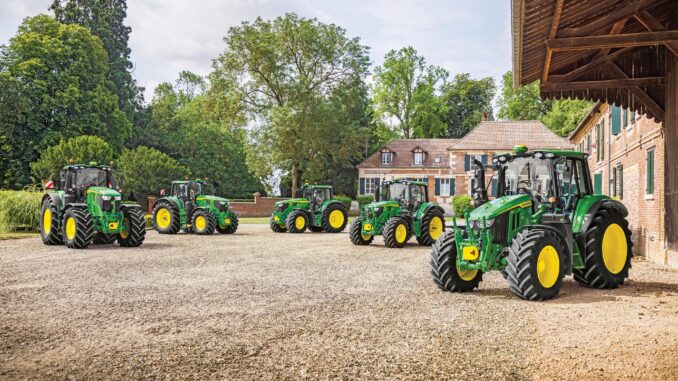
The John Deere 2025R is a 2 Series compact utility tractor aimed at homeowners, acreage owners, and light property-management users who need more capability than a lawn tractor but still want a machine that is manageable for routine DIY care. Deere’s operator literature and maintenance sources show the 2025R uses a diesel engine, hydrostatic drive, standard compact-tractor systems, and a maintenance schedule built around 10-hour, 50-hour, 200-hour, 400-hour, and yearly service points.
This guide is written for owners in the USA and Canada who are comfortable with basic maintenance and some intermediate repairs. It follows a symptom-first approach, explains what is realistic to fix at home, highlights where dealer support makes more sense, and includes a parts table, maintenance planning, and an expanded FAQ focused on common owner problems.
And see
John Deere 2025R model overview
The John Deere 2025R sits in Deere’s 2 Series compact utility tractor lineup, so it bridges the gap between sub-compact machines and larger compact tractors. In practical terms, that means it is commonly used for mowing with AutoConnect mid-mount decks, loader work, light grading, seasonal cleanup, material moving, and general small-acreage work rather than simple lawn-only mowing.
The main systems owners usually deal with are the diesel engine and fuel system, hydrostatic transmission and drivetrain, hydraulic system, PTO and mower-drive components, and the electrical and safety-interlock system. Those are also the systems behind most real-world complaints such as no-start conditions, weak PTO performance, drive issues, warning-light concerns, rough running, and attachment-related problems.
General overview of the John Deere 2025R
On the maintenance side, owners regularly buy filters, belts, blades, batteries, and a few wear items rather than major hard parts. Verified maintenance components associated with the 2025R include engine oil filter M806418, fuel filter M801101, hydraulic oil filter AL156625, transmission oil filter LVA802810, primary air filter M131802, and secondary air filter M131803, with Deere and Deere-focused suppliers also listing model-specific filter packs such as LVA21204 and LVA21036 depending on machine range and application.
If the tractor is equipped with a 54D or 60D AutoConnect mower deck, deck-drive wear parts also become part of normal ownership. Deere literature confirms the 54D and 60D decks as supported equipment families for this platform, and Deere parts listings show deck belt LVU21853 as a common mower-deck drive belt used in this equipment family, though owners should still confirm by deck size and serial before ordering.
John Deere 2025R troubleshooting approach
The best way to diagnose a 2025R is to start with the exact symptom the owner sees, not with an assumption about the failed part. For this tractor, the main symptom groups are starting issues, running issues, PTO or mower performance problems, vibration and noise, overheating or fluid leaks, transmission and drive complaints, and electrical or safety-switch faults.
That approach matters because several different faults can create the same complaint. For example, a “won’t start” tractor may have a battery problem, a fuel-delivery issue, an interlock problem, or a simple control-position issue, while a “won’t mow properly” complaint may be deck-related, PTO-related, or the result of clogged cooling and poor engine performance under load.
Emergency repair needs
Certain problems on a compact tractor should be treated as immediate stop-use issues because they can quickly become unsafe or very expensive. On the 2025R, the most urgent ones are fuel leaks, hydraulic leaks under pressure, overheating, severe vibration, brake or steering problems, and PTO or mower driveline faults that could throw parts or damage connected equipment.
John Deere 2025R starting issues
A starting problem usually shows up as no crank, weak crank, or crank-but-won’t-fire. It matters because repeated unsuccessful starting can flatten the battery, overheat cables or the starter circuit, and mask a simple safety or fuel issue that is easier to fix early.
Common causes:
-
Weak or failed battery.
-
Dirty or loose battery terminals.
-
Safety interlock not satisfied.
-
Fuel restriction or contaminated diesel.
-
Failed glow or starting circuit component.
Basic owner checks:
-
Confirm the battery is fully charged and terminals are clean and tight.
-
Verify PTO and control positions are correct and the tractor is being started under the normal procedure in the operator’s manual.
-
Check that there is clean fuel in the tank and inspect the fuel filter service history.
-
If cranking speed is still poor, stop and inspect cables, grounds, and battery condition before assuming a starter fault.
John Deere 2025R running issues
Running issues usually appear as hard starting, rough idle, reduced power, smoking, stalling, or poor response under load. These symptoms matter because a diesel that is starved for air or fuel, or is overheating, can become harder to restart and may suffer longer-term wear if used that way.
Common causes:
-
Dirty fuel filter.
-
Plugged or restricted air filters.
-
Old fuel or water contamination.
-
Cooling fins clogged with debris.
-
Operator trying to work the tractor at the wrong engine speed for PTO load.
Basic owner checks:
-
Inspect the primary and secondary air filters and replace if dirty or damaged.
-
Check fuel filter age and replace on schedule if overdue.
-
Clean radiator and screen areas so the tractor can cool properly under load.
-
Run at the proper engine speed for PTO work rather than lugging the engine.
John Deere 2025R cut-quality or PTO problems
If the tractor has a mid-mount mower, owners may notice poor cut quality, uneven cutting, belt slip, or weak deck performance under load. This matters because a PTO or deck problem can quickly ruin a belt, damage pulleys, or leave an uneven finish that owners often misdiagnose as a blade problem alone.
Common causes:
-
Worn or stretched deck belt.
-
Dull or damaged blades.
-
Grass buildup under the deck.
-
Improper deck level.
-
PTO not fully engaging or engine speed too low.
Basic owner checks:
-
Inspect the deck belt for glazing, cracks, or obvious slack.
-
Check blades for damage or severe dullness and verify the deck underside is clean.
-
Confirm tire pressures and deck level before blaming the blades alone.
-
Test mowing performance at the recommended PTO operating speed rather than partial throttle.
Vibration and noise on the John Deere 2025R
Strong vibration, rattling, squealing, or grinding should be treated seriously. These symptoms can point to damaged blades, worn pulleys or bearings, loose hardware, driveline wear, or an attachment issue that can lead to secondary damage if ignored.
Common causes:
-
Bent or unbalanced blades.
-
Failing deck spindle or pulley bearings.
-
Loose wheel or implement hardware.
-
Belt damage or pulley misalignment.
-
Driveline or PTO coupling wear.
Basic owner checks:
-
Stop using the tractor immediately if vibration suddenly becomes severe.
-
Inspect blades, deck spindles, pulleys, and visible hardware for looseness or impact damage.
-
Check wheel hardware and tire condition.
-
If the noise appears inside the transmission, PTO driveline, or hydraulic system, move the job out of DIY territory quickly.
John Deere 2025R overheating and leaks
Overheating or fluid leaks are immediate-priority issues because heat and low fluid levels damage expensive components fast. On a compact diesel tractor, clogged cooling fins, low coolant, engine oil leaks, and hydraulic leaks are all problems that should be corrected before further use.
Common causes:
-
Debris-packed radiator fins or screen.
-
Low coolant or coolant age.
-
Loose hose clamps.
-
Engine oil filter or hydraulic filter leakage after service.
-
Damaged hoses or fittings.
Basic owner checks:
-
Shut the tractor down and let it cool before opening or touching cooling components.
-
Clean radiator fins and surrounding screens carefully.
-
Inspect around the oil, hydraulic, and transmission filters for seepage after recent maintenance.
-
Do not place hands near suspected pressurized hydraulic leaks; hydraulic injection injuries are serious and need professional handling.
John Deere 2025R transmission and drive problems
Drive complaints typically show up as weak movement, inconsistent hydro response, unusual noise, or a tractor that will not pull as expected. These matter because hydrostatic and hydraulic problems get expensive quickly if a low-fluid, clogged-filter, or internal issue is ignored.
Common causes:
-
Overdue transmission or hydraulic service.
-
Wrong or low fluid level.
-
Restricted transmission filter.
-
Linkage or pedal issues.
-
Internal hydrostatic wear.
Basic owner checks:
-
Review whether the 50-hour initial service or later 200-hour service was completed on time.
-
Check for visible leaks and inspect the transmission and hydraulic filter area.
-
Confirm nothing external is preventing pedal travel or linkage return.
-
If the tractor still slips, surges, or growls after basic checks, dealer diagnosis is usually the sensible next step.
Electrical and safety problems
Electrical complaints usually include dead dash, no crank, blown fuses, intermittent PTO operation, or safety shutdown behavior. Deere operator material for this tractor family shows that normal operation depends on proper safety-system logic, including seat and PTO-related operating rules, so owners should rule out interlock causes before replacing parts.
Common causes:
-
Weak battery or poor cable connections.
-
Corroded grounds.
-
Faulty switch or interlock component.
-
Blown fuse.
-
Moisture or damaged connectors.
Basic owner checks:
-
Test battery condition and clean both cable ends first.
-
Inspect fuses and obvious connector corrosion.
-
Confirm the symptom matches an interlock condition and not a charging or battery problem.
-
Replace only after checking the part number by PIN, because switch and harness details can vary across machine families.
Summary:
Most reported problems
What is genuinely worth worrying about
Not every item in online “common problems” lists is a design-wide failure. Several are standard compact-tractor diagnostic categories—dirty filters, battery faults, hydraulic contamination, or operator-interlock issues.
For a buyer or owner, I would prioritise these in order:
-
Inspect the underside transmission filter and its mount. Look for impact damage, fresh oil, non-original repairs, or an improvised guard. This is the clearest model-specific concern surfaced in owner reviews.tractorbynet+1
-
Check for hydraulic, engine-oil, and diesel-fuel leaks. Run the tractor until warm, operate the loader, three-point hitch, and any backhoe, then inspect underneath and around hose ends, fittings, and seals.greentractortalk
-
Test all safety and PTO functions. Verify it starts only as intended, the seat/interlock system behaves consistently, and the PTO engages and disengages correctly with the implement attached if possible.backyardmastery+2
-
Work the HST properly. Test forward/reverse in each range, climb a slope under load, listen for abnormal whining, and make sure steering, loader, and hitch remain responsive. Check maintenance records for transmission/hydraulic fluid and filter service.tractortechspecs
-
Look at cooling-system cleanliness. A mower-equipped tractor that has been used in dry grass can collect debris at the grille and cooling pack. Signs of neglected cleaning are a warning of generally poor maintenance.agriculture.papemachinery
Used 2025R inspection checklist
-
Cold-start it rather than viewing it already warmed up.
-
Check engine oil, coolant, fuel system, and hydraulic/transmission fluid for correct level, contamination, or leaks.
-
Inspect battery terminals, cables, grounds, fuses, and wiring for corrosion or amateur repairs.
-
Inspect the complete underside, with particular attention to the transmission oil filter, threaded mount, and any skid/brush protection.tractorbynet+1
-
Cycle the loader and rear hitch repeatedly; watch for jerking, delayed response, hose seepage, or drift.
-
Engage the PTO and test it at working rpm with an implement, where safe.
-
Drive in low and high range, forward and reverse; test under load rather than only on level ground.
-
Confirm 4WD engagement and disengagement, steering effort, brakes, and parking brake.
-
Examine the radiator screen, grille, and air-filter condition; excessive debris suggests neglected mowing maintenance.agriculture.papemachinery
-
Ask for service invoices, warranty repair history, and the exact model/serial number so a John Deere dealer can check outstanding campaigns or repair history.
Bottom line
A well-maintained 2025R can be a useful small-property, mowing, loader, and light-implement tractor. I would not reject one merely because of online reports, but I would treat damage around the exposed transmission filter/mount, unexplained fluid loss, PTO/interlock abnormalities, and poor maintenance records as reasons to negotiate hard—or walk away.
John Deere 2025R transmission filter mount fix
If the transmission oil-filter mount or threaded sleeve has broken on a John Deere 2025R, do not simply fit another spin-on filter and run it. A broken or cracked mount can dump the tractor’s hydraulic/transmission oil rapidly, which can disable propulsion, steering, loader, and three-point hitch—and can damage the hydrostatic transmission if it is operated low on oil.
The correct repair depends on what actually failed: the filter itself, the aluminium threaded adapter/sleeve, or the transmission/housing material surrounding the adapter. The 2025R’s filter is notably exposed beneath the tractor, and an owner report describes a branch breaking the filter from its aluminium threaded mounting sleeve, with a reported repair estimate of $5,000.tractorbynet
Identify the damage first
Remove the damaged filter only after safely parking, lowering implements, stopping the engine, and allowing components to cool. Catch the oil and clean the area thoroughly before judging the mount.
Correct repair approach
-
Stop operating immediately. If the filter has been knocked off or oil has escaped, do not start the tractor to “see whether it still drives.” Hydrostatic components rely on clean, correctly pressurised oil.
-
Establish the exact configuration. Use the tractor PIN/serial number with a John Deere dealer or the official parts system. Filter and component arrangements can vary by production range, and a dealer can identify the exact adapter, seals, and associated parts.
-
Drain and protect the system. If the mount is being removed, drain the transmission/hydraulic oil into a clean container for inspection, but plan on using fresh oil if debris, water, or metal is present. Keep every open hydraulic passage capped or covered; contamination introduced during a mount repair can be more damaging than the original impact.
-
Repair the mount rather than improvising it. If the threaded sleeve is a replaceable part, install the OEM replacement and any specified O-rings/seals using the technical-manual procedure. If the sleeve is integral to a damaged casting, the repair can require a transmission-case or centre-housing repair/replacement rather than an external bolt-on part.
-
Install the correct filter carefully. Deere’s operator guidance says to apply clean transmission oil to the filter seal, prefill the filter approximately one-third to one-half full, screw it on until the seal contacts the mounting surface, then tighten it by hand an additional half-turn. Do not use a wrench to overtighten a spin-on filter.manuals.deere
-
Refill with approved fluid and check leaks. Deere specifies Low Viscosity HY-GARD meeting JDM J20D, or an equivalent, for the applicable service guidance. The same procedure directs owners to start the engine, inspect the filter base and drain plugs for leakage, stop the engine, and recheck level.manuals.deere
-
Change/clean the required service items if oil was lost. Deere’s service process includes draining the transmission, cleaning the suction screen, replacing the hydraulic/transmission filter, and then refilling. For 2R-series quick-reference material, the filter interval is an initial change at 50 hours and then every 200 hours.manuals.deere+1
Why a guard is sensible
Once repaired, fit a purpose-made skid plate or filter guard that does not obstruct filter removal, hydraulic cooling, drainage, or access for routine service. Avoid a guard that bolts to, touches, or transmits impacts directly into the filter head. The goal is to deflect a branch before it reaches the filter—not to turn the filter mount into a load-bearing point.
Also avoid brush work in reverse over unseen limbs, and inspect the filter zone after operating in woodland, scrub, or tall stubble. The reported vulnerability comes from the exposed, aluminium filter/sleeve arrangement rather than routine filter servicing.tractorbynet
When to call a dealer
Arrange professional assessment if any of these applies:
-
The threaded sleeve has separated from the tractor.
-
The filter base is cracked, distorted, or no longer flat.
-
You can see damaged aluminium around the mount.
-
The tractor was driven after losing a meaningful quantity of oil.
-
Hydraulic functions are noisy, weak, erratic, or inoperative after the event.
-
Drained oil contains bright metallic debris, dark burnt oil, or water contamination.
For an owner with ordinary tools, replacing an undamaged filter is routine maintenance; repairing a damaged 2025R filter mount is not a sensible place for a temporary fix. The risk is not merely an oil leak—it is loss of transmission and hydraulic-system integrity.
John Deere 2025R transmission filter part number
John Deere 2025R filter kit part numbers
John Deere 2025R maintenance service intervals
John Deere’s 2025R service schedule is built around daily checks, an initial 50-hour service, then 200-, 400-, 600-, 1,200-, 2,000-hour/two-year, and 6,000-hour/six-year intervals. The exact checklist changes slightly by serial-number range, attachments, and operating conditions, so use the operator’s manual matched to your tractor PIN as the final authority.manuals.deere+2
Core intervals
Filters and fluids
For an early 2025R through HH100000, Deere’s quick-reference guide lists the following routine items:
These part numbers apply to the configuration shown in Deere’s 2025R quick-reference guide; later machines use different hydraulic/transmission and air-filter numbers, so confirm against your PIN before ordering.deere+2
Transmission service clarification
There are two different jobs that are often confused:
-
Routine filter service: normally initial 50 hours and then every 200 hours for the applicable early 2025R filter arrangement.deere
-
Full transmission/hydraulic oil service: involves draining the oil, cleaning the suction screen, replacing the relevant filter(s), refilling with approved oil, and checking for leaks. Follow the model/PIN-specific manual rather than assuming the filter interval is automatically the complete oil-change interval. Deere’s service procedure specifically includes oil draining, suction-screen cleaning, filter replacement, refill, and leak checks.manuals.deere
This distinction matters if your tractor has had a transmission-filter impact or leak: if it has lost oil, ingested dirt, or run with a compromised filter/mount, treat it as more than a routine filter replacement.
Severe-use adjustments
Reduce intervals where the tractor is used for prolonged mowing in dust/chaff, loader work, forestry/brush work, frequent short trips, very hot or cold conditions, or heavy PTO use. In particular:
-
Clean the grille/radiator screen and inspect the air intake far more often during mowing.
-
Check the exposed transmission-filter area after brush or woodland work.
-
Grease loader, mower-deck, front-axle, and implement points according to the relevant attachment manual.
-
Replace engine oil, fuel filters, and hydraulic oil/filter earlier if contamination, water, overheating, or abnormal operation is found.
Practical annual plan
For a lightly used 2025R that may not reach 200 hours in a year:
-
At the start of the working season, inspect fluids, filters, battery, tyres, brakes, belts, hoses, cooling pack, loader pins, and the transmission-filter mount.
-
Complete any 200-hour/annual filters or oil services that are due by calendar time.
-
Before mowing or field work, clean cooling screens and inspect the air filter.
-
After brush work, look beneath the tractor for a damaged filter, oil seepage, or loose protection.
-
Keep a dated service log with hour-meter readings, fluid used, part numbers, and any repair invoices—particularly valuable when diagnosing hydraulic or transmission issues later.
John Deere 2025R engine oil capacity and type
For the John Deere 2025R, use diesel-rated engine oil meeting John Deere’s applicable specification—normally John Deere Plus-50 II or an equivalent heavy-duty diesel engine oil. The commonly published engine-oil capacity is approximately 3.2 L / 3.4 US qt with filter, but some later-production 2025R data lists 2.7 L / 2.9 US qt, so fill by dipstick rather than by capacity alone.tractordata+1
Oil capacity
Because capacity differs across sources and production versions, the safe service method is: drain oil, replace the filter, add slightly less than the stated capacity, run briefly, shut down, allow the oil to settle, then bring the level to the dipstick’s full mark. Do not overfill.
Recommended oil type
Use a high-quality heavy-duty diesel engine oil that satisfies the required API diesel rating specified for your exact 2025R manual. Suitable John Deere product families include:
-
John Deere Plus-50 II diesel engine oil.
-
John Deere Torq-Gard Supreme where listed for the required ambient temperature range.
-
A reputable equivalent diesel oil with the correct viscosity and API classification.
Common viscosity options are:
John Deere says its diesel oils are available in 15W-40 and 10W-30 grades and advises choosing viscosity by the operating-temperature range in the operator’s manual. A published 2025R maintenance source lists Plus-50/Torq-Gard Supreme and SAE 10W-40 or 15W-40 meeting API CH or later, but an up-to-date manual for your exact PIN should override generic listings.deere+1
Service essentials
-
Engine oil filter: M806418 for the early 2025R configuration shown in Deere’s quick-reference guide.deere
-
Change interval: initial 50-hour change, then normally every 200 hours.deere+1
-
Warm the engine first so oil drains properly, but shut it down and allow hot components to cool enough to work safely.
-
Lightly oil the new filter gasket with clean engine oil; install hand-tight according to the filter/owner-manual instructions.
-
Check for leaks immediately after the first start, then recheck the dipstick once oil has settled.
-
Record the hour-meter reading, date, oil grade/specification, quantity, and filter part number.
John Deere 2025R transmission fluid capacity
John Deere 2025R front axle oil capacity
The John Deere 2025R front axle oil capacity differs by production generation:
The model-year split is important: the later 2025R has a smaller front-drive-axle capacity than the earlier machine.maxoilcapacity
What to buy
For a complete front-axle service, buy at least 4 L of a good-quality 80W-90 GL-5 hypoid gear oil for an early 2025R, or 3 L for a later machine. A 5-L container gives sensible spare oil for future level checks.
Do not fill the front axle with Hy-Gard simply because the tractor’s transmission/hydraulic system uses Hy-Gard; the 2025R front axle is specified separately for GL-5 gear oil.maxoilcapacity
Filling procedure
-
Park on level ground with the front axle straight and the engine off.
-
Clean around the fill/level and drain plugs before opening them.
-
Remove the fill/level plug first, then the drain plug.
-
Drain the axle fully, refit the drain plug with its sealing washer/O-ring as applicable, and fill slowly.
-
Stop at the level plug opening, rather than attempting to force in an exact measured quantity.
-
Check each front final-drive/hub area as required by the matched operator’s manual, then check for leaks after operating the tractor.
The quoted capacity is a service approximation. The level plug is the final authority, because oil retained in the axle housings and how level the tractor is can change the quantity required.
Service timing
The 2025R maintenance chart calls for front-axle oil service at roughly 600-hour intervals, alongside other extended maintenance work.deere+1
Check your full tractor PIN to establish whether it is pre-2017 or 2017-on before ordering oil or relying on the capacity above.
DIY or dealer decision guide for the John Deere 2025R
The line on a 2025R is fairly clear: routine service, inspections, simple filter changes, battery work, deck-belt replacement, and other external wear items are realistic for a careful owner, but hydraulic diagnosis, internal transmission work, injector issues, electrical tracing beyond basic tests, and anything involving pressurized hydraulic leaks or major driveline components are usually better left to a Deere dealer or an experienced tractor technician.
Good DIY jobs:
-
Engine oil and filter service.
-
Fuel and air filter replacement.
-
Battery service or replacement.
-
Deck belt and blade service on equipped mower decks.
-
Cooling-screen and radiator-fin cleaning.
Advanced DIY or dealer jobs:
-
Hydraulic leak diagnosis.
-
Transmission or hydrostatic performance diagnosis.
-
PTO clutch or driveline diagnosis.
-
Valve adjustment and injector-related work.
-
Fault-finding on intermittent safety and electrical problems.
Skill guide:
-
Beginner: Battery care, air filter inspection, daily checks, deck cleaning.
-
Intermediate: Engine oil/filter change, fuel filter change, deck belt replacement, blade service.
-
Advanced: Electrical diagnostics with a meter, hydraulic troubleshooting, PTO or transmission-related diagnosis.
Parts for the John Deere 2025R
Before ordering anything, gather the full model name, the tractor Product Identification Number, the engine information if the engine component is involved, and the mower deck or attachment model if applicable. Deere’s own manual structure emphasizes product identification, and Deere-focused parts sources also note that filter kits and maintenance parts can differ by machine range or serial grouping.
OEM parts are the safer choice for belts, seals, switches, and fit-sensitive or safety-related items because those parts are more likely to match exactly and behave correctly. Aftermarket parts are often acceptable for some filters, blades, and batteries, but only when the seller clearly cross-references the exact Deere number and your machine identification matches.
John Deere 2025R manuals and parts diagrams
The most useful sources for this tractor are Deere’s official operator manual pages, Deere parts retail pages, Deere’s JDParts ecosystem, and a Deere-specialist retailer with maintenance breakdowns. The operator manual helps with controls, safety, and service intervals, while JDParts and Deere parts pages help verify part numbers and serial-sensitive variations before purchase.
Useful links:
-
John Deere operator manual view for operating, safety, and service-reference information.
-
John Deere Shop parts pages for confirming live OEM part numbers and availability.
-
JDParts for exploded diagrams and fit verification by model and serial.
-
Green Farm Parts 2025R maintenance guide for owner-friendly maintenance parts cross-checking.
Finding model and serial numbers
These numbers matter because Deere parts and service information can change by production range, and filter packs or deck components may not be identical across similar-looking tractors. Using only “2025R” without the PIN or deck model is one of the easiest ways to order the wrong part.
Steps:
-
Check the tractor identification area referenced in the operator’s manual under product identification.
-
Record the full tractor model and Product Identification Number exactly as shown.
-
If the part is engine-related, record the engine data from the engine identification label as well.
-
If the tractor has a mid-mount deck or attachment, record the deck or attachment model and serial separately.
-
Use all of those numbers when ordering online or talking to a dealer parts counter.
Buying John Deere 2025R parts
The best strategy is to use official Deere sources to verify the OEM number first, then compare dealer, Deere online, and reputable Deere-focused aftermarket pricing. This reduces mistakes, especially on filters, electrical items, deck parts, and anything that may vary by deck size or serial range.
-
Online: Best for price checking and part-number confirmation, especially through Shop.Deere.com, JDParts, and Green Farm Parts.
-
Dealer counter: Best for serial-sensitive, diagram-heavy, or unclear repairs where staff can confirm supersessions and fit.
-
Retail stores: Fine for consumables like batteries or some filters only when the box clearly cross-references the exact Deere number and tractor application.
Fitting common John Deere 2025R parts
These are high-impact owner jobs that solve many common complaints before they turn into larger repairs. Always park on level ground, lower implements, shut the engine off, remove the key, and let hot parts cool first.
Change the John Deere 2025R engine oil filter
This helps with routine service and protects the engine from accelerated wear. The confirmed engine oil filter number is M806418 for the maintenance listing used here.
-
Warm the engine briefly so the oil drains more easily, then shut it off safely.
-
Drain the engine oil into a suitable container following the service procedure in the operator literature.
-
Remove the old oil filter, clean the sealing surface, and install the new M806418 filter correctly.
-
Refill with the correct oil specification from the manual, start the engine, and check for leaks.
-
Recheck the oil level after shutdown and top off if needed.
Replace the John Deere 2025R fuel filter
This job often fixes hard starting, weak running, and fuel-starvation complaints caused by overdue service or contamination. The listed fuel filter for this tractor is M801101.
-
Shut the tractor off and clean the area around the filter before opening the fuel system.
-
Remove the old filter carefully to avoid introducing dirt.
-
Fit the new M801101 filter and confirm seals are seated correctly.
-
Follow the tractor’s normal fuel-system restart procedure so the engine can recover from the filter change.
-
Inspect closely for leaks after restart.
Replace the John Deere 2025R air filters
Air-filter service is important if the tractor works in dusty mowing, grading, or loader conditions. The verified maintenance listings show primary element M131802 and secondary element M131803.
-
Open the air cleaner housing carefully so dirt does not fall into the intake path.
-
Remove the primary and, if required, the secondary element without damaging the sealing surfaces.
-
Clean the housing gently and inspect for dust bypass or hose damage.
-
Install the correct replacement element or elements and close the housing securely.
-
If the old filters were heavily clogged, check cooling areas too because dust buildup often affects more than one system.
Replace the John Deere 2025R mower deck belt
A worn belt often causes weak mowing performance, squeal, or inconsistent cut quality on tractors fitted with AutoConnect decks. Deere listings show LVU21853 as a deck-drive belt in the 54D/60D family, but deck model and serial must still be verified first.
-
Remove the key, lower the deck, and make sure the PTO is off.
-
Study the routing before removal, taking a photo if necessary.
-
Relieve belt tension and remove the old belt from the pulleys carefully.
-
Install the new belt in the correct routing and confirm it is fully seated in every pulley groove.
-
Run the PTO briefly and recheck tracking before returning to normal mowing.
Preventing repeat problems on the John Deere 2025R
Most repeat failures on compact tractors come from deferred service, dirty cooling areas, ignored belt wear, and troubleshooting too late. The 2025R’s official service structure is built to prevent exactly those issues, especially around filters, cooling, lubrication, safety checks, and early hydraulic/transmission service intervals.
Focus areas:
-
Starting reliability: Keep the battery charged, terminals clean, and fuel filter service current.
-
PTO and cut quality: Inspect deck belts, blades, deck cleanliness, and run proper PTO speed.
-
Fire and overheating prevention: Clean radiator fins, screens, and debris-prone engine areas regularly.
-
Drive performance: Do not skip the initial 50-hour and later 200-hour hydraulic/transmission filter service points.
-
Electrical reliability: Test safety systems and inspect cables, grounds, and fuses before replacing switches.
John Deere 2025R maintenance schedule
The maintenance pattern available for this tractor family includes before-each-use checks plus recurring 10-hour, 50-hour, 200-hour, 400-hour, and yearly items, with some tasks also driven by condition rather than hours. Deere-focused 2025R maintenance listings specifically confirm initial 50-hour hydraulic and transmission filter changes, 200-hour or annual engine oil filter service, and 400-hour or annual fuel filter service.
Daily or before each use
-
Check fuel level.
-
Check engine oil level.
-
Test safety systems.
-
Inspect for obvious leaks, loose hardware, or visible damage before operation.
Every 10 hours
-
Follow the tractor’s 10-hour service rhythm in the Deere operator maintenance structure, especially for inspection and lubrication items relevant to the machine configuration.
-
For owners using mower attachments heavily, this is also a sensible point to clear debris and visually inspect deck-drive components.
Every 50 hours
-
Replace hydraulic oil filter AL156625 initially after 50 hours.
-
Replace transmission oil filter LVA802810 initially after 50 hours.
-
Lubricate tractor grease fittings.
-
Check wheel bolt torque and tire pressure.
Every 200 hours or yearly
-
Replace engine oil filter M806418 every 200 hours or annually.
-
Replace hydraulic oil filter AL156625 every 200 hours after the initial change.
-
Replace transmission oil filter LVA802810 every 200 hours after the initial change.
-
Check and clean radiator cooling fins.
-
Lubricate 3-point hitch and other specified grease points.
Every 400 hours or yearly
-
Replace fuel filter M801101 every 400 hours or annually.
Seasonal checklist
-
Spring: Battery check, safety-system test, engine oil review, cooling-area cleaning, mower deck inspection if fitted.
-
Mid-season: Recheck belt condition, air-filter condition, wheel torque, tire pressure, and debris buildup.
-
Fall or storage prep: Clean the machine thoroughly, inspect filters and battery condition, and correct any leaks before parking for a long period.
Repair, upgrade, or replace?
For a 2025R, repair usually makes sense when the machine is structurally sound, the engine and hydrostatic system are healthy, and the needed work is limited to maintenance, wear parts, or moderate external repairs. Upgrade makes sense when the tractor is still good but the owner’s jobs have outgrown the machine or the current deck, loader, or attachment setup, while replacement is the smarter choice when major hydraulic, transmission, or engine work stacks on top of chronic wear and poor fit for the job.
Repair if:
-
The problem is filters, belts, blades, battery, switches, hoses, or other normal wear items.
-
The tractor starts, drives, and hydraulically functions normally aside from one clear issue.
-
The machine has been maintained on schedule and has no major leak or hydro symptoms.
Upgrade if:
-
You regularly ask the tractor to do heavier loader, mowing, or acreage work than it handles comfortably.
-
You need different attachments or deck capability more than you need a different base machine.
-
The tractor is sound but your property needs have changed.
Replace if:
-
Engine, hydrostatic, and hydraulic problems are combining into a high-cost repair list.
-
Structural wear, corrosion, or repeated neglect has affected multiple systems.
-
The cost of restoration is hard to justify against a newer, better-matched tractor.
Expanded troubleshooting FAQ
1. Why will my John Deere 2025R not start?
Start with the basics: battery charge, cable condition, fuel supply, and safety-interlock conditions. A weak battery or poor terminal connection can cause no-crank symptoms, while an overdue fuel filter or control-position issue can create a crank-no-start complaint.
2. Why does the John Deere 2025R crank slowly?
Slow cranking usually points to a weak battery, bad cable connection, poor ground, or cold-weather strain on the starting system. Clean and tighten the cables first, then load-test the battery before replacing starter parts.
3. Why does my John Deere 2025R crank but not fire?
That usually means the engine is turning but not getting the right fuel delivery or starting conditions. Check fuel level, filter age, possible contamination, and whether the normal starting procedure is being followed.
4. Can a dirty fuel filter cause John Deere 2025R power loss?
Yes, a restricted fuel filter can reduce fuel flow and make the tractor feel weak, hesitant, or hard to start. Deere-focused maintenance guidance for the 2025R lists the fuel filter as a regular service item for good reason.
5. Why does my John Deere 2025R run rough at idle?
Rough idle can come from restricted air flow, fuel contamination, overdue fuel service, or a deeper engine issue. Owners should inspect the air filters and fuel filter first before assuming injector or internal engine trouble.
6. Why is my John Deere 2025R smoking?
Smoke under load can be linked to poor combustion, restricted air intake, or fueling issues. Start with air-filter condition and fuel quality, then move toward dealer diagnosis if the problem continues after normal service items are corrected.
7. Why does the John Deere 2025R lose power when mowing?
Power loss during mowing often means the engine is being overloaded, the deck is dirty, the belt is slipping, the blades are dull, or airflow or fuel flow is restricted. PTO work should be done at the correct engine speed, with the deck and filters in good condition.
8. Why is the cut uneven on my John Deere 2025R mower deck?
Uneven cutting is commonly caused by deck level issues, tire-pressure differences, dull blades, or grass packed under the deck. Check those basics before replacing deck parts.
9. Why does the John Deere 2025R mower deck belt keep slipping?
A slipping belt is usually worn, glazed, contaminated, or running with poor pulley alignment or weak tension. Replace the belt if visibly damaged and verify correct routing for the exact 54D or 60D deck model.
10. What belt fits a John Deere 2025R mower deck?
A commonly listed deck-drive belt in the 54D/60D family is LVU21853, but deck model and serial must be verified before ordering. Never buy only from the tractor model name when deck parts are involved.
11. Why is my John Deere 2025R vibrating badly?
Severe vibration is often caused by blade damage, pulley or spindle issues, loose hardware, or driveline problems. Stop using the tractor until the source is found because secondary damage can happen quickly.
12. What causes squealing on a John Deere 2025R?
A squeal often points to belt slip, a pulley bearing problem, or a belt that is wet, glazed, or misrouted. Inspect the deck belt and pulley system first if the sound appears during PTO use.
13. Why is my John Deere 2025R overheating?
Overheating is often caused by plugged cooling fins, screen blockage, coolant issues, or heavy work with poor airflow through the radiator area. Cleaning the cooling package is one of the first practical owner checks.
14. Can grass and chaff cause John Deere 2025R overheating?
Yes, debris buildup around the radiator and cooling fins reduces airflow and can push temperatures up fast during mowing. This is especially common in dry or dusty conditions and should be part of routine cleaning.
15. Why is hydraulic oil leaking on my John Deere 2025R?
Leaks may come from filter seals, hoses, fittings, or damaged components after service or impact. Because hydraulic systems can be dangerous under pressure, owners should inspect visually and avoid hands-on leak tracing under pressure.
16. Why does my John Deere 2025R not drive properly?
Poor drive response can be caused by overdue transmission or hydraulic service, low fluid, filter restriction, linkage trouble, or internal hydrostatic issues. Review service history first, especially the initial 50-hour and later 200-hour filter intervals.
17. Why does the John Deere 2025R feel weak on hills?
That can be a normal load-related limitation, but it can also signal service neglect, low fluid, or hydrostatic wear. If performance has worsened over time rather than always being that way, inspect service items before blaming the tractor’s design.
18. What happens if I skip the 50-hour John Deere 2025R service?
Skipping the initial hydraulic and transmission filter service is a bad idea because the early service interval is there to catch the first wear-related contamination. Deferred early service can shorten component life and complicate later diagnosis.
19. What is the John Deere 2025R engine oil filter number?
The maintenance listing used here shows M806418 as the engine oil filter for the 2025R. Confirm by PIN when ordering, especially if the machine has unusual service history or a prior part-number supersession.
20. What is the John Deere 2025R fuel filter number?
The verified maintenance listing shows fuel filter M801101 for the 2025R. It is listed for replacement every 400 hours or annually.
21. What are the John Deere 2025R air filter numbers?
The primary air filter is listed as M131802 and the secondary element as M131803 in the 2025R maintenance guide source used here. Replace by condition, especially in dusty work.
22. What is the John Deere 2025R hydraulic oil filter number?
The maintenance listing identifies AL156625 as the hydraulic oil filter. It is replaced initially at 50 hours and then every 200 hours.
23. What is the John Deere 2025R transmission oil filter number?
The transmission oil filter listed for the 2025R is LVA802810. The same source shows an initial 50-hour interval and then every 200 hours.
24. Is the John Deere 2025R battery size important?
Yes, battery fit, terminal layout, and cold-cranking ability matter. Deere lists battery options such as TY26498B in a 12-volt 45 Ah 500 CCA format, but physical fit should still be checked before purchase.
25. Why does my John Deere 2025R keep killing batteries?
Repeated battery problems often trace back to loose terminals, poor grounds, infrequent charging, long idle periods, or a charging-system issue rather than the battery itself. Test connections and charging performance before buying another battery.
26. Why does the PTO on my John Deere 2025R not work right?
PTO complaints can involve control settings, interlock logic, operator-position rules, driveline faults, or deck-related load issues. Deere’s operator information makes clear that some PTO functions depend on proper operator presence and operating procedure.
27. Can a seat or safety switch stop a John Deere 2025R from working?
Yes, interlock logic can prevent starting or affect PTO-related operation if the system does not see the expected conditions. That is why owners should verify operating position and safety-system status before replacing expensive parts.
28. Why does my John Deere 2025R shut off when I get off the seat?
That can be normal safety behavior depending on PTO state and tractor configuration. Deere operator material specifically notes operating rules for PTO use with and without the operator on the seat.
29. Is a John Deere 2025R fuel problem always the filter?
No, although the filter is a common culprit, contaminated fuel, water in the system, air leaks, or deeper engine-side issues can create similar symptoms. Filter service is the sensible first step, not the last step.
30. How often should I service a John Deere 2025R?
Use the official maintenance structure and adapt it to your actual workload. The 2025R maintenance sources referenced here show daily checks, a 50-hour initial hydraulic and transmission filter service, 200-hour or annual engine oil filter service, and 400-hour or annual fuel filter replacement.
31. Is the John Deere 2025R a realistic DIY tractor?
Yes, for routine service and straightforward wear-item repairs it is very realistic for an owner with basic tools and patience. It becomes less DIY-friendly once the job moves into hydraulic diagnosis, internal hydro issues, advanced electrical tracing, or engine-internal work.
32. Should I buy OEM filters for a John Deere 2025R?
OEM is the safer choice when fit, sealing quality, and exact filtration matter. Aftermarket can work, but only if the supplier cross-references the exact Deere number and has a strong reputation.
33. Where can I find John Deere 2025R parts diagrams?
JDParts and Deere’s retail parts system are the best places to start because they help verify the correct number against the machine and its equipment. Deere-focused parts retailers are useful as a second check and for easier browsing.
34. When should a John Deere 2025R go to the dealer?
Send it to the dealer when the issue involves internal hydrostatic problems, persistent hydraulic leaks, injector or valve-train work, major PTO driveline diagnosis, or electrical troubleshooting beyond obvious battery, fuse, and switch checks. Those jobs need tools, procedures, and experience most homeowners do not have.
35. Is it better to repair or replace my John Deere 2025R?
Repair is usually the better choice when the tractor is otherwise healthy and the problem is limited to service items or one external system. Replace or trade only when major engine, hydraulic, and transmission costs stack together or the tractor no longer fits the property’s workload.