
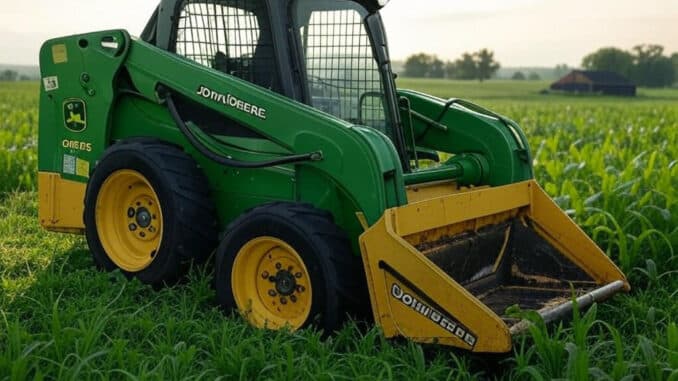
If your John Deere 331G is hard to start, losing power, tracking poorly, running hot, or showing warning lights, the best way to diagnose it is by starting with the symptom you can actually see or feel. The John Deere 331G is a compact track loader built for heavier homeowner acreage work, property maintenance, landscaping, material handling, and light construction-style jobs, so its repair needs are different from those of a lawn tractor.
This guide covers practical John Deere 331G troubleshooting, common repairs, routine maintenance, parts lookup tips, and a detailed FAQ for owners in the USA and Canada. The goal is to help DIY users handle realistic service jobs safely while also knowing when a John Deere dealer or qualified diesel equipment shop is the better choice.
John Deere 331G overview
The John Deere 331G sits in Deere’s G-Series compact track loader lineup and is designed as a mid-size rubber-track machine with more lifting, traction, and hydraulic capability than a typical homeowner machine. Deere’s published specifications list a 4-cylinder turbocharged engine, about 90 gross hp, hydrostatic drive, a rated operating capacity of 3,100 lb, and an operating weight around 11,800 lb.
For owners, the most important systems are the diesel engine and fuel system, hydraulic and hydrostatic drive system, rubber-track undercarriage, cooling package, electrical/safety interlock system, and attachment coupler/hydraulics. When one of these systems falls behind on maintenance, symptoms often show up first as hard starting, power loss, overheating, poor drive response, warning lights, or unusual track wear.
Common John Deere 331G service parts owners regularly buy include the primary air filter KV16429, secondary air filter AT171854, engine oil filter MIU800650, primary fuel filter MIU802421, final fuel filter MIU802154, hydraulic oil reservoir breather AT101565, hydrostatic oil filter AT314164, hydraulic oil filter AT495722, and cab filters such as AT441536 and AT359416 on equipped machines. These are exactly the kinds of fit-sensitive items that should be matched to the machine PIN before ordering.
John Deere 331G troubleshooting approach
The best way to troubleshoot a John Deere 331G is to start with the symptom, not with the part you think is bad. A no-start problem, weak hydraulic performance, overheating, track derailment, warning code, or strong vibration each points you toward a different group of systems and helps you avoid replacing expensive parts unnecessarily.
Main symptom groups on the John Deere 331G usually include:
-
Starting issues
-
Running or power-loss issues
-
Hydraulic performance problems
-
Track and drive problems
-
Overheating and debris buildup
-
Electrical, instrument, and safety interlock faults
-
Excessive vibration, noise, or unusual undercarriage wear
Emergency John Deere 331G repairs
Some John Deere 331G problems should be treated as immediate stop-work issues because they can quickly damage high-cost components or create a safety hazard. That is especially true for hydraulic leaks, overheating, brake or interlock issues, severe undercarriage damage, and warning conditions tied to oil pressure or charging.
John Deere 331G starting issues
When a John Deere 331G cranks slowly, will not crank, or cranks without starting, the problem matters because repeated attempts can flatten the battery, overwork the starter, and hide fuel or safety-interlock faults. Deere lists a 12-volt battery, glow plugs, keyless start/sealed switch module, and several warning and interlock indicators that can all influence starting behavior.
Common causes:
-
Weak battery or poor terminal connection
-
Fuel restriction or water in the fuel system
-
Plugged primary or final fuel filter
-
Glow plug or preheat issue
-
Safety/interlock fault involving seat, lap bar, or door input
-
Air restriction from dirty filters
Basic checks:
-
Check battery terminals for looseness or corrosion.
-
Confirm there is clean diesel fuel in the tank and drain any water from the separator if needed.
-
Inspect the air filter restriction condition and look for a heavily loaded primary filter.
-
Make sure the lap bar, seat, and door conditions are correct for startup.
-
If it still will not start, stop guessing and scan for codes or have the machine tested.
John Deere 331G power-loss issues
If the John Deere 331G starts but feels weak, bogs under load, smokes more than usual, or struggles with attachments, the problem can affect productivity and may indicate restricted fuel, restricted air, cooling issues, or exhaust aftertreatment trouble. Deere specifies a dual-element air cleaner, fuel filtration, turbocharged engine, and serviceable exhaust filter system, all of which can influence power output.
Common causes:
-
Dirty primary air filter
-
Clogged fuel filters
-
Debris-packed cooling package
-
Sensor or derate condition
-
Exhaust filter service need
-
Poor fuel quality
Basic checks:
-
Inspect and clean the cooling package area.
-
Check the primary air filter and restriction warnings.
-
Replace overdue fuel filters if service history is unknown.
-
Verify the machine is not in a protective derate or active warning state.
-
Avoid continued heavy operation until the cause is clear.
John Deere 331G vibration and noise
Unusual vibration or banging on a John Deere 331G often points to undercarriage, track tension, debris buildup, attachment issues, or damaged rotating components. Ignoring it can accelerate wear in tracks, idlers, rollers, sprockets, and planetary components.
Common causes:
-
Incorrect track tension
-
Packed mud, stone, or debris in undercarriage
-
Worn or damaged rollers/idlers
-
Attachment imbalance or looseness
-
Final drive or planetary issue
Basic checks:
-
Clean the undercarriage thoroughly.
-
Check track tension at the recommended interval.
-
Inspect the track for cuts, missing lugs, or exposed internal damage.
-
Check bucket, coupler, and mounting hardware for looseness.
-
Stop use if the noise is metallic, repetitive, or getting worse quickly.
Overheating and leaks
Overheating on a John Deere 331G is a serious issue because compact track loaders often collect debris around the cooling package and belly area. Deere specifically calls for checking and cleaning the cooling package as required, and the machine uses a tri-cool package with variable-speed fan control.
Common causes:
-
Cooling fins blocked by dust, chaff, or mud
-
Low coolant level
-
Hydraulic oil overheating
-
Fan or belt issue
-
Oil, fuel, coolant, or hydraulic leak
Basic checks:
-
Check coolant and hydraulic oil levels with the machine in the correct position.
-
Inspect for debris around the radiator and coolers.
-
Look underneath for fresh leaks before restarting.
-
Check the accessory belt condition.
-
Do not keep working a machine that is overheating or losing fluid.
John Deere 331G drive and track problems
If the John Deere 331G pulls to one side, rides roughly, throws a track, or loses drive force, the problem can become expensive fast. Deere’s maintenance guidance specifically includes track tension checks and hydrostatic planetary service intervals, which shows how important undercarriage and drive maintenance are on this model.
Common causes:
-
Loose or over-tight tracks
-
Undercarriage wear
-
Packed debris
-
Hydrostatic or planetary oil neglected
-
Steering mistracking that needs adjustment
Basic checks:
-
Inspect both tracks for visible damage and abnormal sag.
-
Clean out packed material around sprockets and rollers.
-
Review whether the 50-hour track tension checks and 500-hour planetary service have been done.
-
Compare drive feel side to side.
-
Send persistent mistracking or drive weakness for professional diagnosis.
Electrical and safety problems
The John Deere 331G uses warning lights, service codes, diagnostic codes, and interlock-related inputs for items such as lap bar, seat, and door conditions. Electrical faults can prevent operation, trigger nuisance warnings, or mask a real charging or pressure problem.
Common causes:
-
Weak battery or charging issue
-
Dirty battery terminals
-
Faulty switch or sensor input
-
Damaged wiring in high-vibration areas
-
Moisture or contamination in connectors
Basic checks:
-
Clean and tighten battery terminals.
-
Observe which warning lights remain on.
-
Inspect visible harness sections around the engine bay, cab base, and boom areas.
-
Test simple switch functions before replacing modules.
-
Treat persistent code-related faults as a scan-tool job.
DIY or dealer
For the John Deere 331G, the line between DIY and dealer work is mostly about safety, tooling, machine weight, and electronic diagnostics. Routine service and visual inspection tasks are realistic for many owners, but undercarriage repairs, hydrostatic issues, advanced electrical faults, and emission-system work usually make more sense as dealer or diesel-equipment jobs.
Good DIY jobs
-
Engine oil and filter changes
-
Fuel filter replacement
-
Air filter inspection and replacement
-
Cleaning the cooling package
-
Daily fluid checks
-
Greasing boom linkage and pivot points
-
Cab air filter replacement
-
Battery terminal cleaning
Advanced DIY or dealer jobs
-
Track tension correction if you are not familiar with the procedure
-
Planetary/final drive service
-
Hydraulic oil and filter service on neglected machines
-
Electrical diagnosis involving codes and harness testing
-
DEF and exhaust aftertreatment faults
-
Valve lash adjustment
-
Hydrostatic or steering mistracking diagnosis
Skill guide
-
Beginner: daily inspections, greasing, cab filters, battery cleaning, air filter checks.
-
Intermediate: engine oil/filter service, fuel filter replacement, cooling package cleaning, basic leak tracing.
-
Advanced: hydraulic service, undercarriage work, track adjustment, electrical diagnosis, emission-system repair.
John Deere 331G parts guide
Before ordering John Deere 331G parts, gather the full model name, the machine PIN, and the engine identification details. Deere’s own replacement parts guide is tied to PIN 1T0331G-F300253- and later, which is a strong reminder that serial breaks matter on this model.
You should also confirm whether the machine has options that affect parts selection, such as cab HVAC filters, high-flow hydraulics, track width, reversing fan equipment, or regional engine/emissions configuration. For USA and Canada machines, emissions-related items and filter sets can differ from export variants.
OEM parts are usually the safer choice for filters with exact fit requirements, emissions-related components, hydraulic filters, breathers, and anything safety- or performance-sensitive. Aftermarket can be acceptable for some routine consumables if the supplier provides a solid cross-reference to the exact John Deere 331G and PIN range, but fit and filtration quality matter more here than on a simple lawn tractor.
Manuals and diagrams
The most useful starting points for John Deere 331G documentation are Deere’s official parts store, Deere parts catalog, and operator-manual sources tied to the exact machine version. Deere’s online parts storefront is useful for current OEM availability, while the parts catalog is where exploded diagrams and serial-sensitive breakdowns are normally found.
Helpful sources:
-
John Deere Parts Store — current OEM parts lookup and ordering entry point.
-
John Deere Parts Catalog — diagrams and assembly breakdowns, though access behavior can vary.
-
331G replacement parts and service guide — quick intervals, filter numbers, and fluids.
-
331G equipment specification sheet — published machine specifications and equipment details.
Numbers and identification
The model, serial, and engine numbers matter because the John Deere 331G can have PIN-based parts changes and option-based differences. Ordering by “331G” alone is often not enough for filters, breathers, tracks, electrical items, or emissions parts.
Use this process:
-
Find the machine identification plate and record the full PIN exactly as stamped.
-
Record the full model designation as shown on the machine and documents.
-
Locate and record the engine model and serial information from the engine tag.
-
Note key configuration details such as cab/no cab, high-flow hydraulics, and track type or width.
-
Keep photos of all tags when ordering online or speaking to the dealer counter.
Buying John Deere 331G parts
For John Deere 331G parts, the safest strategy is to start with the OEM part number from a Deere diagram or service guide, then compare pricing and availability. That approach reduces mistakes on serial-sensitive filters, breathers, electrical items, and undercarriage parts.
-
Online: use Deere’s official store and cross-check the part against the exact PIN before checkout.
-
Dealer counter: best for technical parts, serial-break items, hydraulic components, and anything tied to active fault codes.
-
Retail stores: acceptable for some oils, batteries, and universal consumables only when the packaging clearly cross-references the 331G and the required specification.
Useful links:
John Deere 331G fitting guide
Below are four practical John Deere 331G DIY service jobs that solve many common reliability issues when done on schedule. Always park safely, lower the attachment, follow lockout procedures, and let hot components cool first.
Replacing the John Deere 331G primary air filter
A dirty primary air filter can cause power loss, restriction warnings, smoke, and poor fuel efficiency. Deere lists both a primary and secondary element on this machine.
-
Park on level ground, shut down, and open the service access.
-
Remove the air cleaner cover carefully so dirt does not fall into the housing.
-
Pull out the primary filter and inspect the housing for dust or debris.
-
Clean the sealing surfaces and install the new primary element correctly.
-
Only replace the secondary element when required, not just because the primary was changed.
-
Refit the cover securely and check for an air restriction warning after restart.
John Deere 331G engine oil and filter change
Fresh oil and a new filter protect the turbo diesel and support easier cold starts and longer engine life. Deere lists engine oil capacity at 12.6 L and a 500-hour oil/filter interval in the replacement parts guide.
-
Warm the engine briefly, then shut it down and position a drain pan safely.
-
Drain the engine oil completely.
-
Remove the old oil filter and confirm the old gasket came off with it.
-
Install the new filter, lubricating the gasket with clean oil.
-
Refill with the correct engine oil grade for the operating temperature and capacity.
-
Start, inspect for leaks, shut down, and recheck the level.
Replacing John Deere 331G fuel filters
Restricted fuel filters are a common cause of hard starting, weak running, and poor response under load. Deere specifies both a primary fuel filter/water separator and a final fuel filter at 500 hours.
-
Shut off fuel flow if applicable and clean the filter area first.
-
Drain any water from the separator before removal.
-
Remove the old primary and/or final filter as needed.
-
Install the correct new filters and seal them properly.
-
Prime the fuel system according to the operator guidance for the machine version.
-
Restart and monitor for leaks, rough running, or air in the system.
Cleaning the John Deere 331G cooling package
Cooling package cleaning is one of the highest-value preventive jobs on a John Deere 331G because compact track loaders trap dust, chaff, and debris quickly. Deere explicitly lists cooling package cleaning as required service.
-
Open the access area once the machine has cooled.
-
Remove loose debris from screens, coolers, and surrounding compartments.
-
Clean carefully with appropriate low-damage methods recommended for the machine.
-
Check fan area, belts, and visible hoses while access is open.
-
Clean out accumulated belly debris if present.
-
Recheck temperatures and warnings during the next work cycle.
John Deere 331G maintenance focus areas
Regular maintenance on the John Deere 331G is mostly about preventing restriction, heat, contamination, and undercarriage wear. Owners who keep up with filters, fluids, greasing, and cleaning usually avoid many of the expensive failures that show up later as hydrostatic, cooling, or driveline complaints.
Focus areas:
-
Starting reliability: battery terminals, clean fuel, fuel-filter service, air intake condition.
-
Power and hydraulic performance: clean filters, proper oil levels, cooling package cleanliness.
-
Fire and overheating prevention: remove debris from coolers and belly areas, fix leaks quickly.
-
Track life and drive performance: keep track tension correct and undercarriage clean.
-
Electrical reliability: watch warning lights, clean terminals, inspect visible harnesses.
John Deere 331G maintenance schedule
This John Deere 331G schedule is based on Deere-linked service interval material and should be checked against the exact operator’s manual for your PIN. Machines in dusty, muddy, cold, or high-load service often need more frequent attention between the listed intervals.
Daily or every 10 hours
-
Check engine oil level.
-
Check coolant level.
-
Check hydraulic oil level.
-
Lubricate boom linkage, cylinder pivot points, and Quik-Tatch linkage.
-
Lubricate the anti-vibration bogie pivot if equipped.
Initial 50 hours
-
Drain and refill hydrostatic planetary gear case oil on 331G models.
Every 50 hours
-
Check and clean the dust unloader valve.
-
Check track tension.
Every 250 hours
-
Take an engine oil sample if following oil analysis practice.
Every 500 hours
-
Drain and refill engine oil and replace oil filter.
-
Replace hydraulic oil reservoir breather.
-
Drain and refill hydrostatic planetary gear case oil.
-
Replace primary fuel filter/water separator.
-
Replace final fuel filter.
-
Take hydraulic oil and engine coolant samples if using analysis-based maintenance.
Every 1000 hours
-
Check coolant condition.
-
Replace fuel tank breather.
-
Replace auxiliary fuel tank breather.
-
Drain and refill hydraulic oil and replace filter elements.
Every 1500 hours
-
Check and adjust engine valve lash.
Every 2000 hours
-
Replace DEF dosing unit filter.
-
Replace DEF header suction filter.
-
Clean the DEF tank.
-
Replace the DEF baffle.
Every 4000 hours
-
Replace the DEF tank breather filter.
Every 6000 hours
-
Drain and refill the cooling system.
Seasonal checklist
-
Spring or heavy-work season start: change overdue filters, inspect tracks, clean cooling package, grease all pivots.
-
Mid-season: inspect for leaks, recheck track tension, watch for air restriction or overheating warnings.
-
End of season: clean the machine thoroughly, fix small leaks, service filters due by hours, and store with the battery and fuel system in good condition.
Repair, upgrade, or replace?
For a John Deere 331G, repair usually makes sense when the machine is structurally sound and the issue is limited to maintenance items, hoses, filters, sensors, or moderate undercarriage wear. Upgrade makes more sense when attachment needs, hydraulic flow demands, or comfort requirements have changed, while replacement becomes easier to justify when a worn machine needs major hydrostatic, undercarriage, engine, and electrical work at the same time.
Repair if…
-
The fault is clearly tied to routine service neglect or a single failed component.
-
The engine, hydraulics, and undercarriage are otherwise sound.
-
The machine still fits your workload.
Upgrade if…
-
You need high-flow capability, more comfort, or more attachment control features than your current setup provides.
-
Repeated downtime is coming from using the wrong size machine for the job.
Replace if…
-
Tracks, rollers, final drives, engine, and hydraulic systems all need major work at once.
-
The machine has chronic code, overheating, or drive issues that exceed its value to you.
John Deere 331G troubleshooting FAQ
1. Why will my John Deere 331G not start?
A John Deere 331G that will not start often has a battery, fuel-delivery, interlock, or air-restriction issue rather than a major engine failure. Start with battery terminals, fuel condition, separator water, filter service history, and whether the lap bar, seat, and door conditions are correct. Deere also shows warning and diagnostic capability on this model, so persistent no-start problems are worth scanning instead of guessing.
2. Why does my John Deere 331G crank but not fire?
If it cranks but will not fire, look first at fuel supply, fuel contamination, overdue filters, and preheat-related issues. A diesel machine can crank normally and still not start if the fuel filters are restricted or water is present. If you have already addressed the basics, move to code-based diagnosis rather than repeated cranking.
3. Why is my John Deere 331G hard to start when cold?
Cold starting gets harder when battery performance drops, fuel flow is restricted, or the preheat system is not doing its job. Deere offered a cold-start package and glow-plug/preheat-related starting features on this model, which shows that cold-weather configuration matters. If the machine is used in a northern climate, verify battery health, fuel condition, and correct seasonal fluids.
4. Why does my John Deere 331G lose power under load?
Power loss usually points to restricted air, restricted fuel, overheating, or a protective derate. Dirty cooling packs and loaded air filters are especially common in dusty property and landscaping work. Work through the air filter, fuel filters, cooling package, and any warning indicators before suspecting the turbo or injectors.
5. Why is my John Deere 331G blowing black smoke?
Black smoke usually means the engine is getting more fuel than the available air can burn cleanly. That often happens with air restriction, heavy load, or poor combustion conditions. Check the intake side first, then the cooling package and fuel service status.
6. Why does my John Deere 331G run hot?
The 331G uses a tri-cool package, and Deere specifically calls for cooling package cleaning as needed. On machines working in dirt, mulch, grass, or dust, blocked coolers are a very common reason for rising temperatures. Check coolant level too, but do not ignore debris buildup around the coolers and belly.
7. Why is my John Deere 331G hydraulic oil overheating?
Hydraulic oil temperature can rise when the cooling package is dirty, fluid level is wrong, or the machine is being pushed hard with a hydraulic attachment. Restricted airflow and neglected hydraulic service both add heat. If the oil keeps overheating after cleaning and level checks, the machine needs deeper hydraulic diagnosis.
8. Why is my John Deere 331G weak on hydraulics?
Weak auxiliary or loader hydraulics can come from low oil, clogged filters, overheating, or internal hydraulic wear. Start with fluid level, service intervals, and any warning lights before assuming a pump failure. If the machine has high-flow options or attachment-control differences, verify the machine setup as well.
9. Why does my John Deere 331G track to one side?
A 331G that pulls to one side may have uneven track tension, undercarriage drag, wear differences, or steering mistracking that needs adjustment. Deere includes steering mistracking checks in the service material, which is a clue that adjustment and diagnosis may be needed rather than random parts replacement. Clean the undercarriage first, then compare both sides carefully.
10. Why does my John Deere 331G throw a track?
Thrown tracks are commonly linked to bad tension, worn undercarriage parts, debris packing, or side-loading in rough terrain. Deere calls for track tension checks every 50 hours on the 331G, which tells you this is not a set-and-forget item. Do not keep operating if the track system is damaged, because sprocket and roller wear can escalate quickly.
11. How tight should John Deere 331G tracks be?
The safe answer is to use the exact procedure and spec in the operator documentation for your machine configuration. Deere’s maintenance guide confirms that track tension is a regular service item, but the exact adjustment should be done to the official spec rather than by feel alone. Over-tight tracks can wear expensive components just as quickly as loose ones.
12. Why is my John Deere 331G vibrating so much?
Excess vibration usually comes from the undercarriage, attachment, or packed debris rather than the engine itself. Check for mud or stones packed into rollers and sprockets, damaged tracks, worn rollers, or loose bucket/coupler hardware. If the vibration changes with travel speed more than engine rpm, look hard at the track system first.
13. Why is my John Deere 331G making a grinding noise?
Grinding noises should never be ignored on a CTL because they can come from undercarriage metal contact, roller failure, coupler wear, or final drive trouble. Clean and inspect the undercarriage immediately, then isolate whether the sound appears in travel, lift functions, or attachment use. Persistent metal noise is usually dealer-level territory.
14. Why is the battery not charging on my John Deere 331G?
Deere lists a battery-not-charging warning and a 70-amp alternator on the machine specification sheet. If that warning appears, start with terminal condition, belt condition, and visible wiring rather than replacing parts blindly. A weak battery can also create misleading electrical symptoms.
15. Why does my John Deere 331G show warning lights with no obvious problem?
The machine uses indicator lights plus service, diagnostic, and configuration code capability, so warnings may reflect sensor inputs, interlock status, or an early-stage fault. Record exactly which light or code appears and under what condition. That information is far more useful than replacing random switches.
16. Why does my John Deere 331G keep clogging the cooling package?
This usually happens because CTLs pull in a lot of fine debris when working in dusty, grassy, or mulch-heavy conditions. Deere specifically lists cooling package cleaning as an as-required task, which means frequency depends heavily on the jobsite. Machines in dirty work may need cleaning far more often than the basic interval list suggests.
17. Why does my John Deere 331G stall at idle?
Stalling at idle can come from restricted fuel, contaminated fuel, heavy intake restriction, or an unresolved engine-management issue. Because the 331G is a turbo diesel with electronic injection, modern diagnostic problems can feel similar to simple maintenance neglect. Check filters and fuel quality first, then move to code-based diagnosis.
18. Why does my John Deere 331G use more fuel than usual?
Higher fuel use often follows air restriction, excess idle time, dirty cooling components, or working the machine beyond its efficient load range. A machine that is partially derated or breathing poorly may burn more fuel to do the same work. Basic service items are the first place to look.
19. How often should I change John Deere 331G engine oil?
The Deere-linked replacement parts guide lists engine oil and filter service every 500 hours, with oil sampling at 250 hours for operators using analysis. In severe conditions, owners often inspect more frequently even if they still follow the official change interval. Always verify the exact manual for your PIN and operating environment.
20. How often should I replace John Deere 331G fuel filters?
Both the primary fuel filter/water separator and the final fuel filter are listed at 500-hour intervals in the service guide, while draining water and sediment is an as-required task. If you have fuel-quality concerns or hard-start symptoms, do not wait for the full interval. Diesel filtration problems often show up before the scheduled hour mark.
21. How often should I service the hydraulic system on a John Deere 331G?
The Deere-linked guide lists hydraulic oil and filter-element service at 1000 hours, with hydraulic oil sampling at 500 hours and hydraulic reservoir breather replacement at 500 hours. That makes cleanliness and mid-interval monitoring important. On neglected used machines, hydraulic service history is one of the first things to verify.
22. How often should I grease a John Deere 331G?
Deere lists boom linkage, cylinder pivot points, and Quik-Tatch linkage lubrication every 10 hours or daily, with anti-vibration bogie pivot lubrication daily on equipped machines. In dirty or wet service, daily greasing is cheap insurance. Lack of grease usually shows up later as looseness and accelerated pin wear.
23. When should I replace the John Deere 331G air filters?
The primary air filter is an as-required item, and the secondary is typically replaced every third primary replacement or when needed. In practice, dust load drives the schedule more than the calendar. Replace them based on condition and restriction, not just habit.
24. Can I use aftermarket filters on a John Deere 331G?
You can, but caution matters more on a machine like this than on a basic mower. Exact fit, sealing quality, and filtration performance are important for fuel, hydraulic, and air systems. OEM is the safer route for critical filters and emissions-related items unless a reputable supplier clearly cross-references the exact 331G PIN range.
25. Where do I find John Deere 331G part numbers?
The best sources are Deere’s parts store, Deere parts catalog diagrams, and machine-specific service/parts guides. The replacement parts guide is especially useful for common filters and breathers, while the full catalog is better for assemblies and serial-break parts. Always match the part to your exact PIN.
26. Where is the serial number on a John Deere 331G?
The exact plate location should be confirmed from the machine and operator documentation, but the key point is to record the full machine PIN before ordering parts. A generic “331G” description is often not specific enough for service parts. Photos of the ID plate and engine tag help avoid ordering errors.
27. Why is my John Deere 331G air conditioning weak?
If equipped with HVAC, clogged fresh-air or recirculation filters are an easy starting point because Deere lists both cab filter elements for equipped machines. Weak airflow can also come from debris load or general HVAC faults. Check filters first because they are simple, relatively low-cost service items.
28. Why does my John Deere 331G have poor cab airflow?
Poor airflow often comes from dirty cab filters rather than a major blower failure. Deere lists separate fresh-air and recirculation filters on equipped machines, and both should be inspected when airflow drops. If filters are clean and the problem remains, then move toward electrical or HVAC diagnosis.
29. Why does my John Deere 331G beep or refuse to operate with the bar down or door open?
Deere’s specification sheet lists interlock-related indicators for lap bar, seat, and door conditions. If the machine refuses certain functions, the problem may be with switch input, adjustment, or wiring rather than hydraulics themselves. These faults can be simple, but repeated interlock problems often need proper testing.
30. Why should I clean the belly pan and lower machine area on a John Deere 331G?
Debris buildup underneath the machine traps heat, hides leaks, and speeds undercarriage wear. It also makes it harder to spot fresh oil or hydraulic seepage before it becomes a serious repair. On CTLs, this cleaning step prevents many overheating and maintenance headaches.
31. Should I repair or replace a worn John Deere 331G track?
That depends on whether the problem is limited to the rubber track or whether rollers, idlers, sprockets, and alignment issues are also present. Replacing one track without assessing the rest of the undercarriage can be a false economy. On a heavily worn machine, undercarriage condition should be evaluated as a system.
32. When is a John Deere 331G repair too big for DIY?
Once the job involves lifting heavy undercarriage components, hydrostatic diagnosis, emission-system faults, code-based electrical testing, or major hydraulic repairs, the DIY line has usually been crossed. The cost of a wrong guess on this model is much higher than on a lawn tractor. Routine maintenance is owner-friendly, but advanced diagnosis is not.
33. Is the John Deere 331G a good used machine to keep repairing?
It can be, provided the engine, hydraulics, and undercarriage are still fundamentally healthy and the repair list is mostly maintenance-related. A 331G with strong structure and good service history can justify ongoing upkeep. A machine with stacked major issues across tracks, drives, hydraulics, and electronics is much harder to justify economically.
34. What is the most important maintenance task on a John Deere 331G?
There is not just one, but cooling package cleanliness, fuel filtration, daily fluid checks, greasing, and track-tension monitoring are among the highest-value tasks. Those directly affect overheating, power loss, wear, and uptime. On compact track loaders, neglect usually shows up first as heat and contamination problems.
35. What should I check before buying a used John Deere 331G?
Check service records, starting behavior, warning lights, visible leaks, cooling-package cleanliness, track and undercarriage wear, hydraulic response, and whether all identification tags are present. Also confirm what scheduled items are due soon, including filters, hydraulic service, and planetary service. A clean-looking machine is not necessarily a well-maintained one.