
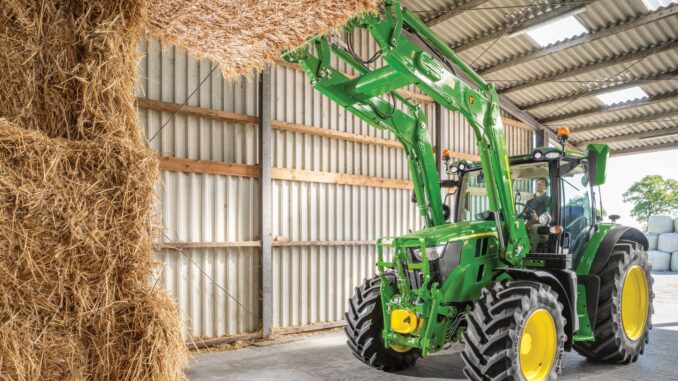
The John Deere 970 is a compact utility tractor from Deere’s 900 Series, built for property maintenance, loader work, light field work, mowing, grading, and general small-acreage jobs rather than simple suburban lawn care. It uses a diesel engine and a heavier-duty tractor layout than Deere lawn tractors, which means owners commonly deal with fuel-system issues, hydraulic service, clutch or transmission concerns, steering and brake wear, and attachment setup problems instead of only mower-related repairs.
This guide explains how to troubleshoot common John Deere 970 problems, what maintenance matters most, which repairs are realistic for a careful DIY owner, and when it makes more sense to involve a dealer or experienced tractor mechanic. It also includes service-part references, maintenance intervals, parts-buying advice, and an expanded FAQ written around real owner symptoms.
John Deere 970 overview
The John Deere 970 sits in Deere’s older compact utility tractor range alongside the 870 and 1070, and Deere’s own quick-reference guide groups those tractors together for filter service intervals and capacities. In practical terms, the 970 is a step up from residential equipment because it combines diesel power, a hydraulic system, rear PTO capability, and agricultural-style chassis components in a compact footprint.
For troubleshooting and ownership, the main John Deere 970 systems to understand are:
-
Engine and fuel system: diesel engine, fuel filter, air filters, cooling system, and cold-start behavior.
-
Hydraulic and transmission system: shared hydraulic/transmission oil supply, hydraulic filter, steering assist, 3-point hitch operation, and attachment lift issues.
-
Electrical system: battery, starter circuit, charging system, lights, safety/start interlocks where fitted, and glow/cold-start related checks.
-
Driveline and PTO: clutch operation, gear selection, PTO engagement, and driveline wear under heavy implement use.
-
Chassis systems: brakes, steering linkage, axle seals, tires, and front axle components on MFWD versions.
Several common John Deere 970 service parts that owners regularly buy include the engine oil filter M806419, primary air filter UC11955, secondary air filter CH12881, hydraulic oil filter RE27284, and fuel filter T111383. Those part numbers come from Deere’s quick-reference guide covering the 970.
Troubleshooting the John Deere 970 by symptom
The fastest way to diagnose a John Deere 970 is to start with the symptom the owner actually sees: hard starting, white smoke, weak hydraulics, difficult shifting, PTO trouble, overheating, steering issues, or brake problems. That symptom-first approach usually prevents wasted parts replacement and helps separate simple service issues from deeper mechanical faults.
Main John Deere 970 symptom groups include:
-
Starting issues
-
Running or power-loss issues
-
Hydraulic and 3-point hitch problems
-
Transmission, clutch, and drive problems
-
PTO and attachment operation issues
-
Steering, brake, and chassis issues
-
Overheating, leaks, and smoke
-
Electrical and charging problems
Immediate John Deere 970 repair needs
Some problems on a John Deere 970 should be handled right away because they affect safety or can turn a smaller repair into a much larger one. The biggest red flags are loss of braking, major hydraulic leaks, overheating, abnormal driveline noise, PTO faults under load, and fuel or oil leaks onto hot engine parts.
John Deere 970 starting issues
If the John Deere 970 cranks slowly, will not start, or starts and dies, the issue often shows up first during cold weather, after storage, or after contaminated fuel has been introduced. On a diesel compact tractor, delayed diagnosis can flatten the battery, overwork the starter, and hide a basic fuel-delivery or air-intake problem.
Common causes:
-
Weak battery or poor cable connections
-
Dirty or restricted fuel filter
-
Air in the fuel system
-
Old or contaminated diesel fuel
-
Restricted primary air filter
-
Starter or charging-system fault
-
Cold-start aid or glow-related issue, depending on configuration
Basic checks:
-
Check battery voltage and inspect both cable ends for corrosion or looseness.
-
Confirm there is clean fuel in the tank and the shutoff, if fitted, is open.
-
Inspect the fuel filter and replace or clean service items as needed using Deere interval guidance.
-
Check the primary air filter for heavy dirt loading.
-
If the tractor recently ran out of fuel or had filter work, bleed the fuel system per the operator manual.
John Deere 970 running and power-loss problems
A John Deere 970 that starts but runs rough, smokes, lacks power, or stalls under load usually points to air/fuel restriction, overdue maintenance, injector-related problems, or compression issues. Owners often notice this first when mowing, grading, climbing, or using the PTO under a sustained load.
Common causes:
-
Dirty air filter
-
Fuel contamination
-
Partially blocked fuel filter
-
Injector wear or poor spray pattern
-
Low compression
-
Cooling problem causing performance drop
-
Incorrect engine speed under PTO load
Basic checks:
-
Inspect and service the air filter elements according to Deere guidance.
-
Replace dirty fuel and clean or replace the filter as needed.
-
Check for smoke color changes, because black, white, and blue smoke each point to different faults.
-
Verify coolant level and look for overheating signs.
-
Test under load only after basic service items are known good.
John Deere 970 hydraulic and 3-point hitch problems
When a John Deere 970 has a weak 3-point hitch, slow hydraulic response, noisy hydraulics, or poor loader performance, the problem matters because continued use can damage pumps and make control issues worse. Low fluid level, wrong fluid, overdue hydraulic filter service, suction leaks, and internal wear are common starting points.
Common causes:
-
Low hydraulic/transmission oil
-
Wrong or contaminated fluid
-
Plugged hydraulic oil filter
-
Air entering the hydraulic side
-
Worn hydraulic pump
-
Internal leakage in lift components or valves
Basic checks:
-
Check hydraulic/transmission oil level with the tractor parked safely on level ground.
-
Confirm the correct Deere-spec fluid has been used.
-
Replace the hydraulic oil filter if service history is unknown.
-
Look for external leaks around hoses, couplers, seals, and housings.
-
If symptoms continue, pressure testing is usually the next step.
John Deere 970 transmission and drive problems
A John Deere 970 that is hard to shift, slips under load, moves poorly, or makes driveline noise may have clutch adjustment problems, worn clutch components, linkage issues, or internal transmission wear. These are important to address early because gear grinding and slipping can damage expensive internal parts.
Common causes:
-
Clutch out of adjustment
-
Worn clutch disc or pressure components
-
Linkage wear
-
Low or contaminated transmission/hydraulic oil
-
Internal gear or bearing wear
-
Brake drag or driveline binding
Basic checks:
-
Check clutch free play and pedal feel.
-
Verify oil level and condition in the transmission/hydraulic system.
-
Listen for noise changes in individual gears or ranges.
-
Test whether the issue appears only when hot, cold, or under load.
-
Stop using the tractor if grinding or slipping is severe.
John Deere 970 electrical problems
Electrical faults on a John Deere 970 usually show up as no-crank, weak crank, no charging, dim lights, or intermittent operation after vibration, storage, or wet conditions. Older tractors often suffer from grounds, cable corrosion, worn switches, and charging issues before more exotic faults.
Common causes:
-
Weak battery
-
Corroded grounds
-
Failing starter or solenoid
-
Bad ignition switch
-
Faulty alternator or regulator
-
Damaged wiring or connectors
Basic checks:
-
Load-test the battery.
-
Clean and tighten grounds and main positive connections.
-
Check charging voltage with the engine running.
-
Inspect visible harness sections for rub-through or heat damage.
-
Replace worn cables before condemning major components.
DIY or dealer for a John Deere 970?
The John Deere 970 is very owner-serviceable for routine maintenance and many straightforward repairs, but the line usually appears when a job requires fuel-system bleeding beyond basics, hydraulic pressure testing, clutch splitting, transmission teardown, or internal engine diagnosis. Because this is a true compact utility tractor rather than a simple mower, the cost of guessing wrong is higher, especially on hydraulic and driveline repairs.
Good DIY jobs on the John Deere 970
-
Engine oil and filter service using M806419.
-
Primary air filter replacement using UC11955.
-
Secondary air filter replacement using CH12881 when required.
-
Hydraulic filter replacement using RE27284.
-
Fuel filter service using T111383.
-
Battery replacement and cable cleaning
-
Coolant checks and hose inspection
-
Light electrical repairs, bulbs, and obvious wiring fixes
-
Greasing, tire pressure, and visible leak inspection
Advanced DIY or dealer jobs
-
Injector testing or overhaul
-
Hydraulic pressure diagnosis
-
3-point hitch internal leakage repair
-
Clutch replacement
-
Transmission internal repair
-
PTO internal faults
-
Front axle or steering box overhaul
-
Brake internal service if major wear or contamination is present
-
Engine compression or internal repair
Skill level guide
-
Beginner: oil and filter service, air filter changes, battery service, basic inspections.
-
Intermediate: fuel filter service and bleeding, hydraulic filter replacement, coolant service, minor electrical diagnosis.
-
Advanced: clutch work, hydraulic diagnosis with gauges, injector work, steering or brake overhaul, transmission repair.
John Deere 970 parts, OEM numbers, and what to check first
Before ordering parts for a John Deere 970, gather the full model name, the tractor Product Identification Number, the engine model and serial number, and any attachment or drivetrain details that affect fit. That matters because older Deere compact tractors can have serial breaks, optional equipment, and attachment-specific components that look similar but are not interchangeable.
For a John Deere 970, OEM parts are usually the safer choice for filters with known Deere fitment, hydraulic parts, seals, and any safety- or tolerance-sensitive component. Aftermarket can be reasonable for batteries, some filters, belts, lights, and general service items, but only when the supplier clearly cross-references the exact 970 application and serial range.
John Deere 970 manuals and parts diagrams
John Deere’s official manuals and publications portal is the first place to look for operator manuals, parts catalogs, and technical publications for the 970. Deere also points owners to Customer Service ADVISOR for digital access to operator, diagnostic, and technical information on supported products.
Useful sources:
-
John Deere Manuals & Training for official operator manuals, parts catalogs, and technical publications.
-
John Deere 870/970/1070 Quick-Reference Guide PDF for filter numbers, service intervals, and fluid capacities.
-
John Deere 970 parts pages on 777parts for exploded assemblies and component grouping, useful when identifying subassemblies.
-
Cross Creek Tractor John Deere 970 parts for aftermarket and replacement part browsing by model.
How to find John Deere 970 serial and engine numbers
On an older John Deere 970, correct identification matters because Deere parts lookups and some aftermarket cross-references depend on the tractor PIN and engine details rather than the decal alone. That is especially important when ordering drivetrain, electrical, steering, and hydraulic parts.
Use this process:
-
Park the tractor safely, shut it off, and clean dirt from identification-tag areas.
-
Locate the tractor Product Identification Number plate on the main tractor chassis or frame area specified in the operator literature.
-
Record the exact model and serial/PIN as stamped, not from memory.
-
Find the engine model and serial tag on the engine block or engine identification plate.
-
Take photos of both before ordering parts, especially if numbers are weathered.
Buying John Deere 970 parts online and locally
The best parts-buying strategy for a John Deere 970 is to identify the OEM number first, then compare dealer availability, Deere-focused online sellers, and local farm-supply options. That reduces the risk of ordering by appearance alone, which is a common problem on older compact tractors.
-
Online: verify the OEM number, model, and any serial break before checkout; official Deere lookup and Deere-focused suppliers are best for precision.
-
Dealer counter: best for hydraulic, steering, transmission, PTO, and serial-specific parts where a parts advisor can confirm fitment.
-
Retail stores: acceptable for common consumables such as batteries and some filters if the packaging clearly cross-references the John Deere 970.
Useful links:
Step-by-step John Deere 970 fitting guide for common parts
These are the highest-value DIY service jobs on a John Deere 970 because they directly affect starting reliability, engine life, and hydraulic performance.
Changing John Deere 970 engine oil and filter
This service helps prevent hard starting, internal engine wear, and contamination-related damage.
-
Warm the engine briefly, park safely on level ground, and shut it off.
-
Drain the old oil into a suitable container.
-
Remove the old oil filter and install a new M806419 filter after lubricating the gasket.
-
Refill with the correct engine oil grade and quantity for conditions, then start and check for leaks.
-
Shut down, recheck level, and top up if needed.
Replacing the John Deere 970 primary air filter
A clean primary air filter helps the 970 start easier, reduce smoke, and maintain power under load.
-
Open the air cleaner housing carefully to avoid dropping dirt inside.
-
Remove the old primary element UC11955.
-
Inspect the housing and wipe out loose dust without forcing debris inward.
-
Install the new filter correctly and inspect the safety element at the same time.
-
Close the housing securely and check all seals.
Replacing the John Deere 970 fuel filter
Fuel filter service is one of the first jobs to do when the John Deere 970 becomes hard to start, runs unevenly, or loses power.
-
Shut off fuel if the tractor configuration allows.
-
Remove the old filter or service element T111383 according to the housing design.
-
Clean the sealing surfaces and install the replacement correctly.
-
Bleed air from the fuel system following the operator manual procedure.
-
Start the tractor and check for leaks or uneven running.
Replacing the John Deere 970 hydraulic oil filter
This job helps protect hydraulic flow, steering performance, and 3-point hitch operation.
-
Park safely and lower implements fully before service.
-
Confirm the system is cool enough to work on.
-
Remove the old hydraulic filter RE27284 and catch any spilled oil.
-
Install the new filter, refill or top up fluid as needed, and use the correct hydraulic/transmission oil.
-
Start the tractor, cycle hydraulic functions, and recheck the oil level.
Maintenance to prevent John Deere 970 problems
Most repeated John Deere 970 problems come from deferred filter service, contaminated fuel, old hydraulic oil, weak batteries, and small leaks that are ignored until they affect other systems. A compact tractor like the 970 stays reliable longer when owners treat maintenance as system protection rather than just routine servicing.
Focus areas:
-
Starting reliability: keep the battery strong, fuel clean, and air and fuel filters serviced.
-
Engine longevity: change oil and filter on schedule and watch coolant level and condition.
-
Hydraulic performance: maintain correct fluid level and replace the hydraulic filter at the proper interval.
-
Electrical reliability: clean grounds and inspect charging performance regularly.
-
Leak prevention: catch seepage early around hoses, seals, and filter bases before a low-fluid condition develops.
John Deere 970 maintenance schedule
Deere’s quick-reference guide for the 870, 970, and 1070 provides several key service intervals for the John Deere 970, including first engine oil filter replacement at 50 hours, then every 200 hours; fuel filter cleaning every 200 hours; primary air filter change every 400 hours; and hydraulic oil filter change every 500 hours. The same guide also lists approximate capacities of 32 L fuel, 5.8 L cooling system, 5.3 L crankcase with filter, and 21 L transmission/hydraulic system for the 970.
Daily or before each use
-
Check engine oil level.
-
Check coolant level.
-
Check hydraulic/transmission oil level.
-
Look for fuel, oil, or hydraulic leaks.
-
Inspect tires, steering response, and brake feel.
-
Remove debris from the engine and radiator area.
After first 50 hours
-
Replace engine oil filter M806419 and complete the initial engine oil service listed by Deere for the series.
Every 200 hours
-
Replace engine oil filter M806419 and change engine oil.
-
Clean or service fuel filter T111383.
-
Inspect fuel lines and connections for seepage or cracking.
-
Check clutch, brake, and linkage adjustments as needed.
Every 400 hours
-
Change the primary air filter UC11955.
-
Inspect or replace the secondary air filter CH12881 as required.
Every 500 hours
-
Change hydraulic oil filter RE27284.
-
Inspect hydraulic fluid condition and service according to overall system condition and manual guidance.
Seasonal checklist
-
Spring or heavy-work season start: battery test, air filter check, engine oil service if due, coolant inspection, hydraulic leak inspection.
-
Mid-season: clean radiator area, inspect belts and hoses, verify brakes and steering, check for driveline looseness.
-
Fall or storage prep: clean tractor thoroughly, stabilize fuel practices where appropriate for diesel storage, charge battery, and fix leaks before storage.
Repair, upgrade, or replace a John Deere 970?
For a John Deere 970, repair usually makes sense when the tractor is structurally sound, starts reasonably well, has acceptable compression, and only needs catch-up maintenance or isolated system repairs. Upgrade or replacement becomes more sensible when the machine has stacked drivetrain, hydraulic, and engine faults at the same time, especially if parts and labor start approaching the value of a healthier compact tractor.
Repair if…
-
The issue is limited to filters, hoses, battery, wiring, seals, or external components.
-
Hydraulics are basically functional and the transmission is usable.
-
Engine condition is otherwise sound and the tractor fits your workload.
Upgrade if…
-
You need stronger hydraulics, easier operator features, or more modern attachment compatibility.
-
The tractor still works but no longer matches the jobs you do most often.
Replace if…
-
The tractor needs engine, clutch, and hydraulic work together.
-
Frame, driveline, steering, and braking all need major correction.
-
Downtime and repair cost are higher than the value of keeping this 970 in service.
John Deere 970 troubleshooting FAQ
1. Why will my John Deere 970 not start?
A John Deere 970 that will not start usually has a battery, cable, fuel-delivery, or air-restriction problem before it has a major engine failure. Start with battery condition and cable cleanliness, then check for clean diesel fuel, a serviceable fuel filter, and a clear air filter. If the tractor recently ran out of fuel or had filter work done, trapped air in the fuel system is a common cause.
2. Why does my John Deere 970 crank slowly?
Slow cranking often points to a weak battery, corroded cable ends, bad ground, or a tired starter circuit. On older tractors, voltage drop through dirty connections is extremely common. Load-test the battery and clean both ends of the main cables before replacing expensive components.
3. Why does my John Deere 970 start and then stall?
This usually means the tractor gets initial fuel but cannot sustain delivery because of a restricted fuel filter, contaminated fuel, air in the lines, or tank-flow restriction. Replace or service the fuel filter and bleed the system correctly. Also make sure the tank vent and fuel path are not restricted.
4. Why is my John Deere 970 hard to start when cold?
Cold starting gets harder when battery output is down, engine oil is heavy for the temperature, or the fuel system is not in top condition. A partially restricted air or fuel filter makes the problem worse. In colder USA and Canada conditions, strong battery condition and clean filters matter more than owners sometimes expect.
5. Why does my John Deere 970 blow white smoke on startup?
White smoke on startup can mean incomplete combustion from cold conditions, weak compression, injector issues, or poor fuel atomization. A little brief smoke may be less concerning than smoke that continues after warm-up. Persistent white smoke needs deeper diagnosis, especially if starting is also poor.
6. Why does my John Deere 970 blow black smoke?
Black smoke usually means the engine is getting too much fuel for the air available, or it is under a load it cannot clear efficiently. Check the primary air filter first because a restricted filter is a common and easy fix. Also check that the tractor is being run at the correct engine speed for the job.
7. Why has my John Deere 970 lost power?
Power loss usually comes from restricted fuel flow, dirty air filtration, injector wear, overheating, or overdue maintenance. Start with the simple service items Deere already identifies in the filter guide. If servicing filters does not help, injector and compression checks may be next.
8. Why does my John Deere 970 run rough?
Rough running often means inconsistent fuel delivery, air in the fuel system, dirty filters, injector trouble, or compression imbalance. If the problem began right after filter service, suspect air in the system first. If it developed gradually, start with fuel quality and maintenance history.
9. Why is my John Deere 970 overheating?
Overheating on a compact tractor often comes from low coolant, restricted airflow through the radiator area, coolant-system faults, or sustained heavy loading. Stop and correct overheating early because heat can quickly create head-gasket and engine damage. Clean debris from the cooling area and check coolant level before using it again.
10. Why is coolant disappearing from my John Deere 970?
Coolant loss can come from hose leaks, radiator seepage, water-pump problems, or internal engine leakage. A clean tractor makes leaks easier to trace because old grime hides fresh seepage. Refill only after identifying the source, because repeated overheating is far more costly than a hose repair.
11. Why is my John Deere 970 leaking hydraulic oil?
Hydraulic leaks often show up at hoses, couplers, filter bases, axle seals, lift components, or aging seals around housings. Even a slow leak matters because low fluid can hurt steering, hitch operation, and pump life. Clean the area, identify the exact leak point, and avoid guessing based only on the drip location.
12. Why is the 3-point hitch on my John Deere 970 weak?
A weak 3-point hitch often means low hydraulic oil, a plugged hydraulic filter, pump wear, internal leakage, or control-valve issues. Start with oil level and filter condition because those are the simplest checks. If the hitch drifts or weakens under load after basic service, pressure testing is usually needed.
13. Why is my John Deere 970 hydraulic system noisy?
Hydraulic whining or growling often indicates low fluid, aeration, restriction, or pump wear. Check level and condition first, then inspect for suction-side leaks or a neglected filter. Continued operation with noisy hydraulics can turn a service problem into a pump repair.
14. Why does my John Deere 970 steering feel heavy?
Heavy steering can be caused by low hydraulic oil, front-end load, worn steering linkage, front axle issues, or hydraulic weakness if the steering assist depends on that system. Tire condition and inflation also matter more than many owners realize. Check for binding or visible mechanical wear before assuming a major hydraulic fault.
15. Why are the brakes weak on my John Deere 970?
Weak braking can come from adjustment issues, wear, contamination, linkage problems, or internal brake faults. Because braking is a safety item, the tractor should not keep working on slopes or around loads until the cause is corrected. Start with pedal feel and visible linkage movement, then move to internal inspection if needed.
16. Why is my John Deere 970 hard to shift?
Hard shifting often points to clutch adjustment, clutch drag, linkage wear, or internal transmission issues. Check whether the problem is worse when cold, hot, or in only one gear range. Continued forcing of gears can increase internal wear, so diagnose it early.
17. Why does my John Deere 970 grind when changing gears?
Gear grinding usually means the clutch is not fully releasing, the linkage is out of spec, or internal wear is developing. Begin with clutch free play and pedal travel checks. If grinding continues after adjustment, deeper clutch inspection is justified.
18. Why does my John Deere 970 move poorly under load?
Poor pulling power may come from clutch slipping, brake drag, tire traction limits, or engine power loss that feels like a transmission fault. Separate engine-power symptoms from true driveline slip before buying parts. A careful load test often makes the difference clear.
19. Why is the clutch on my John Deere 970 slipping?
A slipping clutch usually shows up as rising engine speed without matching tractor pull, especially under load or on hills. That can come from worn clutch material, incorrect adjustment, or contamination. Once slipping is established, continued use tends to make repair more expensive.
20. Why does the PTO on my John Deere 970 not work properly?
PTO problems can be linkage-related, clutch-related, driveline-related, or internal depending on how the symptom appears. Check whether the PTO fails to engage, slips under load, or makes noise, because each symptom points in a different direction. Stop using the implement if engagement is harsh or noisy.
21. Why does my John Deere 970 battery keep going flat?
A flat battery usually means either the battery itself is weak or the tractor is not charging properly. Corroded connections can also prevent full charging even when the alternator is functional. Test charging voltage with the engine running before replacing random electrical parts.
22. Why are the lights dim on my John Deere 970?
Dim lights often indicate low battery voltage, weak charging output, poor grounds, or aged wiring connections. Because the 970 is an older machine, connection quality is often a bigger issue than the light assemblies themselves. Clean grounds and test system voltage before replacing bulbs unnecessarily.
23. Why does my John Deere 970 click but not crank?
A click without cranking usually means insufficient current delivery to the starter, a weak battery, poor cable connection, or a failing solenoid/starter. This symptom often improves temporarily after cleaning terminals, which is a clue that voltage drop is involved. Confirm battery health and cable integrity first.
24. Why does my John Deere 970 use too much fuel?
Higher-than-normal fuel use can result from dirty air filtration, poor injector performance, incorrect operating speed, or engine issues that reduce efficiency. Compare fuel use against the same type of work, not against a lighter task or shorter run time. Catch-up maintenance is often the first fix.
25. How often should I change the oil on a John Deere 970?
Deere’s quick-reference guide says the oil filter is replaced after the first 50 hours and then every 200 hours, which aligns with the normal engine oil service interval for this series guide. If service history is unknown, a fresh oil and filter change is one of the smartest baseline jobs to do immediately. Severe use can justify more frequent attention.
26. How often should I change the hydraulic filter on a John Deere 970?
Deere lists the hydraulic oil filter RE27284 at a 500-hour interval for the 970 series guide. If the tractor has contaminated fluid, unknown history, or hydraulic symptoms, owners often service sooner rather than waiting. Clean fluid and correct level matter just as much as the filter itself.
27. How often should I replace the air filter on a John Deere 970?
Deere lists the primary air filter UC11955 at 400 hours and the secondary element CH12881 as required. In dusty mowing, grading, or loader work, inspection should happen much sooner than the maximum interval. A dust-loaded filter can cause smoke and power loss well before the hour limit.
28. How often should I service the fuel filter on a John Deere 970?
Deere’s quick-reference guide lists the fuel filter T111383 as clean every 200 hours. If you get dirty fuel, water contamination, or hard-start symptoms, inspect it sooner. Fuel quality has a direct effect on diesel starting and injector life.
29. Can I use aftermarket filters on a John Deere 970?
Yes, but only if the aftermarket supplier clearly cross-references the exact Deere part number and the application is correct for the 970. OEM is the safer option when fit, seal quality, or hydraulic performance is especially important. Many owners reserve aftermarket for routine consumables from trusted suppliers.
30. Is the John Deere 970 a good DIY tractor to own?
Yes, the John Deere 970 is generally a good DIY ownership candidate because Deere still provides manuals access and the tractor’s routine service items are straightforward. It is far more serviceable than many newer, more electronics-heavy machines, but hydraulic, clutch, and transmission work still demand experience. Owners who stay on top of filters, fluids, leaks, and electrical connections usually avoid many larger problems.
31. When should a John Deere 970 go to a dealer or specialist?
A John Deere 970 should go to a dealer or experienced tractor shop when it has internal hydraulic faults, clutch or transmission problems, injector issues, compression concerns, or repeated symptoms after baseline service is done. Those repairs often need test equipment, split-tractor procedures, or diesel-specific experience. Sending it out sooner can be cheaper than repeated trial-and-error repairs.
32. Is it worth repairing an older John Deere 970?
It often is, because the 970 is a real compact utility tractor and many problems are still normal maintenance or isolated repairs rather than end-of-life failure. The decision changes when engine, clutch, hydraulics, and steering all need major work at once. Evaluate the whole machine, not just the latest symptom.
33. What should I check first on a newly bought John Deere 970?
Start with engine oil and filter, air filter, fuel filter, hydraulic filter, coolant level, battery condition, leaks, brakes, steering, and visible wiring condition. That baseline service gives you a known starting point and often solves minor drivability issues immediately. It also makes later troubleshooting much easier.
34. Why does my John Deere 970 smoke more under heavy work?
More smoke under load can be normal up to a point, but excessive smoke suggests restricted airflow, weak fueling control, injector wear, or an engine working beyond its healthy capacity. Check the air filter and maintenance condition first. If the tractor has noticeably less power at the same time, deeper diagnosis is warranted.
35. What fluids and capacities matter most on a John Deere 970?
The Deere quick-reference guide lists approximate John Deere 970 capacities of 32 L fuel, 5.8 L cooling system, 5.3 L crankcase with filter, and 21 L transmission/hydraulic system. Those figures are useful for planning service, but owners should still verify exact fill and checking procedures in the correct operator documentation for their machine.