
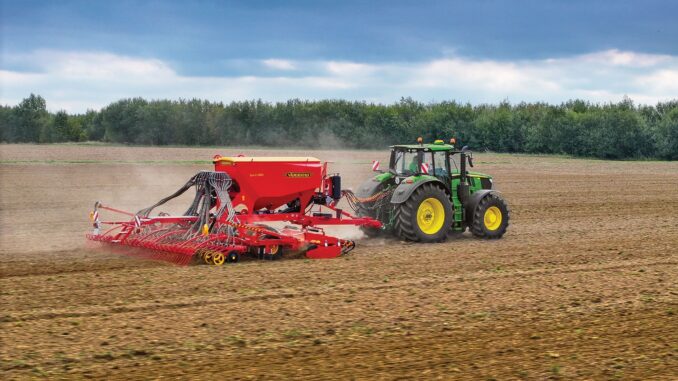
The John Deere 7810 is a 7010 Series row-crop tractor built for heavier field, loader, PTO, and transport work rather than residential mowing, with a 6.8 L six-cylinder diesel engine and transmission options including PowrQuad, AutoQuad II, and PowerShift depending on configuration. In the Deere lineup, it sits above smaller utility machines and is designed for owners who need dependable horsepower, hydraulic capacity, and versatility for hay, tillage, planting, feeding, and general farm duties.
This guide covers practical John Deere 7810 repair topics, owner-level troubleshooting, routine maintenance, common service parts, and a detailed FAQ aimed at users in the USA and Canada. The focus is symptom-first, because most owners begin with what the tractor is doing wrong, not with a part number.
General overview of the John Deere 7810
The John Deere 7810 belongs to Deere’s 7010 Series row-crop family and shares many service principles with the 7610 and 7710 covered in the same operator manual. Deere’s operator documentation groups maintenance, troubleshooting, identification numbers, and service intervals for these tractors together, which makes that manual the main owner reference for day-to-day upkeep.
On this model, the key systems that matter most for repair and maintenance are:
-
Engine and fuel system, including fuel filter, water separator, air intake, and cold-weather starting support.
-
Transmission and drive system, including PowrQuad, AutoQuad II, or PowerShift components, MFWD axle service points, brakes, and clutch-related controls.
-
Hydraulic and hitch system, including SCVs, hydraulic filters, suction screen, three-point hitch, and remote hydraulic circuits.
-
Electrical system, including batteries, fuses, relays, lighting, and neutral start/safety-related circuits.
-
Cooling system, including radiator, coolant recovery system, grille screens, and condenser cleaning points.
Several common John Deere 7810 service parts owners regularly buy include the primary air filter RE65880, secondary air filter RE34967, hydraulic oil filter RE205726 for PowrQuad/AutoQuad/SyncroPlus applications, engine oil filter RE509672 for later 7810 serial ranges, and cab air filters such as RE24619 and RE48882 depending on cab filter position and specification. Deere’s official parts publications also note that some filter numbers vary by serial number, so exact ordering should always be checked against the tractor PIN and serial break.
John Deere 7810 troubleshooting approach
The best way to troubleshoot a John Deere 7810 is to start from the visible symptom, then narrow the fault by system. Deere’s own operator information separates troubleshooting into engine, transmission, hydraulic system, brakes, hitch, SCV, electrical system, operator enclosure, and general tractor operation, which matches how most owners experience problems in the real world.
The main symptom groups on this tractor are:
-
Starting issues, such as slow cranking, no start, hard cold starting, or repeated air-in-fuel symptoms.
-
Running issues, such as low power, smoking, poor throttle response, or stalling under load.
-
Hydraulic and hitch problems, such as weak remotes, slow loader response, or hitch lift issues.
-
Transmission and drive concerns, such as poor shifting, creeping, weak pulling power, or MFWD-related noises.
-
Electrical faults, such as dead dash functions, blown fuses, charging problems, or lighting failures.
-
Overheating, leaks, vibration, and unusual noises, which often point to a maintenance issue that should be caught early.
Emergency and immediate John Deere 7810 repair needs
Some John Deere 7810 faults should be dealt with immediately because they can create a safety risk or turn a manageable repair into a much more expensive one. The big red flags are severe hydraulic leaks, overheating, brake weakness, driveline vibration, charging failure during active work, and any condition where the tractor will not start or stop safely.
1. John Deere 7810 starting issues
A starting problem matters immediately when the tractor is needed for feeding, transport, or PTO work and repeated cranking risks battery damage or starter overheating. On a diesel tractor like the 7810, poor starting can also indicate air in the fuel system, weak batteries, dirty terminals, or fuel filter restriction.
Common causes:
-
Weak or discharged batteries.
-
Dirty or loose battery terminals.
-
Restricted fuel filter or water separator issues.
-
Air entering the fuel system after filter service or due to a leak.
-
Cold-weather starting difficulties.
Basic owner checks:
-
Check battery condition, cable tightness, and visible corrosion.
-
Confirm there is clean fuel in the tank and drain the water separator if needed.
-
Inspect fuel filters and replace overdue elements.
-
Bleed the fuel system if the tractor has recently run out of fuel or had filter work.
-
If cranking speed is still slow, stop before damaging the starter and test the batteries professionally.
2. John Deere 7810 running and power-loss problems
If the 7810 starts but lacks power, smokes excessively, or struggles under PTO or drawbar load, the problem should be addressed quickly because poor combustion raises fuel use and can stress the turbo, cooling system, and exhaust side of the engine. Air restriction, fuel restriction, or cooling-system contamination are among the most common owner-serviceable causes.
Common causes:
-
Dirty primary or secondary air filter.
-
Restricted fuel filter.
-
Water-contaminated fuel.
-
Plugged radiator or oil cooler screen.
-
Turbo or injection-related faults that need advanced diagnosis.
Basic owner checks:
-
Inspect and replace dirty air filters instead of repeatedly over-cleaning them.
-
Replace overdue fuel filters and check for water contamination.
-
Clean grille screens, radiator, and oil cooler condenser area.
-
Note smoke color and when it happens, cold start, idle, or heavy load, before calling for service.
-
If power loss remains, move to dealer or diesel-shop diagnosis for fuel pressure and injection testing.
3. Vibration and noise
Sudden vibration or new driveline noise on a John Deere 7810 should never be ignored because it can point to a loose wheel, damaged PTO driveline, worn front axle component, or failing belt tensioner. Deere includes wheel bolt tightening, toe-in checks, PTO shielding, and fan-belt service points in the operator information for exactly this reason.
Common causes:
-
Loose wheel hardware.
-
PTO shaft or implement driveline imbalance.
-
Failing fan belt or tensioner.
-
MFWD hub or axle lubrication neglect.
-
Cab or sheet-metal vibration caused by loose fasteners.
Basic owner checks:
-
Stop using the tractor until the vibration source is narrowed down.
-
Inspect tires, wheels, and visible wheel fasteners.
-
Check fan belt condition and belt tensioner movement.
-
Disconnect PTO loads and retest only if safe to do so.
-
If the noise is internal to the transmission, MFWD axle, or PTO, book a dealer inspection.
4. Overheating and leaks
Overheating and fluid leaks are immediate John Deere 7810 repair priorities because they can quickly damage the engine, hydraulic system, or brakes. Deere specifically calls out cleaning the radiator, checking coolant, and servicing the cooling system as core maintenance steps.
Common causes:
-
Plugged grille screens or radiator fins.
-
Low coolant level.
-
Worn hoses or clamps.
-
Hydraulic hose seepage or damaged couplers.
-
Engine oil, hydraulic oil, or fuel leaks onto hot surfaces.
Basic owner checks:
-
Let the tractor cool fully before inspecting anything.
-
Clean the radiator, screen, and cooler stack carefully.
-
Check coolant level and visible hose condition.
-
Trace leaks before topping off fluids repeatedly.
-
Do not keep running a tractor that overheats or leaks pressurized hydraulic oil.
5. John Deere 7810 transmission and drive problems
Transmission issues on a John Deere 7810 matter quickly because poor shifting, slipping, or weak pulling power can indicate low oil, filter restriction, calibration issues, or internal wear. Deere’s service information includes transmission troubleshooting and, for some systems, recalibration procedures in the lubrication and operating sections.
Common causes:
-
Low transmission-hydraulic oil.
-
Restricted transmission or hydraulic filter.
-
Calibration or control issues.
-
Brake drag.
-
Internal clutch-pack or transmission wear.
Basic owner checks:
-
Check the transmission-hydraulic oil level first.
-
Replace overdue transmission and hydraulic filters.
-
Look for brake drag or external driveline drag.
-
Note whether the issue affects all gears or only certain ranges.
-
Internal transmission faults usually cross the DIY line and need dealer tools.
6. Electrical problems
Electrical faults on the 7810 often show up as no-crank, dim lights, charging issues, fuse failures, or intermittent dash and switch behavior. Because Deere provides load center fuses, relays, battery servicing, and neutral start system inspection in the operator literature, these are sensible first checks before replacing expensive parts.
Common causes:
-
Weak batteries.
-
Corroded grounds or cable ends.
-
Failed fuse or relay.
-
Charging-system fault.
-
Neutral start or safety interlock problem.
Basic owner checks:
-
Clean and tighten both battery connections.
-
Test charging voltage after start-up.
-
Inspect the appropriate fuse and relay positions.
-
Check whether the problem is constant or intermittent.
-
If wiring is damaged inside harnesses or the dash, move to professional diagnosis.
DIY or dealer? Repair decision guide
For the John Deere 7810, the usual dividing line is simple: routine filters, fluids, belts, batteries, cleaning, and straightforward inspections are realistic DIY work, while internal transmission, hydraulic pressure testing, injection-system diagnosis, advanced electrical tracing, and major axle or engine repairs are dealer or specialist jobs. This tractor is owner-serviceable in many areas, but it is still a high-horsepower farm machine with systems that can cause expensive damage if guessed at.
Good DIY jobs
-
Engine oil and filter changes.
-
Fuel filter and water separator service.
-
Air filter replacement.
-
Cab air filter replacement.
-
Battery, fuse, relay, and lighting service.
-
Cooling-pack cleaning and routine inspections.
-
Basic belt replacement and tensioner inspection.
Advanced DIY or dealer jobs
-
Fuel-system bleeding when persistent air intrusion remains.
-
Transmission calibration or diagnosis.
-
SCV and hydraulic pressure testing.
-
MFWD hub or axle internal repairs.
-
PTO clutch or driveline internal work.
-
Injection, turbo, or engine internal repairs.
Skill level guide
-
Beginner: Filters, oil checks, battery cleaning, radiator cleaning, fuse replacement.
-
Intermediate: Fuel filter replacement and bleeding, fan belt replacement, cab filter service, brake inspection.
-
Advanced: Hydraulic diagnosis, transmission troubleshooting, electrical harness tracing, axle and PTO work.
Parts needed, OEM vs aftermarket, and what information you need
Before ordering John Deere 7810 parts, gather the full model name, tractor PIN, engine serial number, and transmission configuration because Deere’s routine service parts can change at serial breaks. This matters especially for filters, since Deere lists different engine oil and fuel filter arrangements for different 7710 and 7810 serial ranges.
OEM parts are the safer choice for filters, belts, fit-sensitive seals, hydraulic components, and anything safety-related because the 7810 often has serial-number differences that generic listings can miss. Aftermarket can be acceptable for batteries, some cab filters, and well-cross-referenced service items, but only when the supplier clearly matches the exact 7810 serial range and configuration.
Where to find parts diagrams and service manuals
The best sources for John Deere 7810 information are Deere’s operator manual pages, Deere parts resources, and a reputable Deere-focused parts supplier with 7810-specific listings.
Useful references:
-
John Deere operator manual view – Best for maintenance intervals, operating procedures, troubleshooting categories, identification number locations, and routine owner-service steps.
-
John Deere parts and owner support – Best for locating official parts channels and Deere support paths.
-
John Deere Shop parts pages – Useful for confirming live OEM part listings such as RE45864 and related Deere part references.
-
7810 filter parts listing – Useful as a cross-check source for service filters, though OEM verification should still be done against Deere data.
How to locate model, serial and engine numbers
These numbers matter because the John Deere 7810 uses serial-number breaks for some routine service parts and because engine, axle, and cab numbers may be needed for exact ordering. Deere’s operator manual includes a dedicated identification numbers section for the tractor, engine, cab, MFWD axle, suspended MFWD axle, and differential case.
Steps:
-
Find the tractor PIN using the tractor identification plate and record it exactly as shown.
-
Record the engine serial number from the engine identification location noted in Deere’s identification section.
-
Record the cab serial number if ordering cab, HVAC, or enclosure parts.
-
Record the MFWD axle serial number if the tractor is MFWD and axle parts are involved.
-
Keep all numbers in a phone note or workshop file before ordering online or visiting a dealer.
Buying parts online and in physical stores
For the John Deere 7810, the smart strategy is to identify the exact OEM number first, then compare dealer, Deere shop, and established aftermarket sources instead of shopping by model name alone. This reduces the risk of buying the wrong filter set or transmission-related part for the tractor’s serial range.
-
Online: Use Deere part references first, then confirm serial-range compatibility before checkout; strong starting points are Deere Shop, Deere Parts, and NY Tractor Parts 7810 filters.
-
Dealer counter: Best for serial-sensitive filters, hydraulic parts, transmission parts, and any item where Deere has superseded a number.
-
Retail stores: Fine for common consumables like batteries or cross-referenced filters only when the packaging clearly lists the exact Deere number or verified interchange.
Step-by-step fitting guide for common parts
These are high-impact John Deere 7810 service jobs that owners often handle themselves because they directly affect starting, power, reliability, and operating costs.
Replacing the engine air filters on a John Deere 7810
A clogged air filter reduces power and can increase smoke, especially under load.
-
Shut the tractor off, park safely, and open the access to the air-cleaner housing.
-
Remove the primary filter carefully so dirt does not fall into the intake.
-
Inspect the secondary element and replace it if the service interval calls for it or if contamination is visible.
-
Wipe the housing sealing surfaces clean without forcing debris inward.
-
Install the new elements, making sure they seat squarely.
-
Close the housing and check for proper sealing before restarting.
Changing the John Deere 7810 engine oil and filter
Fresh oil and the correct filter protect the 6.8 L diesel, especially on tractors that idle, pull PTO loads, or see seasonal storage periods.
-
Warm the engine briefly so the oil drains more completely, then shut it down safely.
-
Drain the engine oil into a suitable container.
-
Remove the old oil filter and confirm the old gasket comes off with it.
-
Fit the correct new filter for the tractor serial range, either DZ101880 or RE509672 as applicable.
-
Refill with the correct engine oil specification and quantity from the operator manual.
-
Start the engine, check for leaks, shut down, and recheck the oil level.
Replacing the fuel filter and bleeding the John Deere 7810 fuel system
This job helps with hard starting, rough running, and filter-service recovery after fuel contamination or overdue maintenance.
-
Clean around the filter area before opening anything.
-
Remove the old filter element or elements and install the correct replacements for the tractor’s filter system.
-
Drain the water separator if required.
-
Use the Deere bleeding procedure for 7710 and 7810 fuel systems after filter replacement.
-
Crank and start the tractor only after proper bleeding steps are complete.
-
Check carefully for leaks and air-entry signs after restart.
Replacing cab air filters
Cab airflow and HVAC performance drop quickly when the fresh-air or recirculation filters are packed with dust.
-
Locate the cab fresh-air and recirculation filter positions.
-
Remove the old elements carefully to avoid dropping dust into the housing.
-
Clean the housings and sealing edges.
-
Install the correct replacements such as RE24619 and RE48882 if those match the tractor’s cab setup.
-
Test blower airflow and verify that the filters are seated correctly.
Maintenance to prevent problems reoccurring
Regular maintenance prevents most John Deere 7810 problems by keeping dirt out of the engine, water out of the fuel, heat out of the cooling system, and contamination out of the transmission-hydraulic system. Deere’s maintenance chart is especially important on a tractor like this because neglected filters and cooling-pack cleaning often show up later as hard starting, weak hydraulics, power loss, or overheating.
Focus areas:
-
Starting reliability: Keep batteries, cables, fuel filters, and the water separator in good condition.
-
Engine performance: Replace air and fuel filters on schedule and keep the intake and cooling pack clean.
-
Overheating prevention: Clean grille screens, radiator, and oil-cooler/condenser areas regularly.
-
Drive performance: Maintain correct transmission-hydraulic oil level and replace filters at the scheduled interval.
-
Electrical reliability: Inspect batteries, fuses, relays, and light circuits before they fail in-season.
-
Front axle and PTO longevity: Keep lubrication points and oil checks current.
John Deere 7810 maintenance schedule and year-round checklist
Deere’s operator manual organizes service around daily or 10-hour, 250-hour, 750-hour, 1500-hour, 2000-hour, annual, and two-year intervals for the 7610, 7710, and 7810 tractors. The filter guide also confirms common intervals such as 250 hours or annually for engine oil filters, 500 hours or annually for fuel and primary air service items, and 750 hours for transmission and hydraulic filters on applicable systems.
Daily / before each use
-
Check engine oil level.
-
Check transmission-hydraulic oil level.
-
Check coolant level.
-
Check all tires.
-
Drain water separator as required.
-
Inspect for obvious leaks, belt damage, and loose hardware.
Every 250 hours
-
Change engine oil and engine oil filter.
-
Inspect batteries and terminals.
-
Inspect belt tensioner and belt condition.
-
Perform the 250-hour service record items in Deere’s maintenance section.
Every 500 hours or annually
-
Replace primary air filter as listed in the 7010 filter guide.
-
Replace fuel filter system components as listed for the serial range and fuel-system version.
-
Service cab air filters as required and inspect intake components.
Every 750 hours
-
Replace hydraulic and transmission filters applicable to the tractor’s transmission setup.
-
Perform the 750-hour service record items in Deere’s maintenance chart.
Every 1500 hours
-
Carry out Deere’s 1500-hour service items from the maintenance chart.
-
Review cooling-system condition, axle lubrication points, and general chassis wear items.
Every 2000 hours / two years
-
Complete Deere’s 2000-hour and two-year maintenance items.
-
Drain, flush, and refill coolant according to the cooling-system maintenance section when due.
-
Review long-interval lubrication and inspection tasks from the manual’s maintenance records.
Seasonal checklist
-
Spring or pre-season: Change overdue filters, inspect batteries, clean radiator stack, check lighting, and verify hitch and PTO operation.
-
Mid-season: Monitor air filters, radiator cleanliness, belt condition, and fluid seepage during heavy field use.
-
Fall or post-season: Correct leaks, clean the tractor thoroughly, complete any overdue service, and use Deere’s storage section for longer lay-up periods.
Repair, upgrade, or replace?
For a John Deere 7810, repairing usually makes sense when the tractor is structurally sound, starts well, and the issue is limited to wear items, hydraulics, filters, electrical service, or external driveline repairs. Upgrading makes more sense when the tractor is fundamentally good but lacks features or comfort, while replacement becomes the better option when multiple major systems, engine, transmission, hydraulics, and front axle, all need expensive work at once.
Repair if…
-
The problem is isolated to filters, hoses, belts, batteries, lights, or external leaks.
-
The engine and transmission are still fundamentally healthy.
-
The tractor fits the job and only needs catch-up maintenance.
Upgrade if…
-
You need better lighting, seat comfort, precision features, or better hydraulics through implement-side changes rather than replacing the whole tractor.
-
The tractor is mechanically solid but your workload has grown.
Replace if…
-
Major engine, transmission, and hydraulic repairs are all pending together.
-
The tractor has chronic downtime and parts cost exceeds its practical value to the operation.
Expanded troubleshooting FAQ
1. Why will my John Deere 7810 not start?
The most common starting causes are weak batteries, dirty cable connections, fuel restriction, or air in the fuel system. Start with battery condition, terminal cleanliness, and the fuel filter and water separator before assuming a major engine fault. If the tractor recently ran out of fuel or had filter work, proper bleeding is often the missing step.
2. Why does my John Deere 7810 crank slowly?
Slow cranking usually points to battery condition, cable corrosion, poor grounds, or starter circuit problems. Cold weather can make the problem more obvious, especially on a diesel tractor with heavy oil or weak batteries. Test the batteries before replacing the starter.
3. Why is my John Deere 7810 hard to start in cold weather?
Deere includes specific cold-weather starting information for the 7710 and 7810 because low temperature affects cranking speed and fuel ignition quality. Weak batteries, fuel gelling risk, and overdue fuel filter service make the issue worse. Good batteries and clean fuel-system maintenance matter more in winter than many owners expect.
4. Why does my John Deere 7810 start and then stall?
This often means the engine is getting just enough fuel to fire but not enough to keep running. Restricted fuel filters, water contamination, or air leaks on the suction side are common causes. Bleeding may be required after filter changes.
5. Why is my John Deere 7810 low on power?
Low power usually comes from restricted air flow, dirty fuel filters, cooling-pack blockage, or a deeper fuel or turbo issue. Check the primary and secondary air filters, then look at the fuel side. If the tractor still pulls poorly under load, dealer diagnosis is the next step.
6. Why is my John Deere 7810 blowing black smoke?
Black smoke often means too much fuel for the amount of air entering the engine. Dirty air filters and intake restriction are common owner-serviceable causes, especially in dusty work. If filters are clean and the problem remains, fuel-system or turbo diagnosis may be needed.
7. Why is my John Deere 7810 overheating?
Overheating usually starts with blocked screens, radiator debris, low coolant, or poor airflow through the cooling pack. Deere specifically includes radiator and oil-cooler cleaning in normal maintenance because this is such a common issue. Do not keep working the tractor hot.
8. Why is coolant disappearing from my John Deere 7810?
A falling coolant level can come from hose seepage, clamp leaks, radiator issues, or internal engine problems. Start by inspecting visible hoses and fittings after the tractor cools down. If there are no obvious external leaks, pressure testing is the sensible next step.
9. Why does my John Deere 7810 hydraulic system feel weak?
Weak hydraulics can be caused by low transmission-hydraulic oil, restricted filters, contaminated oil, or internal hydraulic wear. Check oil level first because it is the fastest rule-out. If remotes and hitch are both weak, the problem is usually broader than one external valve.
10. Why will my John Deere 7810 three-point hitch not lift properly?
A weak or non-lifting hitch can be caused by low oil, control issues, hydraulic restriction, or internal hitch faults. Check the hydraulic oil level and whether the SCVs also feel weak. If the issue is hitch-only, linkage or control diagnosis becomes more likely.
11. Why are the SCVs on my John Deere 7810 slow?
Slow SCV response often points to cold oil, dirty filters, low oil level, or hydraulic restriction. If only one SCV is affected, the fault may be local to that valve or coupler. If all remotes are slow, think system-wide first.
12. Why is my John Deere 7810 transmission shifting badly?
Poor shifting may come from oil condition, low oil level, overdue filters, linkage or control issues, or a transmission calibration problem. Note whether the issue affects only certain ranges or all gears because that helps narrow the diagnosis. Internal faults usually require dealer tools.
13. Why does my John Deere 7810 creep or pull strangely?
Unexpected tractor movement can be related to transmission control faults, brake drag, or clutch-pack issues depending on configuration. This is not a fault to ignore because it can affect safe operation. Stop using the tractor until the behavior is clearly understood.
14. Why does my John Deere 7810 feel weak pulling a load?
If the tractor feels weak under draft or transport load, look first at engine power, filter condition, and braking drag. A transmission fault is possible, but restricted air or fuel is more common and easier to rule out. Tire condition and ballast also affect pulling performance.
15. Why is the MFWD on my John Deere 7810 noisy?
MFWD noise can come from low lubricant level, wear in hubs or axle components, or driveline mismatch issues. Deere includes MFWD hub and axle oil checks in maintenance because these components depend on proper lubrication. Continued use with noise can turn a bearing repair into a larger rebuild.
16. Why does my John Deere 7810 have a hydraulic oil leak?
Hydraulic leaks commonly show up at hoses, couplers, seals, or fittings, especially on older tractors with loader or remote use. Even a slow leak matters because low oil affects steering, remotes, and hitch performance. Clean the area first so you can trace the real source.
17. Why is my John Deere 7810 leaking fuel?
Fuel leaks can occur at filter heads, lines, fittings, or around service work that was not sealed correctly. Besides the mess and fire risk, fuel leaks can also let air into the system and cause hard starting. Fix them early rather than cranking through the symptom.
18. Why is my John Deere 7810 charging poorly?
Charging problems usually come from the alternator, belt drive, battery condition, or wiring and ground issues. Check battery terminals and belt condition before blaming the alternator. A charging fault often appears first as slow cranking or dim lights.
19. Why do fuses keep blowing on my John Deere 7810?
Repeated fuse failure usually means there is a short, overloaded circuit, or damaged wiring rather than a bad fuse. Deere provides fuse and relay locations in the electrical section, which helps isolate the affected circuit. Replace the fuse with the correct rating only.
20. Why won’t my John Deere 7810 PTO work properly?
PTO problems can involve switch controls, linkage, external driveline issues, or internal PTO clutch faults. First confirm the implement driveline is sound and the PTO shaft setup is correct. If the PTO slips under load or will not engage consistently, dealer diagnosis is usually justified.
21. Why is my John Deere 7810 PTO shaft noisy?
A noisy PTO area may mean worn shielding, driveline angle problems, bearing wear, or implement-side faults. Because rotating driveline safety is critical, stop and inspect before more use. Never treat PTO noise as just an annoyance.
22. Why does my John Deere 7810 vibrate at certain engine speeds?
Vibration at specific RPM often points to a belt issue, driveline imbalance, mounting problem, or implement vibration transferring into the tractor. Separate tractor-only vibration from vibration that appears only with a PTO or hydraulic implement attached. That one step can save a lot of guessing.
23. Why is the fan belt on my John Deere 7810 squealing?
A squealing belt usually means wear, contamination, misalignment, or a weak tensioner. Deere includes belt tensioner inspection and fan belt replacement in general maintenance for this tractor family. Replace the belt before it fails and causes overheating or charging issues.
24. How often should I change the oil on a John Deere 7810?
The 7010 Series filter guide lists the engine oil filter at 250 hours or annually, whichever comes first, and Deere’s operator manual includes 250-hour service records for the 7810 family. Oil choice and service practice should follow the operator manual, especially if extended intervals are being considered under Deere’s oil program.
25. How often should I replace the fuel filter on a John Deere 7810?
The filter overview for 7010 Series row-crop tractors lists the fuel filter service at 500 hours or annually, depending on the specific system and serial range. In real-world use, contaminated fuel or water issues justify earlier replacement. Hard starting is often a sign that waiting longer was a false economy.
26. How often should I replace the air filters on a John Deere 7810?
The 7010 Series guide lists the primary air filter and secondary air filter on annual intervals, with replacement as required by conditions. Dusty hay, grain, and loader work can shorten that dramatically. Replace filters based on condition and service guidance, not just the calendar.
27. How often should I change hydraulic and transmission filters on a John Deere 7810?
Deere’s filter overview lists hydraulic and transmission filter service at 750 hours on the applicable 7010 series systems. Because the 7810 uses transmission-hydraulic oil for several major functions, overdue filter service can show up as weak hydraulics or shifting complaints. Exact filter numbers depend on the transmission and serial range.
28. Can I use aftermarket filters on a John Deere 7810?
You can, but only when the cross-reference is exact and the supplier is trustworthy. OEM is the safer route for serial-sensitive filters and anything where fit or filtration quality matters to expensive systems. Cheap unknown filters are not worth the risk on a tractor in this class.
29. Where do I find the serial number on a John Deere 7810?
Deere includes an identification numbers section covering the tractor identification number, engine serial number, cab serial number, and MFWD axle serial number. The exact plate locations are part of the operator documentation for the model family. Record every number before ordering parts.
30. What is the most important maintenance job on a John Deere 7810?
If one category matters most, it is probably staying on top of filters, fluid levels, and cooling-pack cleanliness because those affect starting, power, hydraulics, and engine life all at once. On many older tractors, poor maintenance shows up first as a symptom in another system. Cleanliness and schedule discipline prevent a lot of expensive diagnosis.
31. Should I repair my John Deere 7810 or trade it in?
Repair it when the tractor is mechanically solid overall and the issue is limited to normal wear or one major system. Consider trading when engine, transmission, hydraulics, and axle work are all converging into a single expensive ownership cycle. The answer depends more on total condition than on age alone.
32. Is a John Deere 7810 a realistic DIY tractor to maintain?
Yes, for routine service, inspections, filters, fluids, electrical basics, and some external repairs. No, for internal transmission, advanced hydraulic, complex electronic, or diesel injection work without the right tools and experience. It rewards competent DIY maintenance, but it is still not a lightweight machine.
33. What manual should I use for John Deere 7810 maintenance?
The Deere operator manual for the 7610, 7710, and 7810 is the best starting point for maintenance intervals, identification numbers, lubrication, cooling, fuel-system service, and owner troubleshooting. For deeper repair procedures and diagnostic testing, technical manual resources exist, but those are a step beyond normal owner maintenance.
34. What parts should I keep on hand for a John Deere 7810?
Useful shelf stock includes engine oil filters, fuel filters, air filters, cab filters, common fuses, and the fluids needed for top-offs and routine service. If the tractor is used heavily in season, a spare belt and known-good battery maintenance setup also make sense. Stock the parts that stop downtime, not just the cheapest consumables.
35. What is the safest way to troubleshoot a John Deere 7810?
Start with the symptom, park safely, isolate the system, and rule out overdue maintenance before assuming a major failure. Deere’s own manual structure, engine, transmission, hydraulic, electrical, and operation troubleshooting, supports that exact approach. If a problem involves brakes, high-pressure hydraulics, driveline rotation, or internal transmission behavior, stop and escalate the repair.