
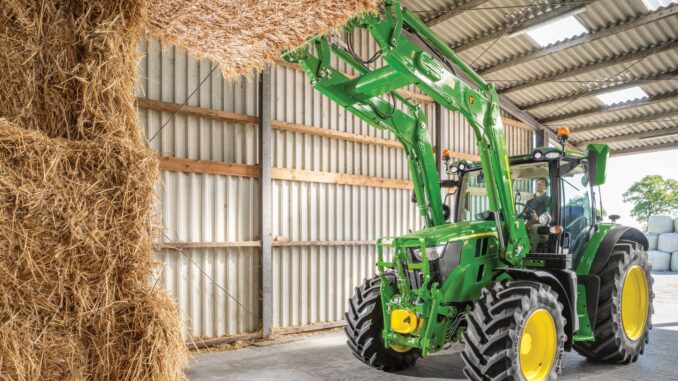
The John Deere 4720 is a compact utility tractor built for property owners, acreage users, and light commercial work who need more capability than a lawn tractor but still want a machine that is manageable for routine owner maintenance. The official operator’s manual covers controls, safety systems, service intervals, engine, transmission, electrical troubleshooting, storage, and specifications, which makes it a strong base for a practical owner-focused repair guide.
For most owners in the USA and Canada, the real value of a John Deere 4720 repair guide is knowing which jobs are realistic DIY work, which symptoms need immediate attention, and which parts information matters before ordering. This guide covers troubleshooting, maintenance planning, common service parts, parts diagrams, manuals, and a detailed FAQ written around what owners actually see in the field.
John Deere 4720 model overview
The John Deere 4720 sits in Deere’s compact utility tractor range and shares operator’s manual coverage with the 4120, 4320, and 4520 series tractors. It uses a diesel engine and is available in configurations that include PowrReverser and eHydro operating systems, so transmission-related diagnosis must always start with the exact machine setup.
For owner maintenance, the main systems to think about are the engine and fuel system, cooling system, transmission and hydraulic system, front axle, PTO and hitch controls, and the electrical/safety interlock system. Deere’s manual specifically includes sections for engine, electrical system, machine, brakes, steering, and error-code troubleshooting, which is useful when you want to work symptom-first rather than guess at failed parts.
Commonly purchased John Deere 4720 service and repair parts include the oil filter RE519626, fuel filter RE508202, primary air filter AP33330, secondary air filter AP33331, fan belt R515222, PTO switch AM118802, seat switch AM124426, park brake switch LVA13307, hydraulic in-line filter LVA14167, suction filter element LVA13038, battery TY26442, and ignition key RE183935. These are the kinds of parts owners often replace while dealing with starting faults, service work, charging concerns, or routine wear items.
John Deere 4720 troubleshooting approach
The best way to diagnose a John Deere 4720 is to begin with the symptom, not the part. Deere’s own manual separates troubleshooting into engine, electrical system, heater and air conditioning system, machine, brakes, steering, and error codes, which is a good reminder that several different systems can create similar owner complaints.
Main symptom groups for this tractor include:
-
Starting problems, such as no crank, slow crank, or crank-no-start.
-
Running problems, such as poor power, stalling, smoke, or rough operation.
-
Hydraulic and drive complaints, including weak motion, poor response, or oil service issues.
-
Overheating or leaks, especially around the cooling system, radiator hoses, fuel system, and hydraulic system.
-
Electrical and safety-switch problems, including PTO interlock issues, seat switch faults, park brake switch faults, and fuse or battery problems.
-
Steering, brake, and front axle concerns that affect safe operation.
John Deere 4720 immediate repair needs
Some problems on a John Deere 4720 should not be left until later because they affect safe operation or can rapidly damage expensive systems. Deere’s manual highlights safety system testing, high-pressure fluid warnings, fire prevention, tire safety, PTO safety, and maintenance safety, so owners should treat those areas as priority items rather than minor annoyances.
Starting issues on the John Deere 4720
If the tractor will not crank, only clicks, or starts intermittently, stop and diagnose it before repeated attempts drain the battery or hide a safety-interlock problem. On this model, battery condition, ignition switch, neutral start switch, seat switch logic, and park brake/PTO interfaces are all relevant enough that Deere gives them dedicated testing procedures in the operator literature.
Common causes:
-
Weak or failed battery TY26442.
-
Dirty or loose battery terminals.
-
Faulty ignition switch RE61717 or worn key.
-
Neutral start or MFWD/neutral start switch issues linked to RE12411 applications.
-
Seat switch AM124426 or PTO switch AM118802 faults.
-
Restricted fuel supply or overdue fuel filter service.
Basic owner checks:
-
Confirm battery voltage and clean both terminals before chasing deeper faults.
-
Verify the PTO is off, the range or transmission is in the correct start position, and the park brake is properly applied.
-
Check whether safety switches feel loose, damaged, or inconsistent in operation.
-
Inspect fuel filter condition and confirm there is clean diesel in the tank.
-
If the machine still will not crank or repeatedly blows fuses, move to dealer-level electrical diagnosis.
John Deere 4720 running and power problems
A John Deere 4720 that starts but lacks power, smokes, stalls under load, or feels uneven often points first to air, fuel, or maintenance issues. Deere includes procedures for servicing air filters, checking the air restriction indicator, replacing fuel filter elements, bleeding the fuel system, and checking engine oil, which are all logical early steps before assuming injector or internal engine trouble.
Common causes:
-
Plugged primary or secondary air filter.
-
Restricted fuel filter or air in the fuel system.
-
Old engine oil or overdue oil filter service.
-
Cooling system contamination causing heat-related power loss.
-
Sensor, electrical, or engine-related issues beyond routine service.
Basic owner checks:
-
Inspect the primary and secondary air filters and the dust unloader valve.
-
Replace the fuel filter if service history is unknown or fuel quality is questionable.
-
Bleed the fuel system only as directed in the operator literature.
-
Check engine oil level and confirm the machine is not overdue for scheduled service.
-
If smoke, knocking, or persistent derating continues, treat it as dealer work.
John Deere 4720 vibration and noise problems
Unusual vibration, rattling, belt noise, or driveline noise matters because it can turn a small wear issue into a larger repair. Deere specifically includes wheel hardware checks, tire pressure checks, front tire rolling direction guidance, wheel installation procedures, and fan/alternator belt replacement in the manual, which shows how many noises come from basic mechanical items rather than internal failures.
Common causes:
-
Loose wheel bolts or hardware.
-
Incorrect tire pressure or tire mismatch.
-
Worn fan/alternator belt R515222.
-
PTO or implement driveline vibration.
-
Loose shields, brackets, or muffler hardware.
Basic owner checks:
-
Inspect wheel hardware and tire condition before running the tractor harder.
-
Listen with the PTO disengaged and then engaged to separate tractor noise from implement noise.
-
Check the fan belt for glazing, looseness, or cracking.
-
Look for obvious rubbing or broken guards around the engine bay.
-
Stop using the machine if vibration is severe enough to affect steering, PTO use, or operator comfort.
John Deere 4720 overheating and leak problems
Overheating, coolant loss, fuel leaks, and hydraulic leaks should be handled quickly because they can damage major systems or create a fire risk. Deere’s manual includes fire prevention guidance, high-pressure fluid warnings, coolant service procedures, radiator hose checks, screen and fin cleaning, and transmission/hydraulic service steps, which tells owners not to ignore even small leaks.
Common causes:
-
Blocked grille, radiator screen, or cooling fins.
-
Low coolant level or aged coolant.
-
Split upper or lower radiator hose.
-
Fan belt slip.
-
Hydraulic or fuel seepage at hoses, clamps, or filters.
Basic owner checks:
-
Clean the grille, side screens, and radiator screen before assuming a deeper fault.
-
Check coolant level only when the system is cool.
-
Inspect the upper and lower radiator hoses for swelling, cracks, or wetness.
-
Check the fan belt condition and tension.
-
Treat pressurized hydraulic leaks and persistent overheating as urgent dealer-level issues.
John Deere 4720 transmission and drive problems
If the tractor hesitates, loses pulling power, or responds poorly in travel, the problem may be service-related or more serious depending on the transmission type. Deere includes separate operating information for PowrReverser and eHydro machines plus procedures for checking transmission oil, changing transmission oil, and servicing the hydraulic suction oil filter.
Common causes:
-
Low or contaminated transmission/hydraulic oil.
-
Overdue suction or hydraulic filter service.
-
Front axle oil neglect.
-
Linkage, control, or electronic transmission issues.
-
Operator setting issues on eHydro features such as SpeedMatch, MotionMatch, LoadMatch, or eThrottle.
Basic owner checks:
-
Confirm the exact transmission type before diagnosing behavior.
-
Check transmission/hydraulic oil level and service history.
-
Inspect for external leaks around filters, lines, and axle areas.
-
Review operator settings if the tractor is eHydro-equipped.
-
Escalate grinding, repeated warning behavior, or loss of motion to a dealer.
John Deere 4720 electrical problems
Electrical complaints often look random to owners, but on the John Deere 4720 they usually sit in predictable areas: battery, fuses, bulbs, switches, and safety interlocks. Deere covers battery service, booster battery use, bulb replacement, fuse replacement, and safety system testing, which makes basic electrical checks realistic for a careful owner.
Common causes:
-
Weak battery or terminal corrosion.
-
Blown fuses.
-
Failed headlight or worklight bulbs.
-
Faulty seat, PTO, cruise, or park brake switches.
-
Charging or starter issues, including starter RE540304.
Basic owner checks:
-
Start with battery terminals, grounds, and battery condition.
-
Check fuses before replacing switches or bulbs.
-
Inspect the seat and PTO switch operation if the tractor behaves like a safety-lockout issue.
-
Replace bulbs only after confirming the circuit is live and fused correctly.
-
Move to dealer testing for recurring electrical faults or no-charge conditions.
DIY or dealer for the John Deere 4720
The John Deere 4720 is very owner-serviceable for routine maintenance, filters, battery work, basic belt replacement, fluid checks, and visual diagnosis, but it crosses into dealer territory when electrical diagnostics become intermittent, the hydraulic system is involved under pressure, or transmission behavior points to internal or control-related issues. Deere’s manual supports this line by giving owners clear maintenance, inspection, and testing procedures while still treating many hydraulic, safety, and driveline risks as serious service matters.
Good DIY jobs on a John Deere 4720
-
Engine oil and oil filter service.
-
Air filter inspection and replacement.
-
Fuel filter replacement and routine bleeding as specified.
-
Battery cleaning, battery replacement, and terminal service.
-
Light bulb and fuse replacement.
-
Cleaning radiator screens, side screens, and grille areas.
-
Checking fluid levels, hoses, and visible leaks.
Advanced DIY or dealer jobs
-
Transmission or eHydro drive complaints beyond fluid and filter checks.
-
Hydraulic pressure leaks or SCV-related issues.
-
Persistent no-start caused by interlock circuits or wiring faults.
-
Front axle repairs, steering faults, and brake diagnosis.
-
Internal engine, injector, or cooling system failures.
Skill level guide
-
Beginner: oil checks, screen cleaning, battery terminal cleaning, bulb and fuse replacement.
-
Intermediate: engine oil and filter change, air and fuel filter service, fan belt replacement, switch replacement.
-
Advanced: diagnosing interlock circuits, hydraulic filtration service, front axle oil service, or transmission-related problem tracing.
John Deere 4720 parts needed before ordering
Before ordering any John Deere 4720 parts, gather the full model name, tractor PIN, transmission type, and where relevant the exact engine information and installed options. Deere’s manual includes product identification and record identification number sections, and that matters because the 4720 family had different publication references by PIN range and can have option-sensitive parts.
For service parts, OEM is usually the safest choice for belts, switches, safety-system parts, hydraulic filters, and fit-sensitive items. Aftermarket can be acceptable for some batteries, bulbs, or basic filters if the cross-reference is exact and the seller clearly lists John Deere 4720 compatibility.
John Deere 4720 parts diagrams and manuals
For John Deere 4720 diagrams and manuals, start with Deere’s own operator literature and parts channels, then use a Deere-focused parts retailer to cross-check common maintenance items. The official operator’s manual is the best place for service intervals, controls, safety testing, and routine procedures, while a parts page is better for confirming current orderable numbers.
Useful sources:
-
John Deere operator’s manual for service intervals, maintenance procedures, troubleshooting categories, and identification guidance.
-
Green Farm Parts 4720 maintenance guide for a quick list of common maintenance and repair parts.
-
John Deere Parts support for OEM parts channels and official parts support entry points.
-
Deere technical publications/manual lookup for manual navigation when you need the exact publication tied to your machine.
How to find John Deere 4720 serial numbers
Identification numbers matter because the John Deere 4720 can have PIN-sensitive literature and option-sensitive parts, and the wrong filter, switch, or hydraulic part wastes time quickly. Deere includes product identification and record identification number sections in the manual for exactly this reason.
-
Park the tractor safely and shut it down before looking for plates or labels.
-
Find the tractor Product Identification Number and record it exactly as shown in the identification area described by Deere.
-
Note the transmission type and major installed options, especially if the machine is eHydro or PowrReverser.
-
Record the engine model and engine serial from the engine identification label before ordering engine-related parts.
-
Take clear photos of all tags and old parts so online and dealer counter checks are easier.
Buying John Deere 4720 parts
The smartest buying strategy is to use diagrams and the machine PIN first, then compare current part numbers before placing the order. This matters more on a compact tractor like the John Deere 4720 than on a simple mower because transmission, hydraulic, and electrical parts can be option-sensitive.
-
Online: verify the OEM number, confirm model fitment, and avoid listing-only matches with no PIN context. Good starting points are Deere Parts support, Green Farm Parts, and Deere manuals.
-
Dealer counter: best for hydraulic filters, switches, serial-break parts, and any part tied to a safety or interlock complaint.
-
Retail stores: acceptable for batteries, bulbs, some filters, and shop supplies only when the packaging clearly cross-references the John Deere 4720 and the OEM number.
John Deere 4720 fitting guide for common parts
These are high-value DIY jobs because they solve many common owner complaints without taking the tractor deep into advanced repair territory. Always park safely, remove the key, lower implements, and let hot components cool before starting service.
Changing the John Deere 4720 engine oil and filter
This service protects starting, lubrication, and overall engine life, especially when service history is unclear. Deere includes dedicated procedures for checking engine oil and changing engine oil and filter.
-
Warm the engine briefly so the oil drains better, then shut it off and park safely.
-
Drain the old oil into a suitable container.
-
Remove the old oil filter and install the replacement RE519626 filter with a properly prepared seal.
-
Refill with the correct engine oil specification listed for the tractor; TY22061 is listed in the maintenance guide.
-
Start the engine, check for leaks, shut down, and recheck the oil level.
Replacing John Deere 4720 air filters
Air filter service helps with hard starting, smoke, and lack of power when the intake system is restricted. Deere includes steps for servicing the air filter element, checking hoses, and checking the restriction indicator light.
-
Open the hood and access the air cleaner assembly.
-
Remove the primary element and inspect the housing for dust buildup.
-
Replace the primary AP33330 and secondary AP33331 filters if dirty, damaged, or at replacement point.
-
Check intake hoses and the dust unloader valve before reassembly.
-
Reset your service record so future diagnosis is easier.
Replacing the John Deere 4720 fuel filter
Fuel filter service is one of the first jobs to do when the tractor cranks well but runs poorly, surges, or loses power under load. Deere’s manual includes fuel filter replacement and fuel-system bleeding procedures.
-
Shut the tractor down and clean the area around the filter before opening the system.
-
Remove the old filter element and install the replacement RE508202 filter.
-
Refill or prime only as required by the manual procedure.
-
Bleed the fuel system if the manual calls for it after filter replacement.
-
Start the engine and check for leaks or air-related running problems.
Replacing the John Deere 4720 fan belt
A worn fan belt can contribute to charging issues, squeal, or overheating, so it is worth changing before it fails in use. Deere includes a specific fan and alternator belt replacement procedure, and Green Farm Parts lists belt R515222 for the 4720.
-
Let the engine cool fully and open the hood.
-
Inspect the old belt routing before removal and take a reference photo.
-
Remove tension as required and take off the old belt.
-
Install the new R515222 belt and confirm it sits fully in each pulley groove.
-
Run the engine briefly and listen for squeal or visible belt wander.
John Deere 4720 maintenance to prevent repeat faults
Most expensive John Deere 4720 repairs start with neglected routine service rather than sudden failure. Deere’s official maintenance structure includes as-needed service, an initial 10-hour check, daily or every-10-hour items, and then recurring 50-hour, 200-hour, 400-hour, 600-hour, yearly, 1200-hour, and two-year or 2000-hour intervals.
Focus areas:
-
Starting reliability: keep the battery, terminals, switches, and fuel filter in good condition.
-
Engine breathing and power: monitor both air filters, hoses, and the restriction indicator.
-
Overheating and fire prevention: clean screens and fins, inspect hoses, and fix leaks early.
-
Drive performance: keep transmission and hydraulic oil and filters on schedule.
-
Electrical reliability: test lights, inspect fuses, and watch interlock switches before they strand the tractor.
John Deere 4720 maintenance schedule
The exact official service chart should always be checked against your tractor’s PIN and installed equipment, but Deere’s operator literature clearly sets the 4720 schedule framework. That framework includes as needed, after first 10 hours, every 10 hours or daily, every 50 hours, every 200 hours, every 400 hours, every 600 hours, yearly, every 1200 hours, and every two years or 2000 hours.
Daily or before each use
-
Check engine oil level.
-
Inspect coolant level and visible leaks.
-
Clean grille, side screens, and radiator screen if debris is present.
-
Check tire condition and look for loose wheel hardware.
-
Test safety systems and confirm normal controls operation.
After first 10 hours
-
Review tractor condition after initial use and inspect for loose hardware or obvious leaks, following Deere’s first-service interval structure.
-
Recheck fluid levels and fasteners after early break-in use.
Every 50 hours
-
Perform scheduled maintenance listed in Deere’s 50-hour interval section for your exact machine configuration.
-
Inspect and service items that see regular contamination or wear, especially around lubrication and filtration.
-
Update service records so future troubleshooting is easier.
Every 200 hours
-
Complete Deere’s 200-hour maintenance items for engine, filtration, and related service points.
-
Replace routine service parts if the chart or actual condition requires it.
-
Inspect belts, hoses, and battery condition at the same time.
Every 400 hours or yearly
-
Service transmission and hydraulic oil items as specified for the tractor.
-
Replace annual-use filters or fluids if your environment is dusty, wet, or severe.
-
Inspect cooling system hoses and electrical service items.
Every 600 to 1200 hours
-
Follow Deere’s 600-hour and 1200-hour sections for deeper scheduled service.
-
Use this interval to plan more involved preventive work before failures appear in the field.
Every two years or 2000 hours
-
Perform Deere’s long-interval service items tied to coolant and other age-sensitive systems where applicable.
-
Treat this as a good point for a full inspection of hoses, wiring, battery condition, and hydraulic seepage.
Seasonal checklist for the John Deere 4720
-
Spring: check battery condition, fluid levels, filters, tire pressures, and all lights before the heavy work season.
-
Mid-season: clean screens and fins more often, inspect belts and hoses, and watch for leaks after long hot work periods.
-
Fall or pre-storage: complete overdue fluid and filter work, clean the tractor thoroughly, and follow Deere’s storage preparation guidance.
Repair, upgrade, or replace on a John Deere 4720
For most owners, a John Deere 4720 is worth repairing when the machine is structurally sound and the problem is in service items, switches, filters, hoses, or moderate wear components. Replacement becomes more realistic when a tractor has stacked hydraulic, electrical, and driveline problems at the same time or when repair costs approach the value of a better-condition machine.
Repair if
-
The issue is clearly limited to maintenance parts, belts, switches, bulbs, hoses, or filters.
-
The tractor starts, drives, and hydraulics function normally once service work is brought up to date.
-
The frame, engine, and transmission are otherwise sound.
Upgrade if
-
You need more hydraulic capability, attachment compatibility, or operator comfort than the current setup provides.
-
Repeated work demands are exposing the limits of your transmission or option package.
Replace if
-
The tractor has major hydraulic, transmission, and electrical faults together.
-
It overheats, leaks heavily, and has poor service history with no clear baseline.
-
The cost of catch-up repair is close to the price of a better 4720 or newer compact utility tractor.
John Deere 4720 troubleshooting FAQ
1. Why will my John Deere 4720 not start?
A no-start on the John Deere 4720 usually comes down to battery condition, safety-interlock logic, fuel delivery, or ignition-switch issues. Start with the battery, terminal cleanliness, PTO position, park brake status, and seat-switch behavior before assuming a major failure. The 4720 operator literature specifically includes testing for neutral start, seat switch, PTO switch interfaces, and park brake interfaces, which shows how common these faults are.
2. Why does my John Deere 4720 crank but not fire?
If it cranks normally but will not fire, fuel supply and air in the fuel system move to the top of the list. A restricted fuel filter, poor fuel quality, or improper bleeding after service can all create this symptom. Check the fuel filter condition and follow Deere’s bleeding procedure rather than improvising.
3. Why is my John Deere 4720 battery always going flat?
A flat battery often points to age, terminal corrosion, poor charging, or repeated short-run use. Deere includes battery service, cleaning, removal, installation, and booster-battery procedures, so start with battery health and cable condition first. If the battery and connections are good but charge recovery is poor, move to charging-system testing.
4. Could a bad seat switch stop my John Deere 4720 from starting?
Yes, it can, especially when the symptom matches a safety-lockout condition rather than a dead starter circuit. The seat switch is a listed common part for this tractor, and Deere includes dedicated safety-interface testing involving PTO and seat-switch logic. If the machine behaves inconsistently when you shift position on the seat, the switch becomes a strong suspect.
5. Why does my John Deere 4720 start and then stall?
That pattern often suggests fuel restriction, air in the fuel system, or an interlock issue rather than a completely dead component. Start with the fuel filter, tank fuel quality, and whether the problem began right after maintenance. If the stalling seems tied to PTO use or operator position, check the safety system next.
6. Why is my John Deere 4720 low on power?
Low power usually starts with restricted air intake, fuel filter issues, overdue service, or overheating. Deere gives specific procedures for air filter service, restriction indicator checks, fuel filter replacement, and radiator cleaning, and those are the best first checks. Only after those basics are confirmed should you suspect deeper engine or fuel-system faults.
7. Why does my John Deere 4720 blow black smoke?
Black smoke usually means the engine is getting more fuel than clean air for the load it is carrying. Dirty air filters, intake restrictions, or heavy overloading are common first suspects. Inspect the primary and secondary air filters and make sure the intake path is clear before going further.
8. Why is my John Deere 4720 overheating?
On a compact tractor, overheating often starts outside the engine rather than inside it. Debris-packed screens, dirty radiator fins, low coolant, bad hoses, or fan belt slip are all realistic causes on the 4720. Deere includes dedicated steps for screen cleaning, coolant checks, hose inspection, and fan belt replacement for this reason.
9. What should I check first when my John Deere 4720 leaks coolant?
Start with the coolant level, radiator cap area, hose connections, and the upper and lower radiator hoses. The parts listings include both radiator hoses and Deere’s manual includes hose inspection and cooling-system service guidance. Any active leak needs attention before continued use because overheating damage is far more expensive than hose replacement.
10. Why is my John Deere 4720 leaking hydraulic oil?
Hydraulic seepage can come from filters, hoses, fittings, or more serious internal areas. Because Deere specifically warns about high-pressure fluids, owners should treat any spray, mist, or pressure leak as a safety issue rather than a cosmetic problem. Visual seepage checks are reasonable DIY work, but pressurized leak repair is usually dealer territory.
11. Why does my John Deere 4720 move weakly or hesitate?
Weak drive performance often points to transmission or hydraulic oil condition, low oil level, overdue filter service, or transmission-specific control issues. Deere includes separate operating information for PowrReverser and eHydro machines, so diagnosis starts by confirming which system your tractor has. If fluid service is current and the tractor still hesitates, a deeper hydraulic or transmission check is warranted.
12. Can low hydraulic oil affect my John Deere 4720 travel?
Yes, low or contaminated transmission-hydraulic oil can affect drive behavior and implement performance. Deere includes transmission and hydraulic oil service along with suction filter procedures because fluid condition is critical on these tractors. Always verify leaks and fluid level before assuming a mechanical failure.
13. Why does my John Deere 4720 PTO not engage properly?
A PTO complaint may be electrical, switch-related, safety-related, or mechanical depending on the exact symptom. Since the PTO switch is a listed common part and the manual includes PTO and seat-switch interface testing, owners should check controls and interlocks first. If the switch logic is correct but the PTO still slips or refuses to drive an implement, the repair may be beyond casual DIY work.
14. Could a bad PTO switch cause John Deere 4720 problems?
Yes, especially if the machine starts inconsistently or the PTO system does not respond to normal control input. The AM118802 PTO switch is listed as a common part for the 4720, which lines up with the operator manual’s emphasis on PTO-related safety testing. Replace only after checking fuses, wiring condition, and obvious connector issues.
15. Why is my John Deere 4720 steering heavy?
Heavy steering may relate to hydraulic issues, front axle conditions, tire setup, or steering-specific faults. Deere includes steering troubleshooting, front axle oil checks, and tire pressure guidance, so those should be your first inspections. If steering effort changes suddenly or comes with noise, stop using the tractor until the cause is clear.
16. Why do my John Deere 4720 brakes feel weak?
Brake complaints matter because this tractor may also be used with loaders, trailers, and PTO equipment. Deere includes brake troubleshooting in the manual, so owners should not ignore poor pedal feel or reduced stopping ability. Basic inspection is fine, but internal brake diagnosis is usually not the best first DIY project on this model.
17. Why does my John Deere 4720 vibrate at speed?
Vibration at speed often points to wheel hardware, tires, driveline issues, or a mounted implement rather than the engine itself. Deere specifically tells owners to check wheel hardware and tire condition, and those are the easiest first inspections. Severe vibration should be treated as a stop-and-check issue, not something to run through.
18. Why is there a squealing noise from the front of my John Deere 4720 engine?
A squeal from the front of the engine often suggests fan or alternator belt trouble. The 4720 parts list includes belt R515222, and Deere includes a replacement procedure for the fan and alternator belt. If noise changes with electrical load or engine speed, the belt becomes an even stronger suspect.
19. How often should I grease a John Deere 4720?
The operator literature includes lubrication service and a daily or every-10-hour maintenance interval, which is the key clue for routine grease-point attention. Exact points depend on equipment and installed options, but frequent lubrication is part of Deere’s normal service structure for this tractor. For loaders and front-end work, owners often need to be even more disciplined in dirty conditions.
20. How often should I change oil in a John Deere 4720?
Use the official service interval chart tied to your machine’s manual and operating conditions rather than relying on guesswork. Deere provides a structured maintenance schedule for the 4720 family, and service frequency may need to increase in severe dust, heat, or heavy use. If service history is unknown, resetting the baseline with fresh oil and filter is usually smart.
21. What oil filter fits a John Deere 4720?
The common maintenance guide for the John Deere 4720 lists engine oil filter RE519626. That makes it a practical starting point when planning routine service, though owners should still cross-check with their PIN and current parts lookup. This is especially important if prior owners substituted parts or mixed kits.
22. What fuel filter fits a John Deere 4720?
The Green Farm Parts 4720 guide lists fuel filter RE508202 as a common service part. As with any diesel fuel-system item, it is smart to verify current supersessions and compatibility before ordering. That extra check matters more if the tractor has a confusing service history.
23. What air filters does a John Deere 4720 use?
The common parts listing identifies AP33330 as the primary air filter and AP33331 as the secondary air filter for the 4720. Deere’s manual also makes clear that air filter service should include the housing, hoses, and restriction-indicator checks, not just swapping elements. A clean filter installed in a dirty housing only solves part of the problem.
24. What battery fits a John Deere 4720?
The common repair parts list includes battery TY26442 for the 4720. That gives owners a useful reference point, but battery dimensions, terminal layout, and cold-start performance still need to match the machine and climate. In colder parts of the USA and Canada, that check matters even more.
25. Why does my John Deere 4720 keep blowing fuses?
Repeated fuse failure usually means a short, damaged wiring, water intrusion, or a component fault rather than bad luck. Deere includes fuse replacement and broader electrical troubleshooting sections, so this is a case where owners should avoid simply installing larger fuses or repeating the same test. Trace the affected circuit before more damage occurs.
26. Where can I get John Deere 4720 parts diagrams?
The best first stop is Deere’s official parts and manual ecosystem, backed up by Deere-focused sellers that list common maintenance parts. Use the operator manual for procedures and identification, then confirm orderable part numbers through an OEM parts channel or a trusted Deere specialist. That combination helps avoid wrong-part ordering.
27. Where can I download a John Deere 4720 manual?
Deere’s online manuals portal includes the operator manual for 4720 tractors within the 4120/4320/4520/4720 family. That manual covers operation, service intervals, maintenance procedures, troubleshooting sections, storage, and specifications. It is the best foundation for any owner trying to maintain or troubleshoot this tractor properly.
28. Is the John Deere 4720 easy to work on for DIY maintenance?
For regular service, yes, it is reasonably owner-friendly. Oil service, filter changes, battery work, bulb replacement, screen cleaning, and visible hose inspections are all realistic jobs for a careful owner with basic tools. Where it becomes less DIY-friendly is hydraulic diagnosis, electrical fault tracing, and transmission-specific performance complaints.
29. When should I stop trying to fix my John Deere 4720 myself?
Stop when the problem involves pressurized hydraulic leaks, internal transmission concerns, repeated electrical faults, severe overheating, or unsafe braking or steering behavior. Deere’s manual repeatedly emphasizes maintenance safety, high-pressure fluid risk, and testing of critical systems, which is a sign not to push past your skill level. A compact utility tractor can become expensive and unsafe very quickly when a repair guess is wrong.
30. Is OEM better for John Deere 4720 repair parts?
For safety switches, belts, hydraulic filters, and fit-sensitive components, OEM is usually the safer choice because exact function matters as much as simple fit. Aftermarket can still work well for some batteries, bulbs, and selected filters when the cross-reference is exact and the seller is reputable. The more critical the part is to safety or hydraulic performance, the less sense it makes to gamble.
31. Why does my John Deere 4720 starter click once and do nothing?
A single click usually points to low battery voltage, poor cable connection, bad ground, or starter-related trouble rather than a fuel issue. Since the 4720 common-parts list includes starter RE540304 and battery TY26442, those areas belong near the top of the diagnostic list. Start with voltage drop and cable cleanliness before replacing expensive parts.
32. Why are my John Deere 4720 lights not working?
Lighting faults often come from bulbs, fuses, switches, or wiring rather than a major electrical failure. Deere includes bulb and fuse replacement procedures, and the common-parts list includes headlight and worklight bulbs plus the light switch. Check the fuse first, then the bulb, then the switch and wiring path.
33. Why does my John Deere 4720 run hot only when mowing or using PTO implements?
That pattern often means the tractor is under sustained load and a marginal cooling or air-flow issue is becoming obvious. Dirty screens, dirty radiator fins, weak belt drive, or restricted airflow are common field causes. Because PTO work adds heat load, the cooling system has less margin for neglect than it does during light transport work.
34. Should I buy John Deere 4720 parts online or from a dealer?
For simple consumables, online buying can save time as long as you verify the OEM number and model fit carefully. For serial-sensitive, electrical, hydraulic, or safety-related parts, the dealer counter usually gives better odds of getting the right part first time. A blended strategy works best for most owners.
35. Is a John Deere 4720 worth repairing?
In many cases, yes, especially when the fault is limited to maintenance catch-up, filters, switches, hoses, battery work, or other moderate repairs. The 4720 remains a capable compact utility tractor, so fixing a sound machine often makes more sense than replacing it over a relatively ordinary fault. The equation changes when transmission, hydraulic, and electrical problems pile up together.
John Deere 4720 common engine overheating causes
Common John Deere 4720 overheating causes are blocked radiator screens/fins, low or wrong coolant mix, loose or slipping fan belt, damaged radiator hoses, a sticking thermostat, a weak water pump, and fuel/engine load issues that keep the cooling system working too hard. In the 4720 operator literature, Deere specifically emphasizes cooling-system cleaning, coolant checks, hose inspection, and fan-belt service as part of normal maintenance, which matches the most likely owner-facing causes of running hot.
What to check first
-
Clean the grille, side screens, and radiator screen.
-
Check coolant level only when the tractor is cool.
-
Inspect the upper and lower radiator hoses for swelling, cracks, or seepage.
-
Check fan belt condition and tension.
-
Make sure the tractor is not packed with chaff, dust, or debris around the engine bay.
When it points to a bigger problem
-
If it overheats only under load, the cooling system may be partially restricted or the belt may be slipping.
-
If coolant keeps disappearing, look for hose, clamp, cap, or radiator leakage.
-
If the temperature rises quickly even after cleaning and topping up, a thermostat, water pump, or internal engine issue becomes more likely.
A good rule is to treat airflow and coolant-level problems as the first suspects, and internal engine faults as the last suspects after the basics are confirmed.
John Deere 4720 cooling system flush procedure
The John Deere 4720 cooling‑system flush is a straightforward drain–flush–refill process: safely cool the engine, drain via the lower radiator hose and engine block drain, flush with water plus approved cleaner, drain again, then refill with the correct coolant mix and bleed by running to temperature.
Deere’s service section for compact tractors spells this out step‑by‑step and specifies using an ethylene‑glycol coolant (such as COOL‑GARD) at up to 50% concentration, not plain water.
Safety and preparation
-
Park the tractor safely on level ground, set the park brake, lower any implements, and shut the engine off.
-
Allow the engine to cool fully before opening the system; never remove the radiator cap on a hot engine.
-
Have a suitable drain pan and containers ready so you can capture and dispose of old coolant properly.
Draining the John Deere 4720 cooling system
-
Raise the hood and locate the radiator cap, lower radiator hose connection, and engine block drain plug on the right side of the engine behind the oil filter.
-
Slowly open the radiator cap only to the first stop to relieve pressure, then remove it once all pressure is gone.
-
Position the drain pan under the lower radiator hose and remove the hose at the radiator so coolant can drain.
-
Move the pan under the engine block drain plug, remove the plug, and let the system drain completely from the block as well as the radiator and recovery tank.
-
When the flow stops, reinstall the lower radiator hose and engine block drain plug snugly.
Flushing the cooling system
-
Fill the system with clean water premixed with John Deere Cooling System Cleaner or Cooling System Quick Flush (or an equivalent product) following the cleaner’s label directions.
-
Reinstall and tighten the radiator cap.
-
Start the engine and run it until it reaches normal operating temperature so the cleaner circulates through the radiator, block, and heater circuit if fitted.
-
Shut the engine off and allow just enough cooling that you can safely work, then remove the lower radiator hose and engine block drain plug again.
-
Drain the system immediately so loosened rust and deposits exit with the flush water instead of settling back into the block.
-
Reinstall the block drain plug and lower radiator hose once flow stops.
If the drained flush water is still very dirty, you can repeat a plain‑water fill, short run to temperature, and drain cycle until what comes out is clean before the final fill.
Refilling with new coolant
-
Allow the radiator neck to cool, then fill the system through the radiator with the correct coolant mixture; Deere recommends an ethylene‑glycol–based antifreeze such as COOL‑GARD at no more than 50% coolant to water. Do not run plain water or a stronger mix than 50%.
-
Install and tighten the radiator cap.
-
Start the engine and run it to operating temperature so any trapped air can purge; watch temperature and leaks.
-
Shut the engine off and check the coolant level in the recovery tank; top up so it sits at the correct “FULL COLD” line once the engine has cooled.
Deere’s example service text gives a cooling‑system capacity of about 3.7 L (3.9 qt) for the compact‑tractor platform in this family; always verify capacity in your exact 4720 operator manual and match your mix to local climate.