
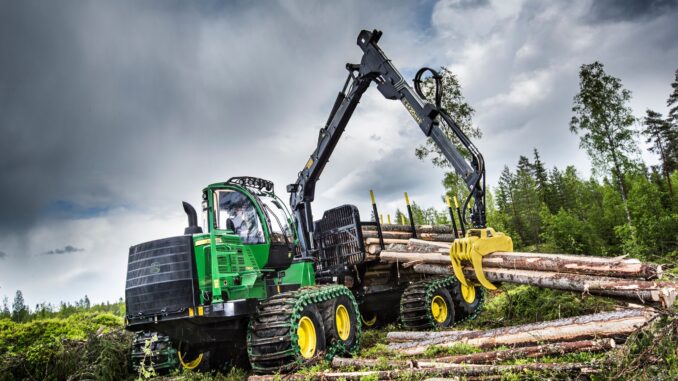
The John Deere 850 dozer is a heavy crawler dozer rather than a homeowner lawn tractor, so the practical version of this guide needs to focus on owner inspection, routine service, common fault symptoms, and the point where hydraulic, undercarriage, transmission, or diagnostic work should move to a dealer or an experienced heavy-equipment shop.
Deere’s official materials show the 850 family as a hydrostatic crawler dozer platform with major systems centered on the diesel engine, hydraulic system, hydrostatic transmission, final drives, blade linkage, and undercarriage, which makes symptom-based troubleshooting especially important before any parts are ordered.
John Deere 850 dozer overview
The John Deere 850 dozer family sits in Deere’s crawler dozer range and has been offered across multiple generations, including older 850C Series II machines and later 850K models, so owners need to confirm the exact serial-number range before using any parts list or service interval. Deere’s published 850C Series II literature describes a hydrostatic crawler dozer with a John Deere 6081A 8.1 L six-cylinder diesel engine, dual-path hydrostatic drive, planetary final drives, and several undercarriage and blade configurations.
Typical use cases are heavier grading, site preparation, pushing, and land-clearing work rather than light property maintenance, which means wear items such as filters, belts, cutting edges, rollers, track components, and blade-linkage points matter more than the mower-style parts you would see on a residential Deere machine. On newer 850K material, Deere’s replacement-parts guide also emphasizes routine service parts such as engine oil filter RE539279, primary/final fuel filter kit RE556406, hydrostatic and hydraulic oil filter AT318160, OCV filter DZ105100, and belt options R529391 or T339348 depending on configuration.
General overview of the John Deere 850 dozer
On the John Deere 850 dozer, the systems owners deal with most often are:
-
Engine and fuel system: air filters, fuel filters, belt, coolant, oil filter, water separation, and air-intake hose condition.
-
Hydrostatic drive and final drives: hydrostatic oil, charge filtration, final-drive oil levels, and track-related checks.
-
Hydraulic/blade system: hydraulic oil, hydraulic filter, cylinder pivots, linkage lubrication, and hose condition.
-
Electrical and monitoring: batteries, alternator charging, warning indicators, safety interlocks, and onboard diagnostics on later machines.
Common service parts owners regularly buy on identified 850-series machines include engine oil filters, fuel filters, engine air filters, cab air filters, serpentine belts, OCV filters, and hydraulic/hydrostatic filters. Deere’s 850K quick-reference guide lists RE539279 for the engine oil filter, RE556406 for the primary/final fuel filter kit, KV16429 for the primary air filter element, AT171854 for the secondary air filter elements, AT318160 for hydraulic and hydrostatic filtration, DZ105100 for the OCV filter, T231314 for the fuel-tank breather, and H216169 for the DEF tank breather on applicable machines.
John Deere 850 dozer troubleshooting approach
The best way to troubleshoot a John Deere 850 dozer is to start with the exact symptom the operator sees, not the part they suspect. Deere’s own maintenance guides prioritize checks such as oil levels, coolant level, air and fuel filtration, track sag, cooling-package cleanliness, and warning-monitor attention before deeper repair work, which fits a symptom-first workflow.
Main symptom groups for this model family are:
-
Hard starting or no-start.
-
Poor running, low power, or excessive smoke.
-
Weak pushing power or slow travel.
-
Hydraulic/blade problems.
-
Vibration, noise, or track/undercarriage issues.
-
Overheating or fluid leaks.
-
Electrical or monitoring faults.
Emergency repair needs
Some John Deere 850 dozer problems need immediate attention because they can quickly damage expensive components or create a safety risk. That is especially true for loss of engine oil pressure, overheating, major hydraulic leaks, final-drive oil loss, track problems that can lead to de-tracking, and any brake/neutral/safety fault that affects machine control.
Starting issues
A no-start or hard-start problem matters because repeated cranking can flatten batteries, stress the starter, and hide a fuel, air, or shutdown fault. Deere documents show the 850 platform relies on battery power, fuel filtration, water separation, and air-intake condition as basic maintenance-critical items.
Common causes:
-
Weak or discharged batteries.
-
Dirty or loose battery terminals.
-
Water-contaminated fuel or plugged fuel filters.
-
Air restriction from dirty primary/secondary filters.
-
Fault with safety/start circuit or fuel shutoff.
Basic checks:
-
Check battery condition and terminal tightness.
-
Confirm fuel level and drain water separators if fitted.
-
Inspect primary and final fuel filters.
-
Check air filters and pre-cleaner for restriction.
-
Stop and seek dealer diagnosis if warning codes or electronic shutdown issues are present.
Running and power loss
Low power, sluggish response, or smoke often points to restricted airflow, poor fuel delivery, overheating, or a deeper engine issue. Deere specifically calls for routine attention to air filters, fuel filters, coolant condition, and air-intake hoses and connections on 850-series maintenance schedules.
Common causes:
-
Dirty air filters or pre-cleaner.
-
Plugged fuel filters.
-
Cooling package packed with debris.
-
Low fluid levels.
-
Turbo, injector, or engine internal issues.
Basic checks:
-
Clean the cooling package.
-
Inspect the air filter system and hoses.
-
Replace overdue fuel filters.
-
Verify engine oil and coolant level.
-
Escalate quickly if smoke, knock, or overheating continues.
Vibration and undercarriage noise
Vibration or clunking on a crawler dozer matters because the undercarriage is one of the most expensive wear areas on the machine. Deere’s 850 literature highlights sealed and lubricated chain, segmented sprockets, rollers, and track-sag adjustment as core service areas.
Common causes:
-
Incorrect track sag.
-
Worn rollers, idlers, or sprocket segments.
-
Loose blade or linkage hardware.
-
Final-drive oil issues.
-
Track shoe or chain wear.
Basic checks:
-
Inspect track tension and visible wear.
-
Check for leaking final drives.
-
Look for loose hardware around blade and linkage.
-
Listen for one-side-only noises during turns.
-
Move to dealer or undercarriage specialist work if wear is advanced.
Overheating and leaks
Overheating and leaks should never be ignored because they can turn a service job into an engine, hydraulic, or transmission failure. Deere’s guides call for routine coolant checks, cooling-system cleaning, and scheduled cooling-system service on the 850 family.
Common causes:
-
Debris-packed radiator or cooler package.
-
Low coolant.
-
Belt problems.
-
Hydraulic hose leaks.
-
Engine oil, final-drive oil, or transmission leaks.
Basic checks:
-
Inspect and clean the cooling package.
-
Check coolant level and belt condition.
-
Identify the leaking fluid before operating again.
-
Check engine, hydraulic, and transmission oil levels.
-
Shut down and repair immediately if the leak is active or severe.
Drive and hydraulic problems
A machine that feels weak in travel, hesitates, or has poor blade response may have fluid-level, filtration, hydrostatic, or hydraulic faults. Deere’s maintenance schedules for the 850 family repeatedly focus on hydrostatic oil, hydraulic oil, and related filters because they are central to machine performance.
Common causes:
-
Low hydrostatic or hydraulic oil.
-
Restricted charge or hydraulic filter.
-
Contaminated oil.
-
Internal pump/motor wear.
-
Linkage or cylinder issues.
Basic checks:
-
Check hydrostatic and hydraulic oil levels.
-
Review service history for overdue filter changes.
-
Look for external hose or cylinder leakage.
-
Check whether the symptom is travel-only, blade-only, or both.
-
Use dealer diagnostics for persistent hydrostatic faults.
Electrical problems
Electrical problems usually show up as weak cranking, charging warnings, dead accessories, or monitor faults. Deere’s 850C information lists a 24-volt electrical system, dual batteries, alternator support, and onboard monitor/diagnostic features depending on generation.
Common causes:
-
Dirty battery terminals.
-
Weak batteries.
-
Alternator/charging fault.
-
Wiring damage in harsh work environments.
-
Monitor, sensor, or safety-switch issues.
Basic checks:
-
Clean and tighten battery terminals.
-
Test battery voltage and charge rate.
-
Inspect visible harness damage.
-
Check for active warning indicators.
-
Use proper diagnostic support for recurring electronic faults.
DIY or dealer repair guide
For most owners, the realistic DIY line on a John Deere 850 dozer covers inspection, lubrication, fluid-level checks, filter changes, basic belt service, battery service, and careful replacement of straightforward consumables. Once the work involves hydrostatic transmission diagnosis, final drives, track-frame wear, blade geometry issues, hydraulic pressure testing, or electronic fault tracing, it usually becomes dealer or heavy-equipment-shop territory because cost of error is high and Deere also routes users toward official technical publications and Customer Service ADVISOR for deeper service information.
Good DIY jobs:
-
Engine oil and filter service.
-
Fuel filter replacement.
-
Air filter and cab filter replacement.
-
Battery terminal cleaning.
-
Cooling-package cleaning.
-
Visual belt inspection and straightforward belt replacement.
-
Daily and periodic lubrication points.
Advanced DIY or dealer jobs:
-
Track adjustment beyond basic checks.
-
Final-drive oil leak repair.
-
Hydrostatic transmission service and diagnosis.
-
Hydraulic pump, valve, or cylinder repair.
-
Undercarriage rebuilds.
-
Engine internal work.
-
Electronic diagnostics and calibration on newer models.
Skill level guide:
-
Beginner: fluid checks, greasing, visual inspections, air and cab filters.
-
Intermediate: engine oil/filter, fuel filters, belt replacement, cooling-system cleaning.
-
Advanced: hydraulic, undercarriage, final drive, transmission, or code-based diagnosis.
Parts needed for the John Deere 850 dozer
Before ordering John Deere 850 dozer parts, gather the full model designation, the Product Identification Number or serial number, the engine model/serial, and the exact machine configuration. That matters because Deere has used the 850 name across different generations, and parts such as filters, belts, DEF components, undercarriage items, and even fluid capacities can change by serial break and equipment level.
OEM parts are usually the safer choice for belts, hydraulic and hydrostatic filtration, emissions parts, and any fit-sensitive or safety-related component. Aftermarket parts can make sense for some filters, batteries, cutting edges, and common wear parts, but only when the supplier cross-references the exact Deere number and serial range correctly.
John Deere 850 dozer diagrams and manuals
For parts diagrams and manuals, the most reliable starting point is Deere’s own manuals portal because Deere states that users can download, view, and purchase operator manuals, technical manuals, and parts catalogs there. That is the best path when you need machine-specific maintenance procedures or official publications tied to your exact equipment.
Useful sources:
-
John Deere Manuals and Training — official Deere hub for operator manuals, technical manuals, and parts catalogs.
-
John Deere 850K Replacement Parts Guide PDF — useful for quick service parts, fluid capacities, and maintenance intervals on the 850K serial range shown in the document.
-
John Deere 850C Series II product PDF — useful for specs, configurations, core systems, and confirming what type of 850 machine you own.
Deere also promotes Customer Service ADVISOR as a subscription-based database for operator, diagnostic, and technical manuals with limited diagnostic functions on supported equipment. For owners dealing with newer electronic systems, that can be more useful than generic third-party manual listings.
Locate ID numbers
The machine’s model and serial information matters because Deere’s 850 name spans multiple generations and configurations. Without the correct PIN and engine details, it is easy to buy the wrong filters, belt, hydraulic parts, or undercarriage components.
Use this process:
-
Find the machine identification or PIN plate on the dozer frame or main machine identification area noted in your operator documentation.
-
Record the full model exactly as shown, such as 850C, 850K, or another 850-series designation.
-
Record the full PIN or serial number, including any prefix and serial break relevance.
-
Record the engine model and serial number from the engine data plate before ordering engine-related parts.
-
Note key configuration details such as blade type, cab/no cab, A/C, and emissions equipment because those affect filters and belts.
Buying John Deere 850 dozer parts
The best buying strategy is to identify the Deere OEM number first, then compare that number across official and reputable sellers. For a machine like the John Deere 850 dozer, serial-sensitive parts are common enough that dealer verification is often worth the extra step.
-
Online: start with Deere’s manuals/resources and any serial-number-based parts lookup, then compare OEM numbers carefully.
-
Dealer counter: best for hydrostatic, hydraulic, undercarriage, emissions, and serial-break parts.
-
Retail stores: acceptable for common consumables only when the packaging clearly cross-references the exact Deere part and machine.
Useful links:
Step-by-step fitting guide
These are the most realistic owner-service jobs on an 850-series machine. Always park on level ground, lower attachments, follow lockout precautions, and use the official manual for torque values and machine-specific access steps.
Change the engine oil and filter
This job supports starting reliability, engine life, and wear control. Deere lists regular oil-and-filter service as a core interval item on 850-series maintenance schedules.
-
Warm the engine briefly, park safely, and lower the blade.
-
Drain the engine oil into a suitable container.
-
Remove the old engine oil filter and confirm the old gasket comes off with it.
-
Install the correct new filter, lightly oiling the gasket.
-
Refill with the correct engine oil grade for your temperature range.
-
Start, check for leaks, shut down, and recheck the level.
Replace the fuel filters
Fuel filters are a common fix for hard starting, poor running, and low power. Deere’s 850K maintenance guide calls for replacement of the primary and final fuel filters at 500 hours.
-
Clean the area around the filter heads before opening the system.
-
Remove the old primary and final filters.
-
Install the correct replacements or kit for your machine.
-
Prime the fuel system according to the operator or technical manual.
-
Start the machine and watch for leaks or air-related stumble.
-
Recheck operation under load after the engine stabilizes.
Replace the air filters
Restricted intake air can cause smoke, low power, and poor fuel burn. Deere lists both primary and secondary air elements, plus pre-cleaner attention, as key maintenance items.
-
Open the air-cleaner housing carefully so dirt does not fall into the clean side.
-
Remove the primary element and inspect the housing.
-
Replace the secondary element only if required by condition or service instructions.
-
Clean the pre-cleaner and dust areas as applicable.
-
Install the new filters correctly and seal the housing fully.
-
Check hoses and clamps for cracks or looseness.
Replace cab air filters
Cab filters matter for operator comfort and HVAC performance on cab-equipped machines. Deere lists fresh-air and recirculation filters for applicable 850K machines.
-
Locate the fresh-air and recirculation filter access points.
-
Remove the old elements without dropping debris into the HVAC housing.
-
Clean loose dust from the filter compartment.
-
Install the correct replacement elements in the proper orientation.
-
Run the HVAC system and confirm airflow improves.
-
Recheck fitment if airflow is still weak.
Maintenance to prevent repeat failures
Regular maintenance is what keeps a John Deere 850 dozer out of expensive repair territory. Deere’s own schedules show that many major faults are prevented by keeping filters current, fluids at the correct level, the cooling package clean, and the undercarriage checked often.
Focus areas:
-
Starting reliability: healthy batteries, clean terminals, good fuel filters, and clean air filters.
-
Power and hydraulic performance: correct oil levels, correct filter intervals, and clean cooling surfaces.
-
Fire and overheating prevention: clean out debris, inspect belts, and monitor coolant condition.
-
Undercarriage life: track-sag checks, lubrication, and fast response to leaks or abnormal wear.
-
Electrical reliability: battery-terminal cleaning and quick attention to warnings or charging faults.
John Deere 850 dozer maintenance schedule
The exact schedule depends on the precise 850 generation, but Deere’s published 850K quick-reference guide provides a strong official maintenance framework for later 850K machines. Older 850C machines use a similar logic with some interval and component differences, so owners should confirm against the exact manual for their serial number.
Daily / before each use
-
Check engine oil level.
-
Check coolant level at the surge tank or cooling system checkpoint.
-
Check hydraulic oil level.
-
Check hydrostatic transmission oil level.
-
Lubricate dozer linkage points as equipped.
As required
-
Inspect and clean the cooling package.
-
Inspect or replace the belt and check automatic tensioner.
-
Replace primary and secondary air filter elements when required.
-
Check and adjust track sag.
-
Clean and tighten battery terminals.
Every 50 hours
-
Lubricate right and left crossbar pivots.
-
Lubricate rear ripper if equipped.
-
Lubricate lift-cylinder or pushbeam pivots as equipped.
Every 250 hours
-
Check inner and outer final-drive oil levels.
-
Take engine oil sample where used in your maintenance program.
Every 500 hours
-
Drain and refill engine oil and replace filter.
-
Replace primary and final fuel filters.
-
Replace auxiliary fuel filter if equipped.
-
Drain water and sediment from the fuel tank.
-
Take hydraulic, hydrostatic, coolant, final-drive, and diesel-fuel samples where applicable.
Every 1000 hours
-
Check coolant condition.
-
Check track-frame pivot shaft bushing oil level.
-
Drain and refill inner and outer final-drive oil.
-
Check air-intake hoses and connections.
-
Replace cab fresh-air and recirculation filters.
Every 2000 hours
-
Replace OCV filter.
-
Drain and refill transmission oil and replace hydrostatic charge oil filter.
-
Drain and refill hydraulic system oil and replace filter.
-
Check and adjust engine valve lash.
-
Replace fuel-tank breather and certain DEF-related filters on applicable machines.
Every 4000 to 6000 hours
-
Replace DEF tank breather and related DEF suction components where applicable.
-
Drain and refill the engine cooling system at 6000 hours on the 850K guide.
Seasonal checklist
-
Spring or work-season start: fluids, filters, battery condition, cooling-package cleaning, and track inspection.
-
Mid-season: recheck filters, oil levels, and undercarriage wear before symptoms appear.
-
End of season: clean debris thoroughly, address leaks, and replace overdue service items before storage or the next job cycle.
Repair, upgrade, or replace?
For a John Deere 850 dozer, repair usually makes sense when the machine is structurally sound, the undercarriage is still economically serviceable, and the fault is limited to routine wear items or isolated repairs. Upgrade makes more sense when the machine is basically useful but needs better guarding, blade configuration, cab comfort, or work-package equipment, while replacement becomes the smarter choice when undercarriage, transmission, hydraulic, and engine costs begin stacking together on an older unit.
Repair if:
-
The issue is filters, belt, hoses, batteries, or routine leakage.
-
The undercarriage is still in workable condition.
-
The machine otherwise starts, travels, and pushes normally.
Upgrade if:
-
You need a different blade setup or guarding package.
-
The machine fits the job but productivity or protection needs have changed.
-
A cab, cooling, or work-environment improvement would extend useful life.
Replace if:
-
Undercarriage, hydrostatic, and engine work are all due together.
-
Serial-specific parts are becoming hard to justify economically.
-
Repeated downtime is hurting job productivity more than replacement cost.
John Deere 850 dozer FAQ
1. Why will my John Deere 850 dozer not start?
Start with the basics: batteries, terminal condition, fuel supply, and filter condition. Deere’s maintenance guidance repeatedly points owners to battery-terminal cleaning, water checks in fuel filtration, and air/fuel service items before deeper diagnosis. If the machine still will not start after those checks, move toward electrical or fuel-system testing rather than guessing at parts.
2. Why does my John Deere 850 dozer crank slowly?
Slow cranking usually points to weak batteries, poor cable connections, corrosion, or charging issues. The 850C literature shows a 24-volt system with dual batteries, so even one weak battery or bad connection can create starting trouble. Clean and tighten all high-current connections before condemning the starter.
3. Why does my John Deere 850 dozer start and then die?
That symptom often suggests fuel restriction, air entering the fuel system, contaminated fuel, or an electrical shutdown issue. Replace overdue fuel filters, check separator/water issues, and verify fuel delivery before moving deeper. If the machine shows warnings or code-related shutdown behavior, dealer diagnostics are the safer next step.
4. Why is my John Deere 850 dozer low on power?
Low power often comes from clogged air filters, restricted fuel filters, overheating, or intake-hose problems. Deere specifically includes air-filter service, fuel-filter service, cooling checks, and hose inspections in the maintenance schedule because those are common causes of lost performance. If those items are current and power is still low, engine or hydraulic load testing may be needed.
5. Why is my John Deere 850 dozer smoking?
Black smoke often suggests too much fuel for the available air, while persistent abnormal smoke can also point to engine condition issues. Start with the air filter system, pre-cleaner, cooling condition, and fuel maintenance history. Continued smoke under normal load deserves proper diagnosis because it can be a sign of larger engine problems.
6. Why is my John Deere 850 dozer overheating?
Overheating commonly comes from a dirty cooling package, low coolant, belt issues, or broader cooling-system faults. Deere lists cooling-package cleaning and coolant checks as core maintenance tasks, which is a clue that debris buildup is a frequent real-world cause. Stop operating before heat turns into head-gasket or engine damage.
7. Why is the John Deere 850 dozer losing coolant?
Coolant loss may come from external leaks, hose issues, a failing cap area, or internal engine problems. Check for visible leaks first and do not keep topping it off without finding the source. If no leak is visible and overheating or pressure symptoms continue, pressure testing is the next logical step.
8. Why is my John Deere 850 dozer leaking hydraulic oil?
Hydraulic leaks often come from hoses, fittings, cylinders, or damaged lines around the blade system. Since the hydraulic system is central to blade control, even a moderate leak should be fixed quickly before contamination and component damage follow. Clean the area, identify the exact leak point, and avoid working around pressurized hydraulic leaks casually.
9. Why is the blade on my John Deere 850 dozer slow to respond?
Slow blade response can result from low hydraulic oil, restricted filtration, contaminated oil, or internal hydraulic wear. Deere’s maintenance schedules emphasize oil level and filter service for a reason, so verify those first. If the oil and filters are correct and the problem remains, pressure and flow testing are usually needed.
10. Why does my John Deere 850 dozer travel slowly?
Travel performance issues can come from hydrostatic oil level problems, charge filtration, internal transmission wear, or drag in the undercarriage. Check the hydrostatic oil level and service history before assuming a major failure. If the symptom is load-sensitive or one-sided, professional diagnosis becomes much more important.
11. Why does my John Deere 850 dozer pull to one side?
One-sided travel problems can be caused by undercarriage wear, track tension issues, hydrostatic imbalance, or brake/drag conditions depending on generation and fault. Start by comparing visible track condition and sag side to side. If no simple external issue appears, hydrostatic testing is typically beyond casual DIY.
12. Why is one track on my John Deere 850 dozer weak?
A weak side can indicate final-drive issues, hydrostatic drive problems, track drag, or undercarriage binding. Check for leaks, heat, abnormal noise, and visible wear first. Because one-side drive faults can get expensive quickly, it is better to diagnose early than keep operating until failure is obvious.
13. Why is my John Deere 850 dozer making a clunking noise?
Clunking can come from loose linkage, blade hardware, worn undercarriage parts, or driveline/final-drive trouble. The 850 undercarriage uses multiple wear components including rollers, sprockets, and chain assemblies, so noises should be traced carefully. A noise that changes during turning often gives a clue about which side needs attention.
14. Why is my John Deere 850 dozer vibrating?
Vibration often points to undercarriage wear, poor track tension, loose hardware, or blade/linkage issues. Since crawler undercarriage wear is both common and expensive, visible inspection should happen as soon as vibration appears. Do not assume it is harmless just because the machine still moves and pushes.
15. Why does my John Deere 850 dozer throw or drop a track?
Track problems usually relate to incorrect sag, worn components, alignment wear, or severe undercarriage condition. Deere includes track-sag checks as an as-required maintenance item because proper adjustment is basic to crawler health. A machine that de-tracks should be inspected thoroughly before it returns to work.
16. How often should I check track sag on a John Deere 850 dozer?
Deere lists track-sag checking as an as-required service item, which means it should be checked whenever operating conditions, wear, or symptoms suggest it may have changed. Mud, rocky work, and heavy pushing conditions can accelerate issues. In practice, owners should treat it as a frequent inspection item, not a rare one.
17. Why is the final drive leaking on my John Deere 850 dozer?
Final-drive leaks can come from seals, housings, or related component wear. Since Deere calls for regular final-drive oil checks and periodic oil changes, any leak in that area deserves quick action. Running low on final-drive oil can turn a seal repair into a major rebuild.
18. How often should final-drive oil be checked?
On the 850K guide, final-drive oil level is checked at 250 hours and changed at 1000 hours, though exact intervals should always be confirmed for the precise machine. Those intervals underline how important final-drive oil is on a crawler platform. If the machine works in severe conditions or shows seepage, inspect more often.
19. Why is my John Deere 850 dozer using more fuel than usual?
Higher fuel use can be caused by restricted intake, dirty fuel filters, poor combustion, heavy cooling drag from debris, or simply a tougher workload. Start with air and fuel service basics because they are cheaper and more likely than engine teardown causes. If fuel use rises alongside smoke or low power, the diagnosis becomes more urgent.
20. Why is the cooling package always plugging up?
Dozers work in dusty, trashy, and debris-heavy environments, so cooling-package contamination is common. Deere explicitly calls for inspection and cleaning of the cooling package as an as-required task on 850K machines. If plugging is constant, check work conditions, shielding, and cleaning frequency rather than waiting for overheating.
21. When should I change the engine oil on a John Deere 850 dozer?
On Deere’s 850K replacement-parts guide, engine oil and filter service is listed every 500 hours. Older 850 machines may differ, so always verify by exact model and manual. The safest rule is to follow the machine-specific official schedule rather than a generic interval.
22. Which engine oil filter fits a John Deere 850 dozer?
For the 850K quick-reference guide cited here, Deere lists engine oil filter RE539279. That does not automatically fit every 850-series dozer, because the 850 name covers different generations. Always verify the part against the exact PIN or serial range before ordering.
23. Which fuel filter kit fits a John Deere 850 dozer?
For the 850K guide, Deere lists RE556406 as the primary and final fuel filter element kit. That is useful as a reference point, but older 850C-family machines can differ. Serial-number confirmation matters more on construction equipment than on many consumer machines.
24. How often should I replace the air filters?
Deere treats the primary and secondary engine air filters as as-required items rather than simple fixed-hour replacements in the 850K guide. That means condition, restriction, and environment matter. Dusty conditions can justify much more frequent inspection than a basic hour-only approach would suggest.
25. Why is the cab HVAC weak on my John Deere 850 dozer?
Weak HVAC airflow often comes from dirty fresh-air or recirculation filters on cab-equipped machines. Deere lists both filter elements in the 850K guide and schedules them for periodic replacement. If new filters do not help, then blower, control, or refrigerant-side diagnosis may be needed.
26. Why does my John Deere 850 dozer battery keep going flat?
Frequent discharge usually means weak batteries, a charging problem, poor connections, or parasitic drain. Deere’s maintenance guidance includes cleaning and tightening battery terminals because connection quality matters on these machines. Test the charge rate before assuming the batteries alone are bad.
27. Can I use aftermarket filters on a John Deere 850 dozer?
You can, but only when the aftermarket supplier gives a trustworthy cross-reference for the exact Deere number and serial range. OEM is usually the safer path for hydraulic, hydrostatic, emissions, and fit-sensitive items. On a machine with expensive systems, a cheap but incorrect filter can be a false economy.
28. Where can I find a John Deere 850 dozer operator’s manual?
Deere’s official manuals and training portal is the best first stop because Deere states that operator manuals, technical manuals, and parts catalogs can be downloaded, viewed, and purchased there. That route is more reliable than relying on unverified manual reposts. It is also the best way to match the exact publication to your model and serial range.
29. Where can I find John Deere 850 dozer parts diagrams?
The best source is Deere’s official parts-catalog and publications ecosystem, starting from the manuals portal and model-specific parts publications. For later 850K machines, Deere’s replacement-parts guide is also helpful because it ties common service items to part numbers and intervals. For deeper exploded views, use the exact machine-specific parts catalog rather than a generic 850 search.
30. Is a John Deere 850 dozer realistic for DIY repair?
Basic service and inspection jobs are realistic for a careful owner with proper safety habits. Hydrostatic, hydraulic, electronic, final-drive, and undercarriage rebuild work usually is not casual DIY territory because the systems are complex and errors are costly. This is a machine where knowing when not to push a repair is part of good ownership.
31. What parts should I keep on hand for a John Deere 850 dozer?
For a working machine, common on-hand items usually include engine oil filters, fuel filters, air filters, cab filters if equipped, belts, and the correct service fluids. Those are the items Deere highlights most clearly in its quick-reference replacement guide. The right small inventory reduces downtime far more effectively than buying random major parts in advance.
32. Does the John Deere 850 dozer have a hydrostatic transmission?
Yes, Deere’s 850C Series II literature describes a dual-path hydrostatic transmission with individually controlled tracks. That matters because sluggish travel, steering behavior, and certain power complaints often need to be interpreted through a hydrostatic-system lens rather than a gear-drive one. It also explains why clean oil and correct filtration are so important.
33. What engine is in the John Deere 850 dozer?
One published Deere 850C Series II specification lists a John Deere 6081A 8.1 L six-cylinder diesel with turbocharging and aftercooling. That is a good example of why owners should verify the exact generation before ordering engine parts, because the 850 name has covered more than one configuration over time. Engine data-plate confirmation is always the safe move.
34. How important are serial numbers when ordering John Deere 850 dozer parts?
They are extremely important because Deere’s 850 line spans multiple generations and serial breaks, and later machines also add emissions-related components not found on earlier ones. Filters, belts, breathers, DEF parts, and even some fluid-related service items can vary by machine. Ordering by model name alone is risky.
35. Should I repair or replace my John Deere 850 dozer?
If the machine mainly needs routine service parts or one contained repair, repair is usually the logical choice. If undercarriage wear, hydrostatic problems, major hydraulic work, and engine issues are stacking up together, replacement or a move to a newer unit may be more economical. The decision should be based on total system condition, not just the single failure happening today.