
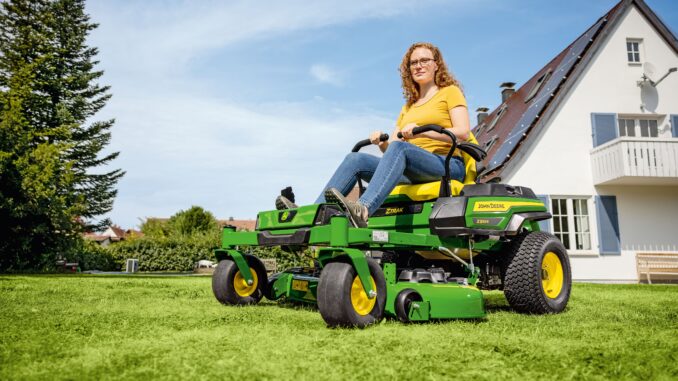
John Deere Z400 Series Lawn and Garden Tractor Models and Maintenance Guide
The John Deere Z400 Series is a residential zero-turn mower range designed for homeowners and acreage users who need faster mowing than a conventional lawn or garden tractor can usually provide. These machines are built around lap-bar steering, independently driven rear wheels, and fabricated mower decks intended for regular mowing of medium to larger lawns, open grass areas, and properties with numerous trees, beds, fences, and other obstacles.
This page serves as a working hub for John Deere Z400 Series model-specific guides, maintenance information, and troubleshooting content. It is intended to help owners identify the correct machine, understand its basic specification and intended use, and locate the type of service or repair information most relevant to their mower. For broader information covering conventional tractors as well as zero-turn equipment, see the General John Deere Lawn and Garden Tractor Guide.
About the John Deere Z400 Series Lawn and Garden Tractor Series
The John Deere Z400 Series occupies the middle part of John Deere’s residential zero-turn mower range. It is generally aimed at users who want more deck strength, mowing capacity, comfort, and durability than entry-level residential zero-turn mowers, but who do not necessarily require the commercial-duty specification of higher Z500, Z700, or Z900 Series machines.
Z400 Series models are typically powered by gasoline V-twin engines in roughly the 21.5 to 24 horsepower range, depending on the model and production period. Common engine suppliers and configurations include Briggs & Stratton V-twin engines and Kawasaki V-twin engines. Actual engine displacement, filtration arrangement, oil capacity, and service parts vary by model, so owners should always work from the identification label and engine specification rather than relying only on the series name.
Most Z400 Series machines use a fabricated steel mower deck rather than a lighter stamped deck. Deck widths commonly include 48-inch, 54-inch, and 60-inch options. The fabricated-deck design is intended for repeated mowing over larger residential lawns, rougher turf, and properties where occasional contact with twigs, uneven ground, or light debris is more likely. It does not make the machine immune to deck damage, however; bent blades, damaged spindles, cracked anti-scalp wheels, and bent deck hangers remain common service concerns.
The Z400 Series is a zero-turn mower family rather than a conventional lawn tractor or garden tractor family. It uses two independent rear hydrostatic wheel drives controlled by steering levers. There is no traditional steering wheel, front transaxle, or gear-shift transmission. The front caster wheels support the mower and allow rapid changes of direction, while the rear drive wheels provide propulsion and steering.
Typical Z400 Series features can include:
-
Dual hydrostatic transmissions with separate control levers.
-
Fabricated Accel Deep mower decks.
-
Electric PTO clutch engagement.
-
Adjustable cutting-height systems.
-
High-back seats and armrests on selected models.
-
Service-friendly deck washout or deck-cleaning arrangements, depending on model.
-
Hour meters or instrument displays on selected versions.
-
Mulching, side-discharge, and bagging capability where supported.
-
Optional tow-behind carts and light lawn-care equipment where the owner’s manual permits towing.
Compared with a John Deere S Series lawn tractor, a Z400 Series mower generally offers faster mowing speed and much better maneuverability around landscaping. Compared with an X300 or X500 Series tractor, it gives up the conventional steering-wheel layout and much of the tractor-style attachment versatility. Compared with a Z500 or Z700 Series mower, the Z400 Series is usually a more homeowner-oriented choice, with lighter overall construction and fewer premium or commercial-duty features.
John Deere Z400 Series Lawn and Garden Tractor Models
The Z400 designation and related model naming can overlap with earlier John Deere residential zero-turn products marketed under EZtrak, M ZTrak, or other regional and production-era naming conventions. When ordering parts or selecting repair information, use the mower’s complete model designation, serial number, engine identification number, deck size, and production code. A Z425, Z445, or Z465 may have meaningful differences in engine components, deck parts, electrical switches, hydrostatic-drive components, and belt routing depending on its build period.
Z400 Series Lawn and Garden Tractor Maintenance Guides
Z400 Series maintenance should focus on the mower as a complete system: engine, hydrostatic wheel drives, mower deck, electrical controls, safety interlock system, tires, steering levers, caster wheels, and frame. A zero-turn mower can continue to operate while developing problems that gradually reduce cut quality, traction, engine cooling, or drive performance. Regular inspection is usually much less expensive than repairing a failed spindle, electric PTO clutch, hydrostatic drive belt, engine cooling system, or damaged mower deck.
Routine Service and Checks
Begin each mowing season by checking the engine oil level and condition, air filter, fuel system, spark plugs, battery condition, tire pressure, deck belt, drive belt, and mower blades. During the mowing season, clean accumulated grass from the engine screen, cooling fins, muffler area, deck top surface, and hydrostatic-drive area. Dry grass, leaves, oil residue, and compacted debris can contribute to overheating, belt wear, fire risk, and poor machine performance.
Engine oil and filter intervals depend on the installed engine and operating conditions. A mower used in dusty conditions, dry summer grass, leaf collection, or heavy mulching often needs more frequent air-filter inspection and cleaning than a mower used on a clean, lightly maintained lawn. Do not rely only on the number of mowing sessions; use the hour meter where fitted and keep a written record of service dates and operating hours.
Key routine maintenance areas include:
-
Engine oil level, oil condition, and scheduled oil and filter changes.
-
Air-filter inspection, cleaning, and replacement.
-
Fuel-filter condition and fuel-line inspection.
-
Spark plug service, ignition-wire condition, and battery-terminal cleaning.
-
Cooling-screen, engine-fin, and muffler-area cleaning.
-
Hydraulic-drive area inspection for leaks, debris, damaged belts, and loose hardware.
-
Tire-pressure checks, especially before diagnosing uneven cutting or poor steering response.
-
Deck-belt, drive-belt, pulley, idler, and spindle inspection.
-
Safety-switch, seat-switch, PTO-switch, and parking-brake function checks.
Useful internal content targets include Z400 Series lawn and garden tractor service interval checklist, DIY maintenance for Z400 Series lawn tractors, Z400 Series engine oil and filter service guide, Z400 Series zero-turn seasonal maintenance checklist, and Z400 Series battery, fuel system, and electrical inspection guide.
Mower Deck, Cutting Quality, and Belt Care
The mower deck is the part of a Z400 Series mower that usually receives the most wear. Even a mower with a strong engine and properly functioning hydrostatic drives will deliver poor results if the deck is dirty, unlevel, fitted with dull blades, or running with worn pulleys and belts.
Inspect the blades frequently for dull cutting edges, bends, cracks, excessive wear, and damage from stones, roots, curbs, or hidden debris. Sharpen blades evenly and keep both sides balanced. An unbalanced blade can produce vibration that damages spindle bearings, deck shells, bolts, and mounting hardware.
Deck leveling should be checked whenever cut quality changes, blades are replaced, deck hangers are serviced, tires are changed, or a mower begins to scalp on one side. Measure the blade-tip height on a level surface and confirm that the deck follows the recommended side-to-side and front-to-rear relationship for that particular model and deck.
Deck maintenance should include:
-
Removing compacted grass from the underside and top of the deck.
-
Checking blade condition and torque.
-
Inspecting spindle housings for noise, heat, looseness, or grease leakage.
-
Inspecting deck belts for cracks, glazing, fraying, stretching, or contamination.
-
Checking idler pulleys and tension arms for free movement.
-
Inspecting anti-scalp wheels, brackets, deck wheels, and height-adjustment components.
-
Looking for cracked welds, bent deck edges, damaged discharge chutes, and loose fasteners.
-
Confirming that the PTO clutch engages smoothly and does not slip under normal mowing load.
Useful internal guide targets include Mower deck maintenance and cutting quality on Z400 Series tractors, Deck belt and spindle service for Z400 Series lawn and garden tractors, How to level a John Deere Z400 Series mower deck, Z400 Series blade replacement and balancing guide, and Z400 Series Accel Deep deck cleaning and inspection checklist.
Steering, Axle, and Chassis Maintenance
A Z400 Series machine does not steer through a conventional front steering axle. Instead, the lap bars control the independent rear hydrostatic transmissions, while the front caster wheels pivot freely as the mower changes direction. This design makes the mower highly maneuverable, but it also means tire pressure, caster-wheel condition, transmission response, and control-lever adjustment have a direct effect on tracking and handling.
Inspect the front caster wheels for loose bearings, bent forks, damaged tires, worn pivot bushings, and grass or string wrapped around the wheel hubs. Check that the caster wheels rotate freely and that the forks pivot without binding. A damaged caster wheel can cause vibration, poor tracking, uneven mowing, or abnormal tire wear.
Inspect the frame, operator platform, seat mounts, lap-bar pivots, deck-lift hardware, parking-brake linkage, and rear-wheel mounting hardware. Look closely for loosened bolts, cracked brackets, worn bushings, and damage caused by striking curbs, trailer ramps, stumps, or other obstacles.
Useful internal guide targets include Steering and front axle maintenance across Z400 Series lawn and garden tractors, Z400 Series caster wheel and front-fork service guide, Z400 Series lap-bar adjustment and tracking guide, Z400 Series frame and chassis inspection checklist, and Zero-turn tire pressure and mowing-quality guide for Z400 Series models.
Z400 Series Lawn and Garden Tractor Troubleshooting Guides
A useful Z400 Series troubleshooting strategy begins by separating the problem into one of five systems: engine starting and operation, electrical and safety controls, PTO and mower deck operation, hydrostatic drive and traction, or cut quality and deck condition. This approach reduces unnecessary parts replacement and helps identify whether a symptom is caused by a simple adjustment, routine maintenance issue, worn component, wiring fault, or more serious repair requirement.
Because Z400 Series machines use separate hydrostatic drives and an electric PTO system, a problem that looks like an engine fault may actually involve a safety switch, seat switch, brake switch, PTO circuit, battery connection, or control-lever position.
Starting, Engine, and Fuel / Ignition Problems
Common starting complaints include no crank, crank but no start, slow cranking, hard starting after storage, starting only with choke, stalling after a few minutes, surging at idle, and loss of power under mowing load. Begin with the simple checks: fuel level, fresh gasoline, battery condition, clean battery terminals, correct control-lever position, parking-brake setting, PTO switch position, and safety-interlock operation.
Old fuel is a major cause of starting and running problems on seasonal mowing equipment. Fuel can deteriorate during storage, leave deposits in carburetors, restrict jets, damage fuel-system components, and contribute to hard starting or surging. A clogged air filter, fouled spark plug, blocked fuel filter, weak fuel pump, loose ignition wire, or debris-packed cooling system can produce similar symptoms.
For a mower that starts but stalls under load, inspect the blades and deck for grass buildup, check for a slipping belt, verify that the engine can breathe through a clean air filter, and confirm that the fuel system delivers enough fuel at higher demand. Engine overheating, incorrect choke use, blocked cooling fins, and mower decks packed with wet grass can all reduce power.
Useful internal resources include Z400 Series lawn and garden tractor starting problems – diagnostics and fixes, Engine and fuel system issues across Z400 Series tractors, Z400 Series no-crank and safety-switch troubleshooting guide, Z400 Series carburetor and fuel-delivery problems guide, and Z400 Series engine overheating and loss-of-power guide.
Mower Deck, PTO, and Cutting Performance Problems
A deck that will not engage may be caused by a PTO switch issue, blown fuse, weak battery, damaged wiring, faulty seat or safety switch, worn electric PTO clutch, seized spindle, jammed blade, or failed deck-belt component. Before testing electrical parts, disconnect the spark plug wires, remove the ignition key, and make sure the deck is fully stopped.
If the blades engage but stop under load, inspect the deck for packed grass, dull blades, damaged spindle bearings, a slipping belt, seized idler pulleys, and excessive grass height. Mowing very tall, wet, or dense grass at full travel speed can overload the deck even when the mower is mechanically sound. Raise the cutting height, reduce travel speed, make multiple passes, and use a discharge pattern that does not force the deck to repeatedly process heavy clippings.
Uneven cutting, streaking, scalping, clumping, and excessive vibration usually point to a deck setup or blade problem rather than a hydrostatic-drive problem. Check tire pressure first, then deck level, blade condition, blade installation, spindle condition, anti-scalp wheel adjustment, and accumulated debris. A single bent blade or low tire can create an obvious and persistent cut-quality issue.
Useful internal resources include PTO and deck engagement problems on Z400 Series lawn tractors, Cut quality and deck vibration issues on Z400 Series models, Z400 Series electric PTO clutch diagnosis guide, Z400 Series uneven cut and deck-leveling troubleshooting guide, and Z400 Series blade, spindle, and pulley noise guide.
Drive, Transmission, and Traction Problems
Z400 Series zero-turn mowers use two independent hydrostatic transmissions. Common complaints include one side moving more slowly than the other, poor forward speed, weak reverse, loss of drive after the mower warms up, noisy hydrostatic units, jerky movement, inability to climb familiar slopes, and a mower that pulls to one side.
Before assuming that a hydrostatic transmission has failed, inspect the obvious causes. Confirm that the parking brake is fully released, transmission bypass valves are in the correct operating position, rear tire pressures match, rear tires have usable tread, drive belts are correctly routed and tensioned, and no debris is restricting linkage movement or cooling airflow.
Poor traction is not always a mechanical failure. Wet grass, slopes, loose soil, heavily worn tires, abrupt control-lever movements, uneven tire pressure, and a mower deck set too low can all reduce stability and drive-wheel grip. Zero-turn mowers can lose traction quickly on slopes because steering and propulsion both depend on the rear drive wheels. Avoid operating across steep slopes, avoid sudden turns downhill, and do not rely on a zero-turn mower as a substitute for a dedicated slope-capable machine.
A Z400 Series mower that tracks poorly may need control-lever adjustment, tire-pressure correction, linkage inspection, or hydrostatic-drive diagnosis. If a transmission is noisy, weak, leaking, or repeatedly loses drive after warm-up, model-specific service information is important because drive-system designs and serviceability vary between production periods.
Useful internal content targets include Drive and transmission problems on Z400 Series lawn and garden tractors, Traction and hill performance issues across Z400 Series models, Z400 Series hydrostatic-drive belt and pulley troubleshooting guide, Z400 Series zero-turn tracking and control-lever adjustment guide, and Z400 Series weak drive and loss-of-motion diagnosis guide.
Attachments and Implements for the Z400 Series Lawn and Garden Tractor Series
The Z400 Series is primarily a mowing platform, so its attachment range is generally more limited than that of a conventional John Deere garden tractor. The machine’s principal working attachment is its mid-mounted mower deck, usually in a 48-inch, 54-inch, or 60-inch-class configuration depending on the model. The deck may be used for side discharge, mulching, or grass collection where compatible equipment is available.
Common compatible or potentially supported equipment can include:
-
Mulching kits and mulch-control components.
-
Grass bagging systems and collection attachments.
-
Replacement mower decks and deck-service parts.
-
Blade sets for standard cutting, mulching, or high-lift bagging work.
-
Trailer hitches and light utility carts where towing is approved.
-
Lawn sweepers, aerators, dethatchers, and small broadcast spreaders where towing limits permit.
-
Striping kits or lawn-striping accessories on selected deck configurations.
-
Protective covers and storage accessories.
-
Replacement anti-scalp wheels, deck wheels, belts, spindles, and chute components.
A Z400 Series mower should not be treated as a full garden tractor simply because it has a towing hitch or a powerful V-twin engine. It is not designed for ground-engaging work such as plowing, large tillers, heavy cultivators, or major earth-moving tasks. It also does not normally support the front-mounted snow-removal systems associated with John Deere garden tractors and heavy-duty garden tractors.
Compatibility depends on the exact mower model, deck size, frame configuration, hitch design, engine output, rear-drive system, electrical capacity, and operator’s manual limitations. A collection system that fits a 54-inch deck may not fit a 48-inch or 60-inch deck. A tow-behind implement that is manageable on level ground may be unsafe on slopes, wet grass, or soft soil. Extra weight in a cart can reduce braking control and traction, particularly when descending a slope.
Useful internal resources include Attachments and implement options for Z400 Series lawn and garden tractors, Setting up and using snow equipment and yard attachments on Z400 Series tractors, Z400 Series bagger and mulch-kit compatibility guide, Z400 Series towing limits and utility-cart safety guide, and Z400 Series mower deck accessory guide.