
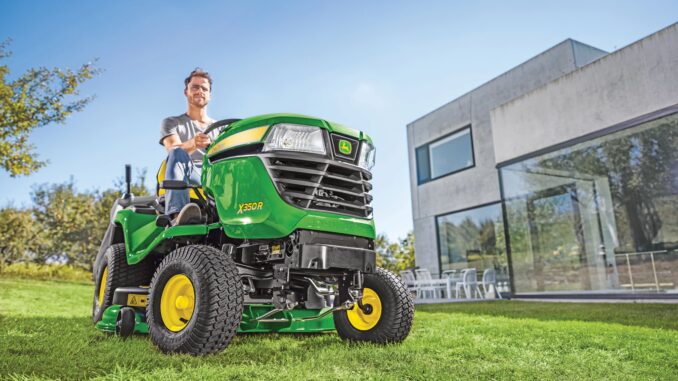
Garden tractors generally do not require a fundamentally different type of fuel from regular cars, but they do need specific fuel characteristics (octane level, ethanol content, and freshness) that are different enough to matter for performance and engine life. In practice, most garden tractors run on regular unleaded petrol similar to what you use in a car, but with tighter limits on ethanol and shelf‑life, plus occasional use of stabilised or ethanol‑free “long‑life” fuels.
What fuel do garden tractors actually use?
Most garden tractors manufactured in the last few decades are designed to run on unleaded petrol (gasoline) with an octane rating in the 95–98 RON range, which is the same as standard “premium” or “super” unleaded at UK and European pumps.
In North America, the equivalent is typically 87‑octane regular unleaded; small‑engine experts often explicitly recommend 87‑octane for lawnmowers and similar equipment, noting that higher‑octane “premium” fuel gives no meaningful benefit and can even lead to richer mixtures and fouled plugs if the engine is not tuned for it.
Crucially, the difference from a car is not the base fuel type, but how that fuel is handled:
-
Ethanol content (usually limited to 5–10%).
-
Freshness (how long it has sat in storage or the tank).
-
Additives and stabilisers used to protect small‑engine fuel systems.
Because garden tractors are often used only a few days per month, or sit for months over winter, degradation and moisture absorption become much more critical than in a car that cycles through fuel every week or two.
Ethanol in garden‑tractor fuel
Most of today’s petrol is blended with ethanol, an alcohol made from plant sources. The common grades are:
-
E5: up to 5% ethanol (95% petrol).
-
E10: up to 10% ethanol (90% petrol).
Some older texts talk about “no ethanol at all” being ideal; in reality, many modern small engines are designed to tolerate up to 10% ethanol, but higher blends (E15, E85, flex‑fuel) are usually incompatible and can void warranties.
Why ethanol matters for garden tractors:
-
Hygroscopic nature: Ethanol pulls water from the air into the fuel; this can lead to phase separation (water pooling at the bottom of the tank), corrosion in fuel bowls, carburettors, and fuel lines, and erratic running or failure to start.
-
Solvent effect: Ethanol can soften or swell older rubber seals, hoses, and some plastics in carburetted fuel systems, potentially causing leaks or blockages.
-
Accelerated degradation: E10 petrol can start to break down and form gums and varnishes in weeks, especially in warm or humid conditions, whereas E5 is somewhat more stable.
Manufacturers and dealers commonly advise:
-
Use E5 where available as the best compromise between performance and compatibility.
-
If E10 is the only option, use it fresh, and empty the tank or stabilise the fuel if the tractor will sit unused for more than a few weeks.
Octane rating and fuel quality
Despite what some owners assume, high‑octane “premium” fuel generally offers no benefit for typical garden‑tractor engines and may even cause issues (richer mixtures, fouled spark plugs) if the engine is calibrated for regular unleaded. Most manufacturers simply specify:
-
Unleaded petrol, usually with a minimum octane (often 95 RON in Europe or 87 pump octane in the US).
-
Petrol with no more than 10% ethanol (i.e., E10 at most).
Octane is primarily about resistance to “knock” (pre‑ignition) in high‑compression, high‑load engines. Garden‑tractor engines are typically low‑compression, air‑cooled, and run under moderate loads, so they rarely need high‑octane blends.
What matters more is:
-
Consistent fuel quality (same brand, same grade) to avoid variable mixtures.
-
Clean fuel without obvious contaminants, debris, or wrong additives (e.g., diesel, kerosene, or more than 10% ethanol).
“Long‑life” and ethanol‑free fuels for garden tractors
Because of the problems with ethanol and short shelf‑life, many landscapers and homeowners now use ethanol‑free “long‑life” fuels such as:
-
Aspen 2T / Aspen 4T (alkylate‑based, ethanol‑free, pre‑mixed or straight‑gasoline).
-
Stihl MotoMix / Moto4plus (similar alkylate‑based chainsaw and mower fuel).
These fuels:
-
Are ethanol‑free, so they do not absorb moisture and phase‑separate.
-
Stay stable for years rather than weeks, making them ideal for tractors that sit over winter.
-
Burn cleaner, reducing carbon deposits, spark‑plug fouling, and carburettor clogging.
For a ride‑on or garden tractor, this can mean:
-
Fewer winter‑start problems.
-
Reduced carburettor maintenance and fewer fuel‑related repairs over time.
Many dealers and manufacturers now explicitly recommend such fuels, or at least strongly suggest using them when E5 or fresh E10 is not practical (e.g., for seasonal or occasional‑use machines).
2‑stroke vs 4‑stroke fuels
Most modern garden tractors are 4‑stroke, so they run on straight petrol (with or without ethanol) and lubrication comes from engine oil in the sump. However, some older or compact machines may still use 2‑stroke engines (e.g., brushcutters or some small walk‑behind mowers), and the fuel rules differ:
-
2‑stroke engines require petrol mixed with 2‑stroke oil at the manufacturer’s specified ratio (commonly 50:1 or 40:1).
-
Again, ethanol issues apply to the underlying petrol component, so many users now opt for pre‑mixed alkylate / ethanol‑free 2‑stroke fuel (like Aspen 2T) to avoid degradation and moisture problems.
For a garden tractor that is definitively a 4‑stroke, the key is to confirm engine type in the manual and then apply the petrol‑type rules above, but without adding extra oil to the tank. Mis‑adding 2‑stroke oil to a 4‑stroke tractor can cause excessive smoke, fouling, and even engine damage.
Fuel additives and stabilisers
Even when using E5 or fresh E10, fuel stabilisers are widely recommended for garden tractors because:
-
Small‑engine fuel systems are more sensitive to gum and varnish than automotive fuel‑injected systems.
-
Sitting for weeks or months at a time is common in garden use.
Best‑practice stabiliser use:
-
Add stabiliser to fresh fuel before filling the tank (or at the start of a long storage period).
-
Use a stabiliser formulated for small engines / outdoor power equipment, not just car stabilisers.
-
Follow the manufacturer’s dosage; over‑treating can sometimes create sludge or deposits.
Some manufacturers even sell ready‑mixed ethanol‑free fuel with stabiliser built in, such as Briggs & Stratton “Advanced Formula Ethanol‑Free Fuel”, which is marketed specifically for small engines and lawn equipment.
Practical “do this” checklist for garden tractor fuel
For a typical homeowner or light‑commercial user, the following approach will cover most situations:
-
Check the manual
-
Confirm required octane and ethanol limit (usually 95+ RON / 87 pump octane, up to 10% ethanol).
-
Note any explicit warnings against E10 or higher‑ethanol fuels.
-
-
Choose the right pump fuel
-
Prefer E5 unleaded where available; it’s gentler on small‑engine fuel systems.
-
If E5 is unavailable, use fresh E10 from a busy station, and avoid old‑stock or “end‑of‑pump” fuel.
-
-
Consider ethanol‑free / long‑life fuel for seasonal use
-
For tractors that see only a few mows per year, or sit over winter, Aspen 4T or similar is an excellent “set‑it‑and‑ignore‑it” option.
-
-
Never use high‑ethanol or wrong fuels
-
Avoid E15, E85, or any flex‑fuel; these are not suitable for most garden tractors and can void warranties.
-
Never put diesel, kerosene, or mixed‑with‑oil fuel (unless it’s a specifically designed 2‑stroke engine) into a 4‑stroke garden‑tractor tank.
-
-
Use stabiliser for storage
-
Before storing for more than a month, add stabiliser to fresh fuel or drain the system and carburettor if recommended by the manual.
-
-
Change fuel if you notice problems
-
Hard starting, rough running, or surging after several weeks of storage often point to old fuel or water‑contaminated fuel.
-
In such cases, drain the old fuel, replace with fresh stabilised fuel, and inspect the carburettor for deposits.
-
Real‑world implications for engine life and maintenance
Using the wrong fuel or letting fuel sit too long can lead to:
-
Corrosion in fuel tanks, carburettors, and fuel‑pump internals due to ethanol‑absorbed moisture.
-
Varnish and gum deposits in carburettor jets, leading to poor idle, surging, or failure to start.
-
Degraded O‑rings and hoses, causing fuel leaks or air‑leak‑related performance issues.
By contrast, employing appropriate fuel (E5 or ethanol‑free) plus stabiliser, and draining or treating fuel before storage, can extend the life of carburettors, fuel lines, and tanks, and reduce the need for professional servicing.
This is especially important for older carburetted tractors, where overhaul of the carburettor is both labour‑intensive and costly compared with simply using better‑quality fuel and proper storage practice.
Regional and seasonal considerations
-
UK and Europe:
Many manufacturers now work with E5 and E10, but often still recommend E5 where available and warn against E15/E85. Some dealers actively push Aspen‑type fuels for ride‑mowers and tractors due to their cleaner‑burning and stability properties. -
North America and similar markets:
Regular 87‑octane unleaded is generally recommended, with ethanol kept below 10%. Long‑term storage is common in cold climates, so fuel stabiliser and ethanol‑free fuels are widely promoted for lawn and garden equipment. -
Seasonal users (winter lay‑up):
Whether in the UK or elsewhere, the core rule is the same: either drain the fuel system and carburettor, or use fresh, stabilised, preferably ethanol‑free fuel before storing for several months.
Summary of the “different fuel” question
To answer the original question directly: garden tractors do not usually require a different fuel type from road vehicles, but they do require different fuel handling:
-
Right octane (usually standard unleaded, not premium).
-
Right ethanol level (ideally E5 or ethanol‑free; avoid E15/E85).
-
High freshness or the use of stabilised / long‑life fuel.
If you would like, I can tailor this post into a proper blog‑style article with headings, sub‑sections, and a more reader‑friendly intro/conclusion for your site.
What are the best ethanol-free fuels for garden tractors?
Below are the main options you can realistically use in a garden tractor, plus what to look for when choosing.
1. Aspen 4 (Aspen Alkylate 4‑stroke fuel)
Aspen 4 is widely regarded as one of the best ethanol‑free fuels for garden tractors and other 4‑stroke garden machinery.
Key features:
-
Ethanol‑free alkylate petrol without oil, suitable for lawnmowers, ride‑ons, tillers, generators, and similar 4‑stroke engines.
-
Very stable in storage (typically quoted at 3–5 years), so it is ideal for tractors that sit over winter or see only seasonal use.
-
Clean‑burning: reduces carbon deposits, spark‑plug fouling, and emissions compared with standard petrol.
-
Low odour and fewer harmful hydrocarbons, making it easier to handle in sheds or garages.
For a garden tractor:
-
Use Aspen 4 in the same way as ordinary unleaded, without needing to mix with oil.
-
It is especially useful if you do not want to drain the tank before storage or if you live in a humid area where E10 absorbs moisture quickly.
2. Briggs & Stratton Advanced Formula Ethanol‑Free Fuel
Briggs & Stratton markets an ethanol‑free fuel specifically for small engines, including lawnmowers and garden equipment.
Key points:
-
Ethanol‑free unleaded petrol with added fuel stabiliser, designed to stay fresh longer than standard pump petrol.
-
Directly approved for use in Briggs & Stratton–powered equipment (common on many garden tractors).
-
Suitable where you want convenience and brand‑specific compatibility without seeking a niche alkylate fuel.
For a garden tractor:
-
Good if your tractor has a Briggs & Stratton engine and you want fuel that matches the manufacturer’s own recommendation.
-
Still costs more than E5 or E10, but less hassle than sourcing Aspen in some regions.
3. Stihl Moto4plus (Alkylate 4‑stroke fuel)
Stihl’s Moto4plus is an ethanol‑free alkylate fuel aimed at 4‑stroke outdoor‑power equipment, including mowers and similar engines.
Key features:
-
Alkylate‑based, ethanol‑free petrol for 4‑stroke engines (not to be confused with MotoMix, which is 2‑stroke).
-
Designed to reduce emissions and deposits, while staying stable for long‑term storage.
-
Marketed by Stihl as a cleaner alternative for gear‑driven and engine‑driven equipment.
For a garden tractor:
-
Interchangeable in practice with Aspen 4 for most 4‑stroke garden‑tractor engines.
-
A good choice if you already buy Stihl products (chainsaws, blowers) and want to standardise on one ethanol‑free fuel brand.
4. Other “classic” or storage‑oriented ethanol‑free fuels
Some brands sell ethanol‑free, stabilised petrol aimed at classic cars and small engines. Examples include:
-
Classic Fuel Solutions Storage Plus (Ethanol‑Free) – an ethanol‑free fuel designed for long storage in engines that sit idle.
These are not as widely advertised for garden tractors, but they can work well if:
-
They are 4‑stroke unleaded petrol, not labelled for 2‑stroke or special‑blend engines.
-
You follow the octane and ethanol rules stated in your tractor’s manual (usually 87 pump octane or 95+ RON max).
Use them primarily if Aspen / Stihl / Briggs options are unavailable locally.
What to look for when choosing ethanol‑free fuel
When evaluating which ethanol‑free fuel is “best” for your garden tractor, consider:
-
Engine type (4‑stroke vs 2‑stroke):
-
Garden tractors are almost always 4‑stroke, so use ethanol‑free straight petrol (Aspen 4, Moto4plus, Briggs “ethanol‑free”) rather than pre‑mixed 2‑stroke.
-
Do not add 2‑stroke oil unless the engine is explicitly designed for it.
-
-
Storage life and shelf stability:
-
Alkylate fuels like Aspen 4 and Moto4plus are marketed for years of storage, while ordinary pump petrol (even E5) degrades in weeks.
-
-
Clean‑burn and emissions:
-
Alkylate‑based fuels reduce carbon and varnish buildup, which helps carburettors and fuel systems on older tractors.
-
-
Availability and price:
-
Aspen 4 tends to be more widely available in the UK and Europe for garden machinery; Briggs & Stratton ethanol‑free fuel is more common in North America.
-
Practical recommendation
For most garden tractors, the strongest, all‑round choice is:
-
Aspen 4 (alkylate, ethanol‑free 4‑stroke fuel) for extended storage and easy winterising, especially in the UK and Europe.
-
Briggs & Stratton Advanced Formula Ethanol‑Free Fuel if you are in North America or prefer a mainstream small‑engine brand‑specific option.
-
Stihl Moto4plus if you already stock Stihl alkylate fuel for other equipment.
If you tell me your country (e.g., UK vs US) and whether your tractor is carburetted or fuel‑injected, I can narrow this down to one or two specific products you can realistically source near you.
Fuel storage tips for garden machinery
Below are clear, practical tips you can follow.
1. Use the right fuel and treat it properly
-
Buy fresh fuel from busy stations and avoid “old stock”; regular petrol starts degrading within days to weeks, especially ethanol‑blended E10.
-
For long‑term storage, choose ethanol‑free or alkylate fuel (e.g., Aspen 4, Stihl Moto4plus), which can last several years without going stale.
-
If you use regular petrol, add fuel stabiliser when filling the tank (or jerrycan) and run the engine for a few minutes to circulate treated fuel through the carburettor.
2. How to store fuel in the machine (or not)
Manufacturers and dealers differ slightly in advice, but the two main approaches are:
-
Empty the tank (often Stihl, Honda, many UK dealers):
-
Run the engine until it stops on its own, or drain the tank and carburettor so no untreated fuel sits for months.
-
Helps prevent varnish, gum, and clogged jets when you bring the machine out in spring.
-
-
Top‑off and stabilise (often Briggs & Stratton, some tractor manuals):
-
Fill the tank with fresh, stabilised fuel right to the top to reduce air space and condensation.
-
Run the engine for 5–10 minutes so treated fuel reaches the carburettor.
-
For garden tractors, a common “best of both” is: use ethanol‑free / alkylate fuel in the tank so you do not need to drain it, but still follow normal oil, filter, and general maintenance checks.
3. Store standing fuel (in cans) safely
If you keep petrol in jerrycans for garden machinery:
-
Use approved, labelled fuel containers (metal or approved plastic) designed for petrol, not generic bottles or food‑type containers.
-
Keep cans tightly sealed and store them in a cool, dry, ventilated place away from ignition sources (heaters, boilers, sparks, direct sunlight).
-
Label containers clearly as “petrol for garden machinery” and avoid mixing with diesel or 2‑stroke mix.
4. Seasonal storage steps for petrol machines
When you’re putting lawn mowers, brushcutters, or garden tractors away for winter:
-
Clean the machine to remove grass, oil, and debris.
-
Manage the fuel:
-
Either drain the tank and run the engine dry (if using regular E5/E10), or
-
Fill with fresh, stabilised or ethanol‑free fuel and run to circulate it.
-
-
Change the oil while the engine is warm so contaminants drain out properly.
-
Store in a dry, sheltered place (garage or shed) and cover if needed, but allow airflow to avoid condensation.
5. General “do not” list
-
Do not leave untreated petrol sitting for months in the tank or can; it degrades quickly and invites gum and water.
-
Do not store more than needed; 5–10 litres is usually enough for a typical garden.
-
Do not store machinery with a half‑empty tank unless the fuel is treated and you are following a “top‑off and stabilise” method.
-
Do not expose fuel containers to heat or direct sunlight, as this accelerates evaporation and vapour‑pressure build‑up.
How to drain fuel from garden tractor tank safely
Here is a step‑by‑step guide you can follow.
1. Preparation and safety
Before you start, make sure:
-
The tractor is cold (not run for at least 30–60 minutes).
-
Work in a well‑ventilated, open area, away from heaters, grills, pilot lights, or sparks.
-
You have:
-
Approved fuel‑safe container (metal or certified plastic gas can).
-
Fuel‑resistant gloves and safety glasses.
-
Rags and absorbent pads nearby for spills.
-
Tools: funnel, siphon pump, pliers (for hose clamps), spanner if you plan to crack the carb bowl or fuel‑line fittings.
-
Unhook or disable the spark plug so the engine cannot start accidentally while you are working on fuel.
2. Method A – Siphoning from the tank (simplest)
Best if there is no easy drain tap on the tank.
-
Place the fuel‑can lower than the tank (on the ground, tractor on level ground).
-
Remove the fuel cap and straighten the filler neck if possible.
-
Insert one end of the siphon pump hose into the tank; keep it submerged but not touching the very bottom (to avoid sucking up sediment).
-
Put the other hose end into the fuel‑can.
-
Pump the siphon a few times to start the flow; gravity will continue the transfer.
-
Let it drain until only a small amount remains, then stop and re‑cap the can tightly.
Important: Never suck fuel through a tube with your mouth; only use a mechanical siphon pump.
3. Method B – Drain via the fuel line (if the tractor has a fuel tap)
Many garden tractors have a fuel shut‑off valve between the tank and carburettor.
-
Move the fuel‑valve to “OFF”.
-
Position a fuel‑safe container under the feed line.
-
If the line has a hose‑clamp, loosen it or use hose‑clamp pliers to block the line until you’re ready.
-
Disconnect the fuel line at the carburettor or at the tank outlet (depending on design), allow fuel to drain into the container, then re‑fit and tighten the line.
This method avoids opening the filler cap and is often cleaner if the tank feed point is accessible.
4. Method C – Drain via the carburettor float bowl (to clear fuel system)
If you are mainly emptying old or contaminated fuel:
-
Place a small container under the carburettor bowl.
-
Using a spanner, loosen the bowl‑drain bolt (usually 10 mm; consult engine manual).
-
Allow fuel to drain from the bowl into the container, then re‑tighten the bolt.
-
If needed, repeat after briefly opening the fuel valve so more fuel runs through the line into the bowl before re‑emptying.
This does not empty the whole tank; it is usually combined with one of the above methods.
-
Re‑use if clean and fresh:
-
If the fuel is only slightly old (a few weeks, not yellow/brown or sludgy), you can mix it 50:50 with fresh fuel in a car or mower that can tolerate older fuel.
-
-
Dispose of bad fuel properly:
-
Do not pour old or contaminated fuel down drains or onto soil.
-
Take it to a local hazardous‑waste or fuel recycle point (many garages, councils, or DIY chains accept small quantities).
-
6. Final checks after draining
-
Re‑fit all caps and lines securely and double‑check for leaks.
-
If the tractor will sit for months, run the engine until the remaining fuel in the carburettor is used (or use a quick‑start spray) to prevent varnish.
-
When you next refuel, use fresh, clean fuel only (preferably stabilised or ethanol‑free for seasonal machines).