
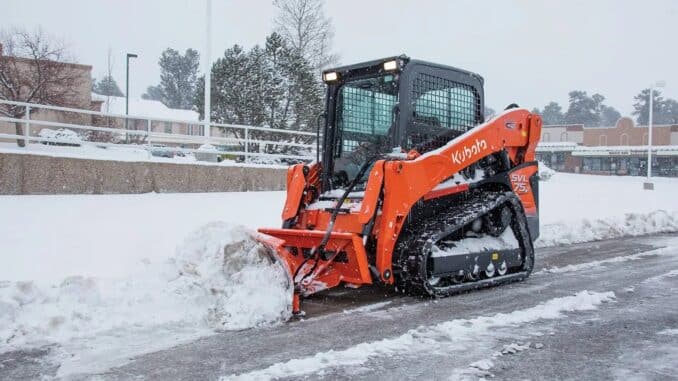
Kubota SSV Series Skid Steer Loaders: Maintenance, Parts and Repair Guide
Kubota SSV Series skid steer maintenance combines engine servicing, hydraulic-system care, drive-chain inspection and regular checks of the tyres, loader linkage and attachment coupler. A reliable maintenance programme also includes the safety interlocks that control starting, travel and loader operation.
And See:
- Kubota Construction Equipment Maintenance, Parts & Repair
- Kubota Excavator, Skid Steer and Track Loader Serial Number Lokup
This guide covers Kubota SSV models, service requirements, replacement parts and general troubleshooting. It explains how to approach starting problems, loss of travel, weak hydraulics, overheating, chain-case issues, attachment faults and regeneration warnings before moving to machine-specific repair instructions.
Exact fluid specifications, service intervals, torque settings, chain adjustments and diagnostic values must come from the operator’s manual and workshop information for the machine’s serial number and configuration.
Kubota SSV Series Models: Current and Legacy Directory
The verified Kubota SSV skid steer range consists of two principal models:
-
Kubota SSV65.
-
Kubota SSV75.
Both appear in Kubota’s SSV product information and manufacturer parts resources. No additional principal SSV models or separately named earlier generations were verified in the material reviewed for this guide.kubotausa+1
Older and newer production machines may retain the same SSV65 or SSV75 name while using different components. Production revisions therefore need to be identified by serial number, not assumed from the model designation alone.
Kubota SSV65
The SSV65 is the smaller of the two documented SSV models.
Kubota’s published North American specification identifies a turbocharged V2607 common-rail diesel engine and a vertical-lift loader arrangement. The brochure lists gross engine power of 64 hp and a rated operating capacity of 1,950 lb at 50% of tipping load for the specified configuration.kubotausa
Maintenance priorities include:
-
Engine oil and filtration.
-
Fuel-system cleanliness.
-
Cooling-pack inspection.
-
Hydraulic oil and filters.
-
Drive-chain cases.
-
Tyres and wheels.
-
Loader-arm pivots.
-
Attachment locking.
-
Safety controls.
Use the machine’s actual specification when selecting tyres, filters and hydraulic components.
Kubota SSV75
The SSV75 is the larger machine in the documented SSV range.
Kubota’s published North American specification identifies a turbocharged V3307 common-rail diesel engine and vertical-lift loader geometry. The brochure lists gross engine power of 74.3 hp and a rated operating capacity of 2,690 lb at 50% of tipping load for the specified configuration.kubotausa
Its servicing categories broadly overlap with the SSV65, but that does not establish identical capacities, filters, chain-case requirements or replacement assemblies.
Legacy Machines and Serial-Number Revisions
Kubota’s OEM parts resources separate SSV machines into production groups, including:
-
SSV65 entries covering serial numbers 10001–19999 and 50001 onward.
-
A separate SSV65 entry covering serial numbers 20001–49999.
-
SSV75 entries covering serial numbers 10001–19999.
-
SSV75 entries covering serial numbers 20001–49999.
-
SSV75 entries covering serial numbers 50001 onward.
These are parts-catalogue application groups, not new principal model names. Check the relevant assembly diagram because individual components may have additional restrictions.shop.kubotausa
Configuration Codes Are Not Separate Model Families
Kubota’s configuration listings contain extended designations such as:
-
SSV65C.
-
SSV65H.
-
SSV65P.
-
SSV65PH.
-
SSV75C.
-
SSV75H.
-
SSV75P.
-
SSV75PH.
Numerous combined suffixes also appear. These catalogue entries distinguish equipment configurations; they should not be presented as dozens of unrelated skid steer models.kubotausa
Record the complete designation where available, but do not assign a universal meaning to each letter without checking the applicable catalogue or build information.
Important SSV Equipment Differences
Before servicing or troubleshooting, establish whether the machine has:
-
Mechanical hand-and-foot controls or ISO pilot controls.
-
Standard-flow or high-flow auxiliary hydraulics.
-
Open or enclosed operator station.
-
Mechanical or hydraulic attachment coupling.
-
Multifunction attachment controls.
-
Keyed or optional keyless starting.
-
Additional electrical attachment connections.
Kubota documents different control arrangements, optional high-flow hydraulics and an optional keyless-start installation for SSV machines. These differences affect both operation and diagnosis.kubotausa+1
Identify Your Kubota SSV Before Buying Parts
Record:
-
Complete model designation.
-
Machine serial number.
-
Engine model and serial number.
-
Control arrangement.
-
Hydraulic-flow configuration.
-
Cab or canopy specification.
-
Tyre size and type.
-
Attachment-coupler arrangement.
-
Attachment identification.
-
Identification numbers on replacement assemblies.
-
Previous modifications.
Photograph identification plates and keep them with service records.
Do Not Confuse SSV and SVL Parts
SSV machines are wheeled skid steer loaders. SVL machines are compact track loaders.
Some attachments or service components may share applications, but the drive systems, chassis and maintenance requirements are not interchangeable. Confirm the actual part application rather than relying on a listing that broadly mentions “Kubota skid steer parts.”
Keep a Service and Fault Record
A useful record includes:
-
Date and operating hours.
-
Work completed.
-
Fluids used.
-
Filter and replacement-part numbers.
-
Warning codes.
-
Measurements.
-
Leaks or wear found.
-
Attachment changes.
-
Repairs requiring follow-up.
For intermittent faults, record whether the machine is hot or cold and which functions stop working.
Kubota SSV Skid Steer Maintenance
Use the schedule for the exact machine and its operating conditions.
Kubota’s SSV maintenance information distinguishes routine intervals from first-service requirements. It also states that harder-than-usual working conditions require more frequent inspection and maintenance.douglaslakeequipment+1
Daily and Pre-Start Checks
Follow the operator’s manual and inspect the machine before work.
Typical checks include:
-
Engine oil.
-
Coolant.
-
Hydraulic oil.
-
Fuel-system condition.
-
Visible leaks.
-
Cooling-pack obstruction.
-
Belts and hoses.
-
Tyres.
-
Wheel hardware.
-
Loader linkage.
-
Attachment locking.
-
Safety controls.
-
Warning indicators.
-
Seat belt and protective structure.
Check around hot components for accumulated debris. Record new leaks, unusual noises and changes in control response.
Engine Oil and Filter Servicing
Use the specified oil, filter and replacement interval for the installed engine.
An oil service should include:
-
Confirming the correct filter.
-
Following the prescribed draining procedure.
-
Inspecting for unusual contamination.
-
Replacing required sealing parts.
-
Refilling correctly.
-
Completing the final level check.
-
Checking for leakage.
Do not rely solely on a nominal refill quantity.
Investigate unexplained oil loss or a rising oil level rather than repeatedly correcting the level without establishing the cause.
Fuel Filters and Water Separation
Common-rail fuel systems require clean fuel and correct servicing.
Maintenance should include the applicable requirements for:
-
Fuel filters.
-
Water separation.
-
Tank drainage.
-
Accessible hoses.
-
Priming after service.
-
Clean refuelling equipment.
If difficult starting appears immediately after a filter change, verify the installation and prescribed priming procedure before assuming an injection-system failure.
Do not loosen high-pressure injection pipes as a generic bleeding test.
Air-Cleaner Maintenance
Inspect:
-
Filter elements.
-
Housing.
-
Sealing surfaces.
-
Intake hoses.
-
Clamps.
-
Signs of dust passing the filter.
Follow the permitted cleaning and replacement instructions.
A damaged or incorrectly seated element can compromise the intake system even if the filter appears relatively clean.
Cooling-Pack Maintenance
Kubota positions the SSV radiator and oil cooler above the engine compartment, providing access for cleaning and routine maintenance.kubotausa
Inspect for:
-
Dust and debris.
-
Blocked screens.
-
Material trapped around cooling components.
-
Damaged fins.
-
Coolant leaks.
-
Hose deterioration.
-
Belt problems.
Use the prescribed cleaning method. Do not damage fins or force contamination into inaccessible areas.
Never open a pressurised cooling system while hot.
Hydraulic Oil and Filters
Hydraulic maintenance involves several components rather than one universal filter change.
Kubota’s SSV maintenance chart distinguishes the hydraulic oil filter, return filter, suction filter and breather-related servicing. It also specifies different first-change requirements for certain filters.douglaslakeequipment
Before opening the system:
-
Clean the surrounding area.
-
Lower equipment as instructed.
-
Shut down the machine.
-
Release stored pressure using the correct procedure.
-
Protect open connections.
-
Keep replacement parts clean.
Check hydraulic oil in the specified machine position. Kubota’s maintenance chart directs the operator to check on flat ground with the bucket lowered.douglaslakeequipment
Drive-Chain Case Maintenance
The chain cases are a major difference between SSV maintenance and tracked-loader servicing.
Include the applicable requirements for:
-
Oil-level checks.
-
Oil replacement.
-
Leakage inspection.
-
Chain-tension checks.
-
Abnormal noise.
-
Evidence of water or contamination.
Kubota’s SSV maintenance chart identifies drive-chain tension inspection and separate chain-case oil servicing. It also gives different chain-case capacities for the SSV65 and SSV75. Do not use one model’s quantity for the other or confuse chain-case oil with the main hydraulic reservoir.douglaslakeequipment
Follow the exact filling and level-checking procedure rather than adding a guessed quantity.
Tyres and Wheels
Check:
-
Correct tyre specification.
-
Inflation according to the applicable instructions.
-
Cuts and sidewall damage.
-
Embedded objects.
-
Uneven wear.
-
Wheel damage.
-
Fastener condition.
Use compatible tyres appropriate to the machine and application. Investigate substantial differences in wear or rolling characteristics before diagnosing a steering or travel fault.
Heavy-equipment tyre work requires suitable equipment and competence.
Loader Linkage and Lubrication
Follow the complete lubrication chart.
Relevant points include:
-
Lift-arm linkage.
-
Bucket links.
-
Cylinder pivots.
-
Control links.
-
Attachment-related joints where specified.
Kubota’s maintenance chart identifies multiple linkage and cylinder lubrication points. Greasing only the visible bucket pins leaves other service points unattended.douglaslakeequipment
Investigate blocked fittings and joints that will not accept grease.
Attachment Coupler Maintenance
Inspect the coupler and attachment interface for:
-
Dirt or debris preventing engagement.
-
Damaged locking components.
-
Excessive wear.
-
Bent parts.
-
Hydraulic leakage where applicable.
-
Incorrect attachment fit.
Verify engagement using the prescribed procedure before work.
A hydraulic coupler operating switch does not, by itself, prove that the attachment is correctly locked.
Cab, Door and Operator Controls
Inspect:
-
Seat belt.
-
Seat mounting.
-
Operator-restraint components.
-
Control locks.
-
Door operation where fitted.
-
Visibility.
-
Cab filters.
-
Wipers and washers.
-
Warning indicators.
Do not bypass a safety switch to keep the loader working.
Kubota SSV Parts Guide
Filters and Service Kits
Common service items include:
-
Engine oil filter.
-
Fuel filters.
-
Air-cleaner elements.
-
Hydraulic filters.
-
Breather filters.
-
Cab filters.
-
Belts.
-
Sealing washers.
-
Approved fluids.
Compare kit contents with the machine’s serial-number application and the work due.
A kit labelled “SSV65/SSV75” does not automatically include every item needed for every service.
Drive-Chain and Chain-Case Parts
Repairs can involve:
-
Drive chains.
-
Sprockets.
-
Bearings.
-
Seals.
-
Covers.
-
Gaskets.
-
Adjustment-related components.
-
Mounting hardware.
Identify the cause of noise, leakage or abnormal movement before ordering.
Where internal wear or contamination is suspected, inspect the complete affected assembly rather than replacing the most accessible component alone.
Pins, Bushes and Loader Linkage
A complete joint repair may require:
-
Pins.
-
Bushes.
-
Seals.
-
Shims.
-
Retainers.
-
Grease fittings.
-
Associated hardware.
-
Repair of damaged mounting bores.
Fresh grease does not restore a worn joint.
Hydraulic Hoses and Couplers
Replacement lines must match:
-
Application.
-
Pressure requirements.
-
Fittings.
-
Length.
-
Routing.
-
Movement allowance.
-
Protective arrangements.
Correct rubbing, twisting or trapping that contributed to the original failure.
Pumps, Motors and Valves
Purchase major hydraulic assemblies after diagnosis.
Confirm:
-
Affected functions.
-
Temperature-related behaviour.
-
Fluid and filter history.
-
Warning information.
-
Component identity.
-
Contamination condition.
-
Prescribed test results.
A slow loader does not automatically need a pump, and a machine that will not travel does not automatically need a drive motor.
Electrical and Emissions Parts
Before replacing a sensor, solenoid, switch or controller:
-
Preserve fault codes.
-
Inspect the relevant wiring.
-
Check connections.
-
Follow the diagnostic procedure.
-
Confirm replacement-part application.
-
Identify any setup requirements.
The SSV maintenance chart includes inspections and replacement requirements for emissions-related piping. A warning associated with a sensor therefore should not automatically lead to sensor replacement without checking the surrounding system.douglaslakeequipment
Attachments and Wear Parts
Confirm attachment compatibility by:
-
Mounting arrangement.
-
Weight.
-
Hydraulic flow.
-
Hydraulic pressure.
-
Return requirements.
-
Case-drain requirements.
-
Electrical controls.
-
Machine operating limits.
Kubota publishes separate performance-matching information for standard-flow and high-flow SSV configurations. Physical connection alone does not establish suitability.kubotausa
Kubota SSV Problems and Repairs
The following are troubleshooting categories, not defects proven to affect every SSV65 or SSV75.
Engine Will Not Crank
Separate:
-
No electrical power.
-
Indicators present but no starter response.
-
A single click.
-
Repeated clicking.
-
Slow rotation.
-
Intermittent operation.
Check the prescribed starting conditions and electrical supply using the correct procedure.
Account for optional keyless-start equipment where installed. Kubota’s installation information shows additional wiring and connections that must be considered during diagnosis.kubotausa
Never bridge terminals or bypass interlocks to operate the machine.
Engine Cranks but Will Not Start
Record whether the fault followed:
-
Running out of fuel.
-
Filter replacement.
-
Refuelling.
-
Storage.
-
Cold weather.
-
Electrical work.
-
Washing.
Follow the correct starting and priming procedure.
Common-rail diagnosis requires appropriate equipment and should not be replaced by improvised fuel-line tests.
Engine Starts but Loader Will Not Move
Treat engine operation and travel enable as separate issues.
Record:
-
Parking-brake indication.
-
Warning codes.
-
Operator-restraint status.
-
Whether lift and tilt work.
-
Whether auxiliary hydraulics work.
-
Whether the fault is intermittent.
A safety-control or travel-enable complaint should not immediately lead to a hydraulic drive replacement.
Do not defeat interlocks to test the machine in normal operation.
Lift and Tilt Will Not Operate
Establish whether:
-
Both functions are disabled.
-
Only lift is affected.
-
Only tilt is affected.
-
Travel remains normal.
-
A warning appears.
-
The problem changes with control position.
Identify the control configuration before diagnosis. Mechanical hand-and-foot and pilot-controlled machines do not necessarily follow the same control-system test procedure.kubotausa+1
Loader Is Weak or Slow
Determine whether the complaint affects:
-
Lift.
-
Tilt.
-
Travel.
-
Auxiliary hydraulics.
-
Several functions together.
-
Operation only when hot.
Check operating settings, service history and accessible components before major replacement decisions.
Use the prescribed pressure, flow and leakage tests to locate the fault.
One Side Travels Weakly or the Machine Pulls
Record forward and reverse behaviour under comparable, safe conditions.
Inspect tyre condition and the accessible drive system before assuming a hydraulic motor failure.
Note any:
-
Chain-case noise.
-
Leakage.
-
Temperature-related change.
-
Difference between low and high travel ranges.
-
Recent tyre or drive-system work.
Chain-Case Noise
Describe whether the sound occurs:
-
During straight travel.
-
During turns.
-
In one direction.
-
Under load.
-
On one side.
-
After warming.
Check the prescribed oil and inspection requirements. Do not keep operating a machine with a significant new mechanical noise while waiting for it to become easier to identify.
Engine or Hydraulic Overheating
Stop for a serious warning or visible fluid loss.
After safe cooling, inspect the relevant system and record the work being performed when the warning appeared.
Distinguish engine coolant temperature from hydraulic oil temperature.
An attachment-related temperature rise needs investigation of both attachment requirements and machine condition, not simply a larger cooling fan or repeated cooling breaks.
Auxiliary Attachment Will Not Operate
Determine whether the fault follows the attachment or stays with the loader.
Check:
-
Selected operating mode.
-
Standard-flow or high-flow requirement.
-
Coupler connection.
-
Continuous-flow controls.
-
Electrical connectors.
-
Case drain where required.
-
Attachment maintenance.
Kubota documents different auxiliary-flow capabilities for SSV65 and SSV75, with optional high-flow equipment on each. Do not assume high flow is fitted because a machine has auxiliary couplers.kubotausa
DPF and Regeneration Warnings
Kubota’s published SSV engine information identifies common-rail injection, EGR and a diesel particulate filter.kubotausa
Follow the correct warning sequence and regeneration instructions for the machine.
Repeated warnings require diagnosis. Clearing a code or repeatedly attempting regeneration does not establish that the underlying problem has been corrected.
Observe the manual’s precautions around hot exhaust components and combustible materials.
Loader Arms or Bucket Drift
Drift requires testing of the relevant circuit.
Lower equipment and keep clear. The symptom alone does not identify whether a cylinder, valve or another circuit component is responsible.
Never inspect drift while standing beneath raised loader arms.
Hydraulic Leaks
Identify the source safely.
Never use hands to search for a pressurised leak. Follow the specified shutdown and pressure-release procedure before opening the circuit.
A suspected hydraulic injection injury requires immediate emergency medical attention.
Excessive Linkage Play
Locate each loose joint before purchasing parts.
Several worn pivots can combine to produce substantial bucket movement. Inspect pins, bushes, retainers and surrounding bores rather than assuming one replacement pin will restore the whole assembly.
Safe Kubota SSV Repairs
Before maintenance:
-
Park on firm, level ground.
-
Lower the loader arms and attachment where possible.
-
Follow the shutdown procedure.
-
Prevent unintended starting or movement.
-
Release stored pressure as instructed.
-
Allow hot components to cool.
-
Use approved supports where required.
When raised loader arms are necessary for maintenance, use the manufacturer’s lift-arm stopper and follow its installation procedure. Never rely on hydraulic pressure alone.
Kubota’s SSV operator’s manual contains a dedicated lift-arm-stopper procedure, while its accessory installation instructions also require mechanical protection when working with raised loader arms.kubotausa+1
Cab tilting, major drive repairs, high-pressure testing and safety-system diagnosis require the proper instructions and equipment.
Inspecting a Used Kubota SSV Skid Steer
A useful inspection combines identification, service records, cold starting and observation after normal warming.
Check:
-
Serial number and correct parts-catalogue group.
-
Engine identification.
-
Control configuration.
-
Hydraulic-flow equipment.
-
Cooling-pack condition.
-
Tyres and wheels.
-
Chain-case leakage or noise.
-
Loader-linkage wear.
-
Attachment retention.
-
Safety controls.
-
Warning information.
-
Evidence of modified wiring.
-
Maintenance records.
Where significant hydraulic, drive or structural concerns are present, obtain an independent inspection before purchase.
Frequently Asked Questions
Which Kubota SSV models are verified?
The verified principal models are SSV65 and SSV75. Manufacturer catalogues also contain configuration codes and serial-number groups within those models.shop.kubotausa+1
Is an SSV65-2 or SSV75-2 a verified model?
Those model names were not verified in the manufacturer material reviewed for this guide. Do not assume that suffixes used on Kubota’s SVL track loaders also apply to SSV skid steers.
Do SSV loaders have drive-chain cases?
Yes. Kubota’s maintenance chart specifies drive-chain tension checks and chain-case oil servicing for SSV65 and SSV75.douglaslakeequipment
Are SSV65 and SSV75 service capacities identical?
No. The maintenance chart, for example, lists different chain-case oil quantities. Use the correct machine’s instructions rather than a shared estimate.douglaslakeequipment
Does every SSV have high-flow hydraulics?
No. Kubota lists high-flow hydraulics as optional equipment. Confirm the installed configuration before selecting an attachment.kubotausa
Can one manual cover both SSV models?
A combined manual can cover both, but model-specific values and configuration differences still apply. Match its serial-number coverage and instructions to the machine.gartontractor
Should a loader that will not move automatically receive a drive motor?
No. Establish the travel-enable conditions, warning information and diagnostic test results before replacing major components.