
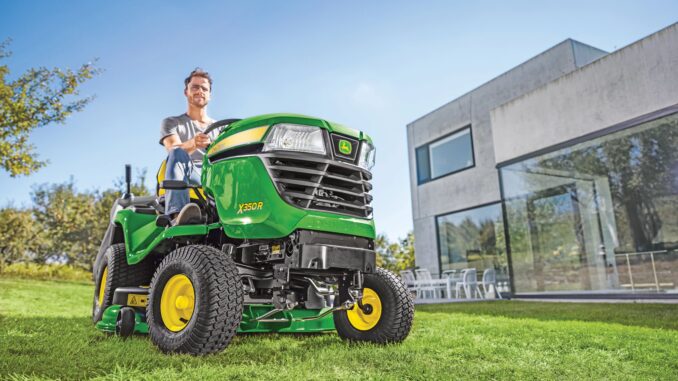
The John Deere LA105 is a residential lawn tractor from Deere’s 100 Series/LA-series family, built for homeowner mowing rather than heavy-duty estate or commercial work. In North American specification, it commonly uses a 19.5 hp Briggs & Stratton single-cylinder gasoline engine, a 5-speed gear-drive transaxle, and a 42-inch mower deck.
For most owners in the USA and Canada, the LA105 is used for routine weekly mowing, light seasonal yard work, and basic homeowner towing jobs within the machine’s limits. This guide focuses on what owners usually need most: realistic DIY repairs, symptom-first troubleshooting, maintenance planning, parts identification, and a detailed FAQ covering common search questions.
General overview of the John Deere LA105
The John Deere LA105 sits near the simpler end of Deere’s homeowner tractor lineup, which makes it attractive to DIY owners because the core systems are fairly straightforward to access and understand. It is not designed for heavy ground-engaging work or repeated commercial-style use, so condition of belts, blades, fuel system parts, and routine service items matters a lot to overall reliability.
The key systems on this model include:
-
Engine and fuel system: Briggs & Stratton single-cylinder engine, air filtration, spark ignition, inline fuel filter, and carbureted fuel delivery.
-
Mower system: 42-inch deck, two blades, spindle assemblies, deck belt, idlers, and deck lift/level adjustment points.
-
Drive system: 5-speed gear transaxle, clutch/brake linkage, traction drive belt, and shift linkage.
-
Electrical system: 12-volt battery, ignition switch, safety interlocks, starter circuit, charging circuit, and headlights.
Several common service parts owners regularly buy for this model include the fuel filter AM116304, oil filter AM125424, deck belt GX20072 / GY20570, traction drive belt GX22036, blade GX22151, packaged blade set GY20850, ignition switch GY20074, and battery TY25878.
John Deere LA105 troubleshooting approach
The best way to diagnose LA105 problems is to start with the symptom the owner can actually observe, then narrow down the likely causes by system. That matters on this model because starting faults, weak mowing performance, and drive complaints can come from several simple maintenance-related issues before they point to a major failed component.
The main symptom categories for this tractor are:
-
Starting issues.
-
Running issues such as surging, misfire, or stalling.
-
Cut-quality problems.
-
Vibration and unusual noise.
-
Overheating or fluid leaks.
-
Transmission and drive complaints.
-
Electrical and safety-switch faults.
John Deere LA105 emergency and immediate repair needs
Some LA105 faults should be addressed immediately because they affect safe operation or can quickly damage other components. Fuel leaks, severe vibration, loose blades, slipping belts, and brake or drive-control faults are not “finish the yard first” problems.
4.1 Starting issues
If the tractor will not crank, only clicks, or cranks without firing, the first priority is sorting out whether the fault is electrical, fuel-related, or caused by a safety interlock. Repeated guessing often just drains the battery and makes diagnosis slower.
Common causes:
-
Weak or discharged battery.
-
Corroded or loose battery terminals.
-
Failing ignition switch.
-
Seat, brake, or PTO safety switch issue.
-
Fouled spark plug or weak spark.
-
Stale fuel.
-
Restricted fuel filter or carburetor issue.
Basic owner checks:
-
Confirm the PTO is off and the brake/clutch pedal is fully depressed.
-
Check battery cable tightness and visible corrosion.
-
Smell and inspect the fuel; replace stale gasoline before deeper diagnosis.
-
Inspect the spark plug and inline fuel filter.
-
Verify spark before assuming the carburetor is the problem.
4.2 John Deere LA105 cut-quality problems
If the LA105 leaves strips, scalps, clumps, or cuts unevenly, the problem is usually tied to blade condition, deck setup, tire pressure, deck cleanliness, or belt speed. Owners often mistake these symptoms for engine weakness when the real cause is under the deck.
Common causes:
-
Dull or bent blades.
-
Unequal tire pressure.
-
Deck out of level.
-
Worn or slipping deck belt.
-
Wet or overgrown grass.
-
Grass buildup under the deck shell.
Basic owner checks:
-
Set tire pressures to spec before touching deck adjustments.
-
Clean the underside of the deck safely.
-
Inspect both blades for damage and correct installation.
-
Check deck level side to side and front to back using the operator’s manual procedure.
-
Inspect the belt for glazing, cracks, or slack.
4.3 Vibration and noise
Strong vibration on this tractor usually points to blade damage, spindle wear, debris wrapped around rotating parts, or belt trouble. This needs attention quickly because vibration can damage bearings, pulleys, and deck hardware.
Common causes:
-
Bent blade.
-
Loose blade hardware.
-
Damaged spindle or bearing.
-
Debris around shafts or pulleys.
-
Cracked or mis-tracking belt.
Basic owner checks:
-
Stop mowing immediately if vibration is severe.
-
Inspect blades and blade mounting hardware.
-
Check spindle and idler pulleys by hand with the belt removed.
-
Remove wrapped debris before running the deck again.
4.4 John Deere LA105 overheating and leaks
If the LA105 smells hot, loses power as it warms up, or shows oil or fuel seepage, stop and inspect it before continuing. Heat and leaks can lead to fire risk, belt contamination, or engine damage if ignored.
Common causes:
-
Low engine oil.
-
Dirty cooling fins or blocked engine shrouds.
-
Old or overheated oil.
-
Fuel line or filter seepage.
-
Oil filter leak.
-
Overfilled crankcase.
Basic owner checks:
-
Check the engine oil level before restarting.
-
Inspect around the oil filter and fuel filter for leaks.
-
Clean grass and debris from the engine cooling area.
-
Replace leaking fuel parts immediately.
4.5 John Deere LA105 transmission and drive problems
If the tractor struggles to move, slips under load, or feels slow in every gear, the likely causes are often the traction belt or linkage rather than immediate internal transaxle failure. On a homeowner gear-drive mower, that is the realistic first place to look.
Common causes:
-
Worn or stretched traction drive belt GX22036.
-
Belt contamination from oil or debris.
-
Clutch/brake linkage maladjustment.
-
Shift linkage issue.
-
Internal transaxle wear.
-
Tire traction loss.
Basic owner checks:
-
Inspect the traction belt for glazing, cracking, or loss of tension.
-
Confirm the clutch/brake pedal returns fully and does not bind.
-
Look for oil contamination on the belt path.
-
If the problem remains after belt and linkage checks, dealer diagnosis is usually more realistic than guessing internal gearbox repairs.
4.6 Electrical problems
Electrical faults on the LA105 usually show up as no-crank, intermittent crank, weak charging, dead lights, or shutdowns linked to seat or PTO safety conditions. The good news is that the system is simple enough that many faults are found in the battery, terminals, ignition switch, or safety-switch circuit.
Common causes:
-
Weak battery.
-
Corroded terminals or poor ground.
-
Failing ignition switch GY20074.
-
Seat or brake safety-switch fault.
-
Charging-system problem.
-
Bulb or socket failure.
Basic owner checks:
-
Clean and tighten battery and ground connections.
-
Test battery voltage at rest and while cranking.
-
Inspect connectors at the ignition and seat switch.
-
Check whether battery voltage rises with the engine running to confirm charging action.
DIY or dealer? Repair decision guide for the John Deere LA105
The LA105 is fairly DIY-friendly for homeowners who are comfortable working safely around mower decks, belts, and basic engine service items. In practice, routine maintenance, blades, belts, battery, filters, and basic deck adjustments are realistic DIY jobs, while carburetor rebuilding, internal transmission work, valve adjustments, and complex wiring faults are better left to experienced repairers or a dealer.
Good DIY jobs
-
Engine oil and oil filter service.
-
Air filter and foam pre-cleaner service.
-
Fuel filter replacement.
-
Spark plug replacement.
-
Blade replacement.
-
Deck leveling.
-
Deck belt replacement.
-
Battery replacement.
Advanced DIY or dealer jobs
-
Carburetor cleaning or replacement.
-
Traction drive diagnosis beyond belt inspection.
-
Spindle replacement if the deck hardware is badly seized.
-
Charging-system testing.
-
Valve clearance checks or internal engine work.
-
Internal transaxle diagnosis.
Skill level guide
-
Beginner: Oil, filters, battery, spark plug, tire pressure, deck cleaning.
-
Intermediate: Deck belt, blade replacement, deck leveling, fuel filter, basic switch testing.
-
Advanced: Carburetor work, wiring diagnosis, clutch linkage setup, valve adjustment, transaxle repair.
John Deere LA105 parts needed, OEM vs aftermarket, and what information you need
Before ordering parts, gather the full model name, the tractor Product Identification Number, the engine model/type/code, and confirmation that the mower deck is the 42-inch version. That information matters because Deere and Briggs parts can vary even when tractors look nearly identical externally.
OEM parts are the best choice for belts, safety-switch parts, ignition components, and other fit-sensitive items where exact dimensions or engagement behavior matter. Aftermarket parts can be a reasonable choice for filters, blades, batteries, and tune-up parts as long as the cross-reference is exact for the LA105 and its engine/deck setup.
Where to find John Deere LA105 parts diagrams and service manuals
Owners get the best results when they use at least one official Deere source before ordering, then cross-check against a reputable Deere-focused parts retailer. That helps avoid common mistakes with belts, blade kits, and serial-sensitive components.
Useful sources:
-
John Deere operator information for operating instructions, safety procedures, deck adjustment, and service basics.
-
John Deere specifications page for engine specs, capacities, tire pressures, torque values, battery details, and drivetrain information.
-
Green Farm Parts LA105 maintenance guide for quick-reference service part numbers used by many owners.
-
JD Parts / Parts Catalog for exploded diagrams and model-specific parts lookup direct from Deere.
How to locate John Deere LA105 model, serial and engine numbers
These numbers matter because engine-side tune-up parts and tractor-side mower or drive parts are not always identified the same way. A few minutes spent finding and recording them usually prevents the wrong order later.
-
Locate the tractor Product Identification Number label on the tractor frame area as described in the operator information.
-
Record the full model exactly as shown on the tractor.
-
Find the Briggs & Stratton engine model, type, and code numbers on the engine tag or shroud.
-
Confirm the mower deck size and any deck tag details before ordering blades or belts.
-
Take clear photos of all tags for reference when ordering online or visiting a dealer counter.
Buying John Deere LA105 parts online and in physical stores
The best strategy is to identify the exact OEM part number first, then search or shop by that number rather than by a generic model description. That reduces the risk of buying a “fits many models” part that is close but still wrong.
-
Online: Best for known OEM numbers, routine consumables, belts, blades, filters, bulbs, and tune-up parts; always verify engine and deck notes first.
-
Dealer counter: Best for serial-sensitive parts, linkages, electrical switches, and anything confusing in the diagrams.
-
Retail stores: Fine for oil, spark plugs, some batteries, and common filters if the packaging clearly cross-references the LA105 or the OEM number.
Useful sources:
Step-by-step fitting guide for common John Deere LA105 parts
These are the most practical DIY jobs because they solve a large share of common homeowner problems on this model. They also fit the machine’s design well, since Deere made basic service access relatively straightforward compared with more complex equipment.
Replace the air filter and foam pre-cleaner
A clean air filter helps with hard starting, black smoke, rough running, and power loss under load.
-
Park safely, remove the key, and let the engine cool.
-
Open the air cleaner housing and remove the paper element and foam pre-cleaner.
-
Inspect for dirt, oil saturation, tearing, or rodent debris.
-
Fit the new elements correctly and reseal the cover.
-
Test-run the engine and confirm it accelerates cleanly.
Replace the fuel filter
This job is worth doing when the tractor starts then dies, surges, or acts fuel-starved.
-
Work in a ventilated area away from flames and let the engine cool.
-
Note the filter flow direction before removal.
-
Remove clamps and the old filter, then inspect the fuel hose for cracks.
-
Install the new AM116304 filter in the correct direction and secure the clamps.
-
Restart and check carefully for leaks.
Replace the spark plug
A fresh correctly gapped spark plug can improve starting, idle quality, and misfire complaints.
-
Pull the plug wire and clean around the plug first.
-
Remove the old plug and inspect it for fouling or oiling.
-
Set the new plug gap to 0.030 inch.
-
Install it by hand first to avoid cross-threading, then tighten correctly.
-
Refit the plug wire and test-start the engine.
Replace the mower blades
Blade replacement is one of the quickest ways to fix ragged cutting, striping, and some vibration complaints.
-
Disable the tractor safely and secure the deck for access.
-
Mark blade orientation before removal.
-
Remove the blade hardware and inspect spindle mounting surfaces.
-
Install the new blades correctly and torque to 65 lb-ft as listed by Deere for the 42-inch deck setup.
-
Test cut a small area and recheck for smooth operation.
Replace the John Deere LA105 deck belt
This is a high-impact repair when blade speed feels weak or the mower deck will not drive properly.
-
Lower the deck, remove the key, and note the old belt routing before removal.
-
Release tension and remove the worn GX20072 / GY20570 belt.
-
Inspect idlers and pulleys for roughness or damage before fitting the new belt.
-
Route the new belt exactly as specified for the 42-inch deck.
-
Engage the deck briefly and confirm smooth tracking with no squeal or belt jump.
Maintenance to prevent John Deere LA105 problems reoccurring
Most repeated LA105 problems are caused by skipped maintenance, stale gasoline, dirty cooling areas, worn belts, and neglected blades rather than sudden catastrophic failure. A consistent maintenance routine prevents many of the no-start, weak-cut, and vibration complaints owners associate with “old mower problems.”
Focus areas:
-
Starting reliability: Fresh fuel, clean battery terminals, healthy spark plug, and serviced filters.
-
Cut quality: Sharp blades, correct tire pressure, clean deck underside, proper deck level, and sound belt condition.
-
Fire and overheating prevention: Clean engine cooling areas, remove dry grass buildup, and fix oil or fuel leaks quickly.
-
Drive performance: Inspect traction belt and pedal/linkage action before drive complaints become severe.
-
Electrical reliability: Keep terminals clean and replace failing switches before they become intermittent no-start faults.
John Deere LA105 maintenance schedule and year-round checklist
Deere’s published specifications for the LA105 list key maintenance-reference values including 1.5 qt oil capacity with filter, 0.030 inch spark plug gap, 14 psi front tire pressure, 10 psi rear tire pressure, and 65 lb-ft blade nut torque for the 42-inch deck configuration. Deere-focused maintenance listings also identify the common recurring service parts owners replace during normal upkeep.
Daily / before each use
-
Check engine oil level.
-
Check fuel level and inspect for leaks or stale fuel smell.
-
Inspect tire pressures and visible tire condition.
-
Check the area under and around the deck for buildup or wrapped debris.
-
Confirm blades engage and disengage normally.
After first 8 hours
-
Recheck accessible hardware if the tractor is newly serviced or newly acquired and service history is uncertain.
-
Inspect belts for early abnormal wear or seating issues.
-
Recheck oil level and general condition after initial use following service.
Every 25 hours
-
Clean the mower deck underside and the engine cooling area more thoroughly, especially in dusty or heavy-growth conditions.
-
Inspect blades for wear, sharpness, and damage.
-
Check battery terminals and visible wiring connections.
Every 50 hours or yearly
-
Change engine oil and oil filter.
-
Inspect or replace the air filter and foam element as needed.
-
Replace the spark plug if due or if performance has dropped.
-
Inspect and replace the fuel filter if restricted or old.
-
Inspect deck and traction belts for wear.
Every 200 hours or similar long-interval service
-
Replace high-wear tune-up items if they have not already been replaced through annual maintenance, especially spark plug and filters.
-
Inspect spindle, idler, steering, and drive-system wear on higher-hour machines.
-
Consider deeper engine checks only if symptoms suggest it, since this is beyond normal casual maintenance.
Seasonal checklist
-
Spring: Change oil, inspect battery, sharpen or replace blades, check pressures, clean deck and engine cooling areas, inspect belts.
-
Mid-season: Recheck blades, clean the deck underside, inspect the fuel filter, and watch for belt glazing or vibration.
-
Fall/end of season: Stabilize or drain old fuel as appropriate, clean thoroughly, inspect for leaks, and note parts needed before the next season.
Repair, upgrade, or replace the John Deere LA105?
For an LA105 in otherwise sound condition, repair usually makes sense when the faults are limited to routine service parts, belts, blades, battery, switches, or deck setup issues. Upgrade or replacement becomes more logical when engine condition, drive wear, structural deck problems, and repair costs all start stacking up on a light-duty homeowner tractor.
Repair if…
-
The engine has good compression and responds well to normal tune-up work.
-
The frame, deck shell, and steering remain structurally sound.
-
The parts needed are mostly routine maintenance or bolt-on repairs.
Upgrade if…
-
You want hydrostatic drive rather than the LA105’s 5-speed gear setup.
-
You mow enough area that easier speed control and higher comfort would matter.
-
You are regularly pushing the tractor beyond normal homeowner use.
Replace if…
-
The engine, deck, and drive system all need major work at the same time.
-
The machine has repeated no-start or low-power problems even after proper tune-up and fresh fuel service.
-
Repair cost is approaching the value of a better-condition used replacement or newer mower.
Expanded troubleshooting FAQ
1. Why will my John Deere LA105 not start?
Start with the basic interlocks and power supply before assuming a major engine fault. Check PTO position, brake/clutch position, battery condition, cable connections, fresh fuel, and spark plug condition first, because those are the most common causes on a residential tractor like this.
2. Why does my John Deere LA105 click but not crank?
A clicking sound usually points to low battery power, poor cable connections, or a starter-circuit issue. Clean and tighten the battery cables, test battery voltage, and make sure the ground path is solid before replacing harder-to-reach electrical parts.
3. Why does my John Deere LA105 crank but not fire?
If the engine cranks normally but never starts, focus on spark, fuel quality, and fuel delivery. Old gasoline, a fouled spark plug, or a restricted inline fuel filter are common first suspects.
4. Why does my John Deere LA105 start and then die?
That pattern often points to restricted fuel flow, stale fuel, venting issues, or carburetor contamination. Check the fuel filter, cap venting, and fuel condition before moving on to carburetor work.
5. Why is my John Deere LA105 surging at idle?
Surging usually means the engine is not getting a steady air-fuel mixture. Dirty fuel passages, stale gasoline, intake restriction, or a partially restricted filter can all cause it.
6. Why does my John Deere LA105 lose power when mowing?
If the tractor runs acceptably unloaded but bogs down in grass, check blade sharpness, deck cleanliness, air filtration, and deck belt condition. Heavy or wet grass can also overload a healthy LA105 because it is built for routine residential mowing rather than heavy-duty cutting.
7. Why is my John Deere LA105 blowing black smoke?
Black smoke usually means the engine is running rich. The most practical first checks are the air filter, choke operation, and general fuel-system condition.
8. Why does my John Deere LA105 backfire?
Backfire can be caused by stale fuel, poor tune-up condition, carburetor issues, or incorrect throttle/choke handling at startup or shutdown. Start with fresh fuel and routine tune-up parts before assuming a deeper engine problem.
9. Why will my John Deere LA105 not stay running on a slope?
Slope-related running issues can reveal marginal fuel delivery, low oil level, stale fuel, or simply operation beyond the machine’s intended comfort zone. Check oil and fuel condition first, then be realistic about slope limits for a homeowner lawn tractor.
10. Why does my John Deere LA105 cut unevenly?
Uneven cutting is usually caused by incorrect tire pressure, deck level problems, or damaged blades rather than engine output. Set pressures first, then level the deck and inspect both blades carefully.
11. Why does my John Deere LA105 leave strips of uncut grass?
This usually happens when the blades are dull, blade speed is reduced by a slipping belt, or mowing speed is too high for conditions. Check the belt and blade edges before chasing bigger problems.
12. Why is my John Deere LA105 scalping the lawn?
Scalping usually comes from mowing too low, deck level issues, rough ground, or sudden changes in ground contour. Correct tire pressure and deck adjustment are the first things to verify.
13. Why does my John Deere LA105 clump grass?
Clumping is usually linked to wet grass, excess ground speed, or heavy buildup under the deck. Cleaning the deck and mowing more slowly often improves results quickly.
14. Why does the John Deere LA105 deck not engage properly?
Weak blade drive or poor deck engagement usually points to belt wear, routing issues, pulley trouble, or heavy debris under the deck. Inspect the belt system carefully before replacing major components.
15. Why does my John Deere LA105 deck belt keep coming off?
A belt that repeatedly jumps off often means misrouting, bent belt guides, seized idlers, pulley damage, or the wrong belt size. Confirm the part number and routing before assuming the deck itself is bent.
16. Why is my John Deere LA105 vibrating when mowing?
Severe mowing vibration usually points to a bent blade, loose blade hardware, spindle trouble, or wrapped debris around rotating parts. Stop using the machine until the source is identified because the vibration can damage other components quickly.
17. Why is my John Deere LA105 making a rattling noise underneath?
Under-deck rattling often comes from loose blade hardware, worn idlers, debris, or a failing spindle assembly. Inspect the underside carefully before operating it again.
18. Why does my John Deere LA105 squeal when I engage the blades?
A squeal at blade engagement usually indicates a glazed, loose, contaminated, or misrouted deck belt. Seized idlers can cause similar noise if the problem has progressed.
19. Why are my John Deere LA105 blades loosening?
Blade hardware needs to be installed correctly and tightened to Deere’s listed 65 lb-ft torque for the 42-inch deck setup. If blades keep loosening, inspect the mounting hardware and spindle mating surfaces for damage.
20. Why does my John Deere LA105 smell hot?
A hot smell usually comes from grass packed around the engine or deck, slipping belts, or oil/fuel reaching hot surfaces. Clean the machine and inspect for leaks before continuing to mow.
21. Why is my John Deere LA105 leaking oil?
Check around the oil filter, drain area, and crankcase for the leak source. Even a modest leak can contaminate belts and make unrelated symptoms appear worse.
22. Why is my John Deere LA105 leaking fuel?
Fuel leaks commonly show up at the inline filter, clamps, aging hose, or cap area. Treat any fuel leak as an immediate repair because of the fire risk.
23. Why will my John Deere LA105 not move?
If the engine runs but the tractor does not move, start with the traction belt, clutch/brake operation, and shift linkage. On this model, those are more realistic first suspects than an instant internal transmission failure.
24. Why is my John Deere LA105 slow in every gear?
A slipping traction belt, dragging brake, or linkage issue can reduce speed in every gear. Inspect the drive belt path carefully, especially for glazing or contamination.
25. Why is it hard to shift my John Deere LA105?
Hard shifting usually means the clutch/brake system is not fully disengaging the drive path or the linkage is binding. Check pedal travel and linkage freedom before forcing the gear selector.
26. Why does my John Deere LA105 battery keep going dead?
A battery that keeps going flat may be old, undercharged, poorly connected, or affected by a charging-system fault. Test voltage with the engine off and running before replacing random electrical parts.
27. Why do the headlights on my John Deere LA105 not work?
Start with the bulb, socket, battery condition, and visible wiring connections. The commonly listed replacement bulb for LA105 maintenance parts is AD2062R.
28. Why does my John Deere LA105 shut off when I get off the seat?
That may be normal safety-switch behavior if the PTO is engaged or the tractor is not in the correct operating condition. If it happens unexpectedly, inspect the seat switch and connector for intermittent faults.
29. Why is my John Deere LA105 using more fuel than usual?
Higher fuel use can come from heavy grass, dirty air filtration, rich running, excess idling, or dull blades that keep the engine loaded longer. Tune-up condition and mowing conditions both matter on a single-cylinder residential tractor.
30. How often should I change oil in a John Deere LA105?
Use the official maintenance guidance and your actual mowing conditions as the baseline. Many owners treat yearly oil and filter service as a minimum, with shorter intervals when hours build up quickly in dusty or hot conditions.
31. What oil capacity does the John Deere LA105 have?
Deere lists the engine oil capacity with filter as 1.4 L, or 1.5 qt. Treat that as a refill guide, then confirm the final level on the dipstick.
32. What spark plug gap does the John Deere LA105 use?
Deere lists the spark plug gap as 0.76 mm, which is 0.030 inch. Correct gap helps starting and general running quality.
33. What tire pressure should I use on a John Deere LA105?
Deere lists 14 psi for the front tires and 10 psi for the rear tires in the LA105 specification set used here. Tire pressure affects cut quality as well as handling because it changes deck attitude.
34. What is the blade torque for a John Deere LA105?
For the 42-inch deck configuration, Deere lists blade nut torque as 88 N·m, which is 65 lb-ft. That is worth following with a torque wrench rather than guessing.
35. Is the John Deere LA105 a good DIY mower to maintain?
Yes, within reason. It is a relatively DIY-friendly homeowner tractor for routine service, blades, belts, battery, and deck setup, but carburetor faults, deeper drive issues, and internal engine work are less suitable for casual repair.