
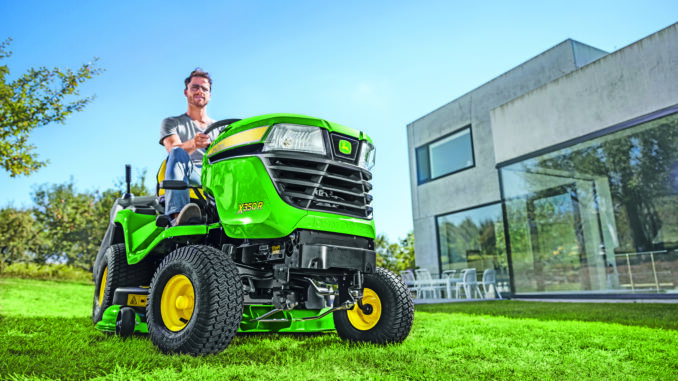
The John Deere X320 is a Select Series lawn tractor built for homeowners who want a stronger machine than an entry-level riding mower, with a 48-inch X Deck, a V-twin gasoline engine, and a belt-driven mower system paired with hydrostatic drive for normal lawn work around larger home properties.
This guide is written for USA and Canada owners who want a practical, symptom-first reference for John Deere X320 repair, troubleshooting, maintenance planning, parts buying, and realistic DIY limits before a dealer visit.
John Deere X320 model overview
The John Deere X320 sits in the Select Series lineup alongside the X300, X304, and X310, so it is generally a step above basic lawn tractors in trim and features while still aimed at residential property owners rather than commercial crews. In practical terms, it suits regular mowing, leaf cleanup, and routine property work where owners want better comfort and durability without moving into a full garden tractor or zero-turn category.
Key systems owners most often deal with on the John Deere X320 include the engine and fuel system, the 48-inch mower deck and blade drive, the traction drive belt and hydrostatic drive arrangement, and the basic electrical and safety-interlock system that governs starting and operation. The parts Deere highlights for regular service on the X320 include oil filter AM107423, in-line fuel filter GY20709, foam air filter M140295, paper air filter M150949, spark plugs M805853, traction drive belt M151277, primary deck belt M154897, secondary deck belt M154958, battery TY25878, and standard blades M145476.
John Deere X320 troubleshooting approach
Good diagnosis starts with the symptom, not the first part that looks suspicious. On the John Deere X320, the main symptom groups are starting problems, rough running or loss of power, poor cut quality, vibration or noise, drive or traction complaints, overheating from debris buildup, and electrical or safety-switch faults.
A homeowner normally gets faster results by asking what changed first: no crank, cranks but will not start, starts then dies, cuts unevenly, shakes when blades engage, loses traction on slopes, or repeatedly blows belts. That symptom-first approach helps separate simple service issues like plugs, filters, debris, belt wear, and blade damage from larger repair work such as hydrostatic, engine-internal, or electrical tracing problems.
John Deere X320 immediate repair needs
Some faults on the John Deere X320 should be handled right away because they create a safety risk or can damage expensive parts fast. Examples include fuel leaks, oil leaks onto hot engine parts, severe vibration, missing safety-function operation, damaged blades, loose belts that are shredding, and heavy grass buildup around the cooling area and muffler.
4.1 John Deere X320 starting issues
Starting trouble usually shows up as no crank, slow crank, or cranking without firing, and it matters because repeated unsuccessful starts can drain the battery and hide a simple safety or fuel fault. Common causes include a weak battery, dirty battery connections, failed brake or seat safety switch, stale fuel, a clogged fuel filter, fouled spark plugs, or restricted air filters.
-
Weak or aging battery TY25878.
-
Dirty or loose battery terminals.
-
In-line fuel filter restriction at GY20709.
-
Fouled spark plugs M805853 or poor plug gap.
-
Safety-interlock issue involving brake, PTO, or seat switch logic.
-
Verify PTO is off, brake is fully applied, and the operator procedure matches the manual.
-
Check battery cable tightness and battery condition before replacing ignition parts.
-
Inspect the fuel filter, fuel age, and spark plug condition.
-
If it still only cranks or intermittently starts, move into switch testing or dealer diagnosis.
4.2 John Deere X320 cut-quality problems
Cut-quality complaints usually show up as scalping, streaking, uncut strips, clumping, or ragged grass tips, and these problems matter because owners often blame the deck when the real issue is setup, blades, or mowing conditions. The John Deere X320 commonly points owners toward blade condition, deck level, belt condition, and proper cleaning as the first checks.
-
Dull, bent, or mismatched blades such as M145476.
-
Deck out of level, causing one side to cut lower.
-
Worn primary or secondary deck belts M154897 and M154958.
-
Wet or overgrown grass causing clumping.
-
Packed debris under the deck affecting airflow.
-
Inspect both blade sharpness and blade balance before adjusting the deck.
-
Clean the underside of the deck and verify anti-scalp wheels and front roller condition.
-
Check deck level with a gauge such as Deere’s leveling tool reference TY130907.
-
Replace damaged blades or belts if the deck still cuts unevenly after leveling.
4.3 John Deere X320 vibration and noise
Vibration that suddenly appears after engaging the mower deck is one of the most important warning signs because it can turn a simple blade problem into spindle or deck damage. Unusual noise may come from bent blades, loose hardware, failing pulleys, belt damage, or debris wrapped around rotating parts.
-
Bent or unbalanced blades.
-
Loose blade hardware or deck hardware.
-
Failing spindle or idler pulley bearings.
-
Damaged deck belts or traction belt.
-
Debris packed around pulleys or under shields.
-
Stop mowing immediately if vibration is heavy or new.
-
Inspect blades first, then belt routing and pulley movement.
-
Check for loose fasteners and wrapped string, wire, or roots.
-
Do not continue mowing until the source is identified.
4.4 John Deere X320 overheating and leaks
The X320’s air-cooled engine depends on clean cooling fins and an engine compartment free of dry debris, so overheating risk rises quickly when grass packs around the engine area. Fuel, oil, or crankcase-breather leaks also need quick attention because they can damage components and create a fire hazard near hot surfaces.
-
Grass and debris packed around engine shrouds or muffler area.
-
Low engine oil or overdue oil service.
-
Dirty cooling fins.
-
Fuel cap or fuel line issues.
-
Oil filter leakage after improper installation.
-
Shut down and clean the engine compartment before deeper diagnosis.
-
Check engine oil level and inspect the filter area for leakage.
-
Look for damaged hoses, loose clamps, or fuel seepage around the cap area.
-
If overheating or smoke continues after cleaning and oil checks, stop using the machine until repaired.
4.5 John Deere X320 transmission and drive problems
Drive complaints on the John Deere X320 usually feel like weak ground speed, poor hill performance, intermittent motion, or belt slip rather than a dramatic transmission failure. In many homeowner cases, the first suspect is not the hydro unit itself but belt wear, linkage issues, tire pressure mismatch, or overdue general inspection.
-
Worn traction drive belt M151277.
-
Incorrect tire pressure affecting tracking and traction.
-
Linkage wear or adjustment issues.
-
Heavy use on slopes or towing beyond residential expectations.
-
Internal hydrostatic wear, which is usually beyond casual DIY.
-
Confirm tire pressures are even side to side.
-
Inspect the traction drive belt for glazing, cracking, or loss of tension.
-
Check pedal and linkage travel for binding.
-
If the belt and linkage are sound but performance is still weak, that is usually dealer-level diagnosis.
4.6 John Deere X320 electrical problems
Electrical faults often look random to owners because the X320 may crank sometimes, refuse to crank other times, or lose lights or PTO function only under certain conditions. Many of these problems trace back to battery condition, terminal corrosion, blown bulbs, switch wear, or safety-interlock faults rather than major harness failure.
-
Weak battery TY25878.
-
Corroded or loose battery connections.
-
Headlight bulb failure AD2062R.
-
Safety switch or PTO switch issues.
-
Dirty wiring connections exposed to moisture and debris.
-
Start with battery voltage and terminal cleanliness.
-
Test whether the fault is tied to seat, brake, or PTO position.
-
Inspect obvious wiring damage around the battery, engine, and deck-engagement areas.
-
Use dealer help for persistent intermittent faults or switch-circuit tracing.
DIY or dealer?
For the John Deere X320, the normal DIY line is simple: homeowners can usually handle routine service, blades, filters, plugs, deck cleaning, basic belt replacement, and visual diagnosis, but internal hydrostatic work, major electrical tracing, and engine-internal repairs are better left to a dealer or an experienced small-engine technician.
Good DIY jobs
-
Engine oil and filter service using AM107423 and the correct oil quantity.
-
Foam and paper air-filter service.
-
Fuel filter replacement.
-
Spark plug inspection and replacement.
-
Blade sharpening or blade replacement, plus deck leveling checks.
-
Visual replacement of worn deck belts where routing is confirmed.
Advanced DIY or dealer jobs
-
Traction-drive belt replacement if access is limited and routing is unclear.
-
Electrical fault tracing involving safety switches or intermittent no-crank conditions.
-
Spindle, pulley, or bearing work after severe vibration.
-
Hydrostatic drive diagnosis for weak or inconsistent movement.
-
Engine smoke, compression loss, or repeated oil-fouling issues.
Skill level guide
-
Beginner: oil change, air filter service, spark plugs, deck cleaning, battery checks.
-
Intermediate: blades, deck leveling, fuel filter replacement, some belt work.
-
Advanced: electrical testing, deck teardown, traction-drive diagnosis, engine repair.
John Deere X320 parts, OEM numbers, and ordering details
Before ordering John Deere X320 parts, collect the full model name, the tractor serial or product identification information, the deck serial information, and the exact deck version because Deere parts can vary by deck width and deck configuration. Owners should also confirm the engine specification from the engine label when ordering engine service parts, because plug, filter, and tune-up details can depend on engine family and production break.
OEM parts usually make the most sense for belts, fit-sensitive deck parts, safety-related switches, and any serial-sensitive components because routing, length, and switch behavior matter more than price alone. Aftermarket parts can be reasonable for filters, batteries, and some blades if the cross-reference is exact and the seller clearly states X320 fitment with the correct deck version.
Manuals and parts diagrams
The best starting points are Deere’s operator information and Deere parts references because they show official service intervals, part numbers, and deck-specific fitment. For owners doing repair planning, a Deere-focused aftermarket lookup site can also help identify exploded diagrams and alternate supply options.
-
Official operator’s manual: Deere’s X300/X304/X310/X320 operator manual is the first place to confirm controls, safety checks, and service procedures.
-
Deere maintenance reminder sheet / parts reference: Deere’s X320/X324 with 48-inch X Deck PDF gives widely used service parts and hour intervals.
-
JDParts / Deere parts support: Deere’s owner support and parts catalog tools help verify fitment and part substitutions before ordering.
-
Model-specific aftermarket parts lookup: Jacks Small Engines and Green Farm Parts both provide X320-specific lookup pages useful for diagrams and service-item cross-checking.
Useful links:
John Deere X320 serial and engine numbers
These numbers matter because the wrong serial range or deck version can lead to the wrong belt, blade, switch, or engine-service part order. On machines that have already changed owners, labels may also confirm whether the deck or engine is original.
-
Park the tractor safely on level ground and shut the engine off before searching for labels.
-
Locate the tractor serial or identification label on the tractor frame area as described in the operator documentation.
-
Locate the mower-deck serial label on the deck housing so deck belts and blades match the actual deck, not just the tractor model.
-
Find the engine model and serial numbers on the engine label or shroud before ordering engine filters, plugs, or tune-up parts.
-
Photograph all labels before ordering so part numbers and serial breaks can be checked later.
Buying John Deere X320 parts online and in stores
The smartest parts-buying strategy is to identify the exact OEM number first, then compare price and availability rather than searching only by model name. That reduces mistakes on X320 deck belts, blades, and serial-sensitive items where similar Deere models look interchangeable but are not always the same.
-
Online: best for comparing OEM numbers, checking deck-specific fitment, and sourcing common service parts after you confirm serial information.
-
Dealer counter: best for unusual hardware, electrical parts, serial-break items, and any order where the fit is not fully clear from online listings.
-
Retail stores: acceptable for oil, grease, batteries, and some plugs or filters only when the package clearly cross-references the John Deere X320 and engine specification.
Useful sources:
John Deere X320 fitting guide for common parts
These are the most common DIY jobs because they fix a large share of everyday X320 complaints without opening major assemblies. Always remove the key, disconnect spark-plug leads where appropriate, and work on a cool machine before touching rotating or hot components.
Change the John Deere X320 engine oil and filter
This service helps prevent hard starting, internal wear, and overheating from neglected oil.
-
Warm the engine briefly, park safely, and shut it off.
-
Drain the old oil into a suitable container and remove the old AM107423 filter.
-
Make sure the old filter gasket is not stuck to the mounting surface, then oil the new gasket lightly and install the new filter hand-tight.
-
Refill with the correct engine oil amount shown on Deere’s maintenance sheet, then check the dipstick correctly and inspect for leaks.
-
Run the engine, shut it down, and recheck level after the filter fills.
Replace the John Deere X320 air filters
Dirty air filters can cause rich running, power loss, black smoke, and hard starting.
-
Open the air-cleaner housing and remove both the foam and paper elements.
-
Inspect for dust loading, oil contamination, or damage.
-
Replace with M140295 foam and M150949 paper elements if dirty or damaged.
-
Clean the housing before reinstalling the cover so dirt is not pulled into the engine.
Replace the John Deere X320 spark plugs
Fresh plugs help cure misfire, rough running, and no-start complaints tied to ignition quality.
-
Let the engine cool fully and pull each plug wire boot straight off.
-
Remove both old plugs and inspect for fouling, oiling, or heavy carbon.
-
Install the correct M805853 plug replacements and set gap to engine specification from the manual or engine label.
-
Refit the plug boots securely and test start the tractor.
Replace or inspect John Deere X320 mower blades
Blade service is one of the fastest ways to fix poor cut quality, ragged tips, and vibration.
-
Raise and secure access safely according to the manual, then remove the blade hardware.
-
Inspect blades for bends, cracks, and uneven wear before sharpening anything.
-
Replace with matched blades such as M145476 standard blades if damaged beyond safe sharpening.
-
Reinstall with proper orientation and torque to specification from the Deere manual.
-
Test cut on a small area and recheck for vibration.
Maintenance to prevent repeat problems
Regular maintenance matters on the John Deere X320 because most homeowner complaints begin as small service issues that were ignored until they affected starting, cut quality, or belt life. Cleanliness is especially important because grass debris around the engine compartment and deck can lead to overheating, poor airflow, fire risk, and accelerated belt wear.
-
Starting reliability: keep fuel fresh, replace filters on schedule, and keep the battery and terminals clean.
-
Cut quality: keep blades sharp, deck level, and belt condition under review.
-
Fire and overheating prevention: remove grass and debris from the engine compartment, muffler area, and cooling surfaces before it packs in.
-
Drive performance: watch traction-belt condition and keep tires evenly inflated.
-
Electrical reliability: keep battery connections clean and inspect wiring near high-vibration areas.
John Deere X320 maintenance schedule
The X320 service rhythm combines daily checks with 25-, 50-, 100-, and 200-hour tasks, plus annual and two-year items depending on the system being serviced. Owners in dusty, hot, or severe mowing conditions should shorten those intervals because Deere notes that extreme conditions may require more frequent service.
Daily or before each use
-
Test safety systems.
-
Check fuel level.
-
Check engine oil level.
-
Remove grass and debris from engine compartment and muffler area.
-
Visually inspect the tractor and deck for loose or damaged parts.
After 8 hours
-
Change engine oil and filter for the initial service shown on the Deere maintenance reminder sheet.
Every 25 hours
-
Check mower blades.
Every 50 hours
-
Check and adjust tire pressure.
-
Clean or service air-cleaner elements more often under dusty conditions.
-
Clean area around steering switches.
Every 100 hours or yearly
-
Change engine oil and filter.
-
Inspect and regap spark plugs.
-
Clean cooling fins.
-
Check mower drive belt.
-
Replace foam air filter, paper air filter, and fuel filter as listed on Deere’s maintenance sheet where applicable to the service plan being followed.
Every 200 hours or every two years
-
Replace fuel filter.
-
Replace service items again per Deere’s 200-hour interval on the X320 maintenance sheet, including oil filter, oil, air filters, spark plugs, and fuel filter where applicable.
Seasonal checklist
-
Spring: change oil if due, inspect blades, clean cooling areas, and confirm battery condition before the mowing season starts.
-
Mid-season: clean deck underside, inspect belts, and watch air-filter condition if mowing in dust or dry clippings.
-
Fall: sharpen or replace blades, clean the machine thoroughly, inspect fuel and air systems, and prepare for storage with fresh service items where due.
Repair, upgrade, or replace?
For most John Deere X320 owners, repair makes sense when the tractor is structurally sound and the problem is limited to normal service items, deck wear parts, belts, blades, battery, or minor electrical components. Upgrading or replacing makes more sense when repairs stack up across the engine, deck, and drive system at the same time, or when the machine no longer matches the property size and workload.
Repair if…
-
The issue is a normal wear item such as belts, blades, filters, plugs, or battery.
-
The tractor starts and drives well apart from one clear fault.
-
The frame, deck shell, and major drive components are still sound.
Upgrade if…
-
You need more traction, heavier-duty towing, or a machine better suited to larger acreage.
-
You want features your current X320 does not have, such as a different mower setup or a step up in platform capability.
Replace if…
-
The engine, deck, and drive system all need major work at once.
-
Parts cost starts approaching the value of a cleaner replacement tractor.
-
The machine has chronic wiring, hydrostatic, or structural issues that keep returning.
John Deere X320 troubleshooting FAQ
1. Why will my John Deere X320 not start?
The most common X320 no-start causes are a weak battery, dirty battery terminals, stale fuel, clogged fuel filter, fouled spark plugs, or a safety-interlock issue. Start with the simple checks first: PTO off, brake applied, battery connections clean, and fresh fuel in the tank. If it cranks but still will not fire, inspect the fuel filter and plugs before assuming a larger engine problem.
2. Why does my John Deere X320 crank but not fire?
This usually points to fuel delivery, spark, or safety-related shutdown conditions rather than a dead starter. Check for stale fuel, a blocked in-line filter, fouled plugs, or a soaked air filter causing poor combustion. If those basics are sound, the next step is ignition and switch testing.
3. Why does my John Deere X320 battery keep going flat?
A flat battery often comes from age, poor charging, corroded terminals, or repeated short-run use that never restores charge fully. Clean the cable ends, charge and load-test the battery, and inspect the tractor for a charging-system fault if the problem keeps returning.
4. Why does my John Deere X320 start and then die?
This commonly happens when fuel flow is restricted or the engine is running on poor fuel. A partly blocked filter, venting problem, contaminated fuel, or ignition issue can let it fire briefly and then stall. Start with fuel quality and filter condition before deeper diagnosis.
5. Why is my John Deere X320 running rough?
Rough running often comes from dirty air filters, aging spark plugs, contaminated fuel, or partial fuel restriction. Service the foam and paper filters, inspect both plugs, and confirm the fuel is fresh enough for reliable combustion.
6. Why is my John Deere X320 losing power while mowing?
Loss of power under load often means the engine cannot breathe properly, the blades are working too hard, or the grass conditions are too heavy for the speed chosen. Check filters, blade condition, deck cleanliness, and whether the grass is wet or overgrown.
7. Why does my John Deere X320 blow black smoke?
Black smoke usually means an overly rich fuel mixture or restricted airflow. On an X320, the first checks are the foam and paper air filters, then choke operation and fuel condition.
8. Why is my John Deere X320 hard to start when cold?
Cold starting gets harder when plugs are worn, fuel is stale, battery performance is weak, or the air filter is dirty. A basic tune-up and battery check often solves this before major repairs are needed.
9. Why does my John Deere X320 cut unevenly?
Uneven cutting usually traces to dull or bent blades, poor deck leveling, wrong tire pressure, or deck airflow problems from debris buildup. Check tire pressure first, then blade condition, then deck level.
10. Why does my John Deere X320 leave uncut strips?
Uncut strips often come from worn blade edges, reduced deck airflow, or mowing too fast for the grass conditions. Clean the deck, inspect blades, and slow down in heavy growth.
11. Why does my John Deere X320 leave ragged grass tips?
Ragged tips usually mean the blades are dull rather than bent. Sharpen or replace the blades and check that both blades match in condition and type.
12. Why does my John Deere X320 scalp the lawn?
Scalping happens when the deck is too low, the lawn is uneven, anti-scalp support is not doing its job, or the deck is out of level. Check front roller and gauge-wheel condition and confirm deck level before changing mowing technique.
13. Why does wet grass make my John Deere X320 clog?
Wet grass sticks to the underside of the deck and reduces the airflow that lifts and discharges clippings. The result is clumping, streaking, and extra belt and blade load. Waiting for drier conditions usually works better than forcing the machine through it.
14. Why are my John Deere X320 blades wearing quickly?
Fast blade wear normally points to sandy soil, hidden debris, repeated impacts, or mowing too low. Blade life improves when the deck is set correctly and the lawn is cleared of sticks and stones before mowing.
15. Why does my John Deere X320 vibrate when I engage the deck?
That usually means a blade is bent, out of balance, loose, or the spindle and pulley system is being affected by belt or bearing wear. Stop mowing immediately and inspect the blades before running it again.
16. Why does my John Deere X320 shake all the time, even with the deck off?
If vibration continues with the deck disengaged, the source may be in the engine, engine mounting, drive components, or attached hardware rather than the mower deck alone. Check for loose hardware first, then move toward dealer diagnosis if the source is not obvious.
17. Why is my John Deere X320 making a squealing noise?
A squeal often points to belt slip, worn pulleys, or a belt that has become glazed or contaminated. Inspect both deck belts and the traction belt for wear before assuming a bearing failure.
18. Why does my John Deere X320 keep throwing or shredding belts?
Repeated belt failure usually means more than normal wear. Misrouted belts, worn pulleys, damaged guards, seized bearings, or debris buildup can all shorten belt life fast. Always confirm the exact belt number and routing before fitting another one.
19. How do I know if the John Deere X320 traction drive belt is bad?
A bad traction belt often shows up as weak movement, poor hill climbing, intermittent drive, glazing, cracks, or visible slack. If tire pressures are correct and the linkage moves freely, the traction belt becomes one of the first items to inspect.
20. Why does my John Deere X320 move slowly uphill?
Slow uphill travel can come from a worn traction belt, low traction from tire condition or pressure, or normal limitation when the machine is pushed beyond residential mowing expectations. If belt and tire basics are good, hydro wear becomes more likely.
21. Why does my John Deere X320 creep or not stop cleanly?
Creeping can point to drive linkage adjustment issues or hydro-related problems rather than an engine fault. Linkage inspection is a reasonable DIY check, but internal hydro correction is usually dealer work.
22. Why are my John Deere X320 headlights not working?
The likely causes are failed bulbs, wiring issues, switch faults, or battery and charging-system problems. Since the Deere parts sheet lists headlight bulb AD2062R, bulb replacement is an easy first check before tracing wiring.
23. Why do the safety switches on my John Deere X320 seem faulty?
Safety-switch complaints often show up as intermittent no-crank, sudden shutdown when shifting weight, or refusal to engage functions unless controls are in exactly the right position. Dirt, wear, or poor switch alignment can all cause this kind of behavior.
24. Why is my John Deere X320 overheating?
Overheating on this air-cooled tractor is often caused by grass and debris packed around the engine compartment, muffler area, or cooling fins. Cleanliness is critical, and the problem should be treated quickly to avoid engine damage.
25. Why is there oil leaking on my John Deere X320?
Oil leakage may come from the filter area, drain point, breather system, or engine seals. If a leak appears right after service, check for a damaged filter gasket or incorrect installation first.
26. Why does my John Deere X320 smell hot after mowing?
A hot smell often means grass and debris are collecting around hot engine parts or a belt is slipping under load. Clean the machine thoroughly and inspect belts before using it again.
27. How often should I service my John Deere X320?
The Deere references point owners toward daily checks, 25-hour blade inspections, 50-hour air and tire checks, and 100-hour or annual service for engine oil, plugs, cooling fins, and belt inspection, with some items extending to 200 hours or two years. Severe conditions call for shorter intervals.
28. How often should I change John Deere X320 engine oil?
Deere’s X320 maintenance reminder sheet lists oil and filter service at 8, 100, and 200 hours, while Deere’s service-interval guidance also points owners to regular 100-hour or annual oil service depending on the maintenance chart being followed. For a homeowner machine, annual service is usually the safe minimum even if total hours stay low.
29. How often should I replace the John Deere X320 fuel filter?
The Deere maintenance references show fuel-filter replacement at 100/200 hours on the maintenance reminder sheet, and 200 hours or every two years on another Deere service interval reference. That difference is exactly why the machine serial, deck, and engine details should be checked against the manual for the specific tractor.
30. How often should I replace John Deere X320 spark plugs?
The Deere maintenance reminder sheet lists spark plugs at 100/200 hours, and Deere service guidance also includes plug inspection and regapping at 100 hours or annually. Replace them sooner if the engine is misfiring, hard starting, or showing obvious fouling.
31. What is the correct oil filter for a John Deere X320?
The Deere X320/X324 maintenance reminder sheet lists AM107423 as the engine oil filter for this setup. Always confirm by serial and engine specification before ordering, especially on used machines.
32. What air filters fit a John Deere X320?
For the X320/X324 with 48-inch X Deck maintenance sheet, Deere lists M140295 as the foam element and M150949 as the paper element. Those are among the most commonly referenced service filters for this model setup.
33. What spark plugs fit a John Deere X320?
The Deere maintenance reminder sheet lists M805853 spark plugs, with two required. Plug gap and final confirmation should still be checked against the engine information on the tractor.
34. Is the John Deere X320 worth repairing?
It usually is when the problem is limited to normal service parts, deck wear parts, or a single straightforward repair. It becomes harder to justify when the deck, engine, and drive system all need major work at the same time.
35. When should a John Deere X320 owner use a dealer instead of DIY repair?
Dealer help makes sense for persistent intermittent electrical faults, hydrostatic drive diagnosis, major vibration that is not solved by blade inspection, engine-internal issues, and any repair requiring special tools or deeper teardown. A good rule is simple: if the next step requires guesswork with safety systems, engine internals, or hydro components, that is usually the dealer line.
