1. Introduction
For a small‑farm contractor, their is often a fine line between what is affordable and what is needed to be productive.
Selecting the proper tractor and matching implements isn’t just a financial decision—it forms the basis of every type of work, from soil preparation to harvest logistics.
This guide takes a systematic approach to the task of how to build a body of equipment that is crucial for the work involved, but at a cost that is affordable.
2. Defining Your Operational Profile
| Parameter | Why It Matters | How to Quantify |
|---|---|---|
| Acreage Managed per Season | Determines total horsepower (HP) needed and implement width. | Sum of all contracted fields; add a 10‑15 % buffer for expansion. |
| Crop Mix | Different crops demand distinct implements (e.g., row‑crop planters vs. broadcast seeders). | List each primary crop and its acreage share. |
| Soil Type & Topography | Influences traction requirements, PTO speed, and implement compatibility. | Conduct a soil survey; note slope percentages. |
| Seasonal Workload Peaks | Guides whether you need a single multipurpose tractor or a pair of specialized machines. | Plot a timeline of tasks (tillage → planting → spraying → harvest). |
| Labor Availability | Impacts the need for self‑propelled vs. tow‑behind implements. | Count full‑time staff and seasonal hires. |
| Budget & Financing Horizon | Sets realistic price caps and influences lease vs. purchase decisions. | Determine upfront cash, loan terms, or leasing options. |
3. Core Tractor Selection Criteria
3.1 Horsepower (HP) Envelope
| Acreage Range | Recommended HP (continuous) | Typical Tractor Class |
|---|---|---|
| ≤ 50 acres | 30‑55 HP | Compact utility |
| 50‑150 acres | 60‑100 HP | Mid‑range utility |
| 150‑300 acres | 110‑150 HP | Small row‑crop |
| > 300 acres | 160 HP+ | Large row‑crop / specialty |
Why: HP determines the ability to pull wider implements at optimal speeds without stalling or excessive fuel consumption.
3.2 Transmission Type
| Situation | Best Choice |
|---|---|
| Frequent speed changes (e.g., mixed tillage & planting) | Continuously Variable Transmission (CVT) – smooth torque, less clutch wear. |
| Straight‑line field work with few speed shifts | Hydrostatic – easy foot‑pedal control, excellent for loader work. |
| Heavy‑duty pulling with high torque demands | PTO‑driven gearboxes – robust, lower cost. |
3.3 PTO Power & Speed
Standard PTO: 540 rpm, 30 hp (typical).
High‑speed PTO: 1000 rpm, 40‑50 hp (required for high‑speed mowers, brush cutters).
Check each implement’s PTO rating; mismatched PTO can cause premature wear or insufficient power.
3.4 Hitch Compatibility
- Three‑point (3‑pt) hitch – universal for most tillage, seeding, and spray implements.
- Rear three‑point with Category II/III – needed for larger, heavier implements (e.g., wide row‑crop planters).
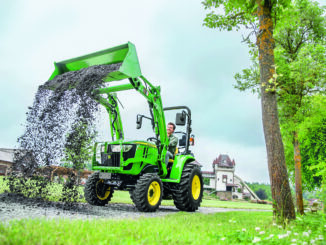
- Front loader mount – essential if you’ll be moving material, loading trucks, or operating a backhoe attachment.
3.5 Weight & Ballast
Heavier tractors improve traction but increase soil compaction. Aim for a ground pressure below 12 psi for most soils; use ballast plates or adjustable weight systems to fine‑tune.
3.6 Brand Ecosystem & Service Network
Small farms benefit from a single brand ecosystem (tractor + implements) because:
- Parts and service are streamlined.
- Integrated electronic controls (e.g., auto‑section control) communicate seamlessly.
Popular ecosystems for contractors include John Deere, Kubota, New Holland, and Massey Ferguson. Evaluate dealer proximity, warranty terms, and availability of financing programs.
4. Implement Portfolio – Matching the Tractor
Below is a modular checklist that aligns each major farm operation with the ideal implement class.
| Operation | Primary Implement(s) | Required Tractor Specs | Optional Add‑Ons |
|---|---|---|---|
| Primary Tillage (disk, chisel) | 3‑pt mounted disks, chisel plows | 60‑100 HP, strong rear hitch, 540 rpm PTO | Depth control module, GPS auto‑steer |
| Secondary Tillage (cultivator, harrow) | Rotary cultivators, disc harrows | 30‑55 HP, 540 rpm PTO | Adjustable sweep width |
| Seedbed Preparation (leveler, roller) | Leveling rollers, seedbed rollers | 30‑55 HP, sufficient rear weight | Tire pressure monitoring |
| Planting (row‑crop planter, broadcast seeder) | Row‑crop planter (12‑24 ft), broadcast seeder | 80‑120 HP, 540 rpm PTO, Category II/III hitch | Auto‑section control, variable rate technology |
| Fertilizer Application (sprayer, spreader) | Air‑blast sprayer, fertilizer spreader | 30‑55 HP, 540 rpm PTO, hydraulic flow ≥ 10 gpm | GPS‑guided boom control |
| Weed Management (cultivator, mower) | High‑speed rotary mower, inter‑row cultivator | 60‑100 HP, 1000 rpm PTO (mower) | Crop‑specific height sensors |
| Harvesting (combine, forage harvester) | Small‑scale combine, baler | Typically separate machine; tractor used for transport | Trailer hitch, PTO‑driven grain auger |
| Material Handling (loader, backhoe) | Front loader, backhoe attachment | 80‑120 HP, front loader mount, hydraulic flow ≥ 15 gpm | Quick‑attach system |
Tip: Prioritize implements that can be re‑configured (e.g., adjustable row spacing on a planter) to maximize flexibility across crops.
5. Cost‑Benefit Analysis Framework
| Metric | Calculation | Interpretation |
|---|---|---|
| Annual Utilization Rate | (Hours Used ÷ Total Available Hours) × 100 % | > 70 % = good ROI; < 40 % suggests over‑capacity. |
| Cost per Acre | (Purchase Price + Annual Maintenance) ÷ Acres Served per Year | Lower values indicate better economics. |
| Fuel Efficiency | HP × Hours ÷ Gallons Consumed | Compare across models; CVT often wins. |
| Depreciation Schedule | Straight‑line over 5‑7 years (or tax‑preferred schedule) | Helps forecast replacement timing. |
| Resale Value Ratio | Expected Resale ÷ Purchase Price | Brands with strong dealer networks retain value. |
Create a simple spreadsheet using these formulas. Plug in real quotes (or dealer estimates) for each candidate tractor/implement combo. The model will surface the most cost‑effective configuration for your specific acreage and workload.
6. Financing & Ownership Options
| Option | Pros | Cons |
|---|---|---|
| Cash Purchase | Immediate ownership, no interest, full depreciation | Large upfront capital outlay |
| Dealer Financing (5‑7 yr loan) | Predictable payments, possible rebates | Interest adds to total cost |
| Equipment Leasing | Low monthly cost, upgrade path, maintenance often included | No equity, mileage/usage limits |
| Farm Credit Programs (USDA, EU CAP) | Favorable rates, government‑backed | Lengthy application, eligibility criteria |
| Co‑op Sharing | Shared cost, higher utilization | Scheduling conflicts, shared responsibility for maintenance |
For contractors who anticipate rapid scaling, a mix of owned core tractor + leased specialty implements often yields the best balance of cash flow and capability.
7. Future‑Proofing Your Fleet
- Electrification Readiness – Choose tractors with electrical architecture (e.g., CAN‑bus, high‑capacity batteries) that can later accept hybrid or fully electric power units.
- Precision Ag Integration – Ensure the tractor supports GPS RTK, auto‑steer, and variable rate technology (VRT). Many manufacturers now bundle a “Smart Controller” that can be upgraded via firmware.
- Modular Attachments – Opt for implements with quick‑connect hydraulic couplings and interchangeable header widths. This reduces the need for multiple dedicated machines.
- Data Logging – Select tractors that log engine hours, fuel consumption, and implement usage to feed into farm management software (e.g., Trimble, Climate FieldView).
8. Step‑by‑Step Procurement Checklist
- Finalize Operations Matrix (Section 2).
- Set Budget Ceiling (include taxes, delivery, training).
- Shortlist Tractor Models based on HP, transmission, and brand ecosystem.
- Match Required Implements (Section 4) to each shortlisted tractor.
- Run Cost‑Benefit Spreadsheet (Section 5).
- Contact Dealers for quotes, demo days, and financing packages.
- Request Test Runs on representative field conditions (soil type, slope).
- Negotiate Warranty & Service Packages (minimum 2‑year powertrain coverage).
- Finalize Purchase/Lease Agreement and schedule delivery.
- Plan Training Sessions for operators on new controls, safety, and maintenance.
9. Maintenance & Longevity Tips
- Daily Pre‑Start Checks: oil level, coolant, tire pressure, hitch integrity.
- Weekly: clean air filters, inspect PTO shafts, lubricate pivot points.
- Monthly: change engine oil (per manufacturer schedule), check battery health, calibrate GPS unit.
- Seasonal: store implements indoors during off‑season, perform full hydraulic flush, inspect tires for cracks.
Document every service event in a logbook (many tractor brands provide mobile apps). Consistent records improve resale value and help predict future maintenance windows.
10. Frequently Asked Questions
| # | Question | Concise Answer |
|---|---|---|
| 1 | What horsepower is enough for a 100‑acre mixed‑crop farm? | 70‑90 HP is typically sufficient, provided you use a 3‑pt hitch and a 540 rpm PTO. |
| 2 | Can I run a 24‑ft row‑crop planter on a 55 HP compact tractor? | Generally not recommended; the tractor may stall under load. Upgrade to at least 80 HP. |
| 3 | Is a hydrostatic transmission worth the extra cost? | Yes, if you frequently shift speeds (e.g., switching between tillage and spraying). |
| 4 | Should I buy a diesel or gasoline tractor? | Diesel offers better torque and fuel economy for heavy pulling; gasoline is lighter and cheaper for light work. |
| 5 | How important is ground pressure? | Very; keep it below 12 psi to avoid compaction on most loamy soils. |
| 6 | Do I need a high‑speed PTO for mowing? | Yes, most rotary mowers require a 1000 rpm PTO. |
| 7 | Can I use a front‑loader on a compact utility tractor? | Only if the tractor has a front loader mount and adequate hydraulic flow (≥ 10 gpm). |
| 8 | What’s the advantage of a Category II hitch? | It handles higher lift capacities and wider implements (up to 48 in). |
| 9 | Should I lease or buy a combine? | For occasional contracts, leasing a small combine reduces idle time and capital outlay. |
| 10 | How often should I change the oil on a 120 HP tractor? | Every 250–300 hours, or per the manufacturer’s recommendation. |
| 11 | Is it safe to run a tractor on bio‑diesel blends? | Most modern tractors support up to B20; check the engine manual for exact limits. |
| 12 | What warranty length is typical? | 2 years or 500 hours, whichever comes first; extended warranties are available. |
| 13 | Can I retrofit an older tractor with GPS auto‑steer? | Yes, many aftermarket kits exist, but integration may be limited compared to factory solutions. |
| 14 | Do I need a separate trailer for implements? | Not for 3‑pt mounted tools; however, large implements (e.g., wide planters) may require a transport trailer. |
| 15 | How do I calculate the optimal implement width? | Divide your target field speed (mph) by the desired passes per hour, then multiply by the tractor’s PTO speed. |
| 16 | What’s the best way to reduce fuel consumption? | Maintain proper tire pressure, use CVT where possible, and avoid over‑loading the tractor. |
| 17 | Are there tax incentives for buying new equipment? | In many regions, Section 179 (U.S.) or similar schemes allow immediate expensing; consult a tax professional. |
| 18 | Should I consider an electric tractor now? | Electric models are emerging; if you have reliable charging infrastructure and modest acreage, they’re viable. |
| 19 | How many implements can I attach simultaneously? | Typically one rear 3‑pt implement plus a front loader; some tractors support dual rear hitches with special adapters. |
| 20 | What safety features should I look for? | Rollover protective structure (ROPS), seat belt, automatic shut‑off, and clear operator visibility. |
| 21 | Can I use the same tractor for both tillage and spraying? | Yes, if the tractor meets the power and PTO requirements for both tasks. |
| 22 | What’s the difference between a “compact utility” and a “mid‑range” tractor? | Compact utilities (< 60 HP) are lighter and suited for small parcels; mid‑range (60‑100 HP) handle larger implements and higher loads. |
| 23 | How do I protect my tractor from rust in wet climates? | Regularly wash and dry, apply anti‑rust coating, and store indoors during winter. |
| 24 | Is it worthwhile to buy a second‑hand tractor? | It can be cost‑effective if the machine has a documented service history and low hours. |
| 25 | What financing options are available for contractors? | Dealer loans, USDA Rural Development loans, equipment leasing, and cooperative purchasing agreements. |
12. Summary
Choosing the right tractor and implement suite is a strategic investment that pays dividends in productivity, fuel efficiency, and farmer satisfaction.
By quantifying your operational needs, matching them to precise tractor specs, and running a disciplined cost‑benefit analysis, you create a resilient equipment platform that can adapt as your contract portfolio evolves.
Remember to factor in future technologies—precision ag, electrification, and data analytics—to keep your fleet competitive for years to come.