Kubota BX2816A Snow Blower Guide: Compatibility, Setup and Maintenance
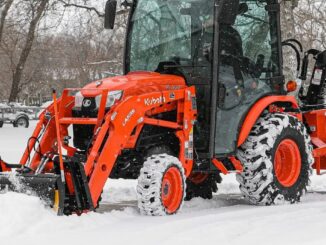
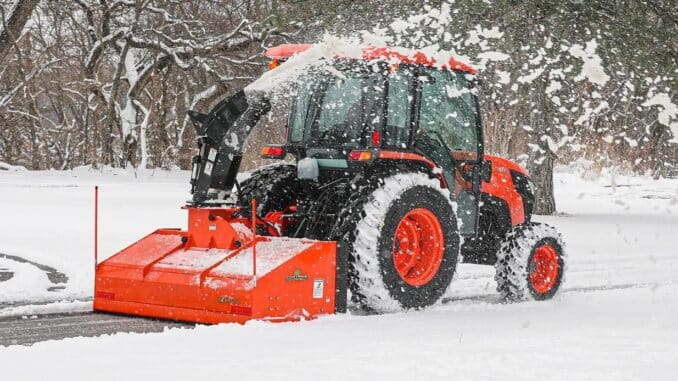
The Kubota BX2816A is a 50-inch, front-mounted, two-stage residential snow blower with chain reduction and a four-blade impeller. Standard controls provide manual chute rotation and manual chute deflection, with optional hydraulic and electric control kits available for specified configurations.kubotausa
The most important buying decision is whether the complete installation package matches your tractor. The BX2816A appears in different tractor applications, and a BX-series installation does not use the same hitch and driveline package as a B01-series installation.
This guide covers compatibility, mounting requirements, accessories, operating technique, maintenance, troubleshooting and storage. It also explains what to inspect before buying a used attachment.
Kubota BX2816A Specifications and Design
The BX2816A is a tractor-powered implement rather than a self-contained snow blower. It has no separate engine, fuel tank or starting battery.
Its two-stage design uses an auger to gather snow and an impeller to discharge it through the chute. The tractor supplies mechanical power through the appropriate mid-PTO driveline.
| Feature | BX2816A configuration |
|---|---|
| Attachment type | Front-mounted residential snow blower |
| Nominal clearing width | 50 inches, approximately 127 cm |
| Snow-processing design | Two-stage |
| Impeller | Four-blade |
| Reduction drive | Chain reduction |
| Standard chute rotation | Manual |
| Standard chute deflection | Manual |
| Operating power | Tractor PTO through the correct driveline |
| Mounting arrangement | Tractor-specific front hitch and installation components |
Do not confuse its chain-reduction arrangement with the oil-bath reduction system used on certain commercial Kubota blowers. Maintenance instructions must match the BX2816A and its serial range, not simply another blower of similar width.kubotausa
Kubota BX2816A Compatibility and Mounting Kits
Compatibility involves more than the blower itself. The front hitch, PTO driveline, completion kit, hydraulic controls and tractor configuration must all agree.
BX1880 installation
The documented BX1880 arrangement identifies these components:
-
BX2810 front quick hitch.
-
BX2811 mid-PTO driveline.
-
BX2417A loader valve if the tractor is not already equipped.
The BX2810 installation requires removal of the mid-mount mower deck and its bracing. Do not assume that removing the deck alone provides all the necessary clearance.kubotausa
B01-series installation
The documented B01 application includes the B2401DT, B2401DTWO, B2301HSD and B2601HSD.
This application identifies:
-
B3410 quick hitch.
-
B3411 mid-PTO driveline.
-
BX2842A completion kit.
-
Applicable grille-guard tilt equipment.
There is an important identification discrepancy in the published grille-guard kit information: the hitch section identifies B3412, while the BX2816A requirements list B2412. Have an authorized dealer resolve the correct kit for the tractor before ordering.
The earlier BX2842 completion kit is specifically identified as incompatible with mower-deck linkage. Do not substitute it for BX2842A without verified approval.kubotausa
BX23S, BX2380 and BX2680 applications
Do not assume that BX2816A compatibility follows automatically from BX2816 compatibility.
The attachment documentation examined here lists BX2816 under the BX2380, BX2680 and BX23S heading, while listing BX2816A under the BX1880 and B01 applications. That distinction does not establish that every BX2816A is unsuitable for the other tractors, but it does mean the suffix must be checked rather than ignored.
For a BX23S, BX2380 or BX2680, ask an authorized dealer to verify the complete BX2816A installation against the tractor and attachment serial numbers before purchase.kubotausa
Why the suffix matters
Treat BX2816 and BX2816A as distinct model designations when checking fitment, ordering parts or obtaining instructions.
Record:
-
Tractor model and serial number.
-
Blower model and serial number.
-
Front-hitch identification.
-
PTO driveline identification.
-
Completion-kit identification where applicable.
-
Installed chute-control equipment.
This information is particularly important when buying a package assembled from used components.
Choosing the Right Snow-Clearing Setup
A front-mounted blower allows the operator to face the clearing direction and monitor the intake. It can be useful where snow must be discharged beyond driveway edges rather than pushed into increasingly large banks.
However, a tractor attachment also requires conversion time, storage space and suitable access around the property.
Consider the property, not just the width
Check the actual attachment dimensions against:
-
Gates and narrow passages.
-
Garage and shed openings.
-
Driveway turning areas.
-
Parked vehicles.
-
Storage space.
-
Areas where discharged snow can land safely.
The 50-inch clearing width is not the same as the overall transport or storage width. Confirm overall dimensions and intake height in the applicable attachment manual.
A walk-behind blower may be more practical for confined paths and small areas. A blade may be convenient where snow can be pushed aside, while a blower is useful where stacking space is limited.
Match expectations to snow conditions
Depth alone does not determine difficulty. Wet snow, compacted plow deposits and frozen banks can impose very different loads from loose powder.
Avoid treating intake height as a promise that every drift can be cleared in one pass. Ground speed and the width of cut must suit the conditions.
Kubota BX2816A Chute Controls and Accessories
The standard manual controls can be suitable for straightforward driveway clearing. Frequent changes in discharge direction may make powered controls more convenient.
| Accessory | Function |
|---|---|
| BX2818A | Hydraulic chute rotation |
| BX2819A | Electric chute rotation |
| BX2820A | Electric chute deflector |
| BX2821A | Hydraulic chute deflector |
| BX2817 | Hard-plastic shoes and cutting edge |
| GR2714 | Drift cutters |
These accessories are listed for the BX2816A, but the complete installation still depends on the tractor, attachment version and existing controls. Verify required hoses, wiring, switches and valve connections before ordering.kubotausa
Rotation and deflection are different functions
Chute rotation changes the direction in which snow is thrown. Deflector adjustment changes the discharge trajectory.
Adding powered rotation does not automatically provide powered deflection. Likewise, an electric deflector kit does not make the chute rotate electrically.
Surface-protection accessories
The BX2817 hard-plastic shoes and cutting edge provide an alternative wear-component arrangement. Confirm suitability for the working surface and follow the prescribed installation and adjustment procedure.
They do not eliminate the need to inspect for raised joints, loose gravel and hidden obstructions.kubotausa
Installation and Mounting
Initial installation of tractor-side equipment is more involved than reconnecting the blower to a correctly prepared tractor. Use the tractor, hitch, driveline and attachment instructions as a complete set.
1. Verify the package before starting
Lay out all mounting components and compare them with the installation instructions. Resolve missing brackets, uncertain shaft identification and incorrect completion kits before dismantling the tractor.
Do not substitute a BX hitch or driveline package for the B01 arrangement simply because the blower is the same model.kubotausa
2. Prepare a safe work area
Park on firm, level ground with enough space to position and support the attachment.
Before hands-on work, disengage the PTO, lower equipment, apply the parking brake, stop the engine and remove the key. Use the prescribed stands or stable blocking.
Never work beneath a component supported only by hydraulic pressure.
3. Complete the tractor-side conversion
Follow the relevant removal instructions for equipment that conflicts with the front-hitch installation. The documented hitch arrangements require removal of the mid-mount mower deck and specified bracing.
Install brackets, supports and drive components in the illustrated positions. Use the fastener sizes and tightening torques in the applicable instructions rather than generic estimates.kubotausa
4. Connect the blower and controls
Follow the hitch’s engagement procedure and verify every mechanical lock and retaining device.
With power isolated, secure the drive connection and install all guards. Connect clean hydraulic couplers and electrical connectors as instructed.
Route hoses and wiring so attachment movement cannot pinch, stretch or abrade them.
5. Check ballast and conduct a functional test
Confirm the approved ballast configuration before operating.
Carry out the initial test in a clear area, using the prescribed PTO engagement procedure. Stop immediately for abnormal vibration, unexpected movement or incomplete engagement.
Installation uncertainty, structural modification or driveline fabrication requires professional assistance rather than trial-and-error operation.
Traction and Ballast
Traction equipment improves grip. Ballast establishes the weight distribution required for the front attachment. Chains do not replace required counterweight.
Consult the tractor and attachment instructions for the correct ballast arrangement. There is no universal quantity suitable for every BX2816A tractor application.
Tire-chain checks
Before fitting chains:
-
Confirm the installed tire size.
-
Check manufacturer approval.
-
Verify clearance to fenders, hoses and steering components.
-
Check clearance during permitted steering and axle movement.
-
Consider possible damage to paved or decorative surfaces.
-
Recheck tension after initial operation.
Front-chain suitability must be verified separately from rear-chain suitability.
Wheel weights, liquid ballast and rear-mounted ballast place weight differently. Do not assume they provide identical handling effects.
Four-wheel drive does not prevent sliding on ice or remove the need for cautious braking and steering.
Operating Tips for the BX2816A
Before each use
Inspect the attachment with power isolated:
-
Verify hitch locks and drive connections.
-
Check guards and retaining hardware.
-
Inspect shear-bolt locations.
-
Look for ice and foreign objects.
-
Check chain condition and lubrication.
-
Inspect skid shoes and cutting edge.
-
Confirm chute and deflector operation.
-
Check ballast, tires and chains.
Remove loose objects from the working area and mark hidden edges before snowfall.
Use ground speed to control intake
Follow the attachment manual for PTO engagement and operating speed. Do not confuse engine rpm with PTO shaft speed.
On hydrostatic tractors, reduce travel speed when snow intake exceeds discharge capacity. On other transmission configurations, select the appropriate gear and operating method.
Taking a narrower pass can help in heavy snow without reducing blower speed below the prescribed operating range.
Work carefully in deep or compacted snow
Begin with a controlled pass and monitor the discharge. Slow down if snow builds in front of the housing or the engine becomes heavily loaded.
Do not repeatedly ram frozen banks or roadside plow deposits. Stop if the attachment strikes an obstruction or begins to vibrate.
Never exceed the specified PTO speed to improve throwing distance.
Gravel-driveway operation
Set skid shoes and cutting-edge clearance according to the attachment manual and surface.
On loose gravel, leave an appropriate protective layer rather than trying to scrape down to stone. Frozen gravel can still contain loose material capable of becoming a projectile.
Keep the discharge area clear even when the driveway appears clean.
Safety Precautions
Keep people and animals away from the intake, driveline and discharge area. Never direct snow toward traffic, windows, parked vehicles or occupied areas.
Wear close-fitting winter clothing, suitable eye and hearing protection, and slip-resistant footwear. Avoid scarves, loose drawstrings and bulky garments that could catch on controls or moving parts.
Follow the tractor’s ROPS and seat-belt instructions. Stop when blowing snow prevents safe visibility.
Clearing a blockage
-
Stop travel and disengage the PTO.
-
Lower the blower.
-
Secure the tractor and apply the parking brake.
-
Stop the engine and remove the key.
-
Wait for all movement to stop.
-
Use the prescribed clean-out tool.
Never use hands or feet. Packed snow can hold components under tension after the engine stops.
Never remove a guard to reduce clogging or make the chute easier to reach.
Kubota BX2816A Maintenance
The BX2816A has a chain-reduction drive, so chain inspection and lubrication are important. However, do not copy service intervals, adjustment measurements or lubricant specifications from a BX2816 manual without confirming they apply to the BX2816A.kubotausa
Chain, sprockets and drive connections
Inspect for:
-
Dry or corroded chain.
-
Incorrect tension.
-
Damaged links.
-
Worn sprocket teeth.
-
Loose retaining hardware.
-
Abnormal movement or drive noise.
Adjust only by the method in the BX2816A manual. Excessive tension is not a substitute for replacing worn components.
Refit every guard before operation.
Gearbox and grease points
Identify each lubricant checking point and grease fitting from the attachment instructions. Use the specified products and service intervals.
Do not assume every bearing accepts grease or that the chain-reduction system requires the same servicing as an oil-bath reduction box.
Persistent leakage, metal contamination or unusual gearbox noise requires investigation.
Shear hardware
Use only the specified shear bolts and associated fasteners.
A stronger replacement can defeat overload protection. Repeated failures require inspection for an obstruction, binding component, incorrect assembly or drive damage.
Follow any auger-positioning instructions when reassembling components.
Wear parts and cleaning
Inspect skid shoes and the cutting edge before wear damages the housing.
After use, remove packed snow with power isolated. Clean away salt and treated slush, avoid directing high-pressure water into seals or electrical components, and allow the attachment to dry.
Lubricate after cleaning as directed.
Troubleshooting Common Problems
| Symptom | Likely causes | Safe first checks | When professional service is needed |
|---|---|---|---|
| Repeated clogging | Excessive intake, wet snow, restriction or unsuitable operating speed | Isolate power, clear with a tool and reduce intake | Clogging accompanies vibration or damaged components |
| Poor discharge | Partial blockage, excessive load, incorrect speed or wear | Check chute settings and operating procedure | Impeller or internal drive damage is suspected |
| One auger section stops | Failed shear hardware, obstruction or mechanical fault | Stop and inspect after full isolation | Repeated failures or binding |
| Chain jumps or rattles | Incorrect tension, poor lubrication or worn parts | Inspect with power isolated | Alignment, shaft or bearing damage is suspected |
| Chute will not move | Ice, binding linkage, electrical fault or hydraulic fault | Check for accessible obstructions and damaged connections | Motor, valve or complex wiring diagnosis is required |
| Hydraulic function is slow | Cold fluid, connection restriction or tractor fault | Warm as instructed and inspect accessible connections | Persistent poor response or high-pressure leakage |
| Excessive vibration | Foreign object, bent component or drive damage | Stop immediately and inspect safely | Cause is not obvious or structural damage is present |
| Gravel pickup | Insufficient clearance or loose surface material | Reassess skid-shoe setting and conditions | Impeller or housing damage has occurred |
Never check hydraulic leaks with bare hands. High-pressure leaks, structural cracks, gearbox overhaul and uncertain driveline faults require qualified service.
Seasonal Storage and Return to Service
Clean the blower thoroughly, remove salt and debris, and allow it to dry.
Inspect wear parts, touch up damaged paint and complete the prescribed lubrication. Record unresolved repairs and order parts before the next season.
Disconnect using the applicable procedure. Cap hydraulic couplers, protect electrical connectors and support the driveline.
Store the attachment on approved stands or stable blocking, away from damp ground. Never leave it suspended by hydraulic pressure.
Before reconnecting, inspect guards, hoses, wiring, chain, shear hardware and mounting connections. Complete required lubrication and conduct a controlled functional test.
Kubota BX2816A FAQs
What is the Kubota BX2816A?
It is a 50-inch, front-mounted, two-stage residential snow blower with chain reduction and a four-blade impeller.kubotausa
Does it have its own engine?
No. The tractor supplies operating power through the correct PTO driveline.
Is it a hydraulic-drive snow blower?
No. Its main drive is mechanical PTO power. Hydraulics serve attachment functions and hydraulic chute controls where fitted.
Does the BX2816A fit the BX1880?
A documented BX1880 installation uses the BX2810 hitch, BX2811 driveline and applicable loader valve. Verify the complete package before purchase.kubotausa
Does it fit the B2301 and B2601?
Documented applications include the B2301HSD and B2601HSD, using the B01-specific hitch, driveline and completion components.kubotausa
Does it fit the B2401?
The documented application includes B2401DT and B2401DTWO configurations. Confirm the precise tractor and installation equipment.kubotausa
Will it fit a BX23S?
Do not assume compatibility from the similar BX2816 designation. Have a dealer verify the BX2816A model, serial number and complete installation package for the BX23S.
Are BX2816 and BX2816A parts interchangeable?
Some components may be shared, but universal interchangeability should not be assumed. Order using the complete model and serial number.
Can I use the same hitch on BX and B01 tractors?
The documented applications use different packages: BX2810/BX2811 for the identified BX1880 arrangement and B3410/B3411 for the B01 arrangement.kubotausa
Can the mower deck stay installed?
The documented front-hitch installations require removal of the mid-mount mower deck and specified bracing.kubotausa
What is the BX2842A completion kit?
It is listed for the documented B01-series BX2816A installation. Do not substitute the earlier BX2842 kit; it is identified as incompatible with mower-deck linkage.kubotausa
Is chute rotation manual?
Yes, in the standard configuration. Hydraulic and electric rotation accessories are listed.kubotausa
Can I add powered deflector adjustment?
Electric and hydraulic deflector kits are listed, subject to installation compatibility and required controls.kubotausa
What are drift cutters for?
They are accessories intended for drift-clearing applications. Use the installation and operating instructions supplied for the approved kit rather than treating them as permission to force the blower through frozen banks.
Can it clear wet snow?
Wet snow requires controlled intake and the prescribed operating speed. Reduce ground speed or take a narrower pass if discharge deteriorates.
Can it clear gravel?
Yes, with suitable skid-shoe adjustment and careful operation. Maintain surface clearance and keep people and property outside the discharge area.
Why does one auger stop turning?
Failed shear hardware is one possibility. Isolate power and inspect for the cause before fitting a replacement.
Can I use a stronger shear bolt?
No. Use the specified hardware to preserve the attachment’s overload protection.
How often should I lubricate the chain?
Follow the BX2816A manual for the applicable serial range. Do not assume the BX2816 interval applies without confirmation.
What chain tension should I use?
Use the BX2816A adjustment specification and procedure. Do not tighten by feel or copy a measurement from another model.
How much ballast does it need?
That depends on the tractor and approved installation. Consult the tractor and attachment instructions; there is no universal amount.
Is a used blower worthwhile?
It can be, provided its condition is sound and the required hitch, driveline and controls are included or accurately priced. Missing installation components can substantially change the total cost.
What spares should I keep?
Keep the specified shear hardware and suitable tools, along with a clean-out tool. Identify spare parts from the attachment’s exact model and serial number.
Can it be stored outdoors?
Dry, sheltered storage is preferable. If outdoor storage is unavoidable, follow the attachment’s protection instructions and keep it securely supported away from damp ground.
Prepare the Complete Package Before Winter
Verify the tractor application, mounting components and control equipment before purchasing or installing a BX2816A. Resolve uncertain kit numbers and missing hardware before the first storm.
Follow the tractor, hitch, driveline and attachment manuals together. Correct chain servicing, approved ballast and safe blockage-clearing procedures are essential to reliable use.