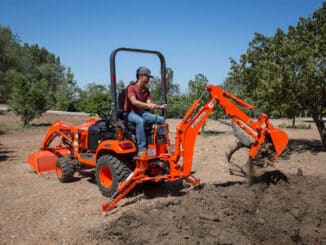
Kubota lawn and garden tractors are known as really robust machines, but they only stay reliable if pro-active maintenance work around wear, dirt, and minor faults are carried out in the context of a structured maintenance routine.
Kubota Maintenance and Repair Overview
-
Engine and cooling: diesel or petrol engine, air intake, fuel delivery, oiling, radiator, fan, and shrouds.
-
Fuel system: tank, pickup, shutoff, lift pump (mechanical or electric), filters, lines, and injectors or carburettor.
-
Electrical system: battery, cables, key switch, safety switches, starter, alternator, glow plugs or choke controls, basic lighting.
-
Drivetrain: gear or hydrostatic transmission, axles, differentials, drive belts or shafts, and wheel hubs.
-
Hydraulics (where fitted): pump, reservoir, filters/strainers, valves, hoses, cylinders (steering, lift, loader), and quick‑couplers.
-
Steering and brakes: mechanical linkages, steering gear or hydrostatic steering, brake pedals, link rods, and parking brake mechanisms.
-
Mower deck and PTO: PTO clutch, gearbox, deck shell, spindles, pulleys, idlers, belts, anti‑scalp wheels, and discharge chute.
-
Chassis and tyres: frame, axle pivots, wheel bearings, wheel bolts, tyres, and tow points.
| System | Short description | Example model‑focused link (anchor) |
|---|---|---|
| Engine & cooling | Engine, air, fuel, oiling, radiator, fan, shrouds | BX lawn tractor engine and cooling layout (link) |
| Fuel system | Tank, pickup, pump, filters, lines, injectors/carb | G‑series fuel system diagram and service points (link) |
| Electrical system | Battery, key, safety switches, starter, alternator, lights | T‑series starting and charging circuit overview (link) |
| Drivetrain | Gear/HST, axles, diffs, belts/shafts, hubs | GR‑series transaxle and drive belt layout (link) |
| Hydraulics (where fitted) | Pump, reservoir, filters, valves, hoses, cylinders | BX garden tractor hydraulic deck lift overview (link) |
| Steering & brakes | Linkages, steering gear, brake pedals, rods, park brake | G‑series steering and brake linkage map (link) |
| Mower deck & PTO | PTO clutch, deck shell, spindles, pulleys, belts, wheels | BX 54‑inch deck and PTO component guide (link) |
| Chassis & tyres | Frame, pivots, bearings, wheel bolts, tyres, tow points | T‑series chassis grease points and tyre sizes (link) |
Kubota Engine and Cooling: Problems and Maintenance
Kubota engines are generally reliable, but neglecting air, fuel, and cooling quickly leads to hard starting, loss of power, and overheating.
Key maintenance tasks
-
Oil and filter changes: follow the hours in the operator’s manual, but many owners aim for roughly 100–200 hours for oil, with the filter at least every other change.
-
Air filter care: inspect regularly and clean or replace when dirty; a clogged air filter is a leading cause of power loss and smoky exhaust.
-
Cooling system cleaning: keep the radiator screen and fins clear of grass and dust to prevent overheating, particularly on rear‑discharge and side‑discharge deck machines.
-
Fuel system hygiene: draining water separators, changing fuel filters, and using clean fuel helps avoid injector and pump issues.
| Task / interval | Series / models focus | Internal link title (anchor) |
|---|---|---|
| 100–200‑hour oil & filter change | BX lawn tractors | BX lawn tractor oil and filter change step‑by‑step (link) |
| G‑series garden tractors | G‑series engine oil change and service checklist (link) | |
| Air filter inspection & replacement | BX / GR models | BX/GR air filter inspection and change guide (link) |
| Radiator screen and fin cleaning | BX with mid‑mount deck | BX mower radiator screen cleaning while mowing grass (link) |
| G‑series front‑radiator | G‑series radiator and shroud clean‑out procedure (link) | |
| Fuel system hygiene | Diesel garden models | Diesel Kubota lawn tractor fuel hygiene best practices (link) |
Common Kubota engine and cooling problems
-
Hard starting or no start: often down to weak battery, poor connections, clogged fuel filter, or glow‑plug issues on diesel units.
-
Loss of power and rough running: dirty air filter, fuel restriction, or injector problems are typical, especially on machines working in dusty grass.
-
Overheating: usually blocked radiator screen or fins restricting airflow, low coolant, or slipping fan belt.
-
Excessive smoke: black suggests over‑fuelling or lack of air; blue points towards oil burning; white can indicate unburned fuel or cold running.
| Symptom / complaint | Series / model focus | Internal link title (anchor) |
|---|---|---|
| Hard starting or no‑start | BX diesel | BX diesel hard‑start and glow‑plug diagnosis (link) |
| G‑series petrol | G‑series petrol no‑start troubleshooting checklist (link) | |
| Loss of power / rough running | GR / T‑series | GR/T‑series engine power loss in tall grass – fixes (link) |
| Overheating while mowing | BX mid‑mount deck | BX overheating after 30 minutes mowing – causes & cures (link) |
| G‑series | G‑series overheating and radiator cleaning guide (link) | |
| Excessive smoke | Older diesel garden | Smoke types and fixes on older Kubota garden tractors (link) |
Kubota Fuel System: From Tank to Combustion
Fuel contamination and restriction are behind a large share of Kubota running complaints, especially in machines that sit over winter.
Routine fuel maintenance
-
Replace fuel filters on schedule, or sooner if you see any power loss, surging, or misfiring.
-
Drain water separators and sediment bowls, particularly on diesel models with see‑through bowls.
-
Inspect lines and clamps for cracks, rubbing, and seepage; tiny air leaks can cause intermittent stalling.
-
Use fresh, clean fuel and appropriate additives if recommended for your climate.
| Task / routine | Series / model focus | Internal link title (anchor) |
|---|---|---|
| Replace fuel filter | BX diesel | BX lawn tractor fuel filter change and priming (link) |
| G‑series | G‑series fuel filter and sediment bowl maintenance (link) | |
| Drain water separators | Diesel garden models | Draining water separators on Kubota diesel mowers (link) |
| Inspect lines and clamps | Any lawn tractor | Fuel hose inspection on Kubota lawn and garden tractors (link) |
| Fuel quality and additives | All series | Choosing and storing fuel for Kubota lawn tractors (link) |
Typical Kubota fuel‑system issues
-
No‑start after storage: often due to stale fuel, microbial growth in diesel, or partially blocked filters.
-
Engine stalls under load: often a restricted filter or collapsing old hose under suction.
-
Visible leaks and fuel smell: cracked hoses or perished rubber around hose barbs are common on older machines.
| Symptom / situation | Series / model focus | Internal link title (anchor) |
|---|---|---|
| No‑start after storage | BX / G / T | Kubota lawn tractor won’t start after winter – fuel fixes (link) |
| Engine stalls under load | T‑series petrol | T‑series stalls when mowing tall grass – fuel diagnosis (link) |
| Visible leaks and fuel smell | Older hose layouts | Fixing fuel line leaks on older Kubota garden tractors (link) |
| Twin filters or priming quirks | Specific G‑series | G‑series twin fuel filter and priming procedure (link) |
Kubota Electrical System: Starting and Charging
Electrical faults regularly appear as “mystery” problems, but a structured approach solves most Kubota starting and charging complaints.
Maintenance basics
-
Keep battery terminals clean and tight; corrosion increases resistance and causes slow cranking or no‑crank.
-
Check ground straps between engine, frame, and battery; poor grounds cause weird intermittent faults.
-
Inspect wiring around moving parts and the deck for chafing and broken insulation.
-
Test the charging system occasionally: a simple voltage check at the battery with the engine running confirms alternator output.
| Task / check | Series / model focus | Internal link title (anchor) |
|---|---|---|
| Clean and tighten terminals | Any lawn tractor | Battery terminal cleaning on Kubota lawn tractors (link) |
| Check/upgrade ground straps | BX / G / GR | Ground strap inspection and upgrade on Kubota mowers (link) |
| Inspect wiring for chafing | Deck‑equipped models | Wiring chafe hot‑spots on Kubota lawn tractors (link) |
| Test charging voltage | BX / G / T | How to test charging system on Kubota lawn tractors (link) |
Common electrical problems
-
Turn‑key, no crank: may be a safety switch (seat, PTO, brake), faulty key switch, weak battery, or bad starter solenoid.
-
Cranks but won’t fire: glow plug circuit (on diesel), fuel solenoid power, or immobiliser wiring can be at fault.
-
Battery not charging: loose belt to the alternator, failed alternator, broken charge wire, or corroded connectors.
| Symptom / complaint | Series / model focus | Internal link title (anchor) |
|---|---|---|
| Turn‑key, no crank | BX lawn tractor | BX lawn tractor no‑crank diagnostic (battery & safety) (link) |
| G‑series | G‑series no‑crank troubleshooting tree (link) | |
| Cranks but won’t fire | BX diesel | BX diesel cranks but won’t start – electrical causes (link) |
| Battery not charging | GR / T‑series | GR/T charging system test and alternator belt check (link) |
| Safety switch issues | BX / T / GR | Safety switch locations and tests on Kubota garden tractors (link) |
Kubota Transmission and Drivetrain
Kubota lawn and garden tractors use a mix of gear and hydrostatic transmissions, but both need clean oil and correct adjustments to remain smooth and safe.
Preventative maintenance
-
Follow the manual for oil and filter change intervals on hydrostatic units; contaminated oil quickly shortens pump and motor life.
-
Check for transmission leaks around seals, hoses, and filters; small leaks can lead to low oil and cavitation.
-
Inspect drive belts (on belt‑driven transaxles) for cracking, glazing, and proper tension.
-
Listen for unusual whining, grinding, or clunks under load; these often precede bigger failures.
| Task / interval | Series / model focus | Internal link title (anchor) |
|---|---|---|
| HST oil & filter change | BX HST lawn tractors | BX hydrostatic oil and filter change guide (link) |
| G‑series HST models | G‑series hydrostatic maintenance schedule (link) | |
| Check for transmission oil leaks | Any lawn tractor | Spotting and tracing transaxle leaks on Kubota mowers (link) |
| Inspect and tension drive belts | T / GR belt‑drive models | T/GR drive belt inspection and tension adjustment (link) |
| Listen for unusual driveline noises | All series | Diagnosing drivetrain noises on Kubota garden tractors (link) |
Common Kubota drivetrain complaints
-
Tractor will not move or moves weakly: low transmission oil, air in the system, slipping drive belt, or internal hydrostatic wear are typical causes.
-
Jerky motion or surging: contamination, blocked transmission filters, or misadjusted hydrostat linkages.
-
Difficult shifting on gear models: clutch adjustment, linkage wear, or internal gearbox issues.
Kubota Hydraulics (Where Fitted)
On models with front loaders, power steering, or hydraulic deck lift, hydraulic health is critical to performance and safety.
Maintenance essentials
-
Use only the specified hydraulic/transmission oil and keep it clean; contamination is the leading cause of hydraulic failure.
-
Replace suction and return filters at the intervals in the manual, or sooner if you notice slow or noisy hydraulics.
-
Inspect hoses and quick‑couplers often for leaks, abrasion, and cracked outer jackets.
-
Keep cylinder rods free of rust and nicks to protect seals.
| ask / topic | Series / model focus | Internal link title (anchor) |
|---|---|---|
| Hydraulic/transmission oil change | BX/G with hydraulics | Hydraulic oil and filter change on Kubota garden tractors (link) |
| Replace suction/return filters | Hydraulic‑equipped | Changing hydraulic filters on small Kubota tractors (link) |
| Inspect hoses and couplers | Loader/lift models | Hose and quick‑coupler inspection on Kubota garden tractors (link) |
| Protect cylinder rods | Any hydraulic model | Caring for hydraulic cylinders on Kubota lawn tractors (link) |
Common Kubota hydraulic problems
-
Loader or lift moves slowly or not at all: low oil level, clogged filter, failing pump, or stuck control valve.
-
Jerky operation: air in the system, internal leakage, or contaminated oil.
-
Oil overheating: undersized or failing pump, blocked filters, or running attachments beyond rated flow.
Model‑specific sections can cover, for example, favourite loader models on certain tractors, steering cylinder replacement on particular G‑series machines, or how to bleed lift circuits on specific lawn tractors.
| Symptom / function | Series / model focus | Internal link title (anchor) |
|---|---|---|
| Deck lift slow or not moving | G‑series deck lift | G‑series hydraulic deck lift not raising – checklist (link) |
| Loader slow / won’t lift | BX with loader | BX garden loader slow to lift – hydraulic diagnosis (link) |
| Jerky hydraulic operation | Any hydraulic‑equipped | Jerky hydraulic functions on Kubota lawn tractors – causes (link) |
| Oil overheating | Smaller hydraulic units | Hydraulic oil overheating on compact Kubota mowers (link) |
Kubota Steering and Brakes
Safe manoeuvring on slopes, around trees, and near buildings depends on responsive steering and reliable braking.
General care
-
Grease front axle pivot points, steering knuckles, and drag‑links according to the lubrication chart.
-
Check tyre pressures; under‑inflation or mismatch left‑to‑right causes pull and makes steering heavier.
-
Adjust brake linkages per the manual so both wheels apply evenly and the parking brake holds securely.
-
Inspect steering components for play, damaged boots, and cracked arms.
| Task / routine | Series / model focus | Internal link title (anchor) |
|---|---|---|
| Grease front axle and linkages | BX / G / GR front axles | Front axle and steering grease points on Kubota mowers (link) |
| Check and set tyre pressures | All lawn tractors | Tyre pressure setup for Kubota lawn and garden tractors (link) |
| Adjust brake linkages | BX / G‑series | Brake and parking brake adjustment on Kubota lawn tractors (link) |
| Inspect steering components | Any series | Steering linkage inspection on Kubota garden tractors (link) |
Typical issues
-
Heavy steering or poor return: low power steering fluid where fitted, worn steering box, or seized joints.
-
Tractor pulls to one side: tyre pressure differences, brake imbalance, or bent steering components.
-
Weak brakes: worn shoes or pads, contaminated linings, or misadjusted linkage.
| Symptom / complaint | Series / model focus | Internal link title (anchor) |
|---|---|---|
| Heavy steering / poor return | BX / GR | Heavy steering and poor return on BX/GR tractors (link) |
| Tractor pulls to one side | Any lawn tractor | Tractor pulls while driving or braking – diagnosis (link) |
| Weak brakes | G‑series | G‑series weak brakes and parking brake not holding (link) |
Kubota Mower Deck, PTO, and Blades
Cut quality and productivity live or die on the condition of the deck, PTO drive, and blades.
Ongoing maintenance
-
Keep the deck clean on top and underneath to prevent rot, corrosion, and airflow restriction.
-
Inspect and replace deck belts when they show cracks, fraying, or glazing; tension idlers should move freely.
-
Grease blade spindles and idler pivots where fittings are provided.
-
Sharpen blades regularly and replace any that are bent, cracked, or excessively worn.
| Task / routine | Series / model focus | Internal link title (anchor) |
|---|---|---|
| Clean deck top and underside | All decked models | Cleaning deck underside on Kubota lawn tractors (link) |
| Inspect and replace deck belts | BX / G / T decks | Deck belt inspection and replacement on Kubota lawn tractors (link) |
| Grease spindles and idlers | BX / GR decks | Spindle and idler greasing guide for Kubota mower decks (link) |
| Sharpen and replace blades | Any lawn tractor | Blade sharpening and replacement on Kubota garden tractors (link) |
Common Kubota deck and PTO problems
-
Uneven cut: dull or mismatched blades, incorrect deck levelling, or low tyre pressure on one side.
-
Excessive vibration: bent blades, damaged spindles, or worn bearings.
-
Blades not engaging: PTO clutch adjustment, failed PTO switch (on electric clutches), or broken belt.
| Symptom / complaint | Series / model focus | Internal link title (anchor) |
|---|---|---|
| Uneven cut / scalping | BX / T / GR | Fixing uneven cut on Kubota lawn tractors – levelling guide (link) |
| Excessive vibration | BX / GR decks | Vibration and spindle wear on Kubota mower decks (link) |
| Blades not engaging | T‑series electric PTO | T‑series electric PTO not engaging – diagnostic steps (link) |
| Mechanical PTO models | Mechanical PTO clutch adjustment on Kubota lawn tractors (link) |
Kubota Tires, Chassis, and General Hardware
Many chronic ride‑quality and cut‑quality complaints trace back to tires, wheel hardware, and general chassis condition.
Good housekeeping
-
Check and set tire pressures to the manual; it matters for traction and cut quality.
-
Retorque wheel bolts periodically, especially after tire work or rough transport.
-
Grease chassis points such as pivoting axles, linkages, and tow points.
-
Inspect the frame and deck hangers for cracks, rust, or elongation of mounting holes.
| Task / routine | Series / model focus | Internal link title (anchor) |
|---|---|---|
| Tyre pressures and sizes | BX / G / T / GR | Tyre size and pressure chart for Kubota lawn tractors (link) |
| Retorque wheel bolts | Any lawn tractor | Wheel bolt torque and safety checks on Kubota mowers (link) |
| Grease chassis pivot points | BX / G‑series | Chassis and axle grease points on Kubota garden tractors (link) |
| Inspect frame, hangers, tow points | Older machines | Frame and deck hanger crack inspection on Kubota mowers (link) |
Typical issues
-
Bouncy ride and scalping: over‑inflated tyres or worn deck wheels.
-
Wheel wobble: loose wheel bolts, worn hubs, or bad bearings.
-
Unusual noises over bumps: loose hardware, cracked brackets, or worn bushings.
| Symptom / complaint | Series / model focus | Internal link title (anchor) |
|---|---|---|
| Bouncy ride and scalping | BX / GR | Reducing bounce and scalping on Kubota garden tractors (link) |
| Wheel wobble | Any lawn tractor | Wheel wobble and hub/bearing checks on Kubota lawn tractors (link) |
| Noises over bumps | Older lawn tractors | Tracking down clunks and rattles on ageing Kubota mowers (link) |
Kubota Service Schedules and Checklists
Manufacturers emphasise that consistent preventative maintenance is the most effective way to avoid breakdowns and extend tractor life, and Kubota is no exception.
Key intervals (typical patterns)
Exact hours vary by model, but many Kubota lawn and garden tractors follow similar patterns in their manuals.
-
Before each use: visual walk‑around, fluid level checks, tyre pressures, deck cleanliness, and safety switch function.
-
Every 50 hours: grease points, check belts and linkages, inspect battery and cables.
-
Every 100–200 hours: engine oil and filter, fuel filter, air filter service, and basic adjustments.
-
Every 200–400 hours: transmission/hydraulic oil and filters where specified, deeper inspections of steering, brakes, and drivetrain.
| Interval / checklist | Series / model focus | Internal link title (anchor) |
|---|---|---|
| Daily pre‑use checks | BX / G / T lawn tractors | Daily inspection checklist for Kubota lawn tractors (link) |
| 50‑hour lubrication checks | BX / GR | 50‑hour grease and inspection plan for BX/GR mowers (link) |
| 100–200‑hour engine service | BX / G‑series | 100–200‑hour engine service checklists by model (link) |
| 200–400‑hour transmission svc | HST garden tractors | Hydrostatic and transaxle service intervals for Kubota mowers (link) |
| Annual winterisation | Any lawn/garden tractor | Winter storage checklist for Kubota lawn tractors (link) |
| Spring recommissioning | Any lawn/garden tractor | Spring start‑up checklist for Kubota lawn tractors (link) |
Kubota Troubleshooting Workflow: From Symptom to Fix
Rather than jumping straight to parts replacement, it is better to use a repeatable troubleshooting flow type sysytem.
Basic diagnostic steps
-
Confirm the complaint: when it happens, what changed recently, and whether it is constant or intermittent.
-
Check the basics first: fuel level, known good fuel, battery charge, and visible wiring and hose issues.
-
Pay attention to patterns: only under load, only when hot, only on slopes, or after long storage.
-
Change one thing at a time: adjust or replace a likely component, then retest before moving on.
| Diagnostic step | Example use case | Internal link title (anchor) |
|---|---|---|
| Confirm the complaint | Won’t start after winter | Won’t‑start‑after‑storage checklist for Kubota lawn tractors (link) |
| Check the basics | Fuel, battery, wiring | Basic “check the basics” guide for Kubota mowers (link) |
| Look for patterns | Only hot / only under load | Diagnosing heat‑ and load‑related issues on Kubota mowers (link) |
| Change one thing at a time | Structured DIY troubleshooting | Step‑by‑step troubleshooting method for Kubota lawn tractors (link) |
Common patterns
-
“Won’t start after winter” usually leads to stale fuel, weak batteries, and corroded terminals rather than deep engine problems.
-
“Overheats after mowing for a while” often points to a blocked radiator screen or fins.
-
“Hydraulic functions slow and noisy” strongly suggests low or dirty oil and clogged filters.
| Symptom pattern | Series / model focus | Internal link title (anchor) |
|---|---|---|
| Won’t start after winter | BX / G / T | Kubota lawn tractor won’t start after storage – full guide (link) |
| Overheats after mowing a while | BX / G | Overheating mid‑mow on Kubota garden tractors – diagnosis (link) |
| Hydraulics slow and noisy | Hydraulic‑equipped | Slow/noisy hydraulics on small Kubota tractors – causes (link) |
| Cut quality suddenly poor | Any mower | Troubleshooting sudden cut‑quality problems on Kubota mowers (link) |
When to DIY and When to Call a Kubota Dealer
Some jobs are ideal for competent owners; others are better left to dealers with the right tools and safety setup.
Suitable DIY tasks
-
Routine servicing: oil and filters, belts, blade sharpening and replacement, greasing, and basic adjustments.
-
Simple electrical checks: battery replacement, terminal cleaning, basic fuse checks.
-
Minor hydraulic and steering maintenance: hose inspections, topping up fluids, greasing cylinders.
| DIY task category | Series / model focus | Internal link title (anchor) |
|---|---|---|
| Routine servicing | BX / G / T / GR | DIY service tasks for Kubota lawn and garden tractors (link) |
| Simple electrical checks | Any lawn tractor | Basic electrical checks any owner can do on Kubota mowers (link) |
| Minor hydraulic/steering care | Hydraulic‑equipped | DIY hydraulic and steering maintenance on Kubota garden tractors (link) |
Dealer‑level jobs
-
Internal engine work: injectors, major fuel‑system repairs, timing, and internal cooling system repairs.
-
Transmission and hydrostatic internals, especially on compact units where components are integrated.
-
Complex electrics: CAN‑bus systems on newer machines, ECU problems, or repeated unexplained faults.
| Dealer‑level job | Series / model focus | Internal link title (anchor) |
|---|---|---|
| Internal engine/fuel work | Diesel garden tractors | When to let a dealer handle engine and fuel work on Kubota mowers (link) |
| Hydrostatic/transaxle internals | HST garden tractors | Why hydrostatic repairs belong at the dealer for Kubota lawn tractors (link) |
| Complex electrical/ECU faults | Newer electronic models | Dealer diagnostics for complex electrical issues on Kubota mowers (link) |
Browse Kubota Lawn Tractor Models by Series
-
xxxx Series Lawn Tractors – link to xxx index page.
-
xxx Lawn Tractor – link to xxxx index page.
-
Xxxx Series Lawn Tractors – link to xxx Series index page.
-
xxx Series Lawn/Garden Tractors – index page.