
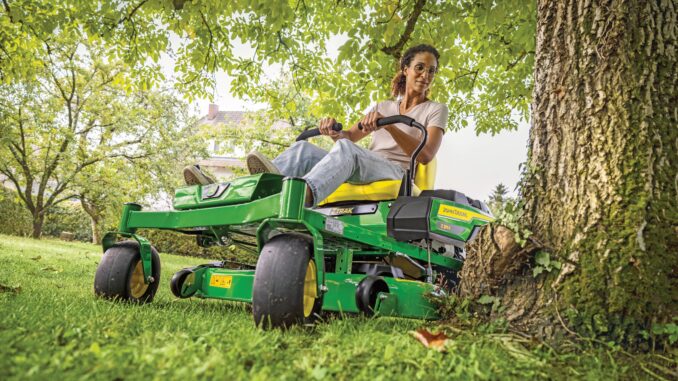
The John Deere Z315E is a residential zero-turn mower built for homeowners who want faster mowing and better maneuverability than a conventional lawn tractor. In North America, it is covered by John Deere’s Residential ZTrak operator literature, and the Z315E replacement-parts guide confirms common home-service items such as filters, spark plugs, blades, battery, and the 42-inch Accel Deep deck belt.
This guide is written for DIY owners in the USA and Canada who are comfortable with routine service and some intermediate repairs. It focuses on symptom-first troubleshooting, realistic DIY limits, common service parts, maintenance intervals, and a detailed FAQ based on the official operator’s manual and John Deere replacement-parts information.
John Deere Z315E model overview
The John Deere Z315E is part of the residential Z300 Series and uses a 42-inch Accel Deep mower deck with zero-turn steering levers rather than a steering wheel. The operator’s manual groups the Z315E with other residential ZTrak models and identifies the machine as a zero-turn mower designed for grass cutting, not brush clearing or rough-field work.
For most owners, the John Deere Z315E fits suburban and rural home lawns where speed and agility matter more than towing or ground-engaging work. Its main systems are the gasoline engine and fuel system, the 42-inch mower deck and blade drive, dual transaxles for propulsion, the electrical and safety-interlock system, and deck-height and leveling hardware.
Common service parts owners regularly buy for the John Deere Z315E include the air filter MIU14395, oil filter AM125424, fuel filter AM116304, spark plug MIU11020, key GY20680, battery CP6843AAU, standard mower blades UC22008, mulch blades M170642, grass-collection blades GX25668, and deck drive belt GX25628.
Troubleshooting approach for the John Deere Z315E
Good diagnosis starts with the symptom, not the first part that seems suspicious. The official manual includes a troubleshooting section and makes clear that owners should inspect safety systems, fuel, oil, cooling-air flow, deck cleanliness, leaks, tire pressure, and brake/interlock condition as part of normal checks before assuming a major failure.
For the John Deere Z315E, the main symptom groups are starting problems, rough running or poor power, uneven cut or poor discharge, vibration and unusual noise, overheating or fire-risk debris buildup, drive or tracking problems, and electrical or safety-switch issues. Those categories match the machine’s actual systems and the service areas covered in the manual, including engine, transmission, mower, electrical, and cleanout points.
John Deere Z315E problems needing immediate attention
Some faults should stop operation immediately because they create a safety risk or can quickly damage expensive parts. The operator’s manual specifically warns against using the machine with damaged blades, missing guards, fuel leaks, heavy debris buildup near hot parts, malfunctioning safety devices, or unstable operation on slopes.
Starting issues
If the John Deere Z315E will not crank or starts only intermittently, stop and confirm it is safe to troubleshoot before repeatedly turning the key. Repeated starting attempts can hide a weak battery, dirty fuel problem, or interlock fault while also overheating the starter circuit.
Common causes:
-
Weak or failing battery.
-
Loose or corroded battery connections.
-
PTO switch engaged.
-
Motion-control levers not in the correct start/shutdown position.
-
Fuel restriction or stale gasoline.
-
Dirty air filter or fouled spark plug.
Basic owner checklist:
-
Make sure both control levers are in the start/shutdown position and the PTO is off.
-
Check fuel level, fuel age, and visible fuel-line condition.
-
Inspect battery terminals for corrosion and tightness.
-
Check the air filter and spark plug condition.
-
If the engine still will not crank or repeatedly blows a fuse, move to dealer-level electrical diagnosis.
John Deere Z315E cut-quality problems
Poor cut quality usually shows up as scalping, streaking, ragged grass tips, clumping, or uneven height from side to side. On this mower, cut problems often trace back to blade condition, deck cleanliness, tire pressure, deck leveling, or an overstretched or slipping deck belt rather than an engine problem.
Common causes:
-
Dull, bent, or mismatched blades.
-
Grass packed under the deck.
-
Incorrect tire pressure.
-
Deck out of side-to-side or front-to-rear level.
-
Worn deck spindle or loose deck hardware.
-
Incorrect blade type for bagging or mulching setup.
Basic owner checklist:
-
Clean the underside and top of the mower deck after the machine cools.
-
Check tire pressures before adjusting deck level.
-
Inspect blades for wear, bends, or loose hardware.
-
Confirm deck pitch is within the manual’s 3–6 mm front-to-rear blade-tip variation.
-
Replace the deck belt if it is glazed, cracked, or slipping under load.
John Deere Z315E vibration and noise
Strong vibration is a stop-now problem because it can damage spindles, belts, engine mounts, and deck hardware very quickly. The manual tells owners to inspect the machine immediately after striking an object and to replace worn or damaged blades and blade bolts in sets.
Common causes:
-
Bent or unbalanced blade.
-
Blade bolt loose or blade installed incorrectly.
-
Debris wrapped around a spindle or pulley.
-
Damaged spindle assembly.
-
Belt damage or pulley bearing failure.
Basic owner checklist:
-
Shut the machine down, remove the key, and wait for all motion to stop.
-
Inspect blades and blade bolts for impact damage.
-
Check spindle areas and pulleys for wrapped debris.
-
Spin pulleys by hand with the spark plug disconnected or battery negative removed, listening for rough bearings.
-
If vibration remains after blade inspection, treat spindle and pulley diagnosis as an advanced repair.
Overheating and leaks on the John Deere Z315E
This mower depends on clean cooling fins, clean intake screens, and an engine bay free of oily grass buildup. John Deere specifically identifies the muffler area, engine cooling fins, intake screens, top of deck, belt and spindle zones, transaxle areas, and under-seat area as critical cleanout points because debris there raises fire risk and operating temperatures.
Common causes:
-
Cooling fins or screens packed with grass.
-
Oil leaks trapping debris.
-
Fuel leaks at cap, lines, or fittings.
-
Operating in heavy dry material without repeated cleanout stops.
-
Low engine oil.
Basic owner checklist:
-
Stop mowing and let the machine cool fully.
-
Check for oil or fuel leaks before cleaning.
-
Remove debris from the muffler, engine screens, deck top, transaxles, and under-seat wiring area.
-
Verify engine-oil level before restarting.
-
Any active fuel leak should be repaired before further use.
John Deere Z315E drive and tracking problems
Drive complaints usually appear as weak hill performance, one side pulling harder than the other, jerky response, or refusal to move smoothly. Because the Z315E uses dual transaxles, drive symptoms can come from operator-control adjustment, belt issues, tire condition, or internal hydrostatic wear.
Common causes:
-
Incorrect tire pressure side to side.
-
Debris near transaxle cooling areas.
-
Control-lever adjustment issues.
-
Internal transaxle wear or damage.
-
Linkage or parking-brake related faults.
Basic owner checklist:
-
Check both rear tires for equal pressure and obvious damage.
-
Clean around the transaxles and cooling fins.
-
Confirm levers move freely and return correctly to neutral/shutdown positions.
-
Inspect for fluid seepage or mechanical damage around the transaxles.
-
If one side remains weak or noisy, dealer diagnosis is the safer next step.
Electrical and safety-switch faults
The John Deere Z315E relies on a safety-interlock system, battery, key switch, PTO switch, and seat/lever logic to start and run correctly. The daily checklist in the manual specifically includes checking the safety interlock system, and faults here often look like random no-start or sudden shutdown complaints.
Common causes:
-
Weak battery.
-
Dirty terminals or poor ground.
-
Faulty PTO or seat switch.
-
Damaged wiring under the seat.
-
Ignition-key or switch wear.
Basic owner checklist:
-
Inspect battery state and cable tightness.
-
Look for rubbed or pinched wires under the seat.
-
Test operation with PTO off and levers in the correct position.
-
Inspect switch connectors for looseness or corrosion.
-
If the fault is intermittent, avoid bypassing switches and use dealer-level testing.
DIY or dealer for the John Deere Z315E?
The normal DIY line on the John Deere Z315E is straightforward: routine maintenance, deck service, blade work, filters, spark plug replacement, deck leveling, and visible belt replacement are realistic for many owners, while internal transaxle work, electrical tracing, engine internal repairs, and repeated no-start diagnosis usually belong with a dealer or experienced mower technician.
Good DIY jobs
-
Engine oil and oil filter changes.
-
Air filter, fuel filter, and spark plug replacement.
-
Blade removal and replacement.
-
Deck cleaning and deck-belt inspection.
-
Tire-pressure checks and deck leveling.
-
Battery replacement and terminal cleaning.
Advanced DIY or dealer jobs
-
Spindle replacement.
-
Deck-belt routing issues involving hidden guards or pulley damage.
-
Safety-switch diagnosis.
-
Starter-circuit tracing.
-
Transaxle performance problems.
-
Engine governor, carburetion, or internal engine repairs.
Skill level guide
-
Beginner: Oil checks, air filter changes, blade inspection, battery-terminal cleaning.
-
Intermediate: Spark plug replacement, fuel filter replacement, deck leveling, blade changes, deck belt replacement.
-
Advanced: Spindle work, electrical testing with a meter, control-linkage adjustment, deeper drive-system diagnosis.
Parts for the John Deere Z315E
Before ordering parts, gather the full model name, machine Product Identification Number, engine serial number, and deck configuration. The manual says Deere dealers need the serial number or PIN for machine and attachment parts ordering, and it identifies the engine serial number as being on the engine blower housing while transaxle serial tags are on the forward side of each transaxle housing.
For homeowner orders, OEM parts are usually the safest choice for belts, safety switches, and fit-sensitive deck parts. Aftermarket parts are more acceptable for common consumables such as some filters, blades, batteries, and spark plugs when the cross-reference is exact and the dimensions match the original part.
John Deere Z315E manuals and diagrams
The most useful official source is the operator’s manual, which covers controls, safety, service intervals, mower leveling, troubleshooting, storage, and identification-number locations.
A second highly useful source is the Z315E replacement parts guide, which gives quick-reference OEM part numbers for filters, blades, belt, spindle, battery, and maintenance kit.
For serial-sensitive parts ordering, John Deere directs owners to JDParts / Parts Catalog and to the Technical Information Store for parts catalogs and technical literature.
Finding serial and engine numbers on the John Deere Z315E
These numbers matter because the same model family can have running production changes, attachment differences, and engine-specific service parts. John Deere tells owners to record the product identification number, engine serial number, and transaxle serial numbers for service and parts support.
-
Park the mower safely on a level surface, remove the key, and let all moving parts stop.
-
Locate and record the machine Product Identification Number from the mower’s identification tag area referenced in the Product Identification section of the manual.
-
Find the engine serial number on the engine blower housing and record it exactly as shown.
-
If a drive-system issue is involved, locate the serial tag on the forward side of each transaxle housing and note left and right numbers separately.
-
Match those numbers before ordering any engine, transaxle, or serial-sensitive deck part.
Buying John Deere Z315E parts online or in stores
The best strategy is to confirm the OEM number first, then shop by that number rather than by a broad model name alone. That reduces ordering mistakes on blades, belts, filters, batteries, and safety-system parts, especially where serial breaks or deck versions may matter.
-
Online: Start with JDParts for diagrams and part numbers, then compare pricing with a Deere-focused seller that clearly lists the Z315E and 42-inch deck.
-
Dealer counter: Best for serial-number-sensitive parts, transaxle components, electrical items, and any order where the PIN must be confirmed.
-
Retail stores: Fine for oil, spark plugs, some filters, and batteries if the packaging clearly cross-references the John Deere OEM number.
Fitting common John Deere Z315E service parts
Changing the John Deere Z315E air filter
A fresh air filter helps starting, throttle response, and engine life, especially in dusty summer mowing conditions.
-
Park safely, stop the engine, and remove the key.
-
Access the engine service area under the seat and open the air-cleaner housing.
-
Remove the old filter and wipe loose dust from the housing without pushing debris into the intake.
-
Install the new MIU14395 filter correctly seated in the housing.
-
Refit the cover securely and inspect nearby intake screens for grass buildup.
Replacing the spark plug on the John Deere Z315E
A new spark plug can cure hard starting, misfire, and weak running under load when fuel and air supply are otherwise normal.
-
Park safely and allow the engine to cool.
-
Pull off the spark-plug lead carefully without yanking the wire itself.
-
Remove the old plug and inspect it for heavy carbon, oil fouling, or damage.
-
Install the correct MIU11020 replacement plug and gap it to engine specification if required by the plug manufacturer.
-
Reattach the plug wire firmly and test-start the mower.
John Deere Z315E blade replacement steps
Sharp, straight blades are critical for clean cutting and low vibration. The manual specifically warns owners to replace worn or damaged blades and bolts in sets.
-
Park safely and disconnect the battery negative cable or spark plug wire to prevent accidental starting.
-
Raise access safely and wear gloves before handling blades.
-
Remove both old blades and inspect blade bolts and spindle mounting surfaces.
-
Install two matching replacement blades, such as UC22008 standard blades, in the correct orientation.
-
Tighten hardware to the proper specification from the operator’s or technical literature before mowing.
Replacing the John Deere Z315E deck belt
A worn deck belt can cause weak blade speed, poor cut quality, squeal, or sudden loss of blade drive. The Z315E 42-inch Accel Deep deck uses belt GX25628 according to the replacement guide.
-
Park safely, lower the deck, remove the key, and disconnect accidental-start sources.
-
Remove the guards needed to access the deck-belt path.
-
Note the belt routing before removal, then release tension and remove the old belt.
-
Install the new GX25628 belt correctly around all pulleys and confirm it seats fully in pulley grooves.
-
Reinstall guards, rotate the system by hand, and test engagement at low risk before returning to full mowing load.
Maintenance that prevents repeat John Deere Z315E faults
Most repeat problems on this mower come from skipped cleanout, dull blades, old fuel, ignored belts, and missed interval service. Deere’s daily checklist and service sections put heavy emphasis on cleaning the muffler and intake areas, checking oil and leaks, verifying safety interlocks, maintaining blade and deck condition, and keeping the machine free of combustible debris.
Focus areas:
-
Starting reliability: Keep fresh fuel, a clean air filter, a sound battery, and a good spark plug.
-
Cut quality: Keep blades sharp, deck clean, tires properly inflated, and deck level set correctly.
-
Fire and overheating prevention: Clean muffler, engine screens, cooling fins, deck top, and transaxle areas often, especially in dry grass.
-
Drive performance: Keep tires matched and inspect around transaxles for debris or seepage.
-
Electrical reliability: Check battery terminals, under-seat wiring, and interlock operation regularly.
John Deere Z315E maintenance schedule
The operator’s manual includes a dedicated service-interval section, and the replacement-parts guide gives quick annual or 50-hour reminders for core consumables. Use the hour meter, but also use calendar time because many homeowner mowers hit yearly limits before high-hour limits.
Daily or before each use
-
Check engine oil.
-
Clean muffler area, air intake screens, and mower deck.
-
Check brake system.
-
Check fuel level.
-
Check under the machine for leaks.
-
Check safety interlock system and tire pressures.
After first use / break-in
-
Check and tighten loose hardware after initial use as directed in the service-interval section for break-in service.
-
Change engine oil and filter at the applicable break-in interval listed in the manual for this machine family.
-
Inspect air-cleaner elements and general machine condition after early operating hours.
Every 25 hours
-
Clean or service air-cleaner elements, with more frequent service in dusty conditions where required by the service chart.
-
Clean around steering or control-switch areas as specified in the service-interval literature for this machine family.
Every 50 hours or yearly
-
Change engine oil.
-
Change oil filter AM125424.
-
Replace fuel filter AM116304.
-
Replace spark plug MIU11020.
-
Replace air filter MIU14395 according to the quick-reference guide.
Every 100 hours or annually
-
Change engine oil and filter where the operator’s manual chart requires annual or 100-hour service.
-
Inspect and regap spark plugs where specified in the service chart.
-
Clean cooling fins and inspect machine condition thoroughly before heavy season use.
Seasonal checklist
-
Spring: Change oil and filter if due, inspect battery, sharpen or replace blades, level the deck, and inspect the belt before first heavy mowing weeks.
-
Mid-season: Clean cooling and deck areas more often, recheck blade condition, inspect for leaks, and verify tire pressures and cut quality.
-
Fall or end of season: Clean the mower thoroughly, remove combustible debris, inspect worn parts, and prepare for storage using the manual’s storage guidance.
Repair, upgrade, or replace the John Deere Z315E?
For most homeowners, repairing the John Deere Z315E makes sense when the core machine is sound and the issue is limited to service parts, deck components, battery, blades, or routine wear items. Upgrading makes more sense when the mower is regularly asked to do more acreage, faster weekly work, or bagging and mulch tasks that justify accessory changes, while replacement becomes more logical when the machine has major engine and hydro drive issues together or repeated neglected-service damage.
Repair if…
-
The problem is a belt, blade, filter, battery, spark plug, or deck-level issue.
-
The engine and both transaxles are otherwise strong.
-
The frame, deck shell, and controls are still in good condition.
Upgrade if…
-
You want bagging, mulching, or bumper accessories already listed for the model.
-
You need better productivity but the mower itself is still mechanically healthy.
-
Your mowing conditions justify setup changes more than a whole new machine.
Replace if…
-
The mower has simultaneous engine, transaxle, and deck-structure problems.
-
Repair costs approach a large share of the mower’s value.
-
The machine has poor maintenance history, repeated overheating, or serious safety-system faults that make ownership uneconomical.
Expanded troubleshooting FAQ
1. Why will my John Deere Z315E not start?
The first things to check are the simple interlock conditions: PTO off, control levers in the correct start/shutdown position, battery condition, and fresh fuel. On this mower, a weak battery, dirty terminals, faulty switch logic, clogged air filter, or bad spark plug can all produce a no-start complaint that feels bigger than it is.
2. Why does my John Deere Z315E crank but not fire?
That usually points more toward fuel, spark, or air supply than a dead battery. Stale gasoline, a restricted fuel filter, fouled spark plug, or an air-filter issue are common homeowner-level starting faults before you move into deeper ignition diagnosis.
3. Why does the John Deere Z315E click once and not turn over?
A single click often means the starter circuit is trying to engage but the battery is too weak or the cable connection is poor. Check battery voltage, terminal tightness, and corrosion first before assuming the starter has failed.
4. Why does my John Deere Z315E start and then die?
Intermittent interlock faults, fuel starvation, or a partially blocked air system are common causes. Also inspect under-seat wiring and switch connectors, because this model’s safety system can shut the engine down if seat, PTO, or control-position logic is not satisfied.
5. Why does the John Deere Z315E run rough at full throttle?
Rough running under load often comes from an old spark plug, dirty air filter, stale fuel, or partial fuel restriction. Start with the listed service parts before chasing deeper carburetion or governor problems.
6. Why is my John Deere Z315E losing power in heavy grass?
Heavy grass stresses both engine output and deck airflow. Check for packed deck housing, dull blades, a slipping GX25628 deck belt, dirty air filter, and mowing too fast for conditions.
7. Why does the John Deere Z315E leave uncut strips?
Uncut strips usually mean the blades are dull, bent, mismatched, or not spinning at proper speed. A deck that is dirty, out of level, or running a worn belt can create the same symptom.
8. Why is my John Deere Z315E cutting unevenly side to side?
Start with tire pressure because deck leveling is meaningless if the tires are not correct first. Then measure blade-tip height side to side and adjust the deck so the difference is no more than 3 mm as stated in the manual.
9. Why does the front of my cut look different from the rear?
That is usually a deck-pitch issue. The operator’s manual says front blade tips should be lower than the rear by about 3–6 mm, so incorrect front-to-rear pitch can leave a poor finish or extra recutting.
10. Why does the John Deere Z315E scalp my lawn?
Scalping is often caused by cutting too low, anti-scalp wheel settings that are wrong for the height of cut, or mowing over uneven ground too quickly. The manual notes that deck wheels should not carry deck weight and should be adjusted each time cutting height changes.
11. Why are there clumps of grass under the John Deere Z315E deck?
Wet grass, overloaded mowing passes, and a dirty deck are the usual causes. Clean the underside after use and avoid letting buildup harden because packed material hurts airflow and cut quality.
12. Why does my John Deere Z315E vibrate badly when the blades engage?
That usually means blade damage, wrapped debris, spindle trouble, or belt/pulley problems. Stop mowing immediately and inspect the blades and spindle areas before more damage occurs.
13. Can a bent blade damage my John Deere Z315E spindle?
Yes, continued use with a bent or badly unbalanced blade can overload spindle bearings and mounting hardware. The manual specifically tells owners to replace worn or damaged blades and bolts in sets to prevent damage and unsafe operation.
14. Why does the John Deere Z315E make a squealing noise?
A squeal often points to a slipping or worn belt, a seized pulley bearing, or debris in the belt path. Inspect the GX25628 deck belt and the pulleys before assuming the engine is the source.
15. Why does my John Deere Z315E deck belt keep coming off?
A belt that repeatedly jumps off usually means misrouting, pulley damage, bent belt guides, spindle problems, or a badly worn belt. Replacing the belt without checking pulley alignment and bearing condition often leads to the same failure again.
16. What blades does the John Deere Z315E use?
For the 42-inch deck, the replacement guide lists standard blades UC22008, mulch blades M170642, and grass-collection blades GX25668. Two blades are required for the deck.
17. How often should I change the John Deere Z315E oil?
Use the official service chart as the main authority, but the quick-reference parts guide lists engine-oil and oil-filter service on a yearly or every-50-hours basis for homeowner maintenance planning. If you mow in dust, heat, or prolonged heavy load, conservative annual service is sensible.
18. What oil filter fits the John Deere Z315E?
The Z315E replacement parts guide lists oil filter AM125424. It also lists CP8201 Turf-Gard 10W-30 engine oil, with 1.41 L or 1.5 qt shown for the guide’s oil-service reference.
19. What air filter fits the John Deere Z315E?
The quick-reference replacement guide lists air filter MIU14395 for the machine. Inspect and service it more often in dusty mowing conditions because airflow restriction affects both starting and power.
20. What spark plug does the John Deere Z315E use?
The guide lists spark plug MIU11020. A worn or fouled plug can cause hard starting, rough idle, weak power, and misfire under load.
21. What fuel filter fits the John Deere Z315E?
The listed fuel filter is AM116304. A partially restricted filter can allow idle or light-load running but cause stumbling or power loss in heavier grass.
22. What deck belt fits the John Deere Z315E?
For the 42-inch Accel Deep deck, the guide lists mower deck V-belt GX25628. Matching the exact belt matters because width and length affect engagement, tracking, and blade speed.
23. Why does the John Deere Z315E overheat or smell hot?
Most overheating complaints on residential ZTraks trace back to debris buildup around the muffler, engine cooling fins, intake screens, or deck top. The manual calls these out as primary cleanout zones because they affect cooling and fire risk directly.
24. Why is grass collecting around the engine of my John Deere Z315E?
Airflow and machine layout pull clippings and dust into hot areas during mowing. That is why Deere tells owners to inspect and clean the muffler system, engine screens, deck top, transaxles, and under-seat area regularly, especially in dry conditions.
25. Why does one side of my John Deere Z315E pull harder than the other?
Start by checking tire pressure and obvious linkage issues because simple side-to-side differences can feel like hydro failure. If the problem remains, inspect for transaxle seepage, overheating debris, or internal hydro wear that needs dealer diagnosis.
26. Why won’t my John Deere Z315E move properly uphill?
The mower must be used within its slope limits, and traction drops quickly on wet or loose grass. Deere warns against operation beyond recommended slope angles and says to mow across slopes, not up and down, because poor traction can mimic a transmission problem.
27. What slopes are safe for the John Deere Z315E?
The operator’s manual states a maximum of 13 degrees in the basic mower configuration and 10 degrees when attachments that increase rollover risk are fitted. Even inside those limits, wet grass, drop-offs, and abrupt turns can make a slope unsafe.
28. Why does my John Deere Z315E battery keep going dead?
Common causes are age, poor cable connections, corrosion, undercharging from repeated short runs, or an electrical drain. Check the battery, terminals, and under-seat wiring area before replacing switches or the starter.
29. Where is the engine serial number on a John Deere Z315E?
The operator’s manual says the engine serial number is on the engine blower housing. Record it before ordering engine-specific service parts or discussing repairs with a dealer.
30. Where are the transaxle serial numbers on the John Deere Z315E?
The manual says the transaxle serial-number tags are on the forward side of each transaxle housing. Record the left and right numbers separately when diagnosing drive issues or ordering hydro-related parts.
31. Should I buy OEM parts for the John Deere Z315E?
OEM is the safer choice for belts, safety switches, and fit-critical deck parts because exact dimensions and engagement characteristics matter. Aftermarket can be fine for some consumables if the cross-reference is exact and the supplier is reputable.
32. Is the John Deere Z315E worth repairing?
Usually yes, if the repair is limited to normal wear parts such as blades, belts, filters, battery, spindle, or routine deck service. It becomes less attractive when the machine needs major engine work and transaxle work at the same time.
33. When should I take my John Deere Z315E to a dealer?
Dealer help is the better call when you have repeated electrical no-start faults, hydro drive weakness, internal engine issues, severe vibration after blade checks, or any repair that requires special adjustment knowledge. The manual itself advises contacting a dealer when the service procedures are not understood or the owner is uncomfortable doing the work.
34. Can I maintain the John Deere Z315E myself?
Yes, many owners can handle routine service such as oil, filters, spark plug, blade work, deck cleaning, battery replacement, and deck leveling. The machine is designed with regular owner inspection and service in mind, but safe support and correct procedures still matter.
35. What is the single best habit to keep a John Deere Z315E reliable?
Consistent cleaning and routine interval service probably matter more than any single repair. Checking oil, cleaning hot and debris-prone areas, watching belt and blade condition, and fixing leaks early prevents many of the engine, cut-quality, and fire-risk complaints owners run into.