
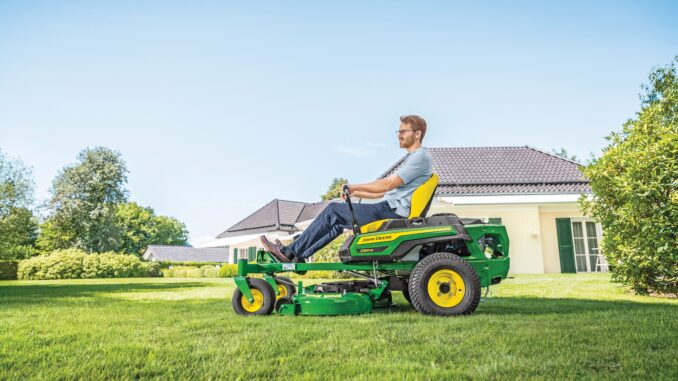
The John Deere Sabre is a riding mower line aimed at homeowners who want a simple, dependable lawn tractor for routine mowing and light yard work. This guide covers the most useful repair paths, common service parts, manuals, diagrams, and the maintenance checks that keep a Sabre running properly.
John Deere Sabre overview
Sabre mowers sit in Deere’s older residential riding mower family, so the key systems are the engine and fuel system, mower deck, drive system, and electrical safety circuits. In practical terms, most problems show up as no-start issues, poor cutting performance, belt wear, vibration, weak drive, or electrical faults.
Common service parts owners actually buy include blades, drive belts, deck belts, air filters, spark plugs, batteries, and tires or wheel assemblies. A parts listing for Sabre-branded equipment also shows common wheel and tire assemblies, which is useful when you are matching older mower hardware to replacement components.
Sabre troubleshooting approach
Start with the symptom, not the part. For a Sabre, the main categories are starting issues, running issues, cut quality, vibration or noise, drive problems, and electrical or safety-switch problems.
The fastest way to save time is to decide whether the issue is engine-side, deck-side, or drive-side before ordering anything. A mower that cranks but will not run points you toward fuel, spark, or safety interlocks, while a mower that runs but cuts poorly usually points toward the deck, blades, belt, or tire pressure.
Sabre problems that need attention now
Some faults can quickly become expensive if they are ignored. Stop and diagnose immediately if the mower will not crank safely, the deck is throwing severe vibration, the drive is slipping badly, or a belt is smoking or shredding.
Starting issues
A Sabre that cranks slowly, will not crank, or starts and dies may have a weak battery, dirty terminals, a bad solenoid, a safety switch issue, or a fuel delivery problem. Ignoring repeated no-start symptoms usually leads to a dead battery or overheating starter components.
-
Check the battery charge and terminal cleanliness.
-
Confirm the seat, brake, and PTO safety switches are functioning.
-
Inspect fuel level, fuel line condition, and fuel filter condition.
-
Pull the spark plug and check for fouling or damage.
-
If it still fails, test the starter circuit before replacing parts.
Cut quality problems
If the mower leaves uneven stripes, clumps, or uncut grass, the usual causes are dull blades, a dirty deck, incorrect tire pressure, or a worn deck belt. Poor cut quality is often a maintenance issue first, not a major repair.
-
Inspect and sharpen or replace the blades.
-
Clean grass buildup from the deck underside.
-
Check tire pressure on all four wheels.
-
Inspect the deck belt for cracking, glazing, or looseness.
-
Verify the deck is level and that the anti-scalp wheels are adjusted correctly.
Vibration and noise
Strong vibration almost always means a blade problem, bent spindle, worn pulley, damaged belt, or debris trapped under the deck. Running the mower in that condition can damage bearings and spindles quickly.
-
Stop mowing and disconnect the spark plug wire.
-
Inspect blades for bends, cracks, or missing material.
-
Rotate spindle pulleys by hand and feel for roughness.
-
Check for wrapped wire, sticks, or packed grass under the deck.
-
Replace any damaged pulley, blade, or spindle before reuse.
Drive problems
If the mower moves weakly, jerks, or will not move in gear, the issue may be a worn drive belt, linkage problem, transmission issue, or brake/traction adjustment problem. Drive faults can worsen fast if the belt is slipping or the transmission is being forced.
-
Inspect the drive belt for wear and correct routing.
-
Check the drive lever, idler, and linkage movement.
-
Make sure the parking brake is fully releasing.
-
Confirm the tires have enough traction and correct pressure.
-
If the transmission is noisy or oily, stop and evaluate for dealer-level repair.
Electrical problems
Electrical faults often show up as dead gauges, no crank, intermittent starting, or safety-switch cutouts. On an older Sabre, corrosion and brittle wiring are common causes.
-
Clean battery terminals and ground points.
-
Inspect visible wiring for cracked insulation or loose connectors.
-
Test the ignition switch and safety switch operation.
-
Check the fuse, if fitted.
-
Replace damaged connectors before they create repeated faults.
Sabre DIY line
Most routine Sabre work is suitable for a competent homeowner, but transmission repair, engine teardown, and major electrical diagnostics are usually beyond simple DIY. The practical line is whether the job needs basic hand tools and access, or whether it needs specialty pullers, electrical testing, or internal engine work.
Good DIY jobs
-
Battery replacement.
-
Spark plug replacement.
-
Air filter service.
-
Blade sharpening or replacement.
-
Deck cleaning.
-
Belt replacement on accessible systems.
Advanced DIY or dealer jobs
-
Transmission internal repair.
-
Crankshaft, piston, or valve work.
-
Carburetor rebuilds on badly varnished engines.
-
Harness troubleshooting with intermittent shorts.
-
Spindle housing replacement if the deck is heavily worn.
Skill levels
-
Beginner: battery, spark plug, air filter, cleaning.
-
Intermediate: blades, belts, deck leveling, basic switch testing.
-
Advanced: transmission, electrical diagnosis, internal engine repairs.
Sabre parts and diagrams
Before ordering parts, owners should collect the full model name, Product Identification Number or PIN, engine model and serial number, and the mower deck size or version. Deere’s parts pages and quick reference guides point owners to model-based parts diagrams, service intervals, and manuals.
OEM parts are the safest choice for belts, safety-critical switches, and fit-sensitive items. Aftermarket parts can be fine for filters, blades, and batteries if the cross-reference is exact and the dimensions match.
Manuals and diagrams
The best sources are Deere’s parts pages, Deere’s quick reference guides, and the operator’s manual for the exact machine. A third-party manual site may list Sabre series repair manuals, but Deere documentation should be the first stop for parts fitment and service intervals.
-
John Deere Lawn Mower Parts — good for parts diagrams, maintenance kits, and model lookup.
-
John Deere Quick Reference Guides — useful for service intervals, capacities, and model-specific maintenance sheets.
-
Sabre Series manuals — a third-party source for workshop-manual listings.
Finding model numbers
The model number and serial number are the difference between a correct part and a wrong one. Deere says the model and serial are found on the identification tag, while the engine number is on the engine itself.
-
Find the identification tag on the mower frame.
-
Record the model number exactly as printed.
-
Record the serial number from the top-right of the tag.
-
Look on the engine block or shroud for the engine model and serial.
-
If the deck or attachment has a tag, record that too.
Buying parts wisely
Online buying works best when you verify the OEM number and compare the part against the PIN. Dealer counter service is best for serial-specific parts, while retail stores are fine for common consumables if the package clearly matches the mower or engine spec.
-
Online: confirm the part number, dimensions, and model compatibility.
-
Dealer counter: use this for switches, belts, transmission items, and serial-specific parts.
-
Retail stores: use this for batteries, filters, plugs, and generic consumables when the cross-reference is clear.
Useful sources include Deere’s parts page, Deere’s quick reference guides, and a parts site with model-based listings. For example, Deere’s parts page explains how to search diagrams, and My Mower Parts shows Sabre-related replacement listings such as wheels and tires.
Common DIY replacements
Air filter and spark plug
This is one of the quickest ways to restore easier starting and smoother running. A clogged filter or worn plug can make an otherwise healthy Sabre feel weak and unreliable.
-
Disconnect the spark plug wire.
-
Remove the air filter cover and inspect the element.
-
Replace the paper element if dirty or damaged.
-
Remove and inspect the spark plug.
-
Install the correct replacement and reconnect the wire.
Blades
Sharp, balanced blades improve cut quality and reduce vibration. If the mower is leaving ragged grass or sounding rough, blades are one of the first items to inspect.
-
Disconnect the spark plug wire.
-
Raise the deck safely and remove the blade bolt.
-
Inspect for bends, nicks, and cracks.
-
Sharpen or replace as needed.
-
Reinstall and torque correctly.
Deck belt
A worn deck belt can cause poor blade speed, uneven cutting, and squealing noises. Replace the belt if it is glazed, cracked, frayed, or slipping.
-
Remove the deck or open the belt access path.
-
Photograph the routing before removal.
-
Release tension and remove the old belt.
-
Route the new belt exactly as shown in the manual.
-
Run the deck briefly and verify tracking.
Battery
A weak battery is one of the most common causes of no-crank complaints. Replacing it usually restores starting if the charging system is still working.
-
Turn the key off and remove the key.
-
Disconnect the negative terminal first.
-
Remove the hold-down and lift out the battery.
-
Install the new battery with the correct polarity.
-
Clean terminals and test starting.
Maintenance that prevents repeat faults
Regular maintenance is the cheapest way to avoid cut-quality loss, starting trouble, and belt wear. On older Sabre mowers, cleaning, lubrication, and seasonal part replacement matter as much as major repairs.
Focus on starting reliability, cutting performance, belt life, and electrical cleanliness. Deere’s maintenance information stresses checking oil level, replacing or cleaning the spark plug, servicing the air filter, sharpening blades, inspecting belts, cleaning the deck, and checking tire pressure.
Maintenance schedule
Daily or before use
-
Check engine oil level.
-
Look for loose hardware or obvious leaks.
-
Check tire pressure visually.
-
Make sure blades and deck are clear of debris.
-
Confirm all safety controls work.
Every 50 hours or yearly
-
Change engine oil and filter if the model uses one.
-
Replace or clean the spark plug.
-
Clean or replace the air filter.
-
Inspect blades and deck belt.
-
Clean the deck underside.
Every season
-
Sharpen or replace blades.
-
Inspect battery condition and terminals.
-
Check drive belt wear.
-
Verify wheel and tire condition.
-
Level the deck and inspect for rust.
End of season
-
Clean the mower thoroughly.
-
Stabilize fuel if the machine will sit.
-
Remove debris from the deck and frame.
-
Charge the battery or disconnect it for storage.
-
Replace worn parts before spring.
Repair or replace
A Sabre is usually worth repairing if the fault is a battery, belt, blade, switch, or simple carburetion issue. It is usually time to replace the machine or move to major dealer repair if the transmission is failing, the engine has low compression, or the deck is structurally worn out.
-
Repair if the problem is a consumable, a wear item, or a simple electrical fault.
-
Upgrade if the mower runs well but needs better blades, tires, or a fresh battery.
-
Replace if the frame, engine, transmission, or deck shell is beyond economical repair.
Sabre FAQ
1. Why will my John Deere Sabre not start?
A Sabre that will not start is usually dealing with battery, spark, fuel, or safety-switch trouble. Start with the battery and terminals, then move to the seat switch, brake switch, spark plug, and fuel supply. If it cranks but never fires, focus on ignition and fuel delivery first.
2. Why does my Sabre crank but not fire?
That symptom often points to no fuel, stale fuel, a clogged filter, or weak spark. It can also be a safety switch preventing ignition output. Check the basics before replacing larger parts.
3. Why does my Sabre start and then die?
A mower that starts briefly and quits may have a restricted fuel cap vent, dirty carburetor, failing ignition switch, or loose wiring. Fuel starvation is very common on older machines that sit between uses. Inspect the fuel system before chasing electrical faults.
4. Why is my Sabre hard to start when cold?
Cold-start trouble usually comes from a weak battery, dirty plug, choke issue, or stale fuel. A partially clogged air filter can also make cold starting harder. If the problem happens every time, service the fuel and ignition basics first.
5. Why is my Sabre hard to start when hot?
Hot-start issues often point to a weak coil, vapor lock, or poor fuel flow. Heat can expose electrical weaknesses that do not show up cold. Check the spark plug, coil connections, and fuel supply after shutdown.
6. Why does my Sabre run rough?
Rough running is commonly caused by a dirty air filter, bad spark plug, stale fuel, or carburetor deposits. On older mowers, simple tune-up parts solve many of these complaints. Start with consumables before assuming a major engine fault.
7. Why does my Sabre lose power under load?
Loss of power under load usually means the engine is not breathing or fueling properly. A plugged filter, dull blades, or thick grass can make the machine feel weak. Check engine service items and deck condition together.
8. Why is my Sabre smoking?
Blue or white smoke can indicate oil burning, overfilled oil, or engine wear. Black smoke usually means a rich fuel mixture or restricted air intake. Stop and inspect the oil level, air filter, and engine condition before continuing to mow.
9. Why is my Sabre cutting unevenly?
Uneven cutting is often caused by dull blades, incorrect tire pressure, or a deck that is out of level. It can also happen if the deck is packed with grass or the belt is slipping. Basic deck service usually fixes the issue.
10. Why does my Sabre leave strips of grass?
Stripes or missed patches usually mean blade wear, deck buildup, or poor overlap from deck height issues. Mowing too fast in thick grass can make it worse. Clean the deck and inspect the blades first.
11. Why does my Sabre vibrate so much?
Severe vibration usually means a bent blade, damaged spindle, loose pulley, or foreign object under the deck. This is not a symptom to ignore because it can destroy bearings and belts. Stop the mower and inspect the deck assembly immediately.
12. Why is my Sabre deck making noise?
Grinding or rattling noises often come from bearings, pulleys, belt issues, or debris in the deck housing. Noise that changes with blade engagement usually means the deck assembly is the source. Remove the deck belt and turn each spindle by hand to check for roughness.
13. Why does my Sabre belt keep slipping?
A belt that slips usually is worn, routed wrong, or being stressed by a stuck idler or spindle. Oil contamination can also ruin belt grip. Replace the belt and inspect all pulleys and tensioners at the same time.
14. Why does my Sabre belt keep coming off?
Thrown belts are often caused by bent deck components, worn idlers, improper routing, or a damaged spindle pulley. A misaligned deck can contribute as well. Recheck the routing against the manual and inspect every pulley.
15. Why won’t my Sabre blades engage?
If the PTO will not engage, the issue may be the switch, wiring, clutch, belt, or a safety interlock. Listen for the clutch and watch whether the belt starts moving. If nothing happens, begin with the control circuit.
16. Why does my Sabre shut off when I engage the blades?
That usually means a safety-switch problem, an engine load issue, or a weak electrical connection. A failing battery can also expose PTO engagement problems. Check battery voltage, switch operation, and belt drag.
17. Why won’t my Sabre move forward?
A no-move complaint may be a drive belt, linkage, brake, or transmission issue. If the engine runs and the deck works but the mower will not move, start with the drive system. Do not force the controls because that can damage the transmission.
18. Why is my Sabre weak in reverse?
Weak reverse often means worn drive components or a transmission that is beginning to fail. Check the drive belt, linkage adjustment, and brake release first. If the problem is getting worse, the transmission may need dealer attention.
19. Why does my Sabre jerk when moving?
Jerking can come from a slipping belt, sticky linkage, or a transmission issue. Uneven tire pressure can also make the mower feel unstable. Inspect the belt and control linkage before assuming the transmission is bad.
20. Why does my Sabre creep when the drive is off?
Creeping usually means the drive system is not fully disengaging or the linkage is out of adjustment. It can also be a brake issue. This should be checked promptly because it affects safe operation.
21. Why is my Sabre battery going flat?
Repeated battery drain can be caused by a weak battery, poor charging, corroded terminals, or a parasitic draw. Old batteries often fail after sitting through the off-season. Charge-test the battery before replacing it.
22. Why does my Sabre click but not crank?
A clicking sound with no crank usually means low battery voltage, poor connections, or a failed solenoid. The starter may also be drawing too much current. Clean and test the battery circuit before replacing major parts.
23. Why does my Sabre blow a fuse?
Fuses blow when a circuit is shorting or a component is failing. Common causes include damaged wiring, a bad switch, or moisture in a connector. Replace the fuse only after finding the reason it failed.
24. Why does my Sabre overheat?
Overheating can come from low oil, blocked cooling fins, dirty air intake, or excessive grass buildup around the engine. Older mowers are especially sensitive to debris and poor airflow. Clean and inspect the engine compartment regularly.
25. Why is my Sabre leaking oil?
Oil leaks may come from loose bolts, a damaged gasket, crankshaft seal wear, or an overfilled crankcase. Small leaks can become bigger problems if oil reaches belts or the muffler. Clean the area and identify the source before continued use.
26. Why is my Sabre using too much fuel?
High fuel use can mean a dirty air filter, rich carburetor setting, or engine wear. Cutting very heavy grass or mowing too fast also increases consumption. Start with service items before suspecting deeper engine damage.
27. Why does my Sabre smell like fuel?
A fuel smell often points to a leaking line, carburetor overflow, or spilled fuel around the tank. It can also happen when the engine floods. Stop and inspect for wet hoses or fuel seepage immediately.
28. How often should I change the oil on a Sabre?
Many Deere riding mowers use a 50-hour or seasonal oil service interval, but you should confirm the exact schedule for your model. Deere’s quick reference guidance and operator’s manual are the right sources for the exact chart. Checking the oil level daily is also recommended.
29. How often should I replace the spark plug?
Spark plug service depends on the engine and usage, but replacing it during regular seasonal maintenance is a smart baseline. A fresh plug helps with starting and smooth running. If the plug is fouled, worn, or corroded, replace it sooner.
30. How often should I sharpen Sabre blades?
Sharpen blades whenever cut quality drops, vibration increases, or the blade edge becomes rounded or nicked. For most homeowners, that means at least once per season and sometimes more often. A balanced blade set gives better results than one sharp blade and one worn one.
31. Can I use aftermarket parts on my Sabre?
Yes, for some items. Filters, batteries, and blades can be fine aftermarket if they cross-reference correctly and match the dimensions. Use OEM for belts, switches, and other fit-sensitive or safety-critical parts.
32. Where do I find Sabre parts diagrams?
The best place is Deere’s parts catalog pages, where you can search by model and view diagrams. That is the safest way to confirm part numbers before buying. A third-party parts listing can help, but Deere fitment should be your main reference.
33. Is a Sabre worth repairing?
Usually yes for normal wear items, but not always for major engine or transmission failure. Older Sabre mowers are best treated as straightforward homeowner machines, so the economics matter. If repair cost approaches replacement value, replacement usually makes more sense.
34. What should I buy first for a used Sabre?
Start with battery, spark plug, air filter, blades, and a full belt inspection. Those are the fastest items to bring the machine back to usable condition. Then address tires, deck cleaning, and any switch problems.