
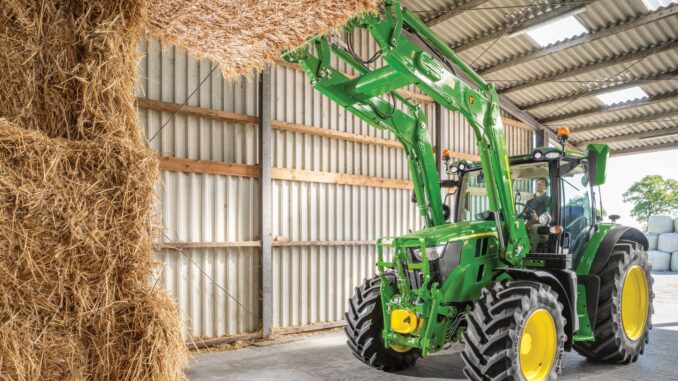
The John Deere 3520 is a North American compact utility tractor covered in John Deere operator literature alongside the 3120, 3320, and 3720 series, with service areas including engine, fuel, cooling, transmission, hydraulics, brakes, electrical, troubleshooting, storage, and specifications. For homeowner and small-property users in the USA and Canada, the most useful way to approach repairs is symptom-first: start with what the tractor is doing, then narrow the likely system before ordering parts or taking anything apart.
John Deere 3520 model overview
The John Deere 3520 sits in Deere’s compact utility tractor range and is designed for mowing, loader work, light ground-engaging tasks, material handling, and year-round property maintenance rather than just lawn duty. Deere’s operator information for this family shows the machine’s core systems include the diesel engine and fuel system, drive train, hydraulic system, PTO, 3-point hitch, electrical system, steering, and brakes.
Because it is a diesel compact tractor, owners usually deal with a different repair pattern than on lawn tractors: fuel restriction, air intake issues, hydraulic service, axle oil checks, PTO interlocks, battery condition, and cooling system cleanliness matter more than blade-clutch style issues. Common owner-bought parts include the engine oil filter M806419, primary air filter RE68048, fuel filter MIU800645, and hydraulic filter LVA12726.
General overview of the John Deere 3520
The official manual structure shows exactly where repair attention goes on this tractor: engine oil and filter service, air filter service, fuel filter service, radiator and screen cleaning, transmission and hydraulic oil service, front axle oil service, brake adjustment, battery care, fuse replacement, and troubleshooting by engine, electrical, machine, brakes, and steering sections. That makes the John Deere 3520 a practical DIY machine for maintenance, but a mixed one for deeper hydraulic, transmission, or injection-system work.
Several service parts owners commonly look up are:
-
Engine oil filter: M806419.
-
Primary air filter: RE68048.
-
Fuel filter: MIU800645.
-
Hydraulic filter: LVA12726.
Troubleshooting approach for the John Deere 3520
Diagnosis on the John Deere 3520 should start from the visible symptom: hard starting, no crank, poor power, hydraulic weakness, overheating, unusual noise, PTO trouble, or a warning light or code. Deere’s own manual layout reinforces this method by separating troubleshooting into engine, electrical system, machine, brakes, steering, and error codes.
Main symptom groups for this model include:
-
Starting issues: no crank, slow crank, hard cold start, stall after start.
-
Running issues: low power, rough running, smoke, fuel starvation.
-
Overheating and leaks: hot running, coolant loss, plugged screens, oil seepage.
-
Transmission and drive issues: poor movement, weak hydro response, MFWD concerns.
-
Electrical and safety system issues: battery, fuses, lights, PTO-seat-brake interlock faults.
John Deere 3520 emergency and immediate repair needs
Some faults on the John Deere 3520 should be treated as immediate stop-use problems because they can create a safety risk or rapidly damage expensive parts. Deere’s operator material specifically emphasizes safe maintenance, avoiding fires, avoiding high-pressure fluids, PTO safety, braking, steering, and testing safety systems.
Starting issues
If the tractor will not crank, intermittently loses electrical power, or only clicks, the issue may be battery-related, connection-related, fuse-related, or tied to a safety interlock that prevents safe starting. Repeated cranking without diagnosis can flatten the battery and hide the real fault.
Common causes:
-
Weak or sulphated battery.
-
Corroded battery terminals.
-
Blown fuse.
-
Seat, PTO, or park-brake safety switch issue.
Basic checks:
-
Confirm PTO is off and park brake is set.
-
Check battery terminal tightness and visible corrosion.
-
Inspect fuses and obvious harness damage.
-
Test the safety system sequence described in the operator controls section.
John Deere 3520 overheating and leaks
Overheating on the John Deere 3520 matters immediately because the manual includes regular radiator screen, fin, coolant, and hose checks for a reason: compact tractors clog easily with chaff, dust, and grass. Continued operation when hot can escalate a cheap airflow issue into hose, coolant, or engine damage.
Common causes:
-
Plugged grille, side screens, radiator screen, or fins.
-
Low coolant level.
-
Aging radiator hoses or clamps.
-
Belt-related cooling fan or alternator drive issue.
Basic checks:
-
Shut down and let the engine cool fully.
-
Clean the grille, side screens, and radiator screen.
-
Check coolant level and look for hose seepage.
-
Inspect belt condition and tension if accessible.
John Deere 3520 transmission and drive problems
Poor movement, weak travel response, unusual hydro behavior, or front axle concerns should not be ignored because low or contaminated transmission/hydraulic oil can affect drive and hydraulic performance together. Running the tractor with unresolved hydraulic or transmission service issues can increase wear and contamination.
Common causes:
-
Low transmission/hydraulic oil.
-
Overdue hydraulic filter service.
-
Front axle oil neglect.
-
Linkage or control issues.
Basic checks:
-
Verify transmission oil level.
-
Check service history for hydraulic oil and filter changes.
-
Inspect for leaks around filters, hoses, and housings.
-
Check front axle oil level if MFWD performance seems wrong.
Electrical problems
Electrical faults on the John Deere 3520 often present as no-start, dim lights, intermittent gauges, or safety shutdown behavior. Because the manual includes fuse, battery, bulb, and safety-test procedures, these are sensible first-line owner checks before deeper diagnosis.
Common causes:
-
Dirty or loose battery terminals.
-
Weak battery electrolyte condition or age-related failure.
-
Blown fuses.
-
Failed switch or interlock.
Basic checks:
-
Clean and tighten battery connections.
-
Check battery condition and electrolyte if serviceable.
-
Inspect and replace blown fuses with the correct rating.
-
Run through the seat/PTO/park-brake safety checks.
DIY or dealer for the John Deere 3520
The realistic DIY line on the John Deere 3520 is this: routine service, filters, fluids, battery work, visible belt service, and basic electrical checks are owner-friendly, while hydrostatic transmission internals, fuel injection work, advanced electrical diagnosis, and major hydraulic repairs are usually dealer-level jobs. That boundary matters because the tractor combines diesel, hydraulics, PTO safety systems, and higher machine weight than a lawn tractor.
Good DIY jobs
-
Engine oil and oil filter service.
-
Air filter replacement.
-
Fuel filter replacement and sediment bowl cleaning.
-
Battery cleaning, terminal service, and fuse replacement.
-
Cleaning radiator screen, side screens, and fins.
-
Front axle and fluid-level checks.
Advanced DIY or dealer jobs
-
Transmission/hydraulic oil and suction filter service if access or contamination is an issue.
-
Brake adjustment if symptoms are unclear.
-
Alternator belt replacement or tension correction if access is tight.
-
PTO interlock diagnosis, display issues, or recurring electrical faults.
-
Fuel injection pump or injector work.
Skill guide
-
Beginner: Filters, battery, fuses, radiator screen cleaning, fluid checks.
-
Intermediate: Fuel filter service, belt inspection, axle oil changes, brake adjustment checks.
-
Advanced: Hydraulic service, electrical tracing, cooling-system repairs, major driveline work.
Parts for the John Deere 3520
Before ordering parts for a John Deere 3520, gather the full model name, product identification number, and engine identification details, because Deere literature specifically provides sections for product identification and recording identification numbers. This matters even more when the tractor has options, cab differences, tire packages, or attachment-specific variations.
OEM parts are the safest choice for belts, hydraulic filters, safety-switch components, and other fit-sensitive items because exact dimensions and bypass characteristics matter. Aftermarket can be reasonable for batteries and some filters only when the cross-reference is exact and tied to the correct John Deere 3520 configuration.
John Deere 3520 diagrams and manuals
The most useful documentation sources for this tractor are Deere’s operator manual, Deere parts catalog resources, and Deere technical publications support. The operator manual is best for service intervals, maintenance procedures, controls, troubleshooting categories, and identification points, while the parts catalog is best for exploded diagrams and exact part-number confirmation.
Useful sources:
-
Official John Deere operator’s manual for 3120/3320/3520/3720 North American tractors.
-
John Deere operator information index for maintenance intervals, service headings, troubleshooting areas, and specifications.
-
John Deere parts catalog for diagrams and serial-specific part lookups.
-
John Deere parts support as a starting point for official parts ordering and dealer routing.
How to find John Deere 3520 serial and engine numbers
Identification numbers matter because parts, diagrams, and some procedures can change by production range or configuration, and Deere explicitly includes product identification and record-identification sections in the manual. For a diesel compact tractor, the engine model and serial can also matter when you are ordering fuel, air, or engine-related components.
Steps:
-
Locate the tractor Product Identification Number plate or decal using the product identification guidance in the operator literature.
-
Record the full model and PIN exactly as shown, including any prefix or suffix characters.
-
Locate the engine identification label on the engine itself and record the model and serial.
-
Match any attachment or implement model separately if the repair concerns PTO equipment rather than the base tractor.
-
Keep those numbers with your service records before ordering parts online or at a dealer.
Buying John Deere 3520 parts
The best buying strategy is to confirm the OEM number first, then compare dealer, official online, and trusted aftermarket listings only after the number is verified. That reduces the risk of ordering a nearly-correct filter, hose, switch, or hydraulic part that fits another Deere compact but not your exact 3520 setup.
Options:
-
Online: use official Deere catalog references and double-check PIN-sensitive items first.
-
Dealer counter: best for serial-specific, hydraulic, electrical, and safety-related parts.
-
Retail stores: acceptable for common consumables only when packaging clearly cross-references the correct tractor and engine.
Useful links:
-
NAPA 3520 replacement parts lookup for cross-shopping consumables.
Step-by-step John Deere 3520 fitting guide
These are the highest-value owner jobs on the John Deere 3520 because they directly affect starting, running quality, cooling, and long-term reliability. Always park safely, lower implements, shut the engine off, and let hot components cool before starting work.
Change engine oil and oil filter
This job protects the diesel engine and is part of Deere’s scheduled maintenance structure.
-
Warm the engine briefly, park safely, and shut it down.
-
Check the manual procedure for oil drain and filter access.
-
Drain the oil into a suitable pan and remove the old filter.
-
Install the new M806419 oil filter and lubricate the gasket if required.
-
Refill with the correct oil specification and verify the level on the dipstick.
-
Start, check for leaks, then recheck the level after shutdown.
Replace the John Deere 3520 air filter
A restricted air filter can cause power loss, smoke, and poor running, and Deere specifically ties service to the air restriction indicator and intake checks.
-
Open the hood and access the air cleaner housing.
-
Remove the old primary element carefully so dirt does not fall into the intake.
-
Inspect the housing, dust valve, hoses, and clamps for cracks or looseness.
-
Fit the RE68048 filter correctly and reseal the housing.
-
Reset or recheck any air restriction indicator as applicable.
Replace the John Deere 3520 fuel filter
Fuel restriction on a diesel often shows up as hard starting, stalling, or weak power under load.
-
Shut the fuel supply off if equipped with a shut-off valve.
-
Clean the area around the filter and sediment bowl before opening anything.
-
Remove the old MIU800645 fuel filter and service the sediment bowl if required.
-
Install the new filter, making sure seals seat correctly.
-
Reopen fuel flow, bleed or prime as required by the manual, and test for leaks.
Clean screens and radiator area
This simple job prevents one of the most common compact-tractor overheating problems.
-
Let the tractor cool fully.
-
Remove and clean the grille, side screens, and radiator screen.
-
Clear debris from radiator fins carefully without bending them.
-
Inspect hoses and coolant level while the area is accessible.
-
Reassemble and monitor operating temperature during the next use.
John Deere 3520 maintenance to prevent repeat problems
Regular maintenance on the John Deere 3520 prevents most repeat faults because the major trouble areas are already mapped by Deere’s own service schedule: air restriction, dirty cooling pack, overdue filters, neglected fluids, weak battery condition, and missed inspections. On compact tractors, neglect usually compounds across systems, so a cooling issue, dirty fuel system, or hydraulic service delay can create multiple symptoms at once.
Focus areas:
-
Starting reliability: battery care, fuel filter service, clean electrical connections.
-
Cooling reliability: clean screens, fins, coolant checks, hose inspection.
-
Drive performance: correct transmission/hydraulic oil level and timely filter service.
-
Electrical reliability: fuse checks, terminal cleaning, safety-system testing.
-
General durability: wheel hardware, tire pressure, axle oil, brake checks.
John Deere 3520 maintenance schedule
The official maintenance structure for this tractor family includes as-needed service, after-first-10-hours checks, every 10 hours or daily tasks, every 50 hours, every 200 hours, every 400 hours, every 600 hours, yearly tasks, every 1200 hours, and every two years or 2000 hours. A maintenance article should stay aligned with that chart rather than inventing lawn-tractor-style intervals that do not match this compact diesel platform.
Daily or before each use
-
Check engine oil level.
-
Check coolant level.
-
Clean grille, side screens, and radiator screen if dirty.
-
Check tire pressure and visible hardware condition.
After first 10 hours
-
Check wheel bolts and hardware as scheduled in Deere service intervals.
Every 50 hours
-
Lubricate machine grease fittings and 3-point hitch points as listed.
Every 200 hours
-
Change engine oil and filter.
-
Inspect alternator belt.
-
Check air restriction indicator.
Every 400 hours
-
Change transmission oil and hydraulic suction oil filter.
-
Replace fuel filter.
Every 600 hours
-
Change front axle oil.
-
Check brake adjustment.
-
Check air filter element, intake hoses, and clamps.
Yearly
-
Check battery electrolyte level.
-
Drain water from fuel-related components and inspect hoses and clamps.
Every 1200 hours
-
Check and clean inline hydraulic filter.
-
Check engine valve clearance through a dealer if required.
Every two years or 2000 hours
-
Flush and replace coolant with the specified Deere coolant type.
-
Service fuel injection nozzles as listed in the maintenance structure.
Seasonal checklist
-
Spring: change overdue engine oil/filter, inspect battery, clean cooling pack, check tire pressures.
-
Mid-season: monitor air restriction, fuel filter condition, and radiator cleanliness.
-
Fall/winter prep: stabilize storage condition, prepare fuel and engine for storage, and record service dates.
Repair, upgrade, or replace the John Deere 3520?
For most owners, repairing a John Deere 3520 makes sense when the machine is structurally sound and the issue is in normal wear items, service neglect, or a single contained system fault. Upgrading or replacing becomes more realistic when repeated hydraulic, transmission, wiring, or major engine work stacks up against the tractor’s overall condition and your workload needs.
Repair if:
-
The fault is limited to filters, fluids, battery, hoses, belts, switches, or one leaking component.
-
The tractor otherwise starts, drives, and operates attachments normally.
Upgrade if:
-
You need more lift, PTO capability, hydraulic capacity, or cab comfort than the 3520 configuration offers.
-
Repeated repairs are pushing you toward heavier-duty use than this tractor handles best.
Replace if:
-
Major engine, hydrostatic, or hydraulic failures combine with poor overall condition.
-
The tractor has chronic electrical or driveline issues plus high repair cost relative to value.
John Deere 3520 troubleshooting FAQ
1. Why will my John Deere 3520 not start?
No-start on this tractor usually means either no crank or crank-no-start, and those are different faults. Start with the basics: PTO off, brake set, battery charged, terminals clean, and fuses intact. If it cranks but will not fire, look next at fuel supply, filter restriction, and air in the fuel system.
2. Why does my John Deere 3520 click but not crank?
A clicking starter often points to low battery voltage, poor cable connections, or a starter circuit issue. Clean and tighten both battery terminals first, then verify battery condition before replacing parts. Safety interlock problems can also interrupt proper starting logic.
3. Why does the John Deere 3520 crank slowly?
Slow cranking is commonly caused by a weak battery, corroded connections, or heavy resistance in cables. Cold weather can make the symptom worse on a diesel compact tractor. Fix the electrical condition first before assuming the starter itself is bad.
4. Why does my John Deere 3520 start and then stall?
If it starts and dies, suspect fuel restriction, air in the fuel system, or contaminated fuel before chasing deeper engine faults. A restricted fuel filter is a very common service item and should be checked early. Also confirm fuel shut-off position and sediment bowl condition where applicable.
5. Why is my John Deere 3520 hard to start cold?
Cold-start difficulty often comes from battery weakness, poor fuel delivery, or overdue maintenance rather than one dramatic failure. A clean fuel filter, healthy battery, and correct seasonal diesel fuel help significantly. If the problem persists, dealer-level testing of glow or injection-related systems may be needed.
6. Why is the John Deere 3520 losing power under load?
Low power under load usually points to restricted air intake, fuel restriction, or overdue service in the intake/fuel path. Check the air filter, air hoses, restriction indicator, and fuel filter before assuming an injector or turbo-type issue. Dirty cooling components can also contribute if the engine is running hot.
7. Why is my John Deere 3520 smoking?
Smoke usually means the engine is not getting the correct air-fuel balance or is operating under poor combustion conditions. Start with the air filter, fuel quality, and service condition, then look for overheating or more advanced engine concerns. Persistent smoke after service deserves professional diagnosis.
8. Why does my John Deere 3520 overheat?
The most common cause is restricted airflow through the grille, side screens, radiator screen, or fins. Low coolant, weak hoses, or belt-related cooling problems can also contribute. Stop using the tractor until the cooling system is clean and the cause is identified.
9. Why is coolant disappearing on my John Deere 3520?
Coolant loss can come from hose seepage, clamp issues, radiator leaks, or internal engine problems. Begin with the visible external checks because they are far more common and far cheaper. Never keep topping it up without finding the source.
10. Why is my John Deere 3520 leaking oil?
Oil leaks are often from routine service points, filter sealing surfaces, hoses, or age-related gasket seepage. Clean the area first so you can identify the real source rather than guessing from old residue. A fresh filter change should always be followed by a leak inspection.
11. Why won’t my John Deere 3520 move properly?
Poor movement can be related to low transmission/hydraulic oil, overdue hydraulic service, or control issues. Because drive and hydraulics are closely linked here, always check the shared service condition first. Continuing to operate it that way risks more wear.
12. Why is my John Deere 3520 hydrostatic drive weak?
Weak hydro response often points to fluid level, filter restriction, contamination, or internal wear. Owner checks should focus first on level, service interval, and visible leaks. If those are correct, deeper diagnosis is usually dealer territory.
13. Why is the MFWD not helping enough?
Front-drive complaints can stem from front axle oil neglect, tire mismatch, driveline issues, or unrealistic traction expectations. Check axle service and tire condition first. Mechanical front-wheel drive improves traction, but it does not overcome bald tires or wrong ballast.
14. Why is my John Deere 3520 hydraulic system weak?
Weak hydraulics can come from low oil, dirty filters, overheating, or internal hydraulic wear. Start with fluid level, filter history, and signs of leaks or contamination. If steering, loader, and hitch are all weak together, move quickly before more damage develops.
15. Why won’t the 3-point hitch lift properly?
A weak or non-lifting hitch is usually tied to hydraulic condition, control setting, or load expectations. Check hydraulic oil level and whether other hydraulic functions are also slow. If the entire system is affected, do not treat it as just a hitch problem.
16. Why is the PTO not working on my John Deere 3520?
PTO problems can be electrical, control-related, or safety-interlock related before they are mechanical. The operator manual includes PTO and seat/park-brake interface testing because those checks matter. Verify the safety logic first, then move to switch and driveline diagnosis.
17. Why are my safety switches causing trouble?
Seat, PTO, and brake switches can cause no-start or PTO-engagement complaints if they are dirty, misadjusted, or failing. Deere specifically includes safety-system testing steps, which makes them an early inspection item, not an afterthought. Do not bypass them for normal operation.
18. Why is the battery always dead on my John Deere 3520?
Repeated battery drain usually means either battery age, poor charging, dirty terminals, or parasitic electrical issues. Start with battery cleaning and condition checks before replacing charging components. If the tractor sits for long periods, storage habits may be part of the problem.
19. Why are the lights or dash acting intermittently?
Intermittent electrical behavior usually points to loose connections, battery condition, fuse contact problems, or switch faults. Vibration and weather exposure make these faults common on compact tractors. Work from the battery and fuse panel outward.
20. Why does the John Deere 3520 blow fuses?
A blown fuse means excess current or a short in the protected circuit, not just “a bad fuse.” Replace it once with the correct rating, then inspect wiring, connectors, and the affected component if it blows again. Never fit a larger fuse to get around the problem.
21. Why is my John Deere 3520 vibrating more than usual?
Unusual vibration can come from engine mounting issues, driveline problems, loose hardware, front axle issues, or attachment imbalance. Start with visible hardware and any recently serviced or installed components. If vibration changes with PTO engagement, inspect the attached implement too.
22. Why do I hear belt squeal on the John Deere 3520?
A squealing belt usually means wear, contamination, or incorrect tension rather than a mysterious engine fault. Deere includes alternator belt service in the maintenance structure, so inspection is appropriate. Replace belts that are glazed, cracked, or oil-soaked.
23. Why is the air filter plugging up quickly?
Fast air-filter restriction usually means dusty work conditions, intake leaks, or overdue pre-cleaning of the housing and dust valve. Replacing the element without checking hoses and the housing can waste money. Use the correct primary element such as RE68048 when replacement is needed.
24. How often should I change the oil on a John Deere 3520?
The operator information for this family places engine oil and filter service at every 200 hours. Time-based yearly service can still make sense if the tractor sees low annual hours and seasonal use. Always align the schedule with the official chart and the actual operating conditions.
25. How often should I replace the fuel filter on a John Deere 3520?
The documented schedule places fuel filter replacement at every 400 hours. Replace it sooner if fuel contamination, hard starting, or power loss points that way. Dirty fuel can justify earlier service than the normal interval.
26. How often should I service the hydraulic system?
Transmission oil and hydraulic suction filter service are listed at every 400 hours in the operator information structure. Hydraulic condition should also be checked anytime drive or loader performance changes. Confirm exact parts by PIN before ordering hydraulic filters.
27. How often should I change front axle oil?
Front axle oil service is listed at every 600 hours in the maintenance structure. Owners who use MFWD heavily or work in wet, dirty conditions should still inspect levels regularly between intervals. Ignoring axle service can lead to much more expensive driveline repairs.
28. What maintenance should I do before each use?
Before use, focus on engine oil, coolant, visible leaks, tires, and cooling-pack cleanliness. A quick walk-around catches many problems before they become a recovery job. On compact tractors, debris in the screens is one of the easiest issues to prevent.
29. Can I use aftermarket filters on a John Deere 3520?
You can, but only when the cross-reference is exact and you trust the source. OEM is the safer default for fit-sensitive or hydraulic-related items, while common consumables are where aftermarket is most reasonable. Guessing by thread size or appearance is a bad approach.
30. Where can I find John Deere 3520 parts diagrams?
The best source for diagrams is the John Deere parts catalog, because it is designed for exploded-view lookup and part-number confirmation. The operator manual helps with procedures and intervals, but not with the same diagram depth. Use the PIN when possible to avoid near-match errors.
31. Where can I get a John Deere 3520 manual?
John Deere’s online operator manual resources cover the 3520 in the North American compact utility tractor series. That manual is the best first source for maintenance, controls, safety, and service intervals. Technical repair manuals exist separately for deeper repair work.
32. Is the John Deere 3520 easy to work on for DIY owners?
For routine service, yes: filters, battery, screens, fluids, and basic inspections are very manageable. For hydraulic internals, injection work, or intermittent electrical faults, it becomes much less beginner-friendly. The tractor is serviceable, but not a casual machine once repairs move past maintenance.
33. When should I stop and go to a dealer?
Go to a dealer when the tractor has repeated hydraulic weakness, persistent overheating after cleaning and fluid checks, no-start after basic electrical and fuel checks, or suspected injection, transmission, or major electrical faults. High-pressure hydraulic and diesel fuel issues are not good guess-and-swap repairs. Dealer help is also sensible when serial-specific parts confusion is holding up a repair.
34. Should I repair or replace my John Deere 3520?
Repair is usually the better choice when the problem is isolated and the tractor is otherwise sound. Replace or upgrade when multiple major systems are failing or your property work now demands more tractor than the 3520 can efficiently provide. The decision is less about age alone and more about repair stack, condition, and workload fit.
35. What are the most important John Deere 3520 maintenance habits?
The highest-value habits are keeping the cooling pack clean, staying on top of oil and filter intervals, watching hydraulic service, and maintaining battery and fuel-system condition. Those simple habits prevent a large share of no-start, overheating, weak-performance, and reliability complaints. On this model, cleanliness and service timing matter as much as wrench work.