
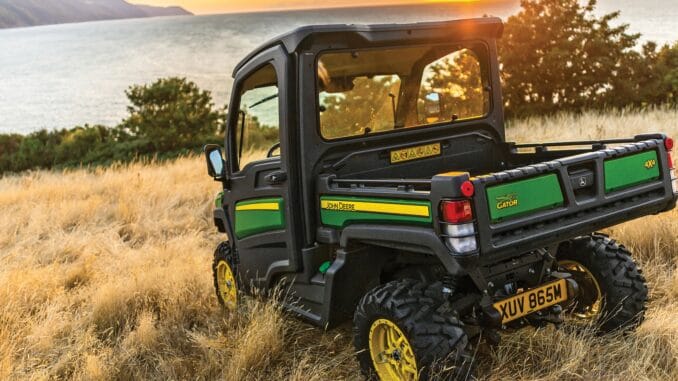
John Deere Predecessor AMT Gator Models Maintenance, and Troubleshooting Guide
Before the John Deere Gator name became synonymous with work UTVs and side-by-side utility vehicles, John Deere sold the AMT—All Material Transporter—series. The AMT 600, AMT 622, and AMT 626 were compact, gasoline-powered five-wheel utility transporters designed for the same fundamental jobs later associated with early Gators: carrying tools and feed, moving supplies, hauling materials around farms and estates, and reducing walking time on large properties.
Today, an AMT is a legacy machine rather than a modern Gator. It does not offer the suspension travel, enclosed cab options, four-wheel drive systems, passenger capacity, or speed of a current XUV. However, a sound AMT can still be highly useful for acreage owners, horse properties, small farms, golf-course support work, grounds maintenance, hunting land, and workshop transport.
This page is a hub for AMT model-specific ownership information, service procedures, troubleshooting guidance, used-machine inspection advice, and practical work-setup information. For the wider model family, begin with the General John Deere Gator Guide.
About the John Deere Predecessor AMT Gator Series
The John Deere AMT series was the direct predecessor to the original Gator utility vehicle. “AMT” stood for All Material Transporter, which describes the machine’s purpose well: it was built primarily as a compact materials-hauling vehicle rather than as a high-speed recreational ATV or a modern side-by-side crossover UTV.
The known North American AMT family consists of three main models:
-
AMT 600
-
AMT 622
-
AMT 626
John Deere introduced the AMT 600 in the late 1980s, followed by the more conventional two-person AMT 622 and the later AMT 626. Publicly available information generally places the AMT range from approximately 1987 into the early 1990s, before the original John Deere Gator replaced it. Exact production cutoffs, features, and specification details can vary by model year, serial-number range, and surviving documentation, so owners should always verify information against the machine identification plate and the correct operator’s or technical manual.
Mechanically, these machines were unlike the later four-wheel Gator layout. They used a distinctive five-wheel configuration:
-
One front steering wheel.
-
Four rear drive wheels.
-
A rear cargo box above the drivetrain and rear axle area.
The AMT 600 was the more ATV-like version, with a single operator position and handlebar-style steering. The AMT 622 and AMT 626 moved toward a more familiar utility-vehicle layout, using side-by-side seating, a steering wheel, pedals, and automotive-style controls. The 622 and 626 are therefore usually the models most comparable in day-to-day use to an early work Gator, although they remain considerably simpler machines.
Power came from small single-cylinder gasoline engines, commonly described in legacy service material as roughly 8.5 hp for the AMT 600 and approximately 10 hp for the AMT 622 and AMT 626. These were compact work machines intended for low-speed hauling, not highway use or aggressive trail riding. A belt-type variable transmission and rear chain-drive arrangement were used on these early transporters; drivetrain details and component arrangements differ between models. Available descriptions also identify a locking rear differential arrangement on certain versions, intended to improve traction when operating on wet grass, soil, loose aggregate, or uneven farm ground.
The AMT 626 is generally regarded as the final and wider-stanced evolution of the AMT family. It retained the two-seat, steering-wheel configuration but incorporated changes that distinguished it from the earlier 622. Published legacy information identifies the AMT 626 as having a 10-hp-class gasoline engine, a cargo-box-focused work design, and a listed towing rating of up to 1,000 lb; owners should nevertheless use the rating shown in their own manual and account for terrain, trailer brakes, load security, tire condition, and machine condition.
In the wider John Deere utility-vehicle history, the AMT series matters because it established the practical formula that the Gator later expanded: compact size, simple controls, low-speed work capability, cargo hauling, towing, and off-road mobility around a property. It is best viewed as a legacy work transporter, not as a direct equivalent of a modern XUV, HPX, Work Series, diesel, electric, or recreational Gator.
John Deere Predecessor AMT Gator Models
The AMT 600, AMT 622, and AMT 626 are the principal North American AMT models supported by publicly available legacy documentation. Technical material covering the family includes separate service information for the AMT 600, AMT 622, and AMT 626, including engine, fuel-system, electrical, powertrain, steering, brake, front-wheel, and rear-axle service procedures.
Predecessor AMT Gator Maintenance Guides
AMT maintenance is straightforward in concept, but it deserves more care than many owners expect. These machines are now several decades old. Their condition is often shaped less by original design weaknesses than by age, storage conditions, improvised repairs, worn wiring, old fuel-system components, neglected belts and chains, and parts substitutions made over many years.
Routine Service and Inspection
Follow the service schedule and lubricant specifications for the exact AMT model and engine fitted to the vehicle. If the original manual is missing, obtain the correct documentation before assuming oil capacities, filter numbers, belt specifications, tire pressures, or adjustment procedures.
Core AMT service areas include:
-
Check engine oil before operation, particularly on machines used on slopes, for towing, or for frequent short journeys.
-
Change engine oil at the correct interval for the fitted engine and operating conditions.
-
Inspect the air-cleaner element and housing for dirt, oil contamination, rodent nesting material, and loose seals.
-
Replace badly contaminated or damaged air-filter elements rather than attempting to clean paper elements beyond their intended service method.
-
Use fresh gasoline of the correct type for the engine, particularly after long storage periods.
-
Inspect the fuel tank, fuel line, shutoff components, fuel filter where fitted, carburetor connections, and fuel-pump-related components where applicable.
-
Check spark plug condition, plug lead security, ignition components, and engine grounding.
-
Inspect battery terminals for corrosion, loose cable ends, frayed cables, and poor grounds.
-
Confirm that the charging system can keep the battery charged during normal operation.
-
Inspect tire condition, tire pressure, wheel security, and signs of dry cracking, especially on original or very old tires.
-
Check the front steering wheel, steering yoke or steering gear, steering linkages, bearings, and mounting hardware for looseness.
-
Inspect brakes for correct operation, adjustment requirements, linkage wear, damaged cables or rods, and contaminated friction surfaces.
-
Examine cargo-box hinges, latches, tailgate hardware, box mounts, lift-assist parts, and any electric-dump components where fitted.
-
Clean mud, grass, hay, manure, leaves, and debris from the engine area, belt-drive ventilation areas, chain-drive areas, cargo-box supports, and brake components.
Predecessor AMT Gator service interval checklist, DIY maintenance for John Deere Predecessor AMT Gators, John Deere Gator fluids, filters, and grease-point guide, and Pre-season inspection checklist for Predecessor AMT Gator owners.
Belt, Drivetrain, and Steering Care
The AMT drivetrain is older and mechanically different from the sealed driveline arrangements found on many modern Gator XUV models. Owners should not assume that modern Gator procedures apply directly to an AMT. Verify the relevant service procedure for the AMT 600, 622, or 626 before dismantling the drive system.
The AMT family is commonly described as using a belt-type variable transmission combined with a rear chain-drive system. Published AMT material also covers powertrain, rear-axle, steering, brake, and operational-checkout work, reinforcing the importance of inspecting these systems as a group rather than treating the vehicle as a simple lawn tractor.
Pay particular attention to:
-
Drive-belt condition, glazing, cracking, fraying, oil contamination, and abnormal belt dust.
-
Pulley or clutch operation, correct alignment, worn bearings, and unusual engagement behavior.
-
Chain condition, lubrication requirements, alignment, tension, sprocket wear, and damaged guards.
-
Rear-drive components, axle supports, hubs, and wheel mounting points.
-
Differential-lock operation, where equipped, including sticking pedals, linkage problems, and incomplete engagement.
-
Steering-wheel gear, steering quadrant, front yoke, fork, wheel bearings, and tie-rod or linkage condition on AMT 622 and AMT 626 machines.
-
Handlebar steering, fork condition, and front-wheel alignment on AMT 600 machines.
-
Brake response, parking-brake holding ability, cable or linkage adjustment, and evidence of seized components.
-
Frame cracks, cargo-box mount damage, loose fasteners, and fatigue around towing and hitch locations.
Conceptual internal content targets include Belt-drive and clutch maintenance for Predecessor AMT Gators, Rear chain-drive and axle service on AMT models, Steering and brake maintenance for John Deere AMT transporters, and How to inspect an AMT drivetrain before costly repairs.
Cargo Box, Towing, and Work Equipment
The cargo box is central to AMT ownership. A working AMT is often used around barns, fields, workshops, garden centers, equestrian properties, and estates because it moves loads that would otherwise require repeated walking or a larger tractor and trailer.
Inspect the cargo box for:
-
Rust-through, cracked seams, bent side panels, and damage from heavy loads.
-
Worn box pivots, missing retaining hardware, loose mounts, and broken latches.
-
Tailgate hinge wear and poor tailgate retention.
-
Bent or damaged dump-bed components.
-
Electric-dump wiring, switches, actuator condition, and mounting points where equipped.
-
Cargo shifting that could destabilize the vehicle or interfere with controls.
For towing, inspect the hitch, drawbar hardware, hitch pin, retaining clip, safety-chain attachment points, and trailer wiring if lighting equipment has been added. Do not rely on an old machine’s apparent pulling ability as evidence that it can safely tow a heavier trailer. Total load, slope, surface conditions, brake condition, tire grip, hitch height, operator skill, and cargo security all matter.
Useful internal-link targets include AMT cargo-box maintenance and repair guide, Towing and cargo safety for John Deere Gator utility vehicles, Setting up an AMT for farm and estate work, and Used AMT cargo-box and hitch inspection checklist.
Predecessor AMT Gator Troubleshooting Guides
AMT diagnostic work should begin with the basics: correct fuel, sufficient battery voltage, a clean air intake, intact grounds, functional safety switches, a properly adjusted drive system, and no obvious belt, chain, brake, or steering failure. Because these machines are legacy equipment, wiring repairs and non-original modifications are common. A careful visual inspection often finds problems that have been masked by temporary repairs.
Model-level guides such as AMT 600 common problems and fixes, AMT 622 maintenance and troubleshooting guide, and AMT 626 common problems and fixes should provide the final model-specific test procedures, part references, wiring details, adjustments, and repair instructions.
Starting, Battery, and Electrical Problems
Common AMT starting complaints include a dead battery, no crank, slow cranking, intermittent cranking, cranking without starting, and starting only after repeated attempts.
Start with a structured inspection:
-
Test battery condition rather than judging it only by whether lights operate.
-
Clean and tighten battery terminals.
-
Inspect battery cables for internal corrosion, stiff insulation, loose crimped terminals, and poor engine or frame grounds.
-
Check the main fuse and any added accessory fuses.
-
Inspect the ignition switch, starter solenoid, starter wiring, and starter-motor connections.
-
Confirm that the machine is in the correct gear or neutral condition and that applicable safety interlocks are operating correctly.
-
Check brake-pedal, neutral, park, gear-selector, or other safety-switch systems where fitted.
-
Look for rodent damage, chafed wiring under the cargo box, poorly installed trailer-light wiring, and corrosion at connectors.
-
Check charging-system performance once the engine is running.
-
Inspect headlights, switches, gauges, warning equipment, and added work lights for electrical loads that may discharge the battery.
Relevant content hubs include Predecessor AMT Gator won’t start: diagnostic steps and fixes, John Deere Gator battery and charging-system problems, Electrical troubleshooting for Predecessor AMT Gator models, and Safety-switch and no-crank problems on John Deere Gators.
Engine, Fuel, and Performance Problems
A gasoline-powered AMT can suffer from many of the same basic engine issues as an older lawn and garden machine: stale fuel, carburetor varnish, blocked passages, air leaks, contaminated filters, weak ignition, poor compression, or restricted exhaust flow.
Common symptoms include:
-
Hard starting after storage.
-
Starting only with choke applied.
-
Stalling when throttle is opened.
-
Rough running under load.
-
Fuel smell, leakage, or overflow.
-
Loss of power while climbing or carrying a load.
-
Engine surging at steady throttle.
-
Misfiring, backfiring, or poor idle.
-
Excessive vibration.
-
Overheating or heat-related power loss.
-
Engine speed that does not respond normally to throttle input.
Start by draining stale fuel safely and checking the tank for sediment or water contamination. Inspect the fuel line, filter, fuel shutoff, carburetor, throttle linkage, choke linkage, air cleaner, spark plug, and engine cooling surfaces. On an older AMT, a carburetor may be functioning poorly because of internal deposits even if the engine starts and idles reasonably well.
Avoid diagnosing drive problems as engine problems without testing under load. A machine with a worn belt, slipping pulley system, dragging brake, tight chain, or failing rear-drive component may feel underpowered even when the engine itself is healthy.
Engine and fuel-system problems on Predecessor AMT Gators, John Deere Gator overheating causes and fixes, Loss of power under load on John Deere AMT utility vehicles, and AMT gasoline-engine starting and fuel-delivery troubleshooting.
Drive, Belt, Steering, and Brake Problems
An AMT that starts and runs but will not move properly needs a drivetrain and control inspection. Because these machines use a legacy belt-and-chain drive arrangement rather than a modern sealed 4WD UTV driveline, the diagnosis should focus on belt condition, pulley or clutch action, chains, sprockets, rear-drive components, brakes, and controls.
Typical symptoms include:
-
The AMT will not move in forward or reverse.
-
The machine moves only at high engine speed.
-
The drive slips under load.
-
A belt squeals, smells hot, or creates excessive dust.
-
Engagement is abrupt, jerky, or delayed.
-
A chain rattles, jumps, binds, or makes a grinding noise.
-
The machine pulls to one side.
-
Rear wheels lose traction in soft ground.
-
The differential lock does not engage or release correctly where fitted.
-
Steering is loose, heavy, notchy, or unstable.
-
The front wheel shimmies or wanders.
-
Brakes drag, grab, fail to hold, or do not release fully.
-
The parking brake will not hold the machine safely.
A belt failure, seized pulley bearing, damaged chain, worn sprocket, locked brake, or damaged rear-drive component can produce similar “no drive” symptoms. Do not continue operating the machine after a major grinding noise, sudden loss of drive, severe vibration, or a steering failure. Stop, secure the AMT, and inspect the system before a small repair becomes a major drivetrain or frame repair.
Predecessor AMT Gator drive and belt problems, Differential-lock troubleshooting for John Deere AMT transporters, Steering and brake problems on AMT 600, 622, and 626 models, and Why a John Deere AMT loses drive under load.
Attachments, Accessories, and Work Setups for Predecessor AMT Gators
An AMT is most valuable when configured around repetitive property tasks. Its compact size makes it practical for barn aisles, grounds routes, workshop areas, garden paths, orchard rows, and short journeys around a farm or estate. However, attachment decisions must respect the machine’s age, cargo capacity, hitch condition, drivetrain limitations, braking ability, and intended operating surface.
Common practical AMT work setups include:
-
Cargo-box liners, divider systems, and load-retention straps.
-
Cargo-box extenders where loads are light but bulky.
-
Tool racks, shovel holders, fencing-tool storage, and field-repair kits.
-
Front or rear work lights, amber beacons, mirrors, and slow-moving-vehicle identification where appropriate.
-
Hitch-mounted utility trailers for light, low-speed material movement.
-
Small sprayer setups where the filled weight remains within the machine’s cargo and handling limits.
-
Compact spreaders for seed, feed, salt, or granular material, subject to corrosion control and weight limits.
-
Winches only where the mounting system, wiring, battery condition, and structure are suitable.
-
Gun, fishing-rod, equipment, or tool holders for property-management and hunting-land use.
-
Turf-oriented tires for lawns and golf-course-type surfaces.
-
More aggressive tires for mud, loose soil, snow, and off-road farm tracks, while avoiding tire sizes that create clearance, steering, gearing, chain-drive, or bearing problems.
Modern enclosed-cab kits, HVAC systems, elaborate power accessories, and high-output electrical accessories are generally less realistic for an AMT than for a current Gator XUV. Owners should treat any non-original wiring, winch installation, bed hoist, lighting harness, receiver hitch, or towing modification as a possible inspection point.
Before fitting an accessory, consider:
-
The machine’s actual payload and towing rating for its model and serial-number range.
-
The condition of the brakes, tires, steering, frame, hitch, cargo box, and rear-drive components.
-
Whether the work will be done on level turf, soft soil, snow, steep ground, gravel, or public-access areas.
-
Whether the electrical system can handle added lights, pumps, winches, or charging demands.
-
Whether the accessory changes weight distribution or obstructs the cargo box, steering, controls, lights, or engine cooling.
-
Whether a modern accessory is designed for a newer Gator rather than the AMT’s legacy frame and drivetrain.
Attachments and accessory options for Predecessor AMT Gators, How to set up a John Deere AMT for property maintenance, Choosing tires for AMT work and turf use, and Towing and cargo safety for John Deere Gator utility vehicles.
The AMT 600, 622, and 626 are historically important machines because they represent John Deere’s early move toward compact, purpose-built material transporters. The AMT line was introduced before the Gator name and was later superseded by the original Gator concept, but it remains a useful and repairable platform for owners who understand its five-wheel design, modest power, low-speed work focus, and legacy parts-support realities.