
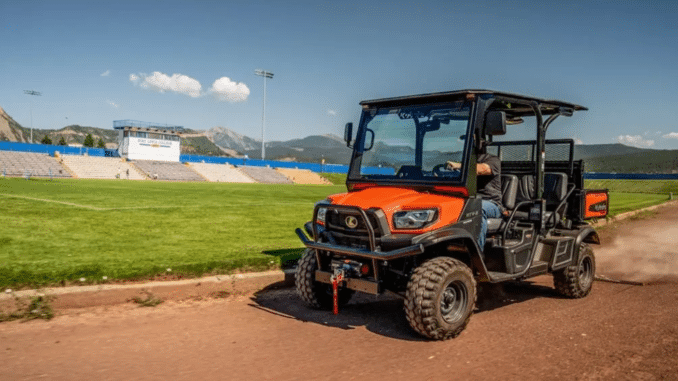
Kubota RTV-X Serial Number, Identification and Year Guide: Later Configurations
Your Kubota RTV-X serial number helps identify the vehicle, select parts and compare a used machine with its paperwork. However, later vehicles marketed as RTV-X, RTV-X CAB, RTV-X CREW and RTV-X LONG BED require more precise identification than the shared “RTV-X” name suggests.
This guide explains how to distinguish the public-facing model name from the detailed model code, separate vehicle identification from engine and accessory numbers, investigate production details and choose suitable manuals. It also covers configuration checks, accessory installation requirements and the additional enquiries needed before buying a used vehicle.
Start with the complete vehicle model code and serial number. Record the actual seating, cab and cargo-bed arrangement separately, particularly where equipment has been replaced or added.
Names, specifications, identification arrangements and available records can vary by market and production period. This guide principally describes the later United States-market configurations; it does not establish equivalent model names, equipment or road-registration arrangements worldwide.
Which later RTV-X configurations does this guide cover?
This article covers four public-facing model names:
-
RTV-X.
-
RTV-X CAB.
-
RTV-X CREW.
-
RTV-X LONG BED.
These names describe different vehicle configurations. They do not establish one common parts application or serial-number sequence.
| Public-facing model name | Main configuration distinction | Identification detail that matters |
|---|---|---|
| RTV-X | Utility vehicle offered in different equipment grades | Detailed model code, grade, cargo-bed arrangement and fitted equipment |
| RTV-X CAB | Integrated, factory-installed climate-controlled cab | Exact vehicle version, cab equipment and relevant production changes |
| RTV-X CREW | Convertible arrangement with one or two seating rows and corresponding cargo-bed configurations | Vehicle code, actual seating position and configuration-dependent operating limits |
| RTV-X LONG BED | Long cargo-bed configuration | Detailed model code, bed construction and associated vehicle application |
The RTV-X CAB has an integrated factory cab, while the RTV-X CREW uses the K-Vertible system to change between a one-row cargo configuration and a two-row passenger configuration. The LONG BED configuration has a six-foot steel cargo bed.kubotausa+1
Public-facing names and detailed model codes are different
A vehicle may be advertised simply as “RTV-X”, while its detailed parts application uses a longer code.
For example, parts applications include:
-
RTV-X / RTVX2-BKH-1.
-
RTV-X LONG BED / RTVX2L-PCLA-1.
These are specific application examples, not a decoding key for every letter or number. Do not assume their suffix meanings without confirmation.kubotausa+1
When requesting parts, provide both the recognisable model name and the detailed designation shown on the vehicle or its applicable records.
Do not assume equivalence with earlier numbered models
Do not automatically substitute:
-
RTV-X1100C information for RTV-X CAB.
-
RTV-X1140 information for RTV-X CREW.
-
RTV-X1130 information for RTV-X LONG BED.
-
RTV-X900 or RTV-X1120 information for every later RTV-X.
A parts listing may explicitly group an accessory across an earlier and later model. That establishes only the stated application, not universal interchangeability of engines, body panels, wiring, manuals or installation kits.
Quick answer: where to find the identification number
The exact main identification location must be checked for the later vehicle’s detailed model code and production group.
| Model / production group | Main vehicle identification location | What to look for | Model-specific limitation |
|---|---|---|---|
| Later RTV-X | Check the operator’s manual for the exact vehicle code | Main model and vehicle serial-number identification | Do not assume every earlier RTV-X900 location applies |
| RTV-X CAB | Check the operator’s manual for the exact cab-model application | Main vehicle identification, separate from cab equipment labels | Do not substitute an RTV-X1100C location without checking |
| RTV-X CREW | Check the operator’s manual for the exact vehicle and production group | Main vehicle model and serial number | Do not move configurable seats or bed components merely to search |
| RTV-X LONG BED | Check the operator’s manual for the precise application | Main vehicle identification | Do not infer its location from the RTV-X1130 or a shorter-bed vehicle |
A precise location is not assigned here where it cannot be confirmed for the exact later configuration.
How to inspect safely
-
Park on firm, level ground.
-
Apply the parking brake and stop the engine.
-
Allow hot components to cool.
-
Follow the model-specific identification instructions.
-
Photograph the complete identification.
-
Record the model code and serial number separately where they occupy different fields.
Follow the applicable instructions before opening panels, moving seats or raising the cargo bed. Never work beneath an unsupported raised cargo bed.
Where left and right are mentioned, they mean left and right from the seated operator’s position.
Identification plate, label and stamped number are not interchangeable descriptions
Do not assume that a later RTV-X has both a vehicle data plate and a separately stamped frame number.
Similarly, do not substitute:
-
An engine label.
-
An emissions label.
-
A rollover-protection label.
-
A warning decal.
-
A cab equipment label.
-
An accessory model plate.
-
A component part number.
If the expected vehicle identification cannot be found, ask a dealer before interpreting another marking as the main vehicle number.
Vehicle serial number, VIN, PIN and engine number: the difference
Different identifiers answer different questions.
| Identification number | What it identifies | Typical use | Where to check |
|---|---|---|---|
| Public-facing model name | The marketed vehicle configuration | Initial model selection | Vehicle information and sales paperwork |
| Detailed vehicle model code | The specific vehicle application | Selecting parts and applicable information | Main identification and original records |
| Vehicle serial number | The individual vehicle | Parts enquiries, record matching and dealer support | Main vehicle identification |
| PIN, where applicable | A product identified under that terminology | Product-record enquiries | Applicable identification and vehicle records |
| VIN, where applicable | A vehicle identified under an applicable VIN system | Registration and vehicle-record enquiries | Relevant identification and registration documents |
| Engine model and serial number | The fitted engine | Engine parts and engine-specific repairs | Engine identification and applicable instructions |
| Transmission or axle identifier, where provided | A particular drivetrain assembly | Component-specific servicing and parts | Relevant assembly identification |
| Cab or accessory identifier, where separately assigned | A separately identified product | Accessory parts and installation support | Product label, plate or instructions |
| Registration or title number | An administrative record | Registration and document checks | Registration certificate, title or local equivalent |
Not every vehicle has every identifier listed above.
Vehicle serial number is the general term used in this guide. Do not assume that every later configuration also has a separate PIN and a standard road-vehicle VIN.
An engine number or registration number should not automatically replace the main vehicle identifier.
How to read a later Kubota RTV-X serial number
Copy the identification exactly as displayed.
Preserve:
-
Letters and numerical characters.
-
Leading zeroes.
-
Any prefix forming part of the number.
-
The distinction between the model code and serial-number fields.
A long model code is not necessarily the vehicle serial number.
Do not invent a model-code decoder
Detailed applications such as RTVX2-BKH-1 demonstrate why the complete code matters. They do not, by themselves, establish what every character means.kubotausa
Do not infer grade, colour, year, cab configuration or production origin from individual characters unless their meanings have been verified for that application.
What the vehicle number can support
The number can help with:
-
Matching the vehicle to paperwork.
-
Identifying the applicable parts group.
-
Investigating production changes.
-
Dealer enquiries about available records.
-
Checking specific recall or campaign applicability.
What it does not automatically reveal
Do not assume that it provides:
-
An exact production date.
-
A complete original-option list.
-
Every later modification.
-
Previous owners.
-
Theft or finance status.
-
Complete service history.
-
Road legality.
-
Current warranty coverage.
A serial sequence may indicate build order within an applicable product group, but it does not inherently provide a calendar date.
Year and production identification
The later public-facing names have their own introduction history.
The new RTV-X was introduced in the United States in 2024. RTV-X CAB and RTV-X CREW were announced in October 2024, with dealer availability stated to begin in February 2025. These are introduction and availability milestones, not the production dates of individual vehicles.kubotausa+1
The RTV-X LONG BED appears in later product information, but a precise introduction date is not established here. Do not assign one merely from a brochure’s publication year.kubotausa
Keep different dates separate
| Date or description | What it means | What it does not automatically establish |
|---|---|---|
| Announcement date | When a model was publicly introduced | Build date of every vehicle |
| Dealer availability date | When sales availability was scheduled to begin | First production date |
| Model year | A manufacturer’s model-year classification, where used | Exact calendar production date |
| Production date | When the vehicle was manufactured | First sale or registration |
| First sale date | When the vehicle was first sold | Manufacturing year |
| Registration date | When an administrative registration occurred | Original build date |
| Warranty start date | The recorded start of applicable warranty arrangements | Exact production date |
| Manual publication date | When information was issued or revised | Age of the vehicle |
| Modification date | When equipment was added or changed | Original factory specification |
How to verify an individual vehicle’s year
-
Read the full vehicle model code.
-
Photograph the complete vehicle serial number.
-
Identify the original market where possible.
-
Collect original invoices and registration records.
-
Ask a Kubota dealer what production details can be confirmed.
-
Clarify whether the answer establishes model year, production period or exact build date.
A universal public year-decoding table cannot be confirmed for these later configurations.
Do not use an earlier RTV-X1100C annual estimate to date an RTV-X CAB or an RTV-X1140 range to date an RTV-X CREW.
Manufacturing origin
Confirm manufacturing origin for the particular vehicle and market.
Do not assign a factory based on:
-
An older numbered model’s origin.
-
The Kubota brand name.
-
An engine’s country of manufacture.
-
A parts-package label.
-
A manual’s publishing address.
-
A “Printed in” statement.
Ask a dealer to clarify uncertain origin information before relying on it for registration, valuation or a sales description.
Configuration differences that affect identification and parts
RTV-X: equipment grade matters
The later RTV-X is offered in Basic, Standard and Premium grades in the United States application described here.
Equipment differences include cargo-bed lifting and bed construction. Hydraulic dumping is standard on the Standard and Premium grades, while the Basic specification differs. The Premium model includes the ProKonvert cargo-bed system.kubotausa+1
Do not assume that every vehicle advertised simply as “RTV-X” has the same bed, wheels, trim or lift equipment.
RTV-X CAB: identify the complete vehicle, not just the enclosure
RTV-X CAB is a vehicle configuration with a fully integrated factory-installed cab, rather than merely an open vehicle with a roof added.
Its cab, heating, air conditioning, glazing, doors and associated electrical components require application-specific identification. Premium-grade cargo-bed equipment also differs from other grades.kubotausa
A later aftermarket enclosure fitted to another RTV-X should not be treated as an RTV-X CAB parts application.
RTV-X CREW: seating position changes operating limits
RTV-X CREW changes between:
-
A one-row, two-person configuration with more cargo space.
-
A two-row, four-person configuration with a shorter cargo area.
For the specified United States model, cargo-bed capacity is 1,102 lb in the one-row configuration and 661 lb in the two-row configuration. These are configuration-specific bed ratings, not permission to disregard total vehicle load limits.kubotausa
Before carrying passengers or cargo, verify the actual seating position, completed conversion, restraints and applicable limits.
RTV-X LONG BED: do not order by bed length alone
The LONG BED configuration has a six-foot steel bed, but bed length does not establish compatibility with another model’s panels, hinges or lifting equipment.kubotausa
Record the detailed vehicle code and identify:
-
Bed structure.
-
Side and tailgate arrangement.
-
Hinges and latches.
-
Lifting mechanism.
-
Mounting components.
-
Relevant wiring or hydraulic equipment.
Do not assume that RTV-X1130 parts apply simply because both vehicles have long cargo beds.
Parts, manuals and accessory compatibility
The vehicle number establishes a starting application. Some repairs also require engine, assembly or accessory information.
| What you need | Number or information to use | Why it matters | What to confirm before ordering |
|---|---|---|---|
| General vehicle parts | Public-facing name, detailed model code and vehicle serial number | Similar names can cover different applications | Exact version, market and serial-number break |
| Engine parts | Engine model and serial number, plus vehicle details | Revisions and replacement engines affect selection | Actual fitted engine and component specification |
| Transmission parts | Vehicle information and relevant assembly identification | Shared transmission terminology does not prove identical internals | Installed assembly and production coverage |
| Axle or final-drive parts | Vehicle and relevant component information | Different revisions may require different parts | Correct assembly and application |
| Cab and HVAC parts | Exact vehicle and cab configuration | Factory cab systems differ from aftermarket enclosures | Controls, glazing, seals and fitted equipment |
| Seating and restraint parts | Exact vehicle and seating arrangement | CREW components are configuration-specific | Approved mounting and correct application |
| Cargo-bed parts | Model code, grade and bed arrangement | Standard, ProKonvert, CREW and LONG BED systems differ | Structure, latches, hinges and clearance |
| Bed-lift parts | Actual lifting-system identification | Grade and configuration can affect the mechanism | Lift equipment, controls and connections |
| Accessory replacement parts | Accessory manufacturer, model and number where assigned | Accessories may use separate parts systems | Exact accessory version |
| Installation components | Vehicle and accessory application | The main accessory may need additional kits | Brackets, guards, wiring and controls |
| Electrical or hydraulic equipment | Actual fitted system and accessory requirements | Available connections and equipment vary | Approved installation and operating requirements |
A practical parts-ordering process
-
Record the exact public-facing model name.
-
Copy the detailed model code.
-
Photograph the complete vehicle serial number.
-
Identify the system being repaired.
-
Collect engine or component identification where relevant.
-
Select the applicable parts catalogue.
-
Check all serial-number restrictions.
-
Compare the illustration with the fitted installation.
-
Disclose replacements and modifications.
-
Obtain confirmation if the application remains uncertain.
Do not rely on an online serial-number range alone when ordering safety-critical, engine-specific or drivetrain parts.
Shared engine and transmission names do not establish interchangeability
The later RTV-X, RTV-X CAB and RTV-X CREW applications described here use Kubota D1105-E4-UV diesel engines and VHT-X variable hydro transmissions. That does not establish identical engine accessories, wiring, cooling components or drivetrain internals across every grade and production period.kubotausa
Do not apply a transmission specification to the LONG BED configuration without checking its exact application.
Likewise, do not order a generic UTV CVT drive belt for a vehicle identified as using VHT-X. An engine accessory belt is a separate component.
Accessory compatibility requires the complete installation
Confirm:
-
Exact vehicle model and production group.
-
Accessory manufacturer and model.
-
Mounting frame and installation kit.
-
Wiring harness and controls.
-
Hydraulic equipment where required.
-
Cab and body clearance.
-
Cargo-bed movement.
-
Seating-conversion clearance on CREW vehicles.
-
Applicable operating limits.
A model-compatible accessory may still need brackets, wiring, controls or hydraulic components that are not installed.
A receiver hitch or winch mounting plate does not by itself establish rated capacity.
Used-vehicle checks
Identification and paperwork
-
Confirm that the main identification is present and readable.
-
Record both the public-facing name and detailed model code.
-
Compare the complete serial number with the paperwork.
-
Investigate unexplained disturbance or inconsistent information.
-
Obtain supporting records for authorised replacement identification.
-
Resolve discrepancies before purchase.
Plate appearance alone does not prove authenticity.
Actual fitted configuration
Inspect the vehicle for:
-
Correct engine identification.
-
Actual drivetrain arrangement.
-
Equipment grade and later additions.
-
Factory cab or separately fitted enclosure.
-
Seating and restraint arrangement.
-
Cargo-bed type and lifting system.
-
Accessory mounting equipment.
-
Electrical or hydraulic modifications.
On an RTV-X CREW, inspect the conversion system and check the instructions for both seating arrangements.
Ownership and mechanical condition
Request purchase records, maintenance invoices and evidence of major repairs.
Arrange suitable theft and finance or lien checks for the country involved. Ask a dealer about applicable recalls, campaigns and available warranty information.
Do not treat the hour-meter reading as verified lifetime use. Compare it with records, wear and overall condition.
Identification checks do not replace a mechanical inspection.
Frequently asked questions
Where is the serial number located on a later Kubota RTV-X?
Check the operator’s manual for the exact detailed model code and production group.
A single physical location is not confirmed here across RTV-X, RTV-X CAB, RTV-X CREW and RTV-X LONG BED. Do not automatically transfer a plate location from an earlier numbered vehicle.
Look for the main vehicle identification, not an engine, emissions or accessory label. Follow the applicable safety instructions before moving panels, seats or the cargo bed.
Where is the identification plate or stamped vehicle number on these later configurations?
The precise identification arrangement must be established for the individual model.
Do not assume that every later RTV-X has both a data plate and a second stamped frame number. A number on a frame-mounted plate is not the same as a number stamped into the frame.
If the expected identification cannot be found, ask a dealer to clarify the correct location. Do not substitute another component’s number merely because it is easier to read.
How do I identify a later RTV-X if the serial-number plate is missing?
Gather original invoices, registration documents, service records and surviving identification.
Photograph the vehicle, controls, engine, drivetrain, cargo bed and identification area. Ask an authorised Kubota dealer whether the original identity can be established.
Appearance alone is insufficient. A roof, replacement bed or model decal can be changed.
Do not recreate, restamp or fit an unofficial plate. Replacement identification should follow an authorised process and any relevant authority’s requirements. Resolve missing identification before completing a purchase.
Is the vehicle serial number the same as the engine serial number?
No. The vehicle serial number identifies the complete utility vehicle. The engine serial number identifies the fitted engine.
Record both for engine-related enquiries, particularly where a replacement may have been installed.
A replacement engine does not change the vehicle’s original identity. Its production date also does not establish the vehicle’s build date.
Do not substitute an engine number for the vehicle identifier on sale documents unless a particular process specifically requests it.
Do later RTV-X configurations use a serial number, PIN or VIN?
Use the terminology applicable to the exact vehicle and market.
Vehicle serial number is the general term in this guide. Do not assume every later configuration also has separate PIN and VIN identifiers.
Where registration paperwork uses a different term, ask a dealer or the relevant authority to clarify the relationship.
Do not apply a road-vehicle decoder simply because a form labels its entry box “VIN”. Copy the vehicle’s existing identification without altering it.
How many characters are in a later RTV-X identification number?
A single character count cannot be confirmed across every later configuration, production group and market.
Copy every character shown, including letters and leading zeroes. Keep the detailed model code separate from the serial number where they occupy separate fields.
Do not add characters or combine unrelated fields because an online form expects a 17-character VIN.
A long model code is not automatically a vehicle identification number.
Can I look up a later RTV-X by serial number?
The exact model and complete serial number can support parts enquiries, dealer record checks and applicable recall investigations.
However, a Kubota RTV-X serial number lookup is not automatically a year decoder, ownership search or complete history report.
Identify the specific question first: production details, parts fitment, warranty information or a paperwork discrepancy.
A public search returning no result does not prove that the number is invalid or that the vehicle has no relevant history.
Can a Kubota dealer identify the configuration from the complete vehicle number?
A dealer may be able to verify certain records, subject to available information, local policy and market coverage.
Provide the full serial number, detailed model code and clear photographs. Explain whether you need original specification, production details, parts support or campaign information.
Original records may not describe later accessories or replacement components.
Inspect the fitted configuration separately, especially on a vehicle with a changed bed, added enclosure or modified seating arrangement.
What year is my later RTV-X from its serial number?
There is no universal public year-decoding method established here for all four configurations.
Ask a dealer to check the complete vehicle identifier and exact model code. Specify whether you need model year, production period or manufacturing date.
An announcement date or scheduled dealer availability does not establish an individual vehicle’s build date.
For parts ordering, the applicable serial-number break may be more useful than an approximate year.
How do I decode a later RTV-X serial number?
Copy the number accurately and preserve separate identification fields.
Only interpret characters where their meanings have been verified for the exact system. Do not use an earlier model’s chart or a generic passenger-car decoder.
Detailed model-code examples demonstrate that different applications exist; they do not establish a universal letter-by-letter decoder.
For most owner enquiries, supplying the full number and model to a dealer is more useful than speculative decoding.
Is there a model-year character in a later RTV-X identification number?
A universal model-year character cannot be confirmed for these later configurations.
Do not assume that the tenth character identifies the year or that a letter follows a passenger-car VIN chart.
If a model year is confirmed through an applicable record, retain that information and distinguish it from the actual build date.
An online decoder accepting a number does not establish that its interpretation applies to the vehicle.
Are model-year serial-number ranges available for later RTV-X configurations?
A trustworthy, complete annual table cannot be confirmed across RTV-X, RTV-X CAB, RTV-X CREW and RTV-X LONG BED.
A range may describe a recall, parts change or production group rather than one calendar year.
Do not transfer ranges from earlier RTV-X1100C, RTV-X1140 or RTV-X1130 applications without verified applicability.
Where annual endpoints cannot be confirmed, use the production details that can be established rather than estimating missing values.
How can I confirm a year-specific serial-number range for my later RTV-X?
Provide a dealer with the public-facing model name, detailed model code, full serial number and original market.
Ask what any supplied range represents: model year, production period or a particular component change.
Do not assume a range is annual merely because it appears beside a year.
For repairs, request the actual parts application and relevant serial-number restriction. That may resolve the question without needing an annual production table.
How can I tell whether my later RTV-X is early or later production?
Define the change you are investigating.
“Early” and “late” are useful only within a specific model or component application. Find the relevant serial-number threshold and compare the actual fitted part.
A replacement bed, updated panel or later accessory does not change the vehicle’s original production identity.
Likewise, a higher number on a different configuration does not prove that vehicle was built later. Separate model groups may use different sequences.
Where was my later RTV-X manufactured?
Confirm manufacturing origin for the particular vehicle and market using applicable identification and original records.
Do not assume that a later RTV-X CAB has the same origin as every earlier RTV-X1100C or that all configurations come from one factory.
An engine marking does not necessarily identify complete-vehicle assembly location.
A manual’s publishing address or “Printed in” wording is also insufficient. Ask a dealer to clarify uncertain details before relying on them.
Does the serial number reveal the exact production date?
Not automatically.
A serial sequence may locate the vehicle within a production group, but it does not inherently disclose the exact day or month.
Exact dating requires an applicable date field or production record.
If only a model year or broad production period is available, describe it accurately. Do not substitute first sale, registration or a component date.
A replacement cab component or cargo bed may have a different manufacturing date from the host vehicle.
How do I use the serial number to find the right parts?
Select the exact detailed vehicle application, then apply the full serial number to relevant restrictions.
Do not stop at the public-facing name. Grade, bed arrangement, cab equipment and production changes can affect selection.
For engine or drivetrain work, collect component identification where requested.
Compare the fitted installation with the parts illustration and disclose modifications. A broad listing saying “fits RTV-X” is insufficient when several distinct configurations are involved.
Why does a parts listing ask for a serial-number break?
The break separates applications before and after a production change.
It may refer to the vehicle, engine or another assembly. A change can affect a single item or several parts used together.
Read the boundary carefully and identify which number controls it.
Do not assume the threshold marks a new model year. If an assembly has been replaced, the vehicle’s original serial position may not fully describe the installed part.
Which parts changed after serial number [XXXXX]?
[XXXXX] is a generic illustration, not a documented change for a specific later RTV-X.
An accurate answer requires the detailed model code, market, component and real serial-number threshold.
Establish whether the number belongs to the vehicle or another assembly.
Do not assume every part changed together or that later parts fit earlier machines without additional components. Ask for confirmation of the complete replacement arrangement rather than relying on a generic number.
Do I need the vehicle or engine serial number for engine parts?
Have both available, together with the complete engine model.
The vehicle information establishes the original application. Engine identification helps select parts for the actual fitted engine, particularly following replacement.
Shared D1105 engine-family terminology does not prove identical accessories or installation components across every later configuration.
Describe the component being replaced and disclose modifications. Do not order solely by engine displacement, approximate vehicle year or a shortened engine-family name.
How do I find the correct operator’s manual?
Match the manual to the detailed model code, market and stated serial-number coverage.
Do not assume a manual for an earlier numbered model covers the later configuration.
RTV-X CREW instructions must cover the seating and bed conversion. RTV-X CAB information must cover the actual cab and controls.
Separate instructions may be required for a winch, plough, enclosure accessory or other attachment. Ask a dealer to clarify uncertain coverage.
Which workshop or service manual applies?
The workshop information must cover the exact vehicle application and production group.
Provide the full identification and describe the repair. Engine, transmission or accessory-specific information may also be needed.
Do not choose a publication merely because it contains “RTV-X” in its title.
Where a component has been replaced, identify that component separately before selecting specifications and procedures. A manual’s publication date is not proof that it applies to every vehicle sold that year.
Does the serial number determine which filters, belts or battery I need?
It helps establish the original application, but further checks may be necessary.
Filters depend on the relevant engine or system. Battery selection requires correct dimensions, terminal layout, securing arrangements and electrical specification.
Confirm the actual transmission before buying a drive belt. The defined later RTV-X, CAB and CREW applications use VHT-X rather than belt-driven CVT arrangements.kubotausa
An engine accessory belt is a different component. Check replacements and electrical modifications separately.
How do I identify transmission, transaxle or axle parts?
Start with the detailed vehicle model code and serial number, then collect relevant assembly identification.
Check the installed arrangement against applicable parts and service information.
Shared transmission names do not prove identical internal parts across configurations and revisions.
If the assembly has been replaced, supply its details and explain the replacement history. Photographs may assist identification, but similar housings are insufficient evidence for internal parts selection.
Can the serial number confirm engine type, fuel type or drivetrain?
It may support confirmation of the original specification, but inspect the actual vehicle.
Later model information describes diesel engines and VHT-X arrangements in the specified applications. That does not prove every component remains original.kubotausa+1
Check the engine identification and drivetrain controls before ordering parts or applying service procedures.
If fitted equipment conflicts with expected specifications, investigate the discrepancy rather than selecting parts solely from the advertised model name.
How do I identify the exact model, suffix and seating configuration?
Read the detailed model code and compare it with the paperwork.
Record the equipment grade where it can be confirmed, then inspect the actual seating and restraints.
RTV-X CREW converts between one-row and two-row arrangements. Its current configuration affects cargo space and applicable bed-loading limits.kubotausa
An added seat on another RTV-X does not create an approved CREW configuration. Nor does the seller’s use of “crew cab” establish the vehicle’s actual identity.
Can the serial number confirm a factory cab, canopy or open configuration?
A dealer may be able to confirm some original specification details, depending on available records.
RTV-X CAB is a factory-cab configuration. A roof and doors added to another RTV-X do not automatically make it the same application.kubotausa
Identify the actual enclosure and manufacturer.
Do not infer rollover-protection certification from a roof, windscreen or cab appearance. Do not drill, weld or modify a protective structure to accommodate incompatible accessories.
Which snowplough, winch or working accessory fits my later RTV-X?
Check the exact vehicle code, production group and accessory system.
Identify the attachment and mounting frame separately. Confirm wiring, controls, hydraulic equipment where relevant, clearances and operating limits.
Do not assume an earlier model’s accessory fits a later configuration because the product names look similar.
Compatibility with the vehicle does not mean the necessary installation components are already present. A winch rating or hitch fitting also does not establish the vehicle’s approved towing capacity.
How do I check cargo-bed, cab, door, windscreen or roof compatibility?
Identify the vehicle configuration, grade and accessory manufacturer.
Cab panels, seals, doors and windscreens may belong to a matched system. A common mounting pattern does not establish approved fitment.
For beds, distinguish the standard arrangement, ProKonvert system, CREW conversion and LONG BED application. These are not interchangeable descriptions.kubotausa+2
Confirm all hardware and clearance, including bed movement and servicing access. Do not modify protective structures to make an incompatible component fit.
Does the serial number identify transmission, four-wheel-drive or bed-lift configuration?
It may help establish original specification, but inspect the current installation.
Equipment grade can affect bed-lift provision. On the later RTV-X application described here, hydraulic dumping is standard on Standard and Premium grades rather than a universal assumption across every grade.kubotausa
Confirm the actual drivetrain and lift equipment before ordering.
A conversion or replacement assembly requires separate identification. The vehicle number does not prove that later equipment is complete or correctly installed.
Can I identify original options and accessories from the vehicle number?
Some original build or sales information may be available, but a complete accessory history should not be assumed.
Factory equipment, dealer-installed packages and later aftermarket additions are separate categories.
Request invoices and installation records where originality matters. Compare them with the actual equipment and its identification.
Matching paint or Kubota branding does not establish factory installation. A genuine accessory may also be missing required brackets, harnesses or controls.
How do I find a separately fitted accessory’s model or serial number?
Check the accessory plate or label and its applicable instructions.
The identifier may be on the attachment, mounting frame or another specified assembly. Not every accessory carries an individual serial number.
Record the manufacturer, exact model and assigned number where present. Do not confuse an individual part number with the complete product identity.
An accessory number identifies that item. It does not replace the vehicle serial number or establish host-vehicle compatibility by itself.
How do I check whether a later RTV-X has been reported stolen?
Use legitimate routes appropriate to the country where the purchase takes place.
Contact local police where theft or altered identification is suspected. Ask a dealer whether relevant identification information can be checked, while recognising that a dealer is not a substitute for law enforcement.
Use a recognised stolen-equipment checking service where available and confirm its coverage.
No matching record does not prove the vehicle has never been stolen. Arrange finance or lien enquiries separately.
Can a dealer check warranty status using the serial number?
A dealer may be able to check recorded warranty information using the exact model and full vehicle identifier.
Availability and coverage depend on the original market, recorded dates, applicable terms and supporting records.
Do not calculate remaining cover solely from an announcement date, apparent age or low hour-meter reading.
Ask what the check confirms and whether purchase or maintenance records are needed. Replacement components or repairs may also have separate paperwork and conditions.
Can I check recalls or service campaigns by identification number?
Provide the exact detailed model code and full vehicle number when asking a dealer to check applicability.
Do not transfer a recall from an earlier numbered model to a later configuration without confirmation.
Ask whether any applicable work has been completed, not simply whether the model name appears in a notice.
Safety recalls and other service campaigns are not necessarily the same, and not every campaign is publicly searchable. No matching public result does not establish that no relevant work exists.
What should I check on a used later RTV-X identification plate?
Check readability, the full detailed model code and every serial-number character.
Compare them with the invoice and relevant registration or title documents. Investigate unexplained disturbance, inconsistent information or damage around the identification area.
Do not judge authenticity from plate appearance alone.
Check the actual cab, seating and cargo-bed arrangement too. An identification match does not prove that every fitted accessory or replacement component is original or suitable.
Does an authorised replacement identification plate affect resale value?
There is no predictable value change applying to every vehicle.
The important issues are why the identification was replaced, whether the process was authorised and whether supporting records clearly link it to the machine.
Retain authorisation and correspondence. Buyers, insurers or registration authorities may require additional verification.
An authorised replacement with records is different from an undocumented or unofficial plate. It does not, however, resolve unrelated mechanical, ownership or finance concerns.
How do I verify that the identification matches the paperwork?
Compare the complete vehicle number character by character.
Check the detailed model code as well as the public-facing name. Investigate shortened identifiers, omitted prefixes or documents that appear to use an engine number.
Ask the seller to resolve discrepancies through the appropriate dealer or authority before purchase.
Matching paperwork is important, but it does not prove the absence of theft, outstanding finance, liens or an ownership dispute.
Can the serial number reveal previous owners or a complete history?
Not through a guaranteed public lookup.
A dealer may hold some service, warranty or campaign information, but records can be incomplete, restricted or unavailable. Work completed elsewhere may not appear.
Private ownership details should not be expected to be publicly accessible.
Ask for purchase records, service invoices and evidence of major repairs. Compare those records with condition and wear. Treat the hour-meter reading as one observation, not verified lifetime operating history.
Final verification checklist
Before ordering parts or buying a used later Kubota RTV-X
-
Confirm the public-facing model name and complete detailed model code.
-
Record the full vehicle serial number using the applicable terminology.
-
Collect the engine model and serial number for engine enquiries.
-
Identify relevant drivetrain or component assemblies where required.
-
Record accessory models, numbers and installation kits.
-
Check the applicable serial-number break.
-
Verify the actual grade, seating, cab, bed and lift configuration.
-
Document replacements and modifications, and obtain parts-catalogue or dealer confirmation where uncertain.
-
Check paperwork and arrange appropriate theft and finance or lien enquiries before purchase.
-
Confirm registration, approval, insurance and local requirements before intended public-road use.