
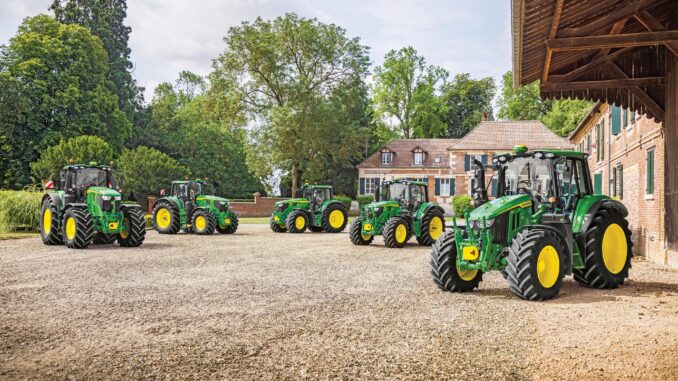
The John Deere 650 is a compact utility tractor built for small-acreage work, mowing, light ground-engaging jobs, transport, and general property maintenance. Official operator and parts references show it was produced from 1981 to 1989, uses a diesel engine, an 8-forward/2-reverse transmission, 540-rpm rear PTO, Category 1 three-point hitch, and a 12-volt electrical system.
This guide is written for DIY owners in the USA and Canada who want a practical, symptom-first reference for John Deere 650 repair, troubleshooting, maintenance, parts buying, and realistic decisions about which jobs are fine at home and which are better left to a dealer or diesel specialist.
John Deere 650 model overview
The John Deere 650 sits in Deere’s early compact utility tractor lineup rather than the later lawn tractor and riding mower families. It is a true compact tractor with rear PTO, three-point hitch, mechanical brakes, open-center hydraulics, and an optional MFWD front axle on some versions, which makes it more capable than a typical lawn or garden tractor for loader-style work, towing, grading, and implement use.
For owners, the key systems are the diesel engine and fuel system, the transmission and clutch, the hydraulic and three-point hitch system, the PTO driveline, steering and brakes, and the 12-volt electrical system. The operator manual also points owners toward regular checks for engine oil, coolant, fuel sediment, fan belt condition, battery condition, tires, clutch and brake adjustment, neutral start operation, and transmission-hydraulic service.
General overview of the John Deere 650
On paper, the John Deere 650 is simple, but that simplicity is exactly why diagnosis should stay organized. The manual’s service and troubleshooting sections divide issues into engine, electrical, and transmission-hydraulic areas, which is a good clue that most owner complaints usually fall into one of those same buckets.
Important John Deere 650 systems and components include:
-
Engine and fuel system: diesel engine, fuel shutoff, fuel filter, injection pump, fuel lines, crankcase vent, air cleaner, and cooling system.
-
Drive system: clutch, gear shift, range shift, differential lock, brakes, rear axle, and optional MFWD components.
-
Hydraulic system: open-center hydraulics, rockshaft, hydraulic pump, hydraulic lines, transmission-hydraulic oil circuit, filter screen, and optional hydraulic filter on some tractors or kits.
-
Electrical system: 12-volt negative-ground system, Group 24 battery, alternator, key switch, warning indicators, fuses, and neutral/PTO start interlocks.
-
PTO and hitch system: rear PTO, PTO lever and interlock, drawbar, and Category 1 three-point hitch components.
Several John Deere 650 service parts owners commonly look for are the engine oil filter, fuel filter, hydraulic oil filter, air cleaner elements, fan belt, battery, fuses, glow plug-related parts, and switches such as the key switch or neutral/PTO interlock switch. Exact OEM numbers can vary by serial range or by whether the tractor has optional equipment, so the tractor PIN and engine details matter before ordering.
John Deere 650 troubleshooting approach
Start every John Deere 650 diagnosis with the symptom you can actually see, hear, smell, or feel. A “won’t start” complaint, a weak three-point hitch, slow hydraulics, hard shifting, smoking engine, charging light problem, or overheating complaint all point to different systems and help you avoid replacing good parts.
Main symptom categories for the John Deere 650 include:
-
Starting issues, especially cold starting, low battery voltage, or fuel delivery problems.
-
Running issues such as smoke, power loss, rough running, or stalling under load.
-
Hydraulic and hitch problems, including slow lift, weak lift, or delayed hydraulic response in cold weather.
-
Transmission and drive issues such as clutch drag, poor shifting, weak drive, or brake adjustment concerns.
-
Electrical issues such as no crank, charging indicator warnings, lighting faults, or switch/interlock faults.
-
Overheating, leaks, and maintenance-related failures tied to coolant, belts, filters, and neglected service intervals.
Emergency John Deere 650 repair needs
Some John Deere 650 faults should not be postponed because they affect safety, driveline damage, or engine life. If the tractor has low oil pressure, overheating, brake imbalance, fuel leaks near hot engine parts, major hydraulic leaks, or PTO shielding/interlock problems, stop using it until the fault is corrected.
John Deere 650 starting issues
When a John Deere 650 cranks poorly or will not start, the main risk is repeated cranking that flattens the battery or masks a fuel-system problem. Diesel tractors often need a more disciplined check sequence than gasoline mowers because battery condition, glow system behavior, fuel shutoff position, and air in the lines all matter.
Common causes:
-
Weak or discharged Group 24 battery.
-
Dirty or loose battery cable connections.
-
Faulty key switch, fuse, or starter circuit issue.
-
Neutral start or PTO interlock switch problem.
-
Fuel restriction, contaminated fuel, or air in the fuel lines.
-
Cold-weather starting difficulty or incorrect starting procedure.
Basic owner checks:
-
Confirm the transmission and PTO controls are in the correct start positions and the parking brake is applied.
-
Check battery voltage, cable tightness, and visible corrosion at both ends.
-
Make sure the tractor has clean diesel fuel and the fuel shutoff is open.
-
Inspect the fuel sediment bowl/filter area and look for signs of air leaks or contamination.
-
If fuel delivery is suspect, follow the manual’s fuel-line bleeding procedure before replacing parts at random.
John Deere 650 running and power-loss problems
A John Deere 650 that starts but runs rough, smokes, or loses power under load is often telling you the issue is fuel, air, cooling, or compression related rather than electrical. Continuing to work the tractor under these conditions can raise exhaust temperature, reduce lubrication margin, and make a minor service issue into a larger engine repair.
Common causes:
-
Restricted air cleaner elements.
-
Dirty fuel filter or contaminated diesel.
-
Air in fuel lines.
-
Injection or nozzle problems.
-
Cooling system issues leading to hot running.
-
Incorrect idle speed or throttle linkage issues.
Basic owner checks:
-
Inspect and service the air cleaner before assuming internal engine trouble.
-
Replace the fuel filter if maintenance history is unknown and check for water or debris in the fuel system.
-
Look for black smoke under load, white smoke at start-up, or persistent blue smoke, then match the symptom to fuel, timing, or oil-consumption possibilities.
-
Verify the radiator area is clean and coolant level is correct.
-
If the tractor still lacks power after basic service, move to injector, compression, or injection-pump diagnosis with professional help.
John Deere 650 hydraulic and hitch problems
Weak or slow hydraulics on a John Deere 650 matter because they can leave an implement partly raised, reduce steering performance on equipped tractors, or point to contaminated transmission-hydraulic oil. The manual also notes hydraulic operation may be slow when the tractor is started in cold weather, so not every slow response means a failed pump.
Common causes:
-
Low transmission-hydraulic oil level.
-
Dirty transmission-hydraulic filter screen or hydraulic filter.
-
Cold oil causing temporary sluggish performance.
-
Hydraulic stop valve or control issues.
-
Pump wear, internal leakage, or rockshaft valve issues.
Basic owner checks:
-
Check the transmission-hydraulic oil level before doing anything else.
-
Warm the tractor properly in cold weather and recheck hydraulic response.
-
Inspect for external leaks at hoses, couplers, and housings.
-
Service the hydraulic filter and clean the filter screen if due by hours or if maintenance history is unknown.
-
If lift power remains weak after fluid and filter service, internal hydraulic diagnosis is usually an advanced job.
John Deere 650 vibration and noise
Unusual John Deere 650 noise or vibration should be treated seriously because it can come from loose wheels, driveline wear, fan belt trouble, PTO components, brake drag, or engine mounting issues. A vibration that gets worse with engine speed often points to rotating engine accessories, while a vibration that changes with travel speed can point to tires, driveline, or transmission components.
Common causes:
-
Loose wheel hardware or tire problems.
-
Fan belt wear or improper tension.
-
PTO shaft, shield, or implement driveline imbalance.
-
Brake drag or uneven brake adjustment.
-
Front axle or steering wear on MFWD tractors.
Basic owner checks:
-
Inspect tire condition, inflation, and wheel hardware first.
-
Check the fan belt for visible wear, glazing, or looseness.
-
Isolate whether the noise appears at idle, with PTO engaged, or only when moving.
-
Test brake operation carefully to see whether one side is dragging or grabbing.
-
Stop use immediately if the noise is heavy, metallic, or tied to PTO or transmission load.
John Deere 650 overheating and leaks
A John Deere 650 that runs hot or leaks fuel, coolant, or oil should be fixed quickly because diesel engines tolerate neglect poorly when cooling or lubrication is compromised. Even a simple belt, hose, or clogging issue can become a head-gasket or internal engine problem if the tractor is worked while overheating.
Common causes:
-
Low coolant level.
-
Dirty radiator or restricted airflow.
-
Worn or slipping fan belt.
-
Coolant hose, water pump, or thermostat issues.
-
Engine oil, fuel, or hydraulic seepage becoming a bigger leak.
Basic owner checks:
-
Check coolant level only when the engine is cool.
-
Clean debris from the radiator and grille screens.
-
Inspect the fan belt and look for coolant residue around hoses and pump areas.
-
Repair fuel leaks immediately because diesel on hot surfaces is still a fire risk.
-
If overheating persists after cleaning and belt checks, move to thermostat, water pump, and internal cooling-system diagnosis.
John Deere 650 transmission and drive problems
Drive complaints on the John Deere 650 usually show up as hard shifting, gear clash, weak pull, clutch issues, or poor brake behavior. Because this tractor uses a gear transmission and mechanical linkage, adjustment and wear checks are often more useful than guessing at major internal failure too early.
Common causes:
-
Clutch free-travel problems.
-
Brake adjustment issues.
-
Low or dirty transmission-hydraulic oil.
-
Internal wear in transmission or final drive components.
-
MFWD axle issues on front-wheel-drive models.
Basic owner checks:
-
Confirm oil level and service condition in the transmission-hydraulic system.
-
Check clutch pedal free travel and compare behavior hot versus cold.
-
Inspect brake adjustment if the tractor pulls while stopping.
-
Listen for noises tied to a specific gear, range, or axle engagement.
-
Internal transmission teardown is generally dealer or specialist work unless the owner already has strong compact-tractor experience.
John Deere 650 electrical problems
Electrical issues on the John Deere 650 are usually straightforward, but they can still stop the tractor completely. The operator and parts information show the tractor uses a 12-volt negative-ground system with fuses, warning indicators, a key switch, alternator, and several interlock-related switches.
Common causes:
-
Weak battery or bad cable connections.
-
Alternator or charging circuit problems.
-
Blown fuse or corroded fuse connections.
-
Faulty key switch.
-
Neutral start or PTO interlock switch failure.
Basic owner checks:
-
Load-test the battery instead of judging it by appearance alone.
-
Clean battery posts and ground points.
-
Inspect the fuse box and replace failed fuses with the correct rating.
-
Watch whether the charging indicator stays on after start-up.
-
Trace no-crank faults through the key switch and safety interlock circuit before replacing the starter.
DIY or dealer? John Deere 650 repair decision guide
The normal line on a John Deere 650 is simple: routine servicing, inspection, and many adjustment jobs are realistic DIY work, but internal diesel, hydraulic, clutch, transmission, and axle repairs quickly move into advanced territory. That matters even more on older tractors because previous-owner modifications, serial breaks, and wear patterns can make a repair harder than it first looks.
Good DIY jobs on a John Deere 650
-
Engine oil and filter service.
-
Fuel filter replacement and fuel-system inspection.
-
Air cleaner service.
-
Battery cleaning, charging, and cable replacement.
-
Fan belt inspection and basic replacement.
-
Coolant checks and radiator cleaning.
-
Greasing and routine lubrication points.
-
Basic brake and clutch free-travel checks.
Advanced DIY or dealer John Deere 650 jobs
-
Bleeding and diagnosing persistent diesel fuel-system faults beyond basic service.
-
Injection pump, injector nozzle, or compression work.
-
Internal clutch repair or transmission teardown.
-
Hydraulic pump, rockshaft control valve, or internal hydraulic diagnosis.
-
MFWD front axle internal repair.
-
Major electrical tracing inside the harness when age damage is involved.
Skill level guide
-
Beginner: fluid checks, battery service, air cleaner service, fuel filter changes, radiator cleaning.
-
Intermediate: fan belt work, brake/clutch adjustment checks, hydraulic filter service, basic fault tracing with a meter.
-
Advanced: injector work, transmission splitting, clutch replacement, hydraulic internal repairs, axle rebuilds.
John Deere 650 parts needed, OEM vs aftermarket, and what information you need
Before ordering John Deere 650 parts, gather the full model name, tractor PIN, engine model and serial, and any relevant options such as MFWD, front PTO, power steering kit, or hydraulic filter kit. The parts catalog shows multiple serial-number breaks and system variations, so ordering by “John Deere 650” alone is often not enough.
For a John Deere 650, OEM parts are the safer choice for belts, interlock switches, hydraulic parts, seals, linkage pieces, and fit-sensitive components. Aftermarket parts are usually acceptable for batteries, some filters, basic tune/service items, and certain wear parts, but only when the seller clearly cross-references your exact tractor and serial range.
Where to find John Deere 650 parts diagrams and service manuals
A good John Deere 650 repair process gets easier when you use the right document for the job rather than one source for everything. Operator manuals help with service intervals and basic procedures, while parts catalogs help identify assemblies and serial breaks.
-
Official-style operator manual reference: Jensales John Deere 650/750 Operator Manual is useful for controls, operation, service intervals, storage, troubleshooting, and identification locations.
-
Parts catalog reference: Jensales John Deere 650/750 Parts Manual is useful for exploded diagrams, switch and filter listings, and serial-range changes.
-
Deere parts portal: John Deere Parts is useful for OEM sourcing, dealer support, and parts-ordering pathways.
-
Dealer-focused aftermarket sources such as Cross Creek Tractor John Deere 650 parts can help when you already have the OEM number and want a Deere-focused retailer page.
How to locate John Deere 650 model, serial, and engine numbers
These numbers matter because the John Deere 650 had serial breaks and optional equipment changes, and older tractors are often repaired with mixed parts over time. Getting the correct filter, switch, hydraulic component, or driveline part usually starts with identification, not guesswork.
-
Find the tractor identification area at the rear of the transmission case below the PTO; the operator information points to this location for the tractor serial identification.
-
Clean the tag or stamped area fully before reading it, because older paint, dirt, and oil often hide digits.
-
Record the full tractor PIN or serial exactly as shown, including any prefix or spacing format visible on the machine.
-
Locate the engine serial reference using the identification section in the manual; engine serial details matter when ordering engine-side service parts.
-
Note any options such as MFWD, front PTO, hydraulic filter kit, or power steering setup before ordering.
Buying John Deere 650 parts online and in stores
The best buying strategy for John Deere 650 owners is to identify the OEM number first, then decide whether the part should be bought as Deere OEM or as a carefully matched aftermarket equivalent. That usually saves more time and money than shopping by generic model name alone.
-
Online: best for comparing OEM numbers, checking serial-sensitive parts, and sourcing common service parts once you confirm fitment; start with Deere parts support, a parts-manual reference, and a Deere-focused seller page.
-
Dealer counter: best for hydraulic, transmission, axle, and switch/interlock parts where a serial break or superseded number could otherwise cause the wrong order.
-
Retail stores: fine for consumables such as batteries, some fluids, and some filters if the packaging clearly cross-references the exact John Deere 650 application and engine specification.
Useful links:
-
John Deere Parts for OEM support and dealer pathways.
-
John Deere 650/750 Parts Manual PDF for diagram lookup.
-
Cross Creek Tractor John Deere 650 parts for Deere-focused online parts browsing.
Step-by-step fitting guide for common John Deere 650 parts
John Deere 650 engine oil and filter change
This job helps protect the diesel engine and is one of the most important routine services in the manual schedule.
-
Warm the engine briefly so the oil drains more completely, then park safely and shut the tractor down.
-
Drain the engine oil into a suitable container and remove the old oil filter.
-
Lightly oil the gasket on the new filter and install it correctly for your engine specification.
-
Refill with the correct engine oil grade listed in the manual and verify level on the dipstick.
-
Start the engine, check for leaks, shut down, and recheck oil level after a short wait.
John Deere 650 fuel filter replacement and bleeding
This is a high-value service job because many hard-start and low-power complaints come back to restricted fuel flow or air in the system.
-
Shut off fuel if your setup allows and remove the old fuel filter carefully.
-
Clean the filter mounting area so dirt cannot enter the fuel system.
-
Install the new filter and make sure all seals seat correctly.
-
Reopen fuel flow and follow the manual’s bleeding process if the system has taken in air.
-
Start the tractor and inspect closely for leaks and stable running.
John Deere 650 air cleaner service
A clean air system helps the John Deere 650 start easier, smoke less, and hold power under load.
-
Open the air cleaner housing and remove the element(s) carefully.
-
Inspect for dirt loading, moisture, damage, or signs that dust has bypassed the seal.
-
Replace elements if they are damaged, heavily restricted, or due by the service interval.
-
Clean the housing and sealing surfaces without pushing debris into the intake tract.
-
Reassemble correctly and check that all clamps and hoses are tight.
John Deere 650 battery service or replacement
Battery condition affects starting speed, glow-system effectiveness, and general electrical reliability on an older diesel tractor.
-
Disconnect the negative cable first, then the positive cable.
-
Clean the tray, terminals, and cable ends and inspect for hidden corrosion.
-
Install the correct 12-volt Group 24 battery specification or a proven equivalent.
-
Reconnect positive first and negative last, then secure the battery properly.
-
Test charging performance after start-up and confirm the indicator behaves normally.
Maintenance to prevent John Deere 650 problems returning
Regular John Deere 650 maintenance prevents many of the faults that owners think of as “sudden” failures. In practice, hard starting, weak hydraulics, overheating, brake trouble, poor charging, and low power are often the end result of missed inspections and delayed fluid or filter service.
Focus areas:
-
Starting reliability: keep the battery clean and strong, service the fuel filter, and deal with air leaks quickly.
-
Engine performance: keep the air cleaner and cooling system clean, and do not stretch oil-change intervals on an older diesel.
-
Hydraulic performance: maintain the correct oil level, service the filter and screen on time, and warm the tractor in cold weather before judging hydraulic response.
-
Fire and overheating prevention: fix fuel, oil, and coolant leaks early and keep the radiator area clean.
-
Drive and braking performance: check clutch and brake free travel, tire condition, and transmission-hydraulic service status.
-
Electrical reliability: clean grounds, protect cables, and inspect fuses and switches before intermittent faults become no-start problems.
John Deere 650 maintenance schedule and year-round checklist
The operator information and maintenance summaries show a pattern built around pre-use checks, 50-hour, 200-hour, 600-hour, annual, and two-year service, with some routine items effectively treated as daily or every 10 hours. That is the schedule owners should adapt for climate, workload, and age-related wear.
Daily / before each use on a John Deere 650
-
Check engine oil level.
-
Check coolant level.
-
Check fuel filter sediment bowl.
-
Inspect tires and tractor condition for loose hardware or visible leaks.
-
Lubricate specified steering/front axle points where the schedule calls for frequent greasing.
After 50 hours
-
Clean and check the battery.
-
Inspect all tires.
-
Inspect tractor for loose nuts and bolts.
-
Lubricate clutch and brake pedal fitting.
-
Lubricate drag link, tie rod ends, and front axle pivot areas.
Every 200 hours on the John Deere 650
-
Change engine oil and filter.
-
Change transmission-hydraulic oil.
-
Clean transmission-hydraulic filter screen.
-
Replace transmission-hydraulic filter.
-
Check neutral start system, clutch pedal free travel, and brake pedal free travel.
-
Service the air cleaner and inspect the fan belt.
Every 600 hours
-
Change transmission-hydraulic oil again as specified in the schedule.
-
Clean the transmission-hydraulic filter screen.
-
Replace the transmission-hydraulic filter where equipped.
-
Change oil in the MFWD axle housing on front-wheel-drive tractors.
-
Clean crankcase vent tube and repack front-wheel bearings.
-
Check steering wheel free travel and engine idle speeds.
Yearly or annual John Deere 650 service
-
Replace air cleaner elements.
-
Change engine oil and filter if yearly comes before the hour interval.
-
Review battery, cooling, belts, and fuel-system condition before a heavy work season.
Every two years
-
Flush the cooling system.
-
Replace the thermostat.
Seasonal checklist
-
Spring or start of work season: check battery condition, engine oil, coolant, tires, fuel filter condition, and hydraulic performance before field or mowing work begins.
-
Mid-season: clean radiator and screens often, inspect for leaks, watch clutch and brake adjustment, and service the air cleaner if conditions are dusty.
-
Fall or storage prep: change overdue fluids, clean the tractor, inspect fuel system, and follow the storage steps in the operator manual.
John Deere 650 repair, upgrade, or replace?
With a John Deere 650, the best decision usually depends on condition of the engine, transmission, hydraulics, and chassis together rather than on one isolated fault. Because it is a true compact tractor, a sound machine is often worth repairing, but a tractor with stacked hydraulic, drivetrain, and engine problems can outgrow a sensible DIY budget quickly.
Repair the John Deere 650 if…
-
The engine starts reasonably well and major systems are basically sound.
-
Problems are limited to maintenance neglect, filters, battery, belts, switches, leaks, or adjustments.
-
The tractor fits your property and implement needs well.
Upgrade if…
-
You need power steering, more hydraulic capability, or a different attachment setup than your current tractor has.
-
You are using the tractor for heavier work than its size and PTO power comfortably support.
Replace if…
-
The tractor has severe engine wear plus weak hydraulics plus drivetrain issues at the same time.
-
Parts identification has become difficult because of major non-original modifications or incomplete machine history.
-
Repair cost approaches the value of a better-condition compact tractor that matches your workload more closely.
John Deere 650 troubleshooting FAQ
1. Why will my John Deere 650 not start?
The most common starting causes are low battery voltage, dirty battery connections, interlock switch faults, fuel restriction, or air in the diesel fuel system. Start with battery condition, cable ends, PTO/neutral positions, and clean fuel supply before moving deeper into the starter or injection system.
2. Why does my John Deere 650 crank slowly?
Slow cranking usually points to a weak battery, poor cable connections, high resistance in the starter circuit, or cold-weather strain on the diesel engine. The tractor uses a 12-volt Group 24 battery, so battery health matters more than many owners expect.
3. Why does my John Deere 650 start hard in cold weather?
Cold diesel starting gets worse when battery output is weak, fuel quality is poor, or the tractor is not following the cold-start procedure. The operator information specifically covers cold-weather starting and Thermostart-related procedures, so those should be checked before replacing parts.
4. Why does my John Deere 650 start and then die?
That usually means fuel is reaching the engine briefly but not consistently. A restricted fuel filter, contaminated fuel, air leak in the fuel supply, or shutoff-related issue is more likely than a major internal engine problem at first glance.
5. Why is my John Deere 650 losing power under load?
Loss of power under load is commonly tied to dirty air filtration, restricted fuel flow, injector issues, or overheating. If the tractor smokes heavily while power drops, note the smoke color because it helps separate air/fuel issues from oil-burning or deeper engine wear.
6. Why is my John Deere 650 blowing black smoke?
Black smoke usually means the engine is getting more fuel than the available air can burn cleanly. Start by checking the air cleaner, intake path, and engine load rather than assuming injector pump failure right away.
7. Why is my John Deere 650 blowing white smoke?
White smoke can appear during cold starts, but persistent white smoke can point to poor combustion, injector trouble, air in fuel, or low compression. If it continues after warm-up, the diagnosis needs to move beyond routine service checks.
8. Why is my John Deere 650 using oil?
Oil use can come from engine wear, breathing issues, or leaks that look like consumption. Check the crankcase vent, visible seepage, and exhaust behavior first, because an old tractor can lose oil externally and make the problem look internal.
9. Why does my John Deere 650 overheat?
Low coolant, a dirty radiator area, fan belt slip, thermostat trouble, or water-pump issues are common causes. The safe approach is to stop work early, clean the cooling package, confirm coolant level, and inspect the belt before running it hot again.
10. Why is my John Deere 650 leaking coolant?
Coolant leaks often show up at hoses, clamps, the radiator, water-pump area, or thermostat housing. Even a small leak matters because low coolant on a compact diesel can turn into overheating fast under load.
11. Why is my John Deere 650 leaking fuel?
Fuel leaks commonly come from filter connections, lines, fittings, or aging seals in the fuel system. Repair them promptly because leaks can create fire risk, air entry, and hard-start symptoms at the same time.
12. Why is my John Deere 650 leaking hydraulic oil?
Hydraulic leaks may come from hoses, couplers, lines, housings, or seals in the transmission-hydraulic system. The immediate concern is not just mess but also low oil level, weak hitch response, and eventual pump damage from running low.
13. Why is the three-point hitch on my John Deere 650 slow?
Slow hitch operation often comes from cold oil, low transmission-hydraulic oil level, dirty filter service items, or wear in hydraulic components. The manual specifically notes that hydraulic function may be slow when started in cold weather, so warm-up matters.
14. Why will my John Deere 650 three-point hitch not lift?
If the hitch will not lift, check oil level, hydraulic stop valve position, filter condition, and whether the tractor has obvious external leakage. If these are correct, the problem may be inside the pump, rockshaft valve, or hydraulic internals.
15. Why is the John Deere 650 hydraulic system noisy?
Hydraulic noise often points to aerated oil, low fluid level, restriction, or pump wear. Check for foamy oil, leaks on the suction side, overdue filter service, and cold-weather operation before assuming a failed pump.
16. Why is my John Deere 650 hard to shift?
Hard shifting often comes back to clutch free-travel issues, linkage problems, or oil-related drag in the transmission system. Start with the clutch adjustment and service status before fearing a major gearbox failure.
17. Why does my John Deere 650 grind gears?
Gear grinding usually means the clutch is not fully releasing or the tractor is being shifted before shafts slow properly. If clutch adjustment does not improve it, internal wear or linkage trouble may need more advanced inspection.
18. Why will my John Deere 650 not move in gear?
If the engine runs but the tractor will not move, think first about clutch failure, driveline issues, brake drag, or internal transmission problems. Diagnosis depends on whether the issue affects every gear and range or only one part of the drive system.
19. Why does my John Deere 650 feel weak when pulling?
Weak pulling power can be engine-related, clutch-related, or traction-related. Separate the complaint by watching whether engine rpm falls under load, whether the clutch slips, or whether the tires simply lose grip.
20. Why does my John Deere 650 pull to one side when braking?
Uneven brake adjustment is a common cause, and the operator manual specifically warns to keep the brake pedals adjusted evenly to prevent swerving under braking. Check both brake sides and linkage condition before using the tractor at road or transport speed.
21. Why are the brakes on my John Deere 650 weak?
Weak brakes can come from wear, poor adjustment, contamination, or neglected linkage service. Because the tractor uses mechanical dry internal expanding shoe brakes, correct adjustment and inspection matter a lot.
22. Why is my John Deere 650 clutch slipping?
A slipping clutch usually shows up as rising engine speed without matching tractor pull. That can be caused by wear, improper adjustment, or contamination, and clutch replacement moves firmly into advanced repair territory.
23. Why is my John Deere 650 clutch dragging?
Dragging means the clutch does not release fully, which can make shifting hard and gears noisy. Start with free-travel checks and linkage inspection because that is easier and cheaper than splitting the tractor unnecessarily.
24. Why is the battery on my John Deere 650 not charging?
A battery that keeps going flat may point to alternator trouble, wiring issues, poor grounds, or simply an old battery that no longer holds charge. The charging-system indicator and electrical service sections are the best starting points.
25. Why do the lights on my John Deere 650 not work?
Lighting faults are usually caused by blown fuses, corroded connections, switch problems, or harness damage on older tractors. Because this tractor is decades old, wiring condition should be inspected just as closely as the bulbs themselves.
26. Why does my John Deere 650 click but not crank?
A click without cranking usually means the battery is weak, cable resistance is high, or the starter circuit is failing under load. Check battery voltage drop and cable condition before replacing the starter motor.
27. Why does my John Deere 650 stall when the PTO is engaged?
That can happen if the implement load is too heavy, the engine is already weak, idle speed is incorrect, or there is a driveline issue in the PTO or attached implement. Confirm the issue is not actually in the implement before tearing into the tractor.
28. Why is my John Deere 650 vibrating while driving?
Travel-speed vibration often points to tires, wheel hardware, front axle wear, brake drag, or driveline issues rather than pure engine problems. Determine whether vibration changes with engine rpm or with ground speed to narrow the fault.
29. Why does my John Deere 650 shake at idle?
Idle shake can be normal to a degree on an older small diesel, but excessive shake can mean uneven fueling, low idle setting, loose mounting, or engine wear. Compare cold and hot idle behavior before making conclusions.
30. Why is the fan belt on my John Deere 650 squealing?
A squealing belt usually means wear, contamination, or incorrect tension. Because the fan belt also affects cooling and charging, it should be fixed sooner rather than later.
31. How often should I service my John Deere 650?
The core schedule is pre-use checks, 50-hour service, 200-hour service, 600-hour service, annual items, and two-year cooling-system work. On an older tractor, it is smart to shorten intervals when history is unknown or the machine works in dusty or heavy-load conditions.
32. What maintenance matters most on a John Deere 650 with unknown history?
Start with engine oil and filter, fuel filter, air cleaner, battery and cables, coolant condition, fan belt inspection, and transmission-hydraulic oil and filter service. Those jobs reset the basics and often solve multiple symptoms at once.
33. Should I buy OEM or aftermarket John Deere 650 parts?
Use OEM for fit-sensitive, hydraulic, and safety-related parts whenever possible, especially when serial breaks are involved. Aftermarket is more acceptable for batteries and some basic service items, but only when the cross-reference is exact.
34. Is the John Deere 650 a realistic DIY tractor?
Yes, for owners comfortable with basic diesel tractor maintenance, routine servicing, and simple mechanical checks. It becomes less DIY-friendly when the repair moves into injection, clutch splitting, internal hydraulics, or transmission work.
35. When should a John Deere 650 owner stop and call a dealer or specialist?
Stop and get outside help when the tractor has persistent no-start issues after basic fuel and battery checks, repeated overheating, internal hydraulic weakness, clutch/transmission faults, or signs of injector, compression, or internal engine trouble. Those jobs can beco