
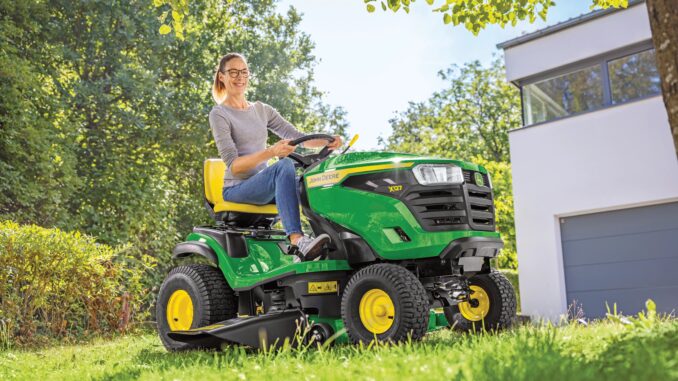
If you own a John Deere 214, you’re working with an older but very capable garden tractor that was built for more than light mowing. The John Deere 214 used a 14 hp Kohler K321AQS engine, a 4-speed transaxle with variable-speed drive, manual PTO, and optional manual, electric, or hydraulic lift depending on configuration.
That makes the John Deere 214 a good fit for homeowners who mow sizeable lawns, tow light implements, or use period attachments, but it also means many machines now have age-related issues like wiring faults, fuel contamination, worn belts, tired ignition parts, and steering or lift wear. This guide covers common John Deere 214 repair issues, troubleshooting steps, maintenance points, service intervals, parts-ordering strategy, and an expanded owner FAQ.
General overview of the John Deere 214
The John Deere 214 sits in Deere’s 200-series lawn and garden tractor lineup alongside the 210 and 212, but with the larger 14 hp Kohler K321AQS engine. Deere’s service manual groups the 214 with the 200, 210, and 212 and identifies the 214 specifically as the 14 hp version.
Key systems on the John Deere 214 include:
-
Engine and fuel system, based on the Kohler K321AQS single-cylinder engine, dry-type air cleaner, carburetor, battery ignition, and fuel shut-off/strainer arrangement.
-
Mower and PTO system, using a manual PTO clutch and belt-driven deck system.
-
Drive system, using a 4-speed transaxle and variable-speed belt arrangement rather than a hydrostatic transmission.
-
Electrical system, including battery, starter, ignition switch, charging system, wiring harness, and neutral start switch.
-
Lift system, which could be manual, electric, or optional hydraulic depending on the tractor setup.
Common service parts owners often end up replacing on a John Deere 214 include the spark plug, breaker points, condenser-related ignition components, battery, air cleaner element, drive belts, PTO-related wear parts, starter components, ignition switch, neutral start switch, and fuel-system parts such as the strainer and fuel pump listings shown in the parts catalog. Deere’s original service manual lists the 214 spark plug family as Champion H-10, AC 45L, or Prestolite 14-L7B with a 0.035-inch gap, and the battery spec as John Deere AM31186, BCI Group 22F.
John Deere 214 troubleshooting approach
The best way to diagnose a John Deere 214 is to start with the symptom the owner actually sees. Deere’s own service literature emphasizes diagnosis by malfunction, analysis, and testing so you eliminate the cause instead of swapping parts at random.
Main symptom groups for the John Deere 214 are:
-
Starting issues, such as cranking with no start, weak spark, or poor fuel delivery.
-
Running issues, such as rough idle, surging, poor acceleration, smoke, or loss of power.
-
Cut-quality problems, usually linked to deck setup, belt condition, blade condition, or PTO performance.
-
Vibration and noise, often from loose hardware, damaged blades, worn PTO parts, or engine/driveline issues.
-
Overheating and leaks, commonly tied to blocked cooling fins, breather issues, dirty shrouds, or age-related seal leaks.
-
Transmission and drive complaints, often caused by worn belts, variator issues, brake adjustment problems, or transaxle wear.
-
Electrical and safety-switch problems, especially battery, wiring, ignition switch, solenoid, or neutral start switch faults.
Emergency and immediate John Deere 214 repair needs
Some John Deere 214 problems should be dealt with right away because they affect safe operation or can quickly damage expensive parts. A loose blade, fuel leak, failed steering component, overheated engine, or slipping drive system can turn a simple repair into a major rebuild.
John Deere 214 starting issues
If the tractor cranks but will not start, the biggest question is whether you have spark, fuel, and enough compression. Deere’s service procedure starts with spark checking, then fuel-system checks, then compression and vacuum testing if the engine still won’t run correctly.
Common causes:
-
Weak or no spark from bad plug, dirty points, bad condenser, weak battery, or poor connections.
-
Old fuel, clogged strainer, closed shut-off valve, dirty carburetor, or blocked fuel line.
-
Low compression or internal engine wear on an older machine.
Basic owner checks:
-
Confirm the tractor is in the proper start condition and the battery connections are clean and tight.
-
Check for spark at the plug lead using a proper spark-test method.
-
Confirm fuel is reaching the carburetor and the shut-off valve/strainer is not blocked.
-
Inspect the spark plug condition and gap.
John Deere 214 cut-quality problems
A John Deere 214 that cuts unevenly, leaves strips, or bogs in grass is often suffering from a deck setup or blade issue rather than a serious engine fault. Because this tractor uses belt-driven mower hardware, worn belts and poor PTO performance can also reduce blade speed.
Common causes:
-
Dull, bent, or unbalanced blades.
-
Stretched or glazed mower belt.
-
Deck not leveled side-to-side or front-to-back.
-
Grass buildup under the deck.
-
Engine not reaching proper governed speed of 3400 to 3500 rpm.
Basic owner checks:
-
Clean the underside of the deck with the engine off and key removed.
-
Inspect blades for wear, bends, and balance issues.
-
Check belt condition and PTO engagement.
-
Verify engine is not running too slowly under load.
John Deere 214 vibration and noise
New vibration on a John Deere 214 should be treated seriously because it can be caused by blade damage, loose PTO parts, worn bearings, driveline faults, or engine hardware coming loose. Continuing to run the tractor can damage the crankshaft, deck spindles, or PTO components.
Common causes:
-
Bent or unbalanced blades.
-
Loose engine or deck mounting hardware.
-
Worn PTO clutch or brake components.
-
Failing bearings in deck or engine-driven accessories.
-
Damaged belt sheaves or misaligned pulleys.
Basic owner checks:
-
Shut the tractor down immediately if vibration is sudden or severe.
-
Inspect blades and blade hardware first.
-
Check visible pulleys, belts, and PTO parts.
-
Do not keep mowing until the source is found.
John Deere 214 overheating and leaks
Because the John Deere 214 uses an air-cooled Kohler single-cylinder engine, dirty cooling fins and blocked shrouds are a common cause of overheating. Deere’s tune-up guide specifically calls for cleaning engine shrouds and cooling fins, and the manual notes that crankcase breather problems can also create pressure-related issues.
Common causes:
-
Debris packed around shrouds and cooling fins.
-
Low oil level or wrong oil viscosity.
-
Lean carburetor setting.
-
Oil leaks from age-hardened gaskets or seals.
-
Crankcase breather problems.
Basic owner checks:
-
Remove debris from the engine shrouds and cooling fins.
-
Check the oil level and condition.
-
Inspect for external oil leaks around gaskets and seals.
-
Check that the engine is not running lean or surging after warm-up.
John Deere 214 transmission and drive problems
The John Deere 214 uses a variable-speed belt drive feeding a 4-speed transaxle, so many “transmission” complaints actually trace back to belts, sheaves, linkages, or adjustment. That is good news for DIY owners because some drive issues are external and serviceable without opening the transaxle case.
Common causes:
-
Worn or stretched drive belts.
-
Variator or sheave wear.
-
Linkage adjustment problems.
-
Brake drag.
-
Low or overdue transaxle lubricant service.
-
Internal transaxle wear on heavily used machines.
Basic owner checks:
-
Inspect drive belts for cracking, glazing, or slack.
-
Check linkage movement and return action.
-
Confirm the brake is fully releasing.
-
Check transaxle lubricant level/service history.
John Deere 214 electrical problems
Older John Deere 214 tractors often suffer from simple electrical faults caused by corrosion, brittle insulation, dirty switch contacts, or weak grounds. Deere’s parts catalog specifically lists the ignition switch, solenoid, circuit breaker, wiring harness, and neutral start switch for 214 tractors, which tells you those are normal service areas on this platform.
Common causes:
-
Weak or failing battery.
-
Dirty terminals or poor ground.
-
Faulty ignition switch or solenoid.
-
Neutral start switch fault.
-
Damaged wiring harness.
-
Charging-system weakness.
Basic owner checks:
-
Clean and tighten battery terminals.
-
Check cable condition and grounds.
-
Test whether power reaches the solenoid and starter.
-
Verify the neutral start circuit is actually allowing cranking.
DIY or dealer? John Deere 214 repair decision guide
The John Deere 214 is very DIY-friendly for routine service and many common repairs, but the age of the machine changes the equation. A simple job can turn into a deeper restoration once seized fasteners, obsolete wiring, worn shafts, or multiple overlapping faults appear.
Good DIY jobs:
-
Oil changes and lubrication.
-
Spark plug replacement and gap setting.
-
Air filter service.
-
Fuel strainer cleaning.
-
Battery service and replacement.
-
Basic belt inspection and many belt replacements.
-
Blade service and deck cleanup.
Advanced DIY or dealer jobs:
-
Carburetor rebuild and precise governor setup.
-
Breaker points replacement and timing adjustment.
-
PTO clutch and brake service.
-
Steering gear repair.
-
Variator or transaxle repairs.
-
Internal engine repair or compression-loss diagnosis.
Skill level guide:
-
Beginner: oil change, air cleaner, spark plug, battery care, deck cleaning, basic visual inspections.
-
Intermediate: drive belts, fuel-system cleanup, simple electrical diagnosis, blade replacement, carburetor adjustment.
-
Advanced: points and timing, PTO clutch service, governor adjustment, transaxle or engine tear-down work.
Parts needed for a John Deere 214 and what information you need
Before ordering John Deere 214 parts, gather the full model name, the tractor serial number, the engine model and serial, and any attachment or deck details. Deere’s service manual says the tractor serial number is on the pedestal below the steering wheel, the engine serial number is on the engine shroud, and the transaxle serial number is on the transaxle case next to the left-hand axle housing.
The parts catalog also shows important serial breaks for the 214, including changes for units before and after 70000, 80000, and 95000 in some systems, so serial-specific ordering matters. That is especially important for switches, wiring, muffler-related parts, PTO controls, brake linkage, variator, and drive-belt arrangements.
OEM vs aftermarket guidance:
-
Use OEM for belts, PTO-related items, switchgear, safety-related parts, and serial-sensitive components because fit and function matter more than saving a few dollars. Deere’s own catalog shows multiple serial breaks on these systems.
-
Aftermarket can be acceptable for consumables such as batteries, spark plugs, and some filters if the cross-reference is exact and the seller clearly lists John Deere 214 compatibility.
Where to find John Deere 214 parts diagrams and service manuals
For official support, Deere’s owner support page for the 214 connects you to manuals, maintenance guidance, and parts shopping. Deere also maintains a parts catalog portal and a manuals/training portal for operator and technical publications.
Useful sources:
-
John Deere 214 owner support — best starting point for manuals, owner support, and parts-fit lookup.
-
John Deere parts catalog — use this for serial-sensitive diagrams and exploded views.
-
John Deere manuals and training — official source for operator and technical manuals.
-
John Deere parts and service — Deere’s main parts and support hub.
For older 214 tractors, period service literature is especially valuable because it gives engine specs, maintenance intervals, timing and carburetor procedures, and location data that may not appear clearly in a modern quick-reference page. The 200-series service manual and 200/210/212/214/216 parts catalog remain strong references for deeper repair work.
How to locate model, serial and engine numbers on a John Deere 214
These numbers matter because the John Deere 214 changed across serial ranges, and some parts listings depend on whether the tractor is before or after a given break. Deere’s service manual says the tractor serial number is on the pedestal below the steering wheel and the engine serial number is on the engine shroud.
Steps:
-
Stand at the operator’s position and inspect the pedestal area below the steering wheel for the tractor serial plate.
-
Record the full tag, but use the six-digit serial number when ordering parts as directed in the service manual.
-
Check the engine shroud for the Kohler engine serial number plate.
-
If you are diagnosing drive issues, inspect the transaxle case near the left-hand axle housing for the transaxle serial number.
-
If a deck or attachment is involved, record that model and deck width separately before ordering parts.
Buying John Deere 214 parts online and in physical stores
The best strategy is to identify the exact Deere part number first, then compare OEM and aftermarket options. That helps avoid one of the biggest mistakes with older Deere tractors: buying a “fits 214” part that ignores serial breaks or attachment differences.
Use these channels:
-
Online: Deere owner support and parts catalog are best for verifying exact OEM numbers before you buy.
-
Dealer counter: best for serial-specific parts, discontinued-item supersessions, and complex assemblies. Deere’s official parts portals support this workflow.
-
Retail stores: acceptable for spark plugs, batteries, oils, and some generic consumables if the packaging clearly cross-references the John Deere 214 or the Kohler K321AQS engine.
Useful links:
Step-by-step fitting guide for common John Deere 214 parts
John Deere 214 spark plug replacement
Replacing the spark plug helps with hard starting, misfire, and weak running if the old plug is fouled or worn. Deere’s 214 spec lists a 0.035-inch plug gap for the approved plug family.
-
Let the engine cool fully and remove the spark plug wire.
-
Remove the old plug and inspect its color and deposits.
-
Check the new plug gap and set it to 0.035 inch.
-
Thread the plug in by hand first to avoid cross-threading.
-
Tighten it correctly; Deere’s service procedure gives 18 to 22 ft-lb for plug installation.
-
Reconnect the plug wire and test start.
John Deere 214 air filter service
A dirty air cleaner can cause rich running, black smoke, plug fouling, and loss of power. Deere’s tune-up steps say to remove the element, tap it lightly against a flat surface, brush out dust, and replace it if bent, crushed, damaged, or extremely dirty.
-
Shut the engine off and remove the air cleaner cover.
-
Remove the element carefully so dirt does not fall into the intake.
-
Lightly tap out dust; do not wash it or blast it with compressed air.
-
Replace the element if it is damaged or heavily contaminated.
-
Reinstall the housing securely and check for proper sealing.
John Deere 214 engine oil change
Fresh oil is critical on an older air-cooled single because heat and contamination build quickly. Deere specifies changing crankcase oil after the first 2 hours and every 25 hours thereafter on these 200-series tractors.
-
Warm the engine slightly, then shut it off and park safely.
-
Open the oil drain valve and drain into a suitable container.
-
Close the drain and refill to the dipstick full mark using the correct viscosity oil for conditions.
-
Deere lists 3 U.S. pints crankcase capacity for the 214.
-
Run briefly, shut down, and recheck the level.
John Deere 214 drive belt replacement basics
A worn drive belt can cause slipping, weak ground speed, inconsistent drive response, or loss of movement under load. Belt layout changes by serial range, so confirm the exact Deere part number before buying.
-
Park the tractor on level ground and disconnect the spark plug wire.
-
Inspect the existing belt routing before removal and take photos.
-
Remove guards or access panels as needed.
-
Replace the belt carefully, checking pulley condition and alignment.
-
Verify the belt sits correctly in all sheaves and idlers.
-
Test drive function gently before returning to normal use.
Maintenance to prevent John Deere 214 problems recurring
Regular maintenance matters even more on a John Deere 214 than on a newer tractor because age adds extra failure points. Deere’s maintenance guidance for the 200-series emphasizes cooling-fin cleaning, air cleaner service, fuel-strainer cleaning, spark plug checks, oil changes, lubrication, PTO bearing service, battery care, and periodic transaxle service.
Focus areas:
-
Starting reliability: keep the battery clean, the plug fresh, the points in good condition, and the fuel clean.
-
Cut quality: keep blades sharp, belts healthy, and engine speed correct.
-
Fire and overheating prevention: clean shrouds and cooling fins and fix fuel or oil leaks promptly.
-
Drive performance: inspect belts and linkages before they fail in use.
-
Electrical reliability: clean terminals, protect wiring, and fix corroded connections early.
John Deere 214 maintenance schedule and year-round checklist
Deere’s period service chart for the 200-series gives clear maintenance intervals for the 214, including 25-hour oil changes, spring/fall greasing, 50-hour hydraulic checks where equipped, and transaxle lubricant changes every 2 years or 500 hours.
Daily / before each use
-
Check engine oil level.
-
Inspect for fuel, oil, or hydraulic leaks.
-
Check tire condition and inflation as needed.
-
Make sure belts, steering, brakes, and attachments look safe to operate.
After first 2 hours
-
Change engine crankcase oil after the initial 2 hours of operation. Deere specifies this early first service, then every 25 hours after that.
Every 25 hours
-
Change engine oil.
-
Check spark plug condition and gap.
-
Clean or replace the air filter element as needed.
-
Clean the fuel strainer.
-
Inspect breather condition.
Every 50 hours or weekly where applicable
-
Check hydraulic fluid level if the tractor has hydraulic lift. Deere says once a week or every 50 hours.
-
Check battery electrolyte level and cable condition.
-
Inspect operation of steering, lift, brakes, belts, and lights.
Every 2 years or 500 hours
-
Change transaxle lubricant. Deere specifies a 2-year or 500-hour interval.
Spring and fall
-
Grease tractor grease fittings in spring and fall.
-
Repack the PTO clutch bearing each spring and fall.
-
Inspect attachment hardware, belts, and PTO operation before the mowing season and again at season end.
Seasonal checklist
-
Spring: change oil, grease fittings, service PTO bearing, inspect blades and belts, clean cooling fins.
-
Mid-season: clean the air filter, inspect plug condition, check battery and belt wear, clean debris from the engine and deck.
-
Fall: grease fittings again, repack the PTO bearing, stabilize storage fuel strategy, and correct leaks or worn parts before storage.
Repair, upgrade, or replace?
The John Deere 214 is often worth repairing because it was built as a heavier garden tractor than many later lawn tractors, and many problems are still external service issues rather than fatal transmission or frame failures. The decision usually comes down to whether you’re facing a single system repair or a chain of age-related failures across engine, wiring, steering, PTO, and deck at the same time.
Repair if…
-
The engine has acceptable compression and no severe internal knock.
-
The problem is in belts, ignition, fuel delivery, battery, switches, or deck service items.
-
The frame, steering base, and attachment systems are fundamentally sound.
Upgrade if…
-
You use the tractor heavily and want better blades, fresh belts, renewed steering parts, and a fully sorted electrical system.
-
You are restoring the machine for long-term use with multiple attachments.
-
You want to refresh several wear systems at once instead of repairing one failure at a time.
Replace if…
-
The tractor has major engine wear plus heavy driveline, steering, and deck problems.
-
Parts availability for your exact setup has become too patchy or too expensive.
-
The cost of restoration is higher than the value of a better-condition garden tractor for your needs.
Expanded John Deere 214 troubleshooting FAQ
1. Why will my John Deere 214 not start?
Start with spark, fuel, and battery condition. Deere’s diagnostic flow for these tractors says to check spark first, then confirm fuel is reaching the carburetor, and then move on to deeper internal checks like compression if needed.
2. Why does my John Deere 214 crank but not fire?
That usually points to no spark, stale fuel, a blocked fuel strainer, or carburetor trouble rather than a starter issue. On the 214, dirty points, a fouled plug, bad connections, or fuel starvation are all common age-related causes.
3. Why does my John Deere 214 have no spark?
No spark often comes from dirty or burned breaker points, poor wiring connections, a weak battery, a bad condenser, or a faulty ignition component. Deere’s service manual specifically calls out checking battery, spark plug, electrical connections, and then points and condenser when spark is weak or absent.
4. What spark plug does a John Deere 214 use?
Deere’s period specification for the 214 lists Champion H-10, AC 45L, or Prestolite 14-L7B, with a 0.035-inch gap. Always confirm the exact engine specification on your tractor before ordering because older machines may have had engine work or substitutions over time.
5. Why is my John Deere 214 hard to start when hot?
Hot-start problems can come from marginal ignition parts, poor carburetor adjustment, weak compression, or fuel boiling issues in an older system. Check plug condition, point condition, fuel cleanliness, and whether the engine is running too lean or overheating.
6. Why does my John Deere 214 run rough at idle?
A rough idle usually means the idle mixture is off, the carburetor is dirty, ignition tune-up parts are worn, or the engine has vacuum/breather issues. Deere’s tune-up sequence includes air cleaner service, fuel strainer cleaning, breather inspection, plug checks, point checks, carburetor adjustment, and engine-speed verification.
7. Why does my John Deere 214 surge or hunt?
Surging usually points to carburetor contamination, improper mixture adjustment, governor issues, or an air leak. If the fuel system is dirty or the engine cannot get steady fuel flow, it will often hunt at part throttle.
8. Why does my John Deere 214 blow black smoke?
Black smoke means the engine is running rich. Deere notes that a black, carboned plug can indicate an over-rich fuel mixture, a clogged air cleaner, or improper carburetor adjustment.
9. Why is my John Deere 214 losing power in thick grass?
Loss of power in grass often comes from dull blades, low engine speed, a slipping mower belt, deck buildup, or a tune-up issue. If the engine is not reaching Deere’s specified 3400 to 3500 rpm at full throttle, cut performance will suffer.
10. Why is my John Deere 214 overheating?
The biggest causes are blocked cooling fins, dirty shrouds, low oil, and lean running. Deere specifically includes cleaning engine shrouds and cooling fins in its tune-up procedure for these tractors.
11. How much oil does a John Deere 214 hold?
Deere lists the John Deere 214 crankcase capacity at 3 U.S. pints, which is about 1.42 liters. Fill to the dipstick mark rather than relying only on dry capacity.
12. How often should I change John Deere 214 oil?
Deere specifies the first oil change after 2 hours of operation and then every 25 hours after that on this 200-series platform. On an older tractor that sees short-run or dusty use, many owners stay conservative and inspect oil condition frequently.
13. What fuel should I use in a John Deere 214?
Deere’s service literature calls for fresh, clean regular-grade or unleaded gasoline with an octane rating of 85 or higher. It also says not to mix oil with gasoline and not to let dirt enter the fuel system.
14. Why does my John Deere 214 foul spark plugs?
Plug fouling usually means a rich mixture, dirty air filter, weak ignition, oil burning, or extended low-load operation. Deere notes that black carbon deposits can point to rich running or air-cleaner/carburetor issues.
15. Why does my John Deere 214 backfire?
Backfiring can happen from ignition timing issues, stale fuel, carburetor problems, or lean mixture conditions. On a points-ignition tractor like the 214, tune-up condition matters more than on a modern electronically managed engine.
16. Why won’t my John Deere 214 battery stay charged?
A battery that will not stay charged may be weak itself, but the charging system, wiring, grounds, or regulator-rectifier circuit can also be at fault. Deere’s parts catalog lists charging-system components and wiring-harness differences by engine and model family in the 200-series platform.
17. What battery does a John Deere 214 use?
Deere lists a 12-volt AM31186 battery, BCI Group 22F, for the 210, 212, and 214 tractors, with 255 cold-cranking amps at 0°F and 55-minute reserve capacity. That gives you a useful OEM baseline when cross-referencing aftermarket batteries in the USA or Canada.
18. Why does my John Deere 214 click but not crank?
That usually means a weak battery, dirty terminals, bad cable connection, faulty solenoid, or starter trouble. Because the 214 also uses a neutral start circuit, a switch issue can sometimes mimic a starter fault.
19. Why won’t my John Deere 214 move properly?
Poor movement is often caused by worn drive belts, variator/sheave issues, brake drag, or linkage adjustment, not always a failed transaxle. The 214 uses a 4-speed transaxle plus variable-speed belt system, so external drive components deserve inspection first.
20. Why does my John Deere 214 slip on hills?
If the tractor slips or feels weak uphill, suspect a worn drive belt, poor belt tension, variator wear, or tired transaxle internals. Older friction and belt-drive systems lose performance gradually, so many owners do not notice the decline until it gets severe.
21. How often should I change John Deere 214 transaxle oil?
Deere specifies changing the transaxle lubricant every 2 years or 500 hours of operation. If the service history is unknown on an older machine, it is smart to inspect and refresh it early.
22. What transaxle oil does a John Deere 214 use?
Deere lists AM30200 transmission lubricant, SAE 90 gear lubricant, or an equivalent SCL multipurpose-type gear oil for the transaxle. Use a lubricant that meets the specification rather than guessing based on modern automotive fluids.
23. Why is my John Deere 214 hard to steer?
Hard steering usually comes from dry or worn steering gear parts, spindle issues, improper front tire pressure, or front-end wear. Deere’s service schedule includes checking steering condition, and the tractor also has grease points that need seasonal lubrication.
24. Why is my John Deere 214 vibrating badly when mowing?
Bad vibration usually means a bent or unbalanced blade, loose deck hardware, bad spindle bearings, or PTO-related issues. Stop mowing immediately because severe vibration can damage the deck, crankshaft, or PTO parts if ignored.
25. Why does my John Deere 214 cut unevenly?
An uneven cut usually comes from deck leveling problems, dull blades, tire-pressure mismatch, grass buildup, or belt/PTO slippage. Check the simple mechanical causes first before blaming the engine.
26. Why does my John Deere 214 leave strips of grass?
Strips are commonly caused by dull blades, low blade speed, belt slip, or trying to cut too much at once. The fix is usually in blade condition, deck cleanliness, and confirming the engine is reaching proper full-throttle speed.
27. Why does the John Deere 214 mower belt keep coming off?
A belt that repeatedly jumps off is often the result of wrong routing, bent guides, worn pulleys, weak idler control, or using the wrong belt for the serial range or deck setup. Because Deere separates some drive and PTO parts by serial break, exact fit matters.
28. Should I use OEM belts on a John Deere 214?
Usually yes. Belts are one of the best places to stick with OEM on a John Deere 214 because fit, width, angle, and effective length matter a lot on older variable-speed and PTO systems, and Deere’s parts catalog shows serial-sensitive belt arrangements.
29. Why does my John Deere 214 stall when I engage the PTO?
That can happen if the deck is jammed, the PTO clutch/brake is dragging, the belt is binding, spindle bearings are failing, or the engine tune-up is poor. A healthy 214 should engage a free-turning deck without falling flat if the engine and PTO are in good condition.
30. How do I know if my John Deere 214 needs a carburetor rebuild?
If cleaning and adjustment do not fix rough running, surging, or fuel leakage, the carburetor may need rebuilding. On a tractor of this age, varnish, worn shafts, and internal corrosion are common enough that a simple adjustment is not always enough.
31. Why does my John Deere 214 leak oil?
Oil leaks are common on older air-cooled singles because gaskets and seals harden with age. First clean the engine thoroughly, then identify whether the leak is from a breather area, pan gasket, seals, or another external point before replacing parts.
32. Where is the serial number on a John Deere 214?
The Deere service manual says the tractor serial number is located on the pedestal below the steering wheel. The engine serial number is on the engine shroud, and the transaxle serial number is on the transaxle case near the left-hand axle housing.
33. Is a John Deere 214 worth repairing?
In many cases, yes, especially if the engine is basically sound and the tractor mainly needs tune-up, belt, wiring, deck, or steering work. The 214 was built as a real garden tractor, so a solid example is often worth more effort than a lighter modern lawn tractor with major plastic and sealed-system limitations.
34. Can a homeowner do most John Deere 214 repairs?
A homeowner with basic tools can do a lot on a John Deere 214, including oil service, spark plug work, air cleaner service, battery care, basic fuel cleanup, and many belt or deck jobs. Timing work, internal engine work, and major driveline repairs are better suited to advanced DIYers or a shop familiar with older Deere garden tractors.
35. What manual should I get for a John Deere 214?
The best combination is the official operator information from Deere’s owner support/manuals pages plus the 200-series service manual and the 200/210/212/214/216 parts catalog for deeper repairs. Together, those sources cover operation, maintenance, specs, serial identification, exploded diagrams, and repair procedures.