
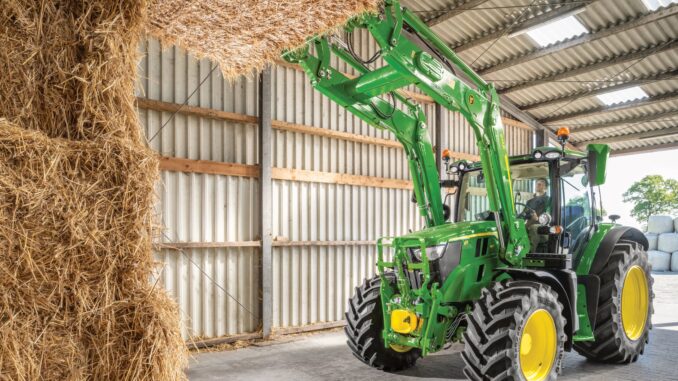
The John Deere 4105 is a compact utility tractor aimed at small-property owners, hobby farmers, and acreage users who need more capability than a lawn tractor but still want a relatively straightforward machine to maintain at home. John Deere’s North American operator’s manual identifies it as a 4105 compact utility tractor and covers the machine’s core systems, service intervals, and troubleshooting topics for owners in the USA and Canada.
This guide is written as a practical, symptom-first resource for owners dealing with hard starting, poor running, hydraulic or transmission concerns, electrical faults, routine service, and parts lookup. It also explains where DIY maintenance usually makes sense, where dealer-level diagnosis is the safer route, and where to find manuals and parts diagrams before ordering components.
General overview of the John Deere 4105
The John Deere 4105 sits in Deere’s compact utility tractor range rather than its residential mower lineup, so owners typically use it for loader work, mowing with compatible implements, light ground-engaging jobs, transport work, and year-round property maintenance. The operator’s manual sections show that the machine is built around diesel engine, transmission/hydraulic, PTO, 3-point hitch, braking, steering, and electrical systems rather than the lighter-duty systems found on entry-level lawn tractors.
For repair planning, the main John Deere 4105 systems that matter are:
-
Engine and fuel system, including the diesel fuel filter, water separator sediment bowl, air filtration, cooling system, and alternator belt.
-
Transmission and hydraulic system, including transmission/hydraulic oil service and filter changes.
-
Electrical system, including battery service, fuses, lighting, and starting-system related checks.
-
Chassis and operator systems, including brakes, steering, front axle service, tires, wheel hardware, PTO controls, and 3-point hitch lubrication.
Several John Deere 4105 service parts come up repeatedly in owner maintenance. Verified Deere sources list transmission/hydraulic oil filter LVA13065, engine oil filter M806419, primary air filter RE68048, secondary air filter RE68049, engine fuel filters MIU800645 and M811032, and filter kit LVA21202 for this tractor.
John Deere 4105 troubleshooting approach
The best way to diagnose a John Deere 4105 is to start with the exact symptom the owner sees, not with a random parts swap. Deere’s operator’s manual includes troubleshooting coverage for the engine, electrical system, brakes, and steering, which reinforces the value of a symptom-based process before ordering parts or tearing deeper into the machine.
For most owners, the main symptom groups are:
-
Starting issues.
-
Running issues such as low power, smoke, or rough operation.
-
Hydraulic and transmission/drive concerns.
-
Steering and brake problems.
-
Overheating, leaks, or warning signs from neglected service.
-
Electrical and safety-related problems, including battery, fuse, and lighting faults.
Emergency John Deere 4105 repair needs
Some faults on the John Deere 4105 should be treated as immediate stop-use problems because they can affect safety or quickly damage more expensive components. Fuel leaks, hydraulic leaks under pressure, overheating, brake problems, steering issues, and PTO-related faults should move to the top of the repair list rather than being left for “later”.
John Deere 4105 starting issues
A starting problem usually appears as a no-crank, slow-crank, or crank-no-start condition. On a diesel compact tractor, that matters because repeated unsuccessful cranking can flatten the battery, overheat cables, and hide the real issue if basic fuel and electrical checks are skipped.
Common causes:
-
Weak or poorly connected battery.
-
Dirty or corroded terminals.
-
Blown fuse or electrical fault.
-
Restricted fuel flow through the filter or sediment bowl.
-
Air in the fuel system after fuel service.
-
Operator-control or PTO-related starting condition not satisfied.
Basic owner checklist:
-
Confirm battery connections are clean and tight.
-
Check for obvious blown fuses and inspect visible wiring damage.
-
Verify there is clean diesel fuel in the tank and that the fuel shut-off arrangement is in the correct operating position.
-
Inspect the fuel filter and water separator/sediment bowl area for contamination or restriction.
-
Recheck operator controls and PTO position before assuming a major fault.
John Deere 4105 running and power issues
When the John Deere 4105 starts but runs poorly, owners often notice low power, hesitation under load, extra smoke, or unstable idle. These symptoms matter because they usually point to airflow, fuel delivery, cooling, or routine-service problems that can worsen if the tractor keeps working under load.
Common causes:
-
Dirty primary or secondary air filter.
-
Fuel filter restriction.
-
Contaminated fuel or water in fuel.
-
Cooling fins or screens packed with debris.
-
Neglected engine oil and filter service.
-
Belt or hose issues around the cooling/charging system.
Basic owner checklist:
-
Clean the grille, side screens, and radiator screen/fins.
-
Inspect the air filter elements and replace if dirty or damaged.
-
Check the fuel filter service history.
-
Confirm engine oil level is correct.
-
Look for collapsed hoses, belt wear, or signs of overheating.
John Deere 4105 vibration and noise
New vibration, rattling, or mechanical noise is often a warning that a loose component, driveline issue, wheel hardware problem, or implement-related fault is developing. This matters because continued operation can enlarge mounting holes, damage shafts, or cause wheel and attachment failures.
Common causes:
-
Loose wheel hardware.
-
Worn or loose implement driveline components.
-
Tire or wheel issues.
-
PTO driveline vibration.
-
Chassis fasteners working loose after service or heavy use.
Basic owner checklist:
-
Park safely and inspect wheel bolts and visible hardware.
-
Disconnect or isolate the implement if practical to see whether the vibration is tractor-side or attachment-side.
-
Check PTO driveline guards and visible shaft condition.
-
Inspect tires for damage, low pressure, or debris.
-
Stop using the machine if vibration is severe or suddenly worse.
Overheating and leaks on the John Deere 4105
Overheating or fluid leakage should never be ignored on the John Deere 4105. Deere’s manual specifically covers coolant checks, radiator hose checks, radiator screen and fin cleaning, transmission and hydraulic oil checks, and safe handling around high-pressure fluids because these problems can quickly become expensive.
Common causes:
-
Plugged radiator screen or cooling fins.
-
Low coolant level.
-
Damaged radiator hoses.
-
Engine oil, fuel, or hydraulic seepage becoming a larger leak.
-
Poor maintenance intervals.
-
Debris buildup around hot engine areas.
Basic owner checklist:
-
Shut the tractor down and allow it to cool.
-
Check coolant level only when safe.
-
Clean the radiator screen, grille, and side screens.
-
Inspect under the tractor for fresh fluid trails.
-
Do not place hands near suspected high-pressure hydraulic leaks.
John Deere 4105 transmission and drive problems
Transmission or drive complaints usually show up as poor movement, weak hydraulic response, unusual noises, or performance changes after neglected fluid service. These issues matter because running low, dirty, or overdue hydraulic/transmission oil can shorten component life.
Common causes:
-
Low transmission/hydraulic oil.
-
Restricted transmission/hydraulic filter.
-
Wrong service interval history.
-
Front axle lubrication issues.
-
Linkage or control adjustment concerns.
Basic owner checklist:
-
Verify transmission/hydraulic oil level.
-
Check whether the filter is overdue; Deere specifies LVA13065 with an initial 50-hour change and then 200-hour intervals.
-
Inspect for external leaks around filters, hoses, and housings.
-
Review whether the problem began after recent service.
-
Escalate to a dealer if there is slipping, no movement, or hydraulic noise under load.
Electrical problems on the John Deere 4105
Electrical issues on the John Deere 4105 can appear as weak cranking, no lights, intermittent faults, or blown fuses. The operator’s manual includes battery service, fuse replacement, and bulb replacement procedures, which tells owners that many basic electrical checks are realistic DIY jobs before deeper diagnosis is needed.
Common causes:
-
Low battery charge.
-
Corroded battery terminals.
-
Blown fuse.
-
Damaged wiring.
-
Failed bulb or poor connection.
Basic owner checklist:
-
Inspect battery terminals for corrosion and looseness.
-
Check the battery condition and charge level.
-
Inspect fuses one by one.
-
Check visible harness sections for rubbing or rodent damage.
-
Test lights and switches systematically rather than replacing multiple parts at once.
DIY or dealer for the John Deere 4105
The John Deere 4105 is owner-serviceable for routine maintenance and many straightforward repairs, but it crosses into dealer territory once diagnosis involves injection-system work, internal transmission faults, hydraulic pressure testing, or repairs that require splitting the tractor or handling high-pressure systems. A good rule is that filters, fluids, belts, battery service, and visual inspections are sensible DIY work, while fuel injection, internal hydro/hydraulic issues, and major driveline repairs are better left to a properly equipped shop.
Good DIY jobs
-
Engine oil and filter changes.
-
Air filter inspection and replacement.
-
Fuel filter replacement.
-
Cleaning radiator screen, grille, and side screens.
-
Battery cleaning and terminal service.
-
Fuse and bulb replacement.
-
Greasing and basic chassis checks.
Advanced DIY or dealer jobs
-
Bleeding or correcting fuel delivery problems after contamination.
-
Alternator belt service if access or tensioning is unfamiliar.
-
Front axle oil service if leaks or hardware damage are also present.
-
Brake or steering adjustments when symptoms persist after basic checks.
-
Hydraulic diagnosis beyond level and filter inspection.
-
Fuel injection pump or injector work.
Skill level guide
-
Beginner: Filters, screen cleaning, battery care, fuse checks, fluid level checks.
-
Intermediate: Engine oil service, fuel filter replacement, front axle or hydraulic service, basic belt inspection.
-
Advanced: Persistent no-start diagnosis, hydraulic fault isolation, steering/brake adjustment, driveline and injection-related work.
Parts for the John Deere 4105
Before ordering John Deere 4105 parts, gather the full model name, tractor PIN, and any engine identification details you can access. Deere’s manual starts with product identification and the machine’s PIN range, and that matters because serial breaks, engine variations, and attachment pairings can change the exact part you need.
For tractors like the John Deere 4105, it also helps to note whether you are ordering a routine service item, a chassis/electrical part, or an implement-related item. That makes it easier to separate tractor parts from mower, loader, or attachment parts that may not be tied to the tractor itself.
OEM parts are the safer choice for filters, hydraulic items, fit-sensitive seals, and safety-related components because Deere’s published service information ties those part numbers directly to the machine. Aftermarket parts can be reasonable for batteries and some routine consumables, but only when the supplier clearly cross-references the exact Deere number and the owner verifies fit by model and PIN.
John Deere 4105 manuals and diagrams
The strongest starting points for John Deere 4105 manuals and diagrams are Deere’s own operator and maintenance publications, followed by Deere-oriented parts suppliers that organize service items by model. These sources help owners confirm service intervals, identify OEM numbers, and avoid buying the wrong filter or hydraulic part.
Useful sources:
-
Official operator’s manual: best for operation, safety, service intervals, fluid checks, and owner maintenance procedures.
-
Deere filter and capacity guide for 4005/4105: best for quick confirmation of filter numbers, service intervals, and capacities.
-
Green Farm Parts 4105 maintenance page: useful for service-part lookup by model and Deere part number cross-checking.
-
John Deere technical manual listing: useful for identifying the shop-manual publication reference when dealer-level repair detail is needed.
How to find John Deere 4105 serial and engine numbers
Identification numbers matter because Deere parts and service information can be serial-sensitive, and the tractor PIN is often the first thing a dealer or parts site will ask for. Deere’s manual begins with a product identification section for recording identification numbers, which underlines how important they are before service or parts ordering.
-
Park the tractor safely on level ground and shut it off.
-
Locate and record the tractor Product Identification Number from the machine identification area referenced in the operator’s manual product identification section.
-
Record the full model exactly as shown, including 4105 and any additional identifying information on the tractor data plate.
-
Locate the engine identification label or plate and note the engine model and serial details if visible.
-
Keep a photo of each tag on your phone so online orders and dealer visits are faster and more accurate.
Buying John Deere 4105 parts
The best buying strategy is to confirm the OEM part number first, then shop by that number instead of relying only on a search for “John Deere 4105 filter” or similar broad terms. That reduces mistakes, especially on fuel, hydraulic, and serial-sensitive items.
-
Online: verify the Deere number, check model and PIN notes, and compare photos before ordering. Good starting points are John Deere manuals, Deere’s 4005/4105 filter guide, and Green Farm Parts.
-
Dealer counter: best for complex items, serial-break questions, hydraulic parts, and any repair where diagrams matter as much as the part itself.
-
Retail stores: acceptable for common fluids, some batteries, and cross-referenced consumables, but only when packaging clearly matches the Deere number or approved spec.
John Deere 4105 fitting guide for common parts
These are four of the highest-value owner maintenance jobs on the John Deere 4105 because they directly affect starting, power, cooling, and long-term reliability. Always use the operator’s manual for model-specific safety steps and capacities before beginning.
Replacing the John Deere 4105 engine oil filter
This service helps protect the diesel engine from accelerated internal wear and is one of the most important recurring jobs.
-
Warm the engine briefly, then shut it down safely.
-
Drain the engine oil into a suitable container.
-
Remove the old M806419 oil filter and check that the old gasket came off with it.
-
Lightly oil the new filter seal and install the new filter by hand.
-
Refill with the correct oil type and amount specified by Deere, then run and recheck for leaks and final oil level.
Changing the John Deere 4105 fuel filter
A restricted fuel filter can cause hard starting, poor running, or power loss, especially on diesel equipment that sits for periods between jobs.
-
Shut the tractor off and work cleanly around the fuel system.
-
Remove the old filter element(s) listed for the machine, using MIU800645 and/or M811032 as the Deere reference numbers for service parts.
-
Clean the sediment bowl or surrounding area if contamination is present, following Deere’s fuel-system service guidance.
-
Install the new filter carefully and ensure seals seat correctly.
-
Restart and inspect closely for leaks or signs of air in the fuel system.
Servicing the John Deere 4105 air filters
Air filter service directly affects engine power, smoke, and long-term dust protection.
-
Open the air cleaner housing and remove the primary element.
-
Inspect the primary RE68048 and the secondary RE68049 elements for dirt, damage, or collapse.
-
Replace dirty or damaged elements rather than trying to reuse a compromised filter.
-
Inspect the housing and intake path for dust leaks or damaged sealing surfaces.
-
Reassemble carefully so the filters seat fully and no unfiltered air can bypass them.
Cleaning the John Deere 4105 cooling screens and fins
This simple job helps prevent overheating and is especially important for owners working in dust, grass, or chaff.
-
Park safely and allow hot components to cool.
-
Remove debris from the grille and side screens.
-
Clean the radiator screen and visible fins carefully without folding them over.
-
Inspect radiator hoses while access is open.
-
Repeat more often in heavy mowing, loader, or dusty conditions.
Maintenance to prevent John Deere 4105 problems
Regular maintenance on the John Deere 4105 prevents a large share of the breakdowns owners actually experience, especially hard starting, overheating, hydraulic sluggishness, and dust-related engine wear. Deere’s published interval structure for this tractor is built around daily checks, 50-hour service, 200-hour service, 400-hour service, 600-hour service, yearly service, 1200-hour service, and two-year/2000-hour tasks.
Focus areas:
-
Starting reliability: Keep the battery clean, connections tight, and fuel system serviced on schedule.
-
Engine protection: Change oil and filter on time and replace restricted air and fuel filters.
-
Overheating prevention: Clean the grille, screens, and radiator fins regularly.
-
Hydraulic and drive performance: Monitor transmission/hydraulic oil level and service the LVA13065 filter at the correct interval.
-
Electrical reliability: Check fuses, bulbs, wiring condition, and battery terminals before a small issue becomes a no-start.
John Deere 4105 maintenance schedule
The John Deere 4105 operator’s manual organizes service intervals by time and hours, which is the best baseline for building a practical owner checklist. The list below stays close to Deere’s published interval structure and the 4005/4105 service guide.
Daily or before each use
-
Check engine oil level.
-
Check coolant level.
-
Inspect transmission/hydraulic oil level.
-
Clean grille, side screens, and visible debris buildup as needed.
-
Walk around the tractor for leaks, loose hardware, and tire issues.
After first 10 hours
-
Follow Deere’s initial service checkpoint listed in the operator’s manual interval schedule.
-
Pay special attention to hardware checks, leaks, and fluid condition after early use.
Every 50 hours
-
Replace the transmission/hydraulic oil filter LVA13065 at the initial 50-hour service.
-
Perform the 50-hour checks and lubrication tasks listed in the operator’s manual.
-
Review battery, tires, and visible linkage condition.
Every 200 hours or yearly
-
Replace engine oil filter M806419 and perform engine oil service annually or every 200 hours, whichever comes first.
-
Replace the transmission/hydraulic filter after the initial service, then every 200 hours.
-
Review front axle, brakes, and steering service items listed in the manual.
Every 400 to 600 hours
-
Change transmission/hydraulic oil at Deere’s longer interval schedule.
-
Complete any 400-hour and 600-hour inspections in the operator’s manual.
-
Reassess hoses, belts, cooling system condition, and wear items before they fail in season.
Every 500 to 1200 hours
-
Replace the engine fuel filter at 500 hours according to Deere’s filter guide.
-
Complete 1200-hour tasks listed in the operator’s manual service interval section.
Every two years or 2000 hours
-
Complete Deere’s two-year or 2000-hour service items from the operator’s manual.
-
Review coolant and long-interval fluid service needs as part of major maintenance planning.
Seasonal checklist
-
Spring: Check battery condition, service overdue filters, inspect hoses, and clean cooling surfaces before heavy use.
-
Mid-season: Recheck debris buildup, tire pressures, fluid levels, and any new leaks or vibration complaints.
-
Fall or storage prep: Follow Deere’s storage section for fuel and engine preparation, battery care, and safe return-to-service planning.
Repair, upgrade, or replace the John Deere 4105?
For most owners, the John Deere 4105 is worth repairing when the issue is limited to maintenance backlog, filters, battery, hoses, routine leaks, or external service parts. Replacement becomes easier to justify when the machine has multiple expensive hydraulic, drivetrain, and engine problems at the same time or when the tractor no longer matches the workload you expect from it.
Repair if…
-
The problem is clearly tied to overdue maintenance or an external service item.
-
The tractor is structurally sound and starts, drives, and hydraulically functions well aside from one fault.
-
You can verify parts support and service information easily through Deere sources.
Upgrade if…
-
You need more hydraulic capability, lift capacity, or attachment support than the 4105 comfortably provides.
-
You are repeatedly pushing the tractor into tasks better suited to a larger compact utility model.
-
You want easier ownership through newer controls, features, or dealer-supported package options.
Replace if…
-
The tractor has major engine, hydraulic, and driveline issues together.
-
Parts and labor costs approach a large share of the machine’s real market value.
-
Unsafe steering, braking, or structural issues are piling up faster than maintenance can reasonably catch up.
John Deere 4105 troubleshooting FAQ
1. Why will my John Deere 4105 not start?
A no-start on the John Deere 4105 usually comes down to battery condition, cable corrosion, fuel delivery restriction, or an operating condition that is not set correctly. Start with the battery, fuses, fuel supply, and visible filter condition before assuming the starter or injection system is at fault.
2. Why does my John Deere 4105 crank slowly?
Slow cranking usually points to a weak battery, poor terminal contact, or cable resistance from corrosion. Battery service and cable cleaning are among the first electrical maintenance items Deere expects owners to handle on this tractor.
3. Why does the John Deere 4105 start and then stall?
If it starts and stalls, suspect fuel restriction, contaminated fuel, or air entering the fuel side after service. Check the fuel filter, sediment bowl area, and fuel condition before moving into deeper diagnosis.
4. What causes low power on a John Deere 4105?
Low power often comes from restricted airflow, a clogged fuel filter, dirty cooling surfaces, or overdue general maintenance. The quickest owner checks are the air filters, fuel filter history, and radiator screen cleanliness.
5. Why is my John Deere 4105 smoking more than usual?
Extra smoke can be linked to restricted air intake, poor fuel quality, or an engine that is working hot because debris is blocking cooling air. If smoke continues after filter and cooling checks, dealer diagnosis is the safer next step.
6. Why does my John Deere 4105 overheat?
Overheating usually starts with blocked screens or fins, low coolant, or hose problems. Deere specifically includes cleaning the radiator screen and fins plus coolant-level checks in routine service because these are common owner-level causes.
7. How often should I change the John Deere 4105 oil filter?
Deere lists engine oil filter M806419 for the 4105 and specifies replacement every 200 hours or annually, whichever comes first. If the tractor sees hard seasonal use, many owners plan the job at least once per year even if hours stay lower.
8. What is the John Deere 4105 hydraulic filter part number?
The verified transmission/hydraulic oil filter part number for the John Deere 4105 is LVA13065. Deere’s guide calls for an initial replacement at 50 hours and then every 200 hours.
9. What fuel filter does a John Deere 4105 use?
Deere’s 4005/4105 service guide lists MIU800645 and M811032 as the engine fuel filters for this tractor. Always verify against the tractor PIN and the exact service setup before ordering.
10. What air filters fit the John Deere 4105?
The John Deere 4105 uses primary air filter RE68048 and secondary air filter RE68049 according to Deere’s filter guide. These are replace-as-required items, so condition matters as much as hours.
11. Can I use aftermarket filters on a John Deere 4105?
You can, but it is smarter to stay with OEM for fit-sensitive and high-risk items unless the aftermarket supplier clearly cross-references the Deere number. This is especially true for hydraulic and fuel filtration where a poor fit can create bigger problems than the money saved.
12. What is the John Deere 4105 filter kit number?
The filter package Deere lists for the 4105 is LVA21202. Deere says that kit contains M806419, MIU800645, RE68048, and LVA13065 for routine service convenience.
13. Why does my John Deere 4105 lose hydraulic performance?
Low hydraulic performance can come from low fluid level, restricted filtration, overdue oil service, or an internal hydraulic issue. Owners should check level, leaks, and service history first, then escalate persistent problems to a dealer.
14. Why won’t my John Deere 4105 move properly?
Poor movement can be tied to transmission/hydraulic oil condition, filter restriction, control issues, or a deeper internal transmission fault. If fluid and filter checks do not reveal an obvious cause, stop using the machine under load and get it diagnosed.
15. Why is the steering heavy on my John Deere 4105?
Heavy steering may come from low hydraulic oil, front axle issues, tire-related resistance, or a steering-system problem noted in Deere’s troubleshooting coverage. Start with fluid, tires, and visible leakage checks before assuming a steering component failure.
16. Why are the brakes weak on my John Deere 4105?
Weak brakes can be adjustment-related or part of a broader wear issue. Deere includes brake adjustment service in the operator’s manual, but persistent poor braking should be treated as a safety repair rather than a convenience issue.
17. Why does my John Deere 4105 vibrate during operation?
Vibration often points to loose wheel hardware, implement driveline issues, tire problems, or a rotating component that is out of balance. Separate tractor-only operation from implement operation to narrow the source faster.
18. Why is there oil under my John Deere 4105?
Oil under the tractor could be engine oil, hydraulic oil, front axle lubricant, or even residual spill from recent service. Clean the area, monitor where fresh fluid starts, and do not ignore a leak that is getting worse.
19. Why is my John Deere 4105 battery always dead?
Repeated battery discharge usually traces back to poor terminal condition, battery age, charging problems, or long storage with little use. Deere includes battery cleaning, electrolyte checks, removal, and booster-battery procedures because battery care is a normal part of ownership.
20. Where is the John Deere 4105 serial number located?
Use the tractor’s product identification area referenced in the operator’s manual and record it before ordering parts. If the plate is dirty or painted over, clean it carefully and photograph it for future reference.
21. Does the John Deere 4105 have a service manual?
Yes, Deere literature for the 4105 includes an operator’s manual, and technical manual listings also exist for workshop-level repair information. The operator’s manual is the right starting point for owner maintenance, while the technical manual is more appropriate for complex repairs.
22. What manual should I use for routine John Deere 4105 maintenance?
For normal owner service, use the official operator’s manual plus Deere’s 4005/4105 maintenance guide. Together they cover service intervals, routine procedures, filter numbers, and capacities.
23. How often should I replace the John Deere 4105 fuel filter?
Deere’s filter guide lists the engine fuel filter replacement interval at 500 hours. Owners working with questionable fuel quality may still need more frequent inspection between scheduled changes.
24. How often should I replace the John Deere 4105 air filters?
The primary and secondary air filters are replace-as-required items according to Deere’s service guide. In dusty work, inspect them often because condition can matter more than elapsed hours.
25. Why is my John Deere 4105 running hot in tall grass or dusty work?
This usually happens because grass seed, dust, and chaff reduce airflow through the grille, screens, and radiator fins. Frequent cleaning is one of the simplest ways to prevent avoidable overheating on compact tractors.
26. Can I service the John Deere 4105 myself?
Yes, most owners can handle fluids, filters, battery service, cooling cleanup, and basic inspections with the operator’s manual. The limit usually comes when diagnosis moves into injection, internal hydraulic, or major transmission work.
27. When should I take my John Deere 4105 to a dealer?
Dealer service makes sense for persistent no-start problems, hydraulic weakness that remains after fluid and filter checks, fuel injection concerns, steering or braking safety issues, and major leaks under pressure. Those are the jobs where special tools and deeper Deere procedures matter most.
28. Is the John Deere 4105 worth repairing?
It usually is when the fault is maintenance-related and the tractor is otherwise solid. Compact utility tractors with good parts support are often worth keeping, especially when the fix is limited to filters, hoses, battery, or external service items.
29. What should I check before buying John Deere 4105 parts online?
Check the full model, PIN, OEM part number, and whether the part is for the tractor itself or for an attachment. That extra step prevents a lot of wrong-part orders, especially on filters, hydraulic items, and serial-sensitive components.
30. What are the most important maintenance items on a John Deere 4105?
The big ones are engine oil service, transmission/hydraulic filtration, fuel filtration, air filtration, battery care, and cooling-system cleanliness. Those items have the biggest effect on starting, engine life, and hydraulic reliability.
31. How much fuel does the John Deere 4105 hold?
Deere’s 4005/4105 capacity guide lists the John Deere 4105 fuel tank at 43.5 L, or 11.5 gallons. That is useful for service planning and for diagnosing whether old fuel has been sitting too long in a partially used tank.
32. What is the John Deere 4105 engine oil capacity?
Deere’s capacity guide lists the 4105 crankcase with filter at 4.3 L, or 1.13 gallons. Always confirm the final level on the dipstick after service rather than relying only on a dry-fill number.
33. What is the John Deere 4105 transmission and hydraulic capacity?
The Deere capacity guide lists the 4105 transmission and hydraulic system at about 31.4 L, or 8.3 gallons. That figure is useful when planning a full fluid service rather than a simple top-up.
34. What front axle oil capacity does the John Deere 4105 use?
Deere’s capacity guide lists the 4105 front axle at about 4.5 L, or 1.19 gallons, when using Low Viscosity Hy-Gard in that application. Check the manual before filling because front axle service can differ from older assumptions about gear oil use.
35. What is the first service most owners should do on a used John Deere 4105?
On a newly purchased used machine, the safest first move is a full baseline service: engine oil and filter, hydraulic/transmission filter, air filter inspection, fuel filter review, coolant check, battery cleanup, and cooling-screen cleaning. That gives you a known starting point before chasing more specific faults