
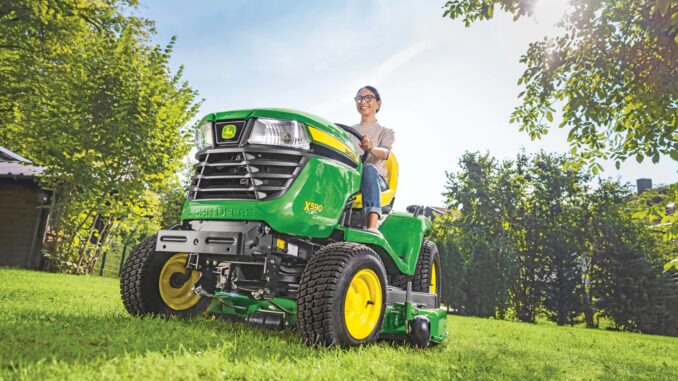
The John Deere X380 is a Select Series lawn tractor built for homeowners who want more capability than an entry-level riding mower, especially if they are mowing larger properties, dealing with uneven ground, or using compatible attachments through the season. This guide covers practical John Deere X380 repair topics, symptom-based troubleshooting, routine maintenance, parts identification, and a large FAQ written for DIY owners in the USA and Canada.
The X380 sits in the same family as other John Deere Select Series machines and is commonly found with 48-inch or 54-inch mower decks, hydrostatic foot-pedal control, and the service access owners expect for regular home maintenance. For most owners, the real value of a John Deere X380 repair, troubleshooting and maintenance guide is knowing which problems are realistic to handle at home and which ones are better left to a dealer before costs climb.
John Deere X380 overview
The John Deere X380 is part of Deere’s Select Series tractor lineup, which places it above basic D100-style lawn tractors and into the category of machines intended for more frequent use, longer service life, and stronger owner maintenance support. Deere’s official operator documentation groups the X380 with models such as the X350, X354, and X370, which confirms that it shares many core service procedures and safety checks with the broader Select Series family.
For troubleshooting purposes, the key systems on the John Deere X380 are the engine and fuel system, mower deck and belt drive, hydrostatic travel system, steering and chassis, and the electrical and interlock system. Common service parts owners regularly buy for this model include the fuel filter AM116304, engine oil filter AM125424, spark plug M805853, foam air filter MIU12554, paper air filter MIU12555, traction drive belt M144044, mower primary belt M169485, mower secondary belts M169486 or M169500 depending on deck setup, and battery TY25221.
John Deere X380 troubleshooting approach
The best way to diagnose a John Deere X380 is to start with the exact symptom the owner sees rather than guessing at parts. A mower that cranks slowly, a deck that cuts unevenly, or a tractor that suddenly loses drive each point toward different systems, so the first step is always narrowing the symptom before spending money.
For the John Deere X380, the main symptom groups are starting problems, poor running, weak or uneven cutting, vibration and unusual noise, overheating or smell issues, drive and traction faults, and electrical or safety-switch problems. Deere’s manual also separates troubleshooting into engine, electrical, machine, and mower sections, which is a useful way to organize DIY diagnosis.
John Deere X380 immediate repair needs
Some John Deere X380 faults should be handled immediately because they can make the tractor unsafe or can quickly damage more expensive components. If the machine develops severe vibration, fuel leakage, hot-smelling belts, weak braking, repeated fuse failure, or a deck issue that risks blade contact or thrown debris, stop using it until the cause is confirmed.
Starting issues on the John Deere X380
If the X380 will not crank, only clicks, or starts and dies, the problem matters because repeated cranking can drain the battery and can hide a failing interlock, ignition, fuel, or charging issue.
Common causes:
-
Weak or failing battery.
-
Dirty or loose battery terminals.
-
Bad fuel or restricted fuel flow through the filter AM116304.
-
Fouled spark plug M805853.
-
Safety switch faults at the seat, brake, or PTO circuit.
-
Dirty air cleaner elements MIU12554 and MIU12555.
Basic owner checks:
-
Confirm the PTO is off, the brake is fully set, and the operator position matches Deere’s safety-start conditions.
-
Inspect battery terminals for corrosion and make sure the cables are tight.
-
Check fuel age, fuel level, and whether fuel reaches the filter and carburetion system normally.
-
Remove and inspect the spark plug for fouling, heavy carbon, or fuel wetting.
-
Clean or replace air cleaner elements if they are dirty enough to affect airflow.
John Deere X380 cut-quality problems
Poor cut quality on a John Deere X380 usually shows up as stragglers, scalping, ridges, clumping, or an uneven finish, and it matters because many owners replace parts too early when the real cause is setup or blade condition. Deere’s manual specifically includes deck level checks, mower wheel adjustment, blade inspection, and blade service because these are the first places to look.
Common causes:
-
Dull, bent, or unbalanced blades.
-
Deck not level side-to-side or front-to-rear.
-
Wrong blade type for discharge, bagging, or mulching conditions.
-
Worn or slipping mower belt.
-
Grass buildup under the deck.
-
Ground speed too fast for grass height or moisture.
Basic owner checks:
-
Clean the underside of the deck after parking safely and disabling the machine.
-
Inspect blades for edge wear, bends, cracks, and balance issues.
-
Check deck level and anti-scalp wheel adjustment to Deere specification.
-
Inspect the primary and secondary mower belts for glazing, cracking, or loss of tension.
-
Slow travel speed and retest before assuming a mechanical failure.
Vibration and noise
New vibration, rattling, or rumbling on the John Deere X380 should never be ignored because blade, pulley, spindle, and belt problems can worsen very quickly. Severe vibration is also a safety issue if it points to bent blades or loose hardware.
Common causes:
-
Bent or damaged mower blade.
-
Unbalanced blade after sharpening.
-
Debris wrapped around spindle or pulley areas.
-
Worn belt or idler components.
-
Loose wheel or deck hardware.
Basic owner checks:
-
Shut the machine down immediately and inspect the deck area.
-
Check blades for bends, cracks, and uneven wear.
-
Look for packed grass, rope, or wire around deck pulleys and spindles.
-
Inspect visible hardware at the deck, wheels, and shields.
-
If vibration remains after blade service, move toward spindle or dealer-level diagnosis.
John Deere X380 overheating and leak symptoms
An overheated X380 may smell hot, lose power, or collect debris around the engine area, and those warning signs matter because Deere specifically instructs owners to clean the air intake screen, engine fins, and shroud to maintain cooling. Fuel or oil leaks also need immediate attention because they can create fire risk or lead to engine damage.
Common causes:
-
Blocked air intake screen or cooling fins.
-
Oil level problems or missed oil service.
-
Fuel seepage at lines or filter connections.
-
Heavy grass and debris buildup near hot surfaces.
-
Operating in extreme heat or dust without increased service frequency.
Basic owner checks:
-
Stop mowing and let the engine cool before touching shrouds or engine areas.
-
Remove grass and debris from the intake screen and cooling areas.
-
Check for wetness around the fuel filter, fuel line joints, and engine base.
-
Verify engine oil level and service history.
-
Do not continue using the machine if an active fuel leak is present.
Transmission and drive problems
If the John Deere X380 becomes weak on hills, hesitates, or loses ground speed, the first concern is whether the issue is traction, belt drive, linkage, or hydrostatic system behavior. Owners often blame the transmission first, but a worn traction drive belt M144044 or incorrect operating condition can create similar symptoms.
Common causes:
-
Worn traction drive belt M144044.
-
Linkage or pedal issues.
-
Low efficiency from age, heat, or heavy use.
-
Tire pressure differences affecting traction and straight tracking.
-
Braking system drag.
Basic owner checks:
-
Confirm tire pressures are even and within Deere guidance.
-
Inspect for belt wear, glazing, or contamination on the traction drive belt.
-
Make sure the parking brake is fully releasing.
-
Check pedal movement and return action for binding.
-
If drive remains weak after these checks, hydrostatic diagnosis is usually dealer territory.
Electrical and safety-switch faults
Electrical issues on the John Deere X380 often appear as no-crank symptoms, random shutdowns, dead lights, or repeated blown fuses. Because the machine uses multiple safety circuits, an intermittent switch problem can look like a starter or ignition problem when it is really an interlock issue.
Common causes:
-
Weak battery or poor cable connection.
-
Failed fuse or corroded fuse contact.
-
PTO, brake, or seat switch faults.
-
Ignition switch problems; aftermarket parts listings commonly identify AM133597 as a frequent replacement item for this platform.
-
Charging or wiring damage.
Basic owner checks:
-
Test the obvious first: battery charge, terminals, and fuse condition.
-
Verify headlights and dash behavior when the key is turned.
-
Follow Deere’s safety-system test routine rather than bypassing switches.
-
Inspect visible wiring near the battery, under the seat, and around moving linkages.
-
If the fault is intermittent, document the exact condition when it happens before ordering parts.
Summary:
Most common X380 problems
The factory-style troubleshooting information especially highlights worn or damaged attachment and traction belts, debris in sheaves, low hydrostatic-oil level, an engaged freewheel lever, and linkage adjustment as causes of drive complaints. It also identifies deck cleanliness, correct belt tension/routing, sharp balanced blades, equal tyre pressure, deck levelling, and suitable mowing speed as key factors behind mowing-quality faults.greenfarmparts
Deck and cut-quality issues
For an X380 that leaves strips, scalps, or cuts unevenly, start with the basics before buying parts:
-
Inflate all tyres to the specified pressure; unequal tyre height changes deck attitude.
-
Clean compacted grass from under the deck and around the pulleys.
-
Inspect blades for dull edges, bends, cracks, or unequal wear.
-
Check that the deck is level side-to-side and correctly pitched front-to-rear per the operator’s manual.
-
Inspect the deck belt for glazing, cracking, missing chunks, or a loose fit.
-
With the key removed, rotate each blade/spindle by hand. Roughness, noise, side play, or binding means the spindle needs attention.
A 54-inch deck naturally has more blade, spindle, and belt load than the 48-inch version, so regular inspection matters more, particularly if mowing rough ground or tall grass.tractoriron
Drive and hill complaints
The X380 uses a hydrostatic transmission, so a little hydro whine under load can be normal. What is not normal is a sudden loss of drive, repeated slipping, strong burning-belt smell, or a tractor that used to climb an incline but now will not.
Before suspecting an expensive transmission failure, inspect:
-
Traction-drive belt condition and tension.
-
Idler pulleys for free rotation and intact bearings.
-
Debris, oil, or grass contamination in belt and pulley areas.
-
Parking-brake operation.
-
The freewheel/tow valve position.
-
Transmission cooling cleanliness and service condition.
Reports specifically associate uphill struggles with drive-belt slip and transmission strain, so use the X380 conservatively on sustained steep slopes—especially while hauling a cart or operating a heavy attachment.justanswer
Avoidable failures
The most useful preventative routine is simple:
-
Use fresh fuel and avoid leaving ethanol-blend petrol in the machine for long storage periods.
-
Check engine oil before mowing and maintain the air filter/cooling screens.
-
Mow at full engine speed but reduce ground speed in dense, wet, or tall grass.
-
Clean the deck after mowing, especially around spindles, idlers, and discharge areas.
-
Inspect both deck and traction belts every few mowing sessions during peak season.
-
Replace blades as a matched set and balance sharpened blades.
-
Do not pressure-wash directly into spindle bearings, electrical connectors, or transmission areas.
-
Investigate new vibration, belt squeal, repeated blown fuses, or worsening hill performance promptly.
When to stop using it
Stop and diagnose before further use if you have:
-
A persistent heavy vibration.
-
Smoke or a burning-rubber smell from the belt area.
-
A deck spindle that is hot, noisy, loose, or hard to turn.
-
Hydrostatic drive that suddenly fades after warming up.
-
A PTO clutch that will not disengage.
-
Fuel leakage, electrical burning smell, or repeatedly dead battery.
Those symptoms can turn a straightforward belt, blade, bearing, or wiring repair into a more costly deck, clutch, or transmission job if the tractor is kept in service.
John Deere X380 transmission fluid change interval
The John Deere X380’s transmission is a sealed component, so John Deere does not specify a routine transmission-fluid or filter-change interval for this model. In normal service, there is no scheduled transmission-oil maintenance; if it develops a drive or transmission problem, John Deere’s guidance is to have it assessed by an authorised dealer.scribd
X380 transmission schedule
The important distinction is that the operator-manual material separates the X380 and X384 from the X370, X390, and X394: it states that the X330, X350, X354, X380, and X384 transmission is sealed and requires no maintenance. The more serviceable models use John Deere Low Viscosity HY-GARD meeting J20D, but that instruction does not create a fluid-change interval for the X380.manuals.deere+1
Avoid conflicting schedules
You may find aftermarket parts sites claiming that the X380 transmission oil and filter should be changed at 50 hours, annually, or every 200 hours. Those schedules conflict with the X380 operator-manual guidance and appear to mix the service requirements for the X370/X390/X394 with the sealed-transmission X380.scribd+1
What to do instead
Maintain the parts around the sealed transmission rather than attempting a routine fluid change:
-
Keep the transmission and its cooling area free of grass, dirt, and debris.
-
Inspect the traction-drive belt, idler pulleys, and linkage for wear, contamination, and proper operation.
-
Confirm the parking brake fully releases and the freewheel/tow bypass is fully disengaged before diagnosing a “weak transmission.”
-
Avoid prolonged heavy towing or steep-hill work, which can overheat or overload a residential hydrostatic transaxle.
-
Arrange dealer diagnosis if the mower loses drive after warming up, repeatedly struggles on inclines, makes abnormal hydrostatic noises, leaks oil, or has a burnt-oil smell.
Do not drill, tap, or try to force a fluid-extraction routine into the X380 transmission simply because a fill-looking cap is visible; that can introduce contamination or damage a sealed unit.
How to check transmission drive belt on John Deere X380
John Deere X380 transmission drive slip symptoms
On a John Deere X380, “transmission slip” often feels like a hydrostatic-transmission fault, but it is frequently caused first by the external traction drive belt, its tensioner/idlers, brake drag, or the freewheel bypass position. The useful clue is whether engine RPM rises while ground speed drops, particularly under load or on an incline.manuals.deere+1
Typical symptoms
John Deere troubleshooting material identifies a locked parking brake, a traction belt requiring attention, and an incompletely returned freewheel lever as direct causes when a tractor will not move. It also lists a worn or damaged traction-drive belt among likely causes of excess vibration or rattle.manuals.deere
Belt slip versus transaxle fault
A slipping V-belt commonly produces heat, glazing/burn marks, cover wear, and sometimes breakage; Deere notes that overload can also cause slip even when apparent belt tension is acceptable. Do not use belt dressing as a “fix,” because it can deteriorate the belt.jdparts.deere
Quick diagnostic order
-
Confirm the simple controls: PTO off, parking brake fully released, and the freewheel/tow-bypass lever fully in the normal drive position.
-
Test without a heavy load: On level ground, with the engine fully warmed up, compare forward and reverse response. Then repeat gently on an incline. A drive system that loses performance only with load is more likely exposing belt slip or a weakening hydrostatic system.
-
Inspect the traction belt with engine off: Look for glazing, cracks, fraying, missing material, contamination, black dust, or a belt running abnormally low in a pulley.
-
Inspect tensioner and idlers: The X380 traction belt is self-adjusted. The tensioner should move against spring pressure and return smoothly; idlers should spin freely without noise, wobble, or roughness. A seized idler can make a good belt slip and overheat.
-
Clear debris: Remove grass and dirt from drive sheaves, pulley grooves, belt guides, and around the transaxle cooling area.
-
Check for brake drag: With the tractor safely lifted or pushed on level ground as appropriate, verify that the parking-brake mechanism fully releases. A dragging brake can imitate a failing transmission.
-
Escalate only after external checks: If the belt, tensioner, idlers, brake, bypass control, and linkage are sound, but drive consistently fades after warm-up or cannot pull modest slopes, arrange dealer diagnosis of the sealed transaxle.
Important distinction
The X380’s sealed transmission has no normal scheduled fluid-change routine. Therefore, if it is losing drive, changing fluid is not the first or specified repair; start with the traction-drive system and controls, then diagnose the transaxle if those checks pass.
How to replace John Deere X380 traction drive belt
Replace the X380 traction drive belt only with the engine off, key removed, and mower deck drive belt removed. The traction belt is spring-tensioned and self-adjusting—do not attempt to set belt tension manually.manuals.deere
Parts and tools
For the X380, John Deere’s replacement-parts guide lists the traction drive belt as:
Confirm the exact belt against your tractor’s serial number before ordering, especially if the machine has been modified or a previous belt may be incorrect.deere
You will need:
-
Safety glasses.
-
Gloves.
-
A 1/2-inch-drive ratchet extension or breaker-bar extension.
-
Basic hand tools to remove any guards as required.
-
A torch/work light.
-
The mower deck removal tools appropriate to your deck setup.
Preparation
-
Park the X380 on a firm, level surface.
-
Disengage the mower PTO.
-
Move the throttle to slow/idle, switch off the engine, remove the key, and wait for all moving parts to stop.
-
Set the parking brake and allow hot exhaust and engine parts to cool.
-
Remove the mower deck belt and mower deck for clear access to the traction-drive system.
-
Photograph the existing belt routing before removal if it is still in place. This gives you a useful reference for checking that the new belt is seated correctly.
The mower deck belt/deck must be removed first in Deere’s traction-belt replacement procedure.manuals.deere
Belt removal
-
Locate the spring-loaded tensioner arm in the traction-drive belt system.
-
Put the 1/2-inch-drive extension into the square hole in the tensioner arm.
-
Rotate the tensioner arm clockwise to relieve tension from the traction drive belt.
-
Hold the tensioner securely in the released position, then remove the belt from the traction/clutch pulley.
-
Slowly allow the tensioner arm to rotate back counter-clockwise. Do not let it snap back—the spring stores significant energy.
-
Remove the old belt from the two transmission drive sheaves and the idler pulley.
Deere specifically warns that the parts are installed under spring tension, so wear eye protection and control the tensioner with the correct tool.manuals.deere
Inspect before fitting
Before installing the new belt, check:
-
The tensioner arm moves smoothly and returns firmly under spring force.
-
Idler pulleys spin freely, quietly, and without wobble or roughness.
-
The transmission sheaves and clutch pulley are clean and undamaged.
-
No grass, old belt cords, mud, oil, or grease is trapped in pulley grooves.
-
The belt guide beside the clutch pulley is not bent or rubbing the pulley.
-
The parking-brake linkage fully releases.
Replace a seized idler, weak/broken tensioner, damaged pulley, or bent belt guide now. A new belt will otherwise quickly glaze, burn, jump off, or wear prematurely.
Fit the new belt
-
Route the new belt over the transmission drive sheaves and idler pulley, following the original/factory routing.
-
Make certain the belt sits fully in each pulley groove—not on a pulley flange, belt guide, or the edge of a sheave.
-
Rotate the tensioner arm clockwise again with the 1/2-inch-drive extension.
-
Slip the belt over the traction/clutch pulley.
-
Slowly release the tensioner arm so it applies its spring tension to the belt.
-
Check the complete route again, turning pulleys by hand only if safe and practical, to verify that the belt tracks centrally and has not twisted.
-
Check the clearance between the clutch-pulley belt guide and pulley: it should be 3.2 mm (1/8 inch). If not, loosen the belt-guide bolt, position the guide to the required clearance, then retighten it.manuals.deere
Reassemble and test
-
Reinstall the mower deck and mower deck drive belt.
-
Confirm all guards and hardware are back in place.
-
Start the tractor in a clear, open area.
-
With the PTO off, test forward and reverse at low speed first.
-
Check for belt squeal, jerky movement, vibration, burning-rubber smell, or a belt that walks out of a pulley.
-
After a short test drive, switch off, remove the key, and recheck belt tracking.
A correctly installed traction belt should provide smooth response in both directions with no manual tension adjustment. If it still slips, loses drive on hills, or makes noise, look next at the tensioner spring, idler bearings, clutch-pulley/belt-guide alignment, brake drag, and freewheel bypass position rather than tightening the belt.
Hydrostatic drive feels weak or struggles uphill
A weak X380 hydrostatic drive is usually most noticeable as reduced ground speed under load: it may crawl uphill, hesitate in reverse, or lose pulling power after mowing for a while even though the engine continues to run normally. First rule out the belt, brake, bypass/freewheel control, cooling blockage, and traction before suspecting the sealed transaxle itself.agandturf.unitedequip+1
Recognise the pattern
The strongest warning pattern is: good cold performance, then progressive weakness after warm-up, especially uphill or in reverse, followed by improvement after cooling. Once external causes are eliminated, that is consistent with heat-related hydrostatic fade under load.causeandfix
Checks in the right order
1. Eliminate a control setting issue
At the rear hitch area, make sure the freewheel/tow-bypass valve control is completely returned to its normal drive position. The control is located near the rear hitch plate specifically for easy access. If it is partly engaged, the tractor can feel as if the transmission has failed or is slipping.agandturf.unitedequip
Also make sure:
-
The parking brake is fully released.
-
The parking-brake linkage is not sticking or holding a rear brake partly on.
-
The forward/reverse pedal returns smoothly.
-
There is no obstruction around pedals or linkage.
2. Check whether it is actually belt slip
With the engine off and key removed, inspect the traction drive belt throughout its run.
Look for:
-
Glazing: a polished/shiny belt surface.
-
Black rubber dust around pulleys or the frame.
-
Cracks, frayed edges, missing chunks, or exposed cords.
-
Oil, grease, fuel, or wet grass contamination.
-
A belt running low in the pulley, visibly slack, or misaligned.
-
Burnt-rubber odour after a hill climb or towing.
-
Belt debris wrapped around a pulley.
Then inspect the tensioner arm and idler pulleys:
-
The tensioner must move against spring force and return positively.
-
Each idler must turn freely, quietly, and without wobble.
-
Pulley grooves must be clean and undamaged.
-
Belt guides must not be bent or rubbing the belt.
The X380 traction belt is self-adjusting; a slack or slipping belt points to belt wear, incorrect routing, contamination, a weak tensioner, or a faulty idler—not a normal adjustment requirement.manuals.deere
3. Check cooling and overheating
The transaxle has to shed heat while transmitting power. Packed grass, dust, oily dirt, or a damaged cooling fan can make drive fade after warm-up.
With the engine cold and off:
-
Remove grass and debris from the transmission housing, cooling fins, and air passages.
-
Inspect the cooling fan on/near the transaxle for missing, cracked, or damaged blades.
-
Look for oil leakage around the transaxle case and axle seals.
-
Do not pressure-wash directly at seals, cooling openings, or electrical components.
If the mower is markedly better after a 20–40 minute cool-down, heat is a meaningful diagnostic clue—not a repair by itself.causeandfix
4. Confirm the load is realistic
A mower that only struggles during certain tasks may be overloaded rather than defective. Test it in stages:
-
Drive it on level, dry ground without a trailer.
-
Drive the same route after the machine is fully warmed up.
-
Try a modest incline with the deck disengaged.
-
Repeat with the deck engaged and mowing light, dry grass.
-
Avoid testing on a hazardous slope or turning across a slope.
If it is normal unloaded but loses ground speed only while mowing dense/wet grass or towing, first lower ground speed, keep engine RPM at mowing speed, clean the deck, and reduce load. The X380 is a homeowner lawn tractor designed for light-to-moderate property work rather than sustained heavy towing or extreme hill use.deere
What the results mean
Avoid these mistakes
-
Do not tighten the traction belt manually or fit a random shorter belt.
-
Do not assume a fluid change is the correct first repair: the X380 has a sealed transmission with no routine fluid-change interval.
-
Do not use belt dressing to stop squeal; it can mask the cause and damage the belt.
-
Do not keep forcing it uphill while the belt is slipping—this can rapidly overheat and destroy a belt, idler, pulley, or tensioner.
-
Do not mow sideways across slopes; loss of traction or control is a rollover risk.
Practical example
If the X380 pulls normally for the first 10 minutes, then slows badly on the same incline after 30 minutes, inspect the traction belt and idlers first. If they are dry, correctly routed, and in good condition; the brake is free; the bypass lever is fully engaged; and the transaxle is clean with an intact fan, the repeated hot-only hill weakness points more strongly to heat-related internal hydrostatic wear rather than an adjustment fault.
Signs of internal wear in a K46 or K62 hydrostatic transaxle
The clearest sign of internal wear in a Tuff Torq K46 or K62 is heat-related loss of drive: the tractor moves and pulls normally when cold, then becomes weak—often first on hills—after the transaxle warms up. This happens as hot, thinning oil leaks internally across worn hydraulic surfaces instead of transferring pressure to the drive motor. Tuff Torq says power loss becomes common above about 90°C / 195°F because oil viscosity drops and internal leakage rises.tufftorq
External faults first
Before treating it as an internal-transaxle failure, confirm:
-
The freewheel/tow-bypass lever is fully in the drive position.
-
Parking brake and linkage fully release.
-
The traction drive belt is intact, correctly routed, clean, and not glazed.
-
The belt tensioner and idler pulleys work correctly.
-
The engine is at full governed speed during a test.
-
The transaxle cooling fan, fins, and surrounding area are clean and undamaged.
-
Rear wheel hubs/keys are not slipping on the axle.
-
Pedal/cable linkage moves the transaxle control arm fully and without excessive play.
A belt can squeal, smell of burnt rubber, produce black dust, or slip intermittently. Internal hydraulic wear usually does not create those belt-specific signs. Tuff Torq recommends inspecting linkage slack and the input pulley/shaft before opening the transmission.tufftorq
Characteristic symptoms
The diagnostic pattern matters more than any single symptom. A tractor that becomes weak only after warming up, then regains power after sitting, is much more suggestive of hydrostatic heat fade/internal wear than a sudden belt failure.tufftorq+1
What wears internally
Both K46 and K62 units use a hydrostatic pump-and-motor system. Typical wear areas include:
-
Centre case / port plate surfaces: The flat hydraulic sealing faces that route pressurised oil through the “kidney”-shaped ports.
-
Pump and motor cylinder blocks: Their mating faces run against the centre case and must remain extremely smooth.
-
Pistons and springs: Wear, damage, or loss of proper contact reduces pumping efficiency.
-
Bypass-valve components: A worn, stuck, or partly unseated bypass can dump pressure internally.
-
Swash-plate, motor-housing, and bearing areas: Wear here can cause poor control response, noise, and damage progression.
Tuff Torq’s own repair guidance says to inspect the surfaces between the kidney ports on both cylinder blocks and the centre case. Scoring or scratches that can be felt with a fingernail allow high-pressure oil to escape, reducing output pressure and traction. It also says the usual K46 wear is found on the centre-case faces where the cylinder blocks rotate.tufftorq+1
K46 versus K62
A K62 is generally the more robust unit, but its higher capacity does not make it immune to contaminated oil, cooling loss, bypass problems, or worn rotating hydraulic components.
Confirming the diagnosis
A sensible escalation path is:
-
Test the tractor cold on a known modest incline, at full engine speed, without towing.
-
Repeat the same test after 20–40 minutes of typical use.
-
Inspect belt, tensioner, pulleys, brake, bypass control, cooling fan, and linkage with the engine off.
-
If the machine has a serviceable transaxle arrangement, inspect fluid condition and the magnet for metallic debris.
-
If it must be opened, inspect the centre case and both cylinder blocks—not just one component.
If the magnet is heavily covered in metal filings, Tuff Torq treats that as an indicator for further internal diagnosis. Where wear exists, it advises replacing the centre case plus both cylinder-block assemblies, including new pistons and springs as applicable; replacing only one visibly worn component often leads to a rapid repeat failure because damaged surfaces have already worn their mating parts.tufftorq
Repair implications
-
K46: On an older residential mower, compare the cost of a repair kit, labour, and a replacement transaxle. A full rotating-group/centre-case repair can be worthwhile for a DIY owner with the correct service documentation and clean assembly conditions, but it is not a casual repair.
-
K62: Repair is often more economically attractive because the unit is heavier-duty and its replacement cost may be higher.
-
Upgrade: A transaxle upgrade is only viable where the chassis, mounts, pulley/input arrangement, axle dimensions, brake arrangement, and linkage are compatible. Never assume a K62 is a direct bolt-in substitute for a K46.
Hydrostatic units are exceptionally sensitive to cleanliness: any dirt left in the case can damage a rebuilt unit quickly. Tuff Torq stresses thoroughly cleaning and flushing units during repair work.
DIY or dealer work on a John Deere X380
For the John Deere X380, the normal DIY line is routine service, blade work, filter replacement, spark plug replacement, belt inspection, battery service, and deck setup. Once the job involves internal engine work, persistent electrical diagnosis, hydrostatic drive faults, major steering wear, or repeated belt failures caused by hidden alignment issues, dealer-level tools and experience usually save time and money.
Good DIY jobs
-
Engine oil and oil filter replacement using AM125424.
-
Fuel filter replacement using AM116304.
-
Air cleaner foam and paper element service using MIU12554 and MIU12555.
-
Spark plug inspection and replacement using M805853.
-
Blade removal, sharpening, balancing, and replacement.
-
Deck cleaning, deck level adjustment, and anti-scalp wheel adjustment.
-
Battery cleaning or replacement using TY25221 where cross-reference is confirmed.
Advanced DIY or dealer jobs
-
Replacing mower belts if access, routing, or pulley condition is unclear.
-
Traction drive belt replacement M144044.
-
Intermittent electrical troubleshooting involving switches, solenoids, or harness faults.
-
Spindle, bearing, steering, or brake diagnosis.
-
Any hydrostatic drive performance issue that remains after basic belt and linkage checks.
Skill level guide
-
Beginner: Oil and filter changes, air filter service, spark plug replacement, battery cleaning, blade inspection.
-
Intermediate: Blade sharpening and balancing, deck leveling, fuel filter replacement, basic mower belt replacement.
-
Advanced: Electrical diagnosis, traction drive belt work, spindle or steering repairs, complex vibration tracing.
John Deere X380 parts, part numbers and fit checks
Before ordering John Deere X380 parts, gather the full model name, the tractor Product Identification Number, the engine model and serial information, and the exact mower deck size or attachment version. This matters because the X380 can be paired with different deck configurations, and the correct secondary belt and blade choice can change with deck size and cutting setup.
OEM parts are the safest choice for belts, ignition and safety-switch items, deck-fit-sensitive components, and any part where routing, tension, or safety function matters. Aftermarket parts can make sense for batteries, certain filters, and some blades, but only if the cross-reference clearly matches the exact X380 deck and engine setup.
Manuals and diagrams for the John Deere X380
These sources are the most useful starting points when working on a John Deere X380.
-
Official operator’s manual for safety, controls, service intervals, blade service, deck leveling, storage, and troubleshooting charts.
-
John Deere Owner Support for model support entry points, manual access, and owner resources.
-
Green Farm Parts X380 maintenance guide for quick reference service parts and commonly purchased repair items.
-
X380 parts diagrams page for diagram-based part lookup by assembly, especially useful when confirming belt and deck component layouts.
How to find John Deere X380 identification numbers
The right numbers matter because many John Deere X380 repair parts are serial-sensitive, deck-sensitive, or engine-specific. Taking one clear photo of each identification label before ordering parts can prevent expensive returns.
-
Park the tractor safely on a level surface, shut it off, remove the key, and let hot parts cool.
-
Find the tractor Product Identification Number label on the machine frame area identified in Deere’s product identification section.
-
Confirm the mower deck identification from the deck tag or deck identification area before ordering blades, spindle parts, or deck belts.
-
Locate the engine model and serial label on the engine itself before ordering ignition or air-intake-related service items.
-
Record the exact deck size and any installed mulch kit or accessory that could change blade or belt selection.
Buying John Deere X380 parts online and locally
The best buying strategy is to start with the OEM number, then verify that number against your tractor PIN, engine details, and mower deck configuration before you purchase. That approach matters more than the seller, because the wrong belt or blade set is one of the most common causes of wasted money and repeat downtime.
-
Online: best for price checking, part-number cross-reference, and assembling a full service order in one go; use John Deere Owner Support, Green Farm Parts, and Deere parts diagrams at GHS.
-
Dealer counter: best for PIN-sensitive parts, wiring pieces, safety switches, deck hardware, and troubleshooting odd supersessions.
-
Retail stores: acceptable for engine oil, some batteries, spark plugs, and common filters if the packaging clearly matches the OEM number or a verified cross-reference.
John Deere X380 fitting guide for common parts
These are some of the highest-value DIY jobs on the John Deere X380 because they directly affect starting reliability, running quality, and cut performance.
Replace the fuel filter on a John Deere X380
A fresh fuel filter often fixes fuel starvation, surging, or no-start complaints caused by restricted flow.
-
Park safely, remove the key, and let the engine cool fully.
-
Clamp or control fuel flow if needed, then note the filter direction before removal.
-
Remove the old AM116304 filter and inspect the fuel line condition at the same time.
-
Install the new filter in the correct flow direction and secure the clamps properly.
-
Check carefully for leaks before restarting the tractor.
Service the air filter elements on the John Deere X380
Air filter service helps prevent hard starting, black smoke, rich running, and power loss.
-
Open the air cleaner housing following the engine service section in the operator’s manual.
-
Remove the foam pre-cleaner MIU12554 and paper element MIU12555.
-
Clean the housing area gently so loose dirt does not fall into the intake.
-
Replace dirty or damaged elements rather than trying to reuse them too long.
-
Reassemble the housing securely so no unfiltered air can bypass the element.
Change the spark plug on a John Deere X380
A new spark plug can help with hard starting, rough idle, and misfire symptoms.
-
Let the engine cool and pull the spark plug boot carefully.
-
Remove the old M805853 plug and inspect it for soot, oil, or a fuel-wet tip.
-
Compare the old plug condition with the running symptom before fitting a new one.
-
Install the replacement plug to the correct snug fit and reconnect the boot fully.
-
Restart and confirm smoother starting and idle quality.
Replace or service blades on the John Deere X380
Blade service restores cut quality and reduces vibration when the cutting edge is dull but the blade is otherwise sound.
-
Park safely and disable the machine before working around the deck.
-
Remove the blades and inspect for bends, cracks, severe thinning, or impact damage.
-
Sharpen only if the blades are structurally sound, then balance them before reinstalling.
-
Replace with the correct blade type for your deck and mowing setup, such as M145476, M143520, M127673, or M177791 where applicable.
-
Test mow a small area and recheck for vibration or uneven cut after installation.
Inspect or replace mower belts on the John Deere X380
Deck belts matter because slipping or stretched belts can mimic spindle or blade problems by reducing blade speed.
-
Remove the necessary shields and inspect belt routing before disassembly.
-
Check the primary belt M169485 and the correct secondary belt option for glazing, cracking, or edge wear.
-
Inspect pulleys and idlers while the belt is off so a new belt is not fitted over damaged hardware.
-
Route the replacement belt exactly as shown in the deck-specific diagram and reinstall guards.
-
Engage the PTO briefly and watch for smooth tracking without chatter or twist.
John Deere X380 maintenance to prevent repeat failures
Most recurring John Deere X380 problems trace back to missed maintenance, debris buildup, or delayed belt and blade service rather than sudden catastrophic failure. Owners who keep the deck clean, maintain airflow around the engine, and replace tune-up parts on schedule usually avoid the most common no-start and poor-cut complaints.
Focus areas:
-
Starting reliability: Keep the battery clean, fuel fresh, filters serviceable, and the spark plug in good condition.
-
Cut quality: Inspect blade condition, blade balance, deck level, and belt condition regularly.
-
Fire and overheating prevention: Clean the air intake screen, engine fins, shroud areas, and grass-packed zones often.
-
Drive performance: Watch traction belt wear, tire pressure, and brake release condition.
-
Electrical reliability: Keep terminals clean and follow Deere’s safety-system tests rather than bypassing switches.
John Deere X380 maintenance schedule
Deere’s operator documentation is the main reference for the X380 maintenance schedule, including daily checks, periodic service, and storage preparation. If the tractor works in heavy dust, extreme heat, or rough terrain, maintenance frequency should increase.
Daily or before each use
-
Review the daily operating checklist.
-
Check engine oil level.
-
Test the safety systems when needed, including brake, PTO, seat, and RIO functions.
-
Inspect for loose hardware, leaks, and debris buildup around hot areas.
-
Check tire condition and general machine condition before mowing.
After the first 8 hours
-
Check wheel hardware and general fastener security after early use.
-
Reinspect belt areas and deck setup if the machine is new to you or recently serviced.
Every 25 hours
-
Lubricate pivot points and other listed grease points.
-
Clean air intake areas and inspect the air cleaner elements.
-
Check mower blades and underside deck cleanliness.
-
Verify mower deck level and anti-scalp wheel setup if cut quality changes.
Every 50 hours or yearly
-
Replace or inspect engine oil and filter according to Deere’s chart and operating conditions.
-
Replace the fuel filter if due or if running issues suggest restriction.
-
Inspect the spark plug and replace if worn or fouled.
-
Clean the battery and terminals and inspect the fuse condition.
Every 100 to 200 hours
-
Change engine oil and filter at the interval listed for the X380 service parts guide, depending on schedule and conditions.
-
Replace key tune-up items that have reached service limit rather than stretching them into another season.
Seasonal checklist
-
Spring: Change oil if due, service filters, inspect battery condition, sharpen blades, and level the deck.
-
Mid-season: Clean cooling areas, inspect belts, check blade balance, and monitor tire pressures.
-
Fall or storage prep: Follow Deere’s storage steps, prepare the fuel system, clean the machine thoroughly, and address worn parts before winter downtime.
Repair, upgrade or replace a John Deere X380?
For most owners, a John Deere X380 is worth repairing when the tractor is structurally sound and the issue is limited to service parts, blades, belts, switches, battery, or setup-related mowing problems. Upgrade decisions usually make more sense when the machine still runs well but your property, attachment use, or comfort needs have outgrown it, while replacement becomes easier to justify when repeated drive, engine, or structural repairs stack up beyond the tractor’s practical value.
Repair if
-
The issue is a normal wear item such as filters, spark plug, blades, belts, battery, or deck wheels.
-
The tractor starts, steers, and drives well overall, and the fault is isolated.
-
The deck shell, frame, and major systems are still in good condition.
Upgrade if
-
You need features, deck size, traction, or attachment capability beyond what your current setup provides.
-
The X380 still works, but the property or workload has changed enough to justify moving up in the lineup.
Replace if
-
Engine, hydrostatic, and deck problems are all appearing together.
-
The machine has major corrosion, structural damage, or chronic electrical faults.
-
Repair cost is approaching the value of a sound used replacement machine in your market.
John Deere X380 troubleshooting FAQ
1. Why will my John Deere X380 not start?
The most common causes are a weak battery, dirty terminals, bad fuel, a clogged fuel filter, a fouled spark plug, or an interlock problem involving the brake, PTO, or seat switch. Start with the basics before buying parts: confirm the PTO is off, set the brake fully, inspect the battery connections, and check whether the engine is cranking strongly or not. If it cranks well but will not fire, move next to fuel, spark plug, and air filter checks.
2. Why does my John Deere X380 click but not crank?
A click with no crank usually points to low battery voltage, bad battery cable contact, or a starter circuit issue. Corrosion at the terminals can create enough resistance to stop the starter even when the lights still work. Clean and tighten the terminals first, then verify the battery condition before chasing deeper electrical faults.
3. Why does my John Deere X380 start and then die?
That symptom often points to restricted fuel flow, stale fuel, a dirty air filter, or an intermittent safety-switch problem. A partially blocked fuel filter can allow the engine to catch briefly and then starve. Check fuel condition, filter flow, and intake restriction before assuming carburetor trouble.
4. Why is my John Deere X380 hard to start when cold?
Cold-start problems often come from a weak battery, old fuel, a tired spark plug, or intake restriction. If the tractor sits for long periods, fuel quality and battery condition become more important. A basic seasonal tune-up often fixes this complaint without any major repair.
5. Why is my John Deere X380 running rough?
Rough running usually means the engine is getting poor fuel, weak spark, or restricted airflow. Check the plug, fuel filter, and air cleaner elements first because they are common wear items on this model. If those parts are in good condition and the issue remains, deeper engine diagnosis may be needed.
6. Why does my John Deere X380 surge at part throttle?
Surging commonly happens when fuel delivery is inconsistent or airflow is compromised. On a homeowner tractor, stale fuel and partially restricted filtration are frequent causes. Start with the low-cost service items before assuming internal engine adjustment issues.
7. Why does my John Deere X380 backfire when shutting off?
Shutdown backfire can happen when combustion is not ending cleanly, sometimes because of tune, fuel condition, or ignition-related issues. It can also be made worse by irregular maintenance or an engine that is not running cleanly under load. If it becomes frequent, inspect the spark plug, air filter, and fuel quality first.
8. Why is my John Deere X380 losing power while mowing?
Loss of power under load often means dull blades, belt slip, clogged deck airflow, dirty air filtration, or a fuel delivery restriction. Wet or overgrown grass can amplify the problem even if the tractor is mechanically sound. Reduce ground speed and inspect the deck and engine service items before assuming a major fault.
9. Why is the cut uneven on my John Deere X380?
Uneven cutting is usually caused by deck level error, uneven tire pressure, damaged blades, or anti-scalp wheels that are out of adjustment. Deere includes deck leveling and mower wheel adjustment in the operator procedures because these checks solve many quality complaints. Confirm setup before replacing spindle or deck components.
10. Why does my John Deere X380 leave strips of uncut grass?
Strips or stragglers usually point to dull blades, low blade speed from belt slip, or mowing too fast for conditions. Grass buildup under the deck can also disrupt airflow and reduce cut quality. Inspect the blade edges and belt condition before blaming the deck design.
11. Why does my John Deere X380 scalp my lawn?
Scalping often happens when the deck is set too low, the anti-scalp wheels are not adjusted correctly, or the ground is more uneven than the tractor setup allows. It can also happen if one side of the deck is lower than the other. Recheck deck height, wheel setup, and level before mowing rough ground again.
12. Why does wet grass clog the John Deere X380 deck?
Wet grass naturally sticks and clumps more, especially if the underside of the deck already has buildup. Dull blades and slow blade speed make the problem worse because the deck cannot move material efficiently. Clean the deck, sharpen the blades, and reduce travel speed in heavy conditions.
13. Why are my John Deere X380 blades dull so quickly?
Fast blade wear usually comes from sandy soil, sticks, hidden debris, or mowing too low over uneven ground. Blade choice also matters, since mulching and side-discharge blades can wear differently depending on conditions. Frequent inspection is normal if the tractor works in abrasive conditions.
14. How do I know if a John Deere X380 blade is bent?
A bent blade often causes vibration, uneven cut height, or a visibly different blade tip path when the deck is inspected safely. Deere includes a bent-blade inspection procedure because this is a common impact-related problem. Any blade with cracks, major bends, or severe impact damage should be replaced, not straightened.
15. Why does my John Deere X380 vibrate when the PTO is on?
If vibration appears mainly with the PTO engaged, look first at blades, deck pulleys, belt condition, and packed debris in the deck housing. PTO-related vibration often narrows the fault to the mower side rather than the engine or chassis. Stop mowing immediately if the vibration is severe.
16. Why does my John Deere X380 shake all the time?
Constant vibration can come from the mower deck, wheels, loose hardware, or engine-related imbalance. Start by separating whether the tractor shakes only while mowing or also while simply driving. That symptom split helps you decide whether to focus on the deck or the tractor chassis first.
17. Why is there a squealing belt sound on my John Deere X380?
A squeal usually means belt slip, glazing, contamination, or pulley/idler trouble. On the mower side, a worn deck belt can reduce blade speed and create cut-quality complaints at the same time. Inspect the visible belt surfaces and pulley alignment before fitting another belt.
18. How do I know which mower belt my John Deere X380 needs?
The answer depends on the exact deck fitted to your tractor, because the X380 can use different deck configurations and secondary belt listings. Use the tractor identification, deck identification, and parts diagram together before ordering. Guessing from model name alone is risky on belt orders.
19. Why does my John Deere X380 throw a mower belt?
Thrown belts usually mean the belt is worn, routed incorrectly, or running on damaged pulleys, idlers, or shields. A belt that keeps jumping off is often a symptom rather than the root problem. Inspect hardware and routing carefully before installing another belt.
20. Why does my John Deere X380 drive slowly uphill?
Weak uphill performance can come from traction limits, tire-pressure mismatch, belt wear, or hydrostatic efficiency issues. Many owners jump straight to the transmission, but the traction drive belt and operating conditions should be checked first. If the belt and linkage are good and the symptom persists, dealer diagnosis becomes more sensible.
21. Why will my John Deere X380 not move forward or reverse?
No movement can be caused by brake drag, linkage trouble, a failed or badly worn drive belt, or a more serious transmission problem. First confirm the machine is not still partly held by the parking brake and that the travel pedals are moving normally. Then inspect the drive-belt area before assuming internal hydrostatic failure.
22. Why does my John Deere X380 creep when parked?
Creeping can point to brake adjustment, linkage issues, or hydrostatic neutral-related problems. Because this affects safe parking, it should be addressed quickly. Do not rely on habit alone if the machine shows signs of movement after you stop.
23. Why does my John Deere X380 have weak braking?
Weak braking is a safety issue and can be caused by adjustment problems, wear, or related linkage faults. Deere includes park-brake testing in the operating procedures because it is important to verify function, not assume it. If braking remains weak after obvious checks, dealer service is the safer route.
24. Why does my John Deere X380 overheat?
Overheating is commonly caused by blocked cooling airflow, debris packed around the engine, or maintenance that has been stretched too long. Deere specifically calls for cleaning the air intake screen, fins, and shroud areas because grass and dust buildup directly reduce cooling. Stop mowing and clean the engine cooling path before continuing.
25. Why do I smell hot rubber on my John Deere X380?
A hot-rubber smell usually points to belt slip, dragged braking, or debris contacting hot moving parts. On a mower tractor, this often appears before a belt fully fails. Inspect the mower and drive belts promptly and avoid continued operation until the cause is clear.
26. Why is my John Deere X380 leaking fuel?
Fuel leaks often show up around the filter, hose connections, or cap area and should be handled immediately because of fire risk. Even a small seep can spread fuel onto hot surfaces or collect debris. Do not mow again until the leak source is identified and corrected.
27. Why does my John Deere X380 battery keep going flat?
A battery that repeatedly goes flat may be old, undercharged, poorly connected, or affected by a charging or parasitic draw issue. Start with battery age, terminal cleanliness, and how long the machine sits between uses. If the battery and connections are sound, charging-system diagnosis may be needed.
28. Why do the headlights on my John Deere X380 not work?
Headlight failure can be as simple as a blown bulb such as AD2062R, a fuse issue, or a wiring/ignition problem. Because lighting faults can share electrical causes with other symptoms, note whether the rest of the dash and key functions behave normally. Replace the obvious failed bulb first, then move outward into fuse and wiring checks.
29. Why does my John Deere X380 keep blowing a fuse?
Repeated fuse failure usually means a short, damaged wire, or a component that is drawing too much current. Replacing fuses without finding the cause can leave you stranded again quickly. Inspect harness areas that move, rub, or sit near heat before replacing more electrical parts.
30. Why does the seat switch on my John Deere X380 seem faulty?
A bad seat switch can cause shutdowns or no-start conditions that seem random until you notice the exact operating position involved. Deere includes seat-switch testing in the operator procedures because the interlock system must function correctly for safe use. Test the system properly rather than bypassing it.
31. What maintenance matters most on a John Deere X380?
The highest-value maintenance items are engine oil and filter service, fresh fuel management, air filter service, spark plug checks, blade care, deck cleaning, and cooling-area cleanup. These tasks prevent the majority of homeowner complaints involving starting, rough running, poor cut quality, and overheating. Missing them usually costs more than doing them on time.
32. How often should I change oil on a John Deere X380?
Use Deere’s operator documentation and service schedule for the exact interval, with shorter intervals in severe dust, heat, or heavy-use conditions. The commonly referenced X380 service parts guide lists AM125424 and TY22029 in the oil service package and indicates 100/200-hour change guidance depending on schedule. If the tractor is new to you, a baseline oil change is usually smart.
33. How often should I sharpen or replace John Deere X380 blades?
That depends on grass conditions, acreage, soil abrasiveness, and whether the blades are simply dull or actually damaged. Deere’s blade service procedures focus on inspection, sharpening, and balancing, which means condition matters more than a fixed one-size-fits-all date. Replace blades that are bent, cracked, or worn too thin to service safely.
34. Can I use aftermarket parts on a John Deere X380?
Yes, but with limits. Aftermarket can work well for some filters, batteries, and certain blades, but OEM remains the safer choice for belts, safety-related parts, and fit-sensitive components where the wrong dimensions can create new failures. Always cross-reference using the exact tractor and deck information first.
35. Is a John Deere X380 worth fixing?
In many cases, yes, especially when the problem is limited to wear items and the tractor is otherwise solid. The X380 has strong owner support, clear operator documentation, and readily available service parts, which helps keep routine repairs practical. The answer becomes less favorable only when major engine, hydrostatic, and structural issues arrive together.
Comparing John Deere X380 vs X390
The John Deere X380 and X390 are both Select Series lawn tractors that share the same engine, deck size, and transmission, with the primary difference being the steering system. Both models are built for homeowners mowing up to 3.5 acres with varied terrain and light- to moderate-duty yard tasks.
Engine and power
Both tractors use the identical Kawasaki FR691V V-twin engine rated at 23 horsepower (17.2 kW) with 726cc displacement. The iTorque Power System is standard on both models, providing superior lugging ability and performance in tough mulching, mowing, and bagging conditions. They share the same fuel tank capacity of 3.3 gallons (12.5 liters) and include electronic fuel gauges on the dash display.
Steering system
The key difference between the X380 and X390 is the steering configuration. The X380 features Twin Touch forward and reverse foot pedals with four-wheel steering, while the X390 uses power hydraulic two-wheel steering with the same Twin Touch pedal system. The X390’s power steering provides effortless control but requires more wheel turns on tight corners compared to four-wheel steering systems.
Transmission and speed
Both models use the same K58 hydrostatic transmission integrated with the transaxle, offering identical forward speeds of 0-6.2 mph (0-10 km/h). They share Twin Touch foot pedal controls, wet disc brakes, and standard cruise control.
Deck and cutting system
The X380 and X390 both offer 48-inch or 54-inch Accel Deep mower deck options, with the same forged steel construction and dual-stage coating for rust protection. Both are compatible with the optional MulchControl kit with one-touch technology and the same 247-liter rear bagger material collection system. Deck leveling uses the same Exact Adjust ports and onboard deck-leveling gauge on both models.
Dimensions and weight
Both tractors have identical dimensions: 72 inches overall length, 62.5 inches width with mower, and share the same wheelbase of approximately 49 inches. The X380 weighs 536 kg while the X390 is slightly heavier at 540 kg, a difference of only 4 kg.
Additional features
The X390 includes a hydraulic power deck lift system, while the X380 uses a standard manual lift. Both models feature the same 18-inch high-back seat with tilt and spring suspension, 15-inch tilt steering wheel with five positions, under-seat storage, and standard headlights. They also share the same 4-year/300-hour bumper-to-bumper warranty.