
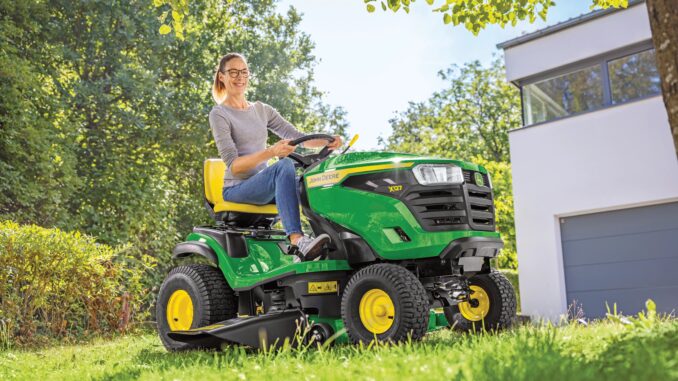
The John Deere X330 is a Select Series lawn tractor aimed at homeowners who want a heavier-duty step up from entry-level riding mowers, with owner support and parts information available directly through John Deere’s support and technical publications systems. This guide is written for USA and Canada owners and covers troubleshooting, maintenance, parts, diagrams, manuals, and realistic DIY repair limits in a practical, symptom-first format.
John Deere X330 overview
The John Deere X330 is a lawn tractor in Deere’s X300 Select Series lineup, and Deere provides dedicated owner-support pages for the model through Shop.Deere.com. Its key owner-service systems are the engine and fuel system, mower deck and blade drive, traction drive, and electrical/safety interlock system, which are the areas most often involved in routine faults and service work.
For most homeowners, the X330 is best suited to regular lawn mowing, seasonal cleanup, and property care where better durability and serviceability matter more than commercial-grade capability. Common service parts owners regularly replace include the fuel filter AM116304, oil filter AM125424, spark plug MIU11020, air filter MIU14395, pre-cleaner MIU14496, traction drive belt M144044, mower drive belt M174994, ignition switch AM133597, and battery TY25221.
General overview of the John Deere X330
In Deere’s residential lineup, the X330 sits above basic lawn tractors and is supported by Deere’s operator-manual, owner-support, and technical-publication channels rather than being treated as a throwaway consumer machine. That matters because repairs on this model often depend on matching the correct model, deck, and serial information before ordering parts.
The most important X330 systems to understand are:
-
Engine and fuel system, because hard starting, surging, and power loss often trace back to fuel flow, air filtration, ignition, or basic service neglect.
-
Mower system, because blades, deck belt, spindle/pulley wear, and deck setup drive cut quality and vibration complaints.
-
Drive system, because traction issues often involve the traction belt or related linkage rather than the engine itself.
-
Electrical system, because safety switches, ignition-switch faults, battery condition, and poor connections can mimic larger failures.
Troubleshooting approach for the John Deere X330
The best way to diagnose a John Deere X330 is to begin with the symptom the owner actually sees: will not start, starts then dies, cuts badly, vibrates, leaks, loses drive, or has intermittent electrical problems. That keeps you from replacing good parts and helps separate simple maintenance issues from dealer-level faults.
Main symptom groups for this model include:
-
Starting issues
-
Running and power issues
-
Cut-quality problems
-
Vibration and noise
-
Overheating and leaks
-
Transmission or drive problems
-
Electrical and safety-switch faults
Emergency repairs on the John Deere X330
Some faults need immediate attention because they create a safety risk or can quickly damage more expensive parts. Stop using the tractor if you have severe vibration, fuel leaks, oil leaks, blades that do not stop correctly, smoke from the engine area, repeated belt throwing, or a machine that moves unpredictably.
1. John Deere X330 starting issues
When an X330 will not crank or will not fire, the root cause is often a weak battery, bad connection, safety interlock issue, dirty fuel delivery component, or overdue ignition/air-service item. Because the electrical and safety systems are designed to prevent unsafe starting, a simple switch issue can look like a major engine problem.
Common causes:
-
Weak or failed battery TY25221.
-
Dirty or restricted fuel filter AM116304.
-
Fouled spark plug MIU11020.
-
Dirty air filter MIU14395 or pre-cleaner MIU14496.
-
Faulty ignition switch AM133597.
Basic checks:
-
Confirm the battery connections are clean and tight.
-
Verify PTO is off and the tractor is in a normal starting condition with all safety interlocks satisfied.
-
Inspect the fuel filter, spark plug, and air-filter elements if service history is unknown.
-
If the engine cranks but still will not start, move from spark, to fuel flow, to stale fuel, before assuming internal engine trouble.
2. John Deere X330 cut-quality problems
Poor cut quality on the X330 usually shows up as uncut streaks, clumping, scalping, ragged tips, or weak blade speed under load. These issues are commonly caused by worn blades, a tired mower belt, grass buildup under the deck, wrong deck level, or trying to mow wet or overgrown turf too quickly.
Common causes:
-
Worn or damaged blades such as standard side-discharge blade M170639 or mulching blade M170642.
-
Worn or slipping mower drive belt M174994.
-
Packed grass under the deck.
-
Deck setup or height issue.
Basic checks:
-
Inspect blade edges and replace bent or heavily worn blades rather than trying to “tune out” the symptom elsewhere.
-
Check the mower belt for glazing, cracking, or looseness.
-
Clean the underside of the deck and confirm free blade rotation with the machine safely disabled.
-
Recheck cut after mowing dry grass at sensible ground speed.
3. Vibration and noise on a John Deere X330
New vibration or mechanical noise should never be ignored on an X330 because it can quickly turn a simple blade or pulley issue into spindle, belt, or deck damage. Severe vibration after striking an object is especially urgent.
Common causes:
-
Bent or damaged blade.
-
Worn pulley or spindle-related component.
-
Debris wrapped around blade shafts or pulleys.
-
Belt damage or misrouting after replacement.
Basic checks:
-
Shut the tractor down and inspect blades first.
-
Check for foreign material around pulleys and spindle areas.
-
Inspect the mower belt for damage and correct routing.
-
If vibration remains after blade inspection, treat spindle or pulley wear as an intermediate-to-advanced repair.
4. Overheating and leaks on the John Deere X330
Oil leaks, heavy smoke, overheating signs, and a dirty engine area should be dealt with quickly because Deere notes that extreme heat, dust, and severe conditions require more frequent service. An overfilled crankcase can also create smoking, hard starting, spark-plug fouling, and oil saturation of the air filter.
Common causes:
-
Overfilled engine oil.
-
Old oil or neglected filter service.
-
Dirt buildup in hot operating conditions.
-
External leak at filter, drain, or hose area.
Basic checks:
-
Check oil level correctly on level ground.
-
Inspect the filter and drain-hose/drain-cap area for seepage after service.
-
Clean debris from the engine compartment and mower deck area.
-
Stop using the machine if active leaking or smoking continues after the oil level is corrected.
5. John Deere X330 transmission or drive problems
If the engine runs normally but the tractor moves weakly or inconsistently, owners should first suspect drive-belt wear, linkage issues, or operating-condition factors before assuming total transmission failure. The traction drive belt listed for the X330 is M144044, making belt condition one of the first practical checks.
Common causes:
-
Worn traction drive belt M144044.
-
Belt contamination or damage.
-
Linkage or pedal-related issues.
Basic checks:
-
Confirm the problem is traction-related and not an engine power-loss issue.
-
Inspect the traction belt for wear or visible damage.
-
Check for debris interference around the drive-belt area.
-
Escalate hydrostatic/internal drive concerns to a dealer if simple belt and linkage checks do not solve it.
6. Electrical problems on the John Deere X330
Electrical faults on the X330 often show up as no-crank, intermittent starting, dead lights, or sudden engine shutoff linked to switches or poor connections. The ignition switch, battery, bulbs, and safety circuits are among the common owner-service items.
Common causes:
-
Weak battery TY25221.
-
Faulty ignition switch AM133597.
-
Headlight bulb failure AD2062R.
-
Dirty terminals or corroded connectors.
Basic checks:
-
Clean and tighten battery terminals.
-
Confirm key-switch operation and inspect for intermittent behavior.
-
Check visible wiring around high-vibration areas.
-
If the issue involves deeper harness or interlock diagnosis, it moves beyond beginner DIY quickly.
DIY or dealer on the John Deere X330?
For the John Deere X330, the practical line is simple: normal maintenance, filters, spark plug, blades, and basic belt work are realistic DIY jobs, while hydrostatic-drive diagnosis, internal engine faults, and deeper electrical troubleshooting are usually better handled by a dealer or experienced technician. Owners comfortable with safe lifting, belt routing, and service procedures can handle a fair amount, but serial-specific diagnostics and internal repairs are where mistakes get expensive.
Good DIY jobs:
-
Engine oil and filter service.
-
Air filter and pre-cleaner replacement.
-
Fuel filter replacement.
-
Spark plug replacement.
-
Blade replacement and deck cleaning.
-
Basic mower-belt replacement where routing is confirmed from diagrams.
Advanced DIY or dealer jobs:
-
Spindle or pulley diagnosis where vibration persists.
-
Drive-system diagnosis beyond the traction belt.
-
Safety-switch tracing and intermittent electrical faults.
-
Internal engine problems, smoke that persists, or compression-related faults.
Skill level guide:
-
Beginner: filters, plug, battery, blade swap, visual inspections.
-
Intermediate: deck belt, traction belt, switch replacement, deck leveling checks.
-
Advanced: pulley/spindle repair, electrical diagnosis, hydrostatic or engine work.
John Deere X330 parts, OEM numbers, and ordering details
Before ordering parts, collect the full model name, the tractor Product Identification Number, the engine model and serial information, and the exact deck version or configuration. That matters because Deere routes owners through model-specific support and publication systems, and even common wear parts can vary by deck or serial break.
OEM-vs-aftermarket guidance is straightforward: use OEM for belts, ignition and safety-related parts, and any fit-sensitive items where routing or dimensions matter; aftermarket can be reasonable for batteries, some filters, and some blade options when the cross-reference is exact. On the X330, mower and traction belts are especially worth keeping OEM because incorrect belt dimensions often create repeat failures and poor performance.
John Deere X330 diagrams and manuals
The best starting points for X330 documentation are Deere’s Technical Information Store for official manuals and parts catalogs, Deere’s owner-support page for model support, and Deere-focused parts sites that tie common service items to the model. Cross Implement also points owners to John Deere operator manuals, technical manuals, and parts catalogs in Deere’s ecosystem.
Recommended sources:
-
John Deere Technical Information Store for official operator manuals, technical manuals, and parts catalogs.
-
John Deere X330 Owner Support for model-specific support resources.
-
Green Farm Parts X330 maintenance guide for a quick service-parts list tied to the model.
-
Cross Implement manuals page for Deere manual access guidance and dealer-linked manual lookup.
Use the operator’s manual for maintenance intervals, controls, and safe routine service; use the parts catalog for exploded diagrams and exact part-number verification; use the technical manual when you need repair procedures beyond normal owner maintenance.
How to find John Deere X330 serial and engine numbers
These identification numbers matter because Deere parts lookup and manual matching are model- and serial-sensitive, especially when parts change across production runs or deck configurations. Having the wrong number is one of the easiest ways to order the wrong belt, blade, switch, or deck-related part.
Use this process:
-
Park the tractor safely on level ground and shut it off completely before looking for identification labels.
-
Locate the tractor Product Identification Number decal or plate on the machine frame area identified in Deere documentation or on the machine itself.
-
Record the full X330 model designation exactly as shown.
-
Open the hood and record the engine model and serial information from the engine label.
-
Confirm the deck setup and blade/belt arrangement before ordering any mowing-system parts.
Buying John Deere X330 parts online or locally
The safest parts-buying strategy is to confirm the OEM number first, then compare price and availability, rather than shopping by a vague model name alone. That is especially true for X330 belts, blades, switches, and deck-related wear parts.
Use these channels:
-
Online: best for confirming OEM numbers and comparing availability, especially through John Deere Owner Support, John Deere Parts, and Green Farm Parts.
-
Dealer counter: best for serial-specific parts, diagram help, and complex fit questions.
-
Retail stores: acceptable for common consumables like oil, some filters, or batteries only when the packaging clearly cross-references the X330 or the exact OEM number.
Step-by-step fitting guide for common John Deere X330 parts
These are four of the most useful DIY jobs on the X330 because they directly affect starting, reliability, and cut quality. Always disable the machine safely and confirm the correct replacement part before starting.
Change the John Deere X330 engine oil and filter
This service helps prevent wear, hard starting, smoking, and oil-related contamination issues.
-
Run the engine briefly to warm the oil, then park safely on level ground and lift the hood.
-
On the X330, disconnect the oil drain hose from the side of the engine and lower the hose into an approved drain container.
-
Remove the drain cap, allow the oil to drain fully, then remove the old oil filter and wipe the filter tray clean.
-
Lightly oil the new filter gasket, install the replacement filter, and tighten it until the gasket contacts the base plus about an extra half turn.
-
Reinstall the drain cap, reattach the hose, and refill slowly, beginning with about 1.9 L (2 qt), checking carefully to avoid overfilling.
-
Start the engine, check for leaks, stop it, and recheck the oil level.
Replace the John Deere X330 air filter and pre-cleaner
This job helps with hard starting, poor running, and reduced power under load.
-
Open the hood and access the air-cleaner housing.
-
Remove the old main filter and pre-cleaner, noting how they sit in the housing.
-
Clean loose dirt from the housing without pushing debris into the intake.
-
Install the new pre-cleaner MIU14496 and air filter MIU14395 correctly.
-
Reassemble the housing and confirm a proper seal before running the engine.
Replace the John Deere X330 spark plug
A fresh spark plug often helps rough starting, misfire complaints, and uneven running.
-
Let the engine cool and disconnect the spark-plug lead.
-
Remove the old plug MIU11020 with the correct socket.
-
Check the plug condition for clues such as heavy fouling or oil contamination before discarding it.
-
Install the new plug carefully by hand first to avoid thread damage.
-
Reattach the plug lead firmly and test-start the tractor.
Replace the John Deere X330 mower drive belt
This is a high-value repair when blade speed is weak or the deck stops cutting properly.
-
Confirm the correct replacement belt, commonly listed for the X330 as M174994 in the maintenance guide source.
-
Lower and secure the deck area for access, then remove guards or covers as needed.
-
Route the old belt off the pulleys and compare routing carefully against the original layout or parts diagram.
-
Install the new belt fully into each pulley groove and check that it is not twisted.
-
Refit the guards, recheck alignment, and engage the blades briefly to confirm proper tension and tracking.
Maintenance on the John Deere X330 that prevents repeat failures
Regular maintenance matters on the X330 because most owner complaints trace back to service items Deere already expects to be inspected or replaced on schedule. A clean deck, fresh filters, correct oil level, and timely belt and blade attention usually prevent the most common starting, cutting, and drive complaints.
Focus areas:
-
Starting reliability, by keeping the battery, plug, fuel filter, and air-filter system in good condition.
-
Cut quality, by checking blades, deck cleanliness, and mower-belt condition.
-
Fire and overheating prevention, by removing packed debris and avoiding oil overfill.
-
Drive performance, by watching the traction belt and not ignoring early slip symptoms.
-
Electrical reliability, by keeping terminals clean and replacing worn switches before they become intermittent.
John Deere X330 maintenance schedule
The official maintenance chart should always take priority, but the X330 sources here support a practical owner schedule built around frequent checks and regular filter, oil, and wear-part service. Deere also notes that severe heat, dust, and similar conditions call for more frequent maintenance.
Daily or before each use
-
Check engine oil level.
-
Look for fuel, oil, or belt-related problems before mowing.
-
Inspect blades and deck area for damage or debris buildup.
-
Confirm safe starting and control operation.
Every 25 hours
-
Inspect the air-filter system and clean or replace as needed in dusty conditions.
-
Check mower-belt and traction-belt condition visually.
-
Clean the deck underside and engine area more thoroughly.
Every 50 hours or yearly
-
Change engine oil and oil filter according to the operator-manual guidance for the model.
-
Inspect or replace spark plug if running quality suggests tune-up need.
-
Replace fuel filter if due or if fuel-flow symptoms appear.
-
Check battery condition and terminal cleanliness.
Seasonal checklist
-
Spring: change oil if due, inspect blades, install fresh fuel-service items if storage fuel is suspect, and check battery readiness.
-
Mid-season: clean deck and engine area often, inspect both belts, and watch for cut-quality drop-off.
-
Fall: clean the machine thoroughly, replace worn parts before storage, and correct any leaks or electrical issues rather than parking them for winter.
Repair, upgrade, or replace the John Deere X330?
For most owners, repairing an X330 makes sense when the machine is structurally sound and the issue is limited to normal wear parts such as belts, blades, filters, switches, or battery-related faults. Upgrading makes more sense when the tractor still runs well but your property or mowing demands have outgrown it, while replacement becomes more rational when multiple major systems need work at once.
Repair if:
-
The problem is clearly a wear part or overdue maintenance item.
-
The engine and drive system are otherwise healthy.
-
Parts are easy to verify by model and serial.
Upgrade if:
-
You need more capability, attachments, or a bigger productivity jump than a repair will deliver.
-
Repeated minor repairs are really signs the machine no longer fits the job.
Replace if:
-
The tractor has major engine, drive, and deck issues at the same time.
-
Repair cost is stacking up across multiple systems instead of one isolated problem.
John Deere X330 troubleshooting FAQ
1. Why will my John Deere X330 not start?
Most X330 no-start complaints come down to battery condition, safety interlock status, fuel delivery, or spark-related service items rather than catastrophic engine failure. Start with battery connections, PTO-off condition, and visible service items like the fuel filter, air filter, and spark plug. If it cranks well but never fires, move through fuel and spark checks before assuming anything internal.
2. Why does my John Deere X330 crank but not fire?
That usually points more toward fuel, ignition, or stale-fuel issues than a dead battery. A restricted AM116304 fuel filter, fouled MIU11020 spark plug, or dirty air filter setup can all contribute. If the tractor has been sitting, bad fuel moves higher up the suspect list.
3. Why does my John Deere X330 start and then die?
An X330 that starts briefly and then dies often has a fuel-delivery issue, an air-flow issue, or an intermittent electrical/interlock problem. Check whether the engine behaves differently with a fresh filter setup and known-good fuel. If the shutdown is abrupt and inconsistent, the switch or wiring side becomes more likely.
4. Why is my John Deere X330 hard to start when cold?
Cold hard starting is often linked to weak ignition performance, marginal battery condition, or old fuel and overdue tune-up parts. A fresh spark plug, clean air-filter assembly, and strong battery often solve it without deeper repair. Oil overfill can also contribute to hard starting if it has contaminated the air-filter area.
5. What spark plug does a John Deere X330 use?
The X330 maintenance source lists spark plug MIU11020 as the common replacement plug for the model. Always confirm against your engine label and current Deere documentation before ordering, especially if the machine has a production change or engine variation.
6. What oil filter fits the John Deere X330?
The X330 maintenance guide lists engine oil filter AM125424. It is the standard filter reference owners commonly use during routine oil service on this model. Confirm the engine details if you want to double-check through Deere’s official publications.
7. What fuel filter fits the John Deere X330?
The commonly listed fuel filter for the X330 is AM116304. It is one of the first parts to inspect or replace when the tractor has fuel-starvation symptoms, rough running, or intermittent stalling.
8. What air filter fits the John Deere X330?
The X330 service-parts list identifies MIU14395 as the main air filter and MIU14496 as the pre-cleaner. Replacing both together is a practical move when service history is unknown or the machine runs in dusty mowing conditions.
9. Why does my John Deere X330 run rough?
Rough running usually comes from the basic combustion side first: fuel quality, fuel flow, spark quality, and intake cleanliness. On this model, the plug, fuel filter, air filter, and pre-cleaner are all common service items for that reason. Check those before chasing uncommon causes.
10. Why does my John Deere X330 lose power while mowing?
Loss of power under load often means the engine cannot breathe properly, fuel flow is restricted, or the mower system is overloading because of deck buildup or belt/blade issues. Clean the deck, inspect the filters, and check blade condition before assuming a larger engine problem.
11. Why is my John Deere X330 cutting unevenly?
Uneven cut on an X330 usually points to blade wear or damage, deck contamination, or deck setup problems rather than a single “bad part.” Start by checking blades and belt condition, then inspect the underside of the deck for packed grass.
12. Why does my John Deere X330 leave streaks of uncut grass?
That generally means blade speed is down, blades are dull, or mowing conditions are asking too much of the deck. A worn mower drive belt M174994 and tired blades are common practical causes.
13. Why does my John Deere X330 clump grass badly?
Clumping is often a mowing-condition problem combined with deck cleanliness and blade performance. Wet grass, overgrown lawn height, and a dirty deck all make the X330 work harder and discharge less cleanly.
14. Why are the cut grass tips ragged?
Ragged tips usually mean the blade edge is no longer cutting cleanly. Replace or sharpen only if the blade is otherwise structurally sound, and replace immediately if the blade is bent or damaged.
15. Why does my John Deere X330 vibrate when the blades engage?
If vibration appears only when the PTO is on, look first at blades, spindle/pulley components, and the mower belt. A bent blade after an impact is a very common cause and should be treated as urgent.
16. Why does my John Deere X330 shake after hitting something?
That is a red-flag symptom for blade damage and possibly spindle or pulley damage. Stop mowing and inspect the blade system before running it again, because continued use can damage belts and deck components.
17. Why is the John Deere X330 mower belt slipping?
A slipping belt is usually worn, glazed, stretched, contaminated, or routed incorrectly after installation. The X330 maintenance guide lists M174994 as the mower drive belt to verify against your setup.
18. What mower belt fits the John Deere X330?
The service-parts guide lists mower drive belt M174994 for the X330. Because belt fit is critical on mower performance, it is worth confirming in Deere’s official parts resources before ordering.
19. Why does my John Deere X330 keep throwing belts?
Repeated belt loss usually means there is another problem underneath, such as wrong belt spec, pulley wear, misrouting, or debris interference. Replacing the belt alone without checking routing and pulley condition often leads to a repeat failure.
20. Why do my John Deere X330 blades not engage properly?
Weak or inconsistent blade engagement often points to mower-belt wear, pulley trouble, or related deck-drive issues rather than the blades themselves. Inspect the full belt path and pulley condition rather than focusing only on the blade ends.
21. Why does my John Deere X330 have weak drive or slow movement?
If engine speed sounds normal but travel is weak, the traction side deserves attention first. The X330 parts list includes traction drive belt M144044, making it an obvious inspection item. If the belt and external linkage look fine, the repair level may be beyond basic DIY.
22. What traction belt fits the John Deere X330?
The X330 maintenance guide lists traction drive belt M144044. As with mower belts, correct fit matters, so it is smart to confirm by model and serial before ordering.
23. Why will my John Deere X330 not crank at all?
A no-crank condition usually means battery, terminal, ignition-switch, or safety-circuit trouble. The ignition switch AM133597 and battery TY25221 are both common X330 parts to be aware of during diagnosis.
24. Why does my John Deere X330 click but not start?
A click without proper cranking often suggests insufficient battery power or a poor cable connection. Start with the battery and cable ends before replacing ignition parts.
25. Why does my John Deere X330 blow smoke?
Smoke can be caused by oil overfill, oil contamination of the intake side, or more serious engine issues if the symptom persists. Deere specifically warns that overfilling can cause smoking, hard starting, spark-plug fouling, and oil saturation of the air filter.
26. Why is oil getting into the John Deere X330 air filter?
One practical cause is crankcase overfill, which Deere notes can saturate the air filter with oil. Correct the oil level first, then inspect the filter and pre-cleaner for replacement if they have been contaminated.
27. Why is my John Deere X330 leaking oil?
Leaks after service commonly show up around the oil filter, drain cap, or drain-hose area if something was not seated correctly. If the leak started right after an oil change, recheck the service points before assuming a larger seal failure.
28. Why do the X330 headlights not work?
The problem may be as simple as a failed headlight bulb, listed in the parts guide as AD2062R, or it could be a wiring or switch issue. Check the bulb and visible connections first because they are the easiest and cheapest fixes.
29. Where can I find John Deere X330 parts diagrams?
The best source is Deere’s Technical Information Store and related official parts-catalog resources, with owner-support pages helping point you to model-specific information. Deere-focused sellers like Green Farm Parts can also help you identify common service items quickly, but official Deere diagrams remain the best fit-check source.
30. Where can I get a John Deere X330 operator’s manual?
Deere’s Technical Information Store is the official place to buy or download operator manuals, technical manuals, and parts catalogs. Deere’s owner-support page for the X330 is also a useful starting point for model-specific support.
31. Should I buy OEM or aftermarket parts for a John Deere X330?
OEM is the safer choice for belts, ignition or safety-related items, and anything where exact fit changes performance directly. Aftermarket can be fine for some batteries, filters, and blades if the cross-reference is exact and the seller is reputable.
32. Is the John Deere X330 easy to maintain at home?
Yes, within reason: the X330 is owner-serviceable for normal maintenance items such as oil, filters, spark plug, blades, battery, and some belt work. Deere’s support structure also makes manuals and parts information easier to access than with many low-end lawn tractors.
33. What repairs on a John Deere X330 are best left to a dealer?
Hydrostatic-drive diagnosis, internal engine faults, persistent smoke after correct service, and deeper electrical or safety-circuit faults are usually better dealer jobs. Those repairs can be serial-sensitive, tool-intensive, and expensive to get wrong.
34. How often should I service my John Deere X330?
Use the official operator-manual schedule as the baseline and shorten intervals if you mow in heat, dust, or other severe conditions. At minimum, owners should stay on top of oil, filters, blades, belts, and routine inspections before symptoms appear.
35. Is it worth repairing a John Deere X330?
In most cases, yes, if the issue is limited to normal wear parts and the machine is otherwise solid. The repair case gets weaker only when several expensive systems need work at the same time, such as engine, drive, and deck components together