
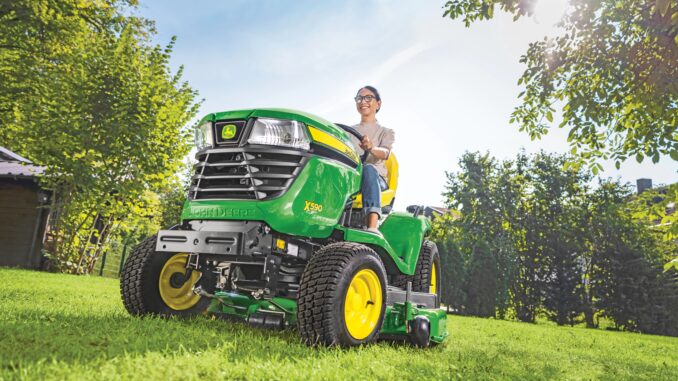
The John Deere 410 is an older lawn-and-garden tractor built for homeowner mowing and light utility work, and it is typically used on medium-sized residential properties rather than commercial turf. This guide covers symptom-first troubleshooting, practical DIY repairs, maintenance, parts selection, manuals, and a large FAQ section tailored to owners in the USA and Canada.
John Deere 410 overview
The 410 sits in Deere’s older lawn tractor family, so the systems that matter most are the engine and fuel system, the mower deck, the drive system, and the electrical/safety circuits. On these older tractors, the most useful service references are the operator’s manual and Deere’s parts/shop portals, because they help confirm the exact deck, belt, and service part needed for your serial range.
Common service parts owners buy
For a 38-inch deck setup, the commonly purchased parts often include the mower blade M82408 and the matching deck-drive related consumables that are specific to the deck version. For engine service, Deere parts listings commonly include fuel filters such as AM107314, oil filters such as AM125424, and spark plugs such as M78543 on related mower products, which is why owners should always cross-check the tractor’s engine before ordering.
Troubleshooting starts with symptoms
Diagnosis should begin with what the owner sees, not with the part that seems most likely to be bad. On an older 410, the main symptom groups are starting issues, running issues, poor cut quality, vibration or unusual noise, drive or traction problems, overheating or leaks, and electrical or safety-switch faults.
Emergency repair needs
Some problems are minor inconvenience; others can quickly damage the tractor or make it unsafe. If the engine is overheating, losing oil, throwing belts, or intermittently dying, the machine should be parked until the cause is found.
4.1 Starting issues
A no-start, hard-start, or start-and-die problem usually means the tractor is not getting correct electrical power, fuel, or spark. On older Deere mowers, weak batteries, blown fuses, bad key switches, and safety-switch faults are common places to begin.
Common causes:
-
Weak or failed battery.
-
Dirty or loose terminals.
-
Blown fuse.
-
Faulty key switch.
-
Seat, brake, or PTO safety switch problem.
-
Clogged fuel filter or stale fuel.
Basic checks:
-
Check battery voltage and cable tightness.
-
Confirm the PTO is disengaged and the brake is set.
-
Inspect the main fuse and any visible harness damage.
-
Try fresh fuel if the machine has sat for months.
-
Verify the safety switches are not preventing crank or spark.
4.2 Poor cut quality
If the lawn looks uneven, ragged, or striped, the mower side of the tractor usually needs attention. Blades, deck cleaning, belt condition, and deck leveling are the usual starting points, especially on a 38-inch deck package.
Common causes:
-
Dull or bent blades.
-
Incorrect deck height or pitch.
-
Worn belt.
-
Grass buildup under the deck.
-
Slow engine speed under load.
Basic checks:
-
Inspect blade edges and balance.
-
Clean grass from the deck shell.
-
Check belt tension and belt routing.
-
Verify tire pressure and deck level.
-
Mow with the engine at full governed speed.
4.3 Vibration and noise
Vibration usually means something rotating is damaged, loose, or out of balance. Because that can fail suddenly, this is one of the problems that should be fixed right away.
Common causes:
-
Bent or loose blade.
-
Damaged spindle bearing.
-
Loose deck hardware.
-
Cracked pulley.
-
Belt slap or misalignment.
Basic checks:
-
Shut off the machine and remove the key.
-
Spin the blades by hand and feel for roughness.
-
Check blade bolts and spindle play.
-
Inspect pulleys for wobble.
-
Look for belt fraying or missing chunks.
4.4 Overheating and leaks
Any sign of smoke, oil smell, fuel seepage, or excessive heat is a stop-use issue. Older lawn tractors often run hot when cooling fins are dirty or the engine is low on oil.
Common causes:
-
Low engine oil.
-
Dirty cooling fins or shrouds.
-
Fuel leak.
-
Blocked air flow around the engine.
-
Loose hose or gasket seepage.
Basic checks:
-
Check oil level before restarting.
-
Clean grass and debris from the engine area.
-
Inspect for wet fuel or oil spots.
-
Make sure the air intake is not blocked.
-
Correct the leak before extended use.
4.5 Drive and traction problems
If the tractor moves weakly, slips, surges, or will not drive smoothly, the transmission belt, linkage, or drive control system may need work. On older tractors, belt wear and misadjustment are very common.
Common causes:
-
Worn drive belt.
-
Loose belt tension.
-
Damaged pulley.
-
Linkage adjustment issue.
-
Transmission service issue.
Basic checks:
-
Inspect the drive belt for glazing or cracking.
-
Check that the drive pedal linkage moves freely.
-
Verify tire pressure and traction.
-
Look for belt debris around the transaxle area.
-
Stop if the belt is slipping badly.
4.6 Electrical problems
Intermittent electrical faults often show up as no crank, no charge, dead gauges, or sudden shutdown. On older Deere tractors, the switch stack and fuse protection are good first checks.
Common causes:
-
Weak battery.
-
Corroded ground.
-
Faulty ignition switch.
-
Blown fuse.
-
Bad charging circuit.
Basic checks:
-
Clean battery posts and grounds.
-
Test the main fuse.
-
Wiggle-test the key switch and harness.
-
Confirm the hour meter or dash powers up.
-
Check for a charging response after starting.
DIY or dealer?
The line is usually simple: routine maintenance and bolt-on parts are good DIY work, while internal engine, transmission, and major electrical diagnosis can move into dealer territory. On an older 410, anything involving safety circuits, governor issues, or transmission internals is best handled carefully.
Good DIY jobs:
-
Oil and filter changes.
-
Spark plug replacement.
-
Fuel filter replacement.
-
Blade sharpening or replacement.
-
Deck belt replacement.
-
Cleaning the deck and cooling fins.
Advanced DIY or dealer jobs:
-
Carburetor rebuild or governor problems.
-
Charging system diagnosis.
-
Transmission repair.
-
Starter motor replacement.
-
Safety switch harness faults.
-
Engine compression or valve work.
Skill level guide:
-
Beginner: Filters, blades, deck cleaning, battery maintenance.
-
Intermediate: Belts, plugs, switch testing, deck leveling.
-
Advanced: Carburetor, wiring diagnosis, transmission, engine teardown.
Parts, OEM, and what to know
Before ordering parts, gather the full model name, the tractor PIN/serial number, and the engine model and serial number if available. Deere’s Owner Support and parts shop are the best starting points for confirming the exact build configuration and parts lookups.
OEM vs aftermarket:
-
OEM is best for belts, blades, switches, and fit-sensitive parts.
-
Aftermarket can be fine for batteries, filters, and some wear items if the cross-reference is exact.
-
Avoid guessing on deck belts and safety switches, because fit differences can be costly.
Manuals and diagrams
The official Deere Owner Support portal is the first place to check for manuals, serial-specific information, and model support pages. Deere’s parts shop is the other essential source for exploded diagrams and current OEM part numbers.
Useful sources:
-
Owner Support for manuals and model support.
-
John Deere Parts for diagrams and OEM parts lookup.
-
Operator manual view for Deere manual navigation and related technical content.
-
Deere parts shop product pages for part details and fit notes.
Finding model numbers
These numbers matter because older Deere tractors often changed parts across serial ranges, deck versions, and engine variants. A belt or switch that fits one 410 can be wrong for another.
Step-by-step:
-
Look under the seat or on the main frame for the tractor ID tag.
-
Record the full model designation and serial/PIN.
-
Check the mower deck tag for deck size and version.
-
Find the engine tag on the blower housing or valve cover area.
-
Copy the engine model and spec number exactly before ordering parts.
Buying parts
The safest strategy is to use OEM numbers first, then compare aftermarket options only after the fit is confirmed. Online ordering is best for known part numbers, the dealer counter is best for serial-specific or hard-to-match items, and retail stores are fine for common consumables when the package clearly lists the model application.
Useful URLs:
Common DIY repairs
Replace the spark plug
A fresh spark plug can cure hard starting, rough idle, and poor fuel burn when the engine is otherwise healthy.
-
Let the engine cool.
-
Pull the plug wire off carefully.
-
Remove the old plug with the correct socket.
-
Check the new plug gap if applicable.
-
Install by hand first, then snug to spec.
-
Refit the wire and test-start the tractor.
Change the fuel filter
A restricted filter can cause stalling, surging, or loss of power under load.
-
Close the fuel supply if the tractor has a shutoff.
-
Clamp the line or prepare for fuel spillage.
-
Remove the old inline filter.
-
Match the flow direction arrow.
-
Install the replacement securely.
-
Check for leaks before running.
Replace or sharpen blades
Sharp, balanced blades directly affect cut quality and reduce vibration.
-
Disconnect the spark plug wire.
-
Raise the deck safely.
-
Remove the blade bolt and blade.
-
Sharpen or replace as needed.
-
Reinstall with correct orientation.
-
Test for vibration and cut quality.
Service the deck belt
A slipping or cracked deck belt can cause poor blade speed, squealing, or no blade drive.
-
Remove the deck if access is limited.
-
Inspect pulleys and idlers first.
-
Note the belt routing before removal.
-
Fit the new belt exactly on all pulleys.
-
Verify tension and alignment.
-
Run at low speed and listen for noise.
Preventing repeat problems
Regular maintenance matters because most 410 problems come from wear, stale fuel, dull blades, dirty cooling fins, and neglected belt systems. Keeping the tractor clean and serviced prevents the same complaints from coming back every season.
Focus areas:
-
Starting reliability.
-
Cut quality.
-
Fire and overheating prevention.
-
Drive performance.
-
Electrical reliability.
-
Belt and spindle life.
Service intervals
The official Deere service intervals for this class of machine emphasize break-in service, then regular oil, plug, air-cleaner, and hardware checks.
Daily / before each use
-
Check engine oil level.
-
Inspect around the tractor for leaks.
-
Check tire condition and pressure.
-
Make sure the deck is clear of debris.
-
Confirm the safety controls operate normally.
After first 25 hours
-
Change engine oil and filter.
-
Check and tighten loose hardware.
-
Check transmission oil level.
-
Check and clean air cleaner elements.
After first 50 hours
-
Change engine oil and filter.
Every 100 hours or annually
-
Change engine oil and filter.
-
Inspect and regap spark plugs.
Every 200 hours or every two years
-
Follow Deere’s machine-specific interval chart for any listed long-interval service items.
Seasonal checklist
-
Spring: fresh fuel, oil check, blade inspection, deck cleaning.
-
Mid-season: plug check, belt check, battery clean-up.
-
Fall: clean deck thoroughly, stabilize fuel, store dry and covered.
Repair, upgrade, or replace?
The best rule is simple: repair what is worn, upgrade consumables if the improvement is real, and replace only when the repair cost is out of proportion to the tractor’s age and condition. For a machine like the 410, cosmetic wear is not a reason to retire it, but major transmission or engine problems may tip the balance.
Repair if:
-
The issue is a belt, filter, blade, switch, or battery.
-
The engine is otherwise healthy.
-
The deck and frame are sound.
Upgrade if:
-
Better blades improve cut quality.
-
A higher-quality battery improves starting.
-
A better fuel filter or plug makes maintenance easier.
Replace if:
-
The engine has major internal damage.
-
The transmission is failing badly.
-
The frame or deck is heavily rusted or cracked.
FAQ
1. Why will my John Deere 410 not start?
Start with the battery, fuse, and safety switches before assuming a major repair. If the dash is dead, electrical supply is often the first clue. If it cranks but will not fire, fuel or spark is more likely.
2. Why does it crank but not fire?
That usually points to fuel delivery, ignition, or a safety circuit issue. Old fuel and a plugged filter are common causes on older tractors. A weak spark plug or bad plug wire can also be involved.
3. Why does it start and then die?
This often means fuel flow is restricted or a safety switch is interrupting power. Check the fuel filter, carburetor bowl, and battery connections. Also confirm the seat and PTO interlocks are behaving normally.
4. Why does the engine surge at idle?
Surging usually means the carburetor is dirty or the fuel supply is unstable. Old fuel, a clogged filter, or an air leak can make the engine hunt up and down. Start with fuel quality and basic service items.
5. Why is my mower cutting unevenly?
Uneven cutting is usually a deck, blade, or tire-pressure issue. Check blade sharpness and deck cleanliness first. Then verify the deck is level and the tires are inflated evenly.
6. Why is the grass ragged after mowing?
Ragged grass usually means dull blades or the engine is not running at full speed. A slipping deck belt can also reduce blade tip speed. Sharpen or replace the blades before chasing more complex faults.
7. Why is there a vibration under the seat?
A bent blade, loose pulley, or failing spindle bearing can transmit vibration through the tractor. Because vibration can lead to breakage, stop using the mower until the rotating parts are inspected. Check blade balance first.
8. Why does the deck make a squealing noise?
Squealing usually points to belt slip, pulley wear, or an idler problem. A glazed belt can slip under load. If the noise changes with blade engagement, the mower side is the first place to inspect.
9. Why won’t the mower deck engage?
If the PTO will not engage, the issue may be electrical, belt-related, or safety-switch related. Confirm the battery and fuses are good. Then check the PTO switch and belt condition.
10. Why does the tractor lose power in grass?
Loss of power in grass usually means the engine is starved for fuel or the blades are dragging the engine down. Start with fuel filter condition, plug condition, and a clean air system. A dirty deck can also increase load dramatically.
11. Why does it run better with partial choke?
That is a classic sign of a fuel mixture problem or restricted fuel delivery. It often points to a dirty carburetor or fuel supply restriction. The choke should not be needed once the engine is warmed up.
12. Why is the engine hard to restart when hot?
Heat-related restart issues can come from a weak spark, vapor lock, or fuel restriction. Check the plug, fuel lines, and filter. Heat soak can expose weak ignition components on older machines.
13. Why is fuel leaking from the tractor?
Fuel leaks are a stop-use issue because they can create a fire risk. Inspect the filter, hoses, tank outlet, and clamps. Replace any cracked line or loose fitting before running again.
14. Why is oil leaking under the engine?
Oil leaks often come from a gasket, filter, drain plug, or damaged seal. Clean the area first so the source is easier to trace. If the leak is heavy, do not keep mowing until the problem is fixed.
15. Why is the battery going flat?
A weak battery can be the battery itself, a bad connection, or a charging-system fault. Check for corrosion and loose terminals first. If the tractor only runs briefly before dying, the charging system may need testing.
16. Why does the starter click but not crank?
A click with no crank usually means the battery cannot supply enough current or the starter circuit has high resistance. Clean the terminals and test the battery under load. If the battery is strong, move on to the starter and solenoid.
17. Why does the key switch act intermittently?
Intermittent key-switch behavior is common on older tractors. Worn internal contacts can make the machine start sometimes and fail other times. If tapping the switch changes the result, replacement is often the fix.
18. Why does the tractor pull to one side?
Uneven tire pressure, a dragging brake, or a steering adjustment issue can cause a pull. Check tire pressures first because that is the simplest fix. Then inspect steering linkage wear and front-end alignment.
19. Why does the transmission slip?
A slipping drive usually means belt wear, linkage issues, or internal transmission wear. Start with the belt and controls before assuming the transaxle is failing. If the slip is severe, stop using it to prevent further damage.
20. Why is the drive noisy?
Noise from the drive system often comes from worn belts, pulleys, or bearings. If the noise changes with speed, that narrows the fault quickly. Do not ignore grinding or metal-on-metal sounds.
21. Why won’t the tractor move?
If the engine runs but the tractor does not move, inspect the drive belt and transmission linkage first. The problem may be as simple as a broken belt. If the linkage is moving correctly, deeper drive repair may be needed.
22. Why is the engine overheating?
Overheating is usually caused by dirty cooling fins, low oil, or restricted airflow. Grass buildup around the engine is a common cause on lawn tractors. Clean the machine thoroughly before checking for more serious damage.
23. Why does it smell hot or smoky?
A hot smell often means the engine is running too hot or a belt is slipping. A burning smell from the deck usually points to belt friction. Stop the tractor and inspect for debris or seized parts.
24. Why is the air cleaner dirty so quickly?
Dusty conditions, poor sealing, or a long mowing interval can load the filter fast. Clean the area around the air intake and replace the element when needed. A restricted air filter hurts performance and fuel economy.
25. How often should I change the oil?
The Deere service chart calls for oil and filter changes after break-in and then at regular hour or annual intervals. For a lightly used older tractor, an annual oil change is still a smart rule. Fresh oil is cheap insurance for an older engine.
26. How often should I sharpen the blades?
Sharpen them whenever the cut quality drops or the edge gets nicked. In practical home use, that often means several times each season depending on mowing conditions. Balanced blades matter as much as sharp ones.
27. Can I use aftermarket parts?
Yes, but only when the part cross-references correctly and the fit is not safety-critical. OEM is the safer choice for belts, switches, and exact-fit deck parts. Aftermarket filters and batteries are often fine if matched properly.
28. Where do I find the serial number?
The tractor PIN is usually on the main ID tag, while the deck and engine have their own labels. Copy the numbers exactly before ordering. A wrong serial number is one of the fastest ways to buy the wrong part.
29. What should I check before mowing after storage?
Check fuel quality, battery charge, tire pressure, blade condition, and visible leaks. Clean the deck before the first cut of the season. A short test run is better than discovering a problem in the middle of the lawn.
30. When should I stop DIY and call a dealer?
Stop when the issue involves internal engine wear, major transmission faults, or repeated electrical failures. Those jobs need more diagnostic tools and often save time when handled professionally. Safety-critical problems are not worth guessing at.
31. Why does the blade engagement smell like burning rubber?
That usually means a slipping belt or a seized pulley. Shut the tractor down and inspect the belt path right away. Continued use can destroy the belt and damage pulleys.
32. Why is the mower louder than before?
A sudden noise increase usually means a loose shield, worn spindle, belt slip, or debris under the deck. Because the sound often points to a mechanical fault, it should be inspected before more mowing. Start with the deck because that is the most common source.
33. What maintenance matters most on an older 410?
Oil service, blade condition, belt inspection, battery care, and keeping the cooling system clean matter most. Those five areas prevent the majority of repeat issues on older lawn tractors. A clean machine is usually a reliable machine.
34. Is the 410 still worth repairing?
If the frame, engine, and transmission are basically sound, the 410 can still be worth keeping alive. These older tractors are usually easiest to justify when the needed repair is a belt, plug, filter, switch, or blade set. Major drivetrain or engine failures change the math quickly.
35. What is the best first repair on a neglected 410?
A full baseline service is the smartest starting point. Change the oil and filter, inspect the air and fuel system, sharpen or replace the blades, and clean the deck and cooling fins. That baseline often solves more than one complaint at once.
How to identify the serial number range for 410 deck parts
For a John Deere 410 with a 38‑inch deck, you identify the correct serial number range for deck parts by combining the tractor’s PIN with the deck’s own model/serial tag and then matching that against the ranges shown on the parts diagrams or catalog pages.
Where serial ranges show up
On Deere-style parts diagrams, each deck version typically appears as a line with a model plus a serial number range such as “up to XXXXX” or “from XXXXX–YYYYY”. Your tractor’s serial must fall inside that range for the diagram (and its part numbers) to be correct.
Step-by-step: 410 deck serial range
-
Find the tractor PIN under the seat or on the frame.
Clean the tag if needed and write down the full model and serial number; this is the number Deere uses to split parts by build period. -
Find the deck’s own model and serial label.
The deck usually has a small plate or sticker on the top or rear edge that lists a separate model/article and serial; this is the “cutting unit” identity, and it can differ from the tractor’s tag. -
Go to an online parts diagram for the 410 and 38‑inch deck.
Use Deere’s official parts lookup or a third‑party catalog, select the 410 plus the 38‑inch deck, and open the “mower deck” or “cutting unit” section; you should see model and serial ranges for that deck variant. -
Match your deck serial to the diagram range.
Compare the serial on your deck tag (or tractor PIN if the deck tag is missing) with the ranges printed above or beside the deck diagrams; if your serial is between the “from” and “to” numbers listed, those are the correct diagrams and part numbers for your mower deck. -
Verify with at least one known part.
Cross‑check a known part like a blade size or belt routing against the diagram to make sure the serial range you picked matches what you actually see on the tractor and deck.
Common electrical issues in 410’s
On legacy lawn-and-garden tractors, the most common electrical issues cluster around the battery/charging system, starter/solenoid circuit, ignition and safety interlocks, and general wiring corrosion or looseness.
Battery and charging problems
Older tractors often suffer from weak batteries and marginal charging systems, especially after storage or seasonal use. Typical symptoms are slow cranking, clicking with no crank, or a machine that starts once and then has a dead battery the next time. Corroded terminals, loose grounds, and worn stator or regulator components also contribute to undercharging over time.
Starter, solenoid, and key-switch faults
The starter circuit includes the battery, key switch, solenoid, and starter motor, and any failure here can give a no-crank condition. Common issues include worn starter motors, solenoids that click but do not pass current, and ignition switches that no longer send 12 V down the signal wire reliably. Diagnosing these usually involves checking voltage at the battery, solenoid posts, and starter terminal while turning the key.
Safety switch and interlock issues
Legacy riders use multiple interlock switches (seat, brake/clutch, PTO/blade) that must be in the right state for the tractor to crank or run. Dirty, worn, or misadjusted switches can mimic more serious faults by preventing the start signal from reaching the solenoid. Owners often find a hidden or contaminated PTO/blade switch is the missing link after checking seat and brake switches.
Corroded wiring, connectors, and grounds
Age, moisture, and vibration cause connectors and grounds to corrode or loosen, leading to intermittent or total loss of power in parts of the harness. Green or white buildup on terminals, brittle insulation, and loose crimp joints are typical on older machines. Cleaning, re-crimping, and resecuring grounds often restores normal operation without major part replacement.