
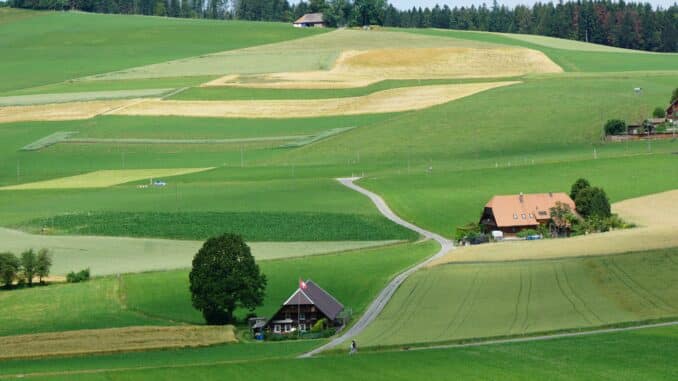
All over the world, people are realising the benefits of locally grown and sourced food, often organic, giving rise to a more sustainable form of living, and more reliable and resilient supply chains.
For many, the idea of owning a piece of land and producing their own crops or livestock is no longer something they just dream about— For many people it has become a realistic way of living, and gives them away of earning a reasonable income at the same time.
1. Introduction
This guide covers specifically :
- First‑time land buyers looking for a clear roadmap before signing a deed.
- So Called Hobby farmers who want to grow vegetables, raise a few chickens, or experiment with small‑scale livestock.
- Small‑acreage owners who already have land but lack a structured plan for turning it into productive farmland.
- Future commercial farmers aiming to scale from a modest plot to a larger, market‑ready operation.
This guide helps to:
- Avoid costly missteps that many newcomers make.
- Understand the fundamentals of tractors, horsepower, and essential attachments.
- Build a realistic budget that includes hidden costs.
- Follow a proven, step‑by‑step roadmap from land purchase to a thriving farm.
2.1 What Does “Starting in Agriculture” Really Mean?
Agriculture isn’t a monolith. It spans a spectrum of activities, each with its own set of challenges and rewards. Understanding where you fit helps you choose the right equipment, land size, and business model.
| Farm Type | Typical Acreage | Primary Focus | Typical Equipment |
|---|---|---|---|
| Hobby / Homestead | < 5 acres | Personal food production, self‑sufficiency | Small tractor, hand tools, garden beds |
| Small Commercial | 5‑50 acres | Market‑ready produce or niche livestock | Mid‑size utility tractor, basic implements |
| Mid‑Scale Commercial | 50‑200 acres | Diversified crops, larger livestock herd | Row‑crop tractor, specialized harvesters |
| Large‑Scale Commercial | > 200 acres | High‑volume commodity production | Multiple tractors, combine harvesters, advanced precision ag tech |
2.2 Crop Farming vs. Livestock vs. Mixed Operations
- Crop Farming focuses on planting, cultivating, and harvesting plants. Success hinges on soil health, irrigation, pest management, and timing.
- Livestock Farming centers on animal husbandry—feeding, breeding, health care, and waste management. It requires pasture management, shelter, and biosecurity.
- Mixed Operations combine both, allowing you to rotate crops with grazing, improve soil fertility, and diversify income streams.
2.3 Equipment Intensity Differences
- Hobby farms often get by with a compact tractor (≈ 30–50 HP) and a handful of attachments.
- Commercial farms demand higher horsepower, multiple implements, and sometimes specialty machines (e.g., sprayers, balers).
Understanding these distinctions early prevents over‑investing or under‑equipping your operation.
3. Tractor Basics
3.1 What Is a Tractor?
A tractor is a powered vehicle designed primarily to pull or drive agricultural implements. Its core purpose is to provide the mechanical force needed for tillage, planting, hauling, and many other farm tasks.
3.2 Types of Tractors
| Type | Typical HP Range | Ideal Use Cases | Example Brands |
|---|---|---|---|
| Compact Tractor | 20‑60 HP | Small acreages, landscaping, light tillage | Kubota, John Deere 1 Series |
| Utility Tractor | 60‑120 HP | Medium farms, row‑crop work, moderate implements | John Deere 5E, Massey Ferguson 4700 |
| Row‑Crop Tractor | 120‑300 HP | Large field work, high‑speed planting, heavy implements | Case IH Magnum, John Deere 6R |
| Specialty Tractor | Varies | Vineyards, orchards, steep slopes, specific crops | John Deere Gator, Kubota M Series (steer‑ahead) |
3.3 Main Tractor Components
- Engine: Generates power; measured in horsepower (HP).
- PTO (Power Take‑Off): Rotating shaft that transfers engine power to implements (e.g., mower, baler).
- 3‑Point Hitch: Standardized connection for implements, allowing lift and control.
- Hydraulic System: Powers lifts, steering, and certain attachments.
- Transmission: Gear‑driven (manual) or hydrostatic (continuously variable).
3.4 2WD vs. 4WD – Which Should Beginners Choose?
- 2WD (Two‑Wheel Drive): Lighter, cheaper, and sufficient for flat, well‑maintained fields.
- 4WD (Four‑Wheel Drive): Provides better traction on wet, uneven, or hilly terrain; recommended for most beginners who anticipate varied conditions.
If you’re unsure, opt for a 4WD utility tractor—it offers flexibility without a huge price premium.
4. Horsepower Basics
4.1 Engine HP vs. PTO HP vs. Torque
- Engine HP measures total power produced by the engine.
- PTO HP is the portion of engine power delivered to the PTO shaft (usually 90 % of engine HP for standard PTOs).
- Torque reflects rotational force; high torque is crucial for pulling heavy loads at low speeds.
4.2 How Much Horsepower Do You Really Need?
Below is a practical breakdown based on typical acreage and tasks.
| Acreage | Primary Tasks | Recommended Minimum HP | Suggested Tractor Class |
|---|---|---|---|
| 1–5 acres | Garden prep, small tillage, mowing | 30–45 HP | Compact tractor |
| 5–20 acres | Row cropping, haymaking, moderate haulage | 60–80 HP | Utility tractor |
| 20–100 acres | Large‑scale tillage, multiple implements simultaneously | 100–180 HP | Row‑crop tractor |
| 100+ acres | Heavy tillage, large implements, high‑speed field work | 200 HP+ | High‑horsepower row‑crop tractor |
Key tip: Choose a tractor with at least 15–20 % more horsepower than the minimum recommendation. This buffer accommodates future expansion and heavier attachments.
4.3 Common HP Mistakes New Buyers Make
- Overbuying: Purchasing a 250 HP tractor for a 5‑acre hobby farm leads to unnecessary expense, higher fuel consumption, and difficulty maneuvering.
- Underbuying: A 30 HP tractor may struggle with a 20‑acre field, causing frequent stalls and reduced productivity.
- Ignoring Future Growth: Many beginners buy based solely on current needs, forgetting that a modest increase in acreage or a shift to a new crop can quickly outgrow a low‑HP machine.
5. Essential Safety Practices for New Farmers
Safety is non‑negotiable. Farming accidents are a leading cause of workplace injuries in the U.S. and worldwide. Implementing robust safety protocols protects you, your family, and any employees.
5.1 Tractor Safety Basics
- ROPS (Roll‑Over Protection System): Must be installed and used on every tractor.
- Seatbelts: Secure yourself whenever the tractor is in motion.
- Mounting/Dismounting: Use the three‑point hitch or a safe step; never jump onto a moving tractor.
- Slope Awareness: Avoid operating on slopes greater than 15° without proper traction aids.
5.2 PTO Safety
- Entanglement Risks: Keep loose clothing, hair, and jewelry away from rotating shafts.
- Shielding: Install a PTO guard to prevent accidental contact.
- Shutdown Procedures: Always disengage the PTO before leaving the tractor or performing maintenance.
5.3 Attachment Safety
- Proper Hitching: Verify that the three‑point hitch pins are fully inserted and locked.
- Load Balancing: Distribute weight evenly to prevent tipping.
- Transport Safety: Secure all attachments with chains or straps during transport.
5.4 Personal Protective Equipment (PPE)
| PPE Item | Purpose |
|---|---|
| Gloves | Protect hands from cuts, chemicals, and vibration. |
| Hearing Protection | Reduce noise exposure from engines and implements. |
| Eye Protection | Guard against debris, dust, and chemical splashes. |
| Steel‑Toe Boots | Prevent foot injuries from falling objects or rolling equipment. |
5.5 Farm Safety Resources
- OSHA Agricultural Safety & Health – Offers guidelines on machinery, chemical handling, and ergonomics.
- NIOSH (National Institute for Occupational Safety & Health) – Publishes research on farm injury prevention.
Regularly review these resources and incorporate their recommendations into daily routines.
6. Common First‑Time Buyer Mistakes (and How to Avoid Them)
| Mistake | Why It Happens | How to Prevent It |
|---|---|---|
| Buying Too Much Tractor | Desire for “future proofing.” | Calculate HP based on current and near‑future acreage; add a modest buffer. |
| Buying Too Little Tractor | Budget constraints or lack of knowledge. | Use the HP guide above; consider financing for a slightly larger unit. |
| Ignoring Attachment Compatibility | Assuming any attachment fits any tractor. | Verify PTO speed (540 RPM vs. 1000 RPM) and hitch class before purchase. |
| Not Budgeting for Maintenance & Storage | Focus on upfront cost only. | Add 10‑15 % of equipment cost annually for service, parts, and secure storage. |
| Skipping Test Drives & Dealer Research | Relying on online specs alone. | Visit local dealers, test multiple models, and ask about warranty coverage. |
| Buying Without a Long‑Term Plan | Impulse purchase driven by excitement. | Draft a 3‑year farm business plan outlining land, equipment, and cash flow. |
7. Starter Attachments
7.1 Core Starter Attachments
| Attachment | Primary Use | Approx. Cost (USD) |
|---|---|---|
| Front‑End Loader | Moving soil, feed, mulch | $2,000‑$4,000 |
| Rotary Cutter (Brush Hog) | Clearing brush, tall grass | $1,500‑$3,000 |
| Box Blade | Leveling ground, spreading material | $800‑$1,500 |
| Tiller | Soil preparation for seedbeds | $600‑$1,200 |
| Post Hole Digger | Installing fence posts, utility poles | $300‑$700 |
These five attachments cover the majority of early‑stage tasks—from clearing land to preparing seedbeds.
7.2 PTO‑Driven vs. Hydraulic Attachments
- PTO‑Driven: Powered directly by the tractor’s PTO shaft (e.g., rotary cutter, mower). Requires correct PTO speed and horsepower.
- Hydraulic: Operated via the tractor’s hydraulic system (e.g., loader, backhoe). Offers precise control and can be used on both 2WD and 4WD units.
7.3 Quick‑Attach Systems Explained
Modern tractors often feature quick‑attach couplers that let you swap implements in minutes without tools. Look for brands that support Universal Quick‑Attach (UQA) or John Deere Quick‑Connect if you plan to expand your attachment inventory.
7.4 Matching Attachments to Horsepower
- < 50 HP: Stick to lightweight implements (loader, small tiller).
- 50‑80 HP: Add medium‑size rotary cutter, box blade, and small post hole digger.
- > 80 HP: You can safely run larger rotary cutters, mid‑size loaders, and multi‑function implements.
7.5 Attachment Budget Planning
Allocate roughly 30‑40 % of your equipment budget to attachments. This ensures you have the right tools without overspending on a single high‑cost implement.
A solid budget is the foundation of any successful farm, whether you’re tending a hobby plot or launching a commercial operation. Below is a detailed, step‑by‑step framework that helps you estimate every major cost, spot hidden expenses, and keep cash flow healthy.
8.1 Land‑Related Costs
| Cost Element | What to Consider | Typical Range (USD) |
|---|---|---|
| Purchase vs. Lease | Buying builds equity but ties up capital; leasing offers flexibility and lower upfront cost. | Purchase: $2,000‑$10,000 / acre (varies by region). Lease: $50‑$200 / acre / year. |
| Soil Testing | Determines pH, nutrient levels, contaminants, and drainage quality. Required before planting. | $100‑$300 per test (multiple samples for larger parcels). |
| Zoning & Permits | Verify that the property is zoned for agricultural use, and obtain any water‑right or building permits. | $200‑$1,500 depending on locality. |
| Property Taxes | Annual tax liability based on assessed land value. | 0.5‑2 % of assessed value per year. |
Tip: Allocate a separate line item for “contingency” (≈ 10 % of total land costs) to cover unexpected zoning or remediation fees.
8.2 Equipment Costs
| Category | New vs. Used | Price Range (USD) | Financing Options |
|---|---|---|---|
| Tractor | New: $25k‑$150k; Used: $10k‑$80k (depending on age, HP, brand). | 5‑20 % down payment typical. | Manufacturer loans, USDA Rural Development loans, dealer financing, equipment leasing. |
| Attachments | New: $500‑$4,000 each; Used: 50‑70 % of new price. | Bundle discounts often available when purchased with tractor. | Same financing as tractor; some vendors offer “pay‑as‑you‑go” rentals. |
| Small Machinery & Tools (seeders, sprayers, hand tools) | Mostly inexpensive, but quality matters. | $200‑$2,000 total. | Credit cards or small business lines of credit. |
| Technology (GPS guidance, farm‑management software) | Subscription‑based or one‑time purchase. | $500‑$5,000 per year. | SaaS subscriptions; some providers offer tiered pricing for small farms. |
Rule of Thumb: Keep equipment costs (tractor + attachments) below 40‑45 % of your total startup budget to leave room for operating expenses.
8.3 Operating Expenses
| Expense | Typical Annual Cost (USD) | How to Estimate |
|---|---|---|
| Fuel | $0.35‑$0.45 per liter; depends on hours of operation. | Multiply average hourly fuel consumption (≈ 5‑10 L/h) by expected annual hours. |
| Insurance (liability, equipment, crop) | $500‑$2,000 for hobby farms; $2,000‑$6,000 for commercial. | Get quotes from multiple carriers; consider bundling. |
| Repairs & Maintenance | 5‑10 % of equipment purchase price per year. | Track mileage and service intervals. |
| Labor (seasonal workers, part‑time help) | $15‑$25 per hour; varies by region and skill level. | Estimate number of person‑hours needed for planting, harvest, and maintenance. |
| Inputs (seeds, fertilizer, pesticides) | $200‑$2,000 depending on crop mix and acreage. | Use agronomic recommendations for per‑acre application rates. |
| Utilities & Water (irrigation electricity, water rights) | $500‑$3,000. | Factor pump power and water usage rates. |
| Storage & Facilities (barn, shed, fencing) | $1,000‑$5,000 (initial build) + ongoing upkeep. | Include depreciation if you own structures. |
8.4 Hidden Costs Beginners Often Miss
- Regulatory Compliance – Environmental permits, pesticide licensing, and record‑keeping fees can add $500‑$2,000.
- Technology Subscriptions – Farm‑management platforms, satellite imagery, and precision‑ag tools often require annual fees.
- Depreciation & Replacement Reserve – Set aside ~5 % of equipment cost each year for eventual replacement.
- Marketing & Sales – Packaging, labeling, farmer’s‑market fees, or e‑commerce platform costs (≈ 2‑5 % of revenue).
- Transportation – Loading/unloading trucks, fuel for hauls to market, or delivery vehicles.
8.5 Sample Starter Budgets (Re‑Calculated)
Below are three refreshed budget templates that incorporate the categories above. All figures are illustrative; adjust for your local market.
A. 5‑Acre Hobby Farm
| Line Item | Cost (USD) |
|---|---|
| Land (lease, 5 acres) | $750 |
| Soil testing & amendments | $800 |
| Compact tractor (used, 40 HP) | $12,000 |
| Attachments (loader, tiller, rotary cutter) | $4,500 |
| Fuel (first year) | $1,200 |
| Insurance & permits | $1,200 |
| Labor (seasonal, 50 h) | $1,250 |
| Misc. (tools, small tech) | $800 |
| Contingency (10 %) | $2,300 |
| Total Estimated Startup Cost | ≈ $24,800 |
B. 20‑Acre Part‑Time Farm
| Line Item | Cost (USD) |
|---|---|
| Land purchase (rural, 20 acres) | $60,000 |
| Utility tractor (new, 80 HP) | $55,000 |
| Attachments (loader, box blade, rotary cutter, post‑hole digger) | $9,000 |
| Irrigation (drip system) | $7,500 |
| Soil testing & fertility program | $1,200 |
| Fuel & maintenance (year 1) | $4,000 |
| Insurance, permits, taxes | $5,500 |
| Labor (seasonal, 200 h) | $4,000 |
| Technology subscription (farm‑manage SaaS) | $1,200 |
| Contingency (10 %) | $14,340 |
| Total Estimated Startup Cost | ≈ $162,740 |
C. 100‑Acre Commercial Startup
| Line Item | Cost (USD) |
|---|---|
| Land purchase (prime ag, 100 acres) | $350,000 |
| Row‑crop tractor (new, 180 HP) | $130,000 |
| Attachments (large loader, high‑capacity rotary cutter, precision seeder) | $25,000 |
| Pivot irrigation system | $45,000 |
| Precision‑ag software & GPS hardware | $12,000 |
| Soil testing, amendment program | $5,000 |
| Fuel & maintenance (year 1) | $15,000 |
| Insurance, permits, property taxes | $30,000 |
| Labor (full‑time staff, 2 FTE) | $60,000 |
| Marketing & sales infrastructure | $8,000 |
| Contingency (10 %) | $66,000 |
| Total Estimated Startup Cost | ≈ $746,000 |
Takeaway: Even a modest hobby farm can launch with under $30k if you lease land and buy used equipment. As acreage grows, the biggest drivers become land acquisition, high‑horsepower tractors, and irrigation infrastructure.
9. Step‑by‑Step Roadmap – From Land to Full Operation
Phase 1 – Education & Planning
- Define Your Farm Type (hobby, mixed, pure‑crop, livestock).
- Research Local Climate & Soil – Use USDA Plant Hardiness Zones, extension service publications, and soil‑test results.
- Enroll in Training – Extension courses, online platforms (Coursera, edX), or local workshops.
- Draft a Business Plan – Include mission statement, market analysis, revenue projections, and risk assessment.
Phase 2 – Land Acquisition
- Identify Candidate Parcels – Evaluate proximity to markets, water sources, and road access.
- Conduct Due Diligence – Title search, easements, floodplain maps, and zoning verification.
- Negotiate Purchase or Lease Terms – Secure favorable financing or lease clauses that allow future expansion.
Phase 3 – Equipment Selection
- Calculate Required Horsepower (see Section 4).
- Choose Tractor Class (compact, utility, row‑crop).
- Select Core Attachments (loader, rotary cutter, tiller, etc.).
- Arrange Financing or Leasing – Compare interest rates, residual values, and tax implications.
Phase 4 – Site Preparation & Infrastructure
| Task | Why It Matters | Typical Timeline |
|---|---|---|
| Soil Testing & Amendments | Ensures optimal fertility and pH. | Weeks 1‑2 after land purchase. |
| Water Access & Irrigation Design | Guarantees reliable water for crops/livestock. | Weeks 2‑4. |
| Fencing & Containment | Protects crops, manages livestock. | Weeks 3‑5. |
| Storage Buildings & Barns | Safeguards equipment and feed. | Weeks 4‑8. |
| Electrical & Power (generator, solar) | Powers pumps, lighting, and tools. | Weeks 5‑9. |
Phase 5 – First Production Cycle
- Prepare Seedbeds – Plow, disc, and level using tiller and box blade.
- Plant or Acquire Livestock – Follow crop‑specific planting windows or livestock quarantine protocols.
- Implement Integrated Pest Management (IPM) – Combine cultural, biological, and chemical controls responsibly.
- Set Up Record‑Keeping – Track inputs, yields, labor hours, and expenses from day one.
Phase 6 – Optimization & Scaling
- Analyze Yield Data – Use farm‑management software to identify bottlenecks.
- Adjust Equipment & Practices – Upgrade horsepower, adopt precision‑ag tools, refine rotation plans.
- Expand Acreage or Diversify – Add new crops, introduce poultry, or explore value‑added processing.
- Hire Additional Help – Seasonal workers, farm manager, or specialist consultants.
10. Training Programs & Certification Courses
Continuous learning keeps your farm competitive, safe, and compliant. Below are reputable pathways for beginners.
| Program | Provider | Format | Cost (USD) | Highlights |
|---|---|---|---|---|
| USDA Extension Workshops | Local County Extension Offices | In‑person / Online | Free‑$200 | Region‑specific agronomy, soil health, pest ID. |
| Cornell Cooperative Extension | Cornell University | Online webinars, PDFs | Free‑$150 | Advanced crop‑production techniques, data analytics. |
| Texas A&M AgriLife Extension | Texas A&M University | On‑site field days | Free‑$250 | Livestock management, irrigation design. |
| Future Farmers of America (FFA) | National FFA Organization | Youth‑focused camps, competitions | Membership fee $30; event fees vary | Leadership, entrepreneurship, hands‑on projects. |
| Coursera – Sustainable Agriculture | Various universities | Self‑paced online | $49/month (audit free) | Global perspectives, climate‑smart practices. |
| edX – Precision Agriculture | MIT, UC Davis | Online, certificate option | $199 for verified cert | GIS, remote sensing, variable‑rate tech. |
| OSHA Agricultural Safety Course | OSHA.gov | Online modules | Free | Required for many state compliance programs. |
| Equipment Operator Certification | Manufacturer‑run (John Deere, Kubota) | Classroom + practical | $300‑$600 | Reduces accident risk, improves efficiency. |
Recommendation for Beginners: Start with a local USDA Extension workshop (often free) to get region‑specific advice, then supplement with an online course on sustainable agriculture to broaden your knowledge base.
11. Glossary of Key Agricultural Terms & Acronyms
| Term | Definition |
|---|---|
| 3‑Point Hitch (3PH) | Standardized tractor attachment point allowing lift and control of implements. |
| PTO (Power Take‑Off) | Shaft on a tractor that transfers engine power to implements (e.g., mower, baler). |
| ROPS (Roll‑Over Protection System) | Structural frame that protects the operator if the tractor overturns. |
| HP (Horsepower) | Measure of engine power; determines what size tractor and attachments you can run. |
| Implement | Any tool or machine attached to a tractor (e.g., loader, tiller). |
| Tillage | Soil‑preparation process that breaks up and loosens soil before planting. |
| Yield | Quantity of agricultural product harvested per unit area (e.g., bushels/acre). |
| IPM (Integrated Pest Management) | Ecologically based strategy combining biological, cultural, and chemical controls. |
| USDA | United States Department of Agriculture – provides research, data, and extension services. |
| FSA | Farm Service Agency – offers loan programs and disaster assistance. |
| NRCS | Natural Resources Conservation Service – assists with conservation planning. |
| EPA | Environmental Protection Agency – regulates water quality, pesticide use, and emissions. |
| CSA (Community Supported Agriculture) | Model where consumers purchase shares of a farm’s harvest in advance. |
| AgTech | Technologies that improve agricultural productivity, sustainability, and profitability. |
| Precision Ag | Use of GPS, sensors, and data analytics to apply inputs variably across a field. |
| Crop Rotation | Sequential planting of different crops on the same land to improve soil health and reduce pests. |
| Cover Crop | Plants grown primarily to protect and enrich soil between main cash crops. |
Feel free to refer back to this list whenever you encounter unfamiliar terminology in the guide.
12 Frequently Asked Questions
12.1 Getting Started – The Very Basics
| # | Question | Answer | Action Tip |
|---|---|---|---|
| 1 | Do I need a college degree to become a farmer? | No. Formal education can accelerate learning, but many successful growers rely on hands‑on experience, extension‑service workshops, mentorship, and self‑directed study. The most important assets are curiosity, willingness to ask questions, and a habit of keeping good records. | Attend a free local USDA Extension workshop this month and sign up for the newsletter of your county’s agriculture office. |
| 2 | How much land do I need to be “self‑sufficient”? | It depends on climate, diet, and the mix of crops and livestock you intend to raise. A typical family of four can produce most of its fresh vegetables on 0.5–1 acre of well‑managed garden space, while a small herd of chickens (10–15 birds) needs about 200 sq ft of coop plus a fenced run. Add extra acreage if you want to raise larger livestock or generate surplus for market sales. | Sketch a rough layout of your desired garden, chicken run, and any livestock pens on graph paper; this visual will reveal whether your target acreage is realistic. |
| 3 | Should I buy a new or used tractor? | Both options can work. A new tractor offers a warranty, the latest emissions standards, and often better fuel efficiency, but it costs significantly more. A used tractor can provide excellent value if it has been well maintained and matches your horsepower needs. The key is a thorough pre‑purchase inspection and verification of service records. | Arrange a mechanical inspection with a trusted farm‑mechanic before signing any purchase agreement. |
| 4 | What is the simplest way to learn about soil health? | Start with a comprehensive soil test (pH, macro‑ and micronutrients, organic matter). Extension services usually provide a test kit for a modest fee. Pair the lab results with a soil‑health guide that explains how to amend pH, add organic matter, and interpret nutrient levels. | Order a soil‑testing kit from your state extension office today; schedule the sampling for a calm weekend when you can collect 10–15 representative cores. |
| 5 | Do I need a business license to farm? | Most jurisdictions require a business registration (e.g., DBA, LLC, or corporation) if you intend to sell products, hire employees, or open a bank account in the farm’s name. Even a sole proprietorship often benefits from a DBA to keep finances separate from personal accounts. | Check your county clerk’s website for DBA filing fees and forms; file online if possible to get the paperwork done quickly. |
| 6 | Can I start a farm on rented land? | Absolutely. Leasing land reduces upfront capital requirements and lets you test a farming concept before committing to a purchase. Make sure the lease includes clear terms for improvements, soil‑conservation practices, and termination conditions. | Request a written lease that specifies who owns any permanent improvements (e.g., irrigation, fencing) at the end of the term. |
12.2 Tractor & Power Selection
| # | Question | Answer | Action Tip |
|---|---|---|---|
| 7 | What horsepower is enough for a 20‑acre mixed farm? | For a mixed operation (crops + a few livestock), a 80–100 HP utility tractor is usually sufficient. It can handle a loader, tiller, rotary cutter, and a modest front‑end loader without overstressing the drivetrain. | Use the horsepower calculator in the “Tractor Basics” section to confirm the drawbar pull needed for your heaviest implement. |
| 8 | Is a 4WD tractor necessary for a small farm? | 4WD provides superior traction on wet, uneven, or sloped ground, which reduces stall risk and improves safety. If your terrain is mostly flat and well‑drained, a 2WD unit can be adequate and cheaper. | Walk the fields you intend to work; if you encounter more than a few soft spots or slopes > 5°, lean toward 4WD. |
| 9 | Can I run a rotary cutter on a 2WD tractor? | Yes, provided the tractor’s PTO horsepower and rear‑axle rating exceed the cutter’s drawbar pull requirement. However, on steep or muddy hills a 4WD tractor will perform more reliably. | Check the cutter’s spec sheet for “maximum PTO drawbar pull” and compare it to your tractor’s rating (usually listed in the owner’s manual). |
| 10 | How often should I change the oil in my tractor? | Follow the manufacturer’s recommendation—typically every 100–150 engine hours or once per year, whichever comes first. Heavy use, dusty conditions, or frequent short runs may require more frequent changes. | Keep a logbook (paper or digital) that records the hour meter at each oil change; set a reminder on your phone for the next service. |
| 11 | Do I need a transmission cooler? | If you plan to run the tractor at high load for extended periods (e.g., continuous tillage, pulling heavy implements), a transmission cooler helps maintain fluid temperature and prolongs component life. For occasional light work, the factory cooling system is usually sufficient. | Ask the dealer whether the model you’re eyeing ships with an optional cooler; if not, inquire about aftermarket kits that bolt on easily. |
| 12 | What is the difference between a 540 RPM and a 1000 RPM PTO? | The 540 RPM standard is common for most agricultural implements in North America. 1000 RPM PTOs deliver higher speed, useful for certain high‑speed mowers or balers. Using the wrong RPM can damage the implement or reduce performance. | Verify the PTO speed on the tractor’s spec plate and match it to the implement’s required speed before purchase. |
12.3 Soil, Crops & Conservation
| # | Question | Answer | Action Tip |
|---|---|---|---|
| 13 | How many soil samples should I take for a reliable test? | Collect 10–15 random cores across the field, combine them in a clean bucket, and send the composite sample to the lab. For larger properties, split the field into zones and test each zone separately. | Mark sampling points with flagging tape before you head out; this avoids duplicate locations. |
| 14 | Which cover crops work best in the Midwest? | Winter rye, hairy vetch, and crimson clover are popular because they winter‑kill or provide nitrogen fixation, improve soil structure, and suppress weeds. Rotate species each year to maximize benefits. | Plant a small strip (¼ acre) of each candidate cover crop this fall; evaluate emergence and winter survival in spring. |
| 15 | How can I reduce herbicide reliance? | Combine crop rotation, timely cultivation, mulching, and mechanical weed control (e.g., rotary hoe). A diversified rotation (corn → soy → small grain → cover crop) disrupts weed life cycles. | Create a weed‑management calendar that aligns cultivation passes with critical weed growth stages for your region. |
| 16 | What is the ideal pH for most vegetable crops? | Most vegetables thrive in a pH range of 6.0–6.8. Slightly acidic soils improve nutrient availability. If your test shows pH outside this window, amend with lime (to raise pH) or elemental sulfur (to lower pH). | Apply lime at the rate recommended by the soil report; incorporate it into the top 6–8 inches of soil and re‑test after 6 months. |
| 17 | Do I need to practice no‑till? | No‑till conserves moisture, reduces erosion, and builds organic matter, but it requires a specialized planter and careful residue management. If you have a modest acreage and limited equipment, reduced‑till (e.g., chisel plow) can be a good compromise. | Start with a strip‑till on half your field this season; compare yields and input costs to conventional tillage. |
| 18 | How much nitrogen should I apply to corn? | A common rule of thumb is 1 lb of N per bushel of expected yield. For a target yield of 180 bu/acre, apply roughly 180 lb N/acre split between pre‑plant and side‑dress applications. Adjust based on soil test, previous crop, and rainfall. | Use a fertilizer calculator (many extension sites provide one) to convert the lb/acre recommendation into bag counts for your chosen product. |
| 19 | What are the benefits of a “living mulch”? | Living mulches (e.g., low‑growth legumes) suppress weeds, fix nitrogen, and improve soil structure while providing habitat for beneficial insects. They can be inter‑cropped with main crops or planted in alleyways. | Plant a clover strip along the perimeter of your vegetable beds this spring; monitor weed pressure compared to bare‑soil sections. |
| 20 | How do I manage soil compaction? | Avoid driving heavy equipment when the soil is wet; use controlled‑traffic farming (same wheel tracks) and consider deep ripping if bulk density exceeds 1.5 g/cm³. Adding organic matter also improves structure over time. | Conduct a penetrometer test after a rain event; if readings exceed 2.5 MPa in the root zone, plan a deep‑rip operation before planting. |
12.4 Livestock Basics
| # | Question | Answer | Action Tip |
|---|---|---|---|
| 21 | Do I need a permit to keep chickens? | Most counties require a poultry permit once you exceed a small backyard flock (usually > 5 birds). Some municipalities also enforce setback distances from property lines or dwellings. | Call your county’s planning department now and ask for the specific “poultry” permit application form. |
| 22 | How much pasture does an adult beef cow need? | In temperate climates with good forage, 1 acre per cow‑per‑year (CPY) is a reasonable rule. Drier regions may need 1.5–2 acres per CPY. Seasonal variations (summer growth vs. winter scarcity) affect the calculation. | Perform a pasture‑productivity test (measure forage yield in lbs/acre) during peak growth; divide by the cow’s annual dry‑matter requirement (~ 25 lb DM/day). |
| 23 | What space does a goat require? | Each goat should have at least 200 sq ft of shelter and 250 sq ft of outdoor pen. For grazing, allocate 0.1–0.2 acre per goat on decent pasture. | Build a simple three‑wall shelter using reclaimed lumber; add a sturdy gate and a ½‑inch woven‑wire fence around the pen. |
| 24 | Should I start with dairy or meat animals? | Meat (beef) cattle are generally lower‑maintenance, especially if finished on pasture. Dairy cows require daily milking, higher‑quality feed, and stricter health monitoring. Choose based on market demand, labor capacity, and personal interest. | Survey local farmers’ markets and grocery stores to see which product (milk vs. beef) commands a higher price in your area. |
| 25 | How often must I vaccinate my livestock? | Core vaccines (Clostridial/Tetanus, BVD for cattle, IBR for sheep/goats, Rabies for all) are typically given annually after the initial series. Some vaccines (e.g., BVD) may have a 2‑year booster schedule. | Set up a vaccination calendar in Google Calendar with reminders 30 days before each due date. |
| 26 | What are the biggest biosecurity risks for a small farm? | 1️⃣ Visitors (friends, contractors) bringing in pathogens. 2️⃣ Shared equipment without cleaning. 3️⃣ Wildlife (deer, raccoons) entering pens. 4️⃣ Improper manure handling that spreads disease. | Install a foot‑bath (10% bleach solution) at the barn entrance and require anyone entering to disinfect boots. |
| 27 | How do I calculate feed for a 500‑lb steer? | Maintenance feed = 2–2.5 % of body weight in dry matter (DM) per day. For a 500‑lb steer: 10–12.5 lb DM/day. Add 1–2 % of body weight for growth phases. | Keep a feed‑log for the first month; adjust rations if the steer’s weight gain deviates from 1.5 lb/day. |
| 28 | Are automatic waterers worth the investment? | Automatic waterers guarantee constant water availability, reduce labor, and lower disease risk (standing water). They become cost‑effective when you have > 20 animals or a large herd that would otherwise require multiple manual troughs. | Start with a gravity‑fed trough for a small flock; upgrade to a pump‑driven system once you exceed 30 animals. |
| 29 | What is the best way to handle manure on a mixed farm? | Compost manure with a C:N ratio of ~30:1 (e.g., add straw or wood chips). Turn the pile every 1–2 weeks to maintain temperature (130–150 °F) and kill pathogens. Use the finished compost as a soil amendment for crops. | Build a simple three‑bin compost system using reclaimed pallets; label each bin “hot,” “maturing,” and “cured.” |
| 30 | How can I protect my herd from parasites without heavy chemicals? | Rotate pastures, practice strategic deworming based on fecal egg counts, and incorporate biological controls (e.g., nematophagous fungi). Maintaining good nutrition also improves animal immunity. | Purchase a fecal egg count kit from a veterinary supplier and test a subset of the herd every 6 months. |
12.5 Financial, Legal & Tax Considerations
| # | Question | Answer | Action Tip |
|---|---|---|---|
| 31 | Do I need a separate legal entity for my farm? | Not mandatory, but forming an LLC or S‑Corporation can protect personal assets, simplify tax filing, and make it easier to obtain financing. Sole proprietorships are simpler but expose you to personal liability. | Schedule a brief consultation with a CPA who specializes in agriculture to discuss the best structure for your projected revenue. |
| 32 | What USDA loans are available for beginning farmers? | The Farm Service Agency (FSA) offers Direct Farm Ownership Loans, Operating Loans, and Microloans. The “Beginning Farmer” provision (≤ 10 years of experience) often relaxes credit‑score requirements and allows higher loan‑to‑value ratios. | Gather your personal tax returns, a detailed business plan, and a list of assets before applying; these documents are required for most FSA applications. |
| 33 | Which tax deductions can I claim as a farmer? | Common deductions include soil & water conservation expenses, equipment depreciation (MACRS), fuel, feed, livestock purchases, property taxes, home‑office expenses, insurance premiums, and interest on farm loans. | Use farm‑management software that tracks each expense category; at year‑end, export the data to your accountant for accurate Schedule F (or corporate) filing. |
| 34 | Do I need a sales‑tax permit for direct‑to‑consumer sales? | Most states require a sales‑tax permit for any retail transaction, including farmers’ market sales, CSAs, and on‑farm stands. Processed foods (jams, baked goods) are often taxable, while raw produce may be exempt. | Register online with your state’s Department of Revenue; keep a copy of the permit in your cash‑register drawer. |
| 35 | Can I claim a home‑office deduction for farm administration? | Yes, if a dedicated area of your home is used exclusively for farm business (record‑keeping, bookkeeping, marketing). You can use the simplified method ($5 per sq ft, max 300 sq ft) or the regular method (actual expenses prorated by square footage). | Measure the office space, take a photo, and store the image with your tax records as proof of exclusive use. |
| 36 | What insurance should I prioritize? | 1️⃣ Multi‑Peril Crop Insurance (MPCI) for weather‑related losses. 2️⃣ Farm Property & Liability Insurance covering buildings, equipment, livestock, and third‑party injuries. 3️⃣ Life & Disability Insurance for the farm owner(s). | Obtain at least three quotes from different agricultural insurers; compare coverage limits, deductibles, and exclusions before selecting a policy. |
| 37 | How do I protect intellectual property (e.g., a proprietary seed blend)? | For asexually reproduced varieties, you can file a Plant Patent. For novel processes or formulations, consider a |
12.7 Summary
Launching a farm is a marathon, not a sprint. By grounding your venture in solid budgeting, thoughtful equipment selection, continuous learning, and robust safety practices, you dramatically increase the odds of long‑term success.
Action Checklist for the First 90 Days
- Secure Land – Complete due diligence, finalize purchase/lease.
- Run Soil Tests – Order a comprehensive lab analysis and develop a fertility plan.
- Select Tractor & Core Attachments – Use the horsepower guide (Section 4) and match to your planned acreage.
- Enroll in Two Training Courses – One local USDA Extension workshop and one online sustainable‑ag course.
- Create a Basic Business Plan – Include market research, cash‑flow forecast, and risk mitigation.
- Set Up Record‑Keeping – Choose a farm‑management app and start logging every expense, input, and labor hour.
- Implement Safety Protocols – Install ROPS, seat belts, PTO shields, and conduct a safety briefing with anyone who will operate equipment.
Remember: Farming is inherently dynamic. Weather patterns shift, market prices fluctuate, and new technologies emerge. Treat your farm as a living system—regularly review budgets, update your knowledge base, and adapt practices accordingly.