
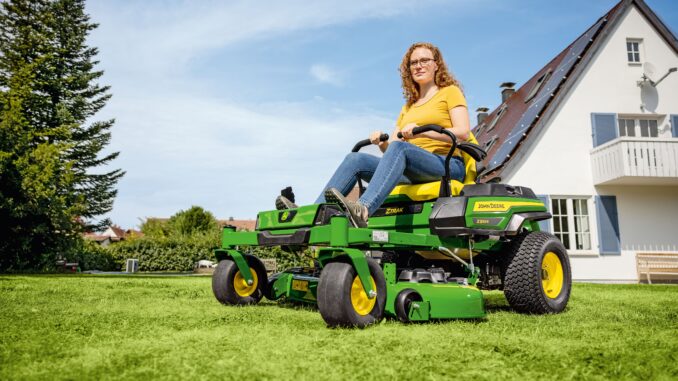
The John Deere Z325E is a residential zero-turn mower aimed at homeowners who want faster mowing and better maneuverability than a lawn tractor, with a 24 hp V-twin engine and a 48-inch Accel Deep mower deck listed in Deere’s current model materials. This guide is written for DIY owners in the USA and Canada and covers realistic home troubleshooting, routine maintenance, common repair decisions, parts planning, and a large FAQ built around what owners usually notice first.
Introduction to the John Deere Z325E
The John Deere Z325E sits in Deere’s Residential ZTrak line alongside models such as the Z315E, Z320M, Z330M, Z320R, and Z330R, and it uses the same operator’s manual family for North American machines with serial number 10001 and up. For most homeowners, the John Deere Z325E is best suited to regular lawn mowing on properties where tight turns, obstacles, and faster cutting are more important than towing or ground-engaging work.
This article follows a symptom-first format so owners can match what they see—hard starting, poor cutting, belt noise, vibration, weak drive, or electrical faults—to sensible checks before buying parts. It also shows where the DIY line normally ends, because some John Deere Z325E work is straightforward at home while other jobs involve transaxles, internal engine work, or advanced diagnostics that are better left to a dealer.
General overview of the John Deere Z325E
The key systems on the John Deere Z325E are the gasoline V-twin engine and fuel system, the 48-inch mower deck and blade drive, the zero-turn drive system with dual transaxles, and the electrical/safety interlock system. Owners most often deal with service items in these systems rather than major hard-part failures, which is why filter, belt, blade, battery, and switch problems show up so often in homeowner troubleshooting.
Common service parts owners actually buy for the John Deere Z325E include the air filter MIU14395, oil filter AM125424, fuel filter AM116304, spark plug MIU11020, traction belt GX26401, 48-inch deck belt GX26422, standard mower blades UC22009, mulch blades UC25185, ignition key GY20680, and 12-volt battery CP6843AAU. Deere also lists the home maintenance kit LG276 and the mower deck leveling gauge AM130907 for routine upkeep and cut-quality setup.
John Deere Z325E troubleshooting approach
The best way to troubleshoot a John Deere Z325E is to begin with the symptom, not the part name, because the same symptom can come from several small issues. A no-start complaint might be fuel, battery, brake/safety switch position, dirty connections, stale gasoline, or a weak ignition component rather than one obvious failed part.
Main symptom groups for the John Deere Z325E are:
-
Starting issues, such as no crank, weak crank, or starts then dies.
-
Running issues, such as surging, power loss, or rough running under load.
-
Cut-quality problems, such as scalping, streaks, clumps, and uneven height.
-
Vibration and noise, especially after blade strikes or belt wear.
-
Overheating, smoke, smells, debris buildup, and leaks.
-
Transmission or drive problems, including weak tracking or one side not pulling correctly.
-
Electrical and safety interlock problems involving the seat, PTO, brake, key, and battery circuits.
John Deere Z325E emergency and immediate repair needs
Some John Deere Z325E problems need attention right away because they create a safety risk or can quickly damage other components. Deere’s manual repeatedly emphasizes safe shutdown, debris cleanout, blade condition, guard condition, and slope safety, so issues in these areas should not be ignored.
John Deere Z325E starting issues
A John Deere Z325E that will not crank or only clicks may leave you stranded, but the bigger issue is repeated starting attempts that overheat wiring, drain the battery, or hide a safety interlock problem. Starting faults also matter because poor voltage can create misleading symptoms elsewhere in the machine.
Common causes:
-
Weak or discharged battery.
-
Dirty or loose battery terminals.
-
Brake not fully applied or motion levers not in the start/shutdown position.
-
PTO switch left engaged.
-
Faulty key switch, damaged wiring, or failed interlock switch.
-
Stale fuel, blocked fuel filter, or fouled spark plug if the engine cranks but will not fire.
Basic owner checklist:
-
Confirm the PTO is off, the park brake is set, and both control levers are in the correct start position.
-
Check battery terminal tightness and obvious corrosion.
-
Verify fresh fuel is in the tank and the fuel shutoff situation, if any accessory setup changed, is normal.
-
Inspect the fuel filter, air filter, and spark plug condition.
-
If it still will not crank or repeatedly blows fuses, stop and move toward proper electrical diagnosis.
John Deere Z325E cut-quality problems
Poor cut quality on a John Deere Z325E usually shows up as uneven grass height, strips of uncut grass, clumping, or scalping, and continuing to mow that way can overload belts, leave poor results, and hide deck setup issues. Deere provides deck-leveling and gauge-wheel adjustment procedures because deck setup is a normal maintenance item, not just a repair issue.
Common causes:
-
Dull, bent, or mismatched blades.
-
Dirty deck underside or packed grass buildup.
-
Deck out of level side-to-side or front-to-rear.
-
Incorrect tire pressure affecting deck pitch.
-
Worn deck belt or idler issues.
-
Mowing too fast or cutting overly wet/heavy grass.
Basic owner checklist:
-
Clean the underside of the deck and top belt area after the machine cools.
-
Check blade edges and replace damaged blades as a full set when needed.
-
Confirm tire pressures are correct before adjusting deck level.
-
Measure deck level side-to-side and front-to-rear using the manual’s procedure.
-
Inspect the mower belt and idlers if the cut stays inconsistent.
John Deere Z325E vibration and noise
Sudden vibration or new mechanical noise on a John Deere Z325E should be treated as urgent because continued use can damage spindles, pulleys, belts, and deck hardware. A machine that vibrates after striking an object should be stopped and inspected immediately.
Common causes:
-
Bent or cracked blade.
-
Blade bolt looseness or blade installed incorrectly.
-
Debris wrapped around spindle areas.
-
Failing spindle or pulley bearing.
-
Damaged traction or deck belt.
Basic owner checklist:
-
Shut down, remove the key, and wait for all moving parts to stop.
-
Inspect blades for bends, cracks, or impact marks.
-
Check belt condition and pulley alignment visually.
-
Spin pulleys or spindle areas by hand only with the machine secured and ignition disabled.
-
Do not keep mowing with strong vibration; deeper spindle or crankshaft checks may be needed.
John Deere Z325E overheating and leaks
Overheating, fuel smell, oily buildup, or smoke on a John Deere Z325E can quickly become a fire hazard if grass and debris collect around hot engine and deck areas. Deere specifically tells owners to inspect and clean the muffler area, engine cooling fins, intake screens, deck top, transaxle areas, and the space under the seat.
Common causes:
-
Grass buildup around muffler, engine screens, and deck shields.
-
Low engine oil or delayed oil service.
-
Fuel line or cap leakage.
-
Dirty cooling fins and intake screens.
-
Oil seepage attracting debris.
Basic owner checklist:
-
Stop mowing and allow the machine to cool in an open area.
-
Inspect the main cleanout zones Deere identifies in the manual.
-
Check for oil or fuel leaks under the machine and around the engine.
-
Confirm the engine oil service interval has not been missed.
-
If smoke, active leaking, or repeated overheating continues, do not keep operating the mower.
John Deere Z325E transmission and drive problems
Drive complaints on a John Deere Z325E usually appear as one side moving slower, weak hill performance, poor tracking, or the machine not responding evenly to the control levers. Because zero-turn drive systems are more specialized than routine mower service, owners should distinguish between belt-related issues they can inspect and transaxle faults that often need dealer-level work.
Common causes:
-
Worn traction belt GX26401.
-
Debris around belt drives or transaxle cooling fins.
-
Incorrect control lever adjustment or operator linkage concerns.
-
Internal transaxle wear or leakage.
Basic owner checklist:
-
Inspect the traction belt for wear, glazing, cracking, or derailment.
-
Clean debris from transaxle and belt-drive areas.
-
Compare left and right response after basic cleaning and inspection.
-
Check for visible leakage at each transaxle housing.
-
If one side remains weak or noisy, move from DIY checks to dealer diagnosis.
John Deere Z325E electrical problems
Electrical issues on the John Deere Z325E can affect starting, PTO engagement, charging, and safety interlock behavior, so random bypassing is a bad idea. The practical DIY goal is to inspect connectors, battery condition, fuses, and obvious switch faults without defeating the safety system.
Common causes:
-
Weak battery or dirty posts.
-
Faulty key switch GY20680 or worn ignition components.
-
Loose wiring under the seat or near the battery.
-
Defective PTO, seat, or brake safety switch.
Basic owner checklist:
-
Inspect battery voltage condition and cable tightness.
-
Check visible wiring around the battery, seat, and switch areas.
-
Confirm the machine behaves normally with brake, PTO, and lever positions.
-
Replace obviously worn common electrical items only after confirming the correct part number.
-
Leave intermittent wiring faults and advanced continuity testing to a qualified technician if the issue is not obvious.
DIY or dealer? Repair decision guide for the John Deere Z325E
For the John Deere Z325E, the normal DIY line is routine service, deck setup, blade work, belt inspection, and other accessible external parts, while internal engine work, transaxle repair, advanced electrical diagnosis, and structural damage are usually dealer territory. Owners with good tools and solid mechanical confidence can handle more, but the machine’s safety interlocks, drive components, and spring-loaded assemblies mean there is a point where guessing gets expensive.
Good DIY jobs
-
Engine oil and oil filter changes.
-
Air filter, fuel filter, and spark plug replacement.
-
Blade sharpening or blade replacement as a set.
-
Deck cleaning, deck leveling, and gauge-wheel adjustment.
-
Deck belt inspection and straightforward belt replacement if routing is confirmed from the diagram.
-
Battery replacement and terminal cleaning.
Advanced DIY or dealer jobs
-
Transaxle diagnosis or internal repair.
-
Crankshaft or spindle damage after major blade strike.
-
Intermittent wiring faults or repeated fuse failures.
-
Internal engine work, compression-related faults, or valve clearance service.
-
Spring-loaded deck or control-linkage repairs if the owner is not fully confident.
Skill level guide
-
Beginner: Filters, battery, oil service, blade inspection, deck cleaning.
-
Intermediate: Blade replacement, deck leveling, gauge wheel adjustment, deck belt replacement, basic switch checks.
-
Advanced: Electrical diagnosis with a meter, linkage adjustment, spindle replacement, in-depth drive diagnosis.
John Deere Z325E parts needed, OEM vs aftermarket, and what information you need
Before ordering John Deere Z325E parts, gather the full model name, the product identification number, the engine serial number from the blower housing, and any deck-specific information tied to the machine setup. Deere states that dealers need the serial number or PIN for the machine or attachment when ordering parts, which matters because production changes can alter exact part fit.
OEM parts make the most sense for belts, safety switches, exact-fit deck and drive components, and anything where routing, length, or interlock behavior matters. Aftermarket parts can be acceptable for some filters, blades, batteries, and tune-up items if the cross-reference is exact and the seller clearly lists compatibility with the John Deere Z325E and its serial range.
Where to find John Deere Z325E parts diagrams and service manuals
These are the most useful official and Deere-focused sources for owners:
-
Operator’s manual — best for safety, controls, service intervals, deck leveling, troubleshooting, and identification-number locations.
-
Deere parts ordering and catalog portal — Deere’s own portal for parts ordering and lookup referenced in the manual.
-
John Deere Technical Information Store — source for the parts catalog and technical manual purchase according to Deere.
-
Z325E replacement parts guide — quick-reference list of common maintenance and deck parts used heavily by owners.
-
Green Farm Parts John Deere catalog — Deere-focused lookup site that explains how to use Deere illustrated diagrams and part numbers for online ordering.
How to locate model, serial and engine numbers on the John Deere Z325E
These numbers matter because they help confirm fit, serial breaks, and the correct engine or machine variant before you spend money on parts. Deere tells owners to record the machine PIN, engine serial number, and transaxle serial numbers for service and parts support.
-
Park the mower safely on level ground, remove the key, and let everything stop moving.
-
Find the Product Identification Number for the mower on the machine’s identification label area referenced in the Product Identification section.
-
Find the engine serial number on the engine blower housing.
-
Find the left and right transaxle serial tags on the forward side of each transaxle housing.
-
Record all numbers before ordering parts or booking dealer service.
Buying John Deere Z325E parts online and in physical stores
The best buying strategy is to identify the exact OEM number first, then decide whether the job needs Deere-only fit or whether a well-cross-referenced aftermarket part is reasonable. That reduces the risk of buying the wrong John Deere Z325E belt, blade, filter, or switch based only on a seller title.
-
Online: use Deere’s own parts catalog portal, the Technical Information Store, and Deere-focused sellers such as Green Farm Parts after confirming the OEM number first.
-
Dealer counter: best for serial-specific parts, safety switches, deck hardware, and anything unclear from the diagram alone.
-
Retail stores: acceptable for oil, grease, batteries, and some cross-referenced filters or spark plugs if the packaging clearly matches the John Deere Z325E application and number.
Step-by-step fitting guide for common John Deere Z325E parts
Changing the John Deere Z325E air filter
Replacing the air filter helps fix hard starting, rich running, and power loss caused by restricted intake flow.
-
Park safely, remove the key, and let the engine cool.
-
Open the air cleaner housing and remove the old element.
-
Clean loose debris from the housing without pushing dirt into the intake.
-
Install the new MIU14395 filter correctly and reseal the housing.
-
Recheck that the air cleaner is fully in place before starting.
Replacing the John Deere Z325E spark plug
A fresh spark plug often helps with misfire, weak starting, and rough running complaints on a homeowner mower.
-
Park safely and disconnect the spark plug wire.
-
Remove the old spark plug and inspect its condition for fouling or oil deposits.
-
Compare the new plug to MIU11020 specification and confirm correct reach and design.
-
Install and tighten the plug correctly, then reconnect the wire.
-
Start the machine and confirm smooth running.
Replacing John Deere Z325E mower blades
Blade replacement fixes poor cut quality, vibration caused by damaged blades, and recurring ragged grass tips.
-
Park safely, remove the key, and disconnect spark plug wires or the battery negative cable as the manual advises before blade service.
-
Raise and support access safely, then remove the blade hardware with gloves on.
-
Inspect each old blade for bends, cracks, and uneven wear.
-
Install matching new blades such as UC22009 as a complete set of three on the 48-inch deck.
-
Tighten hardware correctly and test for smooth operation with no unusual vibration.
Replacing the John Deere Z325E deck belt
A new deck belt can solve blade-drive slip, weak cutting in heavy grass, belt squeal, or blades that stop under load.
-
Park safely, remove the key, and allow all hot parts to cool.
-
Confirm the old belt number and deck setup before removal; the 48-inch deck guide lists GX26422.
-
Note the belt routing carefully using the deck diagram or parts guide.
-
Release belt tension carefully and remove the old belt from pulleys and idlers.
-
Route the new belt exactly, verify pulley seating, and rotate the system by hand before starting.
Maintenance to prevent John Deere Z325E problems reoccurring
Regular maintenance prevents most repeat John Deere Z325E complaints because starting, cutting, and belt-life issues often grow from neglected filters, dirty cooling areas, poor deck setup, and missed inspections. Deere’s service and cleanout instructions make it clear that debris removal is a major reliability and fire-prevention task, not just cosmetic cleaning.
Focus areas:
-
Starting reliability: keep the battery, spark plug, fuel filter, and air filter in serviceable condition.
-
Cut quality: keep blades sharp, deck clean, tires correct, and deck level set to spec.
-
Fire and overheating prevention: clean muffler, screens, cooling fins, deck top, and under-seat debris zones.
-
Drive performance: inspect the traction belt and keep transaxle cooling areas clear.
-
Electrical reliability: keep battery posts clean and inspect wiring around the battery and seat area.
John Deere Z325E maintenance schedule and year-round checklist
The official operator’s manual includes service intervals, and the Z325E replacement parts guide highlights the most common homeowner service items. Exact use conditions can shorten intervals, especially in dusty mowing or heavy debris conditions.
Daily / before each use
-
Check engine oil.
-
Clean muffler area, air intake screens, and mower deck.
-
Check brake system.
-
Check fuel level.
-
Check under the machine for leaks.
-
Check safety interlock system and tire pressures.
After 8 hours
-
Recheck machine condition after early break-in use, especially wheel hardware and general fastener condition as Deere maintenance guidance for mowers emphasizes early post-break-in inspection.
Every 25 hours
-
Inspect machine condition, deck cleanliness, and belt/blade wear in demanding service even if the quick-reference sheet groups many items into annual or 50-hour service.
Every 50 hours or yearly
-
Change engine oil.
-
Replace oil filter AM125424.
-
Replace air filter MIU14395.
-
Replace fuel filter AM116304.
-
Replace spark plug MIU11020.
-
Lubricate with Deere multi-purpose grease as needed in service points and maintain deck components.
Every 100 hours
-
Check mower belt and continue annual cut-quality service items such as blade sharpening or replacement and deck level checks reflected in Deere mower maintenance information.
Every 200 hours
-
Check and adjust engine valve clearance; Deere directs owners to the dealer for this service on similar residential ZTrak schedules and identifies valve clearance as a dealer-type service item.
Seasonal checklist for the John Deere Z325E
-
Spring: change engine oil and filter if due, inspect blades, clean the machine thoroughly, set tire pressure, and level the deck before the main mowing season.
-
Mid-season: inspect belt wear, clean cooling fins and deck top more often, and sharpen or replace blades if cut quality falls off.
-
Fall or end of season: clean all debris from fire-risk areas, check for leaks, complete overdue service, and store only after the machine has cooled and been cleaned.
Repair, upgrade, or replace the John Deere Z325E?
For most owners, a John Deere Z325E is worth repairing when the issue is in normal wear parts like blades, belts, filters, battery, or deck setup because those are expected service items with clear support documentation and parts availability. Upgrade or replacement decisions make more sense when costs pile up around engine, transaxle, or structural problems rather than routine maintenance parts.
Repair if…
-
The problem is a filter, plug, battery, blade, belt, spindle, or deck adjustment issue.
-
The engine and both transaxles are still fundamentally sound.
-
The frame, deck shell, and safety system are intact.
Upgrade if…
-
You want mulch capability, added bumper protection, or accessories Deere already supports for the platform.
-
Your current machine works but no longer matches the lawn size or mowing workload well.
Replace if…
-
The machine has major engine damage, repeated drive-system failure, or severe deck/frame damage.
-
Safety-related repairs exceed the value of the mower.
-
Dealer diagnosis shows multiple expensive systems failing at once.
Expanded troubleshooting FAQ for the John Deere Z325E
1. Why will my John Deere Z325E not start?
Most no-start complaints come down to one of two patterns: it will not crank at all, or it cranks but will not fire. Start by checking PTO position, brake setting, control lever position, battery condition, and cable connections, then move to fuel, spark plug, and filter checks if the engine cranks normally.
2. Why does my John Deere Z325E just click when I turn the key?
A clicking sound usually points to low battery power, poor terminal contact, or a starter/solenoid circuit problem rather than a fuel issue. Clean and tighten the battery cables first, then test battery condition before replacing other parts.
3. Why does my John Deere Z325E crank but not fire?
If the engine cranks but will not run, check for stale fuel, a restricted fuel filter, fouled spark plug, or an intake issue from a dirty air filter. Also make sure the safety system is not interrupting normal start conditions through switch position problems.
4. Why does my John Deere Z325E start and then die?
This often happens when fuel flow is weak, the choke/throttle setup is wrong, or a safety-related electrical issue is interrupting operation. Check the fuel filter, fresh fuel supply, plug condition, and visible wiring near the seat and battery area.
5. Why is my John Deere Z325E running rough?
Rough running commonly comes from poor combustion or restricted airflow, especially when service items are overdue. Inspect the spark plug, air filter, fuel filter, and cooling cleanliness before assuming internal engine damage.
6. Why does my John Deere Z325E lose power in heavy grass?
Power loss under load often points to dull blades, a slipping deck belt, plugged deck underside, or an engine that is not getting clean air and fuel. Slow down, clean the deck, and inspect the belt and tune-up parts first.
7. Why is my John Deere Z325E cutting unevenly?
Uneven cut usually traces back to incorrect tire pressure, deck level problems, bent blades, or a deck that is dirty enough to disrupt airflow. Deere provides a specific side-to-side and front-to-rear deck leveling procedure because this is a common owner adjustment.
8. Why does my John Deere Z325E leave strips of uncut grass?
Streaking or striping of uncut grass often means blade edges are dull, the deck is dirty, mowing speed is too high, or the belt is not driving the blades strongly enough. Check blade condition and the deck belt before assuming a spindle failure.
9. Why is my John Deere Z325E scalping the lawn?
Scalping usually means the cutting height is too low for the ground shape, the deck wheels are set wrong for the selected height, or the deck pitch is off. Recheck tire pressure, cutting height dial setting, deck wheel position, and front-to-rear deck level.
10. Why does my John Deere Z325E clump grass?
Grass clumping is usually a mowing-condition issue first and a mechanical issue second. Wet grass, long grass, a dirty deck underside, or dull blades reduce airflow and make clumps much more likely.
11. Why are the blades on my John Deere Z325E not engaging properly?
If the blades hesitate, stop in heavy grass, or do not engage at all, inspect the deck belt, PTO-related controls, and visible pulley condition first. Belt wear or misrouting is more common than major deck hard-part failure on a homeowner machine.
12. Why does my John Deere Z325E deck belt keep coming off?
A belt that throws repeatedly usually means one of three things: wrong belt, damaged pulley/idler alignment, or debris/wear affecting belt tracking. Confirm the correct OEM belt number GX26422 and inspect pulley condition closely.
13. What is the correct deck belt for the John Deere Z325E?
Deere’s Z325E quick-reference guide lists GX26422 for the 48-inch Accel Deep mower deck. Always verify by machine model and serial details before ordering, especially if the deck or parts history is unclear.
14. What is the traction belt number for the John Deere Z325E?
The Deere quick-reference parts guide lists the traction belt as GX26401. That is the belt to confirm first when the mower has general drive complaints and visible belt wear.
15. Why is my John Deere Z325E vibrating so much?
Strong vibration should make you stop mowing immediately because it often follows blade impact, bent blades, loose hardware, or failing spindle-related components. Continued use can turn a simple blade problem into spindle, pulley, or deck damage.
16. Why does my John Deere Z325E make a squealing noise?
Squealing usually points to belt slip, a pulley bearing issue, or debris affecting belt tracking. Check the deck and traction belt systems separately so you do not misdiagnose a mower-deck sound as a drive problem.
17. Why does one side of my John Deere Z325E pull weaker than the other?
Uneven left-right response can come from debris around the drive system, traction belt problems, control-linkage issues, or internal transaxle wear. External belt and cleanliness checks are fair DIY steps, but persistent one-side weakness often moves into dealer diagnosis.
18. Why won’t my John Deere Z325E drive straight?
A zero-turn mower will never behave exactly like a steering-wheel tractor, but major tracking issues usually mean lever adjustment, tire condition, or drive-system imbalance needs attention. Start with tires, cleanout, and obvious linkage issues before suspecting a transaxle failure.
19. Why does my Z325E feel weak on slopes?
Part of this can be normal when the machine is operated conservatively, because Deere stresses slope limits and traction caution strongly in the manual. If the mower suddenly feels weaker than usual, inspect the traction belt, clean the drive areas, and make sure the issue is not really a general engine power loss.
20. What slopes are safe for the John Deere Z325E?
Deere states the ride-on mower should never be operated on slopes greater than 13 degrees in basic mower configuration, and not more than 10 degrees when using certain attachments that increase rollover risk. The manual also says to mow across slopes, not up and down, and to avoid wet grass where traction is doubtful.
21. Why does my John Deere Z325E overheat or smell hot?
Heat and burning smells usually come from debris accumulation around the muffler, cooling fins, intake screens, deck top, and belt-drive areas. Deere treats machine cleanout as a safety issue because debris around hot parts can start fires.
22. Why is there grass packed on top of my John Deere Z325E deck?
That buildup is normal over time, but it should not be ignored because packed debris traps heat, stresses belts, and raises fire risk. Deere specifically identifies the top of the mower deck, under shields, and around spindles and belts as required cleanout areas.
23. Why does my Z325E battery keep going flat?
Repeated dead-battery issues can be caused by poor connections, an aging battery, charging problems, or electrical draw from wiring faults. Begin with cable condition and battery age before replacing switches or ignition parts.
24. What battery does the John Deere Z325E use?
The Deere Z325E replacement parts guide lists battery CP6843AAU as the 12-volt replacement battery. Cross-reference carefully if buying outside Deere channels because physical fit and terminal layout still matter.
25. What spark plug does the John Deere Z325E use?
Deere’s quick-reference guide lists spark plug MIU11020 for the Z325E. Confirm plug condition and service timing during any hard-start or rough-run diagnosis.
26. What air filter does the Z325E use?
The quick-reference guide lists air filter MIU14395 for this mower. A dirty air filter can contribute to poor running, rich mixture behavior, and loss of power under load.
27. What oil filter fits the John Deere Z325E?
Deere lists AM125424 as the oil filter in the Z325E replacement parts guide. Replacing it with the engine oil at the recommended interval is one of the most important routine services on the mower.
28. How often should I change oil on a John Deere Z325E?
The Z325E replacement parts guide lists engine oil and oil filter service yearly or every 50 hours. Always use the operator’s manual as the final authority if operating conditions are severe or the machine has updated guidance.
29. How often should I replace the spark plug and filters on a Z325E?
The Deere replacement parts guide groups the air filter, fuel filter, oil filter, and spark plug at yearly or every 50 hours for homeowner maintenance reference. In dusty use, inspection may need to happen sooner even if replacement is not yet due.
30. When should I sharpen or replace the blades on my John Deere Z325E?
There is no single universal hour mark because blade wear depends heavily on mowing conditions, impact damage, and lawn size. Inspect blades regularly and sharpen or replace them when cut quality drops, edges round off, or any bend or crack is visible.
31. Can I service the Z325E myself?
Yes, most homeowners can handle the basic service items this machine needs most often, including oil service, filters, spark plug, blades, deck cleaning, and leveling checks. The operator’s manual is detailed enough for routine service, but owners should stay realistic about safety and tool limits.
32. When should I take my John Deere Z325E to a dealer?
Dealer service makes sense when the job involves transaxles, internal engine work, valve clearance, recurring electrical faults, severe vibration after impact, or any repair that affects safe operation and is not clearly diagnosed. Deere also specifically points to the dealer for technical publications and higher-level service support.
33. Is my Z325E worth repairing?
Usually yes, if the issue is in normal wear parts and the mower otherwise has a sound engine, usable deck, and healthy drive system. The repair math changes when you combine expensive engine, transaxle, and structural repairs on the same machine.
34. What is the maintenance kit for the John Deere Z325E?
Deere’s quick-reference guide lists LG276 as the home maintenance kit for the Z325E. That can simplify routine annual service when you want Deere-packaged maintenance parts rather than ordering items one by one.
35. Where can I buy a John Deere Z325E manual or technical manual?
The operator’s manual is available online, and Deere says copies of the parts catalog or technical manual can be purchased through the John Deere Technical Information Store. For many DIY jobs, the operator’s manual plus the parts guide is enough, but advanced repair work may justify the technical manual.