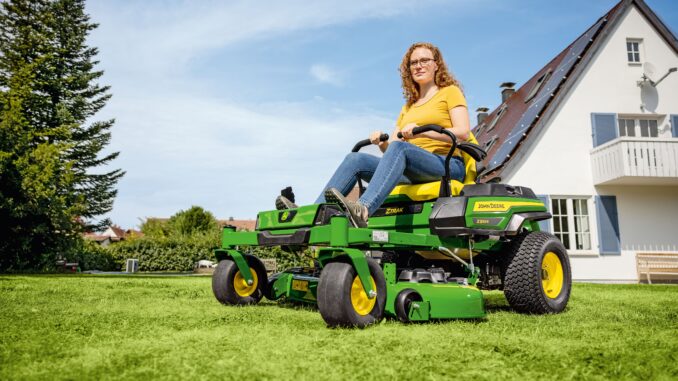
The John Deere Z530R is a residential zero-turn mower built for homeowners who want faster mowing, strong maneuverability, and a premium control layout for medium to large properties. This guide is written for DIY owners in the USA and Canada and covers practical troubleshooting, realistic repair decisions, maintenance planning, parts lookup, and a large symptom-based FAQ so it is ready to publish as a WordPress post.
John Deere Z530R model overview
The John Deere Z530R sits in the Z500 Series ZTrak lineup and shares its operator’s manual family with the Z515E, Z530M, and Z545R. It uses a 54-inch mower setup in the published parts-and-maintenance guide, has dual transaxles, an operator display unit on R-Series machines, and is designed primarily for homeowner mowing rather than commercial fleet work.
For most owners, the John Deere Z530R is a good fit for regular lawn mowing where speed and trim performance matter more than towing or ground-engaging work. The machine’s main systems are the gasoline engine and fuel system, the mower deck and blade-drive system, the hydrostatic drive system with left and right transaxles, and the electrical/safety interlock system.
Common service parts owners regularly buy for this mower include the 54-inch blade M164016, 54-inch mower deck belt GX25998, oil filter GY20577, fuel filter GY20709, air filter AUC18152, John Deere oil TY22029, and the mulch kit BUC10706. These are the kinds of parts most often involved in routine maintenance, weak cut quality complaints, and normal wear repairs on the John Deere Z530R.
Troubleshooting the John Deere Z530R by symptom
The best way to diagnose a John Deere Z530R is to start with the symptom the owner can clearly see, hear, smell, or feel. That usually means grouping problems into starting issues, running issues, cut-quality problems, vibration and noise, overheating or leak concerns, drive and tracking problems, and electrical or safety-interlock faults.
A symptom-first approach matters because one failure can have several possible causes, and guessing at parts often wastes time and money. On this model, basic diagnosis should begin with visible checks, fuel and oil condition, deck cleanliness, belt condition, safety switch behavior, tire pressure, and whether the machine has reached its scheduled maintenance intervals.
Emergency John Deere Z530R repair needs
Some faults on the John Deere Z530R need immediate attention because they can create a safety hazard, damage expensive components, or increase fire risk. Stop using the mower right away if blades hit hard objects, belts come off repeatedly, fuel leaks appear, wiring overheats, the machine loses steering response, or debris builds up around hot engine and muffler areas.
Starting issues
A no-start or no-crank condition on the John Deere Z530R often shows up as a dead key response, a weak crank, or an engine that spins but will not fire. This matters because repeated cranking can drain the battery, wash fuel into the engine, and hide an underlying safety-interlock or fuel-delivery fault.
-
Common causes include a discharged battery, poor cable connections, failed safety switch inputs, stale fuel, a plugged fuel filter, dirty air filter, fouled spark plug, or ignition-related faults.
-
The operator display unit on R-Series machines can also indicate diagnostic or warning conditions that should not be ignored.
-
Confirm the park brake is engaged and motion control levers are in neutral as required by the interlock system.
-
Check battery terminals for corrosion or looseness and inspect the fuse area under the seat.
-
Verify fresh fuel is present and inspect the fuel filter for restriction or age.
-
Inspect the air filter and spark plug condition before assuming a major engine problem.
-
If the engine diagnostic indicator is lit or the machine still will not start, move toward dealer-level diagnosis.
John Deere Z530R cut-quality problems
Cut-quality complaints on a John Deere Z530R usually show up as stragglers, scalping, uneven height, clumping, or a poor discharge pattern. These issues matter because they often point to neglected deck setup, worn blades, or airflow restriction rather than a major machine failure.
-
Common causes include dull or bent blades, incorrect tire pressure, deck out of level, packed grass under the deck, a worn mower belt, or mowing conditions that overload the deck.
-
Cut complaints can also appear after impact damage or when the deck has not been checked after the initial 8-hour deck-level inspection.
-
Clean the underside of the deck and remove heavy buildup around baffles and spindle areas.
-
Check tire pressures before adjusting the deck, because tire pressure changes deck attitude.
-
Inspect blades for edge wear, bends, and looseness, then sharpen or replace as needed.
-
Inspect the mower deck belt for glazing, fraying, or stretch.
-
Recheck deck level on a flat surface before the next mow.
Vibration and noise
Unusual vibration on the John Deere Z530R should be treated seriously because it can signal blade damage, spindle trouble, belt damage, or debris wrapped around rotating parts. Continued use can enlarge spindle, deck, or engine-related damage and can loosen hardware elsewhere on the machine.
-
Common causes include bent blades, damaged blade bolts, stuck debris, worn spindle bearings, belt damage, and impact-related deck issues.
-
Less often, vibration may be tied to engine running quality or loose hardware around guards and shields.
-
Shut the mower down safely and inspect blades and blade bolts as a matched set.
-
Look for wrapped wire, roots, or heavy grass around spindles and pulleys.
-
Check the belt path and pulley alignment visually.
-
Inspect deck mounting points and visible hardware for looseness.
-
If vibration remains after blade service, suspect spindle or deeper driveline issues and consider dealer help.
John Deere Z530R overheating and leak problems
Overheating and leak issues on the John Deere Z530R can quickly become engine-damage or fire-risk problems, especially when grass and chaff collect around hot components. Deere specifically highlights debris cleanup around muffler components, engine cooling fins, screens, deck tops, transaxles, and the battery/fuse area.
-
Common causes include blocked cooling fins, dirty air intake screens, oil leaks, fuel leaks, overfilled crankcase, and debris accumulation near muffler shields or transaxles.
-
In hot, dry conditions, failure to clean these zones can sharply increase fire risk.
-
Park safely, let the machine cool, and inspect for fresh fuel or oil leaks under the machine.
-
Clean engine screen guards, air intake screens, cooling fins, and muffler-adjacent debris.
-
Check engine oil level and condition before running again.
-
Inspect the fuel cap area, fuel filter connections, and visible hoses for seepage.
-
If the engine has run very hot, smoked heavily, or shows repeated leaks, stop at diagnosis and escalate to a dealer.
John Deere Z530R drive and tracking problems
Drive problems usually show up as weak hill performance, poor response from one side, jerky motion, tracking drift, or a machine that will not move normally. Because the Z530R uses left and right transaxles, a simple issue like fluid level, tire pressure difference, or control-lever position can feel like a major hydro fault.
-
Common causes include low transmission oil level, tire pressure mismatch, transaxle issues, control linkage concerns, or operator complaints caused by uneven ground rather than actual transmission failure.
-
A machine that suddenly loses one side of drive may also have deeper transaxle problems that are not sensible for most homeowners to rebuild themselves.
-
Check tire pressures first, because mismatched pressures often mimic tracking faults.
-
Verify oil level in both transmissions during the normal daily checklist.
-
Inspect around transaxles for leaks, debris buildup, and obvious damage.
-
Confirm the control levers return correctly to neutral and do not feel mechanically obstructed.
-
If one side remains weak or noisy, treat it as an advanced repair issue.
John Deere Z530R electrical problems
Electrical issues on the John Deere Z530R often appear as intermittent starting, blown fuses, warning indicators, dead lights, or PTO engagement problems. Because the machine relies on safety switches and electronic display feedback, owners should be careful not to bypass switches just to make the mower run.
-
Common causes include poor battery connections, weak battery, blown fuse, seat switch or brake/interlock faults, PTO switch issues, corroded connectors, and damaged wiring under the seat.
-
Deere calls out the area under the seat and near the fuse block, battery, and harness as a key cleanout and inspection zone.
-
Inspect battery posts, cables, and fuse condition.
-
Clean debris from under the seat and around the fuse block.
-
Test the machine’s safety-switch behavior in normal operation rather than bypassing anything.
-
Confirm whether the operator display shows warning or stop indicators.
-
If an engine diagnostic light remains active, dealer diagnosis is the sensible next step.
DIY or dealer repair guide for the John Deere Z530R
The repair line on a John Deere Z530R is fairly clear: most owners can handle routine service, blade work, filter changes, deck cleaning, and basic belt inspection, while dealer-level work usually starts when diagnostics involve engine internals, transaxles, electrical tracing, or safety-system faults that are not obvious.
Good DIY jobs
-
Engine oil and oil filter changes.
-
Air filter and fuel filter replacement.
-
Blade sharpening or blade replacement if the mower is safely supported.
-
Deck cleaning, tire pressure checks, and deck-level checks.
-
Basic battery service and terminal cleaning.
Advanced DIY or dealer jobs
-
Repeated belt-throwing or pulley alignment problems.
-
Spindle replacement or persistent vibration after blade service.
-
Electrical diagnosis beyond obvious battery, fuse, or loose-connector faults.
-
Transaxle leak diagnosis, weak drive on one side, or internal hydro issues.
-
Engine valve-clearance inspection or adjustment, which Deere specifically points to dealer service for at 200 hours.
Skill level guide
-
Beginner: Air filter, fuel filter, battery inspection, deck washout, tire pressure, visual belt checks.
-
Intermediate: Oil and filter change, blade service, deck leveling, replacing a worn deck belt.
-
Advanced: Spindle work, electrical diagnosis, transaxle troubleshooting, engine mechanical work.
John Deere Z530R parts, OEM numbers, and ordering details
Before ordering anything for a John Deere Z530R, gather the full model name, product identification number, engine serial number, and if needed the transmission serial numbers. On mowers in this family, Deere states the PIN is needed for parts support, the engine serial number is on the engine blower housing, and transaxle serial tags are on the forward side of each transaxle housing.
That information matters because even small running changes can affect fit, especially for belts, switches, electrical items, and serial-number-sensitive components. For deck-related parts, also confirm the deck width and current setup, since the published maintenance sheet for the Z530R identifies the 54-inch deck parts list.
OEM parts are usually the safer choice for belts, safety-system parts, fit-sensitive deck components, and anything that must track correctly through Deere diagrams. Aftermarket parts can be acceptable for filters, batteries, and some blades if the cross-reference is exact and the supplier is reputable, but avoid guessing when the part affects safety or belt routing.
Manuals and John Deere Z530R parts diagrams
The most useful source is the official operator’s manual for the Z500 Series ZTrak family, which covers controls, service intervals, lubrication, engine service, transmission service, electrical service, troubleshooting, and storage. It is the best first stop for maintenance intervals, cleanout areas, operating checks, and number-location guidance.
Useful links:
-
Official operator’s manual PDF — Good for service intervals, controls, cleanout points, troubleshooting, and identification number locations.
-
John Deere Technical Information Store — Deere’s own source for technical and parts literature purchases.
-
JDParts — Deere’s official online parts-ordering and lookup portal mentioned in the manual.
-
Z530R parts and maintenance sheet — Quick reference for common parts and maintenance intervals.
How to find John Deere Z530R serial and engine numbers
These numbers matter because Deere dealers and parts counters use them to confirm exact fit and serial-break changes. Recording them before ordering parts also saves time when comparing diagrams or discussing a fault over the phone.
-
Park the mower safely on a level surface, shut it off, set the brake, and remove the key.
-
Locate and record the Product Identification Number for the mower from the machine identification area described in the manual.
-
Find the engine serial number on the engine blower housing and write it down exactly.
-
If a transmission or drive issue exists, locate the serial tags on the forward side of each transaxle housing.
-
Keep photos of each tag on your phone so you can verify numbers while ordering.
Buying John Deere Z530R parts online and in stores
The smartest buying strategy is to identify the OEM part number first, then compare price and availability across Deere and reputable mower-parts sellers. This reduces returns and helps avoid wrong-fit aftermarket parts that can create tracking, belt, or safety issues.
-
Online: Use JDParts and the official literature links first, then match by exact OEM number and serial information.
-
Dealer counter: Best for serial-number-sensitive items, electrical parts, transaxle-related parts, and anything you cannot confidently identify from a visual match.
-
Retail stores: Fine for oil, spark plugs, batteries, and some filters only when the packaging clearly cross-references the Z530R or the OEM number.
-
Helpful links include JDParts, TechPubs, and the Z530R parts-and-maintenance sheet.
John Deere Z530R fitting guide for common parts
Replace the air filter on a John Deere Z530R
A fresh air filter helps the engine breathe properly and can fix rich running, power loss, and dirty intake-related performance issues.
-
Park safely and allow the engine to cool.
-
Open the air cleaner housing and remove the old air filter element.
-
Wipe dust from the housing without letting debris fall into the intake.
-
Install the new AUC18152 air filter correctly in the housing.
-
Refit the cover securely and recheck that the housing seals properly.
Replace the fuel filter on a John Deere Z530R
Fuel filter service helps with hard starting, poor running, and fuel starvation symptoms, and Deere lists fuel-filter replacement every 50 hours or annually.
-
Work in a ventilated area away from ignition sources and let the engine cool.
-
Clamp or control fuel flow if needed and loosen the hose clamps.
-
Remove the old filter and note the direction of fuel flow.
-
Install the new GY20709 filter with the arrow pointing in the correct fuel-flow direction.
-
Refit clamps, check for leaks, and test-run the mower before mowing.
John Deere Z530R engine oil and oil filter change
Oil service protects the engine, and Deere’s maintenance sheet lists engine oil and filter replacement at 200 hours. Many owners also prefer more frequent oil changes based on actual use conditions, but the official sheet should remain the baseline service reference.
-
Warm the engine briefly, then park safely and shut it down.
-
Drain the old oil into a suitable container and remove the old oil filter.
-
Check that the old filter gasket is not stuck to the mounting surface, then lightly oil the gasket on the new GY20577 filter.
-
Install the new filter hand-tight, refill with the correct oil, and verify the level on the dipstick.
-
Start the engine, check for leaks, shut down, and recheck oil level after a short wait.
Blade service on the John Deere Z530R
Sharp, balanced blades are one of the biggest factors in cut quality, vibration control, and clean discharge.
-
Park safely, remove the key, and disconnect spark plug wires before working under the deck.
-
Raise and support the mower safely before removing blades.
-
Inspect each blade for bends, cracks, or severe wear; replace damaged blades rather than trying to save them.
-
Sharpen evenly and keep the blades balanced, or replace with new M164016 blades if wear is advanced.
-
Reinstall using correct hardware condition and torque procedures from Deere literature.
Preventing repeat John Deere Z530R problems
Regular maintenance prevents many of the failures owners blame on age when the real cause is debris buildup, missed filter service, worn blades, poor deck setup, or neglected inspections. On the Z530R, the biggest reliability gains come from consistent cleanout, interval-based filter service, deck care, and catching small leaks before they attract debris.
-
Starting reliability: Keep the battery connections clean, replace fuel and air filters on schedule, and avoid stale fuel.
-
Cut quality: Keep blades sharp, underside of deck clean, belt condition monitored, and tire pressures correct.
-
Fire and overheating prevention: Clean muffler areas, cooling fins, screens, deck tops, and transaxle areas regularly.
-
Drive performance: Monitor transmission oil levels and keep tires matched side to side.
-
Electrical reliability: Keep the area under the seat and around the fuse block, battery, and harness free of packed debris and corrosion.
John Deere Z530R maintenance schedule and seasonal checklist
The official maintenance references for the Z530R include a daily operating checklist in the operator’s manual and a model-specific parts-and-maintenance sheet with 8-hour, 50-hour, 100-hour, and 200-hour intervals. Building your annual maintenance around those official checkpoints is the simplest way to reduce downtime and catch problems early.
Daily or before each use
-
Check engine oil.
-
Clean muffler area, air intake screens, and mower deck.
-
Check brake system and fuel level.
-
Check under the machine for leaks.
-
Check safety interlock system, tire pressures, and oil level in both transmissions.
-
Clean mower deck using the washout port after use.
After 8 hours
-
Check mower deck level.
Every 50 hours or yearly
-
Replace the fuel filter.
Every 100 hours or yearly
-
Replace the air filter element or elements.
-
Check mower belt.
-
Sharpen or replace mower blades.
-
Clean underside of deck.
-
Check tire pressure, clean engine cooling fins, check mower deck level, and clean air intake screens.
Every 200 hours
-
Check or adjust engine valve clearance; Deere directs owners to the dealer for this service.
-
Change engine oil.
-
Change engine oil filter.
-
Lubricate mower deck spindles and mower idler arm.
Seasonal checklist
-
Spring or first mow of season: Check engine oil, safety interlocks, tire pressure, deck level, blades, and air intake cleanliness before regular use begins.
-
Mid-season: Recheck blades, belt condition, deck cleanliness, cooling-fin cleanliness, and fuel filter interval based on hours.
-
Fall or end of main mowing season: Clean the machine thoroughly, inspect for leaks, complete due oil/filter and air-filter service, and store only after combustible debris is removed from hot and hidden areas.
Repair, upgrade, or replace a John Deere Z530R?
For most owners, repairing a John Deere Z530R makes sense when the machine is structurally sound, starts and drives well, and mainly needs wear items such as filters, blades, a deck belt, or routine service. Upgrading makes more sense when the mower still works but your property size, attachment needs, comfort expectations, or downtime costs have outgrown the machine’s homeowner-focused role.
-
Repair if the issue is routine maintenance, deck setup, blade wear, filter restriction, or a straightforward battery or belt problem.
-
Upgrade if you need heavier-duty commercial durability, a different deck width strategy, or features beyond what this residential Z500 machine is meant to provide.
-
Replace if the machine has major engine and transaxle problems together, repeated structural or electrical failures, or repair estimates that approach the value of a sound used replacement mower.
John Deere Z530R troubleshooting FAQ
1. Why will my John Deere Z530R not start?
A Z530R that will not start usually has a battery, interlock, fuel, or ignition-related issue rather than a mysterious internal engine failure. Start by confirming the park brake and control levers are in the correct positions, then check battery terminals, fuse condition, fresh fuel, and basic filter condition. If the display shows an engine diagnostic indicator, the fault has moved beyond simple guesswork and should be diagnosed properly.
2. Why does my John Deere Z530R crank but not fire?
Cranking without firing often points to stale fuel, restricted fuel flow, a dirty air filter, or spark-plug problems. Begin with fuel quality and fuel filter condition, then inspect the air filter and spark plug before assuming an ignition-module fault. A strong crank with no start after those checks is a good point to stop throwing parts at it.
3. Why is my John Deere Z530R battery always weak?
A weak battery complaint may be caused by dirty terminals, a battery nearing the end of its life, poor charging, or repeated short-run operation. Clean and tighten the battery connections first and inspect the fuse-and-harness area under the seat for corrosion or debris contamination. If voltage warnings or repeated no-crank events continue, test the charging system rather than replacing batteries blindly.
4. Why does the John Deere Z530R engine run rough?
Rough running usually comes from fuel restriction, intake restriction, old fuel, or basic tune-up needs. The fastest homeowner checks are the fuel filter, air filter, and spark plug condition because those are routine wear items on this mower. Also check whether debris has restricted air intake or cooling flow around the engine.
5. Why does my John Deere Z530R lose power in heavy grass?
Heavy-grass bogging is often a deck-load issue rather than a failing engine. Dull blades, a dirty underside of deck, worn belt, or mowing too much wet growth at once can overload the mower system and kill discharge airflow. Restore sharp blades and deck cleanliness before chasing engine parts.
6. Why is the John Deere Z530R cutting unevenly?
Uneven cutting is commonly linked to tire pressure, deck level, blade condition, or a deck clogged with buildup. Check tire pressures first, because they directly affect deck attitude, then verify deck level on a flat surface. A bent blade can also create a strong side-to-side mismatch in cut height.
7. Why does my John Deere Z530R leave strips of uncut grass?
Stragglers usually mean blade edges are dull, blade lift is poor, or the deck is not maintaining clean airflow. Inspect the blades for wear or bending, clean the deck underside, and verify the belt is driving the blades properly. This is one of the most common maintenance-related complaints and often has a simple fix.
8. Why is my John Deere Z530R scalping the lawn?
Scalping happens when the deck rides too low for the terrain or when deck attitude is off. Recheck tire pressures, deck level, and mowing height setting before assuming the deck shell is bent. Fast zero-turn direction changes over uneven ground can also contribute to scalping even with a healthy deck.
9. Why does the John Deere Z530R clump grass badly?
Clumping usually means the deck cannot move grass cleanly through the chamber and out the discharge path. Wet grass, packed buildup, dull blades, and overloading the deck are the main causes. Cleaning the deck and restoring blade condition usually helps more than changing engine parts.
10. Why does my John Deere Z530R vibrate when the blades engage?
Blade-engaged vibration strongly suggests blade, spindle, pulley, or belt trouble rather than a pure engine issue. Shut the mower down and inspect for bent blades, missing chunks, wrapped debris, or visible belt damage. Do not keep mowing until you know what is shaking.
11. Why is my John Deere Z530R noisy underneath the deck?
Noise from under the deck often comes from loose hardware, damaged blades, belt slap, worn pulleys, or spindle-bearing wear. A fresh inspection after safely supporting the machine is usually more useful than guessing from sound alone. If the noise began right after striking an object, assume impact damage until proven otherwise.
12. Why does the John Deere Z530R throw a deck belt?
A deck belt that comes off repeatedly usually has an alignment, tension, pulley, or belt-condition issue. Check for frayed belt edges, damaged keepers, seized pulleys, or a deck component that has shifted after impact. Repeated belt loss is usually beyond a basic parts-swap repair if the root cause is not obvious.
13. How often should I replace the John Deere Z530R mower belt?
There is no fixed replacement hour listed in the quick maintenance sheet, but Deere does call for checking the mower belt every 100 hours or annually. Replace it when inspection shows cracking, glazing, fraying, stretch, or performance loss. Waiting for total failure often creates more downtime than planned replacement.
14. When should I sharpen or replace John Deere Z530R blades?
Deere lists blade sharpening or replacement at the 100-hour or annual interval, but many owners need blade attention sooner depending on soil, sand, sticks, and mowing hours. Sharpen if the blade is sound and not badly worn; replace if bent, cracked, thin, or heavily eroded. Always treat blade condition as a safety issue as well as a cut-quality issue.
15. What blades fit the John Deere Z530R 54-inch deck?
The model-specific maintenance sheet lists blade part number M164016 for the 54-inch deck setup. Always verify that your mower still has the same deck configuration before ordering, especially if a previous owner changed parts or setup.
16. What is the John Deere Z530R deck belt part number?
The published Z530R parts-and-maintenance sheet lists GX25998 as the 54-inch mower deck belt. That is a useful quick reference, but it is still smart to verify by PIN and deck setup before ordering.
17. Why does my John Deere Z530R smell hot after mowing?
A hot smell often comes from packed debris around the muffler, engine screens, deck top, or transaxle areas. Deere specifically identifies those cleanout zones because buildup there can affect cooling and raise fire risk. Stop and clean the machine before the next mow instead of assuming the smell is normal.
18. Why is my John Deere Z530R overheating?
Overheating usually traces back to blocked cooling fins, dirty screens, oil problems, or heavy debris restricting airflow. Clean the engine cooling system thoroughly and check oil level before running again. If the mower has been run hot more than once, inspect carefully for leaks and lasting engine distress.
19. Why is there oil under my John Deere Z530R?
Oil under the mower can come from engine leaks, an overfilled crankcase, or oil spilled during service. Clean the area first so you can tell whether the leak is active, then inspect after a short run. Do not ignore it, because oily debris buildup is also part of Deere’s fire-prevention concern.
20. Why is my John Deere Z530R leaking fuel?
Fuel leaks usually come from filter connections, hoses, clamps, the tank area, or a damaged line. Because gasoline and hot mower components are a bad combination, stop using the machine until the leak is fixed. After replacing a filter, always recheck flow direction and clamp seating.
21. Why will my John Deere Z530R not move properly?
Poor movement can be caused by transmission oil level issues, tire-pressure mismatch, linkage trouble, or a genuine transaxle fault. Start with the simple checks Deere places on the daily checklist, especially tire pressure and transmission oil levels. If one side stays weak or jerky, the problem is no longer a basic maintenance issue.
22. Why does my John Deere Z530R pull to one side?
Tracking drift is often caused by unequal tire pressure before it is caused by hydro failure. Check both rear tire pressures and confirm nothing is binding in the control-lever return to neutral. If the pressures are matched and the mower still drifts badly, inspect deeper for drive-side faults.
23. Why is one side of my John Deere Z530R weak?
One weak side usually suggests a left or right transaxle-related issue, a leak, or a control problem rather than a deck problem. Look for oil leakage, overheating debris buildup, or obvious damage around that transaxle housing. Internal hydro repairs are usually dealer territory for homeowner owners.
24. Why do the blades on my John Deere Z530R not engage?
If the blades will not engage, start with the PTO engagement control, safety interlock status, fuse condition, and visible wiring checks. Because the Z530R uses an electrical control system and operator display feedback, warning indicators matter. If the system passes visible checks but still refuses engagement, a proper electrical diagnosis is the safer route.
25. Why does the John Deere Z530R shut off when I get off the seat?
That behavior is commonly tied to normal safety-switch logic or a seat-switch problem. The machine is designed to monitor operator presence and other interlock conditions, so random bypassing is a bad idea. Diagnose the switch system correctly instead of defeating it.
26. What does the warning light mean on my John Deere Z530R?
The operator display on R-Series machines includes warning and stop indicators along with an engine diagnostic indicator. A warning light means the machine needs attention, and a stop indication means operation should not continue normally. Use the display as a clue to diagnose, not as something to ignore because the engine still runs.
27. Where is the engine serial number on a John Deere Z530R?
The operator’s manual states that the engine serial number is on the engine blower housing. Record that number before buying engine service parts or discussing repair with a dealer.
28. Where are the transaxle serial numbers on the John Deere Z530R?
Deere states the transaxle serial number tags are on the forward side of each transaxle housing. These numbers matter if you are diagnosing one-sided drive issues or ordering hydro-related parts.
29. How often should I replace the fuel filter on a John Deere Z530R?
The Z530R maintenance sheet says to replace the fuel filter every 50 hours or annually, whichever comes first. That interval makes sense because fuel restriction shows up as hard starting, surging, or weak running long before the filter looks obviously bad.
30. How often should I replace the air filter on a John Deere Z530R?
The maintenance sheet lists air filter replacement every 100 hours or annually, whichever comes first. In dusty mowing conditions, inspect it sooner because airflow restriction affects both power and engine cleanliness.
31. When should I change the oil on a John Deere Z530R?
The model-specific maintenance sheet lists engine oil and oil filter change at 200 hours. Many owners choose to service sooner based on use intensity, but the official published interval is the baseline reference for this model sheet.
32. Does the John Deere Z530R need dealer valve service?
Yes, the quick maintenance sheet says valve-clearance check or adjustment is due at 200 hours and specifically directs owners to the John Deere dealer for that service. That is a strong signal that this job sits beyond routine homeowner maintenance for most people.
33. How do I reduce fire risk on a John Deere Z530R?
The most effective step is frequent machine cleanout, especially around muffler parts, cooling fins, engine screens, deck tops, transaxles, and under-seat electrical areas. Deere stresses that debris accumulation on or near hot and moving parts can create a fire hazard. Cleaning once at the end of the day is good, but dry conditions may require checks during use as well.
34. Is the John Deere Z530R a realistic DIY mower to maintain?
Yes, for routine service, filter changes, blades, belt inspection, deck care, and basic visual troubleshooting, the Z530R is realistic for a careful homeowner. It becomes less DIY-friendly when the problem involves transaxles, advanced electrical diagnosis, or engine-internal work.
35. What should I check first when buying used John Deere Z530R parts?
Check the exact OEM part number, the mower’s full model and PIN, and whether the used part matches your deck width and configuration. This matters most for belts, deck parts, electrical items, and anything tied to serial-number changes. Buying by appearance alone is where many used-parts mistakes begin.
How to replace Z530R drive belts and mower deck blades
Below are practical, step‑by‑step owner‑level procedures for changing mower deck blades and the main deck belt on a John Deere Z530R, plus high‑level guidance on the drive belt (transaxle belt). Always cross‑check against the routing diagram in your operator’s manual before you start.
Safety before working under a John Deere Z530R
Work on flat, solid ground and make sure the mower cannot start or move while you are underneath it.
-
Park on level ground, set the parking brake, shut off the engine, remove the key, and let everything cool fully.
-
Disconnect the spark plug wires so the engine cannot accidentally fire.
-
If lifting the front, use a purpose‑built mower jack or an automotive jack plus jack stands, and chock the rear wheels.
-
Never rely on the hydraulic jack alone; always support the machine with stands before getting underneath.
How to replace John Deere Z530R mower deck blades
The process below matches typical Z5-series blade changes and is demonstrated clearly for the Z530R in video form.
Tools and parts you will need
-
New blades (e.g., OEM M164016 for the 54‑inch deck – verify for your exact deck).
-
18 mm socket and strong breaker bar (for blade bolts).
-
Torque wrench capable of 50 ft‑lb (68 N·m).
-
Solid block of wood to wedge the blade.
-
Work gloves and eye protection.
Step‑by‑step blade removal
-
Raise and support the front of the mower
Use a mower jack (like a MoJack) or a floor jack plus stands to lift the front high enough to access the blades comfortably, then chock the rear wheels. -
Block a blade to stop rotation
Slide a sturdy wooden block between the blade tip and the deck shell so the blade cannot spin when you loosen the bolt. -
Loosen the blade bolt
Place the 18 mm socket and breaker bar on the blade bolt and break it loose; once it moves, you can spin it out by hand. -
Remove blade and hardware
Take off the bolt and cupped washer, noting the orientation: the cupped side of the washer faces up into the blade when reinstalling. Remove the blade and set it aside.
Installing and torquing new Z530R blades
-
Position the new blade correctly
Fit the new blade onto the spindle with the “cutting edge” and “this side up” markings oriented per the blade stamping and your manual. -
Refit washer and bolt
Install the cupped washer with the cup facing up into the blade, then start the bolt by hand to avoid cross‑threading. -
Wedge the blade again
Use the wood block to hold the blade solidly while tightening. -
Torque to spec
Set your torque wrench to 50 ft‑lb and tighten the bolt until the wrench clicks; both 54‑inch and 60‑inch decks in this series use this torque in the video example. -
Repeat for all blades and lower the mower
Service the remaining blades the same way, then remove stands/jack carefully and lower the mower back to the ground. -
Final test
Reconnect spark plug wires, start the mower briefly, engage blades, and listen for abnormal vibration or rattling; shut down and re‑check if anything sounds off.
How to replace the John Deere Z530R mower deck belt
The Z5 deck‑belt procedure is shown on a Z5 mower and applies closely to the Z530R; always follow the exact belt‑routing diagram from on‑deck decals or your manual.
Tools and prep
-
New OEM deck belt (e.g., GX25998 for many Z530R 54‑inch decks – verify with PIN and deck size).
-
15 mm socket and wrench (for belt‑keeper bracket fasteners as shown in the video).
-
Pry bar or belt tool for spring removal if needed.
-
Basic hand tools and gloves.
Step‑by‑step: removing the old deck belt
-
Remove the foot platform
Lift off or unbolt the foot pan to expose the top of the deck and belt path. -
Lower the deck fully
Drop the deck all the way down; this gives more belt slack and better access. -
Relieve tension at the idler spring
Locate the deck idler spring and use a suitable tool to remove the spring from its hook, taking tension off the belt. -
Drop the belt from the engine (PTO) pulley
With tension removed, slip the belt off the pulley underneath the engine so the deck belt is completely free from the engine drive. -
Remove belt‑keeper bracket(s) as needed
On Z5 decks, one of the belt keepers is typically held by a bolt from above; remove the 15 mm nut/bolt so you can move the keeper away and free the belt. -
Pull the belt out of all pulleys
Work the belt off the spindle pulleys and idler pulleys, then slide it out from the deck.
Installing the new mower deck belt
-
Match belt length and profile
Compare the new belt to the old to confirm length and profile before installing. -
Route the belt on the deck first
Following the routing decal/manual, place the belt around the spindle pulleys and idlers exactly as shown, keeping it seated properly in pulley grooves and inside belt keepers where required. -
Reinstall belt‑keeper bracket(s)
Refit the removed bracket and tighten the bolt and nut, ensuring the belt is guided but not pinched. -
Install belt on the engine pulley
Route the belt up onto the PTO pulley under the engine, making sure it passes correctly between any frame hooks or guides. -
Reconnect the idler spring
Pull the idler spring back onto its hook to re‑apply belt tension. -
Reassemble and test
Reinstall the foot platform, start the mower, engage the blades, and watch/listen for smooth operation; if the belt climbs out of a pulley or chatters, shut down and re‑check routing and keeper clearances.
High‑level guide: John Deere Z530R drive (transaxle) belt
The rear drive belt on a zero‑turn like the Z530R is more involved than the deck belt and is closer to advanced DIY or dealer‑level work. A generic Z‑turn drive‑belt replacement video shows that access usually requires lifting the rear, removing wheels, and working around the transaxles.
Typical steps (conceptual, not a substitute for the Z530R manual):
-
Support the rear and remove drive wheels
Jack up the rear, place jack stands securely, chock the front wheels, and remove the rear wheels for access. -
Remove deck and/or deck belt
The deck belt often has to be removed or dropped to free the drive belt path. -
Relieve drive‑belt tension
Release the drive‑belt idler spring or tensioner from above or below as shown in model‑specific instructions. -
Unhook belt guides and brackets
Loosen or remove belt‑keeper brackets and any guards that trap the belt; some are held with small metric bolts. -
Remove belt and install new belt
Pull the old belt out from around the engine pulley and transaxle pulleys, route the new belt exactly as shown in the routing diagram, and refit guides and guards. -
Re‑tension and reassemble
Reattach the idler spring, refit the deck and belt, reinstall wheels, torque wheel nuts, and test in a safe open area.
Because access around the transaxles and safety interlocks is tight, many owners sensibly let a dealer handle Z530R drive‑belt replacement unless they already have jacks, stands, and experience working under zero‑turns.