
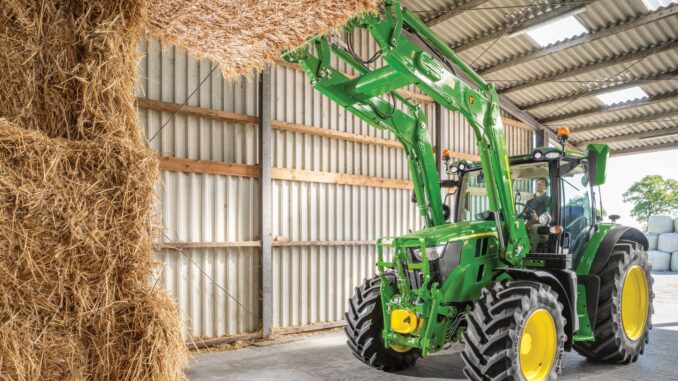
The John Deere 3320 is a compact utility tractor in Deere’s 3000 Twenty Series, covered by the North American operator’s manual alongside the 3120, 3520 and 3720 models. For homeowners, acreage owners and DIY users in the USA and Canada, it sits in the sweet spot between a lawn tractor and a larger farm tractor, with enough capability for mowing, loader work, light ground engagement, snow removal and general property maintenance.
This guide is built around the symptoms owners actually notice first, then works back to likely causes, repair choices, routine maintenance, parts planning and a detailed FAQ. It also highlights where a John Deere 3320 repair is realistic at home and where dealer support is the safer call.
General overview of the John Deere 3320
The John Deere 3320 belongs to Deere’s compact utility tractor range rather than the D or S series lawn tractor family, and its operator’s manual groups it with other 3000 Twenty compact tractors sold in North America. That matters because troubleshooting, service intervals and parts ordering are more like a true compact tractor than a residential mower.
Key systems owners should understand on the John Deere 3320 include:
-
Engine and fuel system, including engine oil filter M806419, engine fuel filter MIU00645/MIU800645, primary air filter RE68048 and secondary air filter RE68049.
-
Cooling and front engine drive components, including fan belt LVU11661, thermostat M811034 and lower radiator hose LVU19512.
-
Hydraulic and transmission system, including transmission oil filter LVA13065, in-line hydraulic filter LVA14167 and Low Viscosity Hy-Gard fluid reference TY6342 listed on the maintenance guide.
-
Electrical and operator-presence system, including PTO switch AM118802, seat switch AM124426, neutral start switch RE39116, key RE183935 and battery TY26498.
Several commonly bought John Deere 3320 service and repair parts include LVA21202 filter pack, M806419 oil filter, MIU00645 or MIU800645 fuel filter, RE68048 primary air filter, RE68049 secondary air filter, LVA13065 transmission oil filter, LVU11661 fan belt and AM118802 PTO switch.
John Deere 3320 troubleshooting approach
The best way to troubleshoot a John Deere 3320 is to start with the symptom the owner actually sees, such as cranks but will not start, loses power under load, runs hot, will not move correctly, or blows a fuse or refuses PTO engagement. That symptom-first method helps avoid replacing parts just because they are common failure items.
The main symptom groups on this model are:
-
Starting issues, including no crank, slow crank and crank-no-start.
-
Running issues, including low power, rough running, smoke and stalling under load.
-
PTO, attachment and implement issues, especially when the PTO switch, seat switch or safety circuit interrupts operation.
-
Overheating and leaks, especially around the cooling system, fan belt, hoses, filters and hydraulic components.
-
Transmission and hydraulic complaints, especially where fluid condition, filter restriction or incorrect fluid level becomes a factor.
-
Electrical and safety-switch faults, including seat switch, neutral start switch, battery and key-switch related faults.
Emergency John Deere 3320 repair needs
Some John Deere 3320 problems need immediate attention because they create a safety risk or can turn a manageable repair into a much more expensive one. If the tractor is overheating, leaking fuel or hydraulic oil badly, making sharp drivetrain noises, or defeating safety circuits, stop using it until the fault is identified.
John Deere 3320 starting issues
A no-start fault matters because owners often keep cranking, which can flatten the battery, overheat the starter circuit and hide a simple safety-switch problem. On this model, common causes include weak battery TY26498, neutral start switch RE39116, seat switch AM124426, key issues or fuel/filter restriction.
Common causes:
-
Weak or failed battery.
-
Loose, dirty or corroded battery terminals.
-
Neutral start switch fault.
-
Seat switch or PTO switch fault.
-
Fuel filter restriction or poor fuel supply.
Basic checks:
-
Confirm the PTO is off and range/gear selector is in the correct start position.
-
Check battery cable tightness and visible corrosion.
-
Verify dash lights and listen for starter click versus full silence.
-
Inspect the fuel filter and fuel supply if the engine cranks but does not fire.
-
Stop and test switches properly rather than bypassing safety circuits permanently.
John Deere 3320 running and power-loss problems
If the tractor starts but lacks power, hunts, smokes or stalls under load, continued use can lead to overheating, soot buildup or unnecessary strain on the fuel and air systems. Dirty air filters, restricted fuel filters and overdue engine service are among the first places to look.
Common causes:
-
Clogged primary or secondary air filter.
-
Fuel filter restriction.
-
Old engine oil or overdue maintenance.
-
Cooling system issues causing heat-related power loss.
-
Load too heavy for current range or operating condition.
Basic checks:
-
Inspect the primary air filter RE68048 and replace if dirty or damaged.
-
Check fuel filter service history and fuel quality.
-
Confirm engine oil and coolant are at the proper level.
-
Watch for black smoke, white smoke or overheating signs while testing.
-
Reduce load and retest before assuming a major engine fault.
John Deere 3320 vibration and noise
New vibration or harsh noise should never be ignored because compact tractors often turn a loose driveline, worn implement component or failing bearing into secondary damage quickly. Noise may come from the front accessory drive, cooling fan area, PTO driveline, attachment or loose hardware rather than the engine internals themselves.
Common causes:
-
Worn or loose fan belt LVU11661.
-
Damaged attachment driveline or implement component.
-
Loose wheel, loader-frame or implement mounting hardware.
-
Bearing or pulley wear.
-
Debris contacting rotating components.
Basic checks:
-
Park safely, shut down and let all moving parts stop.
-
Inspect belt condition, guards and obvious looseness around the front of the engine.
-
Check attachment mounting points and PTO shaft condition.
-
Look for bent or damaged rotating parts.
-
Do not continue running if the source cannot be isolated quickly.
John Deere 3320 overheating and leaks
Overheating and active leaks are high-priority because they can damage the engine, hydraulic components and seals fast. The maintenance guide’s listing of the fan belt, thermostat and radiator hose under commonly used repair parts reflects how important the cooling system is on this tractor.
Common causes:
-
Low coolant level.
-
Fan belt wear or slippage.
-
Thermostat issues.
-
Lower radiator hose damage.
-
Hydraulic or filter seepage that worsens under pressure.
Basic checks:
-
Let the tractor cool fully before opening the cooling system.
-
Inspect the fan belt LVU11661 for cracking, glazing or looseness.
-
Check hoses and clamps for damp spots or staining.
-
Inspect the area around filters and hydraulic lines for fresh oil.
-
Stop using the tractor if temperature rises abnormally under light work.
John Deere 3320 transmission and drive problems
Drive complaints on a compact utility tractor can involve more than the transmission alone, especially when hydraulic filtration, fluid quality and operator controls all influence movement and response. Restricted filters or neglected fluid service are common starting points before deeper hydraulic diagnosis.
Common causes:
-
Low or incorrect hydraulic/transmission fluid.
-
Restricted transmission oil filter LVA13065.
-
Hydraulic filter issues, including in-line filter LVA14167 on equipped setups.
-
Linkage or control adjustment issues.
-
Internal transmission or hydraulic faults needing test equipment.
Basic checks:
-
Verify correct fluid type and level before further testing.
-
Check whether the transmission filter is overdue for replacement.
-
Inspect for external leaks around hoses, filters and housings.
-
Note whether the issue affects forward, reverse, steering, loader or three-point functions.
-
Move to dealer diagnosis if multiple hydraulic functions are weak at the same time.
John Deere 3320 electrical problems
Electrical issues often show up as intermittent starting, dead lights, inoperative PTO or nuisance shutdowns. Because the 3320 uses safety and operator-presence switches, many electrical faults are simple switch or connection problems rather than major harness failures.
Common causes:
-
Weak battery or bad terminal connection.
-
Failed PTO switch AM118802.
-
Failed seat switch AM124426.
-
Neutral start switch RE39116 issue.
-
Faulty key or ignition-related switch component.
Basic checks:
-
Start with the battery and cable ends.
-
Check whether the problem changes with seat position, PTO position or neutral setting.
-
Inspect visible wiring near switches for rubbing or broken connectors.
-
Replace obviously failed switches with the correct OEM part number when possible.
-
Avoid random bypasses that defeat the tractor’s safety design.
DIY or dealer?
On the John Deere 3320, the normal line is fairly clear: routine service, filters, battery work, switch replacement and basic cooling-system inspections are realistic for a careful owner, while hydraulic diagnosis, internal transmission work, advanced electrical tracing and engine internal repairs usually justify dealer tools and experience.
Good DIY jobs on a John Deere 3320
-
Engine oil and oil filter service with M806419.
-
Fuel filter replacement using MIU00645 or MIU800645 cross-reference parts.
-
Air filter service with RE68048 and RE68049.
-
Transmission filter replacement at the listed interval, if access and fluid-handling equipment are adequate.
-
Battery replacement, terminal cleaning and basic switch replacement.
-
Fan belt inspection and straightforward replacement where access is clear.
Advanced DIY or dealer jobs
-
Hydraulic pressure and flow diagnosis.
-
Internal transmission or hydrostatic troubleshooting.
-
Engine overheating that continues after obvious external fixes.
-
Repeated electrical faults that need meter-based circuit tracing.
-
Structural loader, front axle or driveline repairs.
Skill level guide
-
Beginner: battery care, air filter checks, light bulb replacement, basic visual inspections.
-
Intermediate: engine oil and filter changes, fuel filter replacement, fan belt replacement, switch replacement.
-
Advanced: transmission filter and fluid service, deeper electrical diagnostics, cooling-system component replacement, hydraulic fault isolation.
Parts for a John Deere 3320: OEM vs aftermarket
Before ordering any John Deere 3320 repair part, collect the full model name, tractor Product Identification Number, engine model and serial, and the exact attachment or implement details if the problem involves a mower, loader, backhoe or snow equipment. The operator’s manual specifically identifies the covered models by PIN range, and the maintenance guide also shows that different systems use model-specific filter and switch references.
For a John Deere 3320, OEM parts are usually the safest choice for filters with exact fit requirements, belts, safety switches and cooling-system parts because fit and calibration matter. Aftermarket options can make sense for batteries and some service consumables, but only when the seller clearly cross-references the 3320 and the exact OEM part number.
Manuals and diagrams for the John Deere 3320
These are the most useful places to confirm fitment, intervals and exploded diagrams before buying or repairing parts:
-
John Deere operator’s manual – confirms the 3320 is covered under the North American compact utility tractor manual and is the first source for operating, service-interval and identification guidance.
-
Green Farm Parts 3320 maintenance guide – useful for common maintenance parts, interval summaries and frequently purchased repair items tied to the 3320.
-
Green Farm Parts illustrated parts lookup – useful for illustrated diagrams and part-number searching across Deere equipment.
-
Jack’s Small Engines 3320 parts diagrams – useful as a secondary lookup source for exploded views by assembly.
How to locate John Deere 3320 model, PIN and engine numbers
These numbers matter because the John Deere 3320 shares family-level documentation with nearby models, and exact serial information helps avoid ordering the wrong switch, hose, filter or tractor-specific option part.
-
Park the tractor safely on level ground, shut it off and let hot components cool.
-
Find the tractor identification tag or Product Identification Number plate on the machine frame area specified in the operator’s manual for your configuration.
-
Record the full model designation exactly as shown, including any transmission or cab-related specification differences.
-
Locate the engine model and serial information on the engine tag before ordering engine filters, cooling parts or fuel-system parts.
-
If ordering attachment-related parts, record the attachment model and serial separately because loader, mower and other implements are not identified by the tractor PIN alone.
Buying John Deere 3320 parts online and locally
The best buying strategy is to identify the exact OEM number first, then compare online and local options based on shipping time, return policy and whether the part is serial-sensitive. That approach is especially important on compact tractors where a switch, filter or hose may look similar but fit differently.
-
Online: use John Deere manuals, Green Farm Parts and Jack’s Small Engines to confirm diagrams and part references before checkout.
-
Dealer counter: best for serial-number-sensitive items, hydraulic parts, cooling-system parts and anything where superseded Deere numbers may apply.
-
Retail stores: acceptable for batteries, fluids and some filters only if the packaging clearly cross-references the John Deere 3320 and the exact OEM part number.
Step-by-step John Deere 3320 fitting guide for common parts
Below are four of the highest-value DIY service jobs on this tractor because they directly affect starting reliability, power, heat control and long-term wear.
Replacing the John Deere 3320 engine oil filter
This job helps protect the engine and is one of the most routine owner service tasks on the 3320.
-
Warm the engine briefly, park safely and shut it down.
-
Drain the engine oil into a suitable pan.
-
Remove the old oil filter M806419 and wipe the sealing surface clean.
-
Lightly oil the gasket on the new filter and install it by hand to the correct tightness.
-
Refill with the correct engine oil, start the engine, check for leaks and confirm the oil level after shutdown.
Replacing the John Deere 3320 fuel filter
A fresh fuel filter often fixes hard starting, weak running and power loss caused by restricted fuel flow.
-
Shut the tractor down and clean around the filter area first.
-
Remove the old fuel filter MIU00645 or MIU800645 carefully to limit contamination.
-
Install the new filter with the correct seals and orientation.
-
Prime or bleed the fuel system as required for your setup.
-
Start the engine and check for leaks, air in the system or hesitation under load.
Servicing the John Deere 3320 air filters
Air filter service is one of the fastest ways to restore breathing and protect the engine in dusty conditions.
-
Open the air cleaner housing and remove the primary filter RE68048.
-
Inspect the primary element for heavy dust loading, damage or oil contamination.
-
Check the secondary filter RE68049 and replace it if dirty, damaged or due for service.
-
Clean the housing and sealing surfaces without pushing dirt into the intake.
-
Reassemble carefully so the cover seals evenly.
Replacing the John Deere 3320 transmission oil filter
This service supports hydraulic and transmission performance and should be handled cleanly because contamination is costly on compact tractors.
-
Park on level ground and lower implements safely.
-
Clean the area around the transmission oil filter LVA13065 before removal.
-
Remove the old filter and catch any draining fluid.
-
Install the new filter, refill or top up with the correct hydraulic/transmission fluid and inspect nearby hoses or fittings.
-
Start the tractor, cycle hydraulic functions, then recheck fluid level and leaks.
Maintenance to prevent John Deere 3320 problems
Routine maintenance is what keeps a John Deere 3320 from developing the same faults over and over again. The maintenance guide for this model centers heavily on clean filters, scheduled oil changes, air system service and transmission filtration, which lines up with the most common owner complaints on compact tractors.
Focus areas:
-
Starting reliability: keep the battery healthy, terminals clean, fuel filter fresh and safety switches working properly.
-
Engine power and clean running: service air filters RE68048 and RE68049 and keep fuel filtration current.
-
Overheating prevention: inspect the fan belt, thermostat area and radiator hose condition regularly.
-
Hydraulic and drive performance: replace LVA13065 on schedule and use the correct Hy-Gard type fluid reference for the tractor.
-
Electrical reliability: replace weak switches and corroded connections before they create intermittent faults.
John Deere 3320 maintenance schedule and yearly checklist
The published 3320 maintenance references available here clearly identify several recurring intervals, especially 50-hour/200-hour engine service points, 400-hour transmission and fuel filter service, 50-hour cab air/recirculation filter service where equipped, and annual air-filter attention based on conditions.
Daily or before each use
-
Check engine oil level.
-
Check coolant level and look for leaks.
-
Inspect for loose parts, fluid leaks and damaged hoses.
-
Confirm battery cables, lights and safety systems appear normal.
-
Remove heavy debris from engine and cooling areas.
Every 50 hours
-
Change engine oil and engine oil filter at the initial 50-hour service point listed in the maintenance guide.
-
Clean or replace the air and recirculation filter MIU10010 on cab-equipped machines.
-
Grease chassis and loader points as required for attached equipment.
-
Inspect fan belt condition and cooling-system hardware.
Every 200 hours or yearly
-
Change engine oil and oil filter M806419.
-
Review general engine service condition and record hours.
-
Inspect battery condition and charging performance.
-
Replace or service engine air filters as required by operating conditions.
Every 400 hours
-
Replace transmission oil filter LVA13065.
-
Replace engine fuel filter MIU00645 or MIU800645.
-
Inspect hydraulic filter service needs and fluid condition.
-
Review hydraulic hoses, radiator hose and cooling parts for age or wear.
Seasonal checklist
-
Spring: change overdue engine service items, inspect battery after winter storage and verify cooling system condition before mowing or loader work.
-
Mid-season: clean air intake areas more often in dusty conditions and watch filter restriction closely.
-
Fall or pre-winter: inspect battery strength, check fuel system condition and replace weak cooling or electrical parts before cold-weather starts.
-
Storage period: clean the tractor thoroughly, correct active leaks and avoid parking it with unresolved switch or battery issues.
Repair, upgrade or replace a John Deere 3320?
As a general rule, repair a John Deere 3320 when the problem is isolated to normal wear items, serviceable filters, switches, hoses, belts or routine maintenance neglect. Upgrade when attachments, tires, lighting or comfort features are limiting the tractor more than the tractor itself, and replace only when the machine has stacked hydraulic, engine and structural problems that exceed its value to the owner.
Repair if…
-
The fault is clearly tied to filters, switches, battery, hose, belt or routine service items.
-
The tractor is otherwise structurally sound and starts, drives and operates normally once serviced.
-
Parts are readily available and correctly identified by PIN and OEM number.
Upgrade if…
-
The tractor still works well, but your workload now needs different implements or better operator comfort.
-
You mainly need capability gains rather than a whole new machine.
-
The cost is concentrated in accessories rather than core tractor systems.
Replace if…
-
The machine has major engine, transmission and hydraulic issues at the same time.
-
Critical repairs require repeated dealer-level diagnosis with uncertain outcome.
-
Corrosion, structural wear or repeated overheating has affected overall reliability.
John Deere 3320 troubleshooting FAQ
1. Why will my John Deere 3320 not start?
Start with the simple interlock items first. A weak battery, poor cable connection, faulty seat switch, bad PTO switch or neutral start switch can all stop the tractor from starting even when the engine itself is fine. If it cranks but will not fire, move next to fuel supply and filter condition.
2. Why does my John Deere 3320 crank but not fire?
That usually points more toward fuel delivery, air in the fuel system, dirty fuel or a filter issue than a dead battery. Check fuel level, filter age and whether the machine sat unused long enough for fuel quality to become a problem.
3. Why is my John Deere 3320 starting hard when cold?
Cold starts get harder when battery output drops, cables corrode or the fuel system is partly restricted. A marginal battery or an overdue fuel filter can show up in cold weather before it causes obvious problems in warm conditions.
4. Why does my John Deere 3320 lose power under load?
Restricted airflow and restricted fuel flow are both high on the list. Check the primary and secondary air filters first, then review fuel filter condition and whether the tractor is overdue for routine engine service.
5. Why is my John Deere 3320 running rough?
Rough running often comes from dirty filters, contaminated fuel or inconsistent combustion caused by poor maintenance. Start with the air and fuel service items before assuming an injector or internal engine problem.
6. Why is my John Deere 3320 blowing black smoke?
Black smoke usually means the engine is getting more fuel than clean air for the load it is carrying. A dirty air filter, restricted intake or overloading situation is more likely than a major mechanical failure at first glance.
7. Why is my John Deere 3320 overheating?
Overheating should be treated as urgent because the common repair parts list for this model includes the fan belt, thermostat and lower radiator hose, all of which can affect cooling directly. Check coolant level, belt condition and hose condition before using the tractor again.
8. Why is coolant leaking from my John Deere 3320?
Look for hose damage, loose clamps, seepage around the thermostat housing area or age-related cooling component wear. Even a small coolant leak matters because compact tractors can run hot quickly under mowing or loader work.
9. Why is hydraulic oil leaking on my John Deere 3320?
Hydraulic leaks can come from filters, hoses, fittings or seals, and they should not be ignored because low fluid can affect steering, loader response and transmission behavior. Clean the area first, then identify whether the leak appears at a filter, line or component body.
10. Why does my John Deere 3320 move weakly or hesitate?
Low hydraulic or transmission fluid, a restricted transmission oil filter or a broader hydraulic issue are all possible. Since the 3320 maintenance references a 400-hour transmission filter interval, overdue service is one of the first things to rule out.
11. Why won’t my John Deere 3320 PTO engage?
A PTO engagement problem often starts in the switch and safety circuit rather than in the PTO hardware. The common-parts listings specifically include the PTO switch AM118802 and the seat switch AM124426, both of which can interrupt PTO operation.
12. Why does my John Deere 3320 shut off when I leave the seat?
That is usually the operator-presence system doing its job or a seat switch acting up. If shutdown happens inconsistently, inspect the seat switch, connector and seat movement before assuming a larger electrical problem.
13. Why won’t my John Deere 3320 crank in neutral?
A bad or misadjusted neutral start switch is a realistic suspect on this model because RE39116 is listed among commonly purchased repair parts. Also confirm that the control is fully in the required start position before replacing anything.
14. Why does my John Deere 3320 battery keep going dead?
Battery failure, loose terminals, corrosion or a charging-system issue can all produce repeat dead-battery complaints. Since TY26498 is a listed replacement battery for this tractor, battery age alone may be the answer if the unit has been in service for years.
15. Why are the lights not working on my John Deere 3320?
Start with the battery state, fuse condition, bulb condition and visible switch connections. The maintenance parts list includes headlight bulb 57M7166, so simple bulb failure is one of the easy checks before tracing wiring.
16. Why is my John Deere 3320 making a squealing noise?
A squeal from the front of the tractor often points to belt slip, especially if it changes with engine speed or electrical and cooling load. The fan belt LVU11661 is a known service item on this model, so inspect it for glazing, cracking and tension problems.
17. Why is my John Deere 3320 vibrating more than usual?
Check attachments, PTO driveline parts, wheel hardware and any rotating components first. Vibration is not always an engine problem, and continuing to run it can enlarge a simple loose-part issue into a broken bracket or shaft.
18. Why does my John Deere 3320 smell hot after work?
A hot smell can come from a slipping belt, debris around hot engine parts, fluid contacting hot surfaces or an overheating cooling system. Shut the tractor down and inspect before the next use, especially if temperature also seemed elevated.
19. Why does my John Deere 3320 have low hydraulic power?
Weak loader, steering and three-point performance together usually indicate fluid, filtration or hydraulic supply trouble rather than one small isolated fault. Check the fluid level and service status of the transmission and hydraulic filters first.
20. Why does my John Deere 3320 steer poorly?
Poor steering can be tied to low hydraulic fluid, contamination, filter restriction or a larger hydraulic issue. If steering weakness appears together with weak loader response, dealer-level hydraulic testing may be the fastest route.
21. Why is my John Deere 3320 fuel filter clogging often?
Repeated clogging usually points to dirty stored fuel, water contamination or debris in the tank rather than the filter itself being defective. Replace the filter, improve fuel handling and monitor whether contamination returns.
22. Why does my John Deere 3320 air filter get dirty so fast?
This is common in dusty mowing, grading or dry-property work. Deere’s 3320 maintenance guide specifically notes servicing air filters annually and as required by conditions, which means heavy dust justifies more frequent attention than a light-duty schedule.
23. Which oil filter does a John Deere 3320 use?
The 3320 maintenance guide lists engine oil filter M806419. Always cross-check by serial and engine information before ordering, especially when buying aftermarket equivalents.
24. Which fuel filter fits a John Deere 3320?
Available references show MIU00645 and MIU800645 as the fuel-filter listings associated with this model, so it is wise to verify against your serial number or the seller’s fitment database before purchase.
25. Which air filters fit a John Deere 3320?
The standard engine air-filter references in the maintenance guide are RE68048 for the primary filter and RE68049 for the secondary filter. Those are good numbers to start with when building a yearly service order.
26. When should I change the transmission filter on a John Deere 3320?
The 3320 maintenance guide lists the transmission oil filter LVA13065 at a 400-hour replacement interval. If the service history is unknown, many owners treat that as a high-priority baseline service item.
27. What hydraulic fluid should I use in a John Deere 3320?
The maintenance guide references Low Viscosity Hy-Gard in the TY6342 listing for the 3320, along with stated capacity notes tied to transmission type. Use the operator’s manual and the tractor’s exact configuration to confirm the correct fluid for your machine before topping up.
28. Is a John Deere 3320 easy to maintain at home?
Yes, for routine service. The available maintenance references show that the core owner jobs revolve around filters, fluids, belts, battery care and switch replacement, which are all manageable for a careful DIY owner with the right manual and part numbers.
29. Should I buy OEM John Deere 3320 parts?
OEM is usually the better choice for belts, safety switches, cooling parts and filters where fit is critical. Aftermarket can be fine for batteries and selected consumables, but only when the cross-reference is exact and the seller is reputable.
30. Where can I find a John Deere 3320 parts diagram?
The easiest starting points are Deere-linked manuals and dedicated Deere parts sites. Green Farm Parts and Jack’s Small Engines both provide diagram-based lookup paths for the 3320, while Deere’s manual site confirms the correct tractor family and documentation base.
31. What is the best first repair step for an unknown John Deere 3320 issue?
Baseline service is usually the smartest first move if the tractor is new to you and the maintenance history is unclear. Fresh engine oil, known-good filters, a checked battery and a full visual inspection often solve small issues or make the real fault much easier to pinpoint.
32. When is a John Deere 3320 problem dealer-only?
Move to dealer help when the tractor has internal hydraulic or transmission symptoms, repeated electrical faults that survive basic switch and battery work, or persistent overheating after obvious external cooling issues have been corrected. Those jobs usually need gauges, factory procedures or deeper teardown than most homeowners want to tackle safely.