
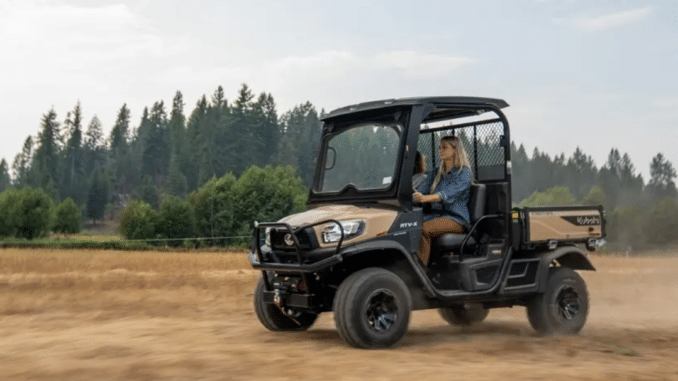
The Kubota RTV 900 is a diesel utility vehicle built for hauling, property work, trail use, and light commercial jobs, with a hydrostatic/VHT-style drive system, 2WD/4WD capability, and maintenance intervals laid out clearly in Kubota’s operator material. This guide is structured for DIY owners in the USA and Canada, with symptom-first troubleshooting, repair boundaries, maintenance intervals, parts guidance, and a large FAQ section ready for a WordPress post.
Introduction to the Kubota RTV 900
The Kubota RTV 900 is a diesel-powered utility vehicle rather than a lawn tractor, and it is designed for cargo carrying, towing, off-road property work, and general farm, estate, and jobsite use. Kubota’s operator documentation shows the RTV900 as part of its utility vehicle range, with core systems including the diesel engine, transmission/hydraulic drive components, steering, braking, cooling, and electrical/safety systems.
For homeowner and acreage owners, the Kubota RTV 900 usually sits in the “work-first” category: stronger and heavier-duty than a recreational UTV, but still simple enough for many routine service jobs at home. This article covers Kubota RTV 900 repair basics, troubleshooting steps, maintenance planning, parts buying advice, and common owner questions.
General overview of the Kubota RTV 900
Within the Kubota lineup, the RTV 900 belongs to the RTV utility vehicle family and was sold in multiple trims and serial ranges, which is why owners should always confirm exact model designation and PIN before ordering parts. That matters because service kits, filters, switches, and even some assemblies can vary by production range or equipment package.
Key systems on the Kubota RTV 900 include:
-
Engine and fuel system: diesel engine, fuel filter, air cleaner, intake plumbing, glow plug starting aid, and injection-related fuel delivery components.
-
Drive system: VHT/HST-style transmission components, transmission fluid and filters, 2WD/4WD system, differential lock, and related linkage.
-
Cooling system: radiator, screen, oil cooler net, coolant reservoir, hoses, fan belt, and temperature monitoring.
-
Electrical system: battery, starting circuit, safety interlocks, lights, brake light switch, and fuse protection.
-
Chassis and utility systems: brakes, steering, suspension points, cargo bed pivots, and hydraulic dump or auxiliary hydraulics where fitted.
Common service parts owners often buy for the Kubota RTV 900 include the filter maintenance kit 77700-01819, air filter outer element K1211-82320, engine oil filter HH150-32430, hydraulic suction filter HHK72-14080, HST filter HHK70-14070, and fuel filter 12581-43012 for the standard RTV900 kit listed by Messicks. Kubota/Messicks listings also show HHK70-14073 as an oil filter used in RTV900-series catalog pages, which is another reminder to match by serial and parts diagram rather than by model name alone.
Kubota RTV 900 troubleshooting approach
The best way to diagnose a Kubota RTV 900 problem is to start with what the owner actually notices: hard starting, weak drive, overheating, warning lights, rough running, unusual noise, or poor shifting. That symptom-first method keeps owners from buying random parts before basic checks like fuel supply, air restriction, safety switch operation, fluid level, or belt tension.
Main symptom groups for this model include:
-
Starting issues
-
Running or power issues
-
Vibration and noise
-
Overheating and leaks
-
Transmission and drive complaints
-
Electrical and safety-switch faults
Because the RTV 900 is diesel and hydrostatic-based, many “major” complaints start from neglected maintenance items such as clogged filters, dirty cooling screens, weak battery condition, or linkage adjustment issues rather than catastrophic failure.
Emergency and immediate repair needs on the Kubota RTV 900
Some Kubota RTV 900 faults need attention right away because they create a safety risk or can quickly damage expensive components. Kubota specifically flags overheating warnings, brake problems, damaged ROPS/seat belt components, fuel leaks, and unsafe starting interlock issues as matters that should not be ignored.
4.1 Kubota RTV 900 starting issues
When the Kubota RTV 900 will not crank, cranks slowly, or starts only intermittently, the problem may be in the battery, cable connections, safety interlock circuit, or fuel/air side if it cranks but will not fire. This matters because repeated cranking strains the battery and starter while masking the real fault.
Common causes:
-
Weak battery or poor terminal connection.
-
Faulty range shift safety switch or hydraulic outlet safety switch on equipped machines.
-
Dirty fuel filter or air in the fuel system.
-
Glow-plug/preheat issues in cold weather.
-
Corroded ground cable or fuse-related electrical fault.
Basic owner checks:
-
Confirm the battery is charged and terminals are clean and tight.
-
Make sure the machine is in neutral with parking brake set and any hydraulic outlet control in the correct position.
-
Check whether the engine cranks normally or only clicks.
-
Inspect fuel level, fuel filter condition, and signs of air in the fuel system.
-
If it still will not start, stop before bypassing any safety circuit and move toward proper testing or dealer diagnosis.
4.2 Kubota RTV 900 running issues
If the Kubota RTV 900 starts but runs rough, smokes, lacks power, or stalls under load, begin with airflow, fuel quality, fuel filtration, and basic service history. Diesel utility vehicles often feel “mechanical” when the root cause is simply restricted intake or contaminated fuel.
Common causes:
-
Dirty air cleaner primary or secondary element.
-
Clogged fuel filter.
-
Old fuel or water contamination in diesel fuel.
-
Dirty spark arrester or muffler restriction affecting performance.
-
Injection or valve-train issues beyond normal DIY level.
Basic owner checks:
-
Inspect and clean the primary air cleaner as allowed by the maintenance schedule.
-
Replace the fuel filter if service history is unknown or fuel flow looks poor.
-
Check the muffler drain and spark arrester condition where applicable.
-
Verify fresh, clean diesel fuel is in the tank.
-
If power is still poor, dealer diagnosis is usually the sensible next step.
4.3 Kubota RTV 900 vibration and noise
New vibration, rattling, driveline chatter, or harsh mechanical noise on a Kubota RTV 900 should be treated seriously because loose wheel hardware, worn driveline parts, or damaged rotating components can become safety issues fast. Even a simple wheel-bolt problem can escalate if the machine keeps being used.
Common causes:
-
Loose wheel bolts.
-
Fan belt wear or poor belt tension.
-
Worn U-joints, prop shaft parts, or driveline hardware.
-
Muffler, guard, or cargo bed hardware looseness.
-
Tire damage or uneven wear.
Basic owner checks:
-
Recheck wheel bolt torque against Kubota’s stated 55.3 to 66.4 ft-lb range.
-
Inspect tires for damage, uneven wear, or low inflation.
-
Check the alternator/fan belt for cracking and correct deflection.
-
Listen for whether the noise changes with engine rpm, vehicle speed, or 4WD selection.
-
Stop using the machine if the noise is severe or comes from the driveline or brakes.
4.4 Kubota RTV 900 overheating and leaks
A hot-running Kubota RTV 900 often points to airflow restriction before it points to internal engine trouble. The operator manual puts repeated emphasis on cleaning the radiator screen and oil cooler net and checking coolant level as part of regular service.
Common causes:
-
Plugged radiator screen or oil cooler net.
-
Low coolant level.
-
Loose or aging radiator hose/clamp.
-
Fan belt loose enough to reduce cooling performance.
-
Mud and debris buildup from heavy off-road use.
Basic owner checks:
-
Clean the radiator screen and oil cooler net fully.
-
Check coolant level only when the system is cool.
-
Inspect the fan belt for tension and condition.
-
Look for hose seepage, clamp looseness, or coolant stains.
-
If the gauge rises rapidly again after cleaning, stop and escalate the repair.
4.5 Kubota RTV 900 transmission and drive problems
The Kubota RTV 900 uses a variable hydro transmission style system, so complaints about sluggish takeoff, harsh deceleration, weak pull, or difficult shifting need to be approached differently than a belt-drive mower or geared tractor. Fluid condition, filter restriction, linkage adjustment, and operator technique all affect how these machines feel.
Common causes:
-
Old transmission/hydraulic fluid.
-
Restricted HST or suction filter.
-
VHT linkage issues, neutral spring concerns, or pressure release adjustment problems.
-
Incorrect warm-up in cold weather.
-
Internal transmission wear requiring specialist diagnosis.
Basic owner checks:
-
Verify transmission fluid level and service history.
-
Check whether both transmission filters have been replaced on schedule.
-
Inspect linkage feel and obvious damage around shift and release mechanisms.
-
Warm the machine properly before expecting full drive response in cold conditions.
-
If drive loss is significant, avoid continued use and seek dealer-level testing.
4.6 Kubota RTV 900 electrical problems
Electrical issues on the Kubota RTV 900 usually show up as no-crank faults, weak lighting, blown fuses, charging complaints, or safety interlock confusion. Because this is a work vehicle that sees mud, moisture, and vibration, connections and switch circuits are often part of the story.
Common causes:
-
Battery condition or corroded terminals.
-
Faulty brake light or safety-related switches.
-
Blown fuse or slow-blow fuse.
-
Alternator belt too loose for proper charging.
-
Damaged wiring around chassis pivot or bed movement areas.
Basic owner checks:
-
Test battery condition and inspect terminals.
-
Check lights, indicators, and gauges for pattern clues.
-
Inspect standard and slow-blow fuses.
-
Confirm alternator/fan belt tension is within spec.
-
Avoid jumping straight to module replacement without circuit testing.
DIY or dealer? Repair decision guide
For the Kubota RTV 900, the usual line is simple: routine service, visual inspection, basic filters, fluids, batteries, belts, and straightforward adjustments are realistic DIY jobs, while fuel injection work, internal transmission work, advanced electrical diagnosis, and structural/safety repairs are usually dealer territory. Kubota’s own operator manual says minor maintenance is covered there, while major repairs belong in the workshop manual and are typically performed by dealer technicians.
Good DIY jobs
-
Engine oil and oil filter changes.
-
Fuel filter replacement and fuel-system bleeding.
-
Air filter inspection and replacement.
-
Battery cleaning or replacement.
-
Radiator screen and oil cooler net cleaning.
-
Fan/alternator belt inspection and tension adjustment.
-
Greasing service points and basic visual safety checks.
Advanced DIY or dealer jobs
-
Brake adjustment and hydraulic brake inspection.
-
Transmission fluid and dual-filter service if access or contamination is a concern.
-
Power steering hydraulic service.
-
VHT neutral spring or pressure release diagnostics.
-
Glow plug circuit testing, charging-system diagnosis, and harness repairs.
-
Valve clearance adjustment, injector work, and injection-pump testing.
Skill level guide
-
Beginner: air filter checks, battery inspection, radiator screen cleaning, tire pressure, fluid-level checks.
-
Intermediate: oil and filter service, fuel filter replacement, belt tension adjustment, greasing, fuse and light repairs.
-
Advanced: transmission service, brake diagnosis, hydraulic troubleshooting, electrical testing with a meter, linkage adjustment.
Kubota RTV 900 parts needed, OEM vs aftermarket, and what information you need
Before ordering Kubota RTV 900 parts, gather the full model name, the product identification number or serial/PIN, and the exact equipment setup or trim. For a utility vehicle like this, the engine family, production range, and option package can affect filters, switches, and other service parts.
Use the following checklist before you buy anything:
-
Full model name, such as RTV900 and exact suffix/series if shown.
-
Product Identification Number / serial number from the machine tag.
-
Engine model and any engine serial details shown on the engine labeling.
-
Whether the unit has hydraulic dump, auxiliary hydraulics, cab kit, or other relevant options.
Service parts table
For OEM versus aftermarket, OEM is the safer choice for filters in hydraulic/transmission circuits, fit-sensitive seals, safety switches, and any part where a wrong match could create a bigger failure. Aftermarket is usually more acceptable for batteries, some air or fuel filters from reputable cross-reference brands, tires, bulbs, and accessory items, as long as the listing clearly matches the RTV 900 by serial range.
Where to find Kubota RTV 900 parts diagrams and service manuals
For official operating and maintenance information, the Kubota RTV900 operator’s manual is the first place to start because it includes the service interval chart, daily checks, capacities, and procedures for basic maintenance. Kubota also provides operator manual access through Kubota prints/manual listings, which is useful when you need the correct edition for a given machine.
Helpful sources include:
-
Official operator’s manual: the RTV900 operator’s manual covers service intervals, daily checks, lubrication points, capacities, and troubleshooting basics.
-
Official Kubota manuals portal / print listings: useful for locating current operator manual sources and confirming you are using the proper publication.
-
Messicks RTV900 parts catalog pages: strong for exploded diagrams, maintenance kit references, and model-variant breakdowns.
-
Messicks RTV900 service manual listing: useful when you want to confirm that a dealer-level workshop manual exists for more advanced repairs.
Useful links for a published WordPress post:
How to locate model, serial, and engine numbers on the Kubota RTV 900
These numbers matter because Kubota RTV 900 parts can vary by production range and configuration, and the wrong filter, switch, or hydraulic part can waste time and money. Even when two machines both say RTV900, the serial range can change what actually fits.
Use this process:
-
Park the machine safely on level ground, set the parking brake, and shut it off.
-
Look for the machine identification plate or label on the vehicle chassis/frame area as described in your manual and compare the exact model text carefully.
-
Record the full PIN or serial number exactly as shown, including any letters.
-
Open the engine access area and photograph the engine identification label or stamped number if visible.
-
Save those details before ordering parts online or calling a dealer counter.
Buying Kubota RTV 900 parts online and in physical stores
The best buying strategy is to confirm the OEM number first, then decide whether you want genuine Kubota or a trusted aftermarket cross-reference. For the RTV 900, this is especially important with filters, hydraulic parts, and serial-sensitive components.
-
Online: use diagrams and kit pages to match the exact part number, then double-check serial applicability before checkout.
-
Dealer counter: best for serial-specific filters, switches, hydraulic parts, and anything unclear in the parts diagram.
-
Retail stores: acceptable for common consumables like batteries, bulbs, and some cross-referenced filters, but only if the packaging clearly lists the correct Kubota application.
Useful shopping/research URLs:
Step-by-step fitting guide for common Kubota RTV 900 parts
These are among the most practical DIY service jobs on a Kubota RTV 900 because they directly affect starting, running quality, reliability, and expensive system protection. Always work on a cool, parked machine with the brake set and the key removed.
How to replace the Kubota RTV 900 fuel filter
A fresh fuel filter helps cure hard starting, low power, and fuel starvation symptoms on the Kubota RTV 900.
-
Shut off the engine and isolate fuel flow if your setup allows it.
-
Place rags below the filter area to catch diesel drips.
-
Remove the old filter carefully and compare the new filter with the old one before installation.
-
Install the new filter hand-tight and reopen fuel supply.
-
Bleed air from the system at the filter housing or pump point as required, then restart and check for leaks.
How to service the Kubota RTV 900 air filter
Air filter service helps with black smoke, poor power, and dusty-environment reliability.
-
Open the access area and remove the air cleaner cover carefully.
-
Inspect the primary element for heavy dust loading or damage.
-
Clean or replace only as allowed by the maintenance schedule and element condition.
-
Check the secondary element and replace yearly where specified.
-
Reassemble carefully so no dirt enters the intake tract.
How to change the Kubota RTV 900 engine oil and oil filter
Regular oil service protects the diesel engine and is one of the highest-value DIY jobs on this machine.
-
Warm the engine briefly, then shut it down and park safely.
-
Drain the engine oil into a suitable container.
-
Remove the old oil filter and lubricate the gasket on the new filter before fitting.
-
Refill with the correct oil type and quantity from the operator’s manual.
-
Start the engine, check for leaks, then shut down and recheck the level.
How to adjust Kubota RTV 900 alternator/fan belt tension
Correct belt tension helps charging performance and cooling-system reliability on the Kubota RTV 900.
-
Raise access as needed and inspect the belt for cracks or glazing.
-
Check belt deflection at mid-span; Kubota service guidance cited by Messicks states about 0.28 to 0.35 inch, or 7 to 9 mm.
-
Loosen the alternator mounting hardware.
-
Lever the alternator outward until tension is correct, then retighten bolts securely.
-
Recheck tension after a short run.
Maintenance to prevent Kubota RTV 900 problems returning
Most recurring Kubota RTV 900 failures come back to deferred maintenance rather than one-off bad luck. A clean cooling package, fresh filters, and regular checks do more to prevent downtime than chasing symptoms after the machine is already acting up.
Focus areas include:
-
Starting reliability: keep the battery charged, terminals clean, fuel filter fresh, and safety switch operation checked.
-
Engine performance: service air and fuel filters on schedule and use clean diesel.
-
Fire and overheating prevention: clean the radiator screen, oil cooler net, and debris around the engine and muffler area.
-
Drive performance: change transmission fluid and filters at the correct intervals and do not ignore shifting or deceleration changes.
-
Electrical reliability: inspect lighting, fuses, charging belt tension, and corrosion at terminals and grounds.
Kubota RTV 900 maintenance schedule and year-round checklist
Kubota’s RTV900 operator manual lays out maintenance by hour interval, and RTV900 parts catalog pages also summarize major interval items such as engine oil, transmission filters, and fuel filter timing. The schedule below follows that maintenance-chart-first approach and stays close to official service checkpoints.
Daily / before each use
-
Walk-around inspection for loose, damaged, or leaking parts.
-
Check engine oil level.
-
Check transmission fluid level.
-
Check coolant level and clean radiator screen/oil cooler net.
-
Check brake function, lights, gauges, tire pressure, and safety items such as seat belt/ROPS.
Every 50 hours
-
Grease specified fittings and pivots.
-
Oil specified cables and linkage points.
-
Check engine start system / safety interlock operation.
-
For new vehicles, Kubota also notes special early-use attention during break-in.
Every 100 hours
-
Check VHT neutral spring and VHT pressure release.
-
Check wheel bolt torque.
-
Clean air cleaner primary element.
-
Adjust alternator belt tension.
-
Check fuel line, fuel filter, battery condition, toe-in, and clean muffler.
Every 150 hours
-
Clean air cleaner primary element again at the listed interval.
Every 200 hours or yearly
-
Replace engine oil filter and change engine oil.
-
Replace transmission oil filters, including HST and suction filters as listed.
-
Change hydraulic lift or auxiliary oil where equipped.
-
Check brake pedal, brake hose/pipe, brake light switch, radiator hoses, and power steering line.
-
Replace air cleaner primary and secondary elements every 1 year.
Every 400 to 500 hours
-
Change knuckle case oil, transmission fluid, hydraulic auxiliary tank oil filter, and front axle case oil at the listed higher intervals.
-
Replace fuel filter at 500 hours.
Longer intervals
-
Adjust engine valve clearance at 800 hours.
-
Check fuel injection nozzle pressure at 1500 hours and injection pump at 3000 hours.
-
Replace coolant, brake fluid, and various hoses on the time-based intervals stated by Kubota.
Seasonal checklist
-
Spring / return to use: battery check, tire pressure, fluid levels, coolant protection, full cleaning, and overdue filter service.
-
Mid-season: radiator screen cleaning, wheel bolt recheck, belt inspection, and grease service if used in wet or muddy conditions.
-
Fall / storage prep: clean machine thoroughly, complete due oil and filter service, inspect fuel system, and follow Kubota storage guidance.
Repair, upgrade, or replace?
For a Kubota RTV 900, repair usually makes sense when the chassis and driveline are basically sound and the issue is limited to normal wear parts, service neglect, or isolated bolt-on components. Upgrade makes sense when the machine works but your use demands better comfort, smoother deceleration behavior, or accessory support, while replacement becomes more realistic when transmission, engine, and structural issues stack up together.
Repair if…
-
The problem is clearly in filters, fluids, battery, cables, belt tension, brakes, or a specific switch.
-
The machine starts and drives but shows maintenance-related symptoms.
-
Parts are available and the rest of the vehicle is solid.
Upgrade if…
-
You use the machine heavily and want accessories or comfort improvements.
-
You want smoother hydro deceleration behavior using a known RTV aftermarket solution like a coast valve kit.
-
The base machine is healthy but your workload has grown.
Replace if…
-
Engine, transmission, and hydraulic problems are all present at once.
-
The machine has severe corrosion, structural damage, or recurring safety-related issues.
-
Repair cost approaches the value of a sound replacement utility vehicle.
Expanded troubleshooting FAQ
1. Why will my Kubota RTV 900 not start?
If the Kubota RTV 900 will not start, begin with battery charge, terminal condition, neutral position, parking brake status, and safety switch operation. If it cranks but does not fire, move next to fuel supply, fuel filter condition, air in the system, and cold-start/preheat issues.
2. Why does my Kubota RTV 900 crank but not fire?
That usually points more toward fuel delivery, air in the fuel system, glow-plug assistance, or restricted filtration than toward a starter issue. A fresh fuel filter and proper bleeding are common first fixes when service history is unknown.
3. Why is my Kubota RTV 900 hard to start when cold?
Cold weather starting on the RTV 900 depends on good battery condition, correct preheat operation, and clean fuel delivery. Weak battery performance or marginal fuel filtration becomes more obvious as temperatures drop.
4. Why does my Kubota RTV 900 click but not crank?
A click with no cranking often means low battery voltage, dirty battery terminals, poor ground connection, or a starter circuit issue. Before replacing parts, fully charge and test the battery and clean all main cable connections.
5. Why does my Kubota RTV 900 stall after starting?
That can happen when fuel flow is restricted, air remains in the fuel system, or the engine is not getting enough clean air. Start with the fuel filter, air cleaner, and fuel quality before assuming injection trouble.
6. Why does my Kubota RTV 900 feel low on power?
Low power often comes from a clogged air filter, restricted fuel filter, dirty spark arrester or muffler, or overdue service. Diesel utility vehicles can still idle and move while lacking proper load power, so do not judge health by idle quality alone.
7. Why is my Kubota RTV 900 smoking?
Smoke color matters, but in general poor airflow, poor fuel quality, or engine wear can all contribute. Owners should first check the air cleaner, fuel condition, and whether maintenance has been skipped before moving to dealer diagnosis.
8. Why is my Kubota RTV 900 overheating?
The RTV 900 often overheats because the radiator screen or oil cooler net is packed with debris, or coolant level is low. Kubota specifically includes these cooling checks in routine service for a reason.
9. Why does my Kubota RTV 900 run hot only under load?
That pattern often suggests partially blocked airflow, weak belt tension affecting cooling, or a cooling system that is marginal but not yet fully failed. Clean first, inspect second, and stop using the machine if the gauge keeps climbing.
10. Why is coolant leaking from my Kubota RTV 900?
Look for hose seepage, clamp looseness, radiator damage, or overflow caused by overheating. Time-based hose replacement is part of Kubota’s long-term maintenance schedule, so older machines deserve a careful hose inspection.
11. Why is my Kubota RTV 900 losing transmission performance?
Old fluid, restricted filters, or hydro/VHT linkage issues are more common than instant internal failure. Check fluid condition and filter history before assuming the transmission itself is bad.
12. Why does my Kubota RTV 900 feel sluggish when taking off?
Sluggish response can come from cold oil, overdue transmission service, or linkage issues. Let the machine warm up properly and confirm fluid and filter service history first.
13. Why is my Kubota RTV 900 hard to shift?
Hydrostatic utility vehicles often shift poorly when drivetrain load is not released cleanly or when linkage needs attention. A full stop, proper pedal release, and correct adjustment can make a noticeable difference before deeper repair is needed.
14. Why does my Kubota RTV 900 stop abruptly when I lift off the pedal?
Strong engine/hydro braking is normal to a degree on this platform, but excessive harshness can feel more noticeable on some units. Some owners use aftermarket coast valve kits to soften deceleration, though that is a preference upgrade rather than a factory-required repair.
15. Why does my Kubota RTV 900 not move in 4WD correctly?
Check whether 4WD selection is engaging properly and whether tire issues, driveline wear, or linkage problems are present. If the complaint includes grinding or binding, stop using the machine until the driveline is inspected.
16. Why is my Kubota RTV 900 making a whining noise?
A whine can come from normal hydro behavior, but a new or louder whine may point to fluid condition, filter restriction, or internal wear. Compare when it happens: idle, acceleration, deceleration, or only under heavy load.
17. Why is my Kubota RTV 900 vibrating while driving?
Start with tires, wheel bolts, and visible driveline hardware. Kubota’s service checks specifically include wheel bolt torque, which makes that one of the first things to verify.
18. Why are the wheel bolts on my Kubota RTV 900 important to recheck?
Loose wheel hardware can quickly turn into wheel damage, hub damage, or a safety event. Messicks’ service-check summary cites Kubota’s wheel bolt torque range at 55.3 to 66.4 ft-lb.
19. Why is my Kubota RTV 900 belt squealing?
On this machine, owners usually mean the alternator/fan belt rather than a mower-style drive belt. Squeal usually means loose tension, contamination, or belt wear, and Kubota specifies a deflection check for this belt.
20. What is the correct Kubota RTV 900 fan belt tension?
The Kubota service-check guidance summarized by Messicks states belt deflection should be about 0.28 to 0.35 inch, or 7 to 9 mm, when pressed at the middle of the span. Always inspect the belt for cracks before adjusting tension.
21. Why does my Kubota RTV 900 battery keep going flat?
A weak battery, poor cable connections, charging issues, or parasitic draw can all cause repeat discharge. Start with battery condition and alternator belt tension because a loose belt can reduce charging performance.
22. Why are my Kubota RTV 900 lights dim?
Dim lights usually point to low battery voltage, poor charging, corroded terminals, or bad grounds. If light output changes with engine speed, charging system inspection moves higher on the list.
23. Why does my Kubota RTV 900 blow fuses?
Blown fuses usually mean a short, pinched wire, wet connector, or failed component on that circuit. Replace the fuse once for testing, but if it blows again, trace the circuit instead of upsizing the fuse.
24. Why does my Kubota RTV 900 safety switch seem faulty?
Kubota includes starting interlocks that prevent unsafe cranking in certain lever positions, and service checks are available for those systems. If the machine starts when it should not, or refuses to crank when all conditions seem correct, the safety circuit needs proper testing.
25. How often should I change Kubota RTV 900 engine oil?
Kubota’s operator manual lists engine oil and engine oil filter service at the 200-hour interval in the periodic service section, while new machines also receive break-in attention. Owners who work in severe dust, mud, heat, or short-trip service may choose to inspect more often even if the formal interval has not arrived.
26. How often should I replace Kubota RTV 900 transmission filters?
The operator manual lists transmission-related filter replacement in the 200-hour service section, and RTV900 catalog summaries also show transmission and HST filters on 200-hour intervals. That is one reason buying the correct filter set matters on this machine.
27. How often should I replace the Kubota RTV 900 fuel filter?
Kubota lists fuel filter replacement at 500 hours in the operator manual’s periodic service section, while routine checking of the fuel line and filter condition occurs earlier. In real-world homeowner use, contaminated fuel may force replacement sooner.
28. How often should I service the Kubota RTV 900 air filter?
The primary element is cleaned at listed intervals such as 100 and 150 hours, and both primary and secondary elements are replaced yearly per the operator manual. Very dusty operation can shorten real-world service life significantly.
29. Why does my Kubota RTV 900 smell hot after use?
Heat smell often comes from debris on the cooling package or muffler area, belt slip, or an engine that has been working in restricted airflow. Cleanliness is a genuine reliability issue on this platform, not just a cosmetic one.
30. Why should I clean the radiator screen and oil cooler net so often on my Kubota RTV 900?
Kubota includes both as regular checks because debris buildup quickly reduces airflow and can cause overheating, especially in dusty or grassy conditions. This is one of the easiest maintenance tasks and one of the most important.
31. Why does my Kubota RTV 900 brake pedal feel weak or odd?
Brake pedal concerns should be treated as safety issues first. Check fluid level and obvious leaks, but if pedal feel is poor or inconsistent, move quickly to proper brake inspection rather than continued use.
32. Can I do most Kubota RTV 900 maintenance myself?
Yes, most owners with basic tools can handle fluid checks, filter changes, belt checks, battery service, and cooling-package cleaning. Kubota’s manual supports owner-level minor maintenance but clearly separates major repair work into workshop-level service.
33. Should I buy OEM parts for my Kubota RTV 900?
OEM parts are the safer bet for transmission filters, hydraulic filters, fit-sensitive components, and safety-related items. Aftermarket can be reasonable for some consumables if the cross-reference is exact and the supplier is reputable.
34. Where can I find a Kubota RTV 900 parts diagram?
Model-specific parts diagrams are available through Kubota-focused dealers such as Messicks, including RTV900 variant pages and parts-manual references. Those diagrams are useful for confirming serial-sensitive changes before you order.
35. When is a Kubota RTV 900 problem no longer a DIY repair?
Once the issue involves internal transmission work, injection system testing, advanced hydraulic diagnosis, structural damage, or safety systems you cannot test properly, it has crossed into dealer territory. That line keeps a manageable repair from turning into a much more expensive failure.