
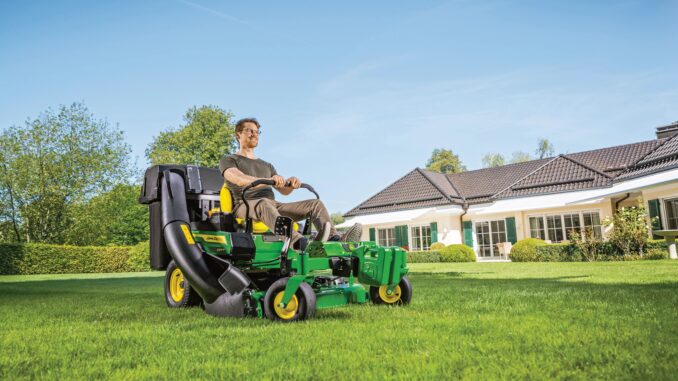
The John Deere Z235 is a residential zero-turn mower built for homeowners who want faster mowing and better maneuverability than a lawn tractor, especially around trees, beds, and other obstacles. It sits in the EZtrak/Z200 family and is aimed at routine home lawn mowing rather than heavy commercial use, which makes it a good fit for DIY owners who handle normal servicing but still need to know when a repair is beyond sensible home repair.
This guide covers the most common John Deere Z235 repair problems, symptom-based troubleshooting, routine maintenance, service parts, parts lookup strategy, and a detailed FAQ for owners in the USA and Canada.
John Deere Z235 model overview
The John Deere Z235 is a zero-turn riding mower in the Z200/EZtrak range, and common owner references for this machine center on the 42-inch deck version along with its mower-drive, traction-drive, engine, and safety-interlock systems. For most owners, the systems that matter most in real-world repair are the engine and fuel system, the deck and blades, the traction-drive belt and hydro drive system, and the electrical and operator-presence safety circuits.
Typical service parts owners regularly buy for the Z235 include the mower belt M154294, traction drive belt M165413, ignition switch TCA22740, battery TY25221, 42-inch 3-in-1 blade kit AM141031, gage wheel GX10168, and fuel filter listings that appear in Deere-focused parts references such as AM116304 and AM116034. For routine maintenance, Deere-focused maintenance lists also identify the oil filter AM125424, spark plug MIU11020, air filter MIU14395, and Turf-Gard 10W30 oil TY22029 for this model family reference.
John Deere Z235 troubleshooting approach
The best way to diagnose a John Deere Z235 is to start with the symptom the owner actually sees, not the part they think has failed. In practice, most Z235 problems fall into a handful of categories: starting issues, poor running, weak or uneven cut quality, vibration or unusual noise, drive or tracking problems, and electrical or safety-switch faults.
For example, a mower that cranks but will not start points you toward fuel, spark, air, or safety conditions, while a mower that starts but cuts badly points you toward blades, deck condition, deck level, or belt-related issues. That symptom-first approach saves time and reduces unnecessary parts swapping.
Emergency and immediate John Deere Z235 repair needs
Some John Deere Z235 problems should be dealt with immediately because they affect safe operation or can quickly damage more expensive components. Owners should stop using the machine if they notice strong vibration, blade impact damage, belt smoke, fuel leakage, electrical burning smell, failed braking/parking function, or a drive system that suddenly stops responding.
John Deere Z235 starting issues
If the Z235 will not crank, only clicks, or starts intermittently, the fault may be electrical, battery-related, or tied to the seat, brake, or PTO safety circuit. If it cranks but will not fire, the common causes move toward stale fuel, blocked fuel flow, weak spark, or restricted air intake.
Common causes:
-
Weak or failed battery.
-
Dirty or loose battery terminals.
-
Faulty ignition switch.
-
PTO engaged or brake/safety switch not satisfied.
-
Clogged fuel filter or stale fuel.
-
Dirty air filter or worn spark plug.
Basic checks:
-
Confirm the PTO is off and the parking brake is properly set.
-
Check battery voltage, cable tightness, and visible terminal corrosion.
-
Inspect the fuel level and fuel condition; replace stale fuel if needed.
-
Check the inline fuel filter, air filter, and spark plug condition.
-
If it still will not start, test the ignition and safety circuit more deeply before buying parts.
John Deere Z235 cut-quality problems
Poor cut quality on a John Deere Z235 usually shows up as stragglers, scalping, clumping, uneven height, or narrow strips of uncut grass. These issues matter because owners often assume the deck needs major repair when the real problem is usually blade condition, deck setup, belt wear, buildup under the deck, or mowing too fast for conditions.
Common causes:
-
Dull, bent, or incorrectly installed blades.
-
Mower belt slipping or worn.
-
Deck packed with wet grass.
-
Tire pressure or deck level out of spec.
-
Ground speed too high for heavy or damp grass.
Basic checks:
-
Clean the underside of the deck with the engine off and key removed.
-
Inspect blades for sharpness, bends, and correct orientation.
-
Check the mower belt for glazing, cracking, or slack.
-
Verify deck level and tire pressures before chasing deeper problems.
-
Test cut quality again at a slower mowing speed.
John Deere Z235 vibration and noise
A John Deere Z235 that suddenly vibrates, rattles, or develops a new knocking or squealing sound should not be kept in service until checked. Strong vibration can point to bent blades, damaged spindle parts, debris wrapped in rotating parts, or belt issues that can lead to more expensive failures.
Common causes:
-
Bent or unbalanced blade after impact.
-
Debris around spindles or pulleys.
-
Worn spindle or idler component.
-
Damaged or slipping mower belt.
Basic checks:
-
Shut the mower down immediately and inspect for recent blade strike damage.
-
Remove built-up debris from the deck shell and pulley area.
-
Spin blades and pulleys by hand only with the machine safely disabled.
-
Replace damaged blades or belts before mowing again.
-
If vibration remains, inspect spindle and deck hardware closely or move to dealer diagnosis.
John Deere Z235 overheating, smoke, and leaks
Although the Z235 is a homeowner mower, overheating and leak-related problems still need quick attention. Smoke, hot-running behavior, fuel smell, oil leakage, or heavy debris buildup around the engine can lead to fire risk, engine damage, or repeated shutdown complaints.
Common causes:
-
Cooling fins or screens blocked with grass and dust.
-
Engine oil level too low or too high.
-
Fuel line or filter leakage.
-
Belt dragging from seized deck parts.
Basic checks:
-
Clean all cooling-air intake areas and remove packed debris.
-
Check oil level and condition on level ground.
-
Inspect around the fuel filter, cap, and lines for wetness or smell.
-
Look for belt smoke, rubber dust, or seized rotating parts.
-
Do not continue mowing if active leaking or burning smell is present.
John Deere Z235 transmission and drive problems
Drive complaints on a John Deere Z235 often show up as weak movement, poor hill performance, slow response, tracking unevenly, or the mower refusing to move at normal speed. Owners often suspect the hydro units first, but belt condition, linkage issues, and basic inspection should come first because they are simpler and cheaper to rule out.
Common causes:
-
Worn traction drive belt M165413.
-
Linkage or control issues.
-
Hydrostatic drive wear or internal issues.
-
Tire or traction differences side to side.
Basic checks:
-
Inspect the traction drive belt for cracking, glazing, or breakage.
-
Confirm both drive tires are in usable condition and similarly inflated.
-
Check for obvious linkage binding or loose hardware.
-
If the belt and linkage look sound but drive remains weak, the repair may be beyond normal DIY scope.
John Deere Z235 electrical and safety-switch problems
Electrical issues on the Z235 commonly involve no-crank conditions, intermittent shutdown, PTO engagement problems, or a mower that behaves differently depending on seat position. Because this machine depends on operator-presence and PTO/brake interlocks, failed switches can mimic more serious faults.
Common causes:
-
Dirty battery connections.
-
Weak battery TY25221.
-
Faulty ignition switch TCA22740.
-
Seat, brake, or PTO safety-switch faults.
Basic checks:
-
Start with battery connections and state of charge.
-
Verify the key switch feels normal and is not intermittent.
-
Check the machine’s starting conditions exactly as outlined in the operator manual.
-
Test safety-switch function before replacing expensive electrical parts.
DIY or dealer for John Deere Z235 repairs
The John Deere Z235 is friendly to routine DIY maintenance, but the practical line is fairly clear: consumables, blades, belts, cleaning, and basic electrical checks are realistic for most owners, while hydro drive internal faults, repeated electrical diagnosis, engine internal work, and structural deck/spindle issues often justify dealer-level tools and experience.
Good DIY jobs on a John Deere Z235
-
Engine oil and filter service.
-
Air filter and spark plug replacement.
-
Fuel filter replacement.
-
Blade inspection and replacement.
-
Mower belt replacement.
-
Battery replacement and terminal cleaning.
Advanced DIY or dealer jobs
-
Repeated no-start diagnosis after basic tune-up parts.
-
Hydro drive or traction-system diagnosis beyond the external belt.
-
Spindle or deck-structure repairs after impact.
-
Wiring faults that are intermittent or heat-related.
-
Engine internal repairs, valve work, or compression-related faults.
Skill guide
-
Beginner: oil changes, air filter, spark plug, battery, deck cleaning.
-
Intermediate: blades, mower belt, fuel filter, simple switch replacement.
-
Advanced: electrical testing, deck spindle work, traction-drive diagnosis, engine troubleshooting beyond basic tune-up parts.
John Deere Z235 parts, OEM numbers, and what to check before ordering
Before ordering John Deere Z235 parts, collect the full model name, the Product Identification Number, the deck size/version, and the engine model and serial details where applicable. This matters because Deere parts can change across serial number breaks, and even common items like belts, electrical parts, and deck components can be version-sensitive.
OEM parts are usually the safest choice for belts, ignition/safety parts, and fit-sensitive items because the correct dimensions and engagement characteristics matter on the Z235. Aftermarket parts are more acceptable for some filters, blades, and batteries if the cross-reference is exact and the seller clearly lists the Z235 and deck version.
John Deere Z235 manuals and parts diagrams
For official information, the most useful source is the John Deere operator manual/support page for the Z235 because it ties the model to operator documents, support information, and related owner resources. Deere’s operator manual archive for the Z235/Z255 EZtrak series is also useful for operating, service interval, and machine-location guidance.
Useful links:
-
John Deere Z235 owner support — official owner support landing page for the model.
-
John Deere Z235/Z255 operator manual archive — operator manual source for operation and maintenance guidance.
-
Green Farm Parts Z235 maintenance guide — useful for common service parts and maintenance item cross-checking.
-
Green Farm Parts Z235 parts catalog — useful for illustrated parts browsing and serial-number-aware shopping.
How to find model, PIN, and engine numbers on a John Deere Z235
These numbers matter because they help you avoid ordering the wrong belts, filters, switches, and deck-related parts. They also help a dealer or parts counter confirm serial-number splits that do not show up in casual marketplace listings.
-
Park the Z235 safely, remove the key, and let hot components cool.
-
Locate the machine identification decal or tag on the mower frame area as described in the operator information for the Z235 series.
-
Record the full model designation and Product Identification Number exactly as shown.
-
Check the engine shroud or engine label for the engine model/type/serial information before ordering engine-service parts.
-
Match those numbers against the parts diagram or provide them to the dealer before buying fit-sensitive parts.
Buying John Deere Z235 parts online and in stores
The best parts-buying strategy for a John Deere Z235 is to confirm the OEM number first, then shop by that number rather than by a broad description like “Z235 belt” or “John Deere zero-turn filter.” That is especially important when listings show multiple similar Z200-series models or where there may be deck-specific differences.
-
Online: use OEM part numbers, confirm serial-number notes, and verify deck/application details before checkout.
-
Dealer counter: best for serial-sensitive, electrical, and fit-critical parts or when there is conflicting aftermarket information.
-
Retail stores: acceptable for common consumables such as oil, some batteries, plugs, and cross-referenced filters, but only if the packaging clearly matches the Z235 application.
Useful sources:
Step-by-step John Deere Z235 fitting guide for common parts
These are the highest-value DIY jobs for most Z235 owners because they solve a large share of real-world starting, running, and cut-quality complaints.
Change the John Deere Z235 air filter
A fresh air filter helps if the engine runs rich, feels flat, or struggles in dusty mowing conditions.
-
Park safely, remove the key, and access the engine air-cleaner housing.
-
Open the air-cleaner cover and remove the old filter carefully so dirt does not fall into the intake.
-
Wipe out loose debris from the housing without pushing dirt into the engine.
-
Install the correct replacement filter, making sure it seats evenly.
-
Refit the cover securely and inspect the housing seal.
Replace the John Deere Z235 spark plug
A new spark plug is a good first step when the engine starts hard, misfires, or runs rough under load.
-
Let the engine cool fully and remove the spark-plug lead.
-
Clean around the plug area first so debris does not drop into the cylinder.
-
Remove the old plug and compare it with the replacement MIU11020 application listing.
-
Install the new plug to the correct seating feel/specification from the engine guidance.
-
Reconnect the plug wire securely and test-start the mower.
Replace John Deere Z235 blades
Fresh blades are one of the fastest ways to cure poor cut quality, grass tearing, and vibration caused by bent cutting edges.
-
Disable the mower safely and support access to the deck according to safe lifting practices.
-
Remove the blade hardware and note blade orientation before taking the old blades off.
-
Inspect blades for bends, cracks, or major edge wear.
-
Install the correct blade set or kit for the 42-inch deck, making sure the cutting edges face the correct direction.
-
Tighten hardware correctly and test for smooth operation with no unusual vibration.
Replace the John Deere Z235 mower deck belt
A new mower belt can fix blade-drive loss, slipping, weak cutting in tall grass, or belt squeal.
-
Park safely, remove the key, and lower the deck for access.
-
Study the belt routing before removal, using the deck routing decal or model documentation where available.
-
Release belt tension carefully and remove the old M154294 belt.
-
Route the new belt correctly around the pulleys and belt keepers.
-
Recheck routing, engage the PTO briefly, and listen for clean, smooth operation.
Maintenance to prevent repeat John Deere Z235 problems
Regular maintenance on the John Deere Z235 prevents many of the issues owners describe as sudden failures, especially no-start complaints, poor cut quality, belt problems, and heat-related shutdowns. The biggest gains usually come from keeping the deck clean, changing service parts on time, inspecting belts before they fail, and keeping debris away from cooling areas.
Focus areas:
-
Starting reliability: battery condition, clean terminals, fresh fuel, clean air filter, good spark plug.
-
Cut quality: sharp blades, correct belt condition, clean deck underside, proper deck setup.
-
Fire and overheating prevention: remove packed grass from engine and deck areas, monitor leaks, keep cooling areas clear.
-
Drive performance: inspect the traction drive belt and watch for changes in response before full failure.
-
Electrical reliability: keep battery and switch connections in good condition and do not ignore intermittent interlock symptoms.
John Deere Z235 maintenance schedule and seasonal checklist
For the Z235, Deere-focused maintenance references show routine service items centered on early engine oil service, repeated oil and filter changes, and periodic inspection or replacement of the fuel filter, spark plug, and air filter. Conditions such as heat, dust, and rough terrain can justify shorter service intervals than the baseline chart.
Before each use
-
Check engine oil level.
-
Inspect for fuel or oil leaks.
-
Check blades and deck area for damage or heavy buildup.
-
Confirm safety systems and controls operate normally.
After first 8 hours
-
Change engine oil and oil filter.
-
Recheck the machine generally for any early service issues.
Every 50 hours
-
Change engine oil and oil filter as listed in the Deere-focused schedule.
-
Clean the machine thoroughly, especially deck and engine cooling areas.
Every 100 to 200 hours
-
Replace or inspect the fuel filter according to application listing.
-
Replace or inspect the spark plug.
-
Replace or inspect the air filter.
-
Review belt condition and common wear items before the season continues.
Seasonal checklist
-
Spring: change oil if due, inspect blades and belts, install fresh fuel if needed, and test battery condition.
-
Mid-season: clean the underside of the deck often, recheck blades, inspect traction and mower belts, and watch for heat buildup in dusty conditions.
-
Fall or storage period: clean thoroughly, inspect parts you want to replace before next season, and store with battery and fuel system cared for properly.
Repair, upgrade, or replace the John Deere Z235?
For most homeowners, a John Deere Z235 is worth repairing when the problems are limited to normal wear parts, tune-up items, belts, blades, or straightforward electrical pieces. The equation changes when the mower has repeated hydro drive trouble, severe deck damage, major engine wear, or multiple systems failing at once on an older machine.
Repair if:
-
The issue is a belt, blade, filter, switch, battery, or tune-up part.
-
The machine otherwise starts, drives, and cuts normally.
Upgrade if:
-
Your property or mowing hours now demand a heavier-duty zero-turn than the Z235 was intended for.
-
You are repeatedly pushing the mower beyond normal homeowner use.
Replace if:
-
Hydro drive and engine issues overlap and repair costs stack up.
-
The deck, frame, and major running systems all need work together.
John Deere Z235 troubleshooting FAQ
1. Why will my John Deere Z235 not start?
Most no-start complaints on a John Deere Z235 come down to battery condition, safety interlocks, stale fuel, clogged fuel flow, or lack of spark. Start by confirming the PTO is off, the brake is set, and the battery connections are clean and tight. Then inspect the fuel filter, air filter, and spark plug before assuming a more serious engine fault.
2. Why does my John Deere Z235 crank but not fire?
If it cranks but does not fire, the starter circuit is at least working, so focus on fuel, spark, and air. Old fuel, a restricted filter, fouled spark plug, or dirty air filter are common first checks on this model. Safety-related shutdown logic can also contribute, so confirm the machine is in the correct start position.
3. Why does my John Deere Z235 only click when I turn the key?
A click usually points to a weak battery, poor cable connection, bad ground, or starter-solenoid related issue rather than a fuel problem. Clean and tighten the battery terminals first, then test battery condition before replacing electrical parts. If the battery is healthy and the issue remains, the ignition or start circuit may need deeper testing.
4. Why does my John Deere Z235 start and then die?
This symptom often means the engine can fire initially but is not getting consistent fuel or the interlock system is interrupting operation. Check for stale fuel, restricted filter flow, and air-filter blockage first. Also pay attention to whether seat position or PTO engagement changes the behavior, because that can point toward a switch issue.
5. Why is my John Deere Z235 running rough?
Rough running usually comes from dirty intake parts, fuel delivery issues, spark-plug wear, or old fuel. A basic service with the correct oil filter, air filter, fuel filter, and spark plug often fixes homeowner-level running complaints. If rough running continues after normal service parts are refreshed, deeper engine diagnosis may be needed.
6. Why does my John Deere Z235 lose power in tall grass?
The most common causes are dull blades, deck buildup, a worn mower belt, and mowing too fast for the grass conditions. Tall or wet grass increases deck load quickly on a homeowner zero-turn like the Z235. Slow down, clean the deck, and inspect the blades and belt before assuming engine trouble.
7. Why is my John Deere Z235 cutting unevenly?
Uneven cutting usually traces back to dull or bent blades, incorrect deck level, uneven tire condition, or buildup under the deck. Blade and deck issues are much more common than major spindle failures in routine homeowner use. Check the easy items first before buying harder parts.
8. Why does my John Deere Z235 leave strips of uncut grass?
Strips or stragglers usually mean the blades are no longer cutting cleanly, the deck is dirty, or the mower is traveling too fast for the thickness of the grass. Replacing worn blades and cleaning the deck often makes a noticeable difference. Belt slip can also reduce blade tip performance, so inspect the mower belt at the same time.
9. Why does my John Deere Z235 scalp my lawn?
Scalping happens when the deck setup is too aggressive for the terrain, the deck is not level, or the mowing height is too low for uneven ground. It can also show up if gage wheels are worn or incorrectly set. The fix is usually setup-related rather than engine-related.
10. Why does my John Deere Z235 clump grass badly?
Clumping is common in wet, overgrown, or heavily fertilized grass, especially if the deck is dirty or blades are dull. Clean airflow under the deck matters a lot on a 42-inch mower deck. Slowing down and mowing more frequently usually helps as much as parts replacement.
11. Why is my John Deere Z235 vibrating so much?
Sudden vibration is often a blade-impact problem, a bent blade, debris wrapped in rotating parts, or a belt/pulley issue. Do not keep mowing through this symptom because it can damage spindle or deck components. Stop, inspect the blades and deck, and replace damaged parts before further use.
12. Why does my John Deere Z235 make a squealing noise?
Squealing often points to a slipping mower belt, traction belt, or pulley-related problem. It may be most noticeable when engaging the deck or under heavy mowing load. Inspect both the mower belt M154294 and traction drive belt M165413 if the source is unclear.
13. Why does my John Deere Z235 smoke?
Smoke can come from oil issues, packed debris around hot engine areas, belt drag, or in some cases fuel-related problems. Any burning smell or visible smoke should be treated seriously because dry grass buildup and hot engine components are a bad combination. Clean the machine fully and check for leaks before using it again.
14. Why is my John Deere Z235 leaking fuel?
Fuel leakage can come from the cap area, lines, or inline filter connections and should be fixed before further operation. Fuel leaks are both a fire risk and a sign that the machine may also develop running problems. Inspect around the filter and line connections first.
15. Why is my John Deere Z235 losing drive power?
Weak drive is often caused by a worn traction drive belt, linkage issues, or hydro drive wear. Start with the traction belt because it is external, relatively accessible, and a common wear point. If belt and linkage checks do not explain the problem, hydro diagnosis may be the next step.
16. Why will my John Deere Z235 not move at all?
A no-move condition may come from a broken or badly worn traction drive belt, a control issue, or a more serious hydro problem. Look for visible belt failure and obvious linkage trouble first. If nothing external appears wrong, this is where dealer-level diagnosis often becomes sensible.
17. Why does my John Deere Z235 pull to one side?
Pulling or uneven tracking can result from tire condition differences, linkage adjustment issues, or one side of the drive system responding differently than the other. Check simple mechanical causes first before assuming hydro failure. Owners often save time by inspecting tires and controls before ordering drive parts.
18. Why does my John Deere Z235 battery keep going flat?
Repeated flat-battery complaints usually come from age, poor terminal condition, storage practices, or a charging-system issue. Replacing the battery without cleaning connections and checking basic charging behavior can leave the real problem unsolved. TY25221 is one of the listed battery references for the Z235.
19. Why does the John Deere Z235 PTO not engage?
If the deck will not engage, check the PTO controls and the machine’s safety conditions first. Electrical switch faults, interlock problems, and belt-related deck issues can all appear as “PTO won’t work” complaints from the operator’s seat. Start with the conditions and visible belt checks before moving into electrical diagnosis.
20. Why does my John Deere Z235 shut off when I get off the seat?
That usually indicates the safety system is working, but if the machine behaves unexpectedly or too sensitively, the seat switch or related interlock parts may need attention. Because the Z235 depends on operator-presence logic, small switch problems can feel like major engine trouble. Test the symptom carefully and consistently before replacing parts.
21. Why does my John Deere Z235 blow fuses?
Fuse failures usually point to a wiring short, damaged insulation, moisture intrusion, or a faulty switch or accessory in the circuit. This is not a parts-swapping job unless the fault is obvious. Repeated fuse blowing is usually better handled with methodical electrical testing.
22. Why is the John Deere Z235 mower belt coming off?
A belt that repeatedly jumps off may be worn, routed incorrectly, damaged by pulley issues, or affected by debris and bent belt keepers. Replacing the belt alone may not solve the issue if the real cause is alignment-related. Inspect the full belt path carefully before fitting another new belt.
23. How do I know if my John Deere Z235 blades are bad?
Bad blades usually show up as tearing instead of clean cutting, increased vibration, visible bends, or poor discharge performance. If the lawn looks ragged and the deck setup is otherwise correct, blade condition is one of the first places to look. Replace damaged blades rather than trying to keep using them.
24. How often should I change the oil on a John Deere Z235?
The Deere-focused Z235 maintenance guide lists an initial oil and filter service after 8 hours and then repeated oil-filter service intervals thereafter, including 50-hour increments in that guide. Exact maintenance practice should still be checked against the model documentation and operating conditions. Dust, heat, and hard mowing conditions can justify more frequent service.
25. How often should I replace the air filter on a John Deere Z235?
The Deere-focused maintenance guide lists the air filter as a regular service item in the 100/200-hour range for the Z235 reference. In dusty mowing conditions, inspection and replacement may need to happen sooner. A dirty filter can contribute to hard starting and rough running, so owners should not wait for it to be completely clogged.
26. How often should I replace the spark plug on a John Deere Z235?
The same maintenance guide lists the spark plug MIU11020 as a scheduled service item in the 100/200-hour range. If the mower starts hard or misfires sooner, inspection earlier than the interval is sensible. Plug condition is also useful as a clue to general engine running health.
27. How often should I replace the fuel filter on a John Deere Z235?
The Z235 maintenance guide identifies the fuel filter as a regular service part, with service references shown in the 100/200-hour range depending on the listing. Because there are multiple part references shown in Deere-focused sources, match the filter carefully to the machine and engine details before ordering. Fuel quality and storage conditions also affect replacement timing in the real world.
28. Can I use aftermarket parts on a John Deere Z235?
Yes, but use judgment. OEM parts are generally the better choice for belts, safety-related parts, and anything where exact fit and operating characteristics matter. Aftermarket parts can be fine for some blades, filters, and batteries if the cross-reference is exact and the seller is reputable.
29. Where can I find John Deere Z235 parts diagrams?
The most useful places are Deere’s official owner support resources and Deere-focused illustrated parts sellers that flag serial-number-specific information. The Green Farm Parts Z235 catalog specifically notes serial-number-specific information for some parts. That matters because broad marketplace listings often skip those details.
30. Is the John Deere Z235 a good DIY mower to maintain?
Yes, for normal homeowner maintenance. Oil changes, blades, filters, spark plugs, battery work, and many belt jobs are realistic for a careful owner with basic tools. The machine becomes less DIY-friendly when the fault moves into hydro drive internals, recurring electrical diagnosis, or engine internal work.
31. When should I take my John Deere Z235 to a dealer?
Dealer help makes sense when basic service parts and visible checks do not solve the problem, or when the issue involves hydro performance, intermittent wiring faults, repeated no-start conditions, or structural deck damage. That is especially true if the machine has multiple symptoms at once and you are no longer dealing with a simple wear item. Paying for diagnosis can be cheaper than guessing at expensive parts.
32. Why does my John Deere Z235 start fine cold but struggle hot?
Hot-start problems can point to ignition weakness, fuel delivery issues, heat-related electrical faults, or engine wear that becomes more obvious when warm. Start with the tune-up basics because neglected plugs, filters, and fuel condition can exaggerate hot-running complaints. If the issue is repeatable and survives normal service, more advanced diagnosis is warranted.
33. Why does my John Deere Z235 use more fuel than expected?
High fuel use often comes from overgrown mowing conditions, dull blades, dirty air filtration, and working the mower harder than normal. A poorly maintained deck and blade system forces the engine to work harder for the same cut quality. On a homeowner zero-turn, mowing technique and deck condition matter a lot.
34. Should I sharpen or replace John Deere Z235 blades?
Sharpening is fine for blades that are only normally dull, but replace them if they are bent, cracked, badly worn, or repeatedly causing vibration. A damaged blade is not worth trying to save on a mower that depends on smooth high-speed rotation. If in doubt after an impact, replacement is usually the safer choice.
35. What are the most common John Deere Z235 parts owners buy?
The most commonly referenced Z235 owner parts include the mower belt M154294, traction drive belt M165413, ignition switch TCA22740, battery TY25221, gage wheel GX10168, blade kit AM141031, oil filter AM125424, spark plug MIU11020, air filter MIU14395, and fuel filter references such as AM116304 or AM116034 depending on listing and application. Those parts line up closely with the wear, service, and troubleshooting areas that owners deal with most often on this mower.
Step-by-step John Deere Z235 mower deck leveling and height adjustment guide
Deck leveling only works properly if the mower is safe, parked on a true flat surface, and the tires are at the correct pressure. Skipping these steps is one of the most common reasons owners “chase” deck adjustments and still get an uneven cut.
-
Park on level concrete or a flat, hard surface, engine off, key removed, and parking brake set.
-
Position the front caster wheels straight ahead so the deck sits consistently.
-
Check and set all tire pressures to the manufacturer’s recommended PSI (refer to the Z235 operator’s manual or tire sidewall). Uneven tire pressure will make any deck look out of level.
-
Lower the mower deck to the working position and set the height-of-cut knob to the standard leveling height, typically 2.5 inches as used in Deere’s quick-leveling procedures.
-
Make sure all anti‑scalp wheels are raised so they are not touching the ground while you level and calibrate the deck.
Tools and measuring method for John Deere Z235 deck leveling
John Deere supplies a simple deck‑leveling gauge in the ZTrak storage compartment on many zero‑turn models, and the method is to “just slip” that gauge under three reference points on the deck. If you do not have the OEM gauge, you can mimic it with pre‑cut blocks or a precise ruler to the same reference height.
-
OEM deck leveling gauge or a 2.5‑inch gauge block equivalent.
-
17 mm or 18 mm wrenches for the side lift‑link adjusters (size can vary by model, check your hardware).
-
Wrench for the front deck hanger nuts (commonly 18 mm, but verify on your machine).
The concept is the same as Deere’s ZTrak procedure: you calibrate the deck at 2.5 inches at three points — rear left, rear right, then front center — so that once it is correct at that height, all other height settings on the knob stay in the right relationship.
Side‑to‑side leveling on John Deere Z235
Always level the John Deere Z235 deck side‑to‑side first, then set the front‑to‑rear pitch. The goal is to have both rear corners of the deck at the same height from the ground at the reference setting.
-
With the deck on 2.5 inches and lowered, slide the leveling gauge or 2.5‑inch block under the left rear deck reference point. On Deere zero turns this is typically a small stamped “ear” on the deck edge or a specific point shown in the manual.
-
The gauge should “just slip” under the deck at that point. If it will not fit, the deck is too low on that side; if it is loose, the deck is too high.
-
Adjust the left rear lift‑link nuts (on the rod that lifts the deck on that side): turning the nuts clockwise raises that side of the deck; turning them counter‑clockwise lowers it. Make small changes, a few turns at a time.
-
After each adjustment, recheck with the gauge until it just slides under the deck with light drag.
-
Move to the right rear deck reference point and repeat the process, using the same 2.5‑inch gauge.
-
If you need more than about 3 mm (⅛ inch) of change on one side, make the adjustment on both sides alternately because a large change on one side can throw the other side out of level.
-
Bounce back and forth between left and right rear points until both sides are equal and the gauge fits the same way under each side.
At this stage your John Deere Z235 deck is level left‑to‑right at 2.5 inches, which is the foundation for a straight, even cut.
Front‑to‑rear pitch and height calibration on John Deere Z235
Once the rear corners are equal, set the front‑to‑rear pitch so the front of the John Deere Z235 deck is slightly lower than the rear, which helps reduce double‑cutting and improves discharge quality. Deere’s quick‑level methods for ZTraks again use the same 2.5‑inch gauge at a front hanger point.
-
With the rear corners already set, slide the gauge under the front deck hanger bracket or front reference point described in the operator’s instructions (often in the center front area).
-
The leveling gauge should just slip under the front bracket when the deck is adjusted correctly at the 2.5‑inch leveling position.
-
Loosen the lower jam nut on each side of the front hanger linkage so the top adjusting nut can move.
-
Turn the top nuts on the front hangers equally on both sides: clockwise to raise the front of the deck, counter‑clockwise to lower it. Make the same number of turns on each side so you don’t twist the deck.
-
After a small adjustment, recheck the front hanger with the gauge. The goal is for the gauge to just slip under the hanger.
-
Once correct, tighten the lower jam nuts again so the adjustment will not move.
On many zero‑turn decks the front blade tips end up about 1/8–1/4 inch lower than the rear tips, which is the slight forward pitch Deere recommends for best cut. The gauge‑based ZTrak method achieves that relationship once the 2.5‑inch calibration is done.
Final checks and transport‑latch verification on John Deere Z235
After the Z235 deck is leveled and pitched correctly, there are two important final checks: confirming there is tension on all lift points and making sure the deck still locks in the transport position. Skipping this last check can leave the deck too high in the rear to latch correctly.
-
Raise the deck to the full transport position using the lift pedal and check that it latches and holds as it should.
-
If it does not latch, return to the rear deck adjusters and turn both rear nuts counter‑clockwise equally to lower the rear of the deck until the latch engages properly in transport.
-
Lower the deck back to 2.5 inches and re‑check the three leveling points to confirm the gauge still just slips under them; small corrections may be needed after fixing the latch.
-
Confirm that the anti‑scalp wheels are now set according to the cutting height (usually just off the ground at your normal mowing height, dropping into play only on uneven ground).
When the deck is level side‑to‑side, correctly pitched front‑to‑rear, and the transport latch engages properly, you can set any height on the Z235 knob and expect consistent, repeatable cutting height across the deck.
Quick test‑cut and fine‑tuning
After leveling, a short test pass is the best way to confirm that the John Deere Z235 deck and height settings are correct under real mowing conditions.
-
Mow a short strip at your normal speed and height setting, then stop and inspect the cut.
-
If the lawn still looks uneven side‑to‑side, recheck tire pressures and the rear leveling points.
-
If there is a visible “step” front‑to‑rear, revisit the front hanger adjustment to dial in the pitch slightly.