
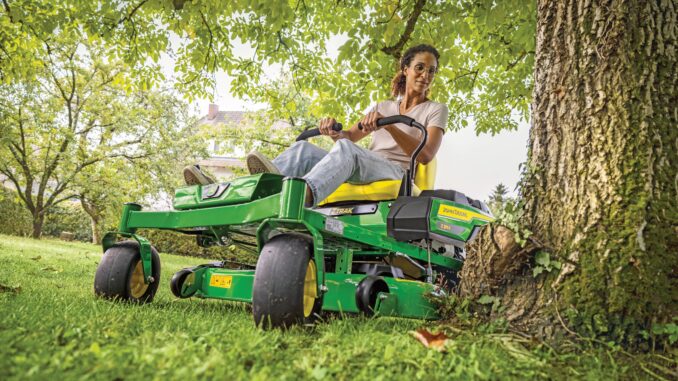
Introduction to the John Deere Z820A
The John Deere Z820A is a professional‑grade ZTrak zero‑turn mower aimed at larger residential properties and light commercial work. It combines a Kawasaki gasoline engine with dual hydrostatic drives and a mid‑mount 48″, 54″, or 60″ deck for fast, precise mowing.
This tractorsby.com guide is written for homeowner and DIY users in the USA & Canada who are comfortable with basic maintenance and occasionally attempt intermediate repairs. It walks through repair, troubleshooting and maintenance for the Z820A, plus a detailed FAQ that helps you decide what you can realistically do yourself and when to involve a John Deere dealer.
General overview of the John Deere Z820A
The John Deere Z820A sits in the professional ZTrak line above typical residential zero‑turns, with heavier frames, higher‑capacity decks, and more durable drive components. It is built to run more hours per season, making regular maintenance and correct parts selection especially important.
On the Z820A, the key systems and components you will interact with are:
-
Engine and fuel system: Kawasaki air‑cooled gasoline engine, carburetor or EFI, mechanical fuel pump, in‑line fuel filter.
-
Mower system: 3‑blade deck (48″, 54″, or 60″), electric PTO clutch, deck drive belts, spindles and pulleys.
-
Drive system: Dual hydrostatic transmissions driving rear wheels, controlled by steering levers.
-
Electrical system: Starter, battery, safety interlock switches, PTO switch, seat switch, ignition switch, wiring harnesses and fuses.
Typical service parts for a John Deere Z820A include:
-
Engine oil filter.
-
Engine oil (10W‑30).
-
Primary and secondary air filters.
-
Fuel filter.
-
Spark plugs.
-
Engine‑to‑deck drive belt.
-
Mower deck belts (matched to deck size).
-
Mower blades for each deck size and cut style.
-
PTO clutch assemblies.
-
Seat, PTO and ignition switches.
-
Battery.
Troubleshooting approach for the John Deere Z820A
For the Z820A, troubleshooting always starts with the symptom you see or feel, not with a guessed component. Identify what the mower is doing wrong (won’t start, runs rough, poor cut, vibration, won’t drive straight, etc.), then decide which system is most likely affected.
A good process is:
-
Define the symptom category.
-
Perform basic safety and walk‑around checks.
-
Work through a short checklist before ordering parts or booking dealer service.
Main symptom categories on a John Deere Z820A:
-
Starting issues.
-
Running / power issues.
-
Cut‑quality problems.
-
Vibration and noise.
-
Overheating and leaks.
-
Transmission / drive problems.
-
Electrical and safety‑switch problems.
Emergency and immediate repair needs on the John Deere Z820A
Some John Deere Z820A problems need immediate attention because they make the mower unsafe or can quickly damage expensive components. Anything involving fuel leaks, major oil loss, steering/drive control loss, severe vibration or blade/spindle failure should be treated as “do not mow until fixed”.
Below are the core emergency categories for the Z820A, broken down with symptoms, common causes, and basic owner checks you can do safely.
Starting issues on the John Deere Z820A
Starting issues look like no crank, slow crank, or cranking without firing, even with choke or proper starting procedure. Because the Z820A has multiple safety switches, a dead machine can be battery, wiring, or safety‑interlock related.
Common causes:
-
Weak or discharged battery.
-
Faulty seat, PTO or parking‑brake safety switch.
-
Bad ignition switch or starter solenoid.
-
Empty tank, stale fuel or blocked fuel filter.
-
Ignition component faults (spark plugs, coils).
Basic owner checklist:
-
Confirm parking brake is fully engaged and PTO is OFF.
-
Sit firmly in the seat and attempt to start, watching for any change if you shift weight slightly.
-
Check battery terminals for corrosion and tightness; recharge or test battery if unsure.
-
Inspect fuses and visible wiring under the seat and around the control panel.
-
Verify there is fresh fuel in the tank and the fuel shutoff (if fitted) is open.
Cut‑quality problems on the John Deere Z820A
Cut‑quality problems show up as uneven cut, scalping, streaks of uncut grass, clumping, or poor discharge, often noticeable at your usual mowing speed. Multi‑blade decks like the Z820A’s are sensitive to blade condition, deck level and belt drive.
Common causes:
-
Dull, bent or mismatched blades.
-
Deck not level side‑to‑side or incorrect front‑to‑rear pitch.
-
Deck height set too low or anti‑scalp wheels misadjusted.
-
Worn or poorly routed deck belt, causing slip.
-
Mowing too fast for grass height or moisture.
Basic owner checklist:
-
Inspect all blades for sharpness, bends and correct type for your deck size.
-
Measure deck level and pitch using a leveling gauge or tape measure.
-
Confirm deck belt routing and condition; look for cracks, glazing or missing chunks.
-
Adjust ground speed and mow slower in heavy, tall or wet grass.
-
Check tire pressures; uneven tires can tilt the deck and affect cut quality.
Vibration and noise on the John Deere Z820A
On a John Deere Z820A, major vibration can be felt strongly through the seat and control levers, especially with the PTO engaged. It often accompanies grinding, rumbling or knocking noises from the deck area and should be treated as urgent.
Common causes:
-
Bent blades from striking rocks, stumps or hard objects.
-
Failing spindle bearings or damaged spindle housings.
-
Loose blade bolts or pulley hardware.
-
Worn PTO clutch or misaligned pulleys.
-
Engine misfire or broken engine mounts (less common but serious).
Basic owner checklist:
-
Disengage PTO, shut off engine and remove the key; inspect blades and spindles from underneath safely.
-
Spin each blade/spindle by hand (engine off) to feel for roughness, wobble or excessive play.
-
Check blade bolts and spindle pulley hardware for tightness.
-
Inspect the deck belt for damage or missing sections.
-
If vibration remains severe after obvious blade issues are addressed, do not mow until a dealer checks the deck and PTO system.
Overheating and leaks on the John Deere Z820A
Overheating appears as the engine running unusually hot, smells of burning grass or oil, or the engine shutting down after heavy work. Leaks show up as wet patches or drips of fuel, oil or hydraulic fluid under or around the mower. Both are critical to address quickly.
Common causes:
-
Blocked cooling fins and air intake screens on the engine.
-
Low engine oil level or incorrect oil grade.
-
Cracked or loose fuel hoses and connections.
-
Hydraulic leaks around hoses, wheel motors or reservoir.
-
Loose filters or drain plugs after recent service.
Basic owner checklist:
-
Clean grass and debris from engine cooling fins, shrouds and intake screens.
-
Check engine oil level and top up with the correct 10W‑30 grade if needed.
-
Inspect fuel lines and filter for wet spots or fuel smell; tighten clamps or replace hoses as necessary.
-
Wipe hydraulic hoses and fittings, run the mower briefly and check again for fresh wetness.
-
Do not run the mower if fuel or hydraulic leaks are present; resolve leaks before using it.
Transmission and drive problems on the John Deere Z820A
Drive issues on a Z820A appear as poor traction, one side pulling or lagging, jerky steering or the mower creeping when levers are in neutral. Sustained drive problems can accelerate hydraulic wear and compromise safety.
Common causes:
-
Low hydraulic fluid or air in the hydraulic system (depending on configuration).
-
Worn or damaged wheel motors or pumps.
-
Misadjusted steering lever linkages, especially neutral positions.
-
Tire issues (low pressure, damage, mismatched sizes).
Basic owner checklist:
-
Verify tire pressures are correct and consistent side‑to‑side.
-
Inspect steering lever linkages for looseness or obvious misalignment.
-
Check hydraulic reservoir (if accessible) and look around for leaks.
-
Test in an open area, slowly moving both levers and noting any tendency to drift or creep.
-
If the mower is unsafe to drive straight or lacks power on slopes, stop using it and consult a dealer.
Electrical and safety‑switch issues on the John Deere Z820A
Electrical issues frequently show as intermittent starting, random engine shutdowns when hitting bumps, or PTO refusing to engage. Safety switches are designed to cut power when they sense an unsafe condition, but worn switches or bad wiring can mimic that state.
Common causes:
-
Failing seat switch causing momentary “no operator” signals.
-
Worn PTO switch contacts or burned connectors.
-
Loose ground connections or corroded battery terminals.
-
Blown fuses from shorted wiring or accessories.
Basic owner checklist:
-
Inspect wiring harness under the seat and around the dash for rub points, pinched sections or loose plugs.
-
Wiggle the PTO switch gently while engaging and see if engagement is intermittent.
-
Ensure battery ground cable is secure and free from corrosion.
-
Replace any blown fuses with the correct rating and watch for immediate failure again.
-
Consider replacing suspect switches one at a time if symptoms point to a specific switch.
DIY or dealer? Repair decision guide for John Deere Z820A owners
On a John Deere Z820A, the typical DIY limit is reached when you need to open hydraulic components, dig into engine internals or undertake complex electrical diagnostics. Routine maintenance and bolt‑on component swaps are realistic for careful owners; internal repairs and system‑level diagnostics are better suited to a dealer.
Good DIY jobs on a John Deere Z820A:
-
Engine oil and filter changes.
-
Air and fuel filter replacement.
-
Spark plug replacement.
-
Battery replacement and terminal cleaning.
-
Blade removal, sharpening and replacement.
-
Deck belt replacement and deck leveling.
Advanced DIY or dealer jobs:
-
PTO clutch replacement and wiring.
-
Spindle rebuilds and bearing replacement.
-
Detailed safety‑switch and wiring harness diagnostics.
-
Hydraulic pump or wheel motor replacement.
-
Carburetor rebuild or EFI system diagnostics.
Skill level guide:
-
Beginner: Oil changes, filter replacements, battery work, basic deck cleaning, blade removal with proper lifting and safety.
-
Intermediate: Deck belt routing and tension adjustment, deck leveling and pitch setting, replacement of simple switches and minor wiring repairs.
-
Advanced: PTO clutch and spindle replacement, hydraulic drive repairs, internal engine work, complex electrical troubleshooting – usually dealer‑level unless you are highly experienced.
Parts needed for a John Deere Z820A and essential information to gather
Before ordering parts for your John Deere Z820A, collect the key machine details so you can match exactly what you need. Serial breaks and deck variations matter, and engine‑specific parts often depend on the exact Kawasaki model and spec.
Information to gather:
-
Full model name: John Deere Z820A Professional ZTrak.
-
Product Identification Number (PIN), usually on the main frame plate.
-
Deck size: 48″, 54″ or 60″, as shown on deck decals or in your manual.
-
Engine model and specification from the Kawasaki label.
John Deere Z820A key service parts table
OEM vs aftermarket guidance:
-
Use OEM John Deere parts for belts, PTO clutches, spindles, safety switches and critical fit items; these are engineered to match pulley profiles, engagement characteristics and safety standards.
-
Aftermarket parts are often fine for engine oil, grease, some filters, blades and batteries, provided they cross‑reference correctly to John Deere and your engine model. Always check dimensions and application lists carefully.
Where to find John Deere Z820A parts diagrams and manuals
Accurate parts diagrams and service information are essential to avoid wrong orders and to understand how the Z820A is assembled. Make it standard practice to consult official diagrams before ordering or attempting major repairs.
Useful sources:
-
Operator’s manual – contains safety information, controls, basic maintenance chart and operating guidance for the Z820A.
-
John Deere online parts catalog – exploded diagrams for the mower, deck, engine and attachments, with OEM numbers.
-
Technical publications and service manuals – deeper diagnostic procedures, tests and adjustments, typically purchased through John Deere technical publications.
-
Reputable Deere‑focused parts sites – often host Z820A‑specific pages listing common service parts and maintenance kits.
Use the operator’s manual for routine service intervals and safe operating procedures, the parts catalog for detailed diagrams and part numbers, and technical manuals for advanced troubleshooting that you may choose to hand off to a dealer.
How to locate model, serial and engine numbers on a John Deere Z820A
Model, serial and engine numbers determine which parts and service procedures apply to your specific Z820A. John Deere uses serial ranges and option codes, so guessing can easily lead to incorrect parts.
Steps to find identification numbers:
-
Look for the main product identification plate on the Z820A frame, typically near the rear or side of the machine where it is visible from ground level.
-
Record the full model designation (Z820A) and the PIN/serial number exactly as printed.
-
Identify deck size from decals on the deck shell and confirm against the operator’s manual.
-
Locate the Kawasaki engine ID plate or sticker on the blower housing or near the valve cover; note the model and spec number.
-
Keep photos or written notes of these numbers in your phone or maintenance log for future parts orders.
Buying John Deere Z820A parts online and in physical stores
For a John Deere Z820A, a mixed strategy works best: routine service items can be bought online for convenience, while complex or serial‑specific components are often easier to source and confirm at a dealer counter.
Buying tips:
-
Online: Use OEM numbers from diagrams or manuals to search; ensure listings clearly mention compatibility with the Z820A or your engine/deck combination. Avoid generic “fits many models” listings without proper cross‑reference.
-
Dealer counter: Ideal for PTO clutches, hydraulic parts, and anything influenced by serial breaks. Bring your PIN, deck size and engine model; ask the parts staff to confirm fit.
-
Retail stores: Good for consumables like oil, grease, some filters and batteries, as long as packaging lists your engine or mower series. Double‑check specifications for replacement batteries and spark plugs.
Useful URLs:
-
John Deere official parts site / parts catalog.
-
Your local or regional John Deere dealer website for contact details and parts ordering options.
Step‑by‑step fitting guide for common John Deere Z820A jobs
The following jobs are high‑impact DIY maintenance tasks for a John Deere Z820A. They help solve common issues and extend machine life without requiring advanced tools or skills.
Changing engine oil and filter on a John Deere Z820A
Oil and filter changes protect the Kawasaki engine from wear and overheating, especially under heavy mowing loads.
Steps:
-
Run the engine briefly to warm the oil, then park the Z820A on level ground, set the parking brake and shut off the engine.
-
Place a drain pan under the oil drain valve or plug and open the valve or remove the plug to drain the oil fully.
-
Remove the old oil filter with an oil filter wrench; wipe the mounting area clean.
-
Lightly oil the gasket on the new filter and spin it on until the gasket contacts, then snug by hand.
-
Close the drain valve or reinstall the drain plug and refill with the specified quantity of 10W‑30 engine oil.
-
Start the engine, let it run briefly, check for leaks, then shut down and confirm oil level is within the proper range.
Replacing the air filter on a John Deere Z820A
Proper air filtration keeps dust out of the engine, which is essential for longevity when mowing dry or dusty lawns.
Steps:
-
Access the air filter housing by lifting the seat or opening the engine shroud, depending on your configuration.
-
Unclip or unscrew the air filter cover and remove the primary (outer) and secondary (inner) elements.
-
Inspect both elements; replace them if dirty, damaged or if hours indicate they are due.
-
Clean loose debris out of the air box, being careful not to let dirt fall into the intake.
-
Install the new inner safety element first, then the outer primary element, making sure sealing surfaces are properly seated.
-
Refit the cover, confirm it latches securely, and check for gaps around the housing.
Replacing the fuel filter on a John Deere Z820A
A fresh fuel filter helps prevent starting and running issues caused by restricted fuel flow or contamination.
Steps:
-
Park the mower safely, set the parking brake, shut off the engine and let it cool. Turn the fuel shutoff to OFF if your machine has one.
-
Locate the in‑line fuel filter between the tank and engine area.
-
Place a rag or small container under the filter, loosen the hose clamps and carefully pull the hoses off the old filter.
-
Install the new filter with the flow arrow pointing toward the engine, pushing hoses firmly onto the barbs.
-
Tighten hose clamps securely, turn the fuel shutoff back ON and wipe any spilled fuel.
-
Start the engine and check for leaks and smooth running.
Replacing mower blades on a John Deere Z820A
Sharp, correctly installed blades are critical for clean cut quality and reduced strain on deck and engine components.
Steps:
-
Park on level ground, set the parking brake, shut off the engine and remove the key.
-
Use a suitable jack and jack stands or a mower lift to raise the front of the Z820A safely; never rely on a jack alone.
-
Wearing gloves, block each blade with a piece of wood and remove the blade bolt using a socket and breaker bar as needed.
-
Inspect blades for wear or bending; replace with new blades matched to your deck size and desired lift style.
-
Install blades with the cutting edge facing the direction of rotation and lift wings oriented upward toward the deck.
-
Torque blade bolts to the specification from your operator’s manual, lower the mower and test at low throttle for abnormal vibration.
Replacing the deck belt on a John Deere Z820A
A good deck belt ensures consistent blade speed and cut quality, preventing slip and uneven discharge.
Steps:
-
Park the mower, set the parking brake, remove the key and lower the deck fully to the ground.
-
Remove deck belt shields and guards to expose the pulleys and belt routing.
-
Take photos or notes of the belt routing around spindles, idlers and tensioner.
-
Release belt tension by moving the idler arm away from the belt and slip the old belt off all pulleys.
-
Route the new belt according to your photos and manual, ensuring it sits correctly in all pulley grooves.
-
Re‑engage the tensioner, reinstall shields and test PTO engagement at low throttle, listening for unusual noises.
Maintenance to prevent John Deere Z820A problems reoccurring
Preventive maintenance on the John Deere Z820A reduces the chance of repeated starting issues, poor cut quality, overheating, drive problems and electrical faults. Consistency is more important than complexity; build a simple routine and follow it.
Maintenance focus areas:
-
Starting reliability: Keep fuel fresh, battery charged, terminals clean, and replace spark plugs and filters on schedule.
-
Cut quality: Maintain sharp blades, proper deck level, and correct deck belt tension; avoid mowing excessively fast or in very wet conditions.
-
Fire/overheating prevention: Regularly clean grass and debris from the deck, engine and exhaust areas; check for fuel and oil leaks.
-
Drive performance: Maintain tire pressures, monitor hydraulic leaks and avoid prolonged operation if drive feels weak or jerky.
-
Electrical reliability: Inspect wiring and switches periodically, protect harnesses from chafing and moisture, and address intermittent faults promptly.
John Deere Z820A maintenance schedule and year‑round checklist
Base your John Deere Z820A maintenance plan on the official chart in the operator’s manual, but adjust intervals if you mow in severe conditions or use the machine heavily.
Daily / before each use
-
Check engine oil level and look for visible leaks under the machine.
-
Verify fuel level and inspect exposed fuel hoses for cracks or wet spots.
-
Walk around the mower to check for loose hardware, damage or obvious deck issues.
-
Look at the deck belt and blades (as far as you can safely see) for major defects.
After approximately 8 hours of use
-
Clean the deck shell and discharge chute to remove built‑up grass.
-
Brush or blow debris from the engine cooling fins and intake screens.
-
Grease fittings as specified in the operator’s manual for the Z820A.
-
Briefly verify that safety switches (seat, PTO, parking brake) work as expected.
Every 25 hours
-
Inspect and, if necessary, clean or replace air filter elements.
-
Check blade condition and sharpness, sharpening or replacing if dull or chipped.
-
Inspect battery terminals and cables for corrosion and tightness.
-
Examine drive linkages and steering control hardware for looseness.
Every 50 hours or yearly
-
Change engine oil and filter.
-
Replace fuel filter.
-
Perform a detailed deck inspection: level, pitch, belt condition, pulleys and spindles.
-
Grease all recommended points in the drive and deck systems.
Every 200 hours or as specified in the manual
-
Replace air filter elements if not changed sooner due to dirt load.
-
Replace deck belts and engine‑to‑deck drive belt if wear or cracking is visible.
-
Inspect PTO clutch, spindles, and drive components more thoroughly for wear.
Seasonal checklist for the John Deere Z820A
Spring / preseason:
-
Perform a full service including oil and filter change, fuel filter, air filter check and battery test.
-
Sharpen or replace blades and confirm deck level and pitch.
-
Test all safety interlocks before first mowing session.
Mid‑season:
-
Re‑evaluate deck condition and belt wear; clean deck thoroughly.
-
Inspect tires, steering response and drive performance.
Fall / end of season:
-
Clean the mower thoroughly, removing grass and debris from all areas.
-
Either stabilize fuel or drain the system, depending on your storage preference.
-
Change oil if hours justify it and store the machine under cover; disconnect battery if storing long‑term.
John Deere Z820A – repair, upgrade or replace?
For most homeowners, repairing and maintaining a John Deere Z820A is more economical than replacing it as long as the frame, deck shell and core engine/drive components are sound. Consider upgrading or replacing only when major systems fail and the machine’s overall condition is poor relative to replacement cost.
Repair if:
-
Problems are limited to wear items like belts, blades, filters, switches, batteries and minor leaks.
-
The engine still starts well and holds power once routine maintenance is done.
-
The deck structure is solid and free from severe cracks or distortion.
Upgrade if:
-
You want improved cut quality via different blades or a mulching kit.
-
You’d like more comfort with an upgraded seat, armrests or suspension.
-
You’re adding accessories such as striping kits, better tires or lighting for extended use.
Replace if:
-
The Z820A has suffered major frame or deck damage or repeated structural repairs.
-
Engine or hydrostatic systems require complete rebuilds and the cost approaches the mower’s replacement value.
-
Your property size or workload has grown beyond what the Z820A can handle efficiently.
Expanded troubleshooting FAQ – John Deere Z820A
1. Why will my John Deere Z820A not start?
A Z820A that will not start usually has a battery, safety‑switch or fuel issue. Make sure the parking brake is on, PTO is off and you are firmly in the seat before turning the key. Check battery voltage and terminals, inspect fuses and confirm there is fresh fuel in the tank. If the engine still does not crank or fire after these checks, suspect a faulty switch, ignition component or starter circuit.
2. Why does my John Deere Z820A crank but not fire?
If your Z820A cranks but never fires, focus on fuel and spark. Confirm the fuel shutoff is open, the fuel filter is not blocked and the fuel is not stale. Then inspect and replace spark plugs if they are fouled or worn. If it still won’t fire, deeper carburetor or ignition module diagnosis may be required and is often best handled by a dealer.
3. Why does my John Deere Z820A only click when I turn the key?
A click without cranking usually indicates a weak battery or starter/solenoid issue. Check battery charge first; low voltage is common on machines that sit between uses. Clean and tighten battery terminals and ground connections. If the battery is good and connections are sound, the starter motor or solenoid may be failing and will need testing or replacement.
4. Why does my John Deere Z820A start then die?
When a Z820A starts and then stalls quickly, the cause is often fuel delivery or safety‑switch related. Ensure you stay seated and the seat switch wiring is secure. Inspect the fuel filter and lines for restrictions or air leaks. If replacing the filter and checking switch connections does not help, you may be dealing with carburetor icing or internal contamination that needs more advanced cleaning.
5. Why is my John Deere Z820A hard to start when hot?
Hot‑start problems typically stem from marginal ignition components, weak batteries or heat‑related fuel issues. Check that the cooling fins and engine shrouds are clean so the engine does not overheat. Verify battery strength and replace spark plugs if they are old. Persistent hot‑start issues may require your dealer to check for specific engine‑related updates or adjustments.
6. Why does my John Deere Z820A run rough or misfire?
Rough running is often caused by dirty air or fuel filters, fouled plugs or contaminated fuel. Replace air and fuel filters, install new spark plugs and use fresh gasoline. If the mower still misfires, look for vacuum leaks or damaged ignition leads. In carbureted models, varnish and debris in jets can also cause rough running and may need professional cleaning.
7. Why is my John Deere Z820A losing power under load?
Loss of power under load, especially in heavy grass, can point to restricted fuel supply, dirty filters or a slipping deck belt. Check and replace filters, and ensure the engine is reaching full throttle. Inspect deck belts and pulleys for slip and clean the deck underside. If the engine seems weak even at no load, further compression and ignition tests might be necessary.
8. Why does my John Deere Z820A bog down in heavy grass?
Bogging in heavy grass usually means blades are dull, deck is too low or ground speed is too high. Sharpen or replace blades, raise the deck slightly and slow down your mowing pace. Verify deck belt condition and tension so blade speed is maintained. In extremely tall or dense turf, consider mowing twice at progressively lower heights.
9. Why is the cut uneven on my John Deere Z820A?
Uneven cut often results from deck mis‑level, uneven tire pressure or one blade being different from the others. Measure deck height at multiple points and adjust level and pitch. Ensure all tires are inflated to recommended pressures. Inspect blades to confirm they match each other and are correctly installed. Fixing these factors typically restores an even cut.
10. Why does my John Deere Z820A leave strips of uncut grass?
Strips of uncut grass indicate that one blade is not cutting at the same height or overlap as the others. The blade may be bent, installed wrong or of the wrong type. Remove blades and inspect them, reinstalling with correct orientation and replacing bent units. Check belt routing so each spindle turns as intended and verify deck level again.
11. Why does my John Deere Z820A scalp high spots?
Scalping on high spots occurs when the deck is set too low or anti‑scalp wheels are not properly adjusted. Raise the deck one notch and adjust anti‑scalp wheels so they ride just above the ground on normal terrain. Confirm tire pressures and deck pitch. In very uneven yards, mow in a different pattern or at a slightly higher height to reduce scalping.
12. Why does my John Deere Z820A clump grass instead of discharging?
Clumping usually results from mowing wet or very long grass, a dirty deck or dull blades. Try mowing only when grass is dry and not excessively tall. Clean built‑up grass from the deck shell and discharge chute regularly. Sharpen or replace blades and check that deck speed is maintained by a good belt and proper engine rpm.
13. Why is my John Deere Z820A leaving a ridge in the middle of the cut?
A ridge or line in the center of the cut is often caused by blade overlap issues or a bent center blade on three‑blade decks. Inspect the center blade and compare its length and shape to the outer blades. Make sure all blades are correct for your deck and properly installed. Check deck level and pitch to ensure the middle blade is not cutting at a different height.
14. Why does my John Deere Z820A vibrate when I engage the PTO?
Vibration that appears only when the PTO is engaged usually points to blades, spindles, pulleys or the PTO clutch. Check blades for bends and ensure bolts are tight. Spin spindles by hand with the engine off to feel for rough bearings. Inspect deck and drive belts for damage. If vibration persists after blade and belt corrections, the PTO clutch may be worn or misaligned.
15. Why does my John Deere Z820A make grinding noises from the deck?
Grinding noises from the deck area often signal failing spindle bearings or foreign objects trapped in the deck. Stop immediately, disengage PTO and inspect the underside of the deck for lodged debris. Check each spindle for play or roughness. Replace damaged spindles and bearings promptly to avoid further deck damage.
16. Why does my John Deere Z820A shake at high speed?
If the Z820A shakes at higher ground speeds, the issue may be tire imbalance, loose wheel hardware or drive problems. Inspect tires for damage, flat spots or uneven wear and ensure lug nuts are tight. Check steering lever linkages and frame mounts. If shaking continues, a dealer can examine wheels and drive components for more subtle issues.
17. Why is my John Deere Z820A overheating?
Overheating typically occurs when engine cooling fins and intake screens are blocked by grass and dust or when oil level is low. Clean cooling surfaces thoroughly and verify oil level and grade. Remove built‑up grass from the deck and engine area, which can trap heat. Persistent overheating may require checking for internal engine problems or incorrect engine settings.
18. Why is my John Deere Z820A leaking fuel?
Fuel leaks are serious and usually come from cracked hoses, loose clamps or damaged filters. Inspect the entire fuel line from tank to engine and look for wet spots, cracks or loose connections. Replace damaged components immediately and avoid running the mower until all leaks are eliminated. If the tank or fittings themselves are damaged, dealer replacement may be required.
19. Why is my John Deere Z820A leaking oil?
Oil leaks often result from loose drain plugs, filter seals or gasket issues. Check the oil filter for proper seal and tightness and ensure the drain plug or valve is secure. Inspect around the engine base and valve covers for wet areas. Small leaks from fittings can often be tightened, but gasket leaks or cracks in housings may need professional repair.
20. Why does my John Deere Z820A creep when the levers are in neutral?
Neutral creep occurs when steering lever linkages or hydrostatic controls are slightly out of adjustment. On level ground, observe whether the mower moves with levers centered. Adjust neutral positions according to the operator’s or service manual. If adjustments do not correct creep, internal hydrostatic issues may exist and should be checked by a technician.
21. Why does one side of my John Deere Z820A pull harder than the other?
If one side of the Z820A drives faster or stronger, the cause may be tire pressure differences, linkage misalignment or hydraulic problems. Check tire pressures first and adjust to match. Inspect steering levers and linkage for symmetrical adjustment. If the imbalance remains, a wheel motor or pump on the weaker side may be failing and needs professional diagnosis.
22. Why does my John Deere Z820A struggle on slopes?
Struggling on slopes usually indicates limited traction, low tire pressure or weakened drive components. Ensure tires are properly inflated and consider more aggressive tread if you frequently mow slopes. Avoid mowing across excessively steep areas and reduce speed. If power feels weak despite good traction, have the hydrostatic system evaluated.
23. Why does the PTO on my John Deere Z820A not engage?
A PTO that refuses to engage can be caused by a faulty PTO switch, blown fuse, low voltage or a failed PTO clutch. Check fuses and battery condition first. Wiggle the PTO switch while attempting engagement to see if contacts are intermittent. Inspect wiring to the clutch for damage. If the clutch receives power but does not engage, replacement is usually required.
24. Why does my John Deere Z820A’s PTO shut off randomly?
Random PTO shutdown often points to safety‑switch issues, especially the seat switch, or wiring problems. Monitor whether PTO cuts out when you hit bumps or shift in the seat, which suggests a weak seat switch or loose connector. Inspect wiring harnesses for chafing and secure all plugs. Replacing the seat switch is a common fix for intermittent PTO cut‑outs.
25. Why does my John Deere Z820A battery keep going flat?
Chronic battery drain can result from leaving the key on, weak batteries, dirty terminals or parasitic electrical draws. Make sure the key is fully off after each use and clean battery terminals. Test battery health and replace if it will not hold charge. If a new battery still drains, an electrical draw may exist and should be traced by a technician.
26. Why do the lights on my John Deere Z820A not work?
Non‑working lights usually indicate blown bulbs, a faulty switch or wiring problems. Inspect bulbs for visible failure and replace as necessary. Check the headlight switch for proper operation and inspect wiring from the switch to the lights. Confirm fuses associated with lighting are intact. Persistent issues may require continuity testing with basic tools.
27. Why does my John Deere Z820A stop when I leave the seat?
If the Z820A stops when you leave the seat, that is normal safety behavior. However, if it stops even when you stay seated, the seat switch or its wiring may be faulty. Check the wiring for damage and ensure the switch is firmly mounted and plugged in. Replacement of the seat switch is often a simple fix for nuisance shutdowns.
28. Why does my John Deere Z820A smell like burning rubber?
A burning rubber smell is typically caused by a slipping or misrouted belt. Inspect deck and drive belts for glazing, fraying or misalignment. Make sure belts are correctly routed and tensioned and that pulleys turn freely. Replace any belt that shows heavy wear or damage and address pulley or tensioner problems promptly.
29. Why does my John Deere Z820A feel underpowered compared to before?
Gradual loss of performance can be the result of cumulative wear and neglected maintenance. Check the full maintenance list: oil, filters, spark plugs, belts and blades. Ensure engine rpm at full throttle is correct and that deck and drive components are in good condition. If performance remains poor after maintenance, internal engine or hydraulic wear may be developing.
30. How often should I service my John Deere Z820A?
Follow the operator’s manual intervals, but adjust for usage and conditions. In typical homeowner use, expect daily checks, 25‑hour inspections, 50‑hour or annual oil and filter changes, and deeper inspections around 200 hours. More frequent service is wise in dusty, hot or heavy‑load conditions. Maintaining this schedule prevents many common failures and extends machine life.
31. What engine oil should I use in my John Deere Z820A?
Use the oil grade recommended in your operator’s manual, commonly a high‑quality 10W‑30 formulated for air‑cooled small engines. In very hot climates or heavy commercial use, check whether your manual suggests alternative viscosity. Always match oil to manufacturer specifications to maintain engine protection and warranty.
32. How often should I sharpen blades on my John Deere Z820A?
Blade sharpening frequency depends on soil, debris and mowing hours. For typical residential use, checking blades every 25 hours and sharpening as needed keeps cut quality high. In sandy or rocky conditions, you may need to sharpen more often. Replace blades if they become thin, cracked or cannot be restored to a proper edge.
33. When should I replace belts on my John Deere Z820A?
Inspect belts at every 25‑hour service and replace when you see cracks, fraying, missing chunks, glazing or frequent slip. Many owners choose to replace belts proactively around 200 hours or sooner in heavy use. Keeping belts fresh protects spindles and PTO components from abnormal loads.
34. Can I use aftermarket blades and filters on my John Deere Z820A?
You can use quality aftermarket blades and filters if they correctly cross‑reference to your mower and engine model and match original dimensions and specifications. However, many owners prefer OEM belts, clutches and fit‑critical parts to ensure correct operation. Always verify compatibility before installation to avoid performance or fit issues.
35. When should I take my John Deere Z820A to a dealer instead of fixing it myself?
Take your Z820A to a dealer when problems involve internal engine or hydraulic components, complex electrical faults, repeated safety‑switch issues or when your diagnostics do not narrow down the cause. If repairs require special tools, lifting equipment or advanced testing procedures, dealer service is usually safer and more effective.