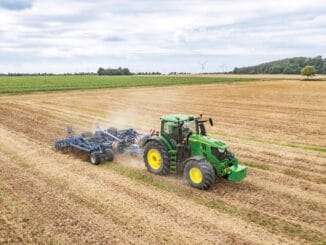
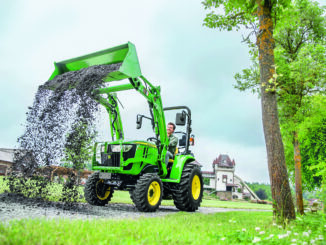
A PTO (Power Take‑Off) is the system that lets your compact tractor share its engine power with implements like mowers, tillers, log splitters, and post‑hole diggers. In practice, the PTO is a rotating shaft on the tractor that you connect to the implement’s driveline so the attachment can do useful work without having its own engine.
What is a PTO on a compact tractor?
On a compact tractor, the PTO is a splined steel shaft, usually at the rear of the tractor, driven mechanically from the engine through the transmission or a separate clutch pack. When you engage the PTO, this shaft spins at a standardized speed (typically 540 rpm on compact tractors) and transfers torque into the implement via a telescopic driveline with universal joints.
Key points:
-
Purpose: Provide rotary power from the tractor engine to an attachment that has no engine of its own.
-
Location: Rear PTO is standard; some compact tractors also have a mid‑PTO under the tractor for belly mowers or front snowblowers.
-
Standard sizes: Most modern compact tractors use a 1 3/8″ diameter PTO shaft, though some older or very small machines may have 1 1/8″.
-
Standard speeds: 540 rpm is the common rating for compact tractors, with some larger tractors offering 1000 rpm as well.
A simple way to look at it: the engine spins, the transmission and PTO gearing reduce and control that speed, and the PTO shaft carries that rotation to the implement.
How a PTO works (step by step)
While designs vary, most compact tractor PTO systems follow the same basic logic.
-
Engine power generation
The diesel engine produces torque at the crankshaft; that torque is transmitted into the transmission and PTO drive train through gears and shafts. -
PTO drive gearing
Inside the rear of the tractor, dedicated gearing reduces engine rpm down to the rated PTO speed (e.g., 540 rpm at a specific engine rpm, often around 2200–2600 engine rpm). -
PTO clutch or engagement mechanism
Depending on design, a mechanical clutch, two‑stage clutch, or electro‑hydraulic clutch pack connects or disconnects the PTO drive from the engine. -
PTO output shaft
When engaged, the PTO shaft at the rear spins at the rated speed. It has standardized splines so that a mating yoke on the implement’s driveline can slide on and lock with a pin or quick‑release collar. -
Implement driveline
The implement uses a telescopic driveline with universal joints to carry power from the PTO shaft to its gearbox or input shaft. The implement’s gearbox further adjusts speed and torque to suit its work (for example, spinning mower blades or an auger). -
PTO horsepower vs engine horsepower
Because some power is lost in the drivetrain, PTO horsepower is always lower than gross engine horsepower. For example, a 24.5 hp compact tractor might deliver about 21–22 hp at the PTO.
In operation, you typically:
-
Shut the tractor off or at least disengage the PTO before hooking up.
-
Attach the implement’s driveline to the PTO shaft.
-
Set engine rpm to the manufacturer’s recommended speed for rated PTO rpm.
-
Engage the PTO lever/switch smoothly to bring the implement up to speed.
Types of PTO systems on compact tractors
Compact tractors don’t all behave the same when you push the clutch or change direction. The feel and control come down to the PTO type.
Transmission‑driven PTO (basic)
This older style connects the PTO to the transmission input. When you push the main clutch pedal, both the drive wheels and PTO stop.
-
Pros: Simple and cheap; common on older or economy machines.
-
Cons: You lose PTO drive every time you clutch, which is awkward for balers or snowblowers where you want PTO running while you stop the tractor.
Many modern compact tractors have moved beyond this, but you may still encounter it in used equipment.
Live PTO
A live PTO uses a two‑stage clutch: press halfway to disengage the transmission (tractor stops moving), press fully to stop the PTO as well. This allows you to keep the PTO turning while pausing tractor movement.
-
Pros: Better control for mowing, baling, tilling, and any job where you want to stop the tractor without stopping the implement.
-
Cons: Requires learning the “feel” of the two‑stage clutch; still mechanically linked and not as flexible as independent PTO.
In practice, many compact tractors with a conventional clutch and live PTO are very workable for small‑acreage owners.
Independent PTO
An independent PTO has its own clutch system (often hydraulic) that is not mechanically tied to the transmission clutch. You switch it on or off with a lever or electric switch regardless of whether the tractor is moving.
-
Pros: Maximum flexibility; you can start or stop the PTO on the fly, with the tractor moving or stationary, without touching the drive clutch.
-
Cons: More complex, typically found on newer or higher‑spec models, and can be more expensive to repair.
Independent PTO is common on modern compact tractors with hydrostatic transmissions, which suits many small farm and estate users.
Mid‑PTO vs rear PTO
Most compact tractors have:
-
Rear PTO: Standard for implements like rotary cutters, flail mowers, finish mowers, rotary tillers, and post‑hole diggers.
-
Mid‑PTO: Located under the tractor; powers belly mowers and sometimes front‑mounted implements via a shaft that runs forward.
Some models let you run rear, mid, or both PTOs depending on selector position, though running both can be limited by available PTO horsepower.
PTO speeds and “economy” PTO
The speed of the PTO shaft is standardized so implements behave predictably.
Standard PTO speeds
-
540 rpm: The most common rating on compact tractors; nearly all small tractor implements are designed around 540 rpm PTO input.
-
1000 rpm: Seen mainly on larger agricultural tractors and high‑demand implements.
Your tractor will specify the engine rpm at which the PTO reaches its rated speed (e.g., 540 PTO rpm at 2500 engine rpm). There is usually a mark on the tachometer for this.
Economy PTO
Some tractors offer an “economy” or “540E” PTO mode, which delivers 540 rpm at a lower engine speed.
-
Benefit: Reduced fuel use, lower noise, and less vibration when running lighter implements that don’t need full engine power.
-
Limitation: You can’t draw full PTO horsepower in economy mode; it’s intended for jobs like mowing or light tillage rather than heavy rotary cutting.
For compact tractor owners, economy PTO is particularly attractive when running a finishing mower or smaller flail where you’re operating for long periods.
Common PTO‑driven implements for compact tractors
One reason PTO matters so much is the sheer range of tools you can run from a modest‑sized machine.
Typical PTO‑driven attachments include:
-
Rotary (bush hog) or flail mowers for pasture and rough cutting.
-
Finish mowers for lawns and park‑like areas.
-
Rotary tillers for garden and small‑scale vegetable ground.
-
Post‑hole diggers/augers for fencing and tree planting.
-
Wood chippers and shredder/chippers.
-
Log splitters (though many are hydraulic off a rear remote rather than PTO‑mechanical).
-
Snowblowers (rear‑mounted or front‑mounted via mid‑PTO).
-
Generators and pumps (less common on compact tractors but possible).
Each of these implements is designed for a particular PTO speed, rotational direction, and horsepower range. Matching implement requirements to your tractor’s PTO specs is essential for good performance and longevity.
Safety fundamentals for PTO use
PTOs are extremely useful but also one of the most dangerous parts of a tractor if misused. The rotating shaft and driveline can entangle clothing, hair, or loose items in a fraction of a second.
Key safety principles:
-
Never work near a rotating PTO shaft
Always shut off the engine, wait for all rotation to stop, and remove the key before approaching the driveline to adjust, clear debris, or service. -
Keep all guards in place
The PTO stub shaft usually has a shield, and the implement driveline has a plastic safety guard that should spin freely over the inner shaft. These guards drastically reduce entanglement risk when intact and correctly fitted. -
Avoid loose clothing and dangling items
Even with guards, avoid long drawstrings, loose jackets, or anything that can catch on rotating parts. -
Hook‑up procedures
-
Ensure the tractor is off or at least the PTO is fully disengaged.
-
Set the parking brake.
-
Only then slide the yoke onto the PTO shaft and secure the lock pin or collar.
-
Confirm the telescoping shaft still has room to shorten and lengthen as the 3‑point hitch moves, so it doesn’t bottom out and damage the tractor.
-
-
Know your PTO direction and speed
Using an implement designed for different rotation or speed can create unpredictable and unsafe behavior. Always check the implement plate or manual.
Treat the PTO as a powerful open rotating machine element that demands respect; safe habits quickly become second nature.
Matching PTO power to your compact tractor and implements
When choosing implements for a compact tractor, PTO horsepower is more important than gross engine horsepower.
PTO horsepower
PTO horsepower is measured at the PTO shaft and accounts for drivetrain losses. A tractor might be advertised as 25 hp engine but only deliver 20–22 hp at the PTO.
Implement manufacturers usually specify a recommended PTO horsepower range. For example:
-
A 4‑ft rotary cutter might call for 15–25 PTO hp.
-
A 5‑ft rotary tiller might call for 18–30 PTO hp.
Running an implement that needs more PTO hp than you have will cause the tractor to bog down or stall, especially in heavy conditions. Oversizing implements can also stress driveline components.
Gear vs hydrostatic tractors and PTO use
While PTOs function similarly regardless of transmission, the way you control tractor ground speed relative to PTO speed differs:
-
Gear or shuttle transmission with live/independent PTO: You select a gear that gives the right ground speed at the engine rpm needed for rated PTO speed.
-
Hydrostatic transmission with independent PTO: You set engine rpm for PTO and then “feather” forward speed with the hydro pedal. This is very convenient for mowing or tilling around obstacles and tight spaces.
For many small‑acreage or estate owners, the combination of hydrostatic drive and independent PTO gives excellent control with minimal learning curve.
Practical tips for new compact tractor owners
If you’re new to compact tractors and PTO systems, these practices will help you get clean, reliable performance and avoid common pitfalls.
-
Learn your tractor’s PTO controls
Understand where the PTO engagement lever or switch is, any mid/rear selector, and how the clutch affects PTO operation on your specific model. -
Use the tachometer PTO mark
There is typically a mark on the tach showing the engine rpm that yields 540 PTO rpm. Run close to this for best implement performance, unless using an economy PTO mode explicitly allowed by the manual. -
Start implements slowly
Engage the PTO at lower engine rpm to reduce shock load, then increase engine speed to the working range. This is easier on clutches and gearboxes. -
Grease driveline universal joints and inspect guards
PTO drivelines see high loads and constant rotation. Regular greasing and guard inspection extend life and maintain safety. -
Check PTO shaft length
When fitting a new implement, test with the 3‑point hitch fully raised and fully lowered to ensure the telescoping driveline never bottoms out or pulls apart. If necessary, shorten the shaft according to the implement manual, or have a dealer do it. -
Respect rated limits
Do not exceed the recommended PTO speed or horsepower range for an implement. This reduces breakdowns and helps avoid dangerous failures.
Why PTO understanding matters for compact tractor buyers
For compact tractor buyers choosing between models, PTO design and capacity are often just as important as engine size or loader lift.
When comparing tractors, pay attention to:
-
PTO type: independent vs live vs transmission‑driven. Independent is usually most convenient, especially if you plan to run mowers, snowblowers, or tillers frequently.
-
PTO horsepower: not just engine horsepower; a smaller engine with efficient drivetrain can deliver comparable PTO power to a larger but less efficient machine.
-
PTO configuration: rear only vs rear + mid‑PTO; crucial if you want a belly mower or front‑mounted snowblower.
-
Availability of economy PTO: helpful for long mowing sessions with moderate loads.
For small farms, homesteads, and acreage properties, getting these PTO details right means your compact tractor can comfortably run the implements you need today and gives some margin for future attachments.
PTO horsepower ratings in popular compact tractor models
Most popular compact tractors have PTO horsepower (PTO hp) that is about 15–25% lower than their advertised engine horsepower, and this PTO rating is the key number that governs what implements they can run efficiently. Below is an overview of how PTO hp typically looks in the 20–60 engine‑hp compact and compact‑utility bracket, using real‑world examples and typical ranges.
Engine hp vs PTO hp
For compact tractors, PTO hp is the power actually available at the PTO shaft after drivetrain losses. You generally lose around 10–25% of engine hp before it reaches the PTO, depending on transmission type and efficiency.
-
Hydrostatic transmissions usually lose a bit more, so their PTO hp is a smaller fraction of engine hp.
-
Gear or power‑shuttle tractors often have slightly higher PTO hp for the same engine rating.
Because PTO‑driven implements (mowers, tillers, blowers) are rated by minimum PTO hp, this figure is more critical than engine hp when you’re sizing implements.
Typical PTO hp ranges by compact class
You’ll see patterns if you group compact tractors by engine size.
-
20–25 engine hp sub‑compact/compact: often 14–19 PTO hp
-
25–30 engine hp compact: usually 18–23 PTO hp
-
30–40 engine hp compact‑utility: typically 24–32 PTO hp
-
40–60 engine hp upper compact/utility: commonly 32–48 PTO hp
These PTO hp ranges line up with common implement needs such as 4–6 ft rotary mowers, 4–6 ft tillers, and 4–6 ft snow blowers, which often require anywhere from about 15 to 40 PTO hp depending on width and conditions.
Example PTO ratings in popular compact tractors
The exact numbers change by model year and transmission option, but these examples illustrate typical relationships.
Values in the table are representative for this tractor class rather than specific to a single, current‑year model; manufacturers’ spec sheets for each model year give the exact PTO rating.
How PTO hp maps to implements
When you read the PTO hp rating on a spec sheet, it ties directly to what the tractor can drive.
Typical PTO hp needs (approximate):
-
4 ft rotary cutter: about 18–25 PTO hp
-
5 ft rotary cutter or medium tiller: about 20–35 PTO hp, depending on vegetation or soil
-
4–5 ft finish mower: roughly 15–25 PTO hp
-
5 ft rear snow blower: often 25–30 PTO hp
-
6 ft blower or heavy debris blower: can push up towards 40–60 PTO hp on larger machines
The practical rule is to choose a tractor where your PTO hp comfortably meets or slightly exceeds the implement’s minimum requirement for the conditions you expect (e.g., heavy brush vs lawn).
Using this when comparing models
When you compare “popular compact tractors” from different brands, focus on:
-
The PTO hp number, not just engine hp.
-
The percentage drop from engine hp (more efficient drivetrains give more PTO hp for the same engine size).
-
Whether the PTO rating is measured at 540 rpm and with which transmission option.
If you tell me the specific models you’re considering (for example, a few Deere, Kubota, New Holland, or Case IH candidates), I can outline their typical engine hp vs PTO hp relationships and suggest a safe implement size band for each class based on these typical ranges.
Kubota compact tractor PTO HP ratings comparison
Kubota’s compact tractors typically have PTO horsepower that’s about 15–25% lower than engine horsepower, and the exact PTO hp varies by series, model, and transmission option. Below is a concise comparison using commonly cited, representative figures for popular Kubota compact machines, so you can see how PTO hp scales across BX, B, and L series tractors.
Why PTO hp matters on Kubota compacts
PTO hp is the usable power at the PTO shaft for running implements like mowers, tillers, and snow blowers, and it’s often more important than engine hp when sizing attachments. Hydrostatic versions of a Kubota model usually have slightly less PTO hp than gear/DT versions because of extra drivetrain losses.
Example Kubota compact PTO hp ratings
These values are typical, published figures or very close approximations cited in buying guides and owner discussions for current‑style models; always confirm against the latest Kubota spec sheet before purchasing.
Kubota BX series (sub‑compact)
-
BX2380
-
Engine: about 21.6 hp
-
PTO: about 17.7 hp
-
Typical work: 48–60″ mid‑mowers, light rear implements like small tillers and post‑hole diggers.
-
-
BX2680
-
Engine: about 24.8 hp
-
PTO: about 19.5 hp
-
Typical work: 4 ft rotary cutter, 50–60″ finish mower, small rotary tiller, light snow blower.
-
These BX models illustrate the pattern of roughly 3–5 hp difference between engine and PTO ratings in the sub‑compact class.
Kubota L “Standard L” series (core compact/compact‑utility)
-
L2501 / L2502‑type
-
Engine: about 24.8–25 hp
-
PTO: about 20–21 hp (HST on the lower end, gear slightly higher)
-
Implements: often paired with 4 ft rotary cutter, 5 ft finish mower, and 4–5 ft tiller in moderate conditions.
-
-
L3902 / L3901‑type
-
Engine: around 37–37.5 hp
-
PTO: around 30–32 hp depending on transmission
-
Implements: 5–6 ft rotary cutters and tillers, 5–6 ft snow blowers, heavier PTO loads than the L2501‑class.
-
The L series shows how stepping up roughly 10–12 engine hp often gains you around 10 PTO hp, which translates into a whole size up in many implements.
Kubota Grand L / higher‑end compacts
-
L3560‑type (Grand L)
-
Engine: about 37 hp
-
PTO: about 29.5 hp
-
Focus: premium features, cab options, and enough PTO hp for 6 ft finish mowers and robust 5–6 ft rotary tillers.
-
-
Larger Grand L or MX5400‑type (upper compact/utility, edging out of “compact” but often cross‑shopped)
-
Engine: roughly 54 hp (MX5400 example)
-
PTO: typically in the low‑40 hp range depending on transmission, based on the usual 20–25% drop pattern.
-
Focus: 6 ft plus rotary cutters, larger blowers and tillers, heavier commercial or small‑farm work.
-
Owners often note that hydrostatic versions of these machines feel slightly “softer” at the PTO than gear siblings because of the fractional hp loss in the hydro drive.
Typical pattern across Kubota compact ranges
From the examples above, you can draw some practical rules of thumb for Kubota compacts:
-
BX series: mid‑teens to just under 20 PTO hp.
-
Smaller L / B series: high‑teens to low‑20s PTO hp in the 25 engine‑hp class.
-
Mid‑L series (around 37 hp engine): roughly 29–32 PTO hp.
-
Upper compact / light utility (around 50+ engine hp): low‑40s PTO hp.
When comparing Kubota compact models for real‑world work, use the PTO hp rating to decide what width of mower, cutter, blower, or tiller is realistic, then choose the series that gives you a comfortable margin above the implement’s minimum PTO hp requirement.