
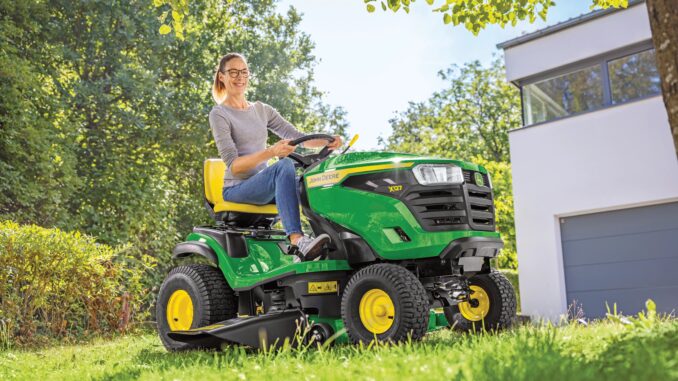
The John Deere D170 is a D100 Series lawn tractor built for homeowner mowing, with a 54-inch mower deck and a V-twin gasoline engine, and the official operator’s manual groups it with the D140, D155 and D160 models in the same family. This guide is written for USA and Canada owners who handle routine service themselves and want a practical line between realistic DIY work and jobs that are better left to a dealer.
The article focuses on symptom-based troubleshooting, routine maintenance, common repair decisions, parts identification, fitting basics, and a large FAQ so owners can start with what the tractor is doing wrong rather than guessing which part failed first.
General overview of the John Deere D170
The John Deere D170 sits near the upper end of the D100 Series homeowner lawn tractor range covered by the OMGX25410 operator’s manual, and Deere lists it in the same product identification section as the D105 through D170 tractors. In practice, that means a residential machine with familiar Deere controls and service access, but still one that needs correct deck, engine, and drive-system identification before ordering parts.
The key systems owners usually deal with are:
-
Engine and fuel system: V-twin gasoline engine, air filter, fuel filter, spark plugs, crankcase oil, and oil filter.
-
Mower system: 54-inch deck, mower belt, spindle assemblies, three blades, discharge parts, and deck-leveling hardware.
-
Drive system: belt-driven hydrostatic transaxle, brake linkage, rear wheels and related control linkage.
-
Electrical system: battery, ignition switch, starter circuit, PTO switch, fuses, and seat/brake safety interlocks.
Common service parts owners frequently buy for this platform include engine oil filters, air filters and pre-cleaners, fuel filters, spark plugs, mower blades, mower deck belts, batteries, and safety-related switches.
John Deere D170 troubleshooting approach
Diagnosis on a John Deere D170 should begin with the symptom you can actually observe, because the same underlying issue can show up in different ways and several different faults can create the same complaint. A no-start tractor, for example, may have stale fuel, a discharged battery, a bad brake or seat interlock signal, or an ignition/fuel problem rather than one single “bad starter” answer.
Main symptom groups for the John Deere D170 are:
-
Starting issues.
-
Running or power-loss issues.
-
Poor cut quality.
-
Vibration or unusual noise.
-
Overheating, burning smells, or leaks.
-
Drive and traction problems.
-
Electrical and safety-switch problems.
John Deere D170 emergency and immediate repair needs
Some faults on a John Deere D170 need attention before the tractor is used again because they affect safe stopping, blade control, fire risk, or the ability of the operator-presence system to work correctly. Deere specifically warns about debris buildup near the muffler, engine screens, deck top and transmission, and also notes that blade-stop time should be about five seconds after disengagement; anything outside normal behavior deserves prompt inspection.
4.1 John Deere D170 starting issues
When the John Deere D170 will not crank, only clicks, or cranks without firing, the immediate concern is whether the fault is electrical, fuel-related, or caused by an interlock preventing start authorization. Repeated cranking with stale fuel or a weak battery can waste time and overheat components without solving the real cause.
Common causes:
-
Weak or discharged battery.
-
Dirty or loose battery terminals.
-
Brake not fully applied or PTO left engaged.
-
Faulty seat, brake, or PTO safety switch.
-
Stale fuel or restricted fuel filter.
-
Fouled spark plugs or blocked air filter.
Basic owner checks:
-
Set the park brake, switch PTO off, and confirm the tractor is in the normal starting position.
-
Check battery cable tightness and obvious corrosion at the terminals.
-
Confirm there is fresh fuel in the tank and that the fuel filter is not visibly dirty or empty after running attempts.
-
Inspect the air filter and spark plugs if the engine cranks but will not catch.
-
If it still will not start, move to switch and wiring diagnosis rather than continuing to crank.
4.2 John Deere D170 cut-quality problems
If the John Deere D170 leaves strips, scalps, clumps, or an uneven finish, the deck setup and blade condition usually matter more than engine power alone. Poor cut quality also increases stress on belts, spindles and the engine because the deck is working harder than it should.
Common causes:
-
Dull, bent, or unbalanced blades.
-
Deck out of level.
-
Wrong ground speed for grass conditions.
-
Wet or overgrown grass.
-
Clogged underside of deck.
-
Worn or slipping mower belt.
Basic owner checks:
-
Clean the deck underside safely with the engine off, key removed, and spark plug wires disconnected.
-
Inspect blade edges and blade shape for dullness or impact damage.
-
Verify tire pressures before judging deck level.
-
Recheck deck leveling and anti-scalp wheel setting if the cut is uneven.
-
Slow ground speed in heavy grass and mow only when conditions are dry enough.
4.3 John Deere D170 vibration and noise
A John Deere D170 that suddenly vibrates, rattles, or makes a new knocking or scraping sound should be shut down and inspected before further use. Deere states that if the machine hits an object or abnormal vibration occurs, operation should stop and repairs should be made before using it again.
Common causes:
-
Bent blade.
-
Loose blade hardware.
-
Debris wrapped around spindles or pulleys.
-
Worn spindle bearings or idlers.
-
Damaged belt.
-
Loose wheel or deck hardware.
Basic owner checks:
-
Park safely, remove the key, and wait for all moving parts to stop.
-
Inspect blades and blade bolts for impact damage or looseness.
-
Clear wrapped grass, wire, or twine from spindle and pulley areas.
-
Spin deck components by hand only with the engine safely disabled and listen for rough bearings.
-
Do not keep mowing until the source is identified.
4.4 Overheating and leaks on the John Deere D170
Heat, smoke, raw fuel smell, oil leakage, or grass packed around hot areas are all immediate concerns on a John Deere D170 because they can quickly lead to engine damage or fire. Deere repeatedly stresses debris cleanup around the muffler, engine screens, deck top and transmission as part of fire prevention.
Common causes:
-
Debris blocking cooling-air flow.
-
Low engine oil.
-
Oil leak around filter or drain point.
-
Fuel line or filter seepage.
-
Heavy dry grass buildup around muffler area.
-
Dirty engine cooling fins or screen.
Basic owner checks:
-
Let the tractor cool fully before cleaning or inspecting hot areas.
-
Check engine oil level before the next run.
-
Remove grass and debris from muffler, screen, engine compartment and deck top.
-
Inspect for wet oil or fuel traces that indicate an active leak.
-
Do not operate the tractor again if fuel leakage is present.
4.5 John Deere D170 transmission and drive problems
If a John Deere D170 moves weakly, hesitates on hills, fails to respond smoothly, or will not drive at normal speed, the issue is often a mix of belt condition, linkage adjustment, brake drag, or transaxle wear rather than a single catastrophic failure. Because drive complaints can overlap with operator technique and slope limits, diagnosis should also consider terrain and load.
Common causes:
-
Drive belt wear or slippage.
-
Brake dragging.
-
Linkage out of adjustment.
-
Low traction from wet grass or unsuitable slope.
-
Transmission wear or internal failure.
Basic owner checks:
-
Confirm the problem is repeatable on level ground before blaming the transmission.
-
Inspect visible drive-belt condition and routing as far as safely accessible.
-
Check that the brake fully releases after parking.
-
Review the manual’s slope limits before testing on hills.
-
If the tractor still lacks drive with correct belt condition and linkage movement, dealer diagnosis is usually the next step.
4.6 Electrical problems on the John Deere D170
Electrical trouble on the John Deere D170 often shows up as no crank, intermittent cranking, PTO not engaging, blown fuses, dead lights, or safety-related shutdowns. Because the machine uses several interlocks, a symptom that feels like a battery issue can actually be a switch or wiring fault.
Common causes:
-
Weak battery.
-
Corroded terminals or ground connection.
-
Faulty ignition switch.
-
Bad PTO, seat, or brake switch.
-
Damaged wiring near heat, vibration, or moving parts.
-
Blown fuse.
Basic owner checks:
-
Clean and tighten battery connections first.
-
Inspect fuse condition and wiring plugs that may have loosened.
-
Test whether the symptom changes with brake position, PTO position, or seat pressure.
-
Look for rubbed or pinched wiring around the frame and engine area.
-
Avoid bypassing safety switches except for formal diagnostic procedures and never leave a bypass in place.
DIY or dealer repair decision guide for the John Deere D170
The practical repair line on a John Deere D170 is simple: routine service, access-friendly deck work, and obvious wear-part replacement are normal DIY jobs, but internal engine work, transmission faults, persistent electrical diagnosis, and anything affecting safety system integrity are usually dealer territory.
Good DIY jobs
-
Engine oil and oil filter service.
-
Air filter and pre-cleaner service.
-
Fuel filter replacement.
-
Spark plug replacement.
-
Blade removal, sharpening, and replacement.
-
Deck cleaning and deck-level checks.
-
Battery replacement and terminal cleaning.
Advanced DIY or dealer jobs
-
Deck belt replacement when routing is unclear or pulleys are worn.
-
Spindle, idler, or brake-linkage work.
-
Safety-switch circuit diagnosis.
-
Steering wear diagnosis and correction.
-
Transmission or major drive-system repair.
-
Internal engine repairs.
Skill level guide
-
Beginner: oil check, battery cleanup, air filter service, deck washout and debris removal.
-
Intermediate: spark plugs, fuel filter, blade replacement, deck leveling, battery replacement.
-
Advanced: belt routing, spindle work, switch testing with a meter, driveline diagnosis.
Parts needed for the John Deere D170: OEM vs aftermarket
Before ordering John Deere D170 parts, gather the full model name, the tractor Product Identification Number, the engine serial number, and the deck size because Deere says service support and correct parts identification depend on these numbers. For this model family, the machine PIN is on the left side of the frame, and the engine serial number is shown on the engine itself in the operator’s manual identification section.
OEM parts are the safer choice for belts, safety switches, blade hardware, and any fit-sensitive item because correct length, routing, and switch calibration matter more than a small price difference. Aftermarket parts can be reasonable for filters, blades, batteries, and tune-up items if the listing clearly cross-references the John Deere D170 and matches the engine and deck setup exactly.
Where to find John Deere D170 manuals and diagrams
These sources are the most useful starting points for a John Deere D170 owner:
-
Official D100 Series operator’s manual — safety, controls, service intervals, lubrication points, mower and electrical service basics, troubleshooting, storage, and identification-number locations.
-
John Deere Technical Information Store — Deere’s own manual portal tied to the operator manual reference number.
-
John Deere D170 owner support page — maintenance and wear categories, repair categories, and model-specific shopping entry point.
-
Green Farm Parts D170 page — illustrated aftermarket-friendly browsing path useful when checking commonly sold service items.
How to locate model, serial and engine numbers on a John Deere D170
These numbers matter because the John Deere D170 can share many family parts with nearby D100-series tractors, but not every engine or deck-related part is identical across the range. Using the correct identification numbers reduces the risk of buying the wrong belt, filter, switch, or engine service part.
-
Park the tractor safely on level ground, switch it off, remove the key, and let hot parts cool.
-
Find the tractor Product Identification Number on the left side of the frame, as shown in the operator’s manual product-identification section.
-
Locate the engine serial number on the engine shroud or engine identification area; the manual shows separate examples for single-cylinder and V-twin engines.
-
Check the mower deck tag and confirm that the tractor is fitted with the expected 54-inch deck before ordering deck parts.
-
Record all numbers exactly as stamped so dealer staff or online catalogs can filter parts correctly.
Buying John Deere D170 parts online and in physical stores
The best buying strategy for a John Deere D170 is to identify the exact OEM number first, then compare sources rather than shopping by description alone, because belt length, blade shape, and switch style errors are common when buyers order only by model name.
-
Online: Use the John Deere owner support page, the Technical Information Store, and a Deere-focused seller such as Green Farm Parts to confirm OEM references first.
-
Dealer counter: Best for serial-specific electrical parts, safety switches, transmission-related parts, and any item where the parts advisor can match your PIN.
-
Retail stores: Fine for oil, fuel filters, spark plugs, and batteries only when the packaging or catalog clearly lists the John Deere D170 or the exact OEM cross-reference.
Step-by-step fitting guide for common John Deere D170 parts
Replacing the air filter on a John Deere D170
This job helps with hard starting, black smoke, and power loss caused by restricted intake flow.
-
Park safely, stop the engine, remove the key, and let hot engine parts cool.
-
Open the air cleaner housing and remove the old paper filter and pre-cleaner.
-
Wipe loose dirt from the housing so debris does not enter the engine.
-
Install the new pre-cleaner and filter in the same orientation as the old parts.
-
Close the housing securely and check for a proper seal before restarting.
Changing spark plugs on the John Deere D170
Fresh spark plugs help the John Deere D170 start easier, idle smoother, and recover power if the old plugs are fouled or worn.
-
Let the engine cool completely and pull the spark plug leads off carefully.
-
Remove each plug and compare its condition for signs of rich running, oil burning, or heavy deposits.
-
Verify the replacement plug type against the engine specification before installation.
-
Thread new plugs in by hand first to avoid cross-threading, then tighten correctly.
-
Refit the plug leads securely and test-run the tractor.
Replacing the mower blades on a John Deere D170
Blade service fixes ragged cutting, striping issues, and vibration caused by dull or damaged blades.
-
Disable starting by removing the key and disconnecting spark plug wires.
-
Raise and support the deck safely for access; use gloves because the blades are sharp.
-
Remove blade hardware, noting the blade orientation before taking it off.
-
Install sharpened or new matched blades and tighten hardware to specification from the manual or service data.
-
Test mow a small area and recheck cut quality and vibration.
Replacing the John Deere D170 mower deck belt
A new mower belt can cure blade-speed loss, poor discharge, squealing, or a deck that stops under load.
-
Park the tractor safely, lower the deck, remove the key, and disconnect spark plug wires.
-
Note the old belt routing before removal, using the routing decal or parts diagram where available.
-
Release belt tension carefully and remove the worn belt from pulleys and guides.
-
Install the replacement belt exactly in the correct pulley path and confirm it sits fully in the grooves.
-
Recheck belt keeper clearance, engage the deck briefly at low throttle, and listen for tracking issues before mowing.
Maintenance to prevent John Deere D170 problems from coming back
Most repeated John Deere D170 problems trace back to missed routine service, old fuel, neglected deck cleanup, poor blade condition, or debris accumulation around hot engine components. Regular maintenance reduces no-start complaints, improves cut quality, lowers belt and spindle stress, and cuts fire risk in dry mowing conditions.
Focus areas:
-
Starting reliability: fresh fuel, clean battery terminals, serviced air filter, annual spark plug and fuel-filter attention.
-
Cut quality: sharp balanced blades, clean deck underside, proper tire pressure, correct deck level.
-
Fire and overheating prevention: remove debris from muffler area, engine screens, deck top, and transmission area.
-
Drive performance: inspect belts and linkages before symptoms become severe.
-
Electrical reliability: keep terminals clean, protect wiring from rubbing, and fix switch problems early.
John Deere D170 maintenance schedule and year-round checklist
The D100 Series operator’s manual includes service intervals for lubrication, engine, transmission, mower, electrical service and miscellaneous checks, while Briggs & Stratton’s general maintenance schedule adds useful engine timing guidance such as daily oil checks, first oil change after five hours, and recurring annual tune-up items.
Daily / before each use
-
Check engine oil level.
-
Inspect the tractor for loose hardware, damaged parts, and safety-device condition.
-
Remove grass and debris from muffler area, engine screens, mower deck top, and transmission area.
-
Check tires visually and confirm the mowing area is clear of hazards and debris.
After first 5 hours
-
Change engine oil on a new or newly rebuilt service interval start.
Every 25 hours or annually
-
Clean air filter and pre-cleaner, more often in dusty conditions.
-
Check deck cleanliness and inspect belts and blades for wear.
-
Review wheel hardware tightness, especially on machines early in life or after wheel service.
Every 50 hours or yearly
-
Change engine oil.
-
Check muffler and spark arrester area where applicable.
-
Inspect battery condition, terminals, and charging performance.
-
Inspect mower blades, blade bolts, and brake operation.
Every 200 hours or similar long interval
-
No universal 200-hour line is clearly stated in the fetched D100 operator pages, so owners should use the model manual plus engine schedule and inspect high-wear items such as belts, blades, battery and switches well before this point.
Seasonal checklist
-
Spring: change oil if due, install fresh fuel, inspect battery, service air filter, inspect blades, and level the deck.
-
Mid-season: clean cooling areas often, inspect belt condition, sharpen blades as needed, and watch for debris buildup in dry mowing weather.
-
Fall / end of season: clean the tractor thoroughly, address leaks, stabilize or manage fuel correctly for storage, and store only after hot areas are free of dry debris.
Repair, upgrade, or replace a John Deere D170?
A John Deere D170 is usually worth repairing when the engine, frame, deck shell, and transmission are fundamentally sound and the needed work is limited to wear parts, tune-up service, blades, belts, batteries, or switches. Upgrade or replacement becomes more sensible when multiple major systems need work at the same time, especially if transmission, severe deck corrosion, steering wear, and engine problems all show up together.
Repair if…
-
The issue is routine service or a single wear part.
-
The engine has good compression and starts reliably after normal tune-up work.
-
The deck shell and frame are structurally solid.
-
The cost is mainly blades, belts, filters, battery, or switches.
Upgrade if…
-
You regularly mow rough or large ground that pushes a homeowner tractor beyond its comfort zone.
-
You want stronger towing, heavier-duty transmission hardware, or more attachment capability than the D100 platform is meant to provide.
-
Repeated belt, deck, or cut-quality issues are really a mismatch between the tractor and the workload.
Replace if…
-
The John Deere D170 has major transmission failure plus engine or deck problems at the same time.
-
The frame or deck shell is badly rusted or cracked.
-
Safety systems are compromised and the repair estimate approaches the value of the tractor.
-
Parts and labor together exceed what a better-condition replacement machine would cost in your market.
Expanded troubleshooting FAQ for the John Deere D170
1. Why will my John Deere D170 not start?
The most common no-start causes are a weak battery, dirty battery terminals, PTO left engaged, brake/interlock problems, stale fuel, dirty air filter, or fouled spark plugs. Start with the simple checks first, because many D170 no-start complaints are basic starting-condition faults rather than major engine failure.
2. Why does my John Deere D170 click but not crank?
A click usually points to low battery voltage, poor cable contact, or a starter circuit issue rather than a fuel problem. Clean and tighten the terminals, charge-test the battery, and then check the brake and PTO interlock conditions before assuming the starter itself is bad.
3. Why does the John Deere D170 crank but not fire?
If the engine cranks but will not fire, focus on fresh fuel, spark, and air flow first. Stale fuel, clogged filters, and fouled plugs are much more common than severe engine damage on a residential tractor that was running normally before storage.
4. Why does my John Deere D170 start and then die?
This usually suggests fuel starvation, a blocked fuel cap vent, dirty fuel filter, contaminated fuel, or an intermittent ignition/safety-switch issue. A tractor that starts briefly on available fuel and then dies often needs fuel delivery checks before deeper engine diagnosis.
5. Why is my John Deere D170 hard to start when cold?
Cold-start trouble often comes from weak spark, tired battery output, stale fuel, or an air/fuel mixture issue made worse by a dirty filter. Annual spark plug, filter, and fuel attention usually improves cold starting noticeably.
6. Why does the John Deere D170 run rough at idle?
Rough idle can be caused by old fuel, partially fouled spark plugs, air-filter restriction, or carburetion issues. If basic tune-up parts are overdue, do that work before chasing more advanced faults.
7. Why does my John Deere D170 lose power while mowing?
Power loss under load often points to dull blades, clogged deck, wet or overgrown grass, dirty air filter, or a slipping mower belt. The symptom feels like an engine problem, but deck drag is often the real cause.
8. Why is my John Deere D170 blowing black smoke?
Black smoke usually means the engine is running too rich, often because the air filter is restricted or fuel quality is poor. Check the air cleaner first because that is one of the fastest and cheapest fixes.
9. Why does my John Deere D170 leave uncut strips?
Uncut strips usually come from dull blades, low blade speed, deck leveling issues, or mowing too fast for conditions. Check blade condition and deck setup before replacing major parts.
10. Why is the John Deere D170 cutting unevenly?
Uneven cutting is commonly tied to unequal tire pressure, deck-level problems, bent blades, or one spindle not running correctly. Tire pressure should be checked before trying to level the deck because it affects deck attitude directly.
11. Why does my John Deere D170 scalp the lawn?
Scalping happens when the deck is too low, the lawn is uneven, anti-scalp setup is wrong, or the mowing pattern is too aggressive for the terrain. Recheck deck height and ground conditions rather than assuming the deck itself is defective.
12. Why does grass clump under the John Deere D170 deck?
Wet grass, heavy growth, dull blades, and a dirty deck all increase clumping. Cleaning the underside regularly and mowing in better conditions reduces discharge problems and belt load.
13. Why does the John Deere D170 vibrate when I engage the blades?
Blade-engagement vibration usually indicates a bent blade, unbalanced blade set, wrapped debris, or worn spindle/idler parts. Shut the machine down and inspect it before mowing further, because Deere advises stopping when abnormal vibration occurs.
14. Why is my John Deere D170 making a squealing noise?
A squeal often means belt slip, belt glazing, pulley issues, or a bearing beginning to fail. If the noise changes with PTO engagement, start by inspecting the deck-belt path and pulley condition.
15. Why does the John Deere D170 mower deck stop in heavy grass?
This usually happens when the belt slips, blade speed drops, the deck is packed with grass, or the mowing load is simply too high. Slow down, clean the deck, and inspect belt condition before assuming the PTO switch or engine is at fault.
16. Why does my John Deere D170 burn or shred deck belts?
Repeated belt failure usually means misrouting, seized pulleys, worn belt guides, spindle drag, or use of the wrong belt size. This is one area where OEM belts usually save time because fit and length matter a lot.
17. Why does the John Deere D170 blade brake seem slow?
The manual states mower blades should stop in about five seconds after disengagement. If stop time is clearly longer than that, treat it as a safety issue and have the deck brake, belt, and linkage inspected before further use.
18. Why does my John Deere D170 smell hot after mowing?
A hot smell often comes from grass packed around the muffler or engine cooling areas, slipping belts, or oil residue on hot surfaces. Clean the machine thoroughly once it cools and check for leaks or belt problems before the next run.
19. Why is oil leaking on my John Deere D170?
Common sources include an oil filter sealing problem, drain-point seepage, overfilling, or age-related gasket leakage. Verify the oil level and locate the source before adding more oil or continuing to mow.
20. Why does my John Deere D170 smell like fuel?
A fuel smell can mean spilled fuel, a leaking line, filter seepage, or evaporating stale fuel after storage. Because Deere treats fuel handling and fire prevention seriously, any active leak should be fixed before the tractor is used again.
21. Why does my John Deere D170 move weakly uphill?
Weak hill performance can be caused by drive-belt wear, brake drag, reduced traction, or simply operating on slopes beyond what the manual recommends. On a basic lawn-tractor platform, not every hill complaint means the transmission is failing.
22. Why will my John Deere D170 not move at all?
No movement can come from a failed drive belt, linkage issue, brake drag, or internal transaxle trouble. Start with external checks because they are far more accessible and cheaper than transmission replacement.
23. Why does the John Deere D170 jerk when driving?
Jerky movement can result from belt slip, sticking linkage, inconsistent traction, or transaxle wear. If the problem appears both cold and hot, inspect the mechanical basics first before blaming hydrostatic internals.
24. Why does my John Deere D170 battery keep going flat?
A battery that repeatedly dies may be old, poorly connected, undercharged, or affected by corrosion or charging-circuit faults. Clean the terminals first and then test both the battery and charging output if the problem returns.
25. Why do the John Deere D170 safety switches cause trouble?
Seat, brake, and PTO switches are meant to prevent unsafe starting or operation, so faults in them can mimic larger electrical problems. Intermittent switch behavior is common enough that it should be checked early in a no-crank or sudden-shutoff diagnosis.
26. Why does my John Deere D170 PTO not engage?
If the PTO will not engage, suspect the PTO switch, wiring, related interlock conditions, or deck-belt problems depending on the exact symptom. Separate an electrical non-engagement from a mechanical blade-drive issue before ordering parts.
27. How often should I change the oil in a John Deere D170?
Briggs & Stratton’s published maintenance guidance says change the oil after the first five hours on a new engine and then every 50 hours or annually for routine service, while also checking oil daily or every eight hours. The operator’s manual should still be treated as the primary model-specific reference.
28. How often should I replace the air filter on a John Deere D170?
The general Briggs schedule says clean the air filter and pre-cleaner every 25 hours or annually and replace them annually, with more frequent service in dusty conditions. If the tractor mows dry, dusty ground, it may need attention sooner than the calendar suggests.
29. How often should I replace spark plugs in the John Deere D170?
The general Briggs schedule lists spark plug replacement annually. Many owners also inspect plug condition mid-season when hard starting or rough running develops, because the plug appearance can reveal mixture or oiling issues.
30. When should I replace the blades on my John Deere D170?
Replace blades when they are bent, cracked, too worn to sharpen correctly, or cannot be balanced after service. Dull blades can often be sharpened, but impact-damaged blades should not be straightened or welded.
31. Should I buy OEM belts for a John Deere D170?
Usually yes, especially for deck and drive belts, because routing, width and length are fit-sensitive and incorrect belts often create repeat failures. Aftermarket belts can work, but only when the supplier gives a true cross-reference to the exact Deere number.
32. Is the John Deere D170 worth repairing?
It is usually worth repairing when the needed work is limited to normal wear items and the tractor’s core structure is still sound. It becomes harder to justify when engine, transmission, deck shell, and steering problems stack up together on the same machine.
33. When should I take my John Deere D170 to a dealer?
Dealer help makes sense for persistent no-start diagnosis, transmission faults, wiring diagnosis beyond obvious checks, safety-system issues, and repairs that require serial-specific parts confirmation. It is also the safer option when abnormal blade-stop time, major fuel leakage, or repeated belt failures are involved.
34. Why does my John Deere D170 overheat in dry conditions?
Dry mowing conditions pack combustible debris into hot areas faster, and Deere specifically warns that cleaning frequency may need to increase during hot, dry, windy operation. Overheating risk goes up quickly if engine screens, muffler areas, and deck-top surfaces are allowed to cake with debris.
35. What is the biggest maintenance mistake on a John Deere D170?
The most common mistake is letting small maintenance slip until several symptoms appear at once, especially old fuel, dirty filters, dull blades, and heavy debris buildup around hot components. A little routine service prevents a large share of the starting, cut-quality, and overheating complaints owners run into.