
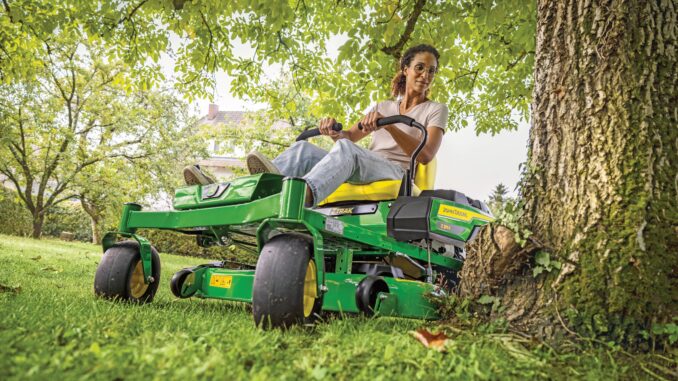
John Deere Z200 Lawn and Garden Tractor Models and Maintenance Guide
The John Deere Z200 Series is a family of residential zero-turn riding mowers designed for homeowners and larger-lot users who want faster mowing, close trimming around obstacles, and efficient coverage of regularly maintained lawns. Although this group is often discussed alongside lawn and garden tractors, Z200 machines are more accurately described as residential zero-turn mowers: they use twin steering levers and independently driven rear wheels rather than a steering wheel and conventional lawn-tractor layout.
This page serves as an across-time directory for John Deere Z200 models sold in the United States and Canada, including older EZtrak models and later ZTrak versions where public information is available. It is intended as a hub for model-specific guides, maintenance procedures, mower-deck information, drive-system checks, parts identification, and troubleshooting content. For broader information covering conventional tractors as well as zero-turn machines, see the General John Deere Lawn and Garden Tractor Guide.
About the John Deere Z200 Lawn and Garden Tractor Series
The John Deere Z200 Series occupies the residential zero-turn portion of the John Deere mower lineup. These machines are intended primarily for mowing maintained grass efficiently, particularly where a lawn contains trees, flower beds, fence lines, landscaping, outbuildings, or other obstacles that slow down a conventional front-steer lawn tractor.
Across the family’s history, Z200 models have generally used single-cylinder or V-twin gasoline engines in roughly the 18 hp to 24 hp range, although the exact engine manufacturer, displacement, rating method, and published horsepower can vary by model and production year. Typical deck widths range from about 42 inches on smaller residential models to 54 inches on larger Z200 machines intended to cover more ground per pass.
Most Z200 models use two hydrostatic rear-wheel drive units controlled by lap bars. Moving the two control levers independently changes the speed and direction of each rear wheel, allowing the mower to make very tight turns and, in suitable conditions, turn around with little uncut grass left between passes. This system is one of the main advantages of a zero-turn mower, but it also means that rear tire pressure, drive-belt condition, linkage adjustment, and hydrostatic-drive cooling all affect how the machine tracks and responds.
Later Z200 models commonly use Accel Deep mower decks, electric PTO blade engagement, anti-scalp wheels, adjustable cutting heights, high-back seats, cup holders, and service-access features. Depending on the exact mower, owners may have access to mulch-control components, bagging systems, deck wash facilities, rear hitches, and other mowing-oriented accessories.
The Z200 Series sits above basic walk-behind mowers for productivity and manoeuvrability, but it is not intended to replace a true garden tractor. John Deere S Series and X300 Series machines are conventional front-steer lawn tractors. The X500 Series and X700 Signature Series are more capable garden and heavy-duty garden tractors, particularly for towing, snow work, front implements, and certain ground-engaging tasks. Z200 machines are optimized for mowing speed and turning performance rather than rear tillers, snow blowers, heavy carts, or agricultural-style attachments.
John Deere Z200 Lawn and Garden Tractor Models
Engine brand, published horsepower, deck availability, feature package, and parts specification can differ by model year. Before ordering parts or following a repair procedure, identify the exact mower model, deck size, engine model, and product-identification number from the machine’s identification labels.
Z200 Lawn and Garden Tractor Maintenance Guides
Z200 maintenance shares many tasks with conventional lawn tractors, including engine oil service, blade care, belts, battery checks, tire inspection, and fuel-system maintenance. However, zero-turn mowers also require attention to twin hydrostatic drives, lap-bar controls, rear-wheel traction, front caster assemblies, and the mower-deck layout beneath the operator platform.
The most reliable maintenance plan is one based on the exact operator’s manual and engine documentation for the individual mower. A Z225, Z320M, Z330R, and Z365R may look broadly similar in purpose, but they can use different engines, belts, decks, control arrangements, and service parts.
Routine Service and Checks
Routine service begins with engine oil level, air-filter condition, fuel quality, and visible safety checks. Check oil before mowing and change engine oil and filters according to the schedule for the individual mower and engine. Machines operating in dusty grass, dry conditions, or leaf-heavy areas may need more frequent air-filter inspection than machines used on clean, regularly cut lawns.
Inspect fuel lines, the fuel filter where fitted, spark plugs, battery terminals, charging connections, and engine cooling screens. Fresh fuel is especially important after storage. Old gasoline, water contamination, varnish deposits, and neglected filters can lead to hard starting, surging, loss of power, and carburetor-related problems.
Check rear tire pressure regularly. Uneven rear tire pressure can make a zero-turn mower pull to one side, leave an uneven cut, or feel inconsistent when the steering levers are moved equally. Also inspect front caster tires, rear drive tires, wheel condition, and the area around the hydrostatic transmissions for grass buildup.
The Z200 lawn and garden tractor service interval checklist can help owners organize seasonal and hourly maintenance. DIY maintenance for Z200 lawn tractors should also include regular inspection of drive belts, idler pulleys, control linkages, pulley guards, cooling areas, and deck-lift components. The Z200 engine oil, air filter, and fuel-system service guide and Z200 zero-turn drive-system inspection guide can provide useful cross-model maintenance structure.
Mower Deck, Cutting Quality, and Belt Care
The mower deck is central to Z200 performance. A zero-turn mower can travel quickly, but speed alone does not guarantee a clean cut. Blade sharpness, deck level, grass condition, tire pressure, engine speed, ground speed, and airflow beneath the deck all affect the final result.
Inspect blades regularly for dull cutting edges, bends, cracks, excessive wear, missing material, or damage from rocks, roots, and other obstacles. Sharpen blades as a matched set and ensure they remain balanced. An unbalanced blade can create vibration that damages bearings, spindles, deck hardware, and the mower itself.
Before working beneath the deck, park on firm and level ground, stop the engine, remove the key, wait for all moving parts to stop, and use safe lifting and support methods. Never rely solely on a hydraulic jack, mower lift, or unstable blocks to support the machine while working under it.
Inspect deck belts for glazing, cracking, fraying, missing chunks, heat damage, slackness, and contamination from oil or grass buildup. Check idler pulleys, spindle pulleys, belt guides, blade mounting hardware, anti-scalp wheels, deck wheels, and deck hangers. A worn belt or sticking idler can cause squealing, poor blade speed, repeated belt failure, or blades that stop in heavy grass.
Mower deck maintenance and cutting quality on Z200 tractors should include regular cleaning of packed grass from beneath the deck. Grass accumulation reduces airflow, creates clumping, encourages corrosion, and can affect discharge performance. Deck belt and spindle service for Z200 lawn and garden tractors and the Z200 blade replacement, deck leveling, and anti-scalp wheel guide are useful topics for model-specific maintenance coverage.
Steering, Drive Controls, and Chassis Maintenance
Z200 mowers use lap bars and independently driven rear wheels rather than a steering wheel and conventional front-steer axle. The front wheels are casters, while direction changes occur through differences in rear-wheel speed and rotation.
Check lap-bar movement, neutral return, control linkage condition, parking-brake operation, and the mower’s ability to stop and remain stationary when controls are returned to neutral. A mower that creeps in neutral, pulls noticeably to one side, or responds unevenly to equal lap-bar movement may need inspection or adjustment.
Inspect drive belts, idler pulleys, belt guides, pulley guards, hydrostatic cooling areas, rear-drive components, and control-linkage hardware. Grass, leaves, dirt, or debris around the drive system can restrict cooling and contribute to poor performance or overheating.
Check front caster wheels and caster pivots for looseness, damaged bearings, worn tires, missing fasteners, and impact damage. Also inspect the frame, deck-lift linkage, deck hangers, foot platform, engine mounting points, seat mounting hardware, and safety guards.
Steering and drive-control maintenance across Z200 lawn and garden tractors should focus on safe and smooth control operation. The Z200 front caster, chassis, and wheel inspection guide can help identify wear before it develops into handling, cut-quality, or safety problems.
Z200 Lawn and Garden Tractor Troubleshooting Guides
Z200 troubleshooting should begin with simple, visible checks before assuming an expensive engine or transmission failure. Confirm that the mower has fresh fuel, adequate oil, a charged battery, clean cooling screens, correctly positioned controls, properly inflated tires, and intact belts. Check that the parking brake, lap bars, seat switch, PTO control, and other safety interlocks are being used as intended.
Many common symptoms result from ordinary maintenance issues: stale fuel, a dirty air filter, a loose battery cable, a worn deck belt, a packed mower deck, low tire pressure, or grass debris around the engine and hydrostatic-drive cooling areas.
Starting, Engine, and Fuel / Ignition Problems
A no-crank condition may involve a weak battery, corroded terminals, blown fuse, defective starter circuit, incorrect parking-brake position, PTO switch position, seat-switch issue, or another safety-interlock fault. Start with the battery, cable connections, fuse condition, and operating controls before replacing components.
If the engine cranks but does not start, check fuel freshness, fuel supply, choke operation where applicable, spark plug condition, air-filter blockage, and the possibility of water-contaminated fuel. A mower that has been stored for months with untreated fuel may suffer from stale gasoline, clogged fuel passages, carburetor deposits, or restricted fuel flow.
Hard starting, surging, hunting, loss of power, rough running, black smoke, white smoke, overheating, and stalling under load all require systematic diagnosis. A dirty air filter, damaged spark plug, restricted fuel filter, old fuel, grass-packed cooling screens, incorrect engine oil level, or wet grass overloading the mower deck can each create symptoms that resemble a more serious engine problem.
The Z200 lawn and garden tractor starting problems – diagnostics and fixes guide can organize basic checks. Engine and fuel system issues across Z200 tractors should distinguish fuel-delivery faults from ignition, compression, safety-system, and operator-control problems. The Z200 safety switch, battery, and charging-system troubleshooting guide can address common electrical no-start conditions without bypassing factory safety equipment.
Mower Deck, PTO, and Cutting Performance Problems
If the mower deck will not engage, begin with the PTO control, battery condition, fuse, wiring connections, safety interlocks, clutch operation where applicable, and deck-belt condition. Do not assume that an electric PTO clutch has failed until these basic items have been checked.
Blades that stop in heavy grass may result from a worn or slipping belt, damaged idler pulley, packed deck, dull blades, reduced engine power, excessively high travel speed, or mowing grass that is too wet or too tall for the selected speed. A mower that cuts well in light grass but struggles in heavy growth may need deck cleaning, blade service, belt inspection, or a slower mowing pace.
Uneven cutting can result from unequal rear tire pressure, incorrect deck leveling, poor front-to-rear deck pitch, worn anti-scalp wheels, bent blades, damaged spindle assemblies, or worn deck-hanger hardware. Scalping often occurs when the deck is set too low for uneven terrain, when anti-scalp wheels are incorrectly adjusted, or when a zero-turn mower is turned sharply across dips and rises.
Vibration or excessive deck noise should be investigated promptly. Common causes include bent blades, unbalanced blades, loose blade bolts, damaged spindles, worn bearings, failed idler pulleys, deck-shell damage, or debris trapped beneath the deck.
PTO and deck engagement problems on Z200 lawn tractors can provide a symptom-based diagnosis path. Cut quality and deck vibration issues on Z200 models should cover deck level, blades, tires, spindle condition, anti-scalp wheels, and mowing technique. The Z200 mower deck belt, spindle, and blade troubleshooting guide can help separate belt-drive faults from blade, pulley, and spindle problems.
Drive, Transmission, and Traction Problems
A Z200 mower that will not move, moves only on one side, responds slowly, pulls to one direction, or loses speed under load may have a drive-belt, linkage, parking-brake, tire-pressure, cooling, or hydrostatic-drive problem. Start with visible checks: verify that the parking brake is fully released, the lap bars are operating properly, rear tire pressures match, drive belts are present and correctly routed, and grass has not blocked cooling areas.
Uneven tracking may be caused by different rear-tire pressure, a control-lever adjustment issue, worn linkage components, or differing response between the two drive systems. Jerky movement can occur if controls are moved too abruptly, but persistent jerking, excessive noise, or delayed response should be inspected.
Reduced travel speed can result from a slipping drive belt, weak engine performance, clogged cooling areas, overheated hydrostatic components, damaged pulleys, or an internal transmission issue. Before diagnosing the hydrostatic transmissions themselves, rule out engine, belt, control, brake, and debris-related causes.
Traction problems are especially important with zero-turn mowers. Wet grass, loose soil, slopes, soft ground, sharp turns, and sudden steering inputs can cause rear wheels to lose grip. Traction loss on slopes can be dangerous. Follow the individual mower’s operator guidance for slope limits, safe mowing direction, and terrain suitability. Do not use a Z200 mower on terrain beyond its rated capability.
Drive and transmission problems on Z200 lawn and garden tractors can help owners identify common causes of reduced movement. Traction and hill performance issues across Z200 models should cover tire pressure, ground condition, mowing direction, wheel spin, and safe use. The Z200 hydrostatic drive, belt, and control-linkage diagnostics guide can help distinguish external service needs from potential internal drive-system faults.
Individual model guides, including Z225, Z320M, Z330R, Z345R, Z355E, and Z365R maintenance and troubleshooting guides, can address model-specific engines, belts, deck arrangements, safety switches, part numbers, control systems, and service procedures.
Attachments and Accessories for the Z200 Lawn and Garden Tractor Series
The Z200 Series is designed primarily for grass cutting. Its most useful accessories are generally mower-deck and grass-management products rather than the front, rear, and ground-engaging implements associated with John Deere garden tractors.
Depending on model, deck size, and year, suitable accessories may include mulching components, MulchControl systems, mulching blades, high-lift blades, bagging systems, hopper systems, grass-collection equipment, deck wash facilities, seat or comfort accessories, and certain rear-hitch equipment. Compatibility must always be checked against the exact machine rather than assumed from the Z200 designation alone.
Bagging systems often require model-specific mounting brackets, chute components, deck-specific blades, and collection hardware. Mulching kits may also be deck-specific, with different parts required for a 42-inch, 48-inch, or 54-inch mower deck. A correct installation matters because airflow, discharge configuration, blade design, and deck baffles influence both cut quality and collection performance.
Some Z200 models include a rear hitch or may support limited utility use. However, towing should be limited to manufacturer-approved equipment and within the machine’s stated towing capacity. Heavy trailers, ground-engaging tools, large aerators, tillers, snow equipment, or loads that reduce traction or steering control are not appropriate simply because a hitch is present.
Snow blades, snow blowers, rear tillers, front implements, dethatchers, heavy-duty aerators, and other garden-tractor attachments are more commonly associated with conventional lawn tractors, X500 garden tractors, X700 heavy-duty garden tractors, and dedicated utility equipment. A Z200 zero-turn mower should not be treated as a universal attachment platform.
Attachments and implement options for Z200 lawn and garden tractors should focus on verified, mower-specific accessories. Setting up and using mowing accessories on Z200 tractors can cover bagging, mulching, blade selection, and seasonal deck care. The Z200 bagging, mulching, and deck-accessory compatibility guide should emphasize the need to confirm model, serial number, deck width, mounting provisions, belt requirements, electrical features, and regional availability before purchasing accessories.